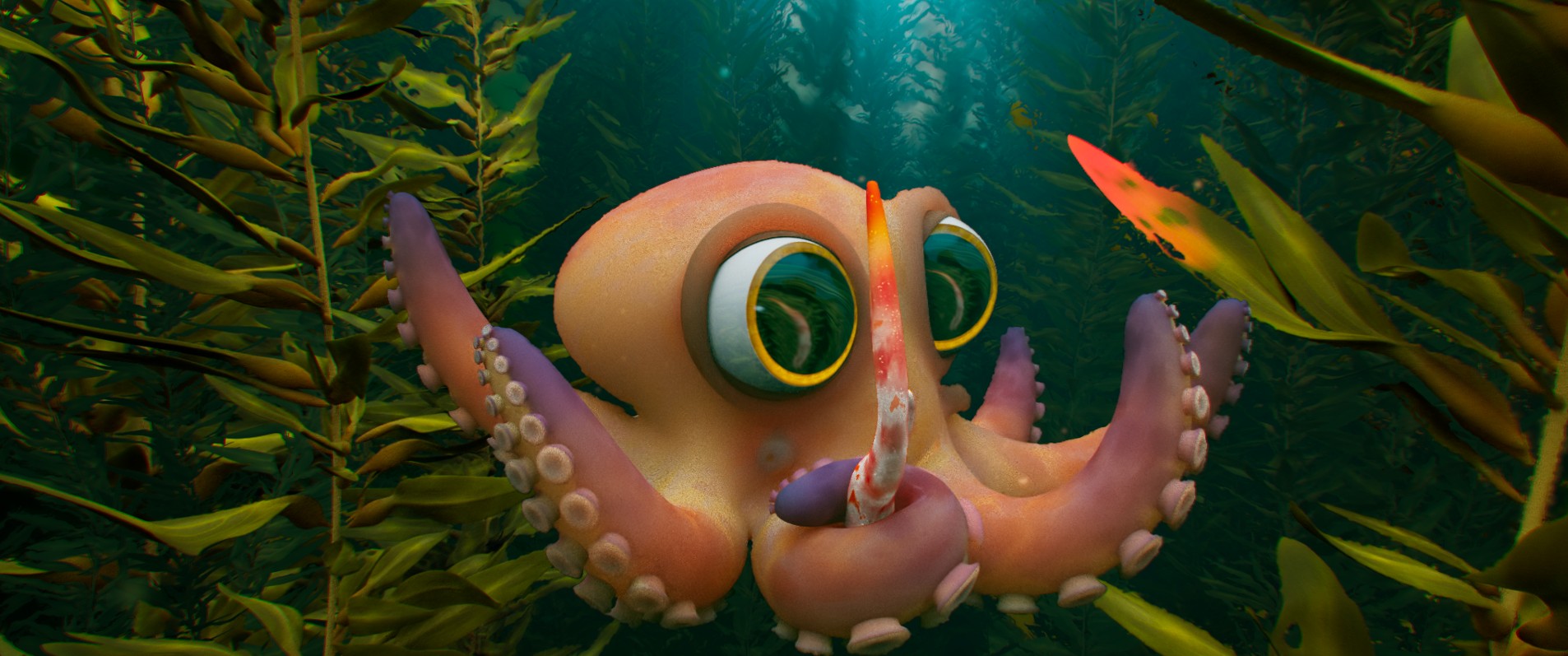

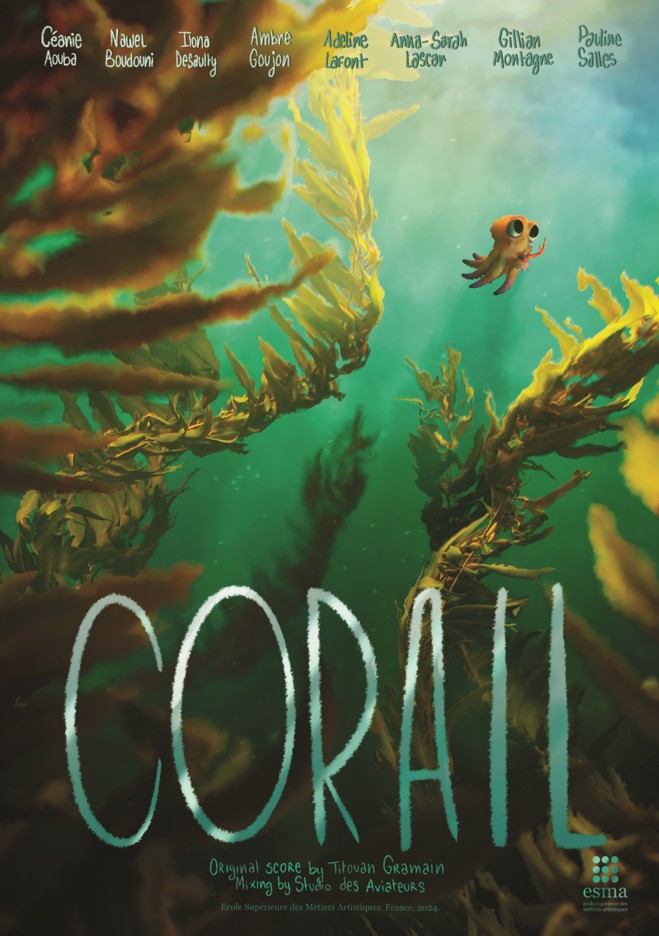
Fascinated by these bright colours, the little octopus discovers a new courage and sets off on an adventure in an ocean much bigger than she had imagined.
How did these students manage to avoid drowning in such a huge project? And what tools did they use to recreate this ocean of multiple hues, while adding extremely subtle effects to their 3d renderings?
Take a look behind the scenes.
First of all, can you tell us how this project came about?
Our first idea was to start with the question “Where do the vibrant colours of the coral reefs come from?”. From there, we built a story collaboratively, with exchanges of ideas between the storyboard team and the script team, for a better understanding of the story and a more impactful conclusion.
Right from the start of this creative process, we wanted a poetic and contemplative film. We then looked at all the storytelling possibilities that this choice offered, using post-its to give us the opportunity to swap scenes and determine the best approach.
To be honest, the very first version of the film is nothing like the final result! From a story revolving around a family of sea slugs painting coral, we tightened our narrative around a single protagonist, Kawa, the little octopus who now plays the leading role in our film.
What has guided your aesthetic thinking?
The aquatic world offered us many interesting materials to give the film this unique look. The sea is rich and very inspiring from both an aesthetic and a storytelling point of view. We wanted a contemplative film, and it turns out that the accumulation of constraints that we imposed on ourselves to make the film immersive ultimately gave a singular look to the renderings, thanks in particular to the reflections of the water, the overflowing edges and the vibrant colours of our images.
The emotions that our character goes through were the guiding thread that defined our colour palette, as well as the concepts for the film’s many sets.
Coming back to Kawa, how did you create this protagonist?
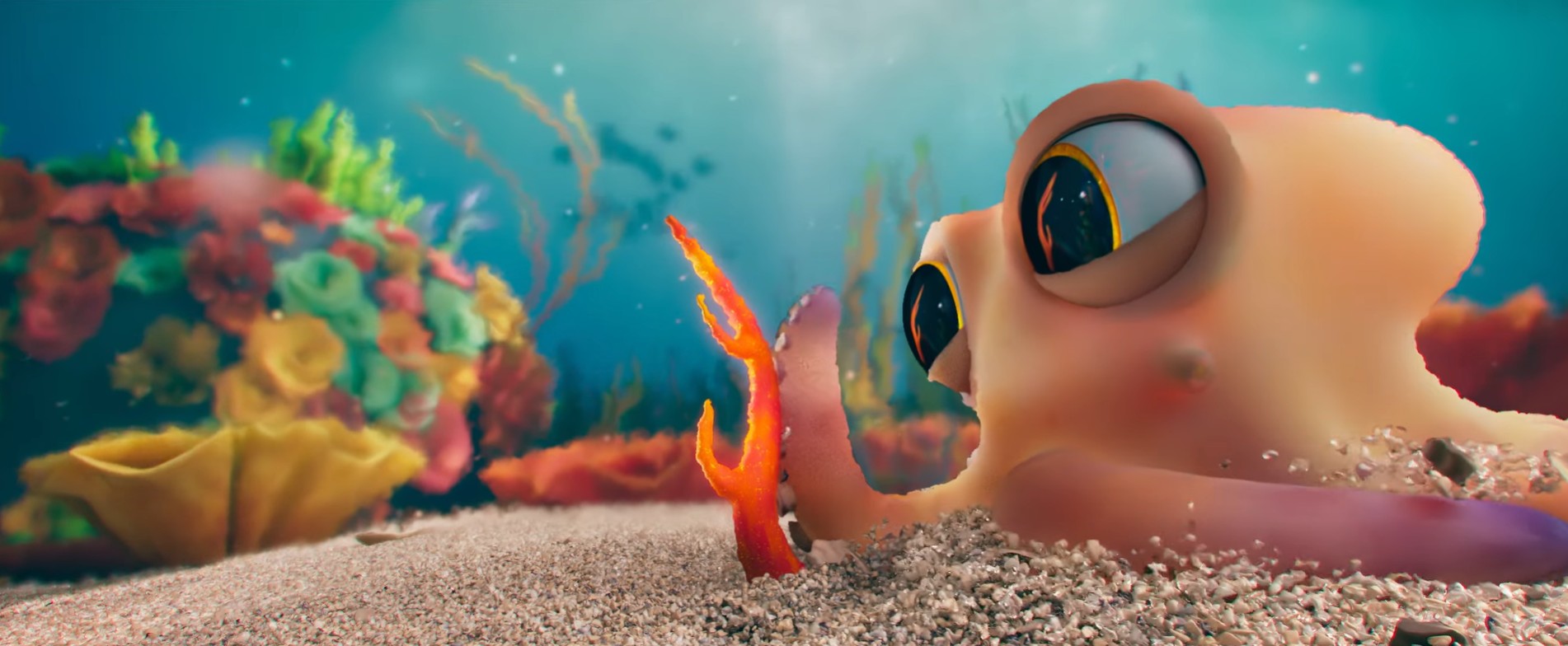
Our character’s psychology had a huge influence on her final appearance. As we wrote, we were able to determine whether she would look more adult or childlike, the length of her arms, her colouring… We were inspired in particular by baby Dory for the attitude and appearance of our character, who we wanted to be very expressive.
This expressiveness was one of our biggest challenges, because Kawa has a very simple face. She expresses herself solely through her eyes and body expressions.
It was a huge challenge to convey her evolution, her fears and her intentions to the audience while making her endearing and believable.
How did you establish the artistic direction of the project, and what were your influences?
First of all, we looked at the references we had in common, and then we mixed them with what corresponded to the themes of the film. We wanted a world of clear, legible and distinct colours, but also a unique and expressive graphic style.
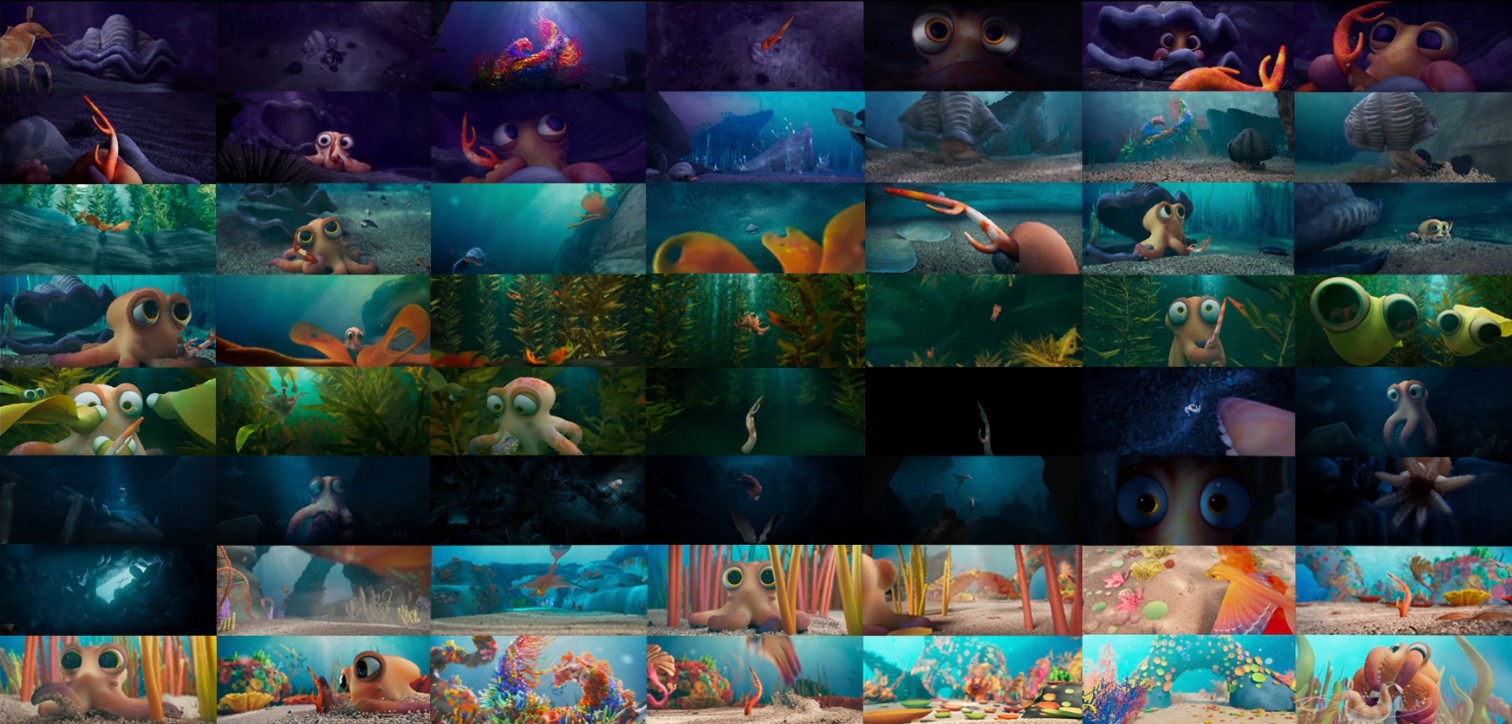
In order to achieve a coherent, harmonious result, we had to carry out a large number of tests, which led to a number of setbacks. For this part of the project, our main influence was Chinese director Tian Xiaopeng’s Kingdom of the Abysses, for its colour management and particle FX effects. Another inspiration, notably in certain textures and the clarity of its storyboard: The Tulip King, an ESMA short film released in 2020.
But beyond these two titles, we found it very difficult to find references for the textures we were looking for: simple, cartoonish shapes, and a texture that would be reminiscent of impressionist painting, with brushstrokes, subtle shades of colour and a graphic richness visible in the close-ups. And that’s why we tried so many things.
Which sequence gave you the most trouble?
Without a doubt the final sequence on the reef, because it required an enormous amount of research.
This sequence had to be the high point of the film, at once colourful but legible, with a rich backdrop while leaving plenty of room for the action. In terms of camera movement, the sequence had to be dynamic without being nauseating.
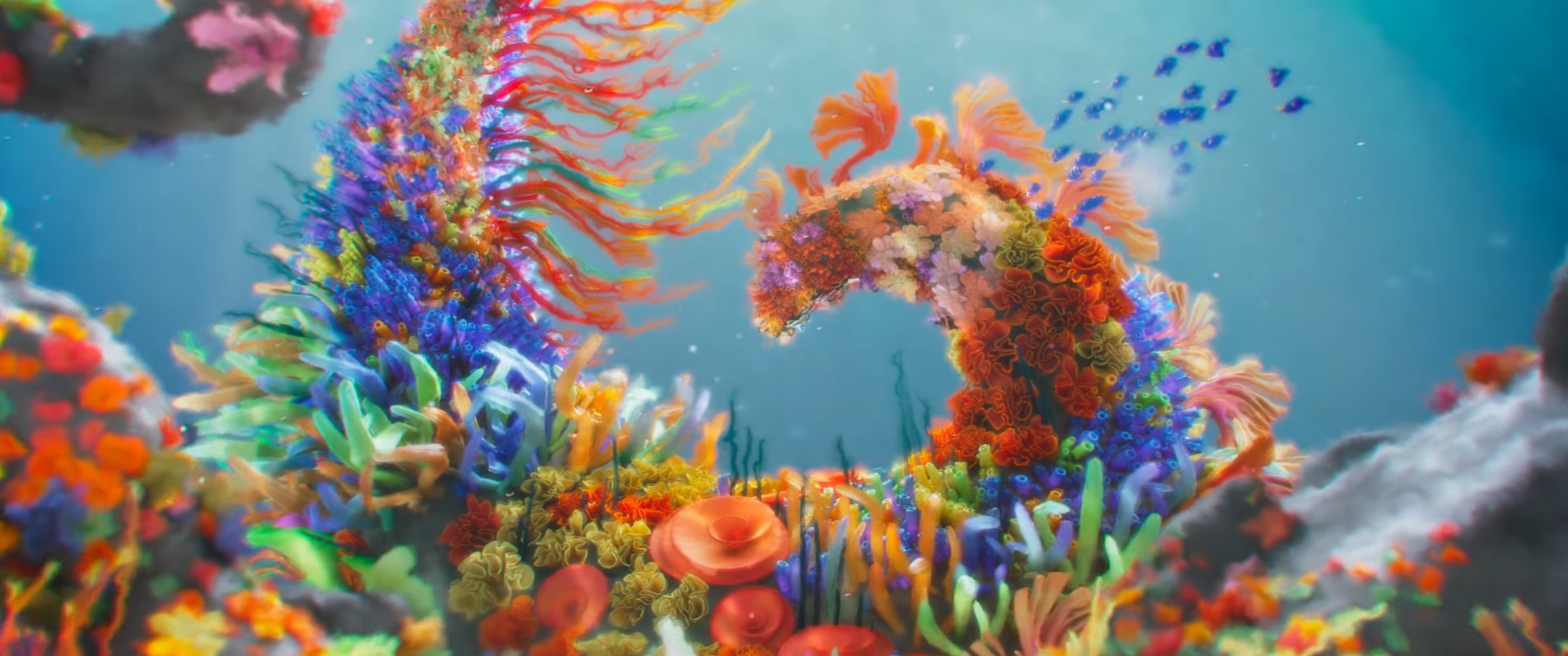
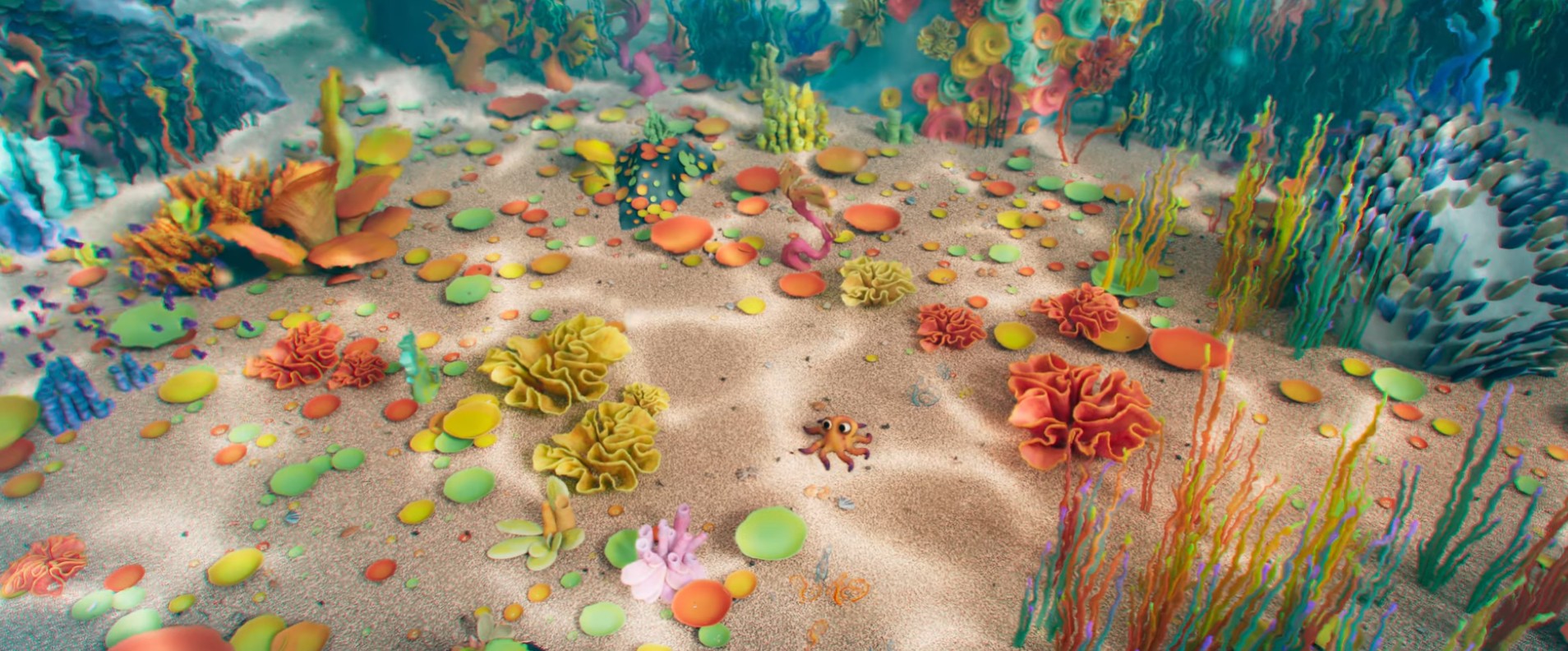
Beyond this particular moment in the film, we faced three main challenges: Firstly, we had to manage to convey the depth of the seabed, while still being able to show objects located far in the background.
Secondly, we had to manage to fit a very large number of marine plants and animals into our shots without continually crashing. And finally, as our main character is an octopus, this added an extra challenge in terms of rigging and animation.
How did you overcome all these challenges?
As for the water effects, the challenge was to simulate them correctly in post-production. Atmospheric depth, caustics, particles, colourimetry and chromatic aberration are all effects that are essential for bringing our film to life. We managed to do this through a number of iterations and test phases, which enabled us to establish an efficient workflow that we were then able to apply to all the shots.
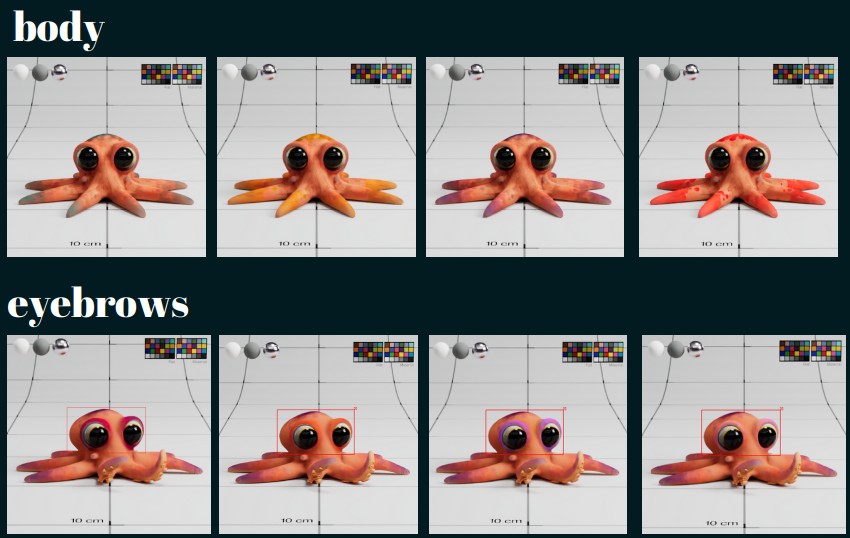
For the octopus, it was above all a question of innovating to create functional tentacles, and making their use as practical and intuitive as possible for the animators. This required quite a bit of R&D for the rig, especially as it went beyond the spectrum of what we had learnt up to that point. Once we’d created a tentacle set-up, we coded it to recreate it more quickly on all the character’s tentacles.
How did you go about allocating roles and working as a team?
We quickly appointed two production managers, responsible for monitoring the project. These two people would meet privately to determine the tasks to be carried out during the week, and decide who would be assigned to them on the basis of each person’s skills and preferences, in order to avoid frustration.
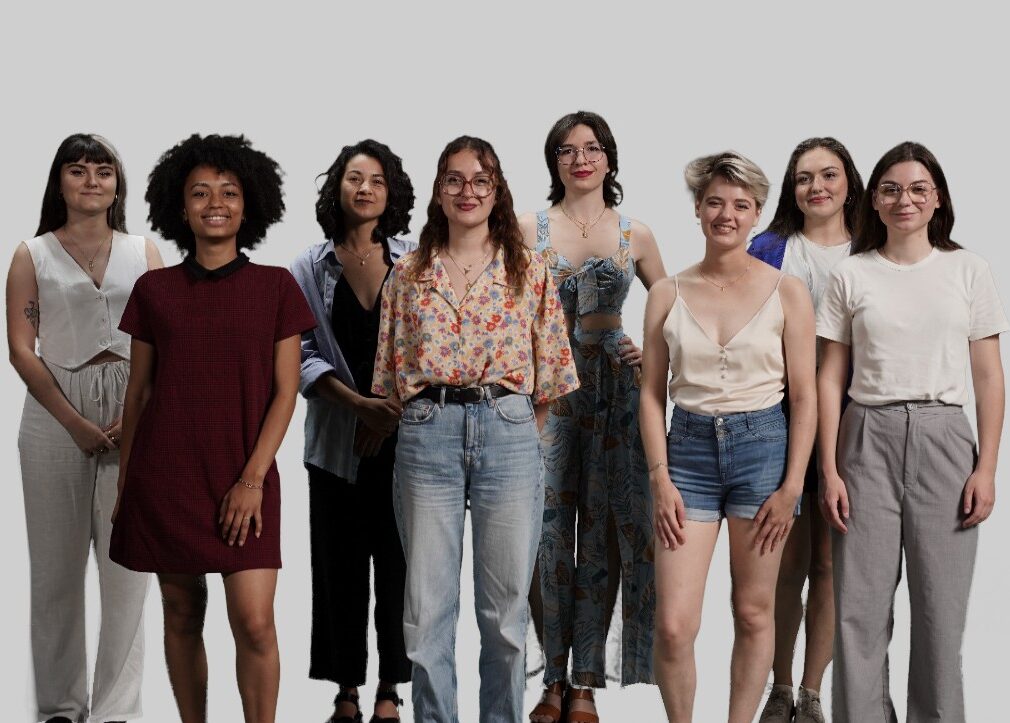
Then we’d all have a meeting where we’d announce the assignment, and everyone was free to suggest changes or swap tasks if necessary. For tasks that we didn’t like or that we had trouble assigning, we were lucky enough to be able to count on the goodwill of the whole team. There was always someone with a bit more free time to volunteer.
For us, it was unthinkable to make a project incomplete, or to include unfinished shots in the final render. We therefore made it a priority to keep all the scenes that were absolutely essential to understanding the story, and we determined very early on which parts of the film could be removed in case of extreme necessity. In this way, we never had any doubts about the outcome of the project, even if there were times when we doubted its final quality and integrity.
What enabled you to bring this project to fruition?
There’s no doubt that the involvement of all the members of the team and their mutual support enabled us to successfully complete this mentally and physically gruelling project. Our big strength was communication, which helped us to maintain a very good atmosphere throughout the project, and pushed all the team members to give their all.
At the same time, the confidence that the production managers enjoyed on the part of the team made it much easier to distribute tasks, and vice versa, because the production team had complete confidence in the rest of the team, which prevented us from falling into oppressive micro-management. We were also able to count on our teachers, who were always available, and on our fellow students. The fact that the different films helped each other was a big plus, because discussing similar problems and sharing tools and solutions benefited everyone.
What are you most proud of today when you revisit this project?
We all learned an enormous amount during this project, both about the tools (particularly the USD format and its implications for the pipeline) and about the creative process. Looking back, we pushed ourselves to the limit, using new techniques to make a film that we liked, and that is what we imagined it to be. Even if it has its faults and isn’t perfect, we can still be proud of ourselves.
What advice would you give to students making films today?
Not to dwell too much on details like “the plant in the background will be out of focus, it has to be perfect”, but rather to think carefully about what needs to be perfect and what doesn’t!
And above all, good organisation.
You’ve all known each other since the first year, or even since prep school, so have fun. Because with a project like this, there are bound to be complicated days, but most of the time it’s still fun!
Corail is just like its makers: colourful and lively. It’s a world we’d love to immerse ourselves in again.
While you wait to see this short film at the festival or online, check out ESMA’s other short films on our Youtube channel.