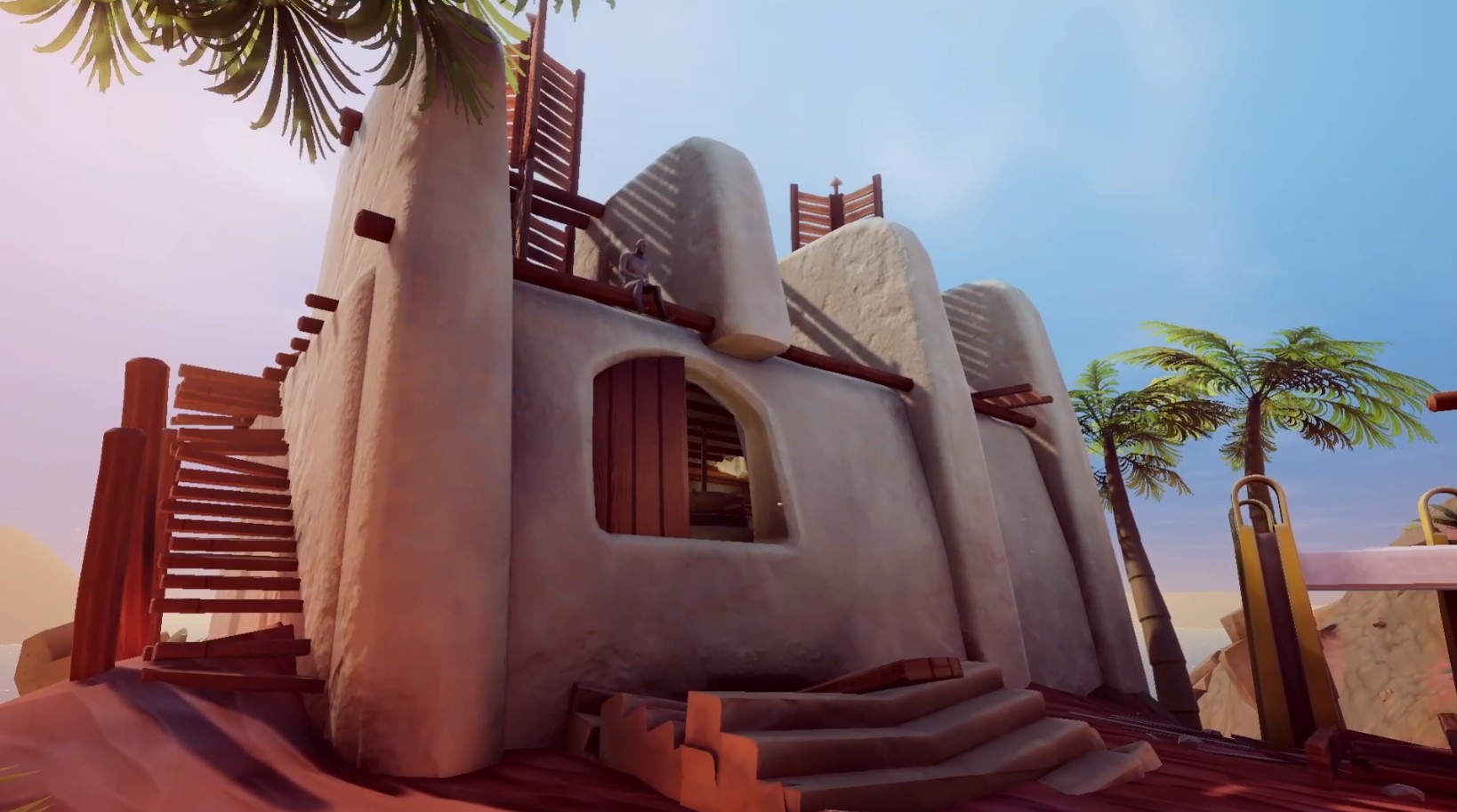

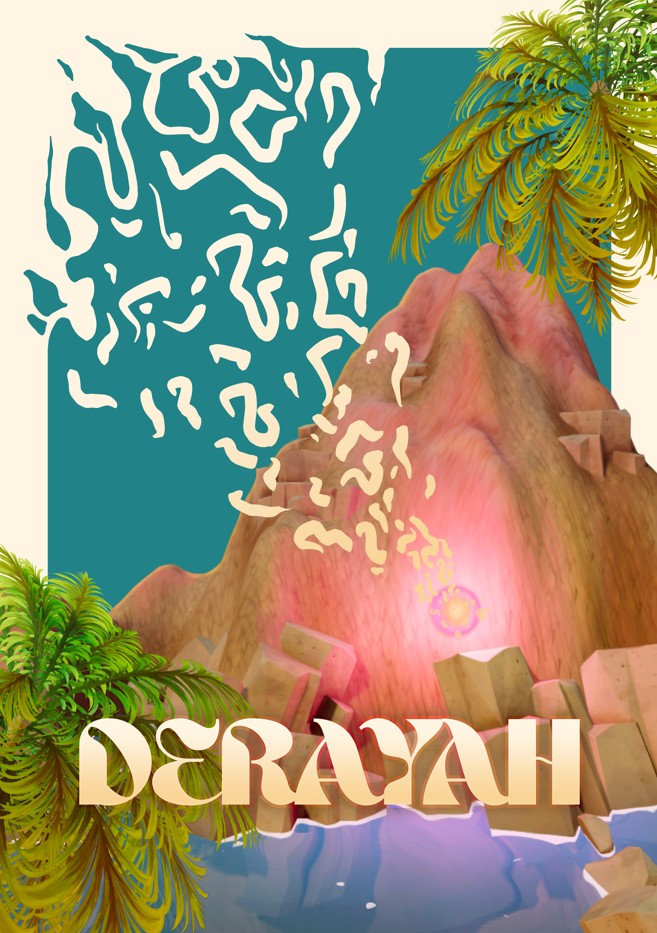
A strange universe where Saghir, our hero, will have to solve the secret of a town built on the back of a giant spider crab, in which all the inhabitants seem to have been suddenly petrified.
To give you a better understanding of the creative process behind this game by Marin Aussant, José-Daniel Capitaine, Solenn Cattin, Jonathan Fichant, César Gasnier, Victor Grondin, Achille Martin and Vincent Quinquis, we’re taking you behind the scenes of this student production, inspired as much by the Myst saga as by the independent successes Return of the Obra Dinn and Outer Wilds.
Gameplay based on understanding the environment
In the space of just one hour of gameplay, the team offer a true environmental storytelling experience, built around a cryptic story that gradually reveals itself to the player as they progress. The game’s mechanics are based on the way you look at things, and on your ability to understand increasingly complex mechanisms. At the heart of this gameplay is the quest for the most complete immersion possible.
“The user interface is minimalist to immerse the player as fully as possible,” explains the team. “A discrete circle in the centre of the screen acts as a pointer, but also as an indicator when the player is pointing at an interactive object. The circle then becomes full. This pointer is essential because most of the game’s mechanics use the orientation of the camera, in keeping with the classic standards of first-person games.
Saghir, our character, is a medium-sized human with no specific powers of his own. He can walk, run, jump and interact with certain objects.”
The gameplay is simple, but made smoother by the use of modern video game mechanics such as the coyote jump and an input buffer to reduce frustration in the event of latency or a slightly off key press. The result is the most enjoyable travelling experience possible, with exploration and the acquisition of new knowledge at the heart of the process.
Open sesame!
One of the special features of Derayah is its use of the eye as a tool for unlocking certain specific mechanisms in the game. The team describe these mechanisms in detail in their GDD or Game Design Document, the bible that guides and accompanies the entire process.
“First, the player must look at the lock in the centre of the door (the large diamond) to initiate the unlocking process. He must then look in a precise sequence at different parts of the door. If the sequence is correct, the door opens. Various visual and audio feedbacks help the player to understand the mechanics of the game, making it a much smoother experience.
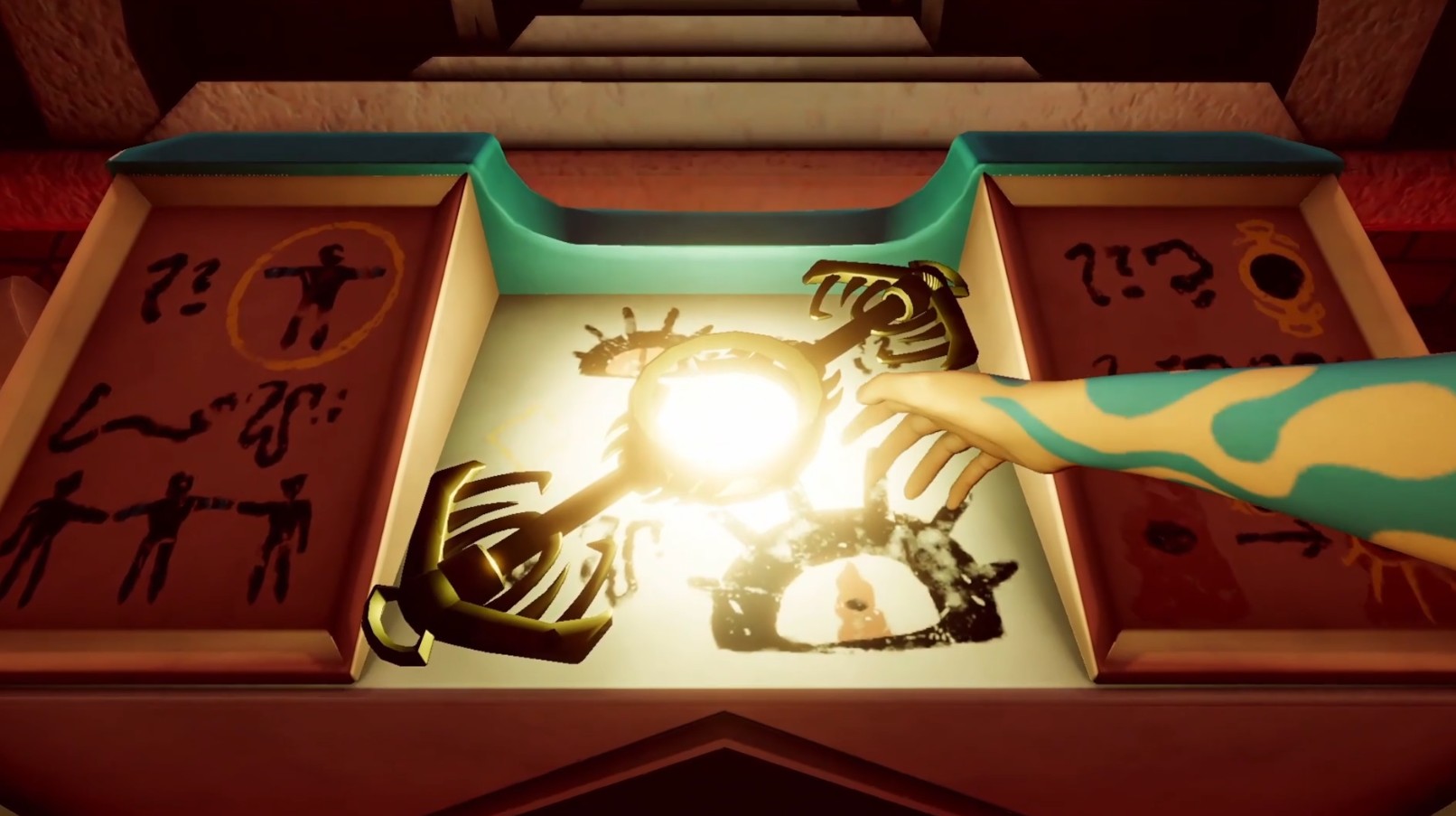
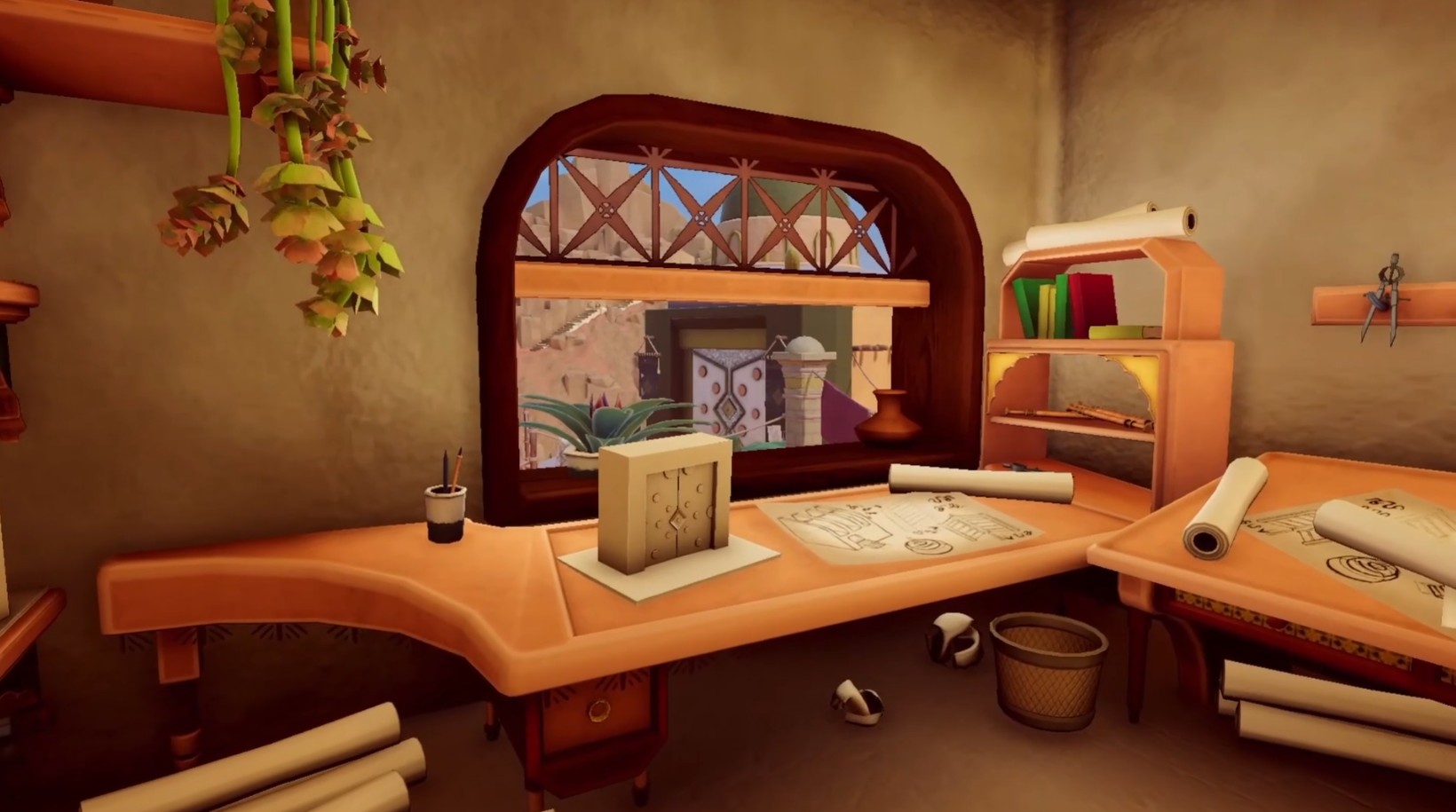
Understanding and experimentation are therefore at the heart of this process, but exploration can also allow the most inquisitive player to find a unique clue in the architect’s house, where a diagram explains in greater detail how the puzzle works. An alternative system has been put in place by the team to multiply the possibilities.
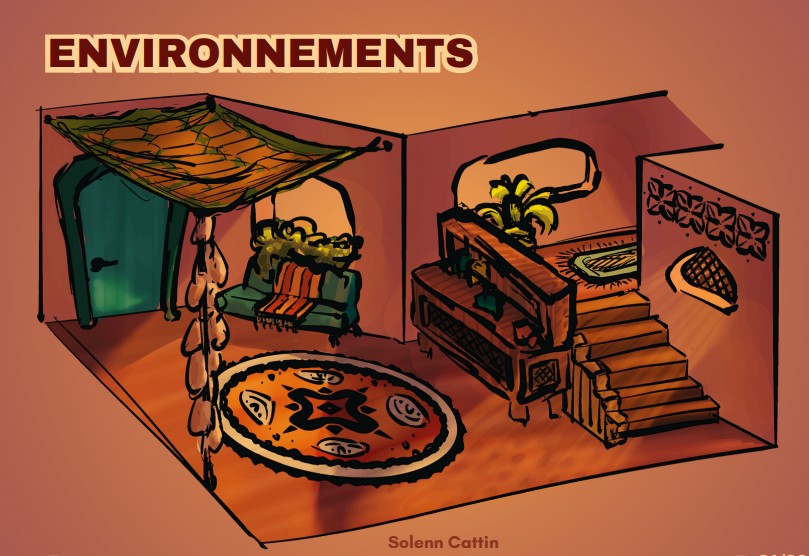
“Each clue is placed in the environment according to its accessibility (exploration challenge) and its intrinsic difficulty of understanding. All of this is balanced to ensure that the reward is equivalent to the effort made.
The game is in the Knowledge-Based Game genre (or Knowledgevania / Metroidbrainia), where only knowledge is needed to progress. A calm, contemplative game, where brute force is of no use in solving puzzles.”
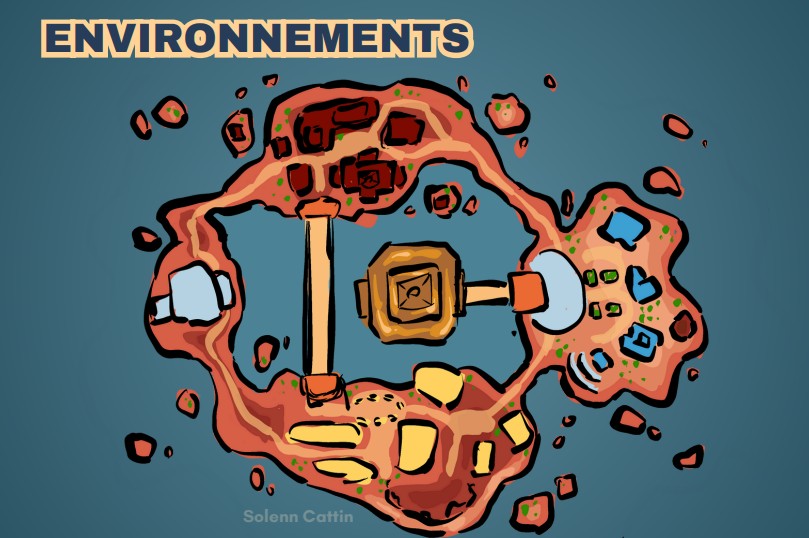
These puzzles are closely linked to a refined level design, in a semi-open world divided into three main zones: The Tomb, the tutorial zone, the Exploiter quarter, and the Temple, the final game zone. “The player discovers the city in a semi-linear fashion,” explains the team. The player advances from zone to zone without being able to return to the previous one, but can freely explore each zone before moving on to the next. So, even if each zone is diegetically linked to the others, physical and visual elements (scree, a broken bridge, etc.) prevent free movement between them. It’s a way of ensuring that the player progresses, while maintaining interest in the rapidly changing scenery.
Between oriental inspiration and modern design, an artistically singular game
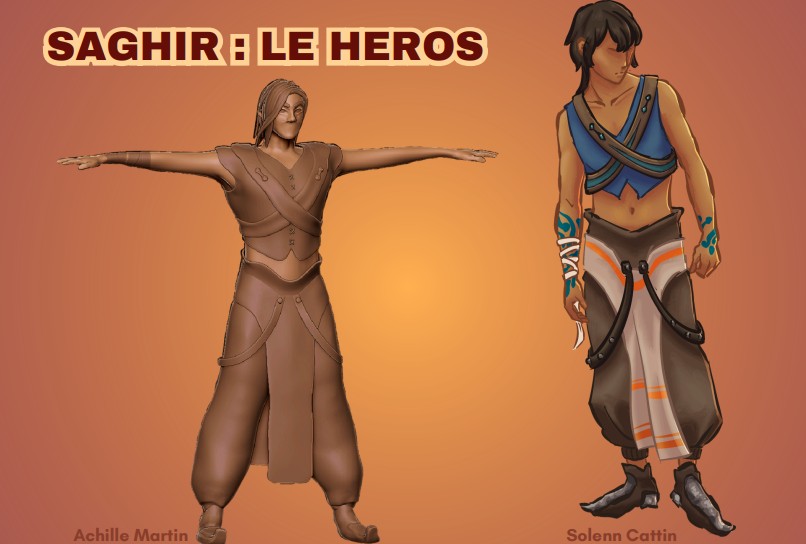
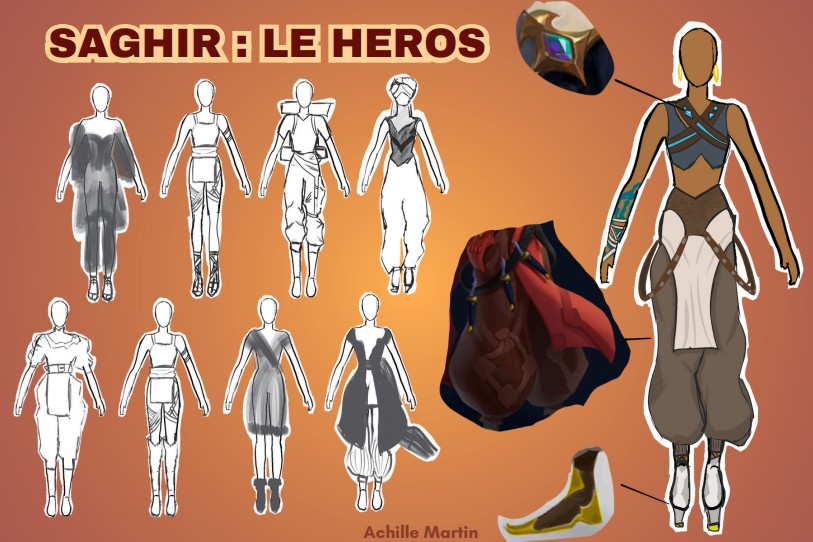
Achille Martin and Solenn Cattin bring Saghir and his environment to life, while Victor Grondin is responsible for creating the many materials and textures used in the project. The result is a singular set and finely crafted character design that further enhances the sense of immersion.
And that’s despite the fact that we only get to see our hero through his arms when he’s interacting with objects. This research adds body and soul to a world of carefully crafted scenery that’s a joy to explore.
To build the many statues and petrified figures that populate this city, the team used a rigged 3D model, which is easily adaptable to the many different settings required for this project.
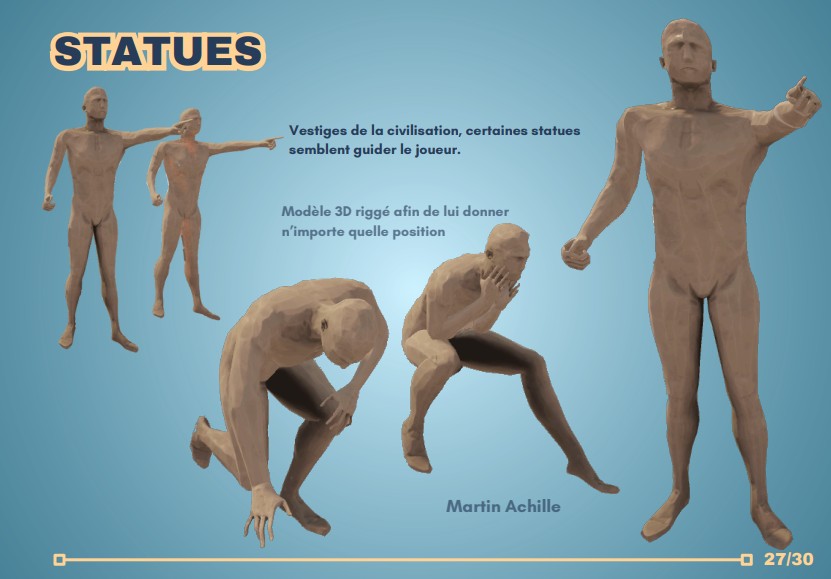
The unfortunate prisoners of this ghost town, these statues (which can be easily transformed using a variety of clothes and accessories devised by the team) often help to orientate the player, or direct them towards the clues needed to solve the puzzles that punctuate the game.
A light, easy-to-play game powered by Unity
“For our project, we chose to use Unity’s Universal Rendering Pipeline (URP), which is flexible because it can be scripted and is also light on resources,” explains the team. “A few packages were added to improve the visual rendering, in particular volumetric fog, which lets you play with the inclination of the lights and the rays they produce in this fog.”
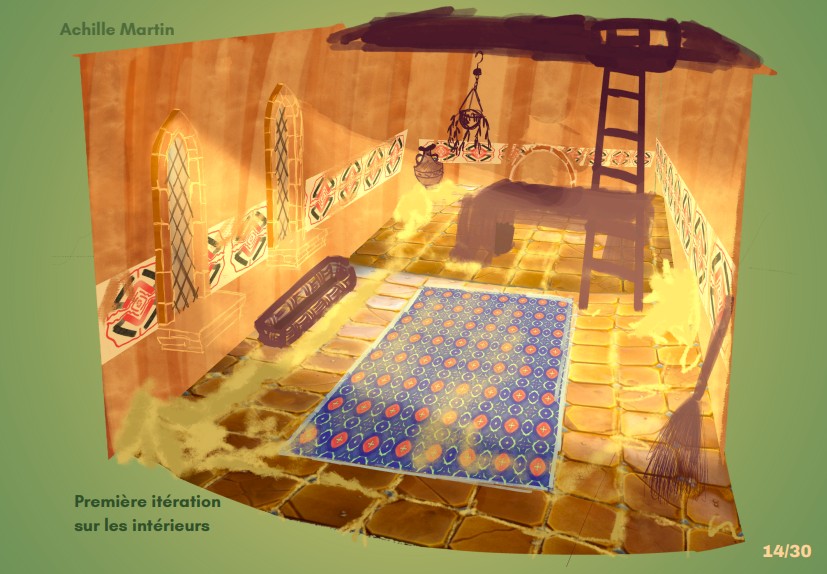
For this lighting work, which is very important in Derayah‘s Mediterranean atmosphere, the team used Light Probes, which are more flexible and lighter than lightmaps. This choice, combined with an Adaptive Probe Volume (APV), makes it possible to create a setup that is effective both outdoors and indoors, while incorporating the possibility of changing the light between daylight and twilight to suit the needs of the narrative.
A very convincing result, for a project built in barely a year. And a high-level calling card, both in terms of game architecture and artistic quality.
Discover and play the Derayah game, available for free here: