
When unfriendly aliens get involved, the player and his team-mates will need a whole arsenal of somewhat absurd weaponry to achieve their goals, reach the precious quota and get off the planet, facing increasingly ferocious waves of supercharged aliens.
Produced in 2024 by Paul Leroy, Victor Fabre, Sébastien Osborne, Dylan Goarant, Gabriel Deleporte, Hugo Thomas, Corentin Hardy and Alexian Raguin, Crops Warriors is now available free of charge via itch.io, and is sure to get you hooked.
To find out more about the various stages that led to this achievement, we spoke to Alexian Raguin, a member of the project’s game design team.
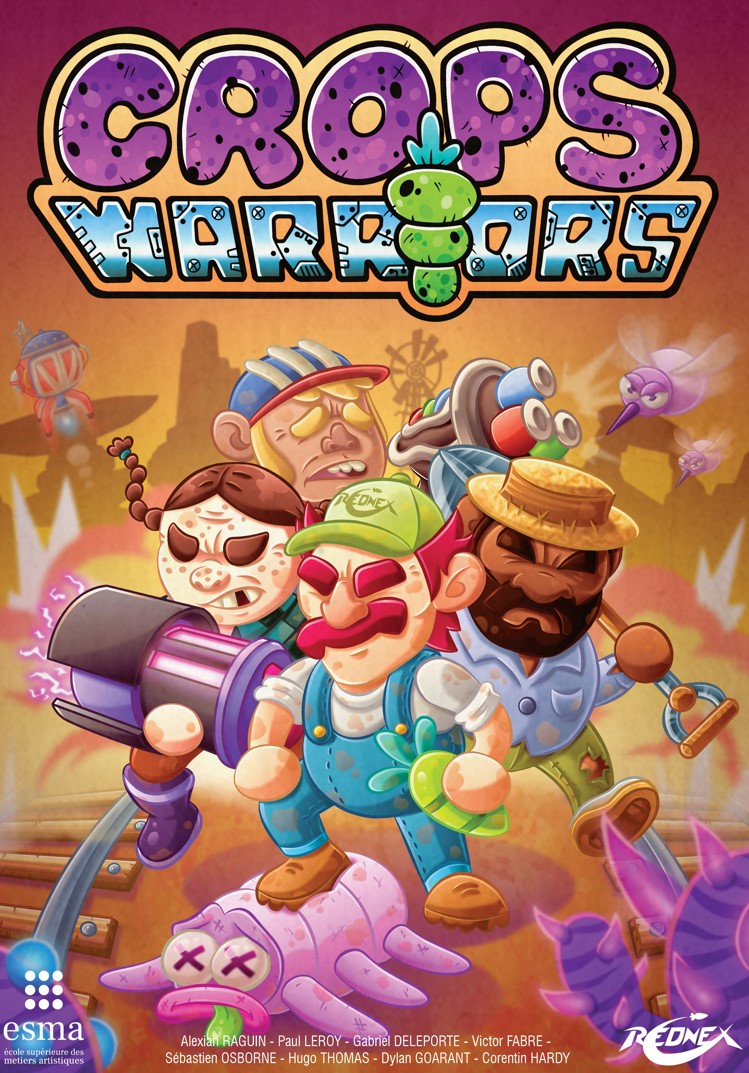
How did you and your team come up with the concept for the game?
Initially, it was an extension of an idea formed by my friend Paul Leroy, which he presented to my colleague Gabriel Deleporte and me. By reworking this concept, we wanted to create a tower defence game based on the world of the farm, where players would have to defend their base using vegetables they had grown themselves, with the idea of bringing out the fun of a game with friends, couch co-op style.
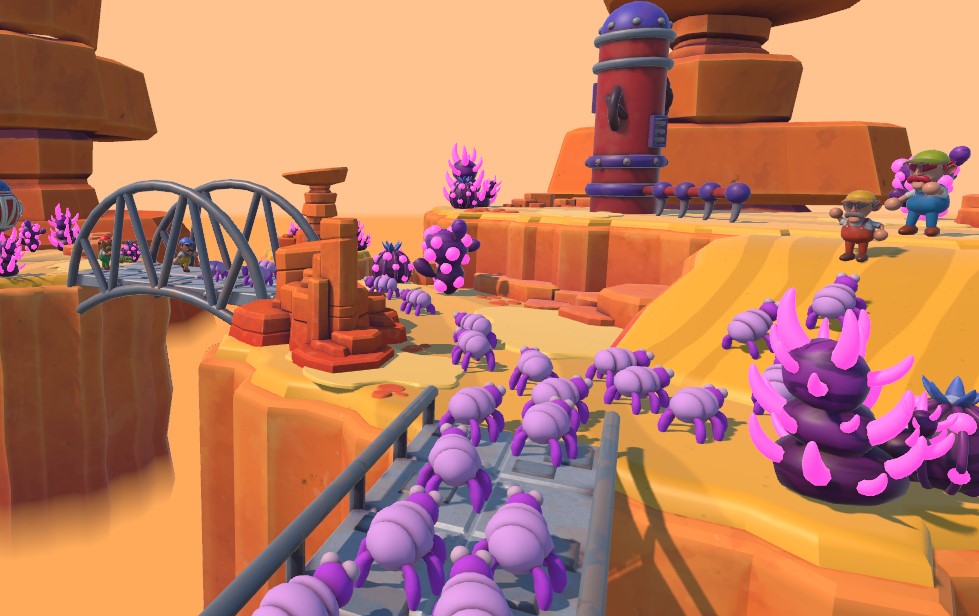
Over time, the game evolved greatly, we remained in this world of farmers, but we pushed the idea to another level. Players would no longer be defending, but attacking, with exploration and combat within a limited timeframe. The new gameplay involved harvesting vegetables on a planet while defending yourself against enemies on the ground. The aim is to collect enough vegetables to leave.
Given the nature of our game, the narrative was kept very light, just enough to add a little salt to our ‘stupidly fun’ game.
What do you think were the main challenges of this production?
Our main difficulty was blocking the concept, both because of internal communication problems and because of external instructions that were sometimes contradictory, according to the supervisors. This long period of vagueness stalled our production for a while, which reduced the time available for the other aspects of the project. Apart from that, the multiplayer aspect of the game was also a challenge, but thanks to Gabriel we managed to overcome it.
We quickly defined roles for everyone, with three areas of focus: art, programming and design. Paul Leroy and Sébastien Osborne are in charge of the art, which means the universe, the colours, the shapes and so on. They are the ones behind the game’s visuals. Then Gabriel Deleporte and Hugo Thomas made it all happen, writing the lines of code that made it all work and make it playable. And finally, Corentin Hardy and myself on the design team, in charge of game rules, balancing, integrating gameplay elements into the game, testing and ideating content.
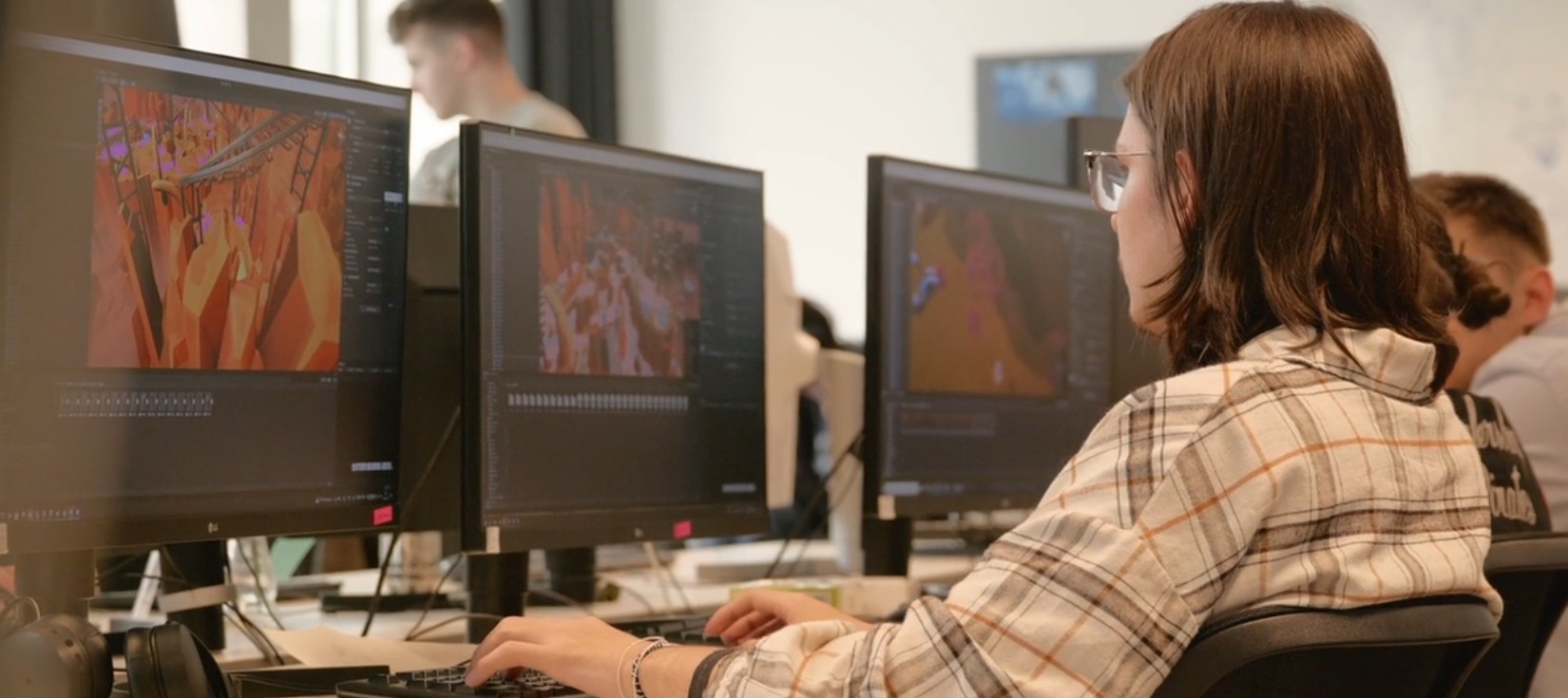
We also have two specific profiles to round off our team: Dylan Goarant, who is in charge of the music and has supported the art department on a number of creations. And Victor Fabre, the most mixed profile among us, who has helped us with the visual side of things, particularly with FX, but who has also integrated them on his own without going through the programming department.
On the whole, when it came to managing our ideas, our solutions and our way of doing things, our team was well organised. There were Excel spreadsheets, diagrams and iterations of what we wanted, and we tested our creations regularly. We asked for our own tools, which we defined with the coders to better create certain elements, like the weapons for example, in order to reinforce synergies.
Because even though we each had a role, we had everything in common and regularly discussed what was going to be done. The game had to satisfy every member of the team as much as possible. With the difficulties that this can also pose, which I mentioned earlier.
What will you take away from this experience?
For a first experience, I think we achieved our objectives. The game is fun, and there are some good ideas, despite the difficulties that may have arisen with each player’s work.
In a way, we’ll always have the impression that it wasn’t a success. There were so many ideas that had to be discarded, so many consensuses reached. There was always more to add, always more to change, and always more to do. The thought that it would never come to fruition stayed with us throughout the production.

But by being much more down-to-earth and observing how the project was unfolding, and how our missions complemented each other in our organisation, I was able to put this fear aside and realise that we were going to come up with something that worked. Imperfect, but satisfying.
In terms of teamwork, it was a fun experience, but we were certainly the noisiest group as we spent so much time teasing each other as we worked. Hence the need to keep calm in order to keep working.
What advice would you give to people who are currently working on their final year video game project?
It’s a bit clumsy, but you need to show a lot of willpower and calm, and establish a good division of labour from the outset.
With hindsight, I think we need to ask ourselves fewer questions about the opinions of our supervisors and trust ourselves a little more. If we’d defined ourselves more quickly, how much more interesting could we have made the game?
In any case, what’s obvious is to communicate well, to know how to listen to each other without closing yourself off to criticism, and above all to have fun doing it.

Like all ESMA graduation games, Crops Warriors is free to discover on itch.io.