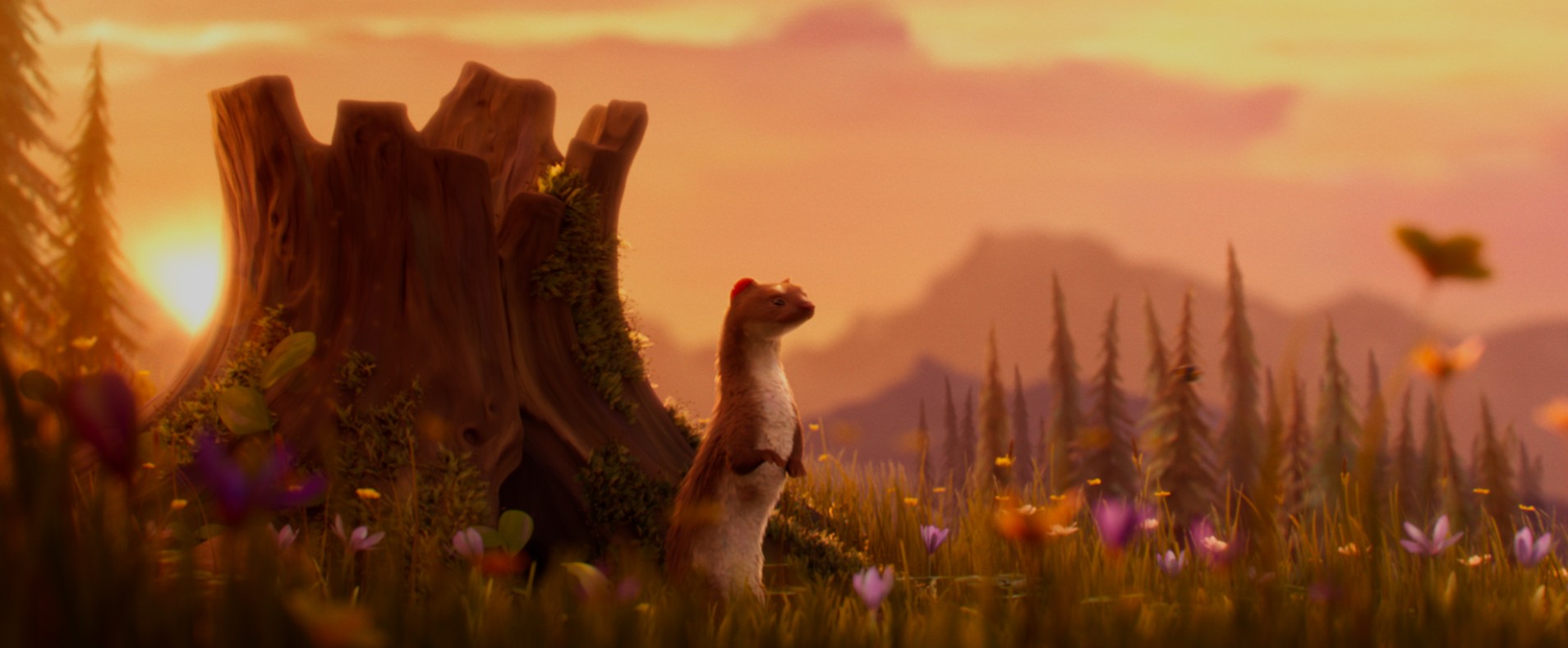

Frustrated by having to live with noisy neighbours, the cockatoo mammal sets off in search of a new home. But what she discovers may well make her miss her original mountain pasture…
Taking a malicious pleasure in torturing Lalao, their grumpy stoat whose life quickly turns into a nightmare, the team of eight ESMA students delivers an emotionally rich graduation short of great technical quality. A golden opportunity to highlight the skills they have acquired during their training, and to explore the tools they have discovered.
It’s a job that couldn’t have been done without particularly strong teamwork and structured collaboration of an almost professional standard. To find out more about what went on behind the scenes of this film, we looked at the artistic choices and technical challenges faced by Marine Camps, Éléanore Chaboud, Chloé Escot, Mélina Lebeurier, Camille Lecture, Paola Navarro Castillo, Marie Rousselet and Alizée Waquez.
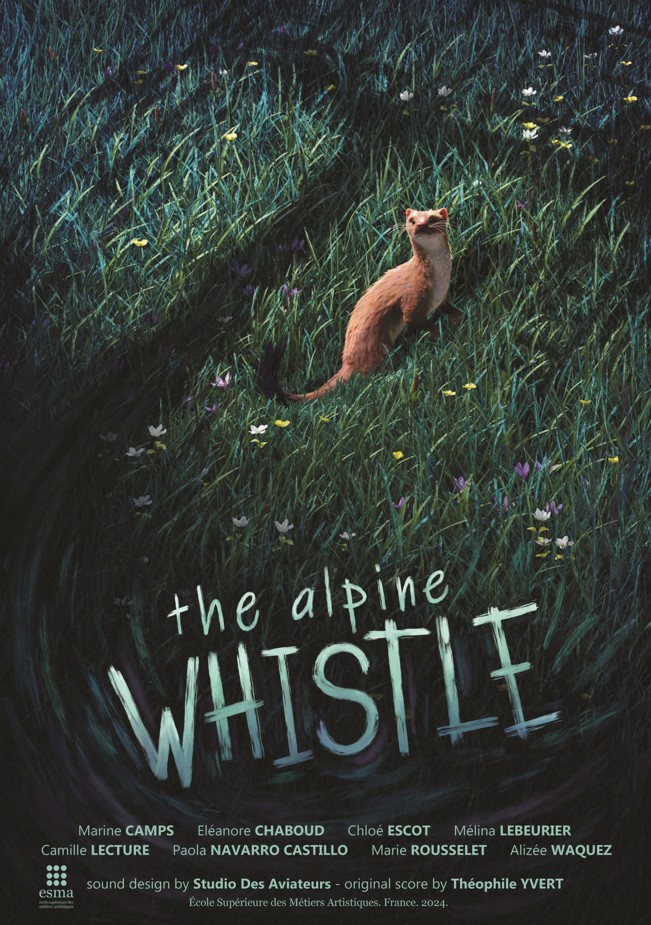
An opportunity to find out more about how students in their final year at ESMA work, and their approach.
The mountains as a starting point
It was first and foremost their love of the mountains and Alpine landscapes that prompted the directors to embark on this story, setting the scene for this short film.
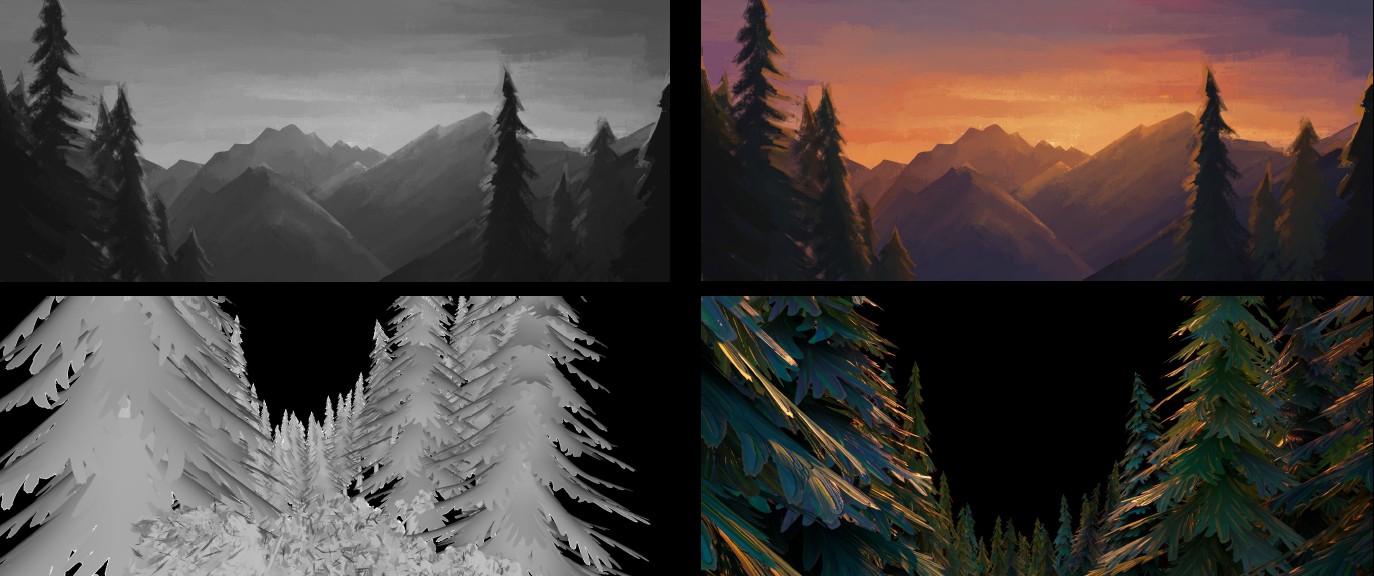
“We wanted to showcase this beauty, so we decided to represent it as a painting, as if an artist had wanted to redecorate this environment with broad brushstrokes.”
This approach enabled the team to reveal both the gentleness and fragility of these landscapes, which are very quickly abused by the human hand. “It was also a way of playing on the public’s senses, particularly touch, to immerse them as fully as possible in this beautiful universe.”
A story at ermine height
By using the ermine, a small animal whose view of the world differs radically from our own, the team gave the mountain a singular character by playing with the different scales to build first wonder and then tension.
“Lalao, our little stoat, seemed the perfect choice. It allows us to observe the repercussions of human activity in these areas and to feel them in a very carnal way through her emotions, to experience them through her.
At Lalao’s pace, we learn to appreciate what’s around us [unlike the grumpy ermine], and as we discover more and more intense dangers, we savour more and more of what we had before.
The point of view of the little mustelid on the ground places the spectator in a gigantic universe where every element seems to be an obstacle, a potential danger. In this way, we can afford to exaggerate, distort and transform the scenery.
It’s enough to convey a growing sense of anxiety, which is largely conveyed by the staging and the team’s finely-tuned lighting effects, which quickly create an anxious, violent world. And it’s all done with terrifying shadows, sinister red tones and brutal textures.
Building a world of sound to reinforce impact
“This exacerbation doesn’t just stop at the visual, but also affects the sound,” adds the team. “In fact, sound punctuates the narrative: a cacophony when it comes to nature, as opposed to the icy silence of the construction site. We wanted to emphasise the dissonance between humanity and the ecosystem. The sound dimension of this short film is therefore very important: it feeds the film and reinforces Lalao’s tribulations, while at the same time enhancing the impact of the resolution, when the ermine manages to regain her serenity and initial well-being.”
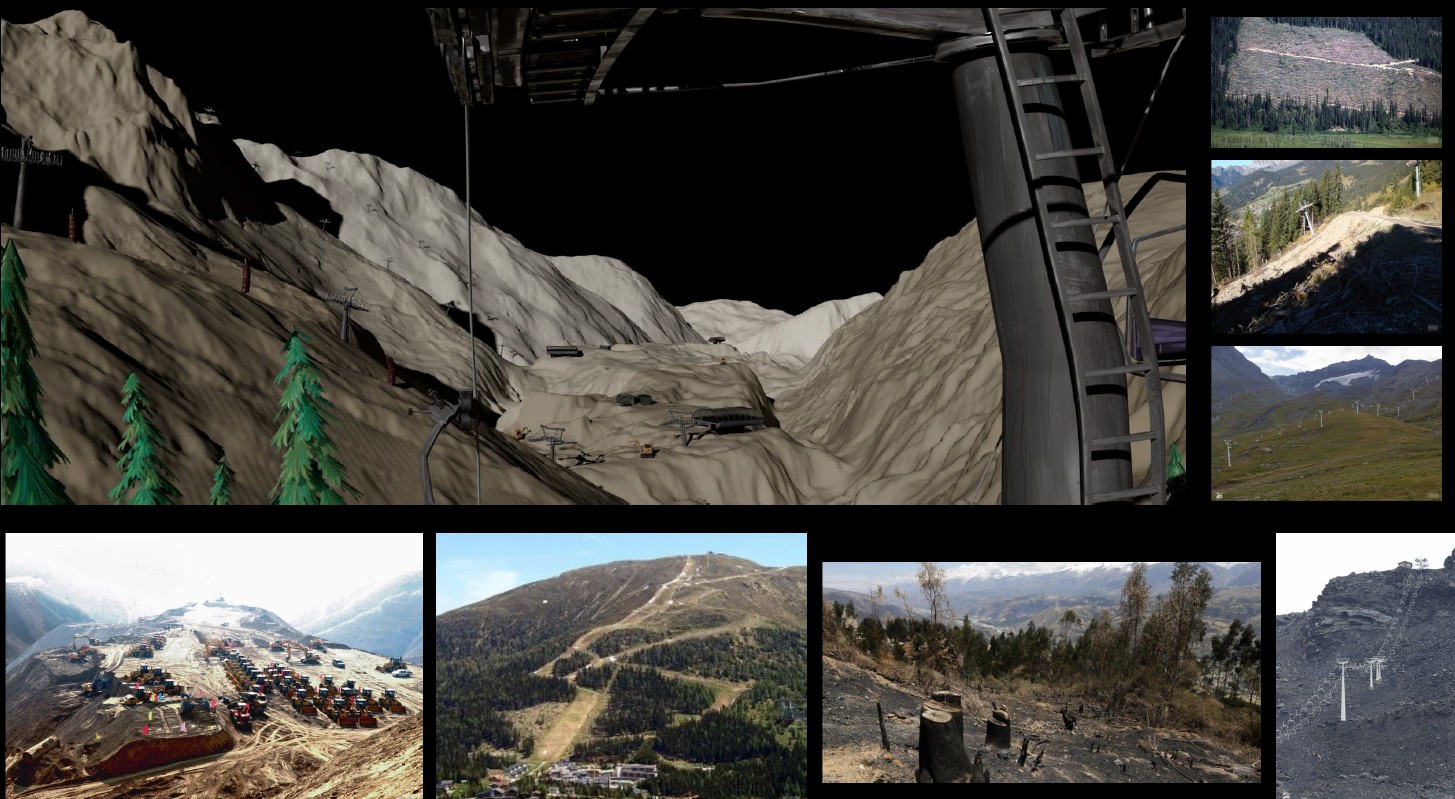
How did the team meet these many challenges? There’s only one answer: through meticulous work, based on skills developed during their training, but also thanks to their inventiveness and creativity. A cocktail that would not have been possible without a collaborative dynamic based on listening, mutual support and team spirit.
Mastered software for consistent, high-quality visuals
To bring this world to life, the Alpine Whistle team used a wide range of tools, starting with Maya. “We chose this software for its general approach to 3D, allowing us to go from modelling to animation, via rig”, explains the team. But it wasn’t the only software used for this short. “In the same way, it was necessary for us to link the different media together, particularly in the transition from Maya to Houdini, which we chose to facilitate the creation of the characters’ groom and their simulation.”
An essential aspect of the project, given the number of shots involving close-ups of the ermine’s fur, animated with finesse.
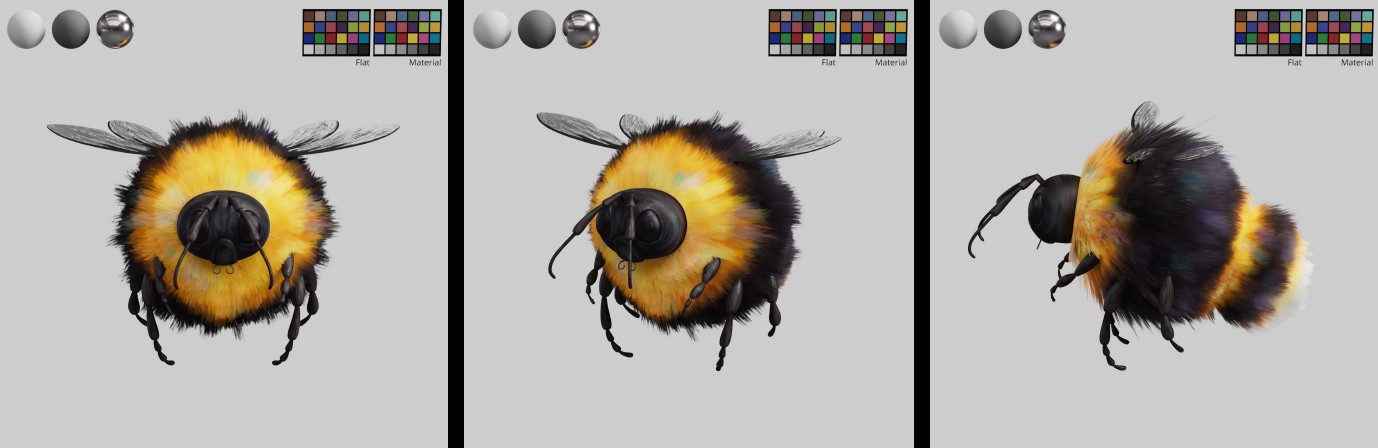
“It was often a case of transferring data and moving quickly from one software package to another to test, redo and improve, particularly for the hair texture. We needed to go back and forth a lot between Substance, the texture software, and one of Maya’s rendering engines, Renderman, whether for aesthetic or purely technical reasons.”
Finally, to finalise and homogenise the visuals for the entire production, the team used Nuke for compositing. “It was this tool that enabled us to create an overall coherence and fine-tune certain graphic details.
Finally, all that remained was to edit the whole thing on Da Vinci Resolve to achieve the continuity we were looking for, and end up with a final result that lives up to our expectations”. It’s a top-class result, and a quality calling card that will enable the newly-qualified artists to enter the highly competitive animation job market.