
As the sole survivor, your boss decides to entrust you with saving the company.
You’ll have to climb the floors of this tower full of traps, where each level (and each loop) will bring you closer and closer to the truth.
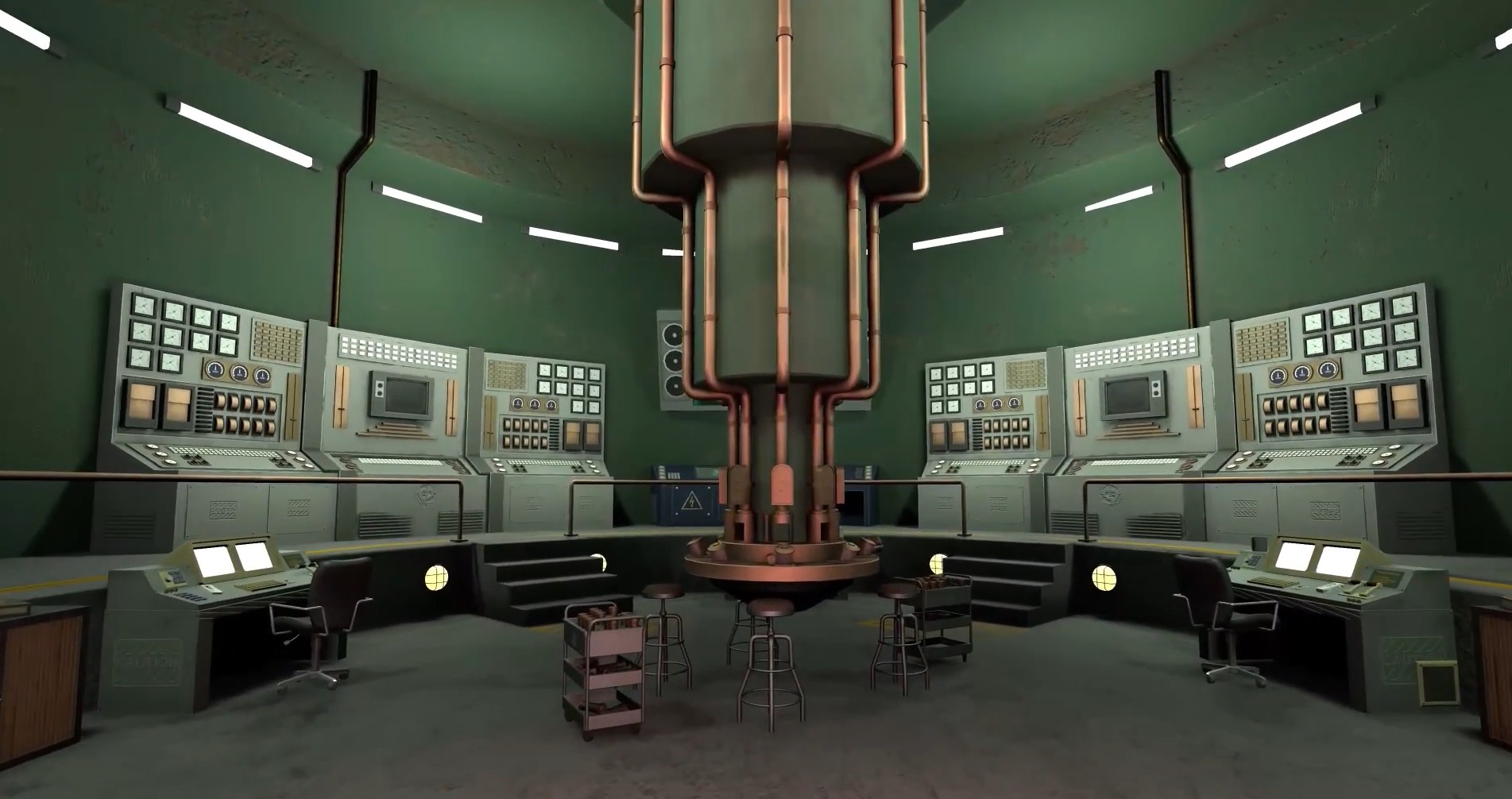
Designed, developed and produced by a team of nine students from ESMA Toulouse, Unclock is a game by Claude Blanchet Babin, Ferdinand De Gouzillon De Belizal, Maxime Ginguéné, Baptiste Guilcher, Pierre Pavoine, Samuel Roux, Alan Salaün, Gabin Simonard and Arnaud Tu. It’s a long-term project, inspired by hits like Portal and Outer Wilds, halfway between an infiltration game and a rogue-like game, with a little horror thrown in for good measure. To gain a better understanding of the development process behind such a project, we immersed ourselves in the development ofUnclock, with its team.
Game design and mechanics
First and foremost, it was the development of the narrative and the main gameplay principles that kept the team busy. Using a study carried out by Quantic Foundry and based on data from over 1.25 million gamers(available online), the designers identified the main motivations that drive gamers to take up a video game, and built their game mechanics on this basis. “The player profile we chose to target is that of players who are interested in stories and their depth“, the team explains. “They prefer single-player games without cooperation or competition, and they want a strategic aspect that requires them to make decisions throughout their experience. Beyond this typical profile, we have nevertheless broadened the target by integrating challenges and an increased level of difficulty, so that the experience can be enjoyed by more seasoned players.”
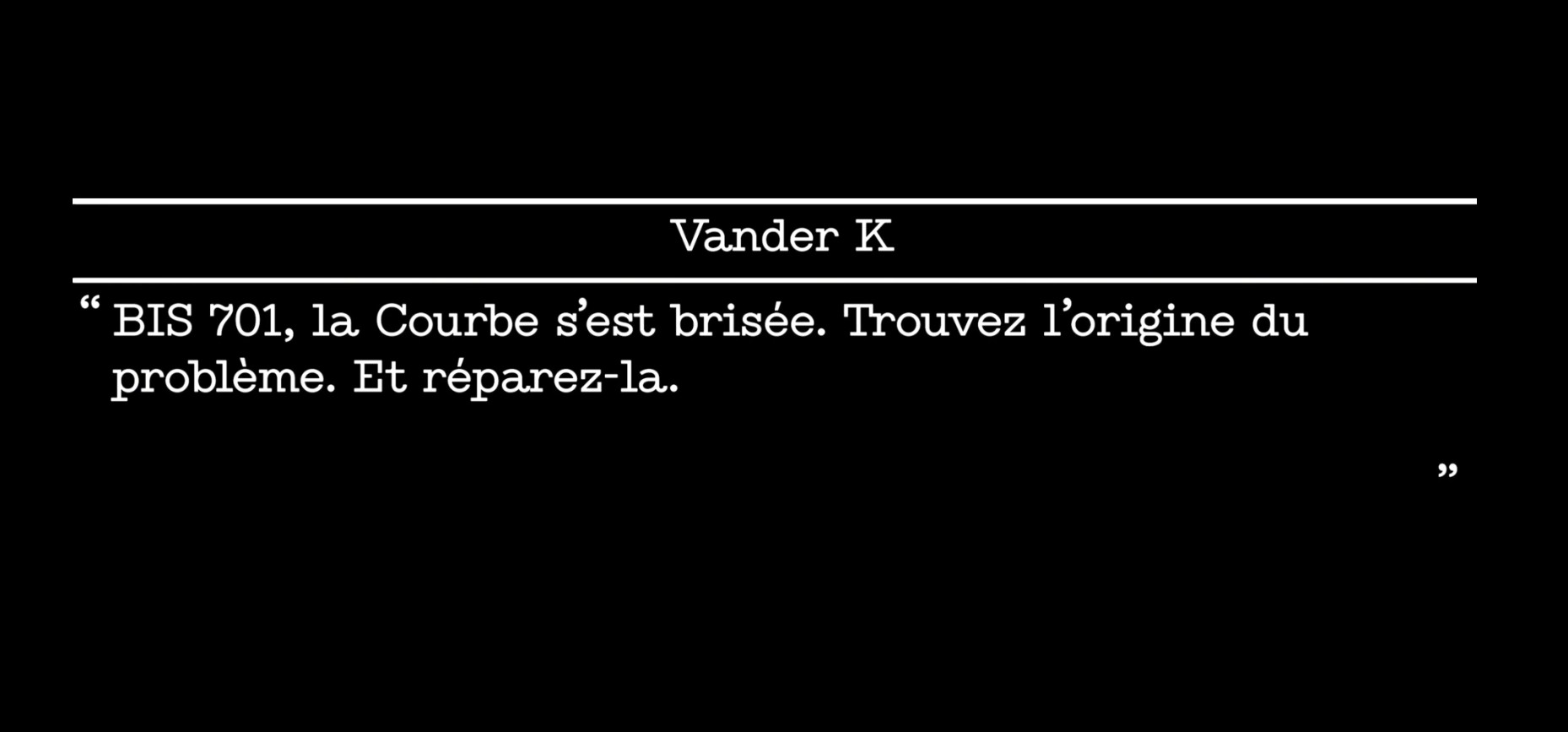
As the adventure progresses, this rogue-like game allows players to improve their skills, unlocking new abilities and upgrading them to develop new strategies. Each death is an opportunity to rethink the approach, to gain more effective powers and upgrades, and to create a real sense of achievement and evolution for players.
“In terms of experience and game design, Unclock consists of ascending a tower, most of whose floors had to be designed procedurally. Some of them, however, are fixed and don’t change from one game to the next, marking important stages in the game. Each level has a passage that leads to the next floor, and regularly a reward room is available.”
A sense of ascension that is reinforced by a setting that gradually decomposes, right up to the denouement and resolution of this plot that deals not only with bureaucracy, but also with alienation at work and manipulation by an oppressive system.
Creating a level design around office work
Having laid the foundations of the game, which is part infiltration and part rogue-like, the team turned their attention to putting these concepts into practice in an office environment. Armed with a stapler, the player must navigate increasingly complex levels, avoiding the enemies embodied by the hostile robots on the one hand, and avoiding the alarms triggered by the quality of his infiltration on the other.
“To test this gameplay, we developed a prototype level that allowed us to put the player in confrontation situations with enemies, in infiltration sequences, giving them the chance to choose and test different approaches.
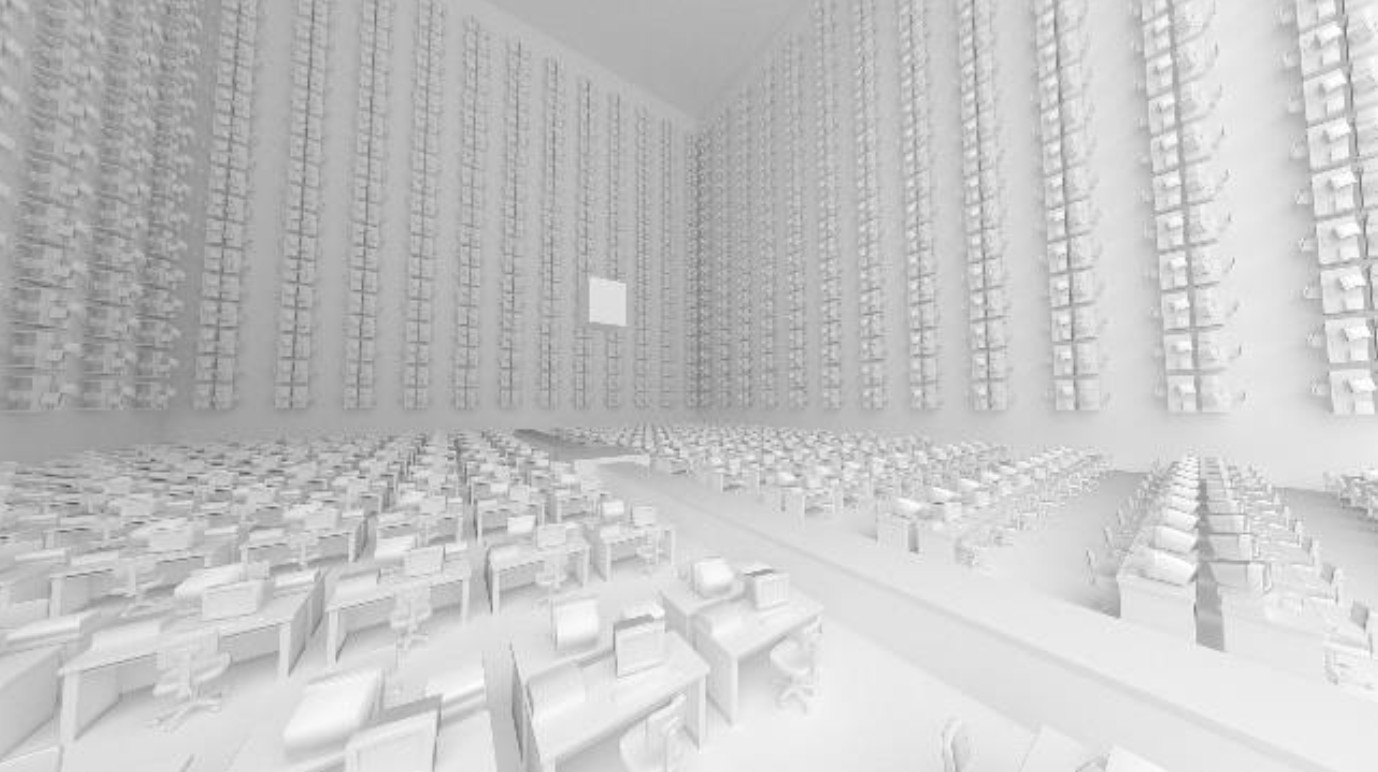
This prototype level also enabled us to consider the limitations of procedural development. Even though this system allowed us to address the issues of randomness and replayability in relation to the rogue-like model, it also entailed fairly heavy technical constraints.
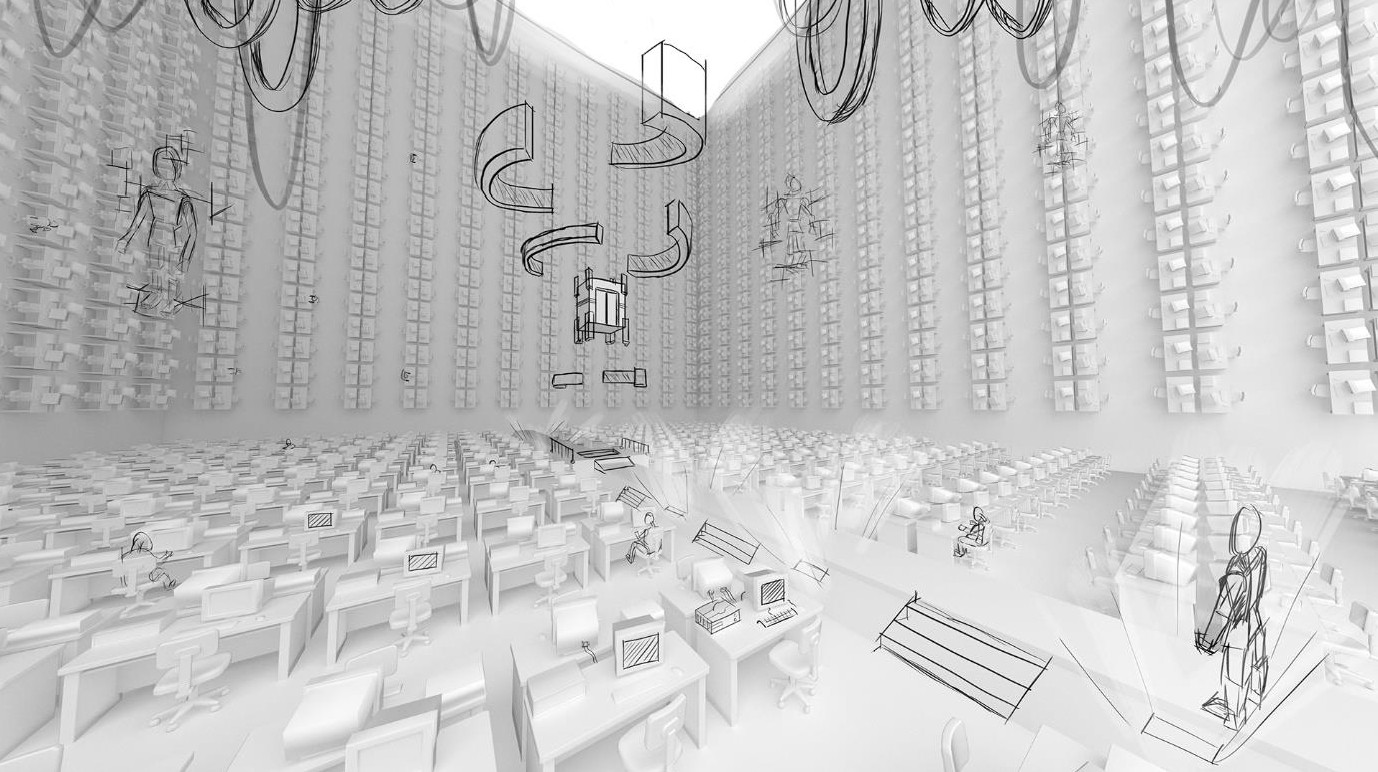
At the same time, the traffic in a level like this wasn’t interesting and tended to lose the player, so we finally decided to abandon this method.”
Multiple influences
Both in their gameplay and in their artistic direction, the Unclock team has drawn on a rich iconography ranging from cinema to television series, via video games, illustration and painting. “The environment in which the player evolves can be described as a parallel dimension”, the team explains.
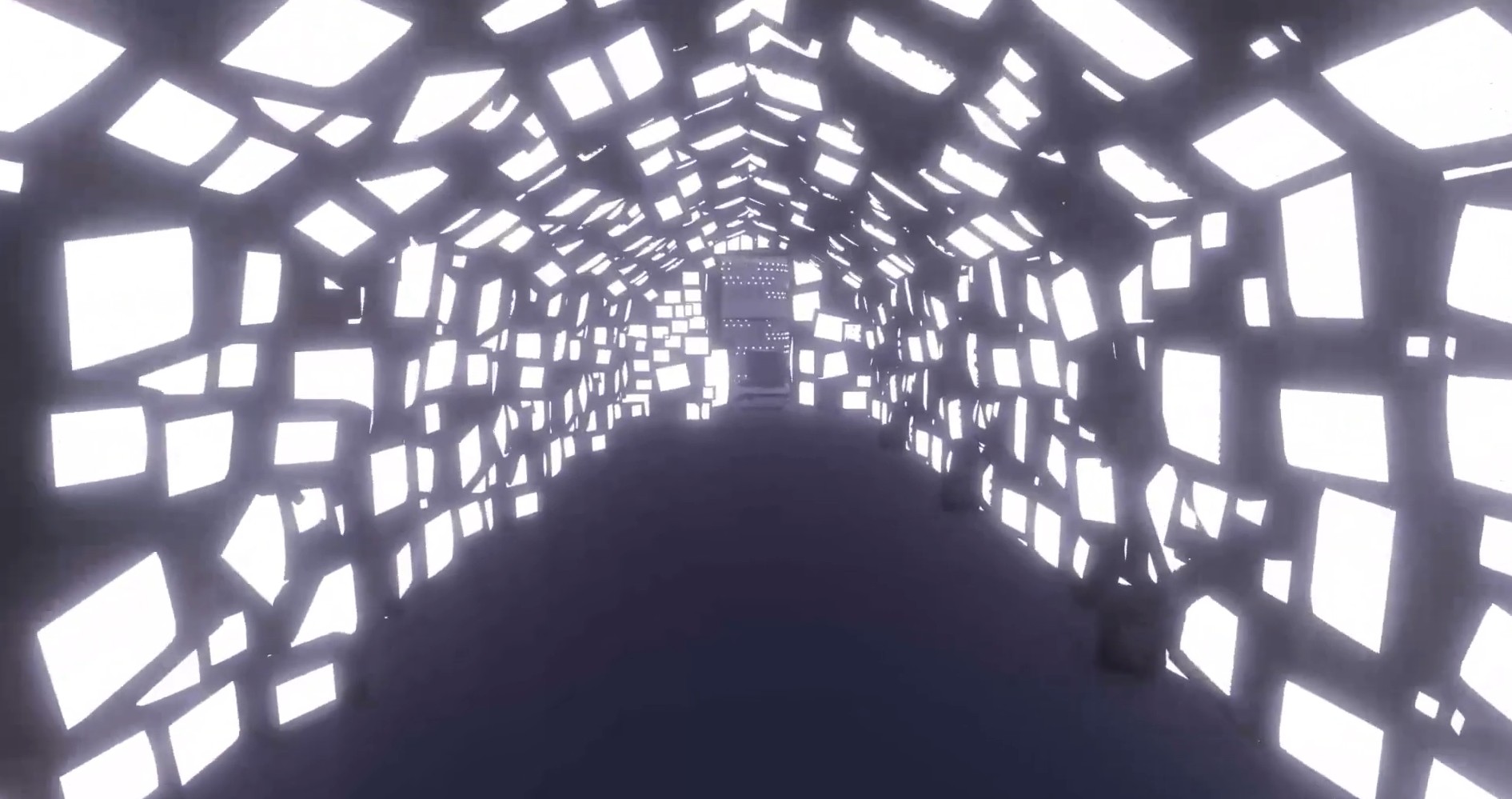
It is an empty, misty place in which solid objects gradually deteriorate and become increasingly abstract. This deconstruction is achieved through the accumulation of forms in order to create an echo and a dilation of time.”
An environment inspired by Franck Ghéry’s architecture, with its distorted structures full of contrasts, but also by films such as Doctor Strange, or the illustrations of Frantisek Kupka. “You can also find these little shifts in the accessories, furniture and decor in our tower.
The idea was to create a strong contrast between the real world and the world of Unclock, which is why we also worked on the colour and texture of this universe. An environment devoid of life, because we know that a living world is a colourful world. To achieve this contrast, the original colours are extremely muted and blended around the grey colour, in the style of the game Nier: Automata.”
An immersive and captivating experience
Nourished by these many influences and served by their solid training, the Unclock team has risen to the major challenges of this ambitious project, to deliver a truly immersive and captivating videogame experience.
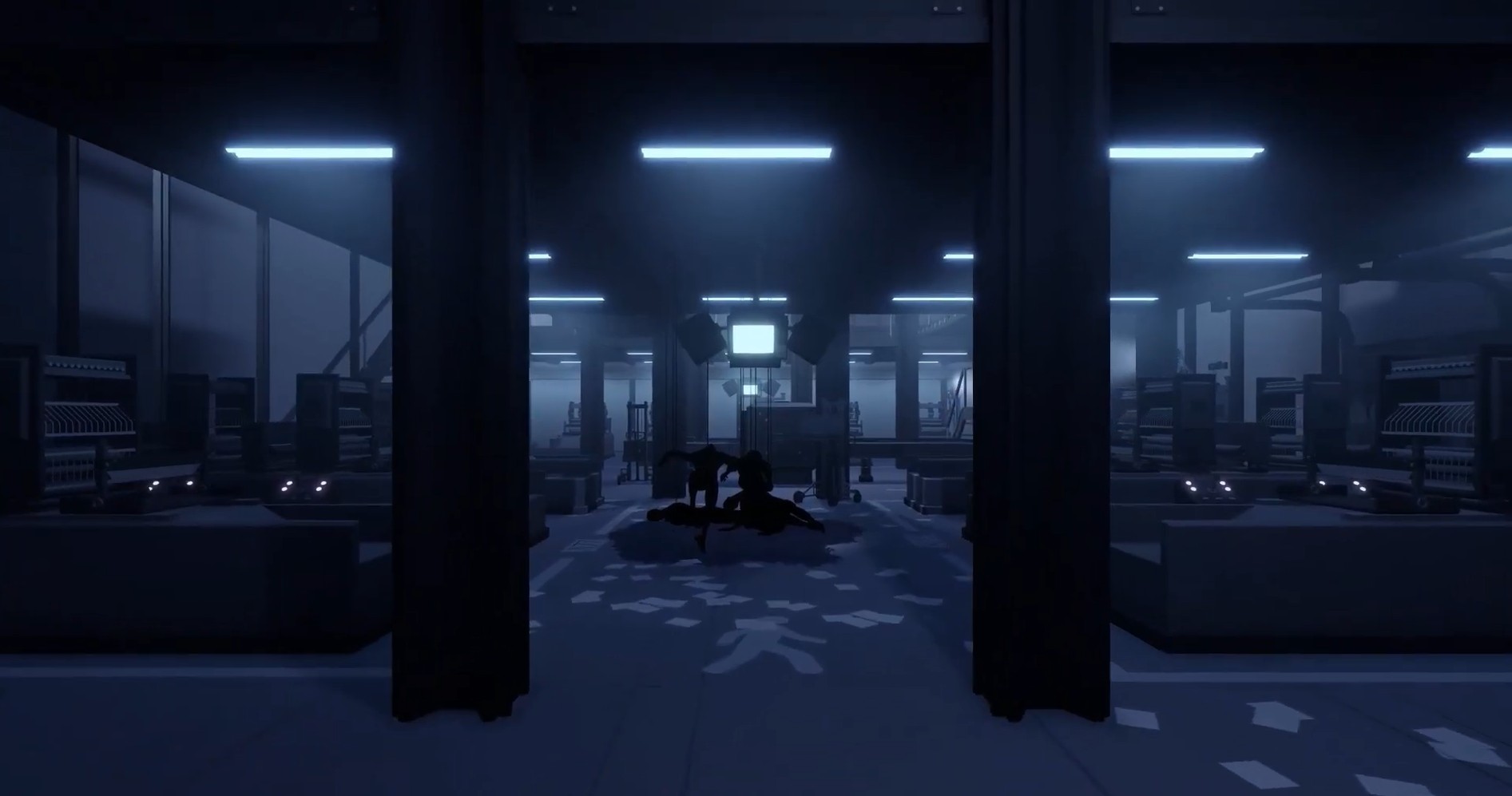
It was a long-term project, but one that (through close cooperation and with the support of ESMA’s teaching teams) enabled them to immerse themselves in a production process similar to those they are joining today, by joining the sector. A first experience of project management, a necessary asset to understand the production methods of the video game industry, and to land a job there.
Find out more about the Unclock game, available here :