A great adventure
A quest at the height of the undergrowth, yet full of adventure and beautifully directed by a multi-influenced production team.
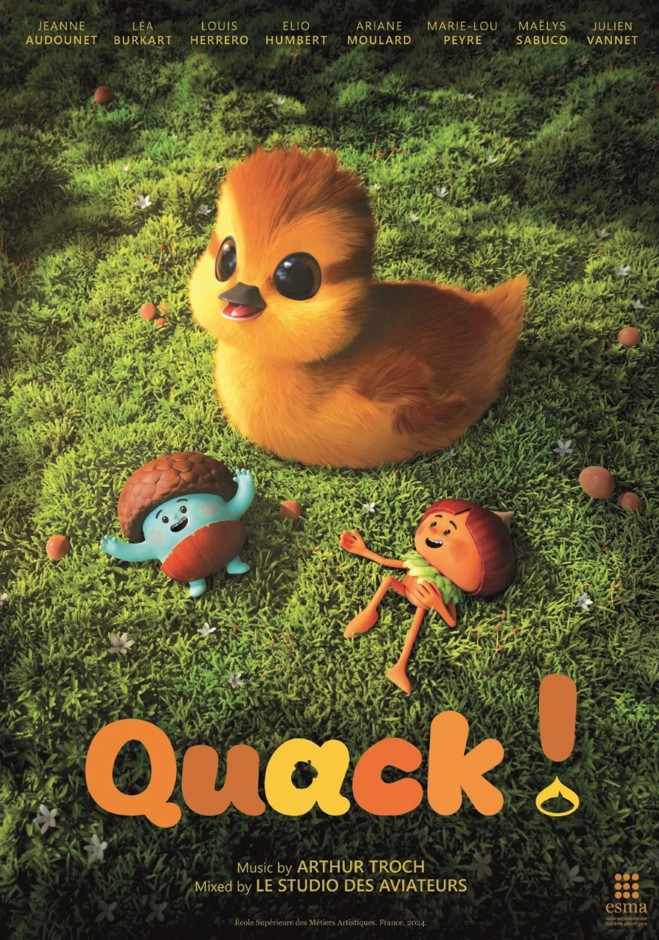
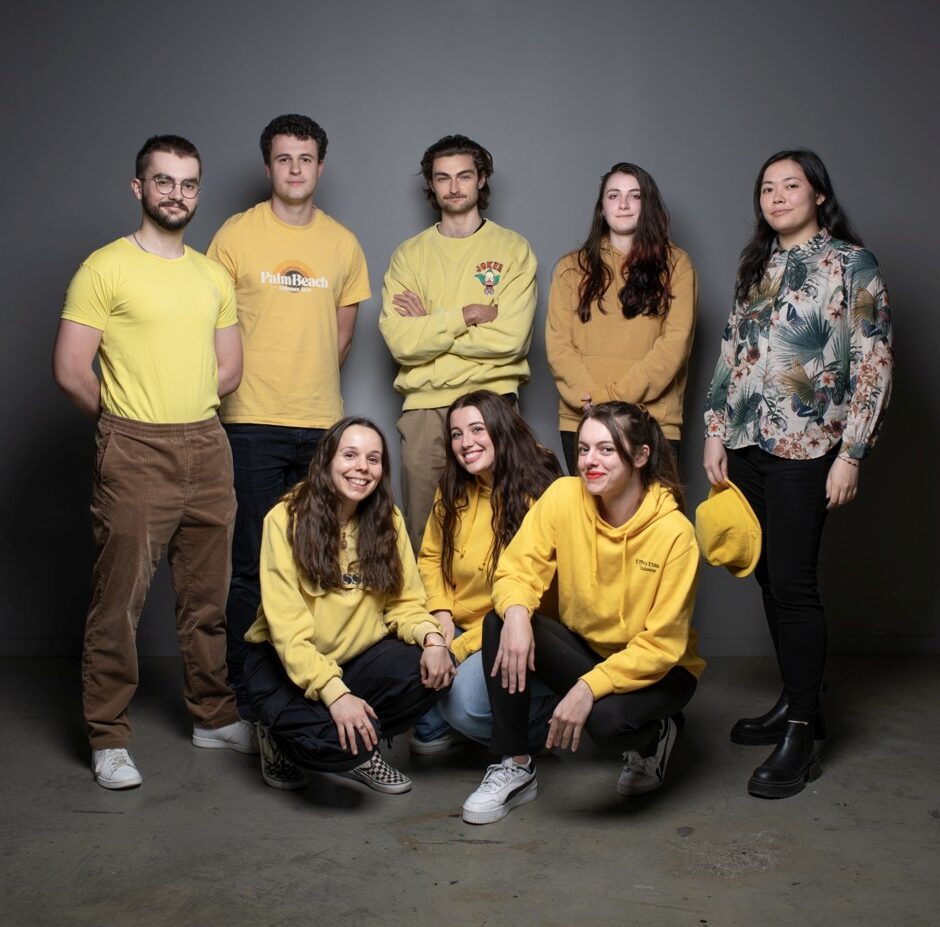
To find out more about the behind-the-scenes production of this ESMA graduation short, we spoke to Jeanne Audounet, Léa Burkart, Louis Herrero, Elio Humbert, Ariane Moulard, Marie-Lou Peyre, Maëlys Sabuco and Julien Vannet.
We take a look at the technical challenges they had to overcome to bring these lush environments to life, inspired both by the dreamlike worlds of Hayao Miyazaki and by the very nature of European forests.
Can you tell us how the film came about?
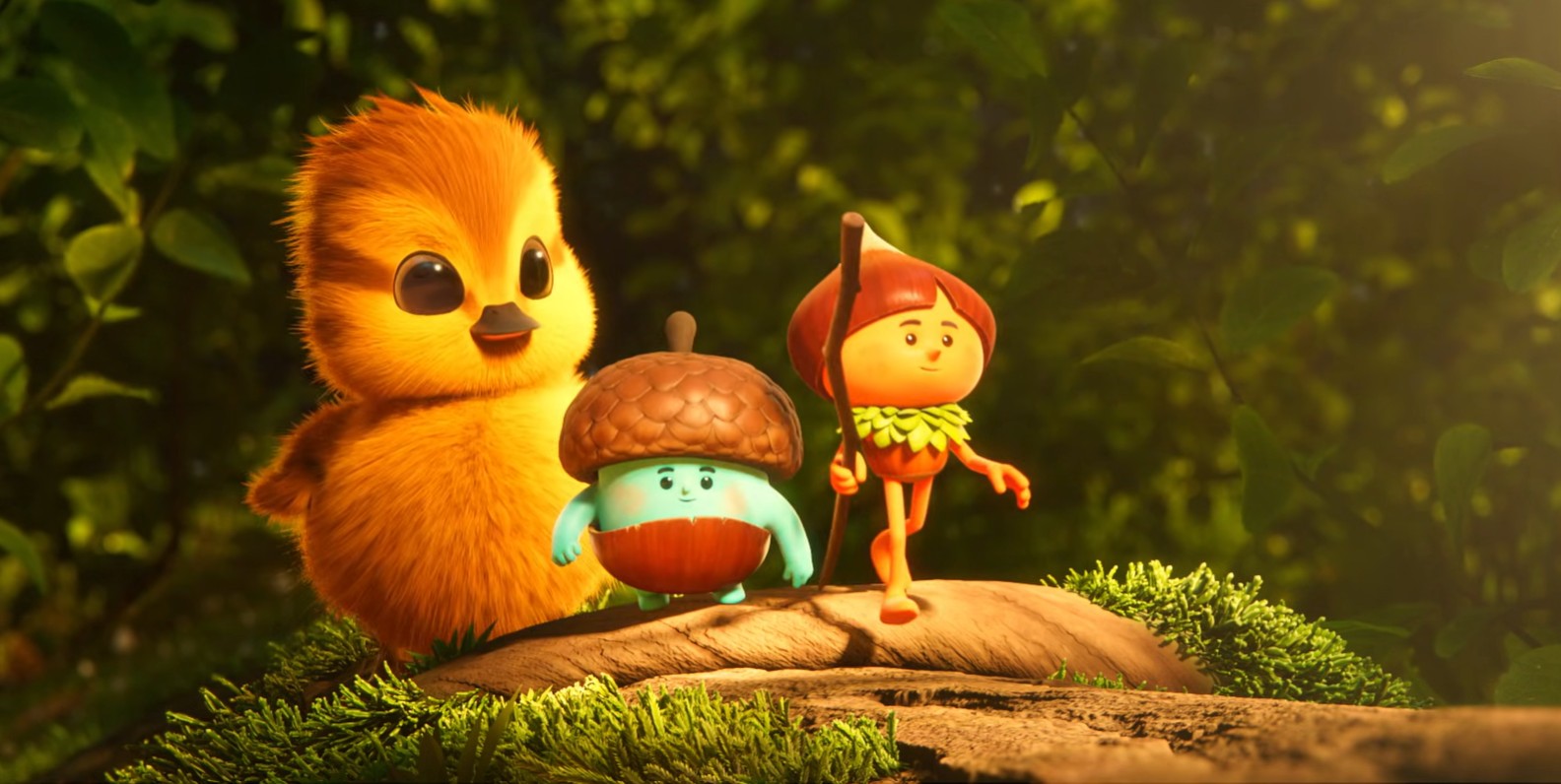
The film was originally the brainchild of Elio Humbert, a member of our team. He was inspired by works such as Arrietty: Little World of Thieves by Studio Ghibli, the series Oni: Legends of Thunder (directed by Dice Tsutsumi and broadcast on Netflix), and the macro photographs of David Bird. These influences can also be found in our characters. These multiple sources were the source of our story, about little creatures evolving in a luxuriant forest.
Initially, the idea was to develop a real action-adventure story, with a touch of magic, featuring these characters. Over time, however, the project evolved considerably. And while the idea of recounting the adventures of these little creatures accompanying a duckling through the forest remained intact, the overall tone of the film changed. The story has gradually moved away from magic and action towards a simpler style, designed above all to be accessible and suitable for a younger audience.
What guided you in your narrative choices?
We always wanted to focus on the relationship between our three protagonists. Their friendship and complicity, similar to that between brothers and sisters, are at the heart of the story.
Little by little, the story began to take shape for an audience of very young children. Like films such as My Neighbour Totoro, we chose to move away from a classic storyline centred around protagonists and antagonists, in favour of a gentler, more soothing approach.
The script is based on simple, clear situations, with no dialogue, to keep it accessible even to the youngest children. This approach is also reflected in the aesthetic choices we’ve made: warm, colourful backdrops, devoid of violence, to reinforce the caring, reassuring atmosphere.
How did you create your main characters, and how did they evolve over the course of the project?
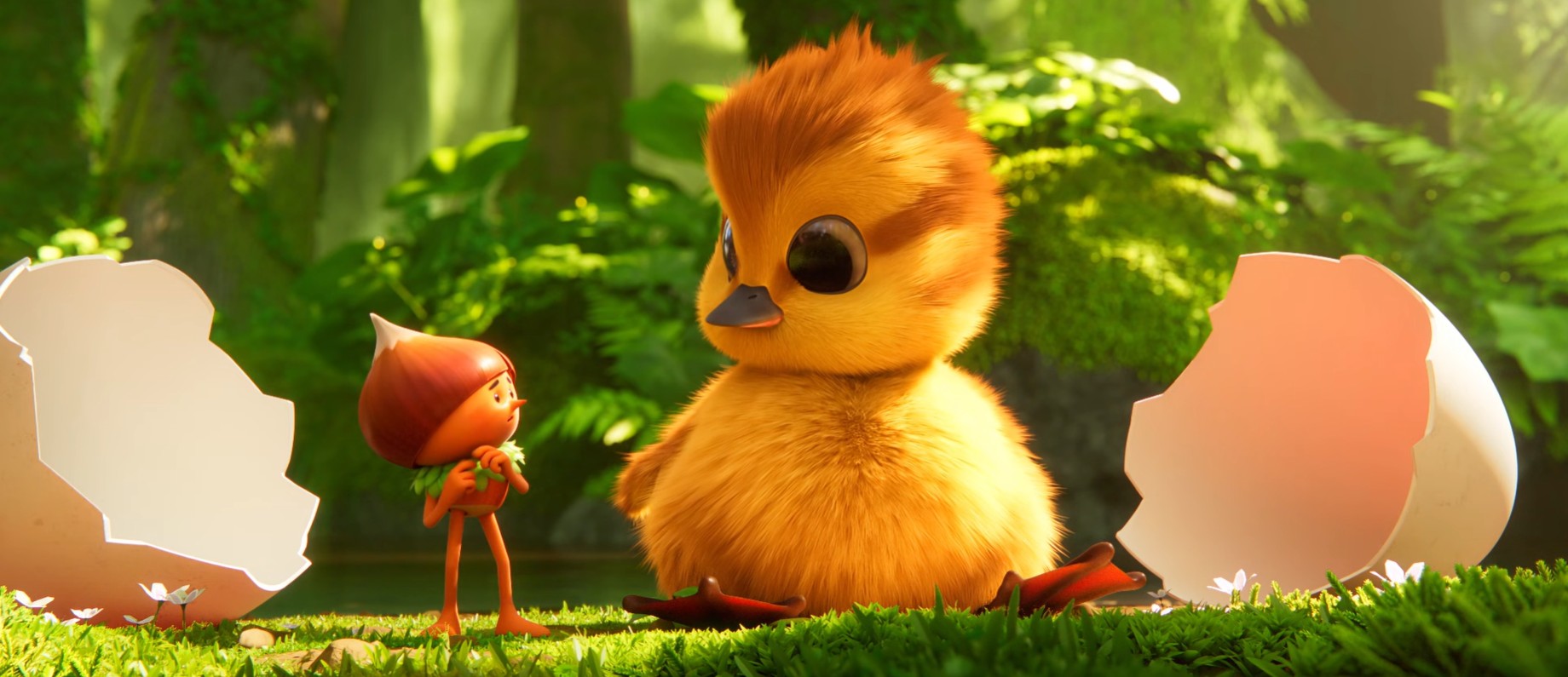
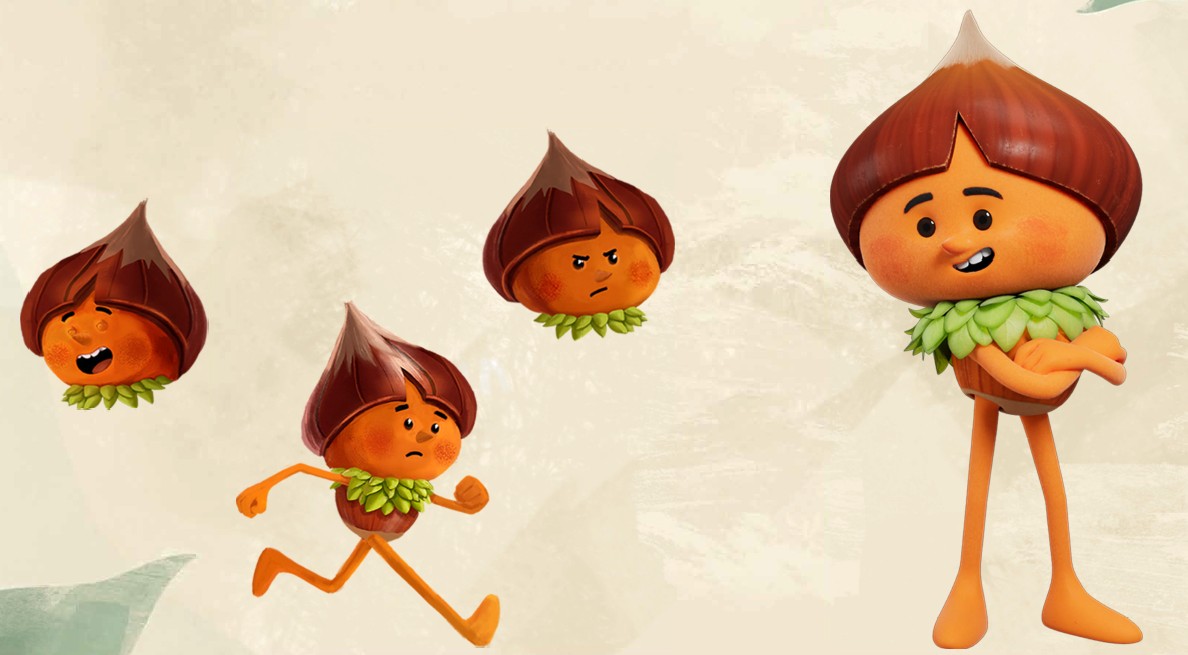
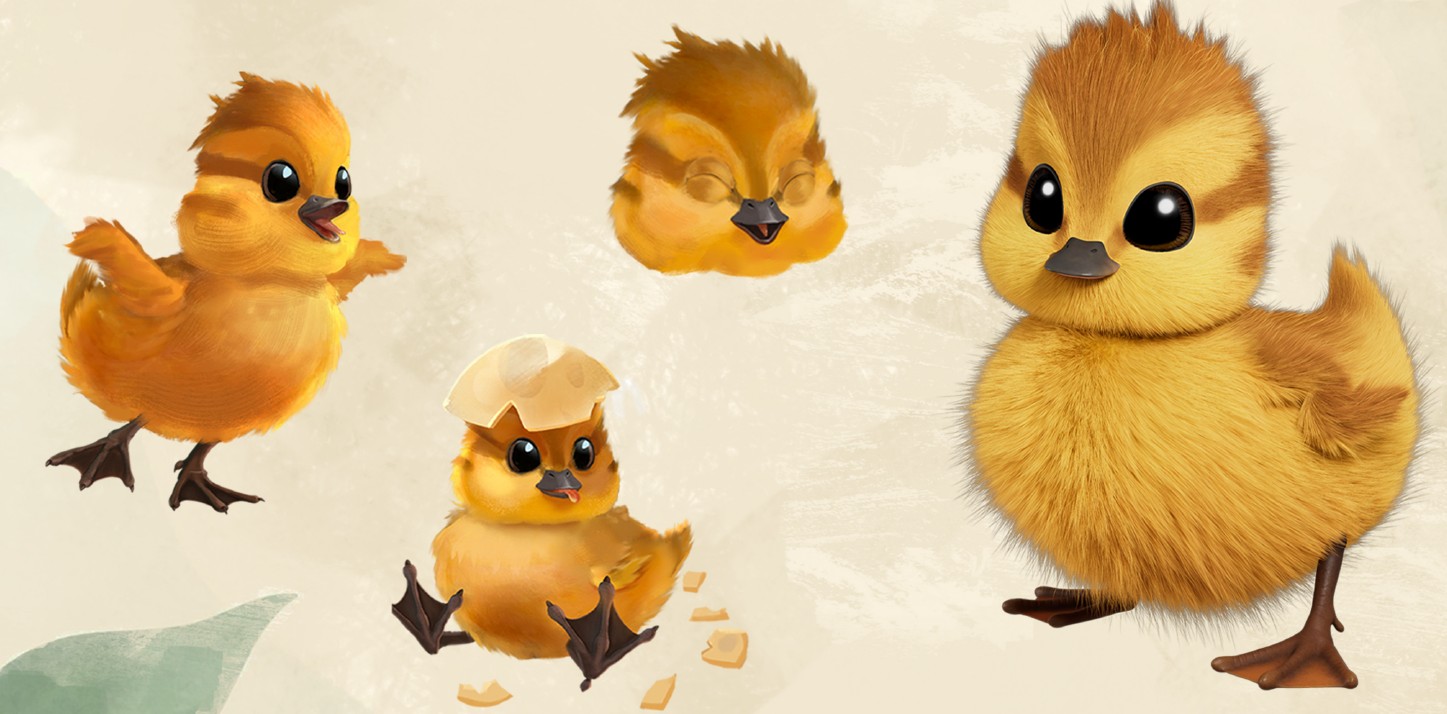
As mentioned above, it was the work of Dice Tsutsumi that guided Elio during the initial design phase. The characters are very rounded and cute, and were also influenced by the work of David Bird and his little wooden figurines, which were certainly reminiscent of our little chestnut !
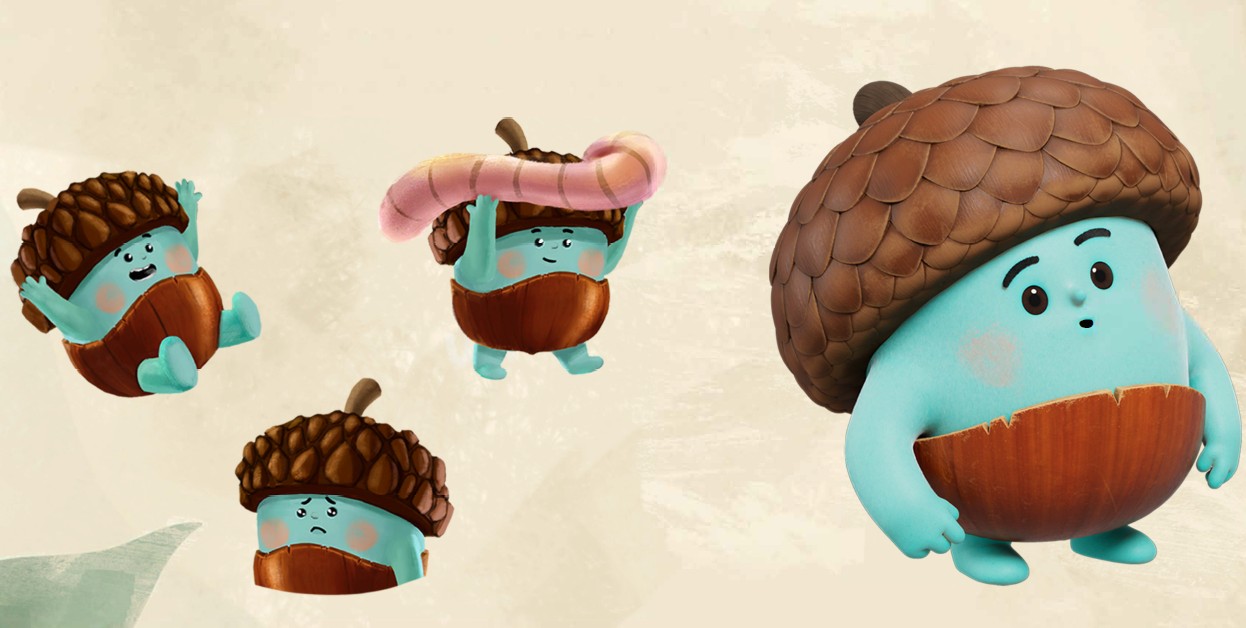
Nevertheless, for technical reasons of rig and animation, the character of the little acorn has evolved a little. His body shell, which wasn’t originally a nappy but a sort of plain jumpsuit with two extra holes for his arms to stick out through, has been reworked to prevent problems with gesture animation.
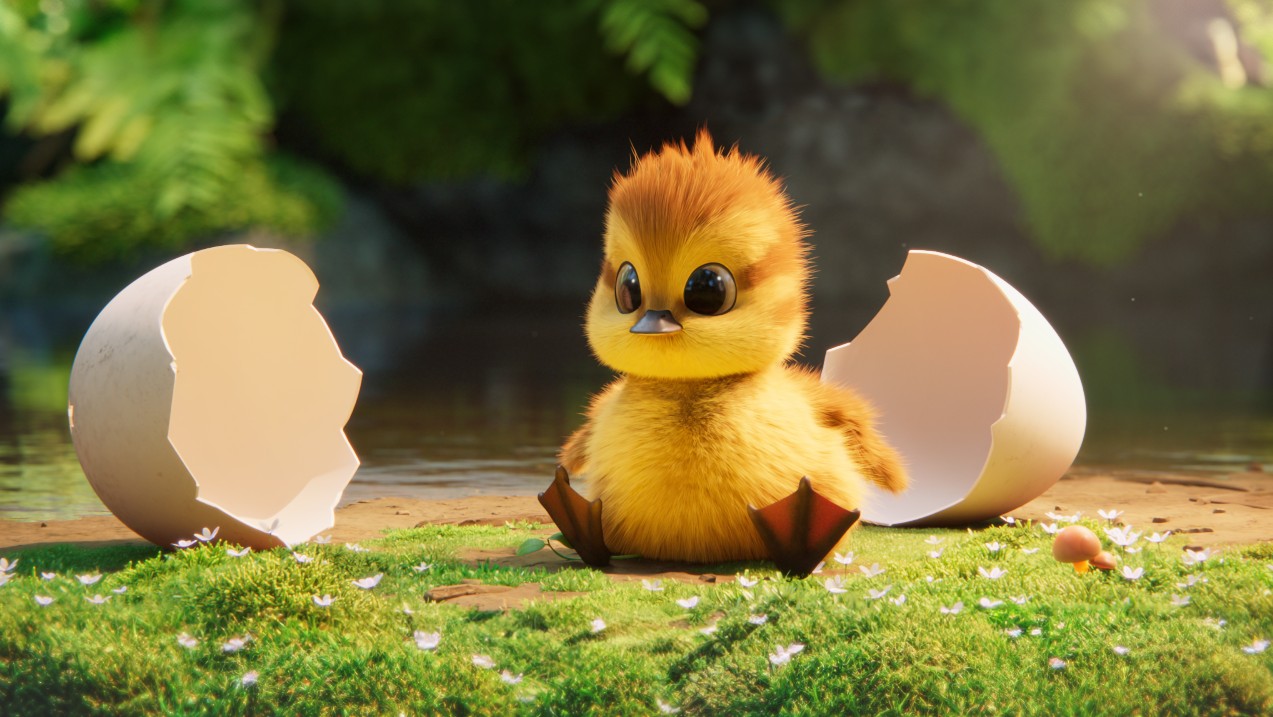
Similarly, our duckling, who initially looked much more clumsy and silly, has been reworked to appear cuter. Its realistic appearance (particularly in terms of the fur) would certainly have required too many iterations in relation to the time available for this production.
Do you have any other influences or styles that have helped you create this universe?
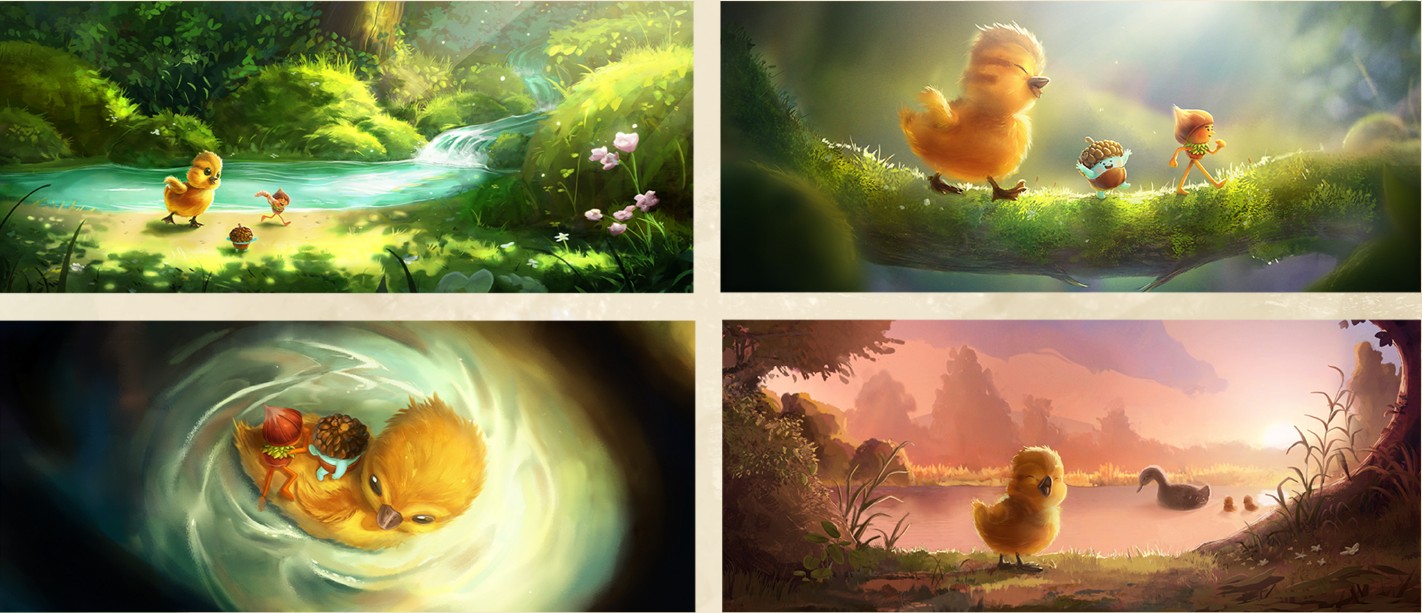
Over and above the characters, Dice Tsutsumi’s work was a great guide to us in its entirety, whether it be for the lighting, the aesthetics of the characters or even the treatment of the set.
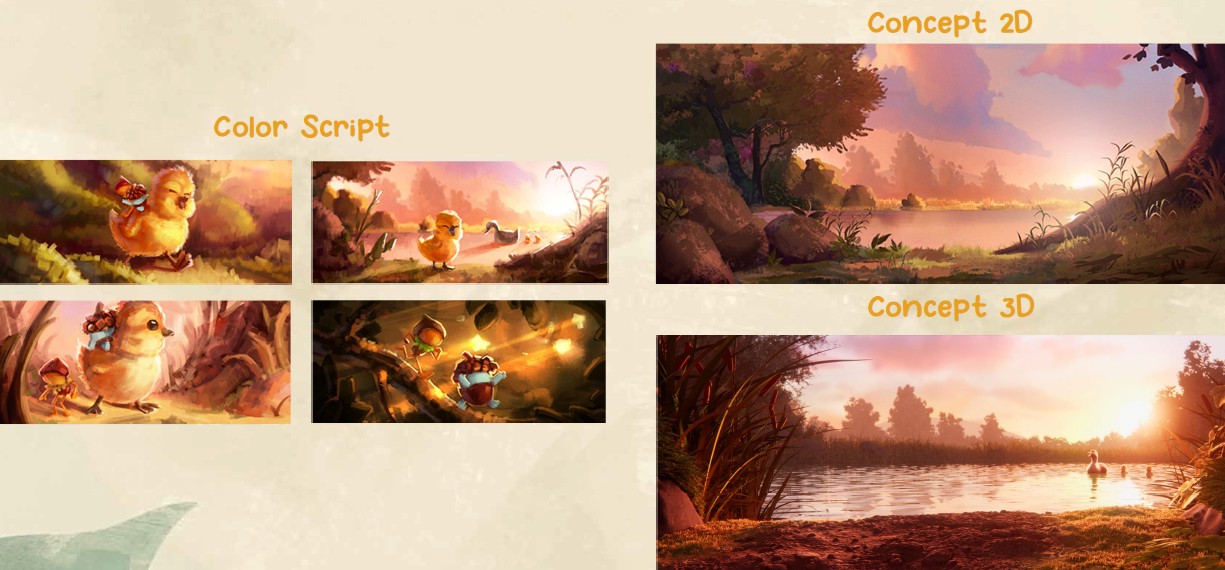
We also drew a great deal of inspiration from the European forests of southern France, particularly their mosses and ivy, to create these worlds and tones. Miyazaki, and his way of representing nature (poetic, always present on screen but without inundating the viewer with information) also guided us during this production.
For the duckling and the sunrise and sunset, we used the Pixar short film Piper as a reference.
What were the main technical difficulties encountered during this production?
We had quite a few problems with the development of the moss, the creation of the ground and the moments of contact between the characters and the simulated water. Generally speaking, all the natural elements required considerable development work. The same goes for the multiple leaves hanging around the neck of our chestnut character, which also posed some serious animation challenges.
From a technical point of view, we immediately decided to set up a USD pipeline via Solaris on Houdini.
This method enabled us to integrate the very many elements needed for our sets, while retaining the flexibility to modify each element individually.
What’s more, this configuration made it easier to integrate the various FX, particularly fluids, present in the film.
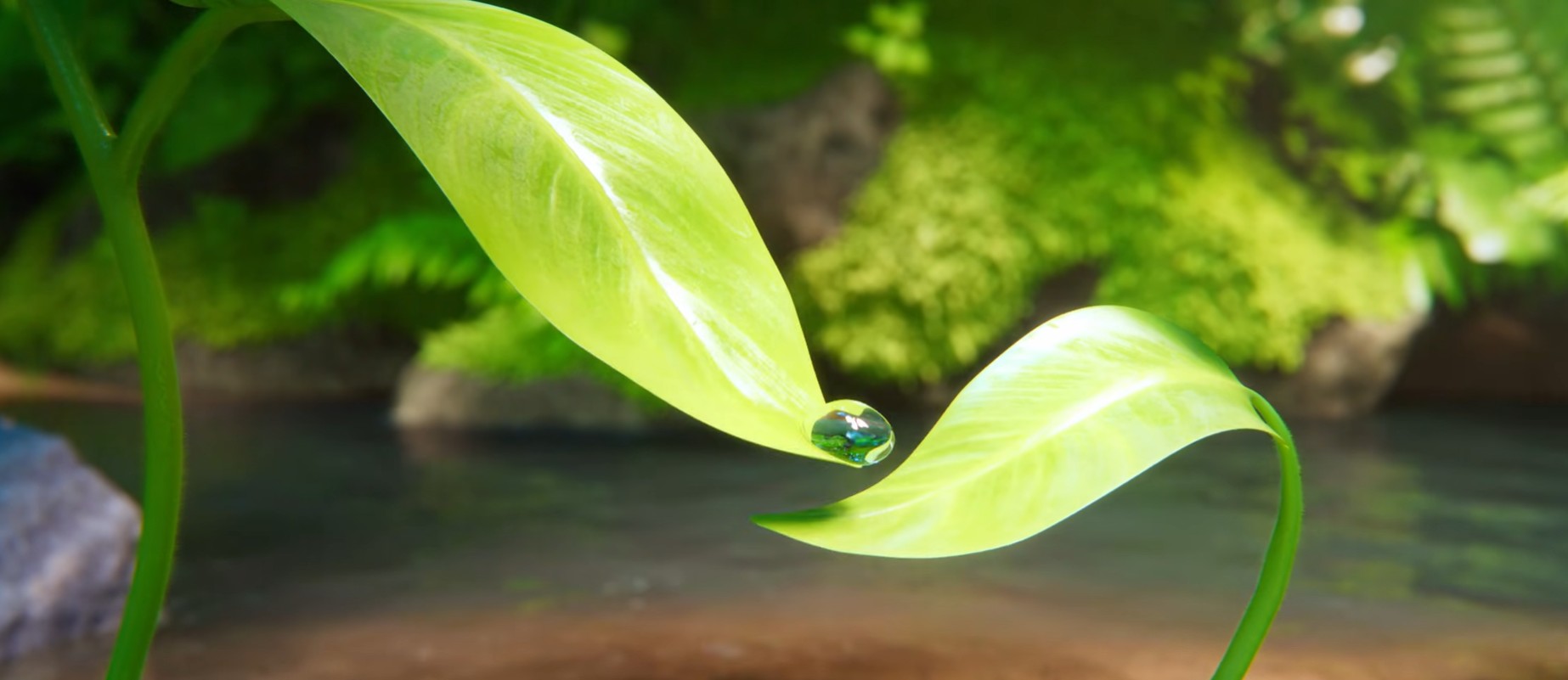
We also had to intelligently separate the animated parts that we had to render in their entirety from the foreground and background parts that could be rendered only once, as many elements such as plants, water or skin were particularly time-consuming to render.
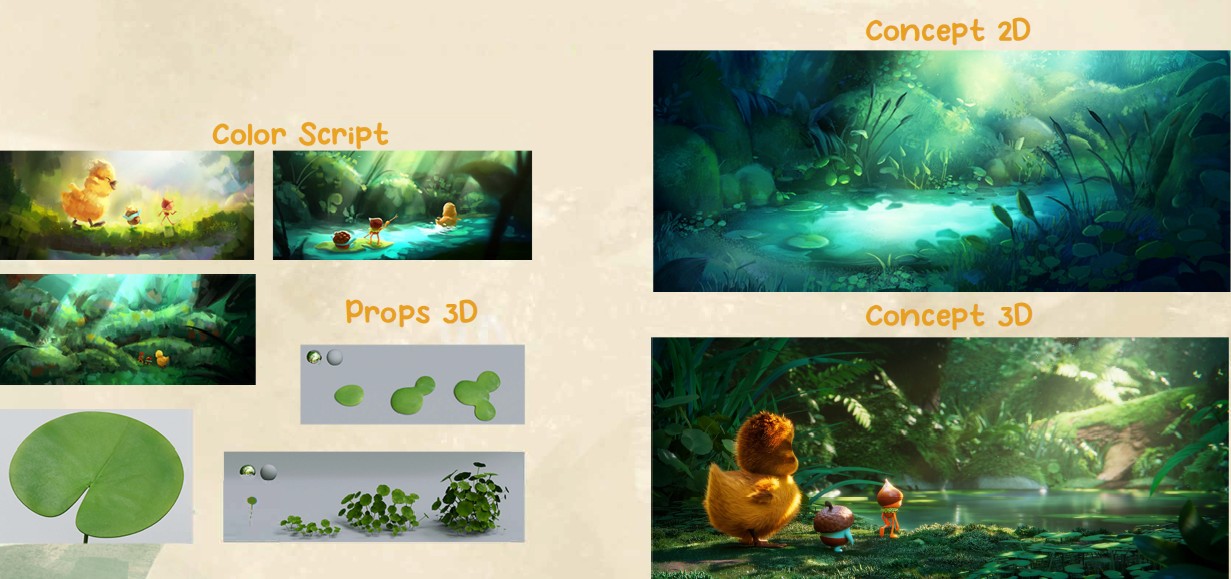
To optimise the rendering, we used several techniques: for the foam, we learned to work non-destructively and to use scattering effectively to automatically disperse the elements on the surfaces. For the water, which took a long time to calculate, we sometimes rendered the background shots without movement, then added the movement in compositing. We also used matte paintings for certain backgrounds, which saved us rendering time while preserving the visual richness of the sets.
Thanks to this pipeline and these optimisations, we were able to manage all the complex elements of the film efficiently, while maintaining a high degree of flexibility and facilitating collaborative working.
Speaking of collaboration, how did you divide up the tasks within the team?
From the outset, we decided to work like in a real film production: everyone had more or less their own role. So, for example, we had an FX artist who was responsible for producing all the film’s water, although he also played a big part in the pipeline and batch management.
At the same time, we appointed an environment artist who created most of the film’s environment, so that our animators could concentrate solely on animation and rig.
Finally, two lighting artists and a CFX artist shared the film’s compositing.
Obviously, we didn’t carry out just one task during this project, but we chose to allocate at least 70% of a single responsibility to each of us.
As far as the teamwork was concerned, everyone had an open mind, ready to acknowledge their qualities and faults, which enabled the film to move forward smoothly. The chestnut character went through four different hands, gaining in finesse thanks to the qualities of each (shape, topology, texture, etc.).
Was there ever a time when you thought the project wouldn’t go ahead?
Yes, there was a moment when we all thought we’d thought too big and that our number of sets was going to sink us! The project would have succeeded in any case, but we really wanted it to succeed with this set of sets. However, creating such a diversity of sets in such a short film, with so few people, was a risky challenge.
But we took it on to the very end, and it was the determination and commitment of the whole team that enabled us to complete the entire set. A success achieved thanks to regular communication, and the impressive back-planning created at the beginning of the year by Julien Vannet.
It’s an essential element, even in a small production of eight people. It’s a tool that allowed everyone to find their way around, and made communication between animators and renders very simple and clear. Looking back, the schedule saved us a lot of unnecessary conflict.
And it is these tools, combined with the investment and hard work of our entire team, that have enabled us to bring this project to a successful conclusion.
Quack! has since been selected for a number of festivals, including Animarte in Brazil, Aesthetica in the UK and Cinéma Sedicicorto Forli in Italy.
Discover the film Quack! available in its entirety on the ESMA Movies YouTube channel: