
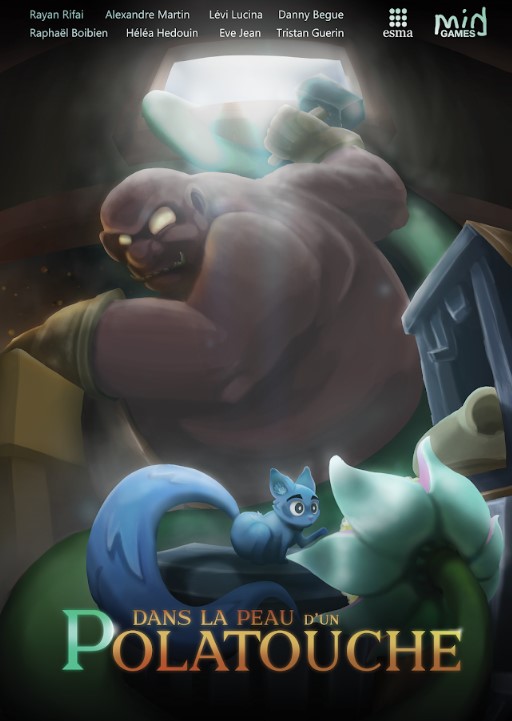
But suddenly a trap is sprung, and he wakes up in a huge house, at the mercy of a taxidermist Ogre who wants nothing more than to stuff the specimen to add to his collection.
The little squirrel you play will have to use all his skill and agility to avoid this disastrous fate.
In the Skin of a Flying Squirrel, a single-player 3D platform game in third-person view, takes players on an impressive journey through a world of exploration and thrilling platform sequences.
Produced by Antoine Jean, Raphaël Boibien, Danny Begue, Tristan Guérin, Rayan Rifai, Héléa Hedouin, Lévi Lucina and Alexandre Martin, their final year project is available (like all ESMA games) free of charge on the Itch.io platform.
Four gameplay axes for a sparkling experience
To create a good platform game, you don’t need complex game mechanics. That’s why the Polatouche team quickly defined its approach around a simple process and a clear objective.
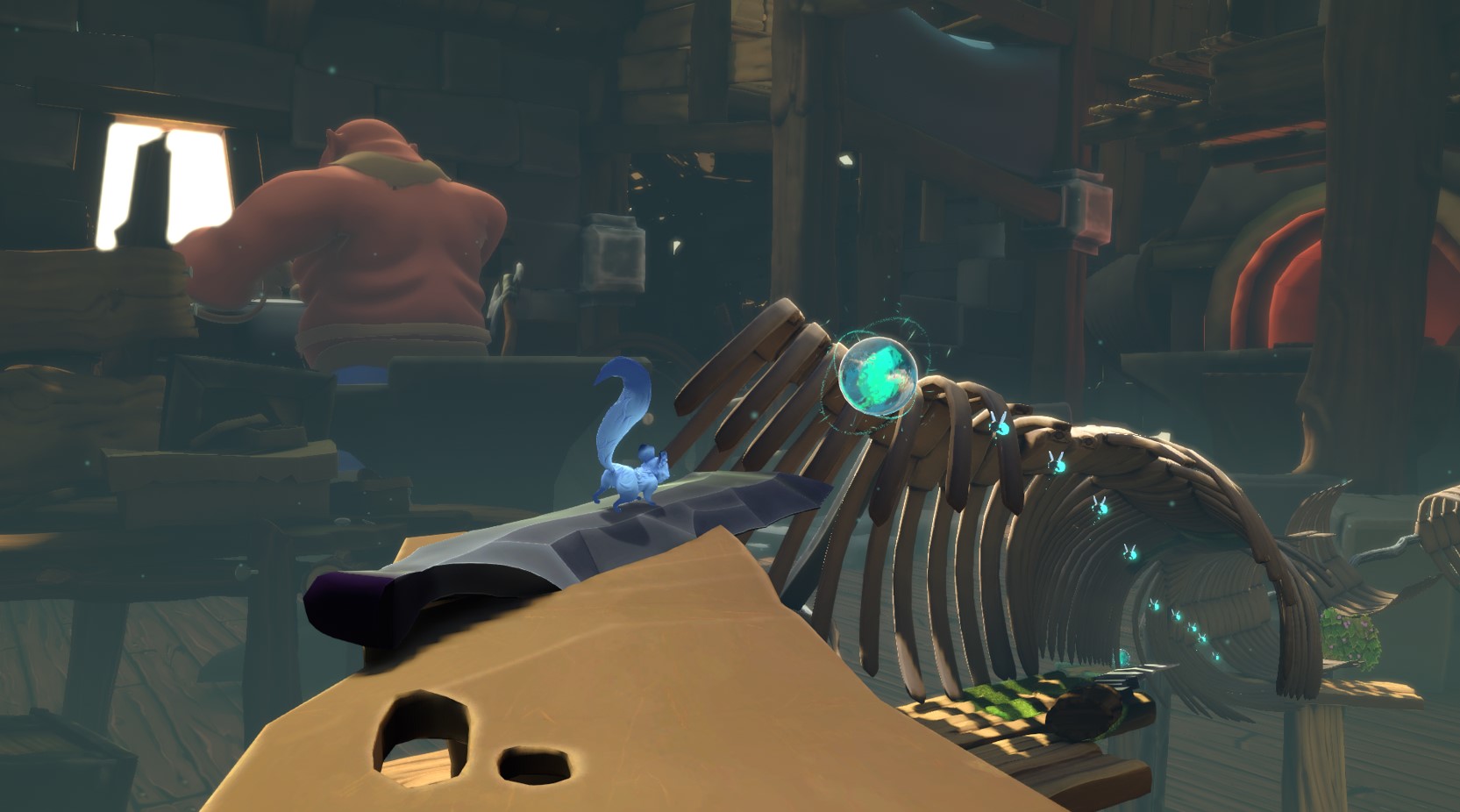
“It’s a simple one”, explains Rayan Rifai, gameplay programmer on the project, “our squirrel has to escape from the ogre’s house using four skills: jumping, climbing, gliding and running”. Four actions that players can combine as they wish to move through impressive environments.
Developing immersion and creating tension
In any good platform game, the player must be able to choose their own pace, but also be able to immerse themselves in a captivating and frenetic experience. With Polatouche, the team has taken up this challenge through a variety of levels and a wealth of sequences. The game alternates between metroidvania-style 2D views and plunging camera angles that redefine the way players interact with their environment at every turn. When simplicity seems to be at the tip of its squirrelly tail, blades and rotating platforms appear and create yet another obstacle, forcing the player to rethink and adding a new level of difficulty.
These are all parameters that the team has incorporated into its universe, to create tension and allow even the most seasoned gamers to find something of interest, while remaining accessible to as many people as possible.
For level designer Lévi Lucina, exploration is at the heart of this development concept. “The overall look of the game is constantly evolving, and that has an impact on the gameplay too. Our aim was to offer players a real experience in a shimmering universe that is accessible to everyone. It’s a success reminiscent of other recent games in the genre, such as the very likeable Tinykin from the independent French studio Splashteam, based in Montpellier.
A formative experience
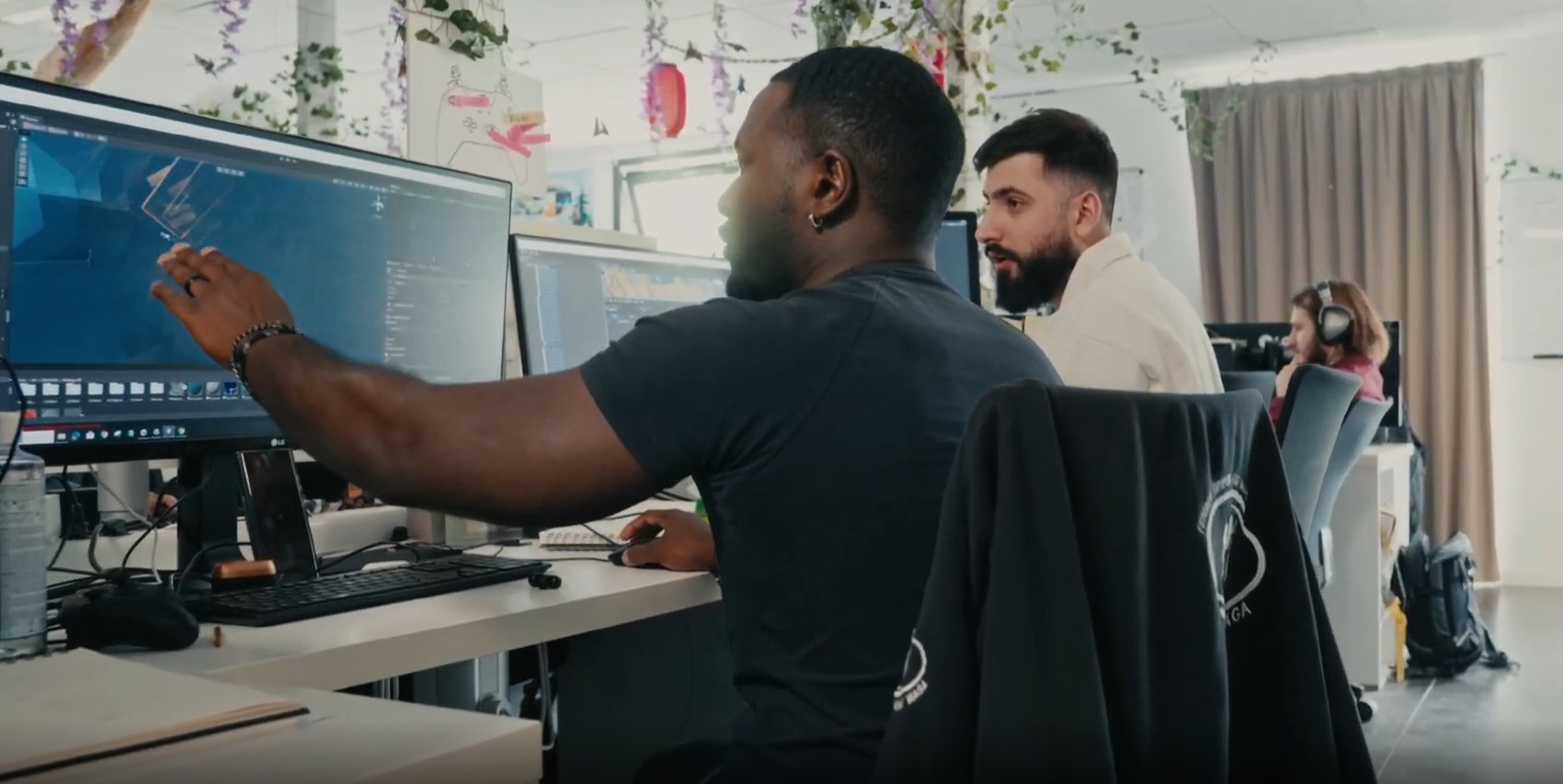
Developing such a project in just eight months represents a real challenge, both in terms of technical mastery but also in terms of coordination and schedule management. It was this second aspect of the project that most impressed the students involved in the production. In an industry where creation rhymes with collaboration, it’s vital to be able to put your ego aside, as this team clearly understood.
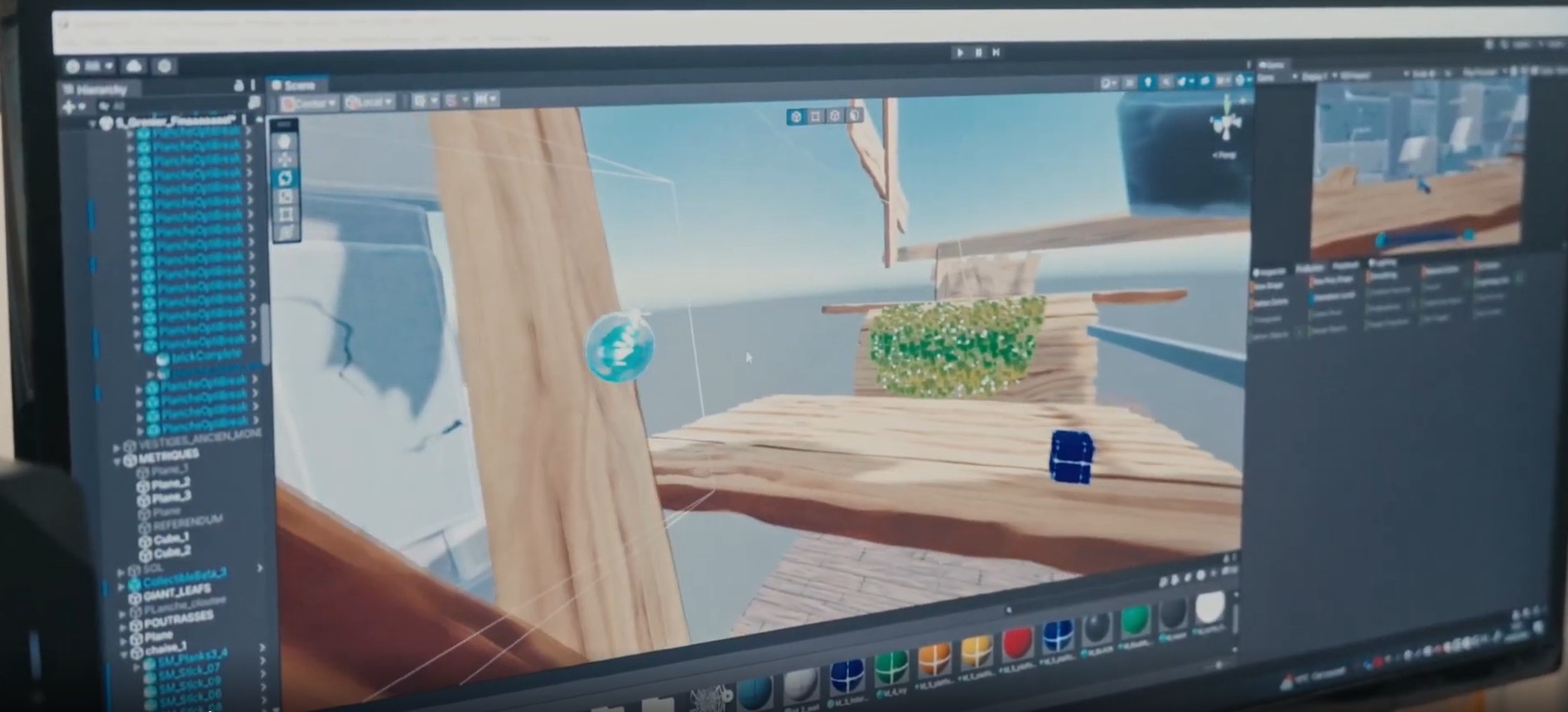
“What we learnt most throughout the year was to work as a team, to know our weaknesses and strengths and to ensure that everyone could really find their place in the project,” recalls Lévi.
Rayan, who now works as a freelance developer on a number of video-game projects, agrees: “Knowing how to programme and do 3D, even at a very high level, is useless if you don’t know how to work as part of a team. Without this spirit of collaboration, you won’t get anywhere. A game is created together, never alone.
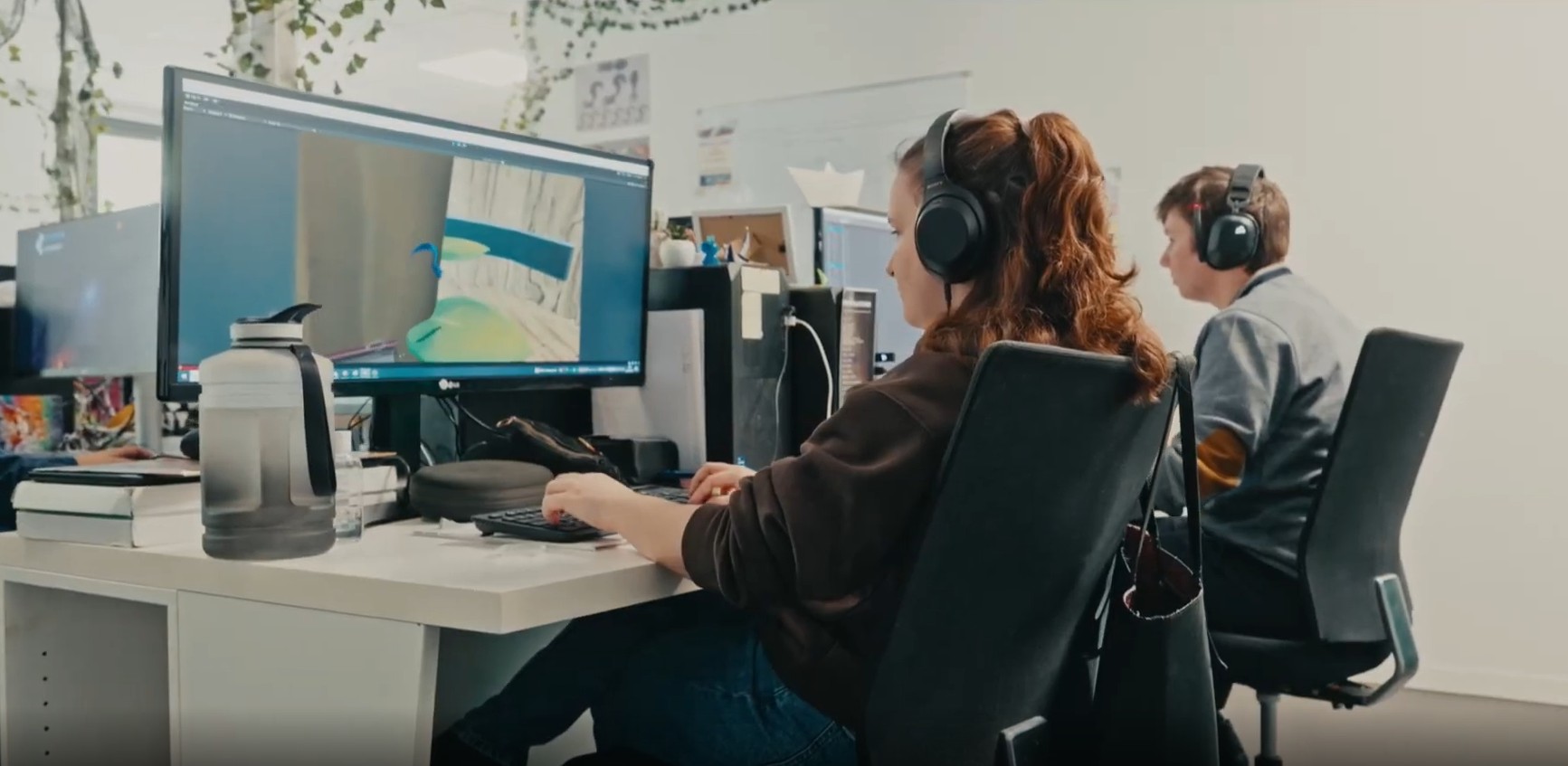
This is also true of the other teams of ESMA students who are now entering the sector with a pragmatic and open mind. There are many jobs in video games, but they always involve the ability to communicate, receive feedback and work together smoothly. If you are destined for a career in this sector, don’t hesitate to develop these so-called ‘soft skills’, which are essential for integrating into this industry and climbing the ladder.
Like all ESMA graduation games, Dans la peau d’un Polatouche is free to play on itch.io.