Buoyed by the impressive career of her graduation short Achoo, which she co-directed in 2017 and which garnered numerous festival selections before being nominated for an Oscar, Elise Carret began her career at Illumination on Sing 2, before working on Moi, moche et méchant 4 and then Migration.
In 2023, she moved to Vancouver to join the team behind Vaïana 2, and the short film Versa, a little gem by Malcon Pierce, about which she agreed to talk to us today.
We invite you to go behind the scenes of this unique animated short, soon to be available on Disney+.
What were your main tasks on this project?
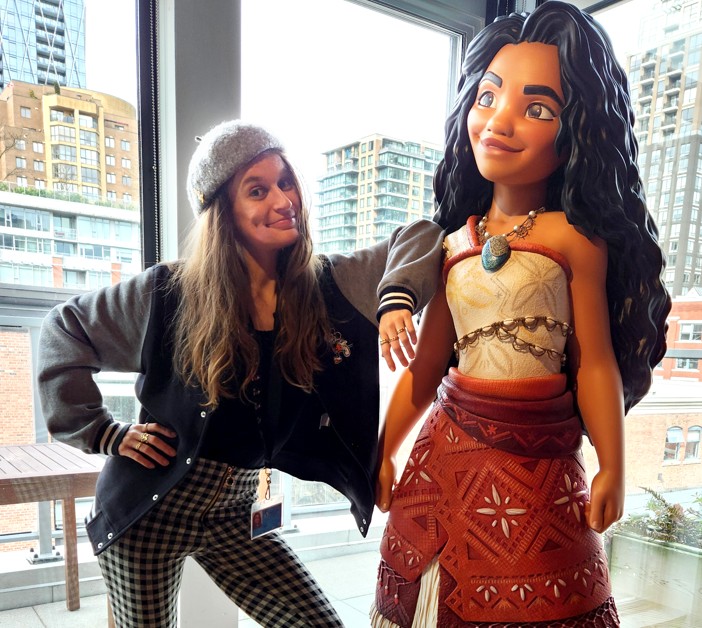
For Versa, I worked on the film as a CGI Character Animator, in other words as a 3D animator.
My mission was to be the virtual actress on this project, bringing the characters to life through virtual puppets. In all honesty, I would be hard pressed to define my personal impact on this film, given that this kind of ambitious project requires many artists.
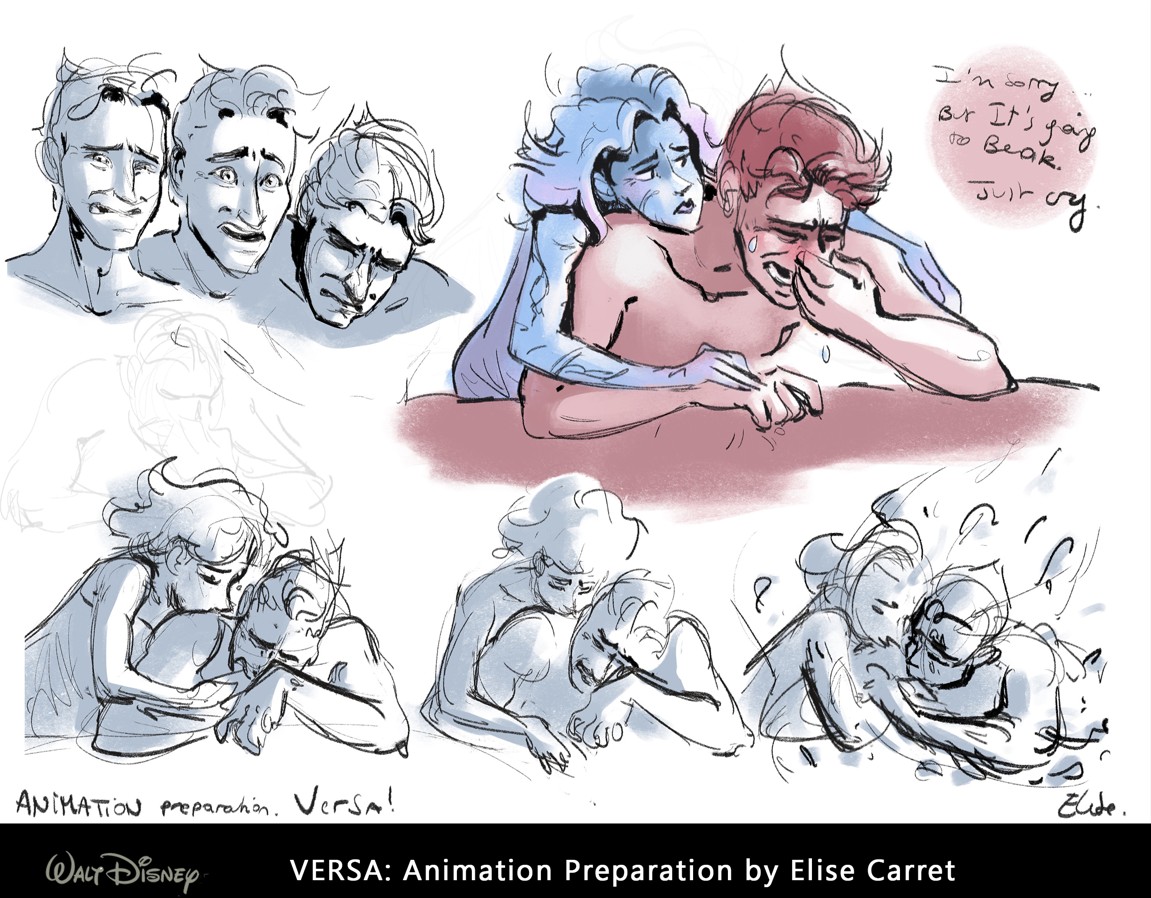
But what I’m most happy about is the fact that I was able to offer these intertwined, weeping character performances: a devastated man who hides his face, torn apart by a guilt that’s too painful, and his companion wrapping her arms around him for support, like a Rodin sculpture.
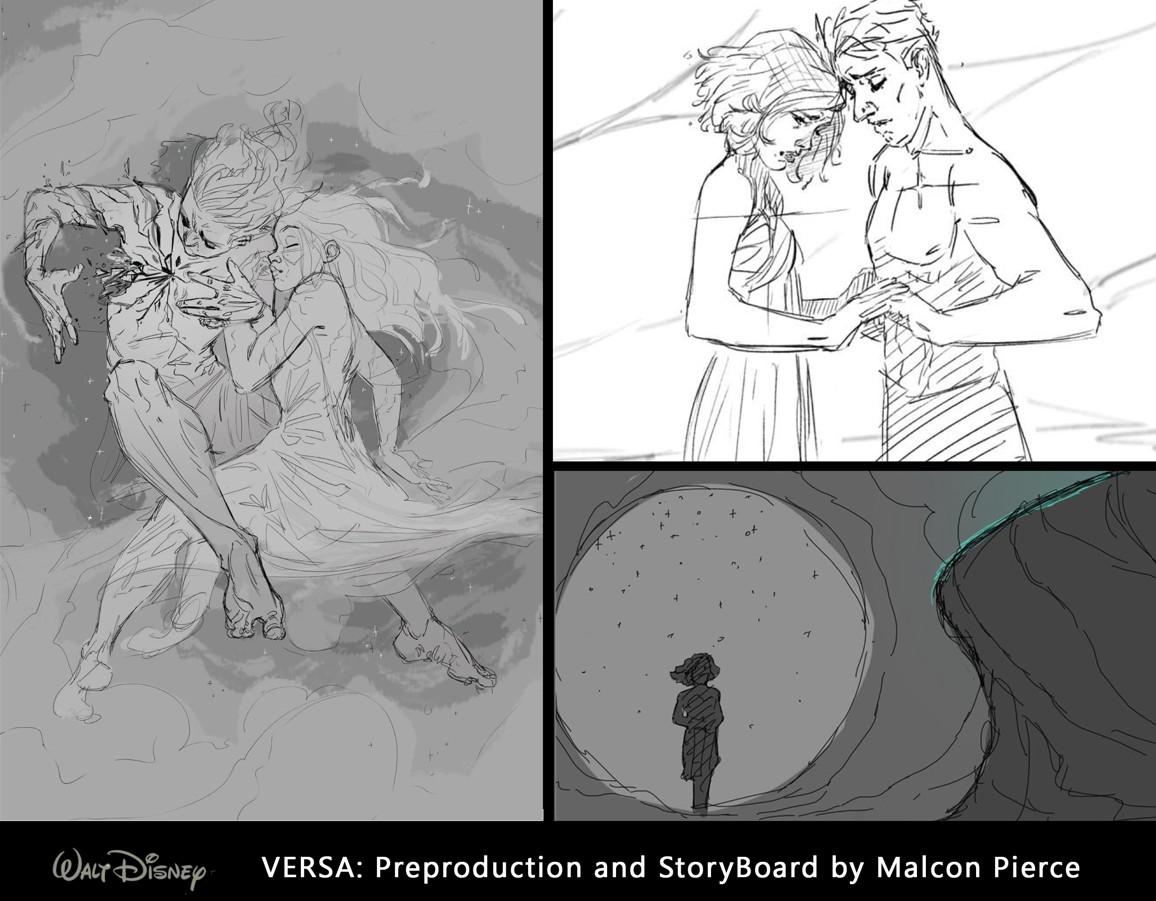
Director Malcon Pierce didn’t necessarily see the scene that way originally, but he apparently liked my proposal! We pushed the sculptural aspect as far as possible. Looking back, I’m really very, very happy with it, because it’s not often that you get such creative freedom!
What technical or artistic constraints were involved in this work?
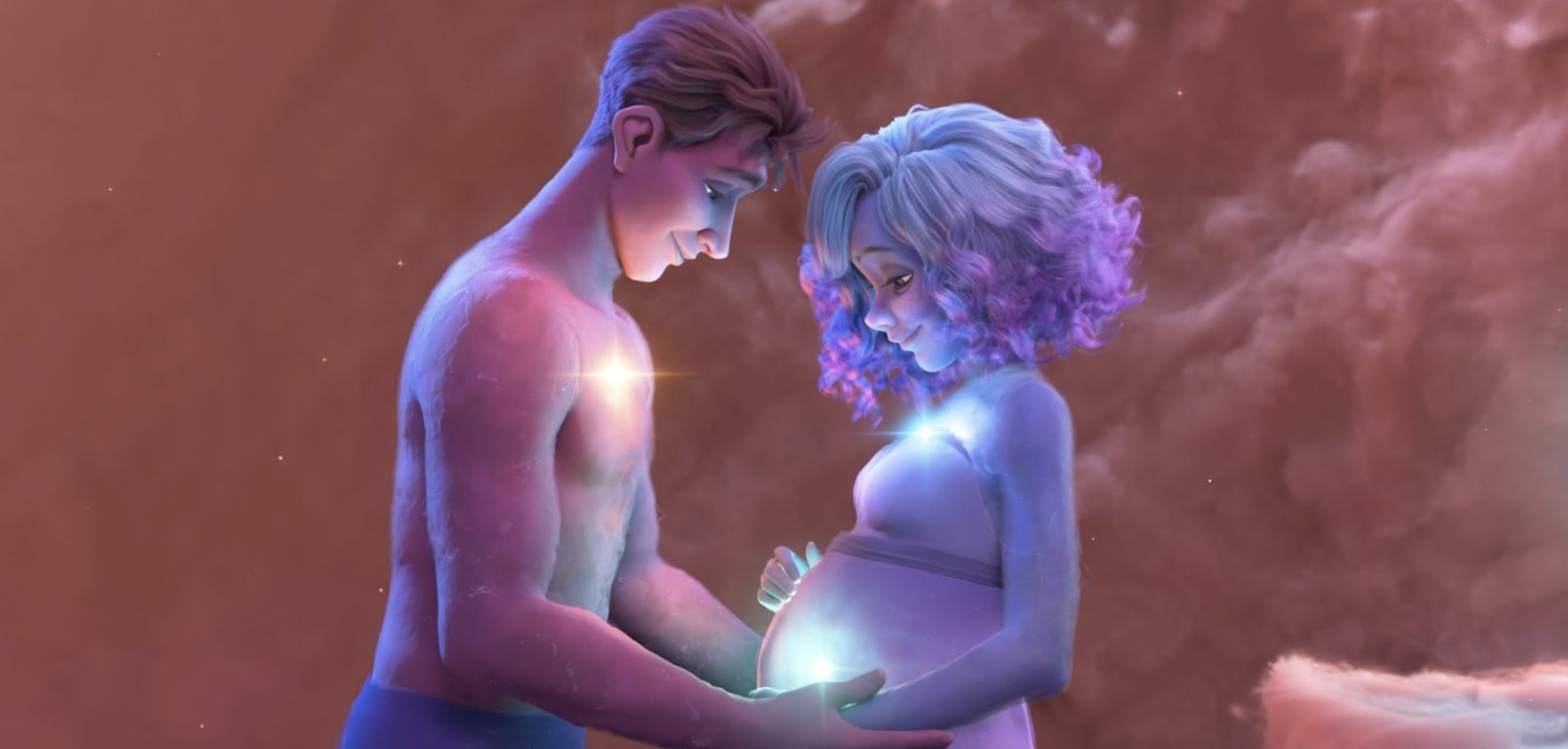
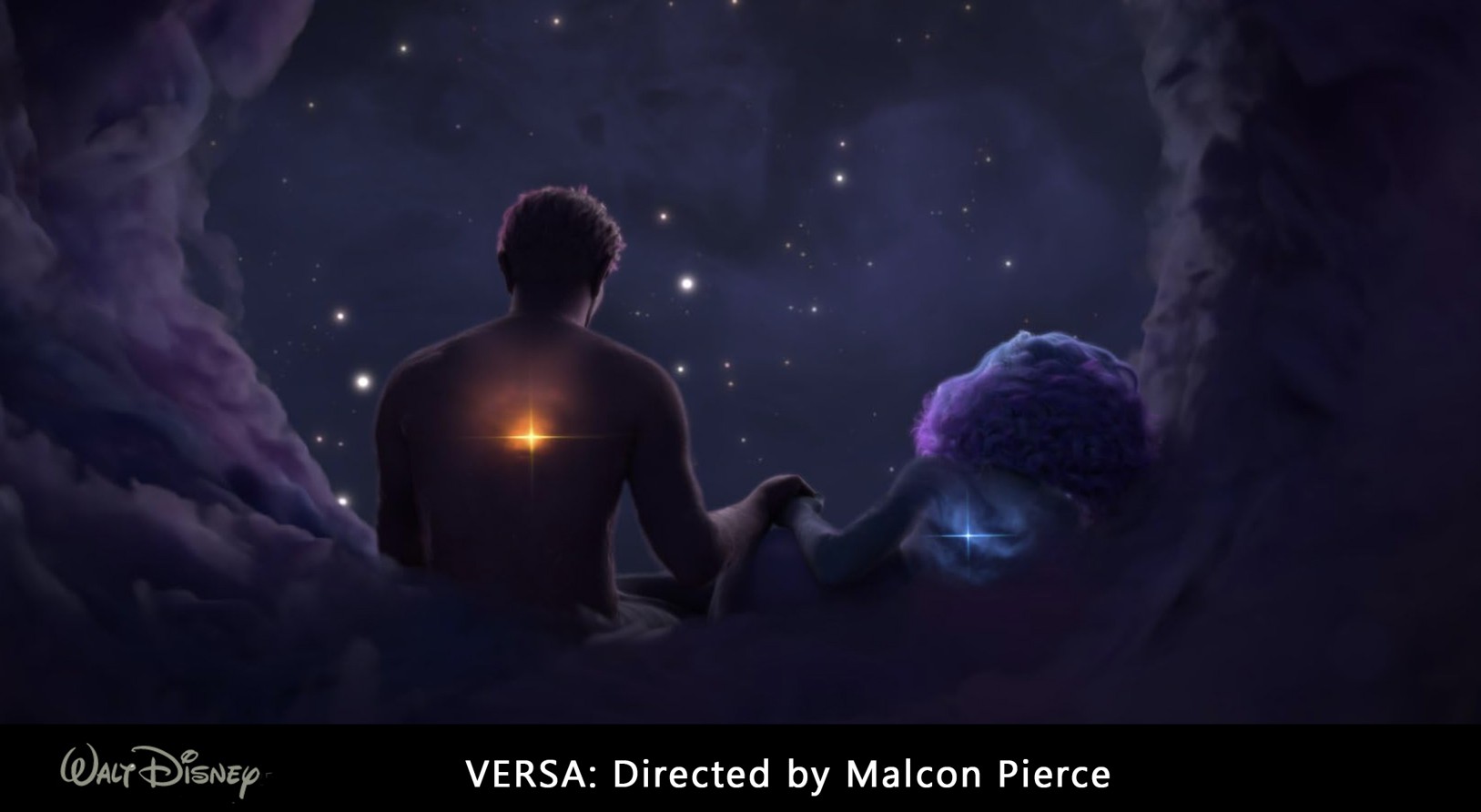
The main artistic constraints on this project were to succeed in expressing grief visually, with the protagonists being two characters living in the Milky Way, dancing like figure skaters in space. Their hearts are stars, and some of them unfortunately fade away to explain their disappearance.
As a result, we always had to make sure that the stars weren’t hidden by an arm, a corner, another character, and so on.
The other major constraint was to follow the figure skaters’ references, while exaggerating certain passages to convey the right emotions.
One of the special features of this project was that we were able to work on shots of real figure skaters, with zooms, travels and so on. The team managed to find a skating cameraman who developed his own self-taught style of onboard camera!
We worked mainly on Maya’s animation. Incidentally, for any seasoned animators reading this article: and there were lots and lots of ‘constraints’, switch ik fk, and complicated looping curves!
What other professions were you constantly interacting with?
We worked hand in hand with the riggers, who were responsible for creating the character skeletons, but also with the layout department, because we had to constantly change the animation.
It was like a two-person dance. We were able to follow the storyboard quite closely because it was very well done, which isn’t always the case.
Can you think of a concrete example where communication has helped to unblock a situation?
It’s not an easy question to answer, because we’re constantly communicating within the project! In my case, the moment when communication prevailed was during my crying scene, when the director didn’t understand some of my choices.
Through my textual explanation, I was able to argue and set out my approach. I saw him staring at the screen, his eyes squinting in intense reflection, and then he exclaimed “Haaa , I see now! Very interesting.” And to make my idea work better, he advised me to change a few things. I was happy that this director was giving me the floor to express myself, and above all that he was trying to understand my intentions.
What did you learn during your training that was of direct use to you on this project?
To work in a team, you always have to ask for help. For example, I had to animate close-ups of hands embracing. I couldn’t do it on my own, which was very awkward. We put our shyness aside, and set off for a 20-minute reference shooting session, holding hands with colleagues, sharing our sweaty hands (and embarrassing giggles).
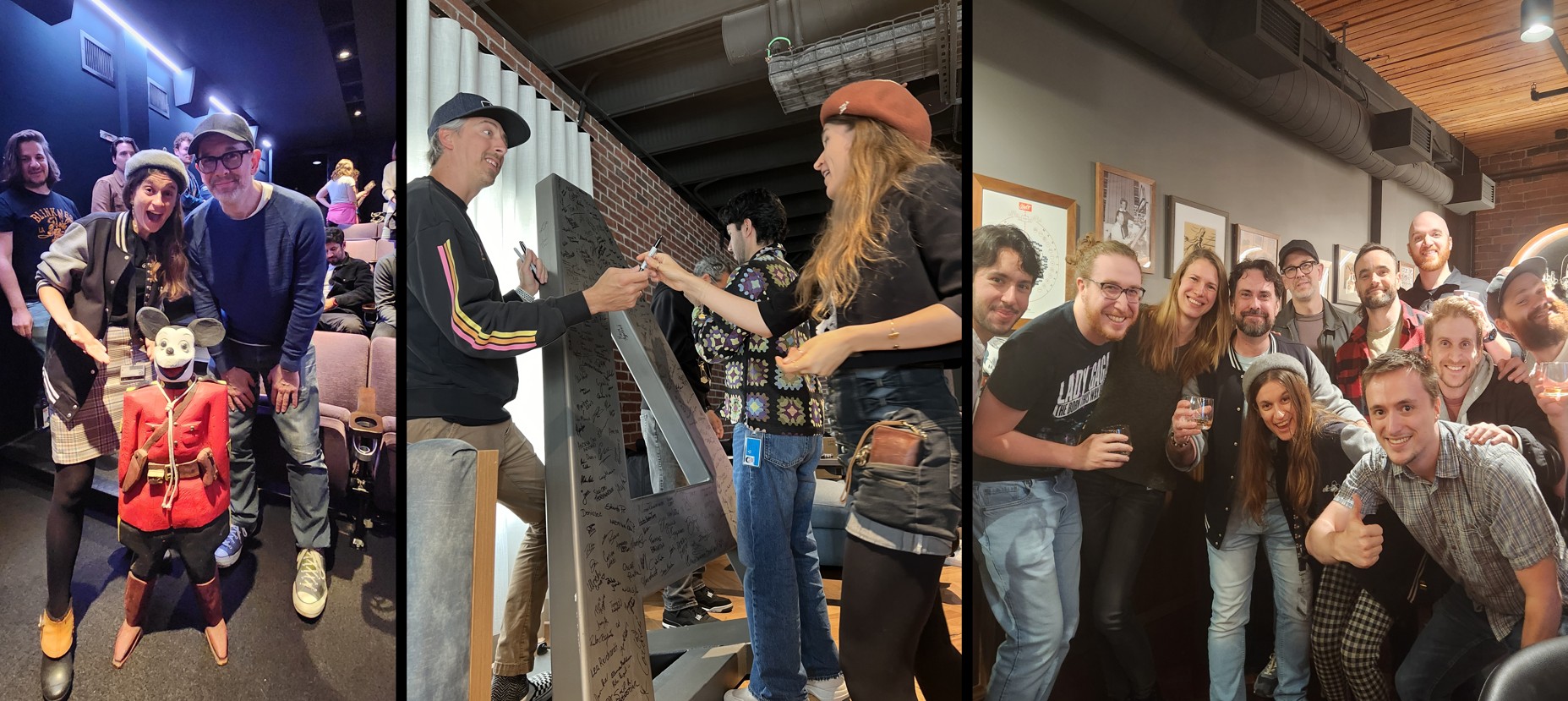
I also acted as a reference for other colleagues, drew over (drawings over an existing image) and made thumbnails (miniature sketches of the first version of an animation). Of course, I also used all the tools I’d learnt in my animation and drawing classes, and I’d like to take this opportunity to say a big thank you to our teacher Isabelle Auphan!
What has this adventure meant the most to you?
What struck me most about this project was that we were working on Malcon Pierce’s most personal work. He talks about the loss of his child, and it was very moving to participate in his own mourning, and to pay tribute to all those souls who left too soon, or to the souls of adults in depression.
Most of the artists voluntarily joined this project because of their similar stories: fathers or mothers who have lost a child, or in my case, as the little sister of a missing child. Through this collaboration, I also wanted to pay tribute to my parents, who went through this pain in silence, because of a taboo that is still very present today.
Is there a memory, an encounter or a memorable anecdote from backstage that you’d like to share?
I loved meeting the Olympic-winning figure skaters and the cameraman! They explained their filming techniques, their flexibility techniques and so on. What’s more, these two top sportsmen and women agreed to take part in this project because they had given up parenthood because of their careers, which was also a sort of mourning process.
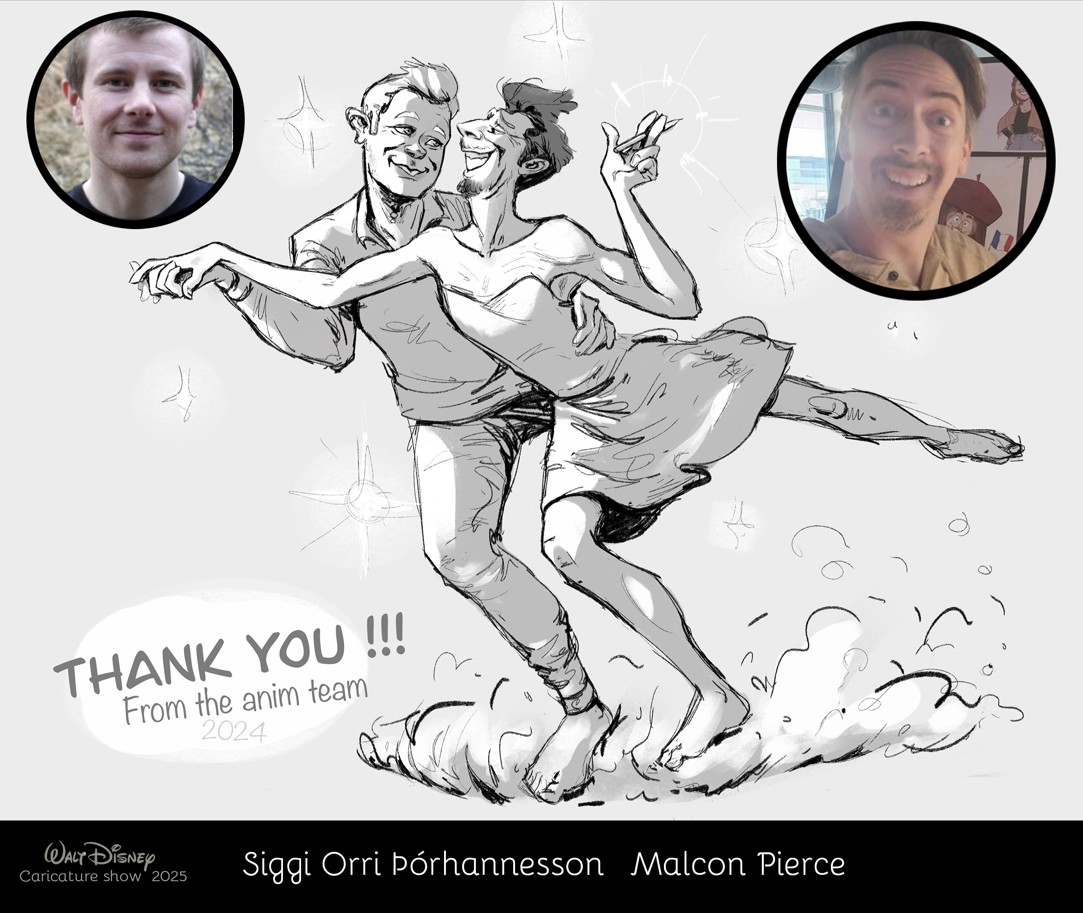
On a completely different note, our small animation team enjoyed working on this project so much that we decided to give Malcon Pierce a caricature of himself dancing like a figure skater with Siggi Orri Þórhannessonn, Head of animation on this project. I have to say that he was very surprised by this rather incongruous gift, and it’s also a very happy memory!
How has this project influenced your career path?
I don’t think this short film will change my career, but I’m very happy and very proud to have taken part in it. It’s so rare to be able to contribute to such sincere artistic gems. I hope one day to be able to bring one of my stories to the big screen as a director.
But to do that, I have to continue my career as a presenter and keep learning within solid teams.
What films or worlds inspire you today?
It’s extremely vast and varied! I used to be a huge fan of the visual identities of Disney or Blue Sky(Ice Age), and then the storylines of Pixar or Dreamworks.
These days, I’ve got a soft spot for films that are a little crazy and sensitive, and historical if possible. For example, one of my favourites is Albert Dupontel’s live-action masterpiece Au revoir là-haut, whose direction surpasses the original book while tackling the difficult subject of the survivors of the First World War. But I’m also a big fan of Armando Lannucci’s The Death of Stalin , Nicolas Bedos’ La belle époque , Milos Forman’s Amadeus Mozart , and the Daniels brothers’ Everything Everywhere All at Once .
I also enjoy this type of storytelling, with its captivating settings and powerful narrative weaves, in comics. Jordi Lafebre’s Malgré tout, Lupano and Cauuet’s Les vieux fourneaux, Dorison and Delep’s Le Château des animaux , and Juanjo Guarnido’s Blacksad are all works I greatly admire. Finally, I recently discovered Maus by Art Spiegelman. What a powerful way to present this historical drama through a dysfunctional father-son relationship! It was a very moving read.
What’s next?
Elise Carret joined the Netflix animation studios in Vancouver in September 2025. Today, she’s working on one of the platform’s next animated features, so you’ll be hearing from her again soon!
Her advice for young students? Here’s what she has to say:
You have to enjoy every day of your life!
Whether you’re in a rush, on a break, studying, at work, in your free time, as part of a team, on your own, having a hard time, travelling or whatever.
Live your life as an exciting adventure that you write!
I’d add: get involved in projects with friends, from the craziest to the most insignificant (music videos, music, comics, animated or live action short films, improv theatre, puppet shows, painting, dance, souvenir videos, etc.).
Keep that little flame burning inside you, it’s what will keep you going. Never let the industry, the world of AI or the crises extinguish you. It’s not your CV that will determine whether you’re a successful artist, it’s your passion!”