
Between rigour, creativity and overall vision
Since 2016, Fabien Cellier has been running Brunch Studio, a Paris-based 2D and 3D animation studio renowned for its high-quality cinematics, particularly in the world of video games.
His career, rich in experience and technical challenges, bears witness to a rare dual skill: mastery of creative production and a global strategic vision.

A multi-faceted role
Fabien Cellier occupies a position at the crossroads of several functions. As Studio Director, he oversees the day-to-day running of the studio and the quality of working life, while also taking responsibility for the financial monitoring of future projects and investments.
In addition to these responsibilities, he is also in charge of human resources management: supervising the production and supervision teams, coordinating between the various sites in Paris and Rennes, and passing on information between departments.
“80% of my time is spent on operations,” he explains. “The rest is divided between medium-term planning, managing software licences and… dealing with the unexpected.
These ‘contingencies’, which account for around a third of each day, require immediate responsiveness and an acute sense of priorities.
Landmark projects
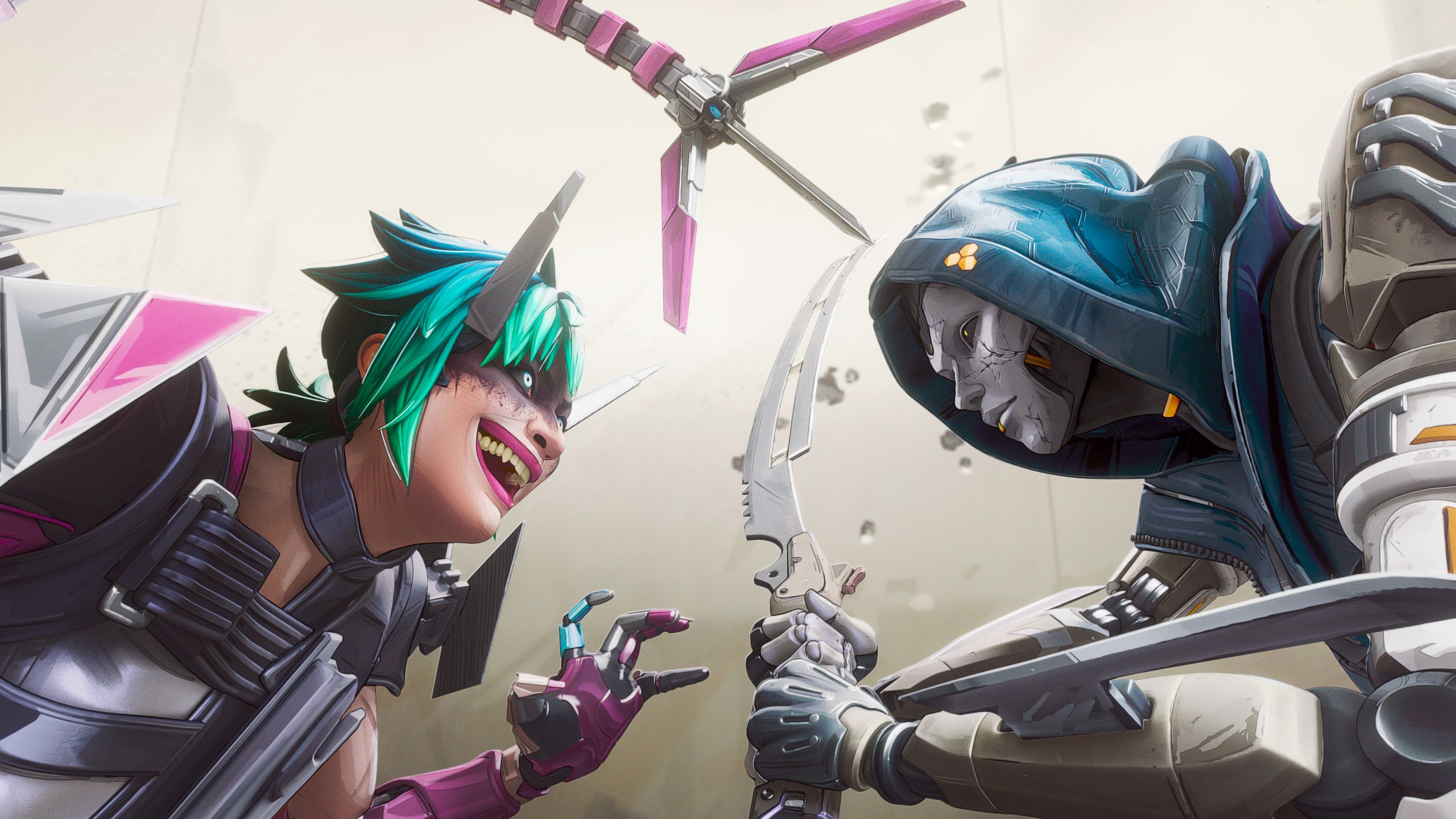
Two productions have particularly marked his career. The first, when he first joined Brunch, was the introductory cinematic for Ghost Recon in 2016. Extremely realistic, incorporating motion capture and collaboration with several service providers, this project represented an unprecedented technical and artistic challenge for him.

The second, for The Division in 2019, marked the studio’s debut in the 2D/3D combination. Produced in the middle of the Christmas period, with only two months to spare, this work was conceived in a hurry but managed to achieve a high level of quality, a standard now mastered by the team.
“We thought it was impossible, and yet we came up with something we were proud of,” he recalls.

An organisation based on dialogue
At Brunch Studio, internal communication is essential. Fabien attaches as much importance to the human link as to the deliverables. Daily meetings, informal exchanges and constant monitoring of requirements help to anticipate technical or organisational problems.
Although he is no longer directly involved in resolving software incidents, he remains responsible for ensuring that the necessary resources are put in place, in liaison with the technical service providers. This cross-functional role, combining management, anticipation and support, enables him to maintain a balance between creative imperatives and operational constraints. “My role is to make sure that everyone has what they need to work and that information flows.
A clear reading of the market
His analysis of the sector highlights clear differences between animation and video games. Animation, particularly for feature films and series, has suffered a brutal post-COVID halt after a period of forced expansion. Video games, on the other hand, were hit later, but were not spared budget cuts, project cancellations and waves of redundancies.
For Fabien, the major problem remains the lack of safeguards, leaving the major international players free to invest massively and then pull out overnight, undermining an entire ecosystem. “We can see just how febrile our sector is, and that without minimum rules, everything can grind to a halt overnight.
However, he highlights the positive signs: the momentum created by France 2030, the desire to support training and the gradual relaunch of certain projects.
Putting people first
When it comes to recruitment, Brunch Studio gives priority above all to human qualities. Integration into a team, the ability to collaborate and adapt take precedence over technical skills alone.
This doesn’t mean that technical requirements are secondary: each job requires a high level of expertise, but also active listening and a precise understanding of requests. “Listening, understanding and asking questions are qualities that are being lost, but they remain essential,” Fabien insists.
AI: between caution and curiosity
Although the studio is not yet using generative AI in production, it is already integrating algorithms into its pipelines and is keeping a close eye on developments in the sector. Client contractual constraints and intellectual property issues are holding back any mass integration for the time being.
Fabien nevertheless identifies the inevitable impacts: automation of simple tasks, transformation of post-production professions, and possible industrialisation of part of the production process. “We’re all going to be there one day. AI can both open up opportunities and accentuate the sector’s vulnerabilities.”
He remains convinced that craftsmanship, original creation driven by a human collective, will continue to exist alongside this industrialisation.
Video games: a cyclical market
In his view, the video game market is closely linked to console hardware cycles, with a slowdown at the end of a generation followed by a rebound when new machines are released. Currently, the PS5 and Xbox Series S/X are reaching the end of their cycle, which is slowing down major releases.
Fabien also notes the emergence of studios specialising in in-game cinematics, a market that Brunch Studio has chosen not to enter in order to preserve its creative freedom and high standards of graphic design. “We remain committed to telling our stories using our own tools and our own level of quality, without strictly adhering to the game’s graphics.
Advice for new generations
He recommends that students embarking on a video game course should not limit themselves to school projects. A portfolio should reflect the ability to produce by oneself, to go beyond the academic framework, and to push quality to the maximum.
He recommends a simple but instructive exercise: reproduce an existing work identically within a given time, then compare it with the original and gather as much feedback as possible. “Never be satisfied with saying ‘it’s finished’: go further, look for ways to improve, compare your work with the critics.
For him, curiosity and self-education remain decisive assets: “Just because you haven’t seen the rig teacher doesn’t mean you can’t go and look at a tutorial or read a technical document”.
A balance between high standards and passion
His words reflect a constant desire to combine high technical standards, rigorous organisation and respect for people.
Fabien Cellier embodies this generation of managers who, while adapting to the rapid changes in the sector, are defending a long-term vision based on quality, transmission and reasoned innovation. “I believe in a healthier, more stable model, even if that means less ambition than in the euphoric years.