
As you search, it’s up to you to find out what caused this sudden and mysterious disappearance, and that’s what’s at stake in this puzzle adventure game combining exploration and increasingly complex enigmas, developed by a group of ten ESMA students.
Natan Gabard (Level Designer), Corentin Budor (3D Artist / Sound Designer), Evan Trehin (3D Artist / Texturing), Aurélien Bonbony (Concept Artist / UI Designer), Alban Motte (Game Designer), Gabriel Heleut (Character Designer / Tech Artist), Baptiste Carion (Narrative Designer), Paolo Menard (3D Artist), Ethan Mugnaini de Ricci and Nathan Poisson (Programmers / Tech Artists) all deserve credit for bringing this project to fruition, after eight months of intense and challenging production.
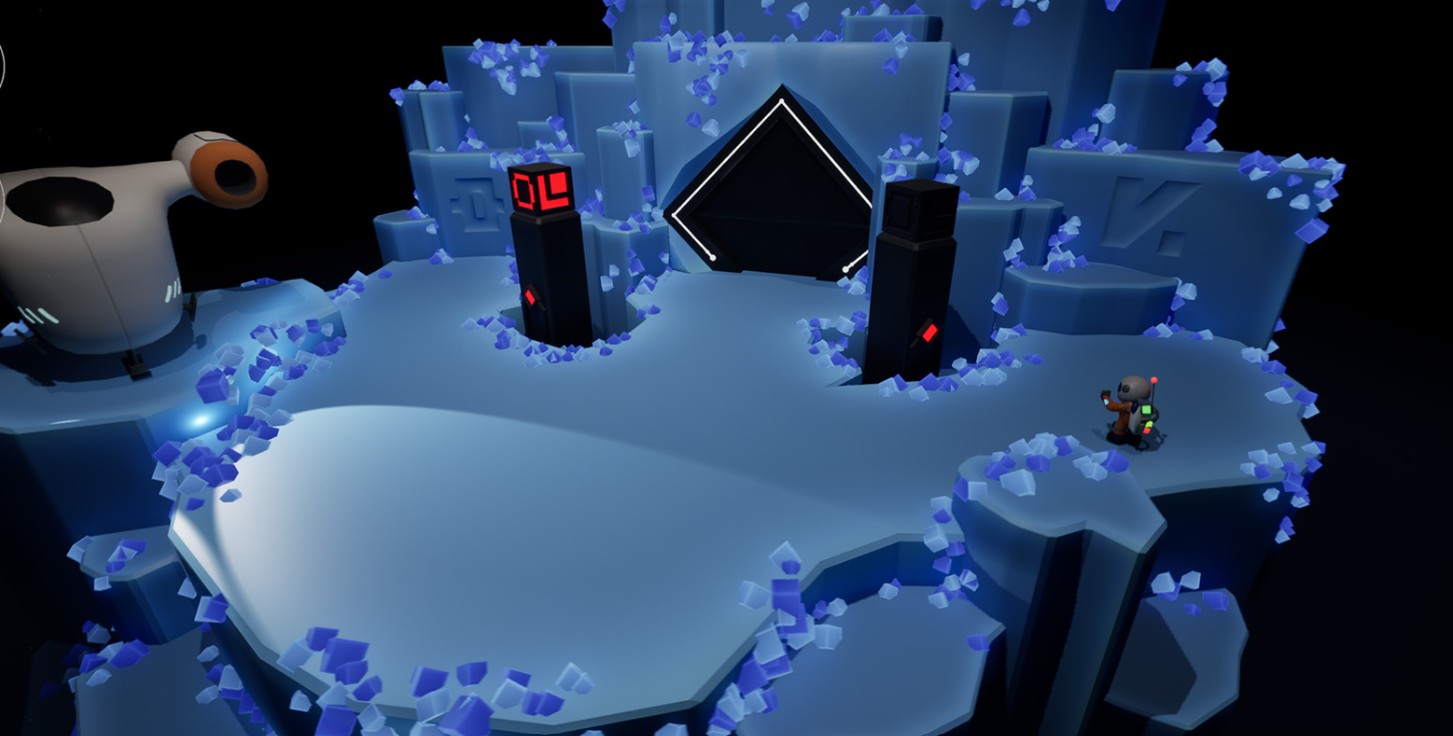
It’s an adventure not unlike that of their protagonist, who must brave the dangers of these troglodyte alien ruins with the sole aid of a multifunctional tool that allows him to interact with his environment and create portals to another dimension.
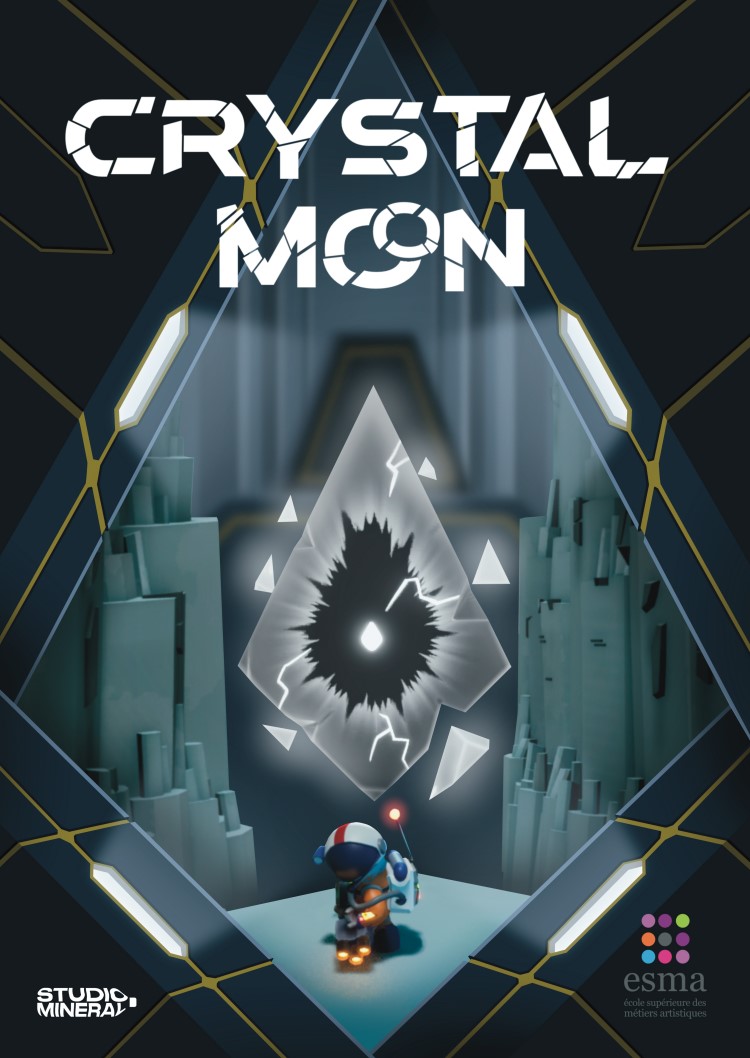
A complete level to arouse desire and wonder
“Crystal Moon is all about puzzles, exploration and discovery,” explains Baptiste Carion, Narrative Designer on the project, who has just graduated and is looking for a job as a game / level / narrative designer.
In the level proposed by the team, the archaeologist embodied by the player will have to move through one of the logistical zones of this vanished civilisation, using the railways, transport platforms and various paths to reach the city below.
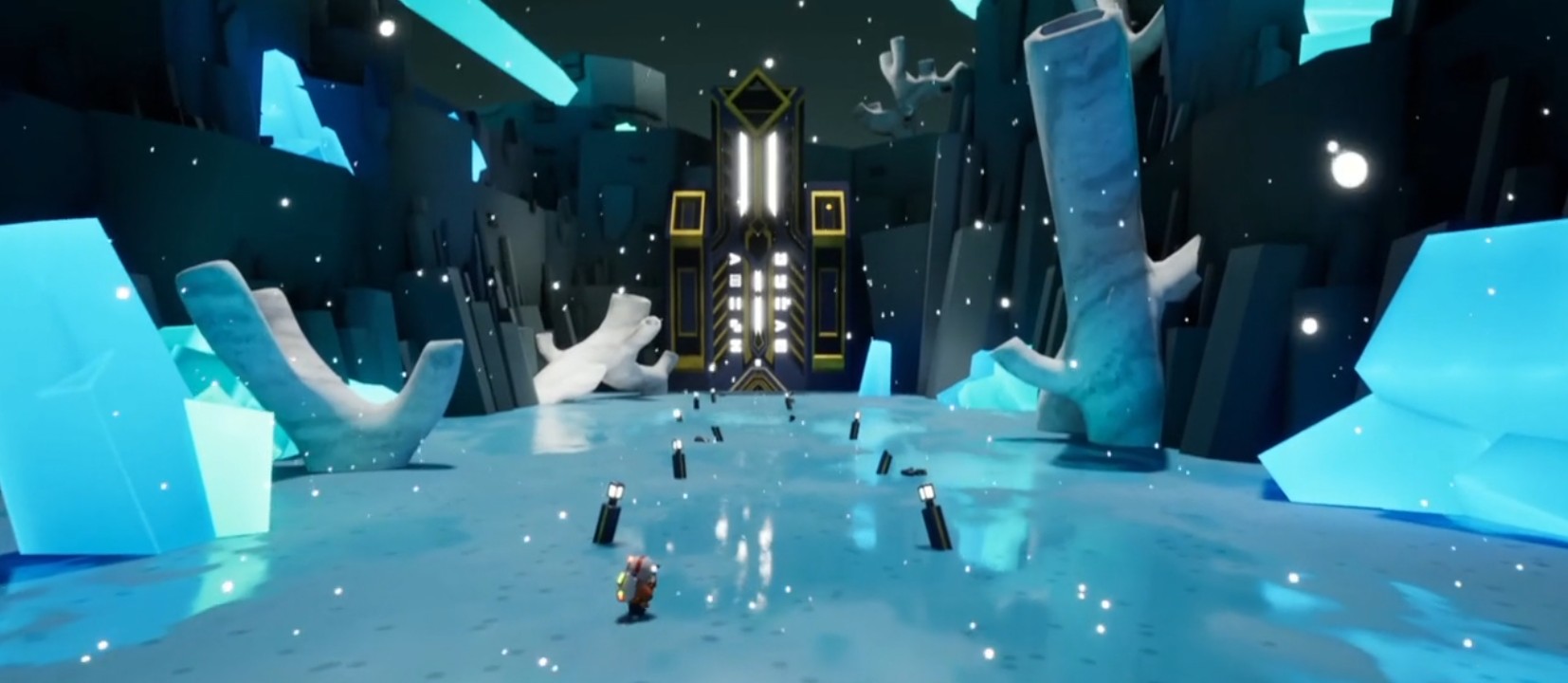
By exploring this marshalling site, and the security post linked to it, they will have the opportunity to find and decipher remains from the ancient civilisation, and thus understand what happened on this moon that is now devoid of inhabitants. “The sequence ends when the player obtains the last crystal, which gives him or her a new ability, and moves on to the next zone, the city”, sums up the team, whose collaborative work has made it possible to set up this dense videogame universe.
A videogame Swiss army knife for inventive gameplay
To solve the various puzzles and enigmas he will have to face, the player has a unique tool at his disposal, a cross between the Portal Gun from Valve’s game of the same name and the playful, inventive weapons of the recent It Takes Two. Here, however, our protagonist is on his own, equipped with this tool with a host of possibilities. “It has various properties, allowing you to change dimensions, of course, but also to shoot, push and move key elements of the scenery”, explains Alban Motte, head of game design at Crystal Moon.
It was a multi-disciplinary, multi-faceted project that forced the team to go the extra mile and give it their all, building on a solid foundation.
Developing, producing, between putting into practice and going back to basics
For Baptiste Carion, this project was also an opportunity to work on all the tools and processes learnt during his previous years of training. “What I really learned during the development phase,” recalls the man in charge of Crystal Moon‘s narrative, “was how to write for others. A job like this involves a lot of pooling, and there was also a lot of putting into practice everything we had learnt. This end-of-studies project is a real apprenticeship in the field, mixed with a lot of confirmation of our already well-integrated knowledge.”
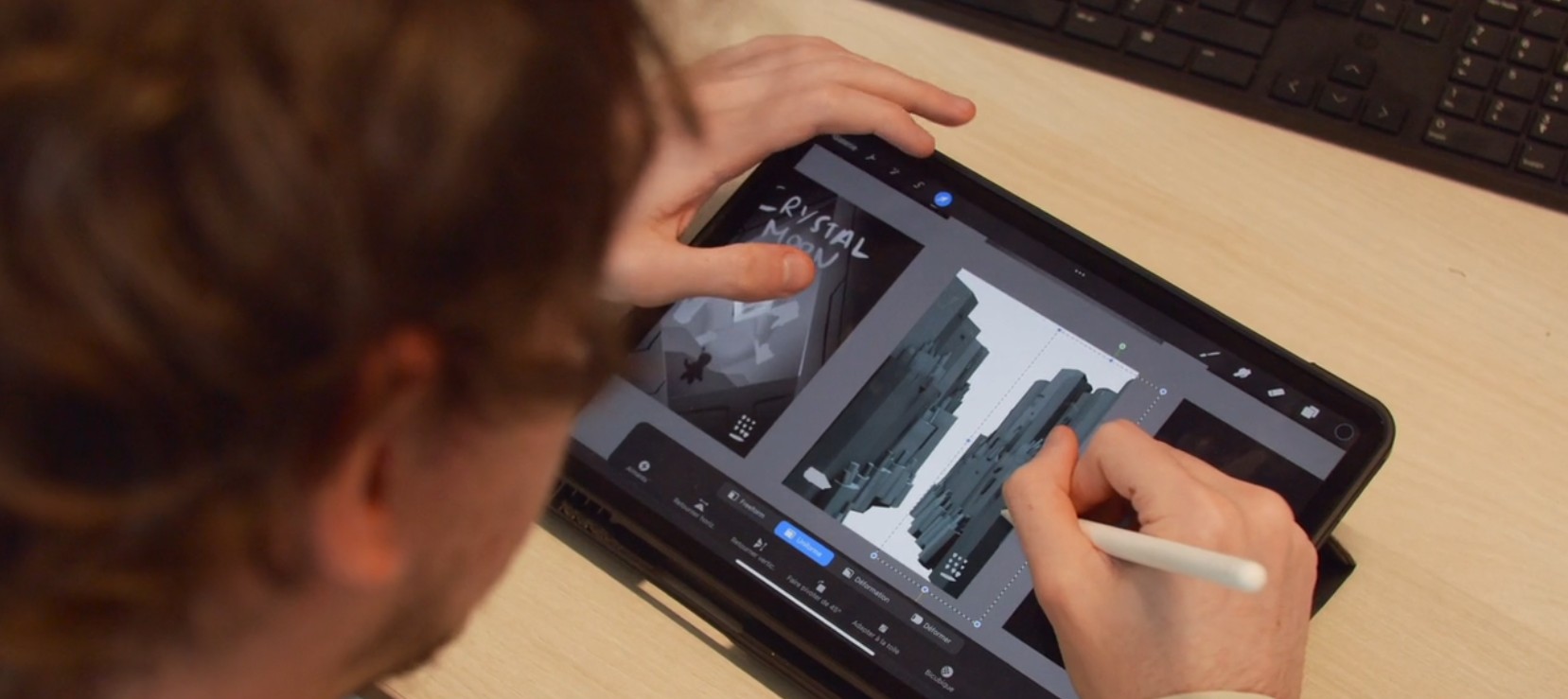
It’s a painstaking, time-consuming job that (admittedly) wasn’t always a pleasure for the team.
“I think the main difficulties we encountered were time management on the one hand, and fatigue management on the other,” confides Alban Motte. When you’ve been working on a project for a long time, you tend to relax and become less active and less focused. It’s a very human thing to do, but de facto if you produce less, it can have a major impact on the project”.
For these students, united in a dynamic of close collaboration and all driven by the same energy, the project was a success. But without regular work and effective production monitoring, the result could have been very different.
How do these students view the experience?
“It’s tiring, but very, very satisfying to work on such an ambitious project,” recalls Alban Motte. It’s a feeling shared by his entire team, and a finished product they can be proud of. “What’s really pleasing is to see that this project has gone so far. It’s been presented to a panel of qualified professionals, and we’ve learnt an enormous amount from the feedback, which is shaping us for the future.”
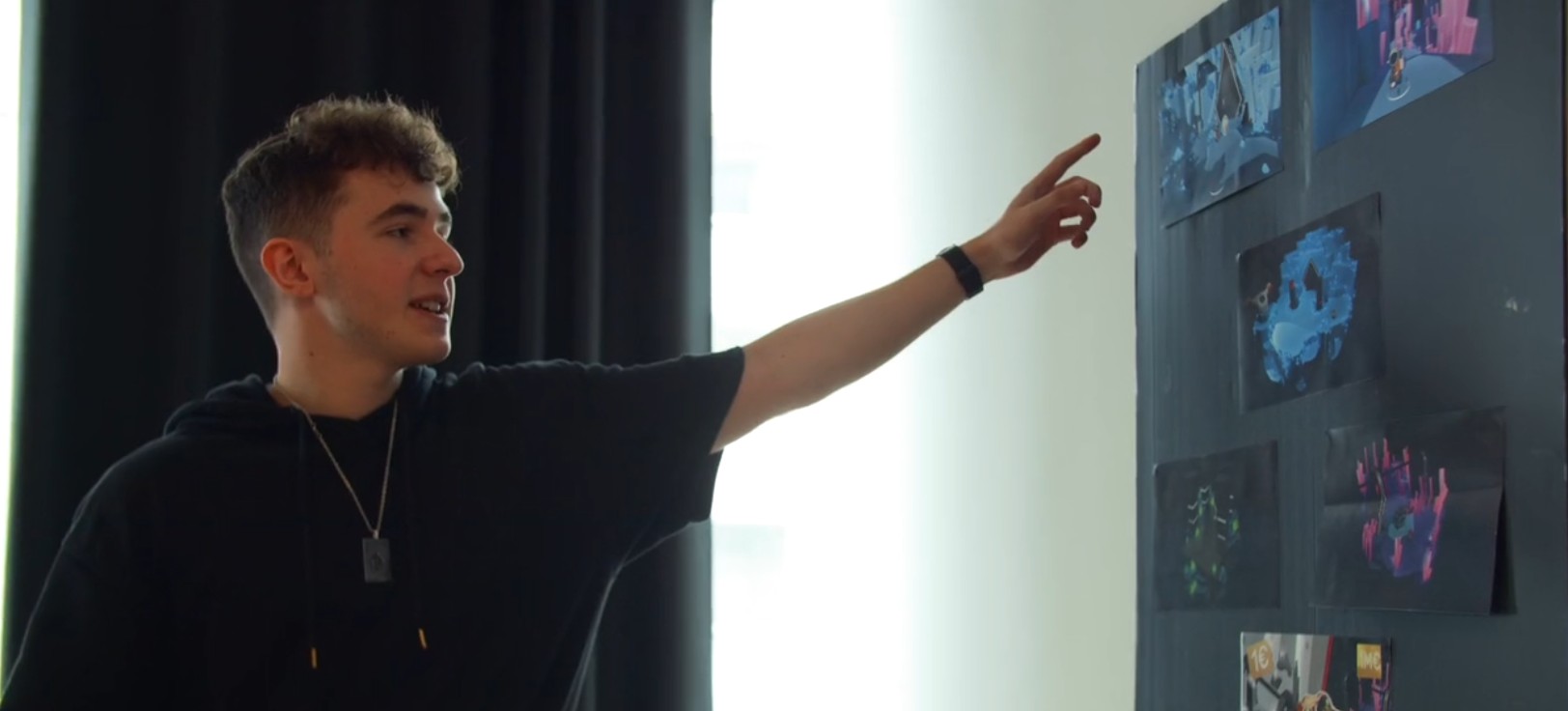
This benevolent feedback is provided by a number of professionals, including former ESMA students, with the aim of preparing these young graduates to integrate as effectively as possible into a dynamic and constantly evolving sector.
If, like them, you’d like to discover Crystal Moon, the game is available free of charge and can be played in its entirety on Windows.