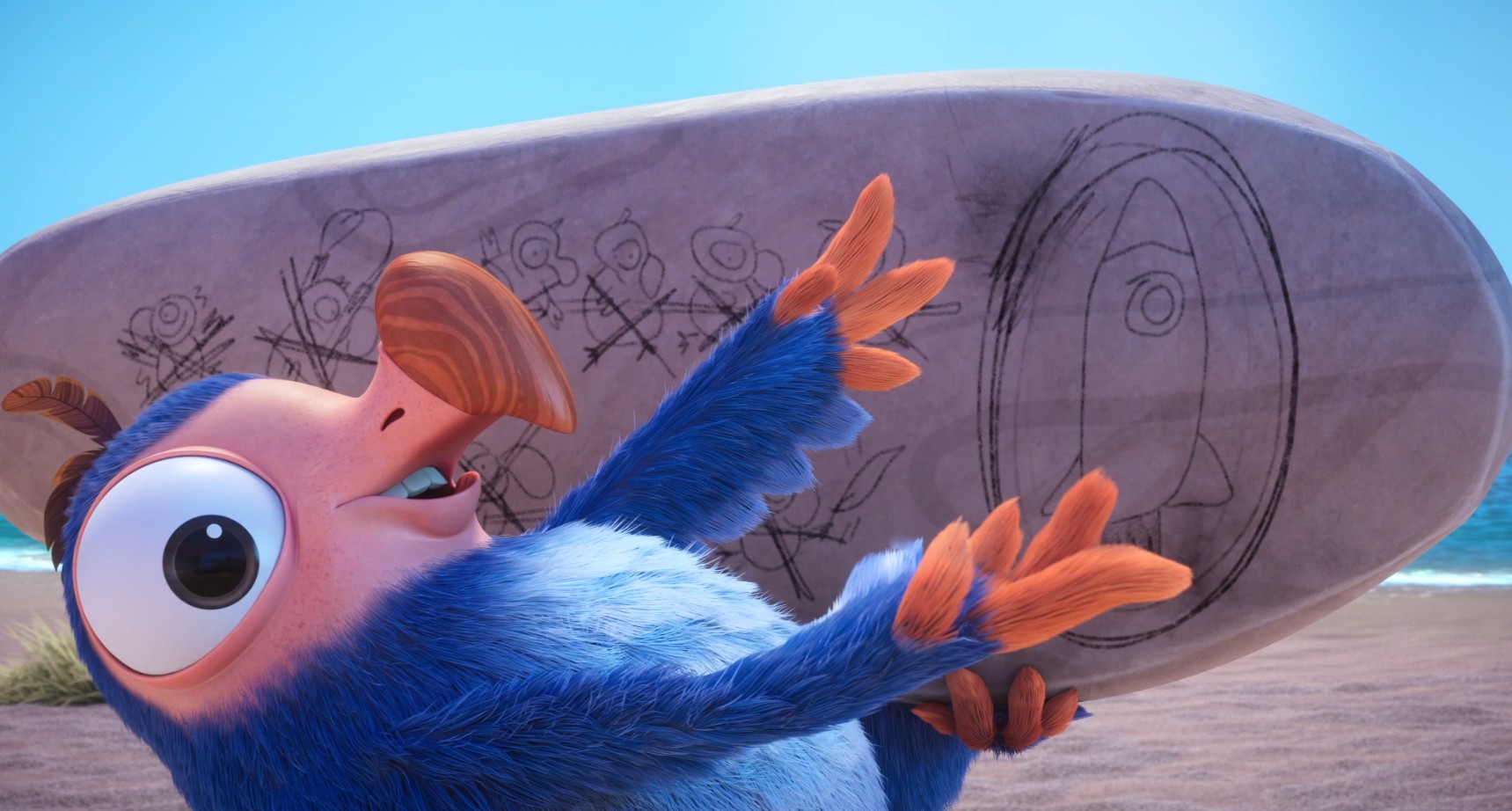

Presented at the Même pas peur festival, semi-finalist at the Sao Paulo International Film Festival and Jury’s Favourite at the Festival Jeunesse en court, El Dodorado stands out for its dark humour that contrasts with its round, soft and colourful aesthetic.
It’s an explosive cocktail that gives this short film all its flavour.
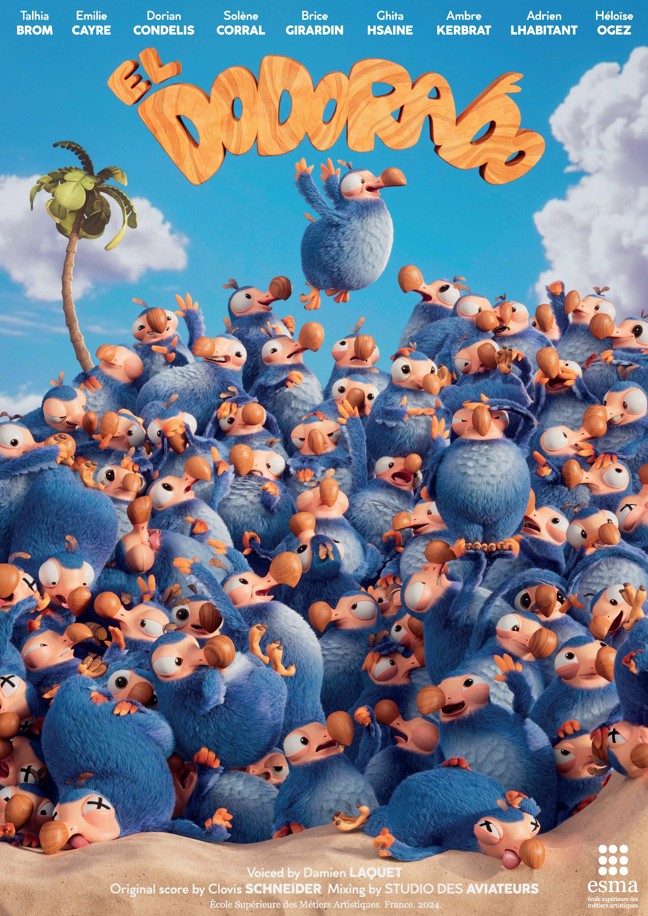
At the helm of this project are Talhia Brom, Emilie Cayre, Dorian Condelis, Solène Corral, Brice Girardin-Faure, Ghita Hsaine, Ambre Kerbrat, Héloïse Ogez and Adrien Lhabitant, a team of experienced students who have shown perseverance, team spirit and cohesion to bring this ambitious project to fruition.
This is an example of ESMA’s collective efforts, and we invite you to take a look behind the scenes.
Origin and purpose of the project
According to the film’s team, the roots ofEl Dodorado lie in Greek mythology. More specifically, they wanted to rewrite the myth of Icarus, a fable whose tragic moral resonates directly with the film’s script. After discovering an ancestral stele depicting the majestic flight of their ancestors, the last survivors of the dodo species do everything in their power to fly and reach the nearby paradise island, their “El Dodorado”.
“We very quickly realised that the idea of ‘burning one’s wings’ went well with the dodo, whose inability to fly is well known to the general public. Offering a zany new explanation for the tragic extinction of this bird, using humour, was at the heart of our project.”
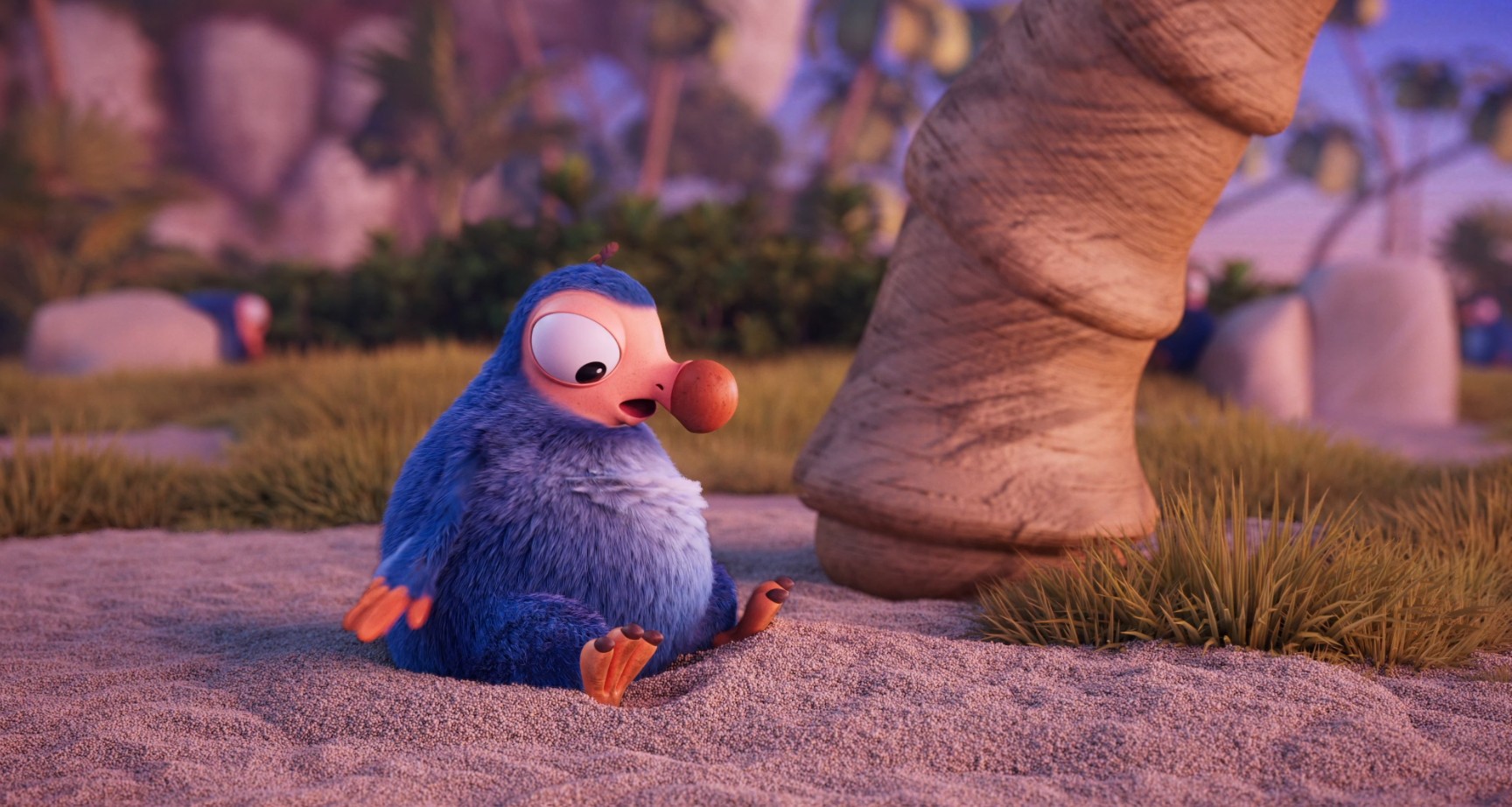
The humour is both absurd and brutal, chosen to provoke laughter, surprise and empathy for the characters we know are doomed.
“During the production of the film, we discussed the level of violence at length to ensure that it was suitable for all ages. Far from realistic or explicit depictions, our approach favours cartoonish violence. There’s no real blood or pain, just exaggerated distortions and slapstick gags.”
It’s an approach that blends perfectly with the rounded, gentle aesthetic of the characters, each with a death more ridiculous than the last and reminiscent of the acidic tone of cartoons from the last century, such as Bip Bip and Bugs Bunny .
Cartoonish dodos with a clumsy charm
How do you provoke empathy and laughter without arousing disgust? That’s the balancing act that the El Dodorado team performed when they created these characters designed to be slaughtered to the last man, much to our delight. With these clumsy birds as (almost) the only characters, the film required a great deal of thought to create protagonists who are both touching and ridiculous.
“Like the Minions or the Raving Rabbids, we needed a strong, unique design that would make the audience want to get attached to these characters and follow their adventures. At the same time, it had to be compatible with our various gags. We didn’t want the design to be too humanised, or to bear too close a resemblance to the real anatomy of the dodos.
In the end, we opted instead for a soft, squishy silhouette, reminiscent of a sack of potatoes. This shape proved perfect for expressive cartoon-style animation, while instantly making the dodos endearing in their awkwardness.”
A clumsy charm that also shines through in the oversized eyes of these creatures, allowing the team to easily move their hapless characters from innocence to terror to confusion, depending on the expression conveyed by these eyes that speak volumes.
A round, gentle universe that clashes with sharp visual humour
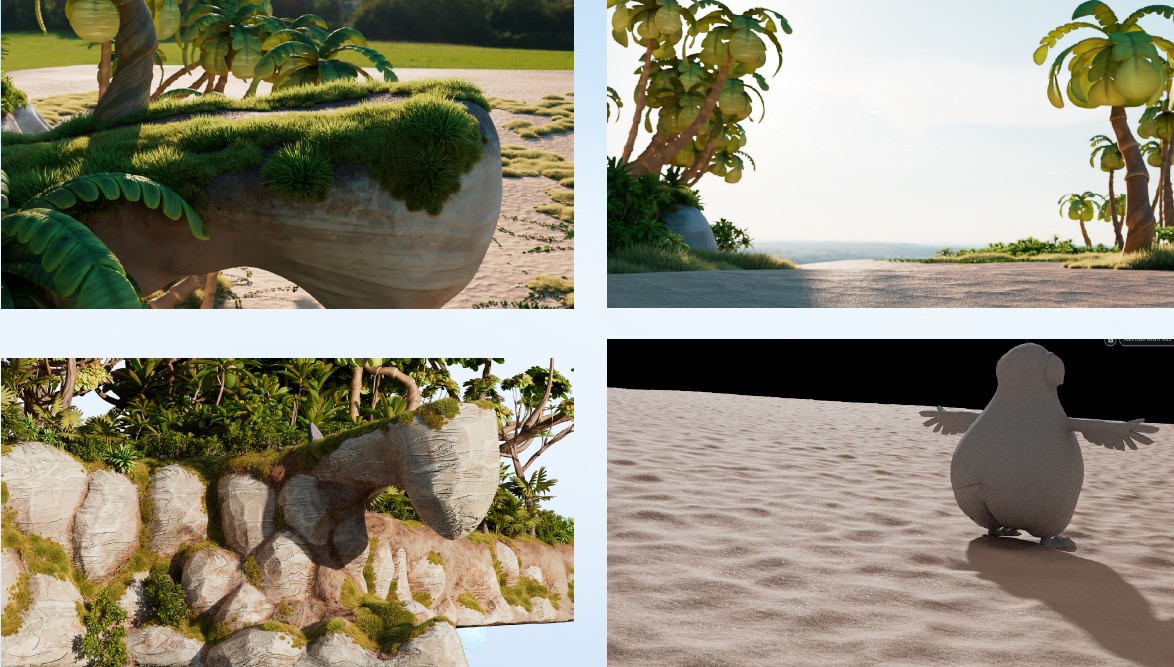
“Just like the dodos, the environment is designed to appear round and soft,” says the team. “A choice that deliberately contrasts with the overwhelming presence of death”, which gives the film its ironic flavour.
The island where the dodos are trapped is designed by the team to emphasise the lack of any possible escape route.
A rather sober world of dry land and sandy beaches, with only coconut palms to punctuate the landscape.
“In contrast, we wanted the island across the water to look like a cornucopia, covered in juicy, colourful fruit.
It’s a paradise overflowing with riches that the dodos dream of reaching.” This impulse will punctuate the entire film, contributing to the accumulation of gags in the purest cartoon style.

But these artistic choices also posed a number of challenges for the team, both in terms of the characters and the rich universe, despite the simplification of some of the sets. To bring this project to fruition, the team had to go through a number of iterations, and master the latest 3D animation tools.
“It’s everyone’s commitment that has enabled us to bring this project to a successful conclusion”.
Because of the large number of characters involved, the film posed very specific technical challenges for the team. “We wanted to give a unique look to each dodo, and this required hand animation for each one, as well as a wide variety of cycles to dress the crowd. Our desire for graphic consistency also led us to carry out extensive research into hair and grooming, so that we could optimise the quality of the rendering with the number of characters on screen.”
The team developed a specific production pipeline capable of supporting a large number of characters in this life-size environment.
The Universal Scene Description (USD) format, an open-source format that promotes interoperability between content creation tools, proved easier to use for this purpose.
The animators and renderers therefore chose this one, which also made it easier to share the various graphic assets.
“Among the various R&D experiments linked to this project, we created a Frustum system to remove the groom from parts not visible from the camera, as well as an automatic groom writing programme, with different quality levels depending on the distance of the dodos from the camera. We also set up an instancing system to create backgrounds with lots of plants and large crowds of dodos, while working on sand simulation with our characters.”
These are all methods acquired during their training in 3D animation, which these students have each reappropriated in their own way to meet the challenges of this very special project.
“The division of labour came about quite naturally,” recalls the team. “The group’s skills complemented each other very well, and everyone was able to contribute their own expertise throughout the various stages of the film. It was everyone’s investment, time and perseverance in the process that enabled us to bring this film to a successful conclusion.”
Their advice to students in the making? Enjoy what you do, and communicate.
Although this project is now behind them, and the students are now working in a fast-changing sector, the film team remains proud to have made this short film, which corresponds to the initial idea that gave impetus to the project.
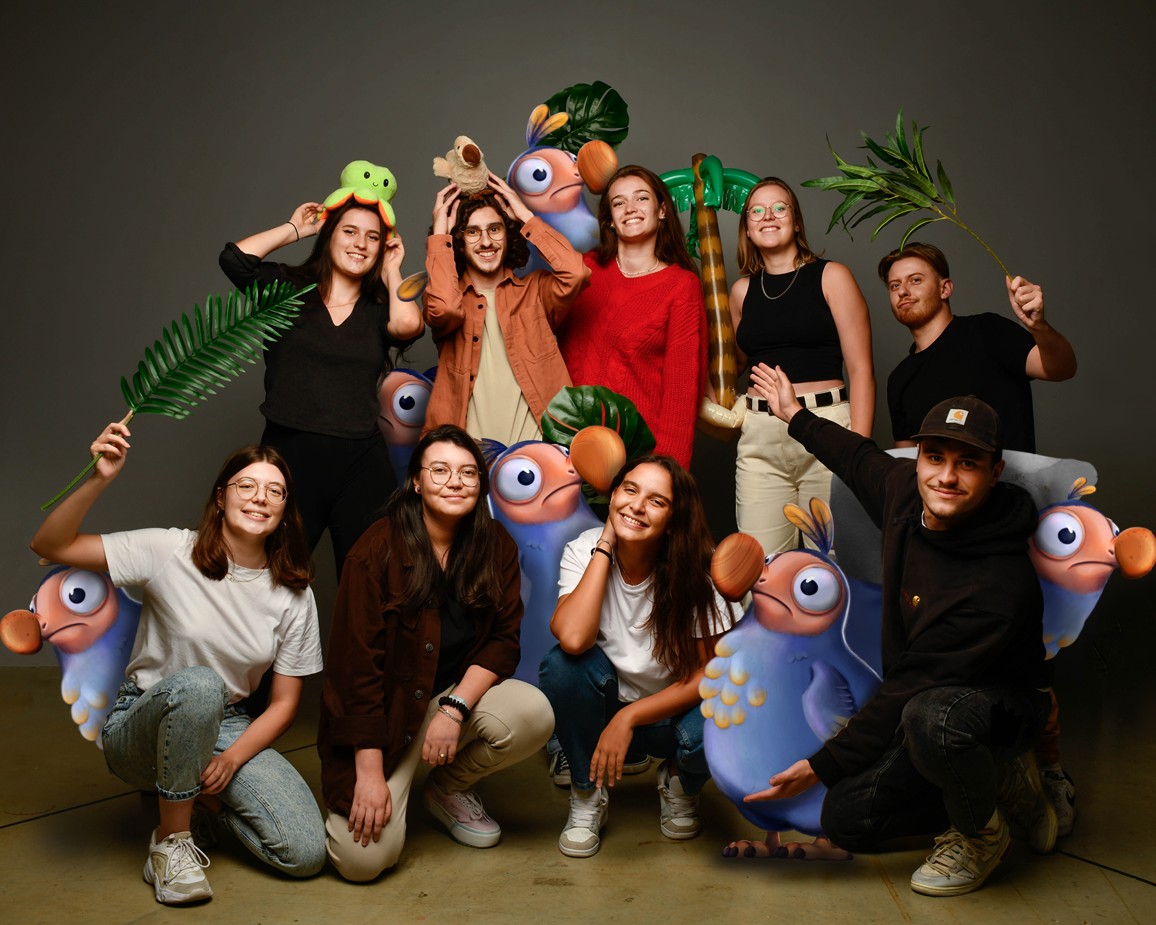
“Despite the difficulties and challenges we set ourselves, we managed to find solutions at every stage of the project, and that’s still a great source of satisfaction, especially the day we finally saw that animating a hundred dodos on screen was possible.
But it’s above all the human aspect of this project that will remain one of our fondest memories. To have been able to make a short animated film with nine artists who put so much of themselves into it, all in a happy, pleasant and attentive atmosphere, is priceless.
So if we had to give one piece of advice to students making films today: communicate. It will make production more efficient, and above all, more enjoyable.”
This is sound advice from a team that is still close-knit and happy to share this film, and it’s easy to feel the pleasure they took in bringing it to life.
Technical learning, innovation, but also a real human adventure, the production of a short animated film is a unique moment in the lives of ESMA students. These students have understood this, and are still eager to share their experience and their learning.
As for their film, El Dodorado is now available in full on our YouTube channel: