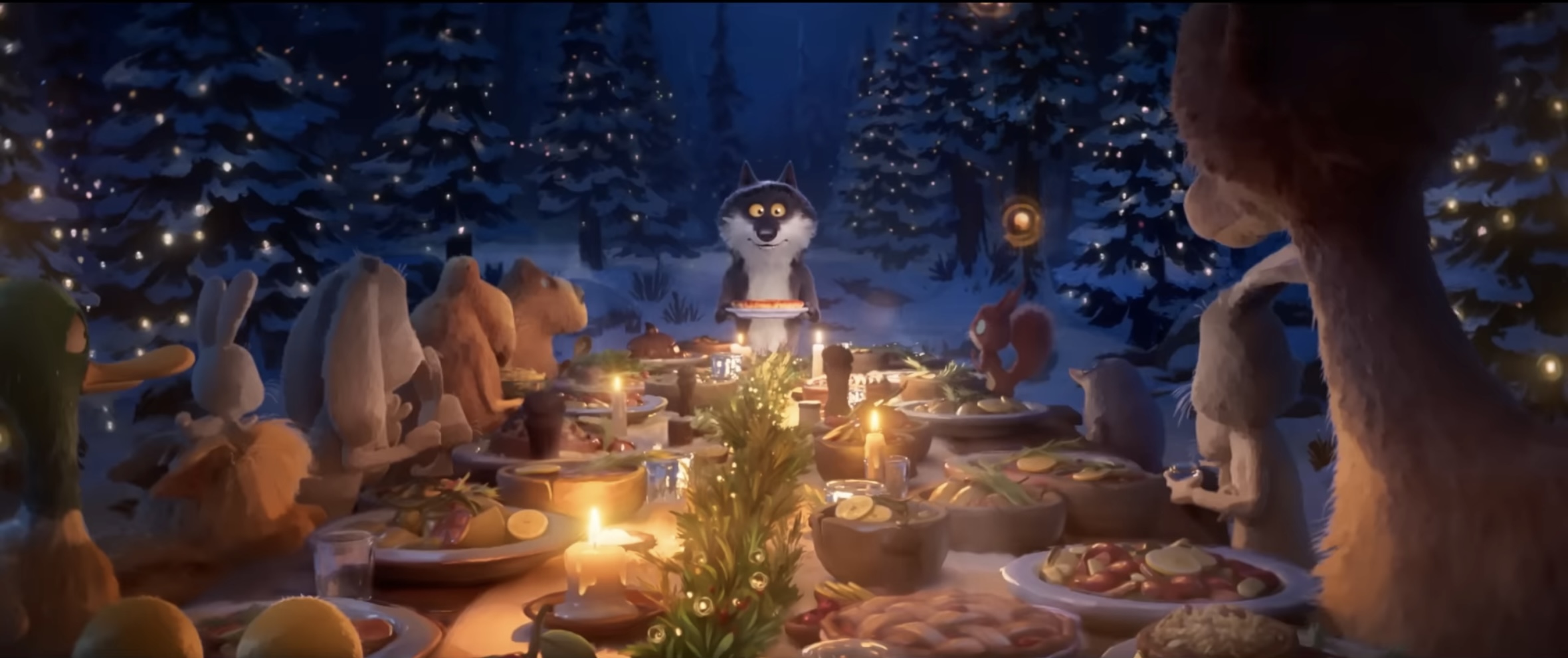
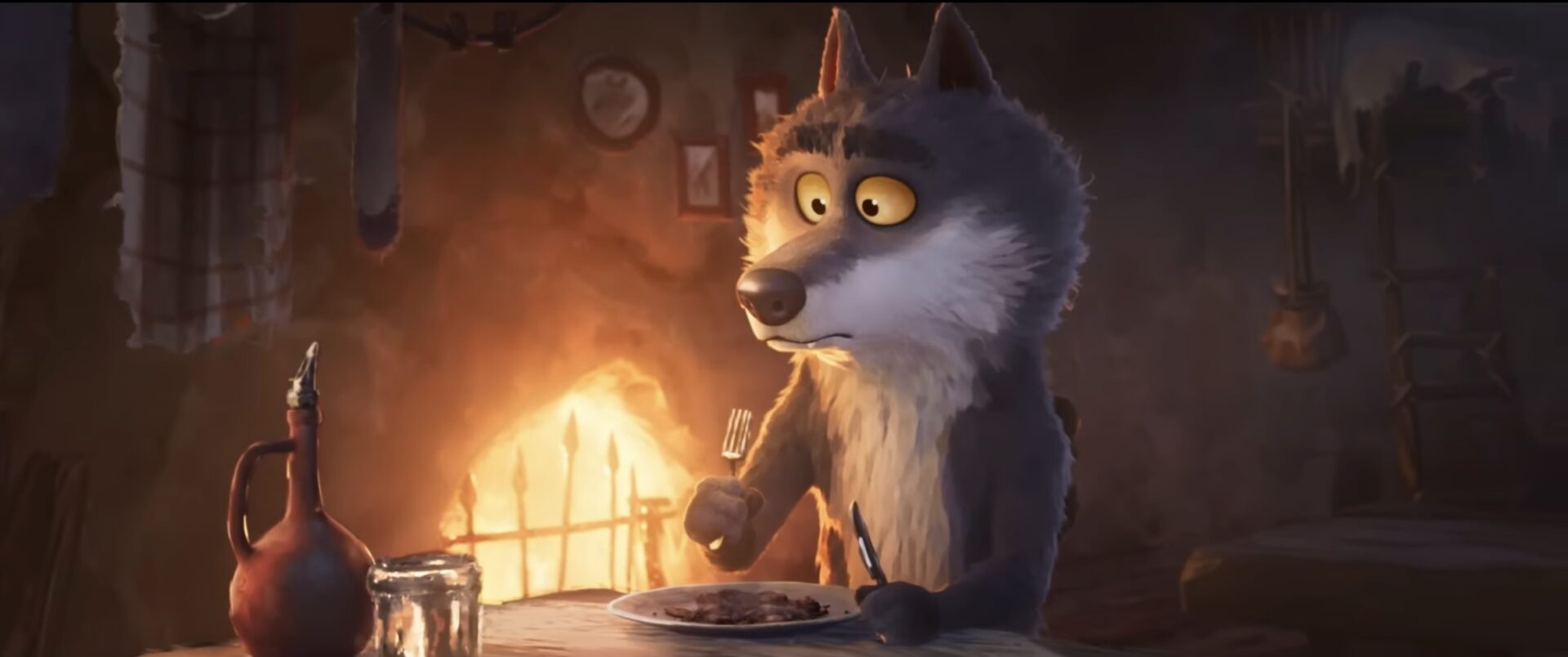
Broadcast on 6 December in prime time on TF1, this two-and-a-half-minute short film about the Mal-Aimé, a wolf trying to fit into life in the forest, and more specifically at his community’s end-of-year dinner, stood out for its high-quality animation, which quickly won the hearts of millions of people.
A viral phenomenon that has since set social networks alight, this short advertising film has now amassed more than 600 million views, and has also been praised for its simplicity, its touching message, and its use of talented animation teams.
Among the real people behind this wonderful Christmas surprise is Inès Martin, who graduated from ESMA in 2023 and is Lighting & Compositing Artist for Illogic Studios. While she and her studio have been living a daydream for the past few days, we had the chance to talk to her about this adventure and her journey since graduating.
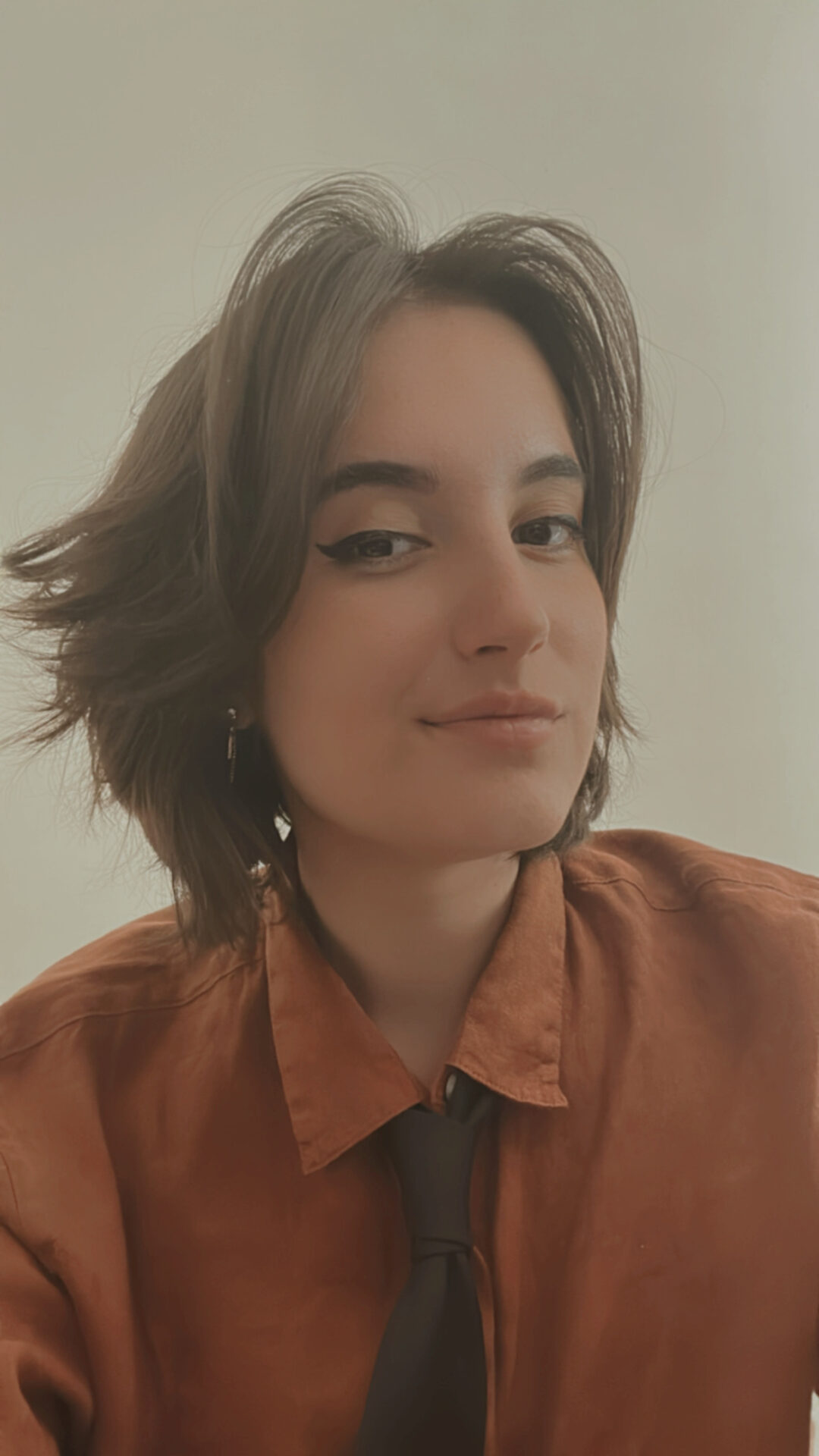
Can you tell us about your career path from school to this project?
I have to admit that it’s been a pretty sunny road. To be honest, I hadn’t even had time to finish my final year film when Illogic Studios had already contacted me to join their team as a Lighting and Compositing artist. Afraid of missing out on this opportunity, I (for a short time) combined working at the studio during the day with producing my final year film in the evening. With hindsight, it would probably have been easier to talk to my school or employer about it earlier, but I wanted my fellow students to always be able to count on me without missing out on this offer, which I have absolutely no regrets about accepting.
After five months at Illogic Studios, I went to Fortiche to produce the second season ofArcane, then I returned to Illogic Studios, and I’ve been part of the set for a year now.
I was very lucky, because I fell into these two prestigious companies at the start of my career and I was able to meet some wonderful people who have now become more than just colleagues, most of them have become friends.
We’re doing this interview following the phenomenal success of the Intermarché advert you worked on. What was your exact role on this project and when did you get involved?
I was the lighting artist on the project, so my role was to use the lighting to bring a particular emotion, atmosphere and energy to the stage.
Specifically, I was responsible for the sequences inside the hut, the food shots and some of the shots of the Christmas banquet.
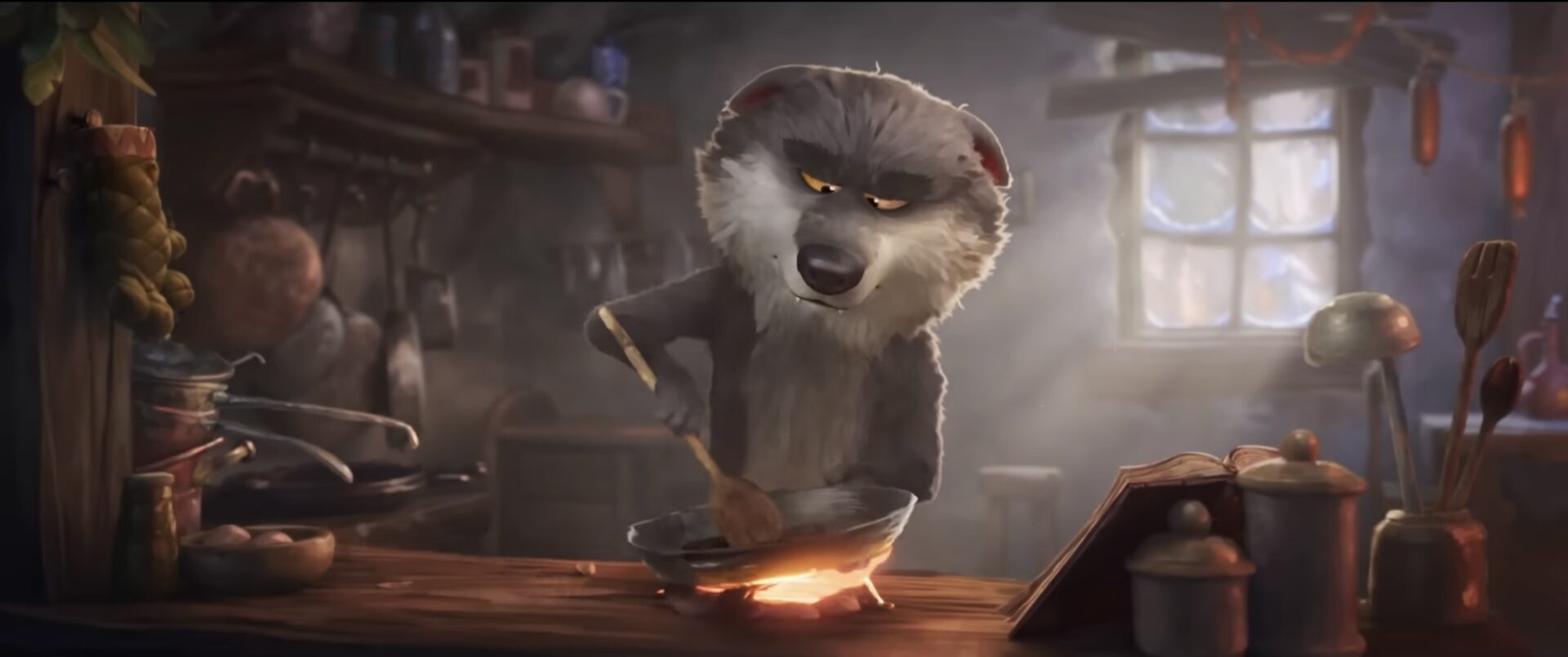
What was expected was an atmosphere that evolved with the wolf’s state of mind. The more the wolf evolved, the warmer the light became.
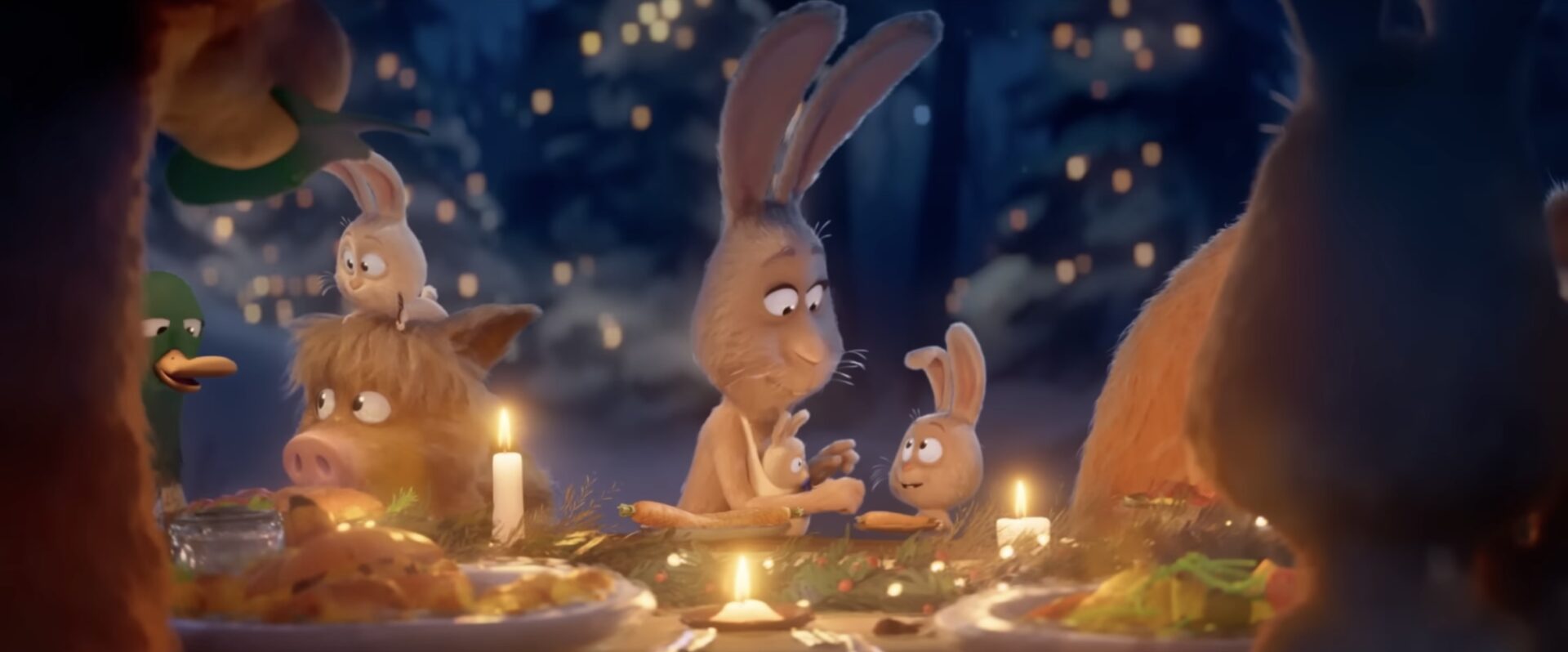
We had seven months of production on this film, which enabled us to put in place a luminous artistic direction that was discussed and thought through.
Sometimes it’s nice to take the time to ask ourselves these kinds of questions, because it allows us to express ourselves artistically while producing a film with the best possible images. For my part, I had a direct impact on the atmosphere, the lighting directions and the aesthetic enhancement of the shots.
What technical or artistic constraints have marked this work?
It was a new way of working with which we weren’t all particularly familiar. What’s more, we had to do a lot of technical and artistic research on this project, which in a way took us out of our comfort zone, with a whole new approach to put in place.
In that sense, this project has taught us all a lot, in terms of software optimisation, in terms of implementing a new graphic style, and also in terms of people. We went from a team of around fifteen people in the studio to around 70 artists. Everything was much bigger.
What tools or software did you use during the production?
We mainly used Houdini/Solaris with a USD pipeline for everything to do with the image. For animation and rigging, we used Maya and Nuke for compositing. Other software such as Zbrush, Photoshop and Da Vinci Resolve were also part of our toolbox on this project. I’m sure I’m forgetting others, but the main ones are there.

How was communication within the team, which was suddenly much more important?
In a business like ours, inter-team communication is the most important thing.
We were in constant communication with each other, it’s a habit that’s so present within our teams that it would be impossible to do otherwise. I think that without this communication, we would have found it difficult to get past certain technical challenges or simply to ensure consistency between artists on the project.
For my part, I was in constant interaction with compositing, which directly follows lighting in the production chain. In fact, lighting and compositing work hand in hand to translate the artistic vision of the teams and the final atmosphere of the project.
What did you learn during your training that was of direct use to you on this project?
During my training in 3D animation and VFX at ESMA, I worked enormously on my eye and my sensitivity to detail. Artistically, it helped me to become a more meticulous professional and to perfect my skills a little more. The training also taught me rigour and respect for deadlines, and the ability to meet deadlines (even very tight ones). On this project, I learnt a lot about Houdini and Solaris. Having mainly been trained on Maya, it was quite new for me, but I did pretty well!
I think it’s fair to say that I’m now fairly comfortable with lighting in this software. I had already done a few productions on Houdini before this project, but this experience was decisive for me.
How do you feel today, as this project travels around the world?
I still don’t quite realise it, I don’t think we were expecting it. We saw the hype build up quite quickly, and then overnight we had all the media at the studio doors. We saw the reactions on the networks, which just kept getting bigger and bigger – it’s completely crazy! But we’re pleasantly surprised and very touched by the positive feedback on our work. Thank you all for this recognition.

What would you like to explore in your next projects (artistically or technically)?
I’d like to try my hand at real-time animation and VFX. There are so many things I’ve yet to discover. I’ve only just started my career and I’m keen to learn and try lots of new things. I’d also like to do feature films, something I haven’t had the chance to do yet. So far, I’ve worked on the production of advertising, teasers and series, but never a feature film. And I admit I’m very keen to tick that box.
What films, games or worlds inspire you today?
I love the work of Xavier Dolan, who inspires me with his photography and his unique ability to capture the emotion of his characters. I also have a great deal of affection and admiration for the work of Korean director Bong Joon-ho.
As far as animation is concerned, I have a particular affection for stop motion, which I’d like to see on screen more often. I also love Satoshi Kon’s films, which are true cinematic marvels. Finally, it’s impossible not to mention the big studios like Illumination, Dreamworks and Disney-Pixar, which are my daily references.
What advice would you give to a student who wants to follow in your footsteps?
I’ve sometimes had doubts during my studies, or even been told that maybe this wasn’t the right path for me. You have to be able to turn that kind of negativity into positive energy and work with passion and love to show what you’re capable of. I don’t regret having persevered. After that, there’s no secret: in the studios, you’ll often be told that the key is the quality of your work, and your sympathy for others.
And what about the schools that are training students today?
Perhaps be a little more daring, and let the students explode with creativity, without restricting them. Sometimes, genius is hidden in ideas you wouldn’t have thought of. I’d also advise you not to let yourself be overtaken by new software trends in the industry, which evolve very quickly, and to keep up to date with what’s being used in production so that you can adapt and develop your training for the better.
A final word?
I’d like to thank the entire Illogic Studios team for their confidence, for these moments of work, joy and good humour. I get up every morning with the desire to work and I realise that this is a luxury. Thank you to my colleagues and bosses who are, and they know it, much more than that to me now. And above all thanks to the public for their positive feedback, which gives a lot of hope to artists and the creative industries in these rather difficult times.