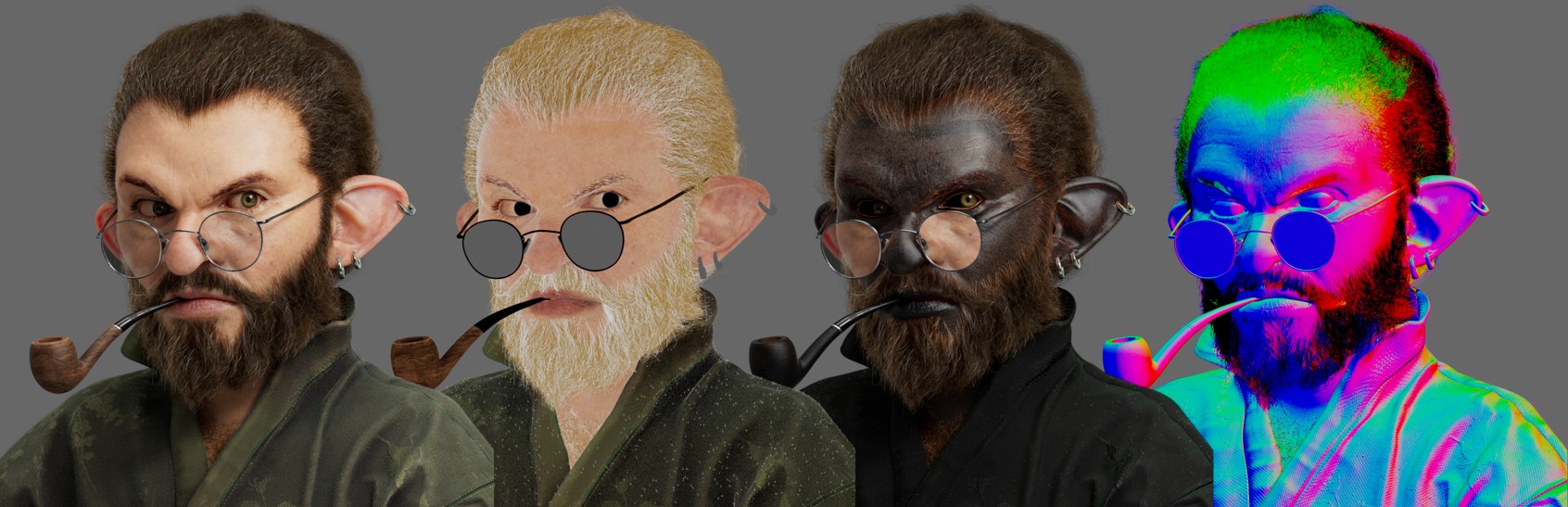
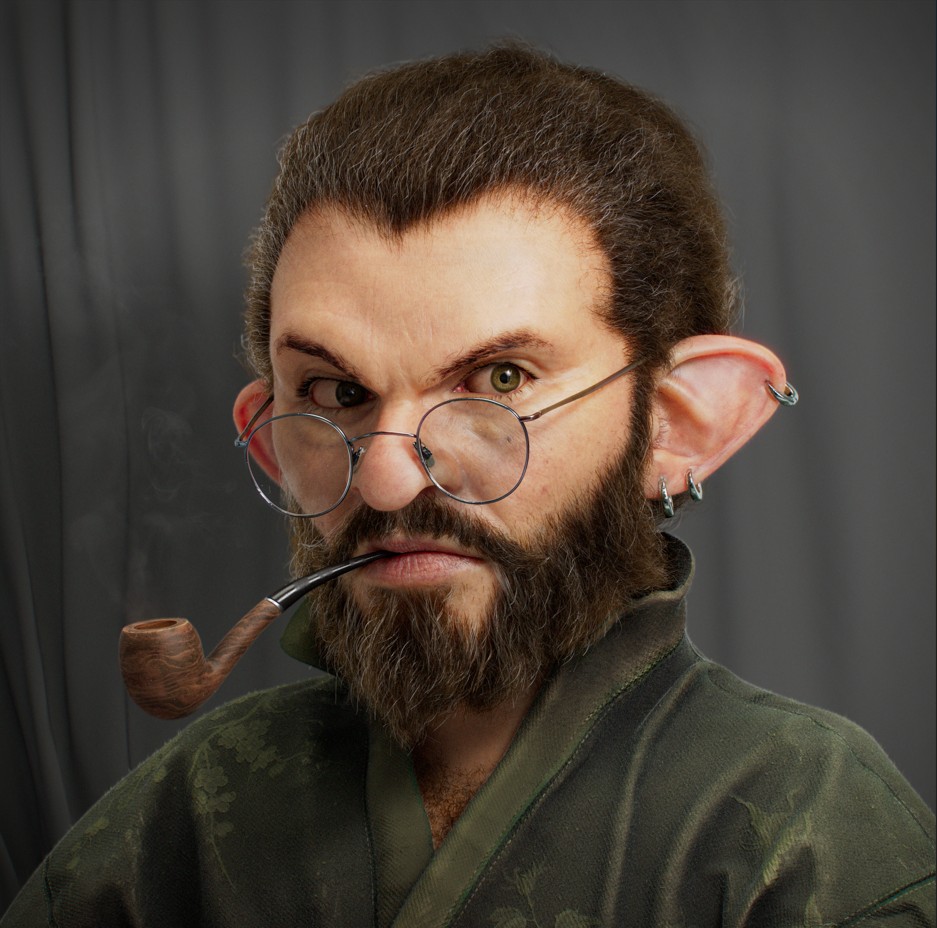
Among them, Rémi Perrier was lucky enough to have his project (The Smoking Gnome) selected to become a Pixar / RenderMan resource in its own right.
Recognition, but also a solid addition to his portfolio.
As he heads into his final year (and the production, with his fellow students, of his end-of-studies short film Aïe Aïe AI), we spoke to him about his background, what brought him to ESMA, and his ambitions for the future.
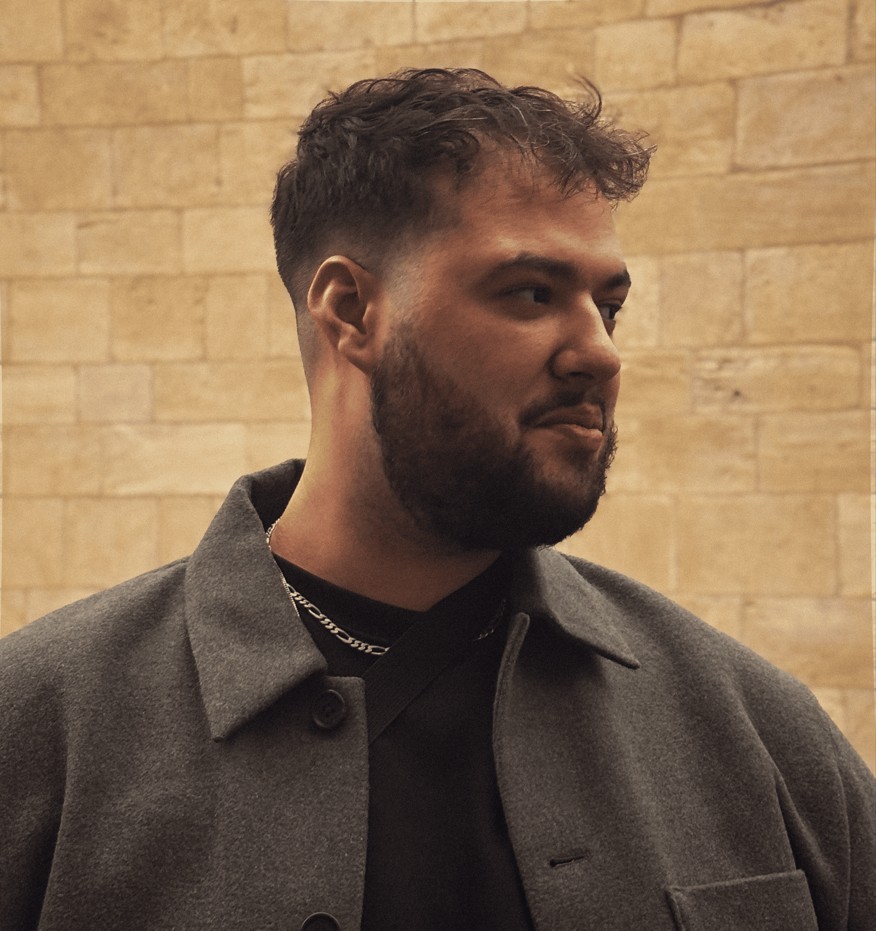
What made you choose this school and this sector?
It’s a family thing. My grandfather grew me up with VHS of Tex Avery and old cartoons, and my parents always encouraged me to follow what I was passionate about. It was really thanks to them that I developed an early attachment to animated films. It all started when I saw Kung Fu Panda in cinemas. That’s when I said to myself “I want to do that when I grow up”.
I started working with 3D when I was about 12-13 years old, self-taught. At secondary school, I spent my time watching ESMA short films online. When a school opened near me (ESMA Lyon), just as I was starting to take a serious interest in 3D, it was quite natural: I knew that ESMA had an excellent reputation in the field, and I told myself that it was the ideal place to train and transform this passion into a concrete professional project.
What does your training give you in concrete terms?
First of all, I discovered and learned to master professional software that I’d never touched before. Little by little, this has enabled me to develop real expertise (still under construction) in cinema imagery and 3D.
Secondly, the course teaches me how to work like in a real studio: respecting a pipeline, managing deadlines, collaborating with a team, accepting feedback and continuously improving my work.
And then there’s the human aspect: I’m surrounded by very talented people with different sensibilities. Working in this environment pulls me up, forces me to give the best of myself and hone my artistic eye.
Is what you’re doing today what you imagined it would be before you joined the school?
I knew I was going to get involved in 3D animation, but I didn’t expect to experience things so close to what I had dreamed of at the start. For example, I was able to do this project with RenderMan, a tool that I associated directly with the Pixar films that made me want to do this job. Being able to talk about it today is a piece of that dream that I’m touching with my fingertips. It gives me the feeling that I’m exactly where I want to be, on the path I imagined before I started school.
What are the films that inspire you, or the artists whose work you admire and who push you to excel today?
In terms of VFX, Avatar was a huge shock for me. I discovered it in 3D at the cinema when I was younger, and visually it was a real slap in the face. Weta’s work still impresses me as much as ever: this constant search for new technologies in the service of hyperrealism, the way they bring entire worlds to life on screen, it really motivates me to push the quality of my images.
When it comes to 3D animation, I’m very influenced by the work of Pixar/Disney. The care taken with the staging, lighting and textures, as well as the emotion in the storytelling, is something that inspires me a lot in what I do.
They manage to create universes that are strong and legible, but always very rich visually, and that’s what I try to strive for in my own projects.
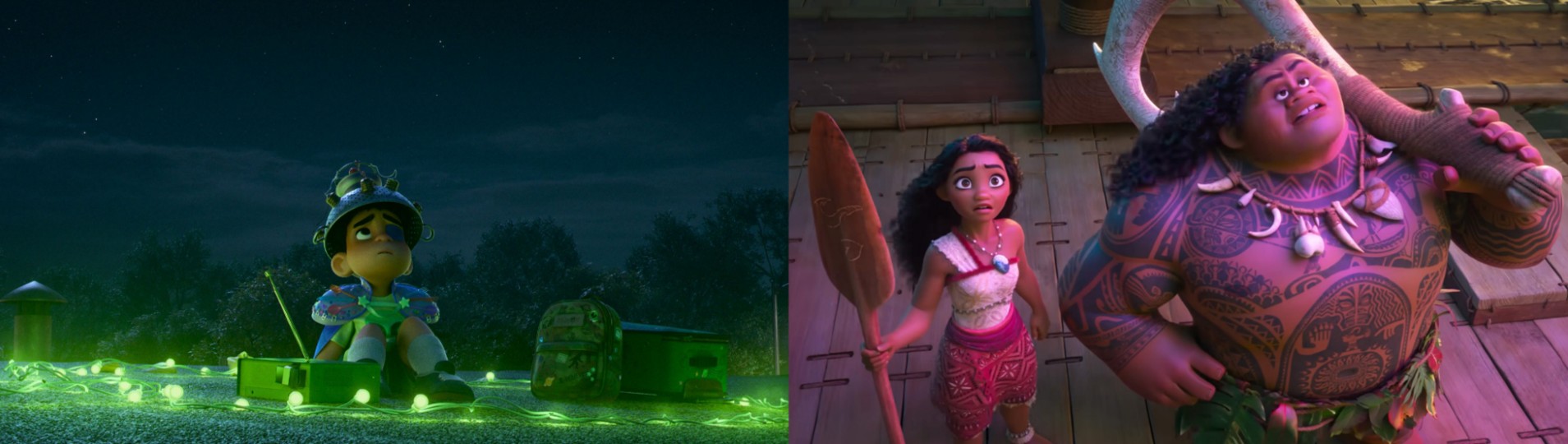
My dream would be to work on this type of project, in studios of this scale. I’d also love to work on the Despicable Me franchise at Illumination. There’s a very fun, cartoony side to this universe, which leaves a lot of room for play, rhythm and exaggerated poses. It’s typically the kind of project I could see myself having a lot of fun with.
On the other hand, I don’t necessarily have an artist that I admire more than anything else. What I find most inspiring is collective work: whole teams working together to create an incredible image or film. I think it’s better to work together than alone.
Can you tell us about the project you’ve just completed with RenderMan, The Smoking Gnome?
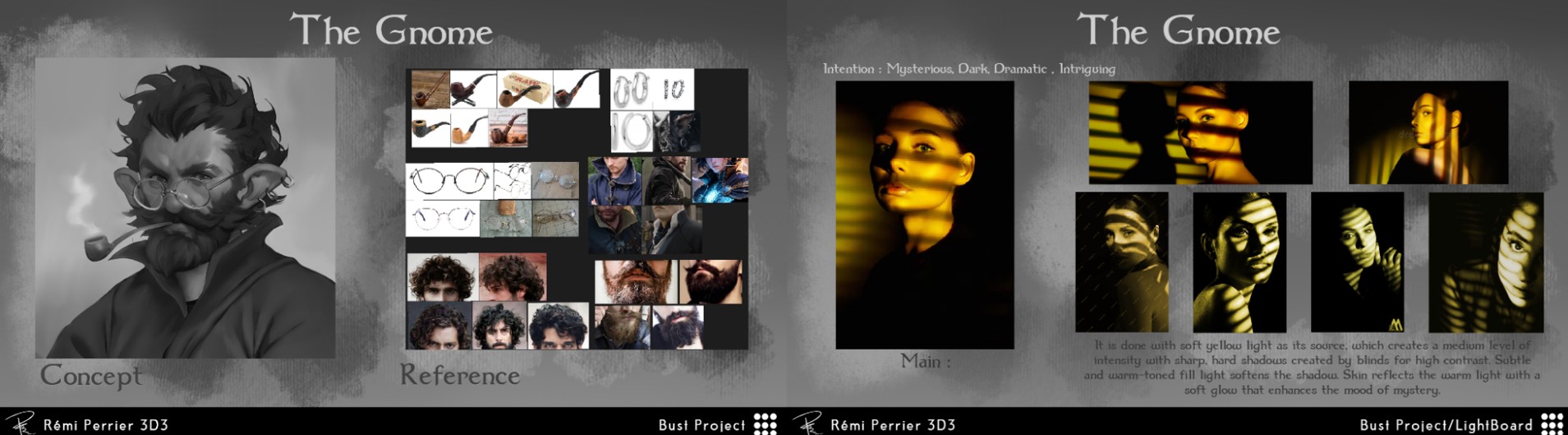
It’s a bit like the key project of every 4th year, when you go into Lighting / Lookdev: we had to choose the concept of a fictional character and make a bust as realistic as possible, using Maya with RenderMan for rendering and Mari for texturing. All under the supervision of Baptiste Lebouc (Head of CGI training at ESMA Lyon).
At the same time as this project, I was taking part in the Sci-Tech RenderMan Art Challenge, and it was in this context that I was able to start exchanging ideas with Pixar talent. I was one of the top 10 honourable mentions in the challenge. All under the guidance of Baptiste Lebouc (Head of CGI training at ESMA Lyon).
At the same time as this project, I was taking part in the Sci-Tech RenderMan Art Challenge, and it was in this context that I was able to start exchanging ideas with Pixar talent. I was one of the top 10 honourable mentions in the challenge.
I started with a very simple intention: to create a character that was both enigmatic and captivating. I started by working on the bust, already thinking about the final result:
how the skin would react to light, where to place areas of contrast, how to bring out the eyes, etc.
Technically, the project’s main software was Maya, with RenderMan in RIS as the rendering engine.
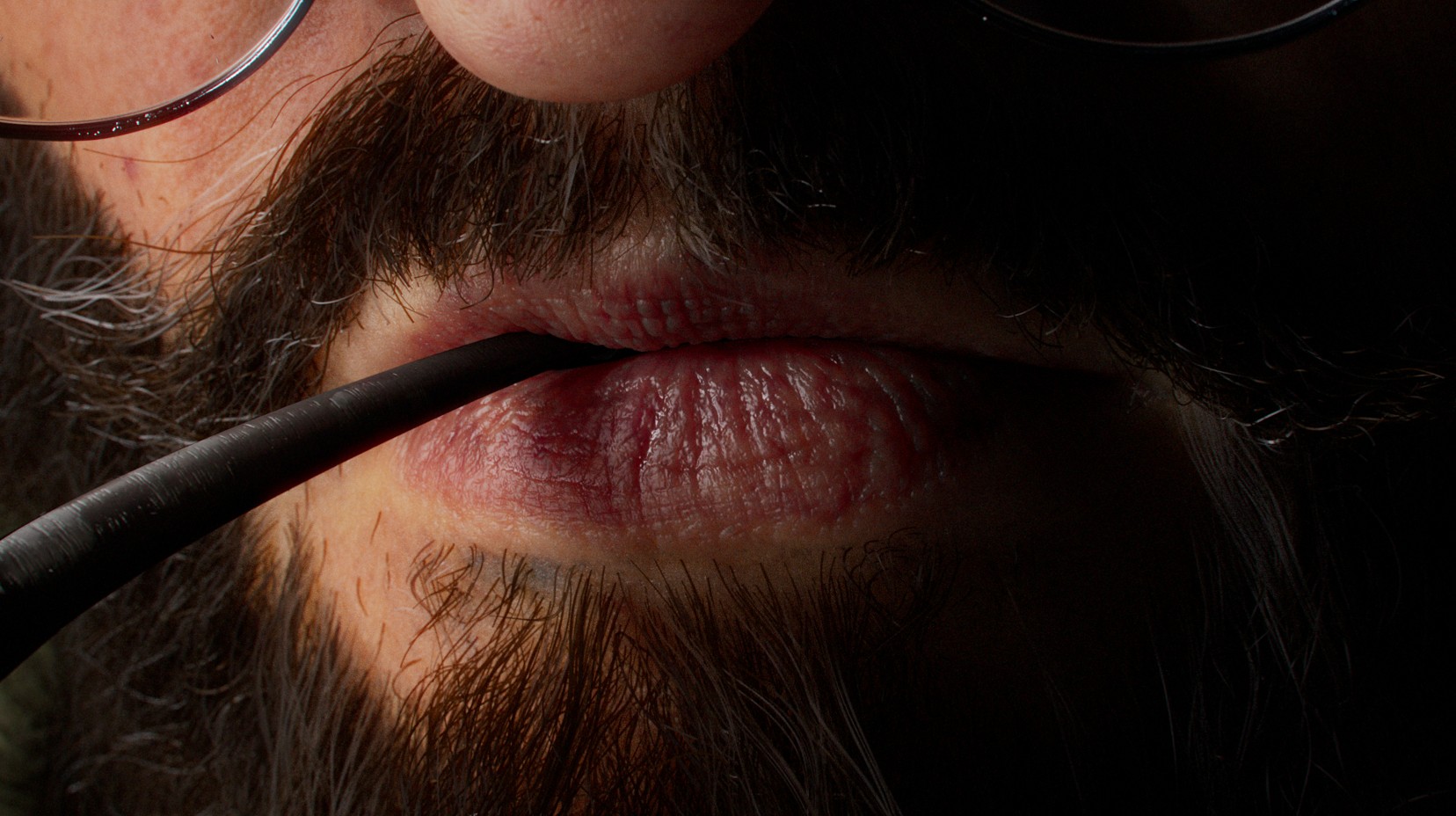
For the hair, beard and small hairs, I used XGen Core, which allowed me to give the character an even more lively (thanks to the use of coding in the randomisation of the hairs) and detailed look. The sculpting was done in Blender.
For the texturing, I used Texturing XYZ’s multi-channel textures to recover as many micro-details in the skin as possible, then everything was painted and adjusted in Mari, bearing in mind that the character had to remain believable in very close-ups.
Technically, I worked in ACES from start to finish.
This allowed me to use consistent physical values in the shading and lighting, and therefore to push realism.
First I calibrated the character in a neutral lighting studio, to validate the shader without colour pollution, and only then did I move on to more creative lighting setups.

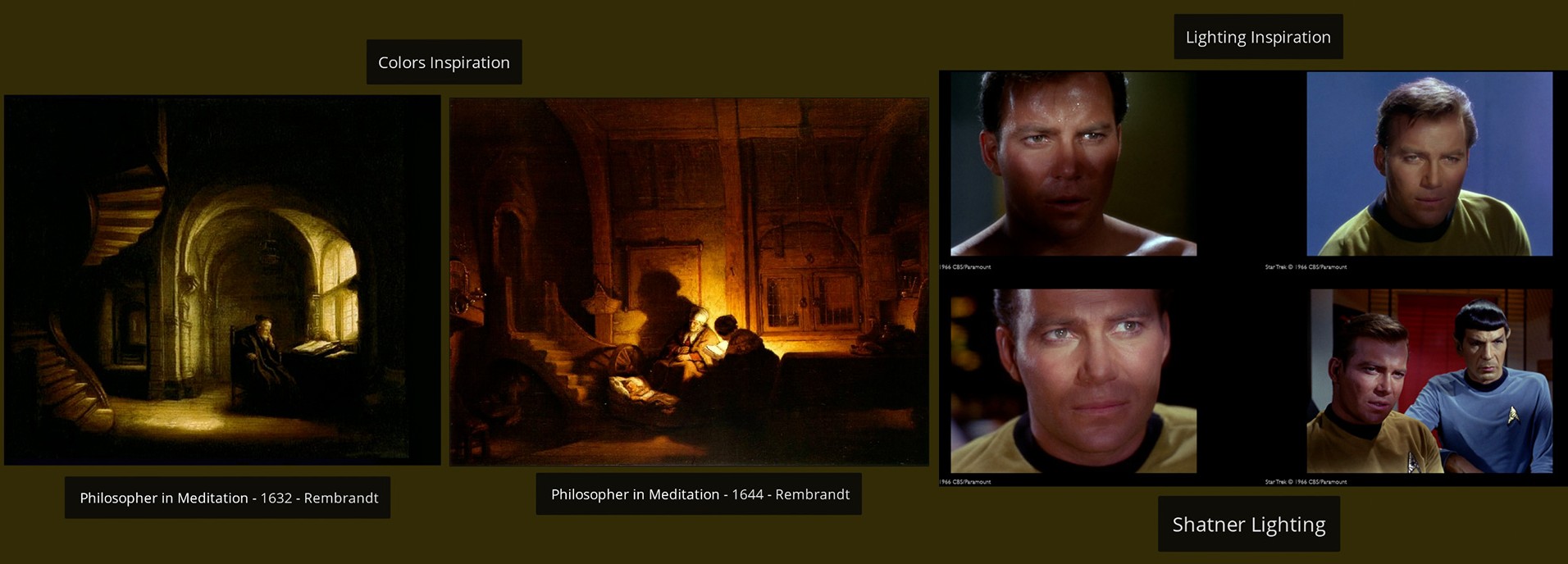
For the atmosphere, I took a lot of inspiration from Rembrandt-style chiaroscuro, with references like Philosopher in Meditation, to give the character depth and drama.
On some rigs, I also used Shatner-style lighting, which reinforces the film noir feel and the mystery of the gnome.
I iterated a lot with feedback from Baptiste Lebouc, former students and professionals, until I had an image that really held up.
Finally, as the project was to become a free RenderMan resource, I also approached it with this constraint in mind: to have a clean, educational scene that shows good lighting and shading practices, and that makes artists want to open it up, dissect it and play with it. For this adaptation, I worked directly with Leif Pedersen (Renderman Specialist at Pixar): we adapted the content to Pixar standards so that it would be free and accessible to everyone.
I’m very grateful to Leif for this collaboration. For me, it represents a major career objective that I never imagined I’d achieve so quickly.
What did this teach you, and how did it feed into your training at ESMA?
This project has taught me an enormous amount, from a technical, artistic and human point of view. The simple fact of collaborating with Pixar / RenderMan on a resource is an experience in itself: it forced me to be much more rigorous, to clearly document my work and to respect professional standards.
From an artistic and technical point of view, the project taught me to always seek a balance between physical values and artistic intent. Working with credible values, understanding how light really reacts on a skin, an eye, a material… while maintaining a strong, legible and expressive image. I realised that realism doesn’t just come from technique, but from this blend of precision and artistic sense.
It’s also been a huge source of inspiration for my research work: I’ve got into the habit of always starting with real references when I’m aiming for realism. Without references, you invent in a vacuum; with solid references, every choice is more justified, more relevant.
At ESMA, all this has had a direct impact on the way I work: I’m more demanding about my shaders, my lighting and my stage preparation, and I also try to share what I’ve learnt with my fellow students. This project wasn’t just a ‘nice image’, it really accelerated my training.
What do you think are the most useful pieces of advice to keep in mind today, for students who want to get started?
The first is very practical: make personal plans.
Don’t limit yourself solely to school exercises, but take advantage of your free time to try out ideas, experiment, make mistakes, try again… That’s how you make the most rapid progress and build a portfolio that really reflects you. And above all: don’t stay in your own corner. Working together, mixing worlds and sensibilities, is extremely instructive.
The second is more mental: no matter how talented you are, you never make a film on your own. It’s the people around you (your classmates, your teachers, your colleagues) who really bring a project to life. Everyone brings something to the table, and it’s this combination of skills and different perspectives that makes the projects truly incredible. Keeping that in mind helps you to stay humble, listen to others and work in a good spirit.
As a student about to enter the job market, how do you feel about a somewhat unstable industry?
First of all, I have to admit that it scares me a bit. You can already see it when you’re looking for an internship: there are lots of applications, few places, and the process can be long and uncertain. It gives you an idea of the reality of the market and how unstable it can be, not to mention the AI.
But at the same time, this situation is pushing me to be even more demanding of myself: to develop real artistic know-how, an ability to tell stories, to work in a team and to adapt to the tools. AI evolves, pipelines evolve, but there will always be a need for people capable of making artistic choices, carrying a vision, collaborating and solving creative problems.
So yes, there is some concern, that’s clear, but that doesn’t discourage me. On the contrary, it makes me want to continue to progress, specialise, remain curious and be ready to seize opportunities, whether in France or abroad.
What are you doing to prepare yourself for the job market?
I’m currently working in three areas.
The first is the portfolio. I try to build a clear, focused portfolio around what I really want to do: lighting / lookdev. I don’t select many projects, but images and videos that I push to the maximum, between school work and personal projects. The idea is to show a high standard and a visual identity, not just an accumulation of exercises.
The second is the network.
My work placement at STIM Studio as a Lookdev/Modeling Artist has already given me my first taste of the studio world. As well as that, I’m trying to keep in touch with the artists I’ve met (at Pixar, Disney, Illumination, STIM Studio, etc.), to ask for feedback on my work, and to refine my CV, my demo and even the way I present myself.
The third is continuous skills development.
I’m continuing to learn about the software I use (Maya, RenderMan, Mari, XGen…), keeping up to date with the latest tools and pipelines, and working on my English. The idea is to be as ready as possible, whether I’m applying for a job in France or abroad, and to show that I’m capable of adapting and learning quickly.
I’m also very active on LinkedIn, which I use mainly as a monitoring and connection tool. It allows me to keep abreast of 3D news, but also to chat with professionals that I’ve had the opportunity to meet or discover through their work. I also post my projects, which allows me to get feedback, gain visibility and start building a network for the future.
Any final words for your colleagues, or the students who will be following you?
“Help yourself, support yourself, because in this business as elsewhere, you can never do anything on your own. It’s the people around you that allow you to go further than you ever imagined.
And if you want to follow the rest of my adventures, don’t hesitate to find me on the networks… and above all, come and support our film Aïe Aïe AI in 2026!”