

Whether you’re the captain of a ship or the pilot of a plane, the metaphors are many, but they all point to a single truth: the success of a game depends on the Game Director, from a technical, entertainment, artistic and economic point of view.
So how do you get into this job? That’s what you can find out in this guide.
What are the duties and responsibilities of a game director?
A true architect of the video game they are working on, game directors are the brains behind the project. They contribute their overall vision and expertise, and work alongside the various teams and their project managers to guarantee the quality of the final result.
He is also responsible for defending the interests of his project with higher hierarchical levels, while keeping in mind the technical and budgetary constraints of his production.

In short, the game director is the person with the best vision of the project, both technically and artistically.
Its responsibilities are therefore very important, and require a wide range of skills.
What skills do you need to excel as a game director?
They range from a thorough command of video game creation software to advanced project management skills and a very good level of team management.

The game director must be able to keep in mind the creative vision of the game that he wishes to infuse into his project, while respecting the budgets and schedules established upstream. The game director must also be able to find the best talent to put together his teams, and adapt them if necessary.
Finally, to ensure that the production process is as efficient as possible, the game director must be flexible and adaptable, and be able to make numerous decisions concerning all aspects of the game for which he or she is responsible.
What tools and software does the game director use?
As we mentioned earlier, the role of game director is as much that of a creative person as it is that of a leader and manager. To accomplish these tasks, project management tools such as Miro, Trello and Notion will be a great help in keeping you on track, and maintaining your vision of the project despite the challenges inherent in producing a video game. The fluidity of the creative process will depend directly on your ability to integrate these tools, get your teams to adopt them, and use them effectively.
At the same time, your expertise must encompass the full range of technologies used to bring a video game to life. You may not be an expert in every piece of software, but a thorough understanding of each is imperative, as this will enable you not only to anticipate and solve your team’s problems, but also to communicate gameplay, artistic and technical issues clearly to the other members of the project.
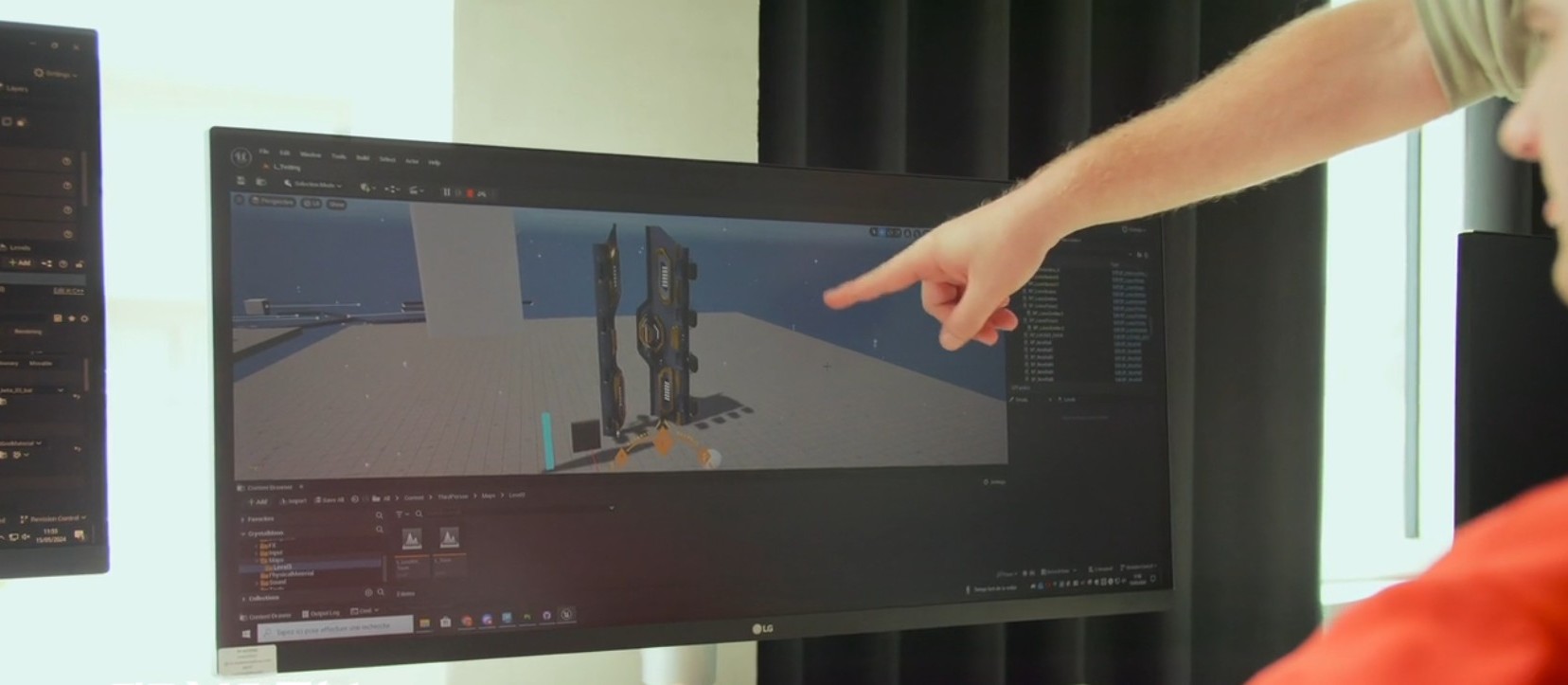
As well as mastering game engines such as Unreal Engine, Unity or GoDot, being able to understand and use 3D modelling and animation software such as Blender, Maya, 3ds Max or even Houdini and Daz3D is ideal for taking into account all aspects of video game creation. In addition, mastery of 2D/3D illustration and creation tools such as ZBrush or Photoshop, as well as software dedicated to managing special effects, can be a real asset.
Finally, in a sector that is constantly changing, and that is currently being heavily impacted by AI, it is vital for game directors to cultivate a constant technological watch. Staying at the cutting edge of software and innovation is not only a competitive advantage in the eyes of the public, but also a significant challenge for your career.
Which baccalaureate should you choose?
There is no standard route to this job, so you can hope to gain access via several baccalaureate courses. If you are more artistic, a Bac ST2A (Science and Technology of Design and Applied Arts) is a good choice for developing your technical mastery of the software used in the sector.
If, on the other hand, you are more at home with the technical aspects, a baccalaureate in mathematics or NSI (Numerical and Computer Sciences) might be more appropriate, as the creation of a video game involves many aspects of programming. In any case, it’s essential that your background can steer you towards a school that trains for the video game industry, so that you can integrate smoothly.
What training do you need to become a game director?
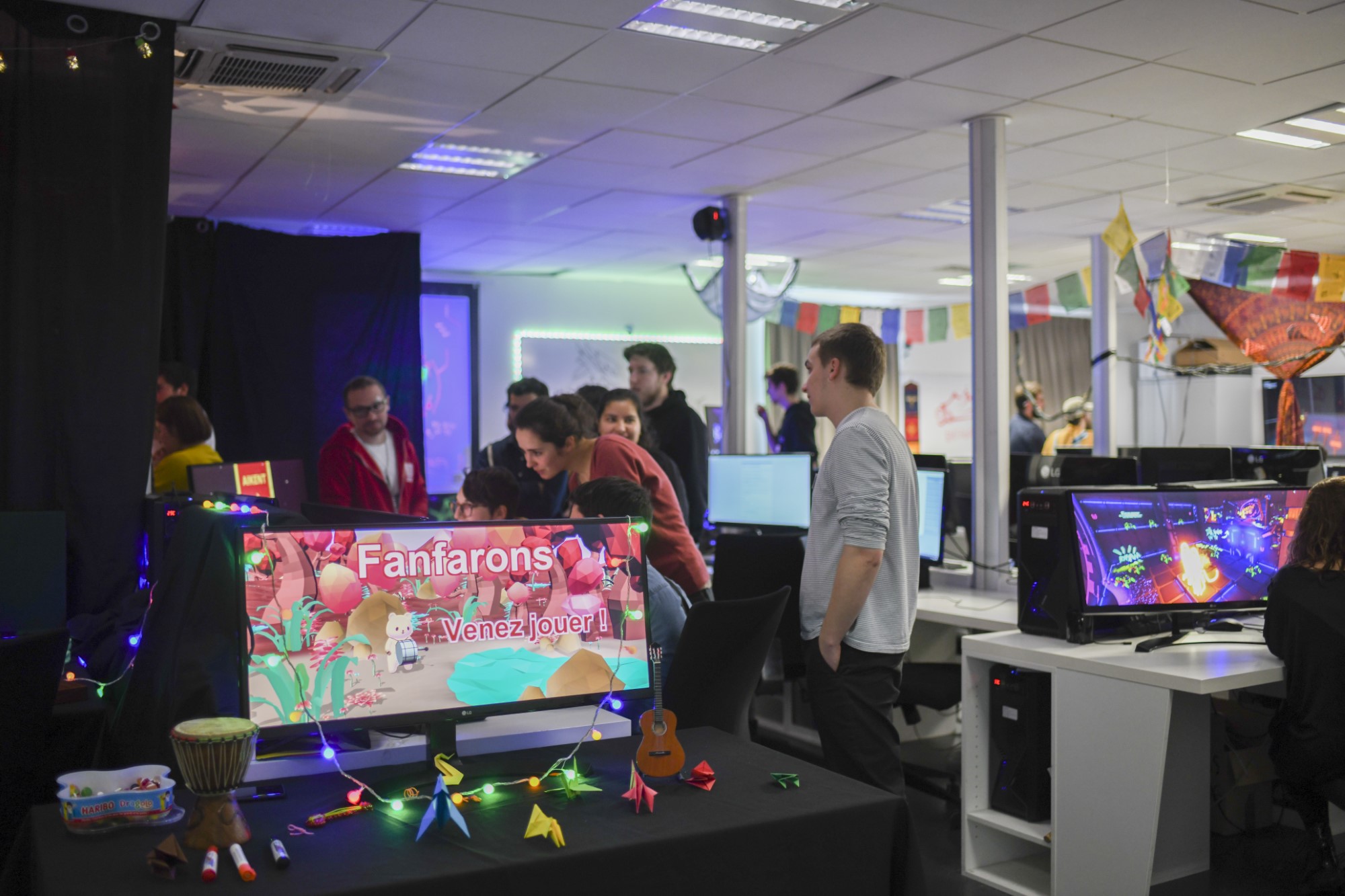
If you want to become a game director, going to a specialist school is ideal. The job requires a level of mastery that can only be achieved through a precise, comprehensive course of study that familiarises you with all the tools and software used in the video games industry.
This type of training, which also puts students in direct contact with studios through conferences, masterclasses and practical placements, is also an ideal springboard for rapid entry into the job market.
How much does a game director earn in the world of video games?
Salary at the start of your career
Generally speaking, you don’t become a game director on your first job. But when you do get the job, you should be aware that a junior game director earns between €40,000 and €50,000 gross per year, depending on the size of the studio they work with.
Salary with experience
With experience, a game director’s salary can reach much higher levels, especially if he or she has succeeded in making a name for himself or herself in the industry and with the public.
Major international studios can offer salaries in excess of €100,000 gross per year. The average is around €75,000 a year, with wide variations depending on the location of the studio, its size and the scope of the project managed by the game director.
What are the career prospects in this profession?
To become a game director, it is not uncommon to start out as an art director or technical director, or as a lead game designer, for example.
Once you’ve proved yourself as a game director, there are plenty of opportunities for development. Setting up your own studio, working on larger-scale projects, or holding an executive position within a studio with which you have built up a relationship of trust: these are just some of the interesting career prospects that will be open to you.
Which school should you choose to become a game director?
Among video game schools, ESMA offers a curriculum combining theoretical training and practical experience. The course culminates in the completion of an end-of-studies project, giving aspiring game directors a real-life professional experience.
This project, together with the various experiences acquired at the end of the course and the work placements completed, will form an attractive portfolio that is essential for convincing recruiters. As an added bonus, you’ll have the opportunity to develop contacts, lay the foundations of your professional network, and test your managerial and project management skills.