
In a nutshell, you’ll be one of the key players in the creation of video games, and the success of your project will depend on your managerial skills and your mastery of the tools used in the sector.
How do you get into this job, what skills do you need and what are the tasks involved? How do you train to become a lead graphic designer? That’s what this guide is all about.
What are the duties and responsibilities of a lead graphic designer?
The lead graphic designer’s job is to design or supervise the design of graphic elements that will then be integrated into the video game. Depending on requirements, this may involve characters, vehicles and various creatures, but also more intangible elements such as lighting, textures or visual effects such as smoke, fire, water and many others.
As team leader, he will be responsible for this creation, which will have to be in line with the specifications received.

The lead graphic designer will also act as the link between his team of graphic designers and those of the other leads, under the supervision of the art director or game director, to ensure that the elements for which he is responsible are rendered to a high artistic standard, while complying with the industry’s high technical standards.
What skills do you need to excel as a lead graphic designer in video games?
As you will have realised, a lead graphic designer must not only master the software involved in the graphic production chain for a video game, but must also have good managerial skills in order to supervise his teams as effectively as possible.
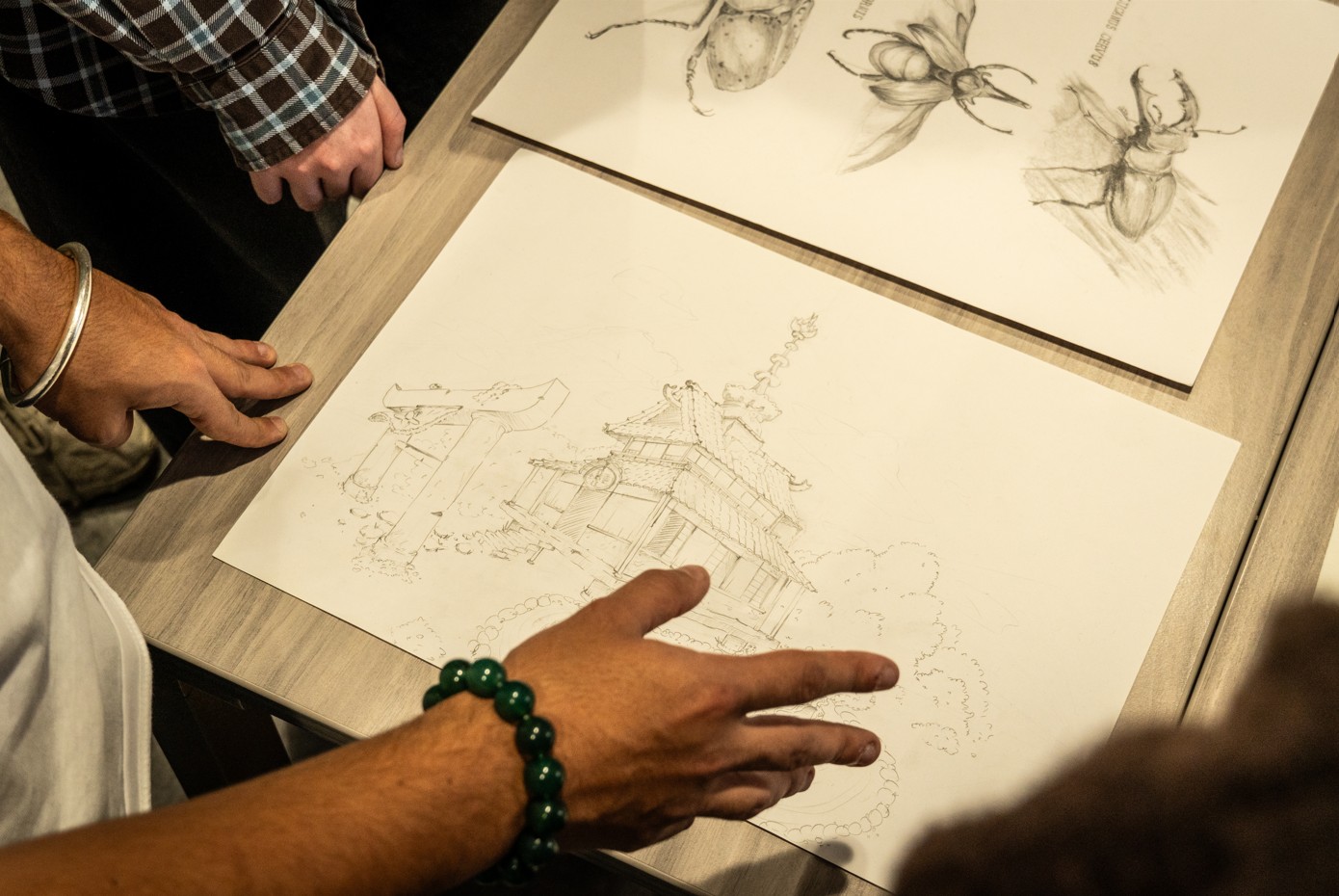
Uniting, supporting and inspiring – these are all skills that make a good lead graphic designer, and are actively sought after by recruiters.
Alongside this human factor, the ability to deploy creativity through a skillset that combines technical knowledge with a true artistic sense is also key to achieving this position, in a sector where the quality of visuals weighs just as much as playability in the user experience.
What tools and software does the lead graphic designer use?
Graphic design software such as the Adobe suite, as well as animation tools such as Maya or Blender, and specialist software such as ZBrush or Substance Painter, are essential programmes for lead graphic designers.
Then, beyond these creative tools, understanding and being able to deploy your work in a real-time game engine such as Unreal Engine or Unity is obviously an asset in the video games sector, which today relies heavily on these technologies. A good lead graphic designer is as much a leader as someone with the ability to get down to the nitty-gritty in the more intense phases of work, and to provide practical, effective help to the members of the team for which he or she is responsible.
To manage these tense moments smoothly, lead graphic designers are well advised to use planning management software and effective communication tools such as Slack, Trello, Notion or Discord, to keep an overview of the progress of the project entrusted to them.
Which baccalaureate should you choose?
While there is no single pathway to becoming a graphic design lead, being able to build on your artistic and technical skills from the moment you choose your A-levels can help you to envisage a smoother transition into higher education.
For this role, you should aim for a baccalaureate with a focus on the applied arts, or a scientific baccalaureate, which will give you the opportunity to work with NSI and improve your technical skills.
What training do you need to become a lead graphic designer?
If you can already familiarise yourself with graphic design software on your own, training at a school specialising in video games is crucial if you want to stand out from the crowd of recruiters.

A three-year course combining theory and practice with on-the-job learning (through work placements) is ideal, as it will enable you not only to acquire a solid foundation of common ground, but also to put it into practice during a collaborative end-of-studies project. This experience also encourages the development of soft skills, which, as you will have realised, are essential in an industry where teamwork is paramount.
How much does a lead graphic designer earn in the world of video games?
Salary at the start of your career
At the start of their career, lead graphic designers can expect to earn between €35,000 and €45,000 gross per year, depending on the assignment they are given, the size of the company they are working for and their location.
Salary with experience
After a number of successful projects and a career developed within renowned studios, the salary of an experienced lead graphic designer can rise to around €55,000 – €60,000 gross per year. But this obviously depends on the nature of the graphic project they are assigned, their experience and the size of the overall project they are working on.
What are the career prospects in this profession?
As the years go by and experience accumulates, lead graphic designers can easily rise to the position of art director in the video game industry. In this role, they will supervise all the artistic teams involved in the project, in direct contact with the game director and the other lead designers. This is a highly responsible position, on which the artistic integrity of the game depends, but one that will suit the most experienced profiles.
Which school should I choose to become a Lead Graphic Designer?
At our campuses in Montpellier, Toulouse, Rennes, Nantes and Bordeaux, we offer an advanced three-year course in video games, giving you in-depth technical knowledge of the tools, software and working methods used on a daily basis by professional lead graphic designers. It’s also during this course that you’ll be able to meet many people already working in this sector in similar positions, so you’ll be able to familiarise yourself with this profession, understand what’s at stake and put together the best possible applications to land a job as soon as you graduate.
Bringing together schools and studios in a constantly evolving industry is one of the missions of video game schools, which ESMA applies on a daily basis through its teaching and practical workshops.