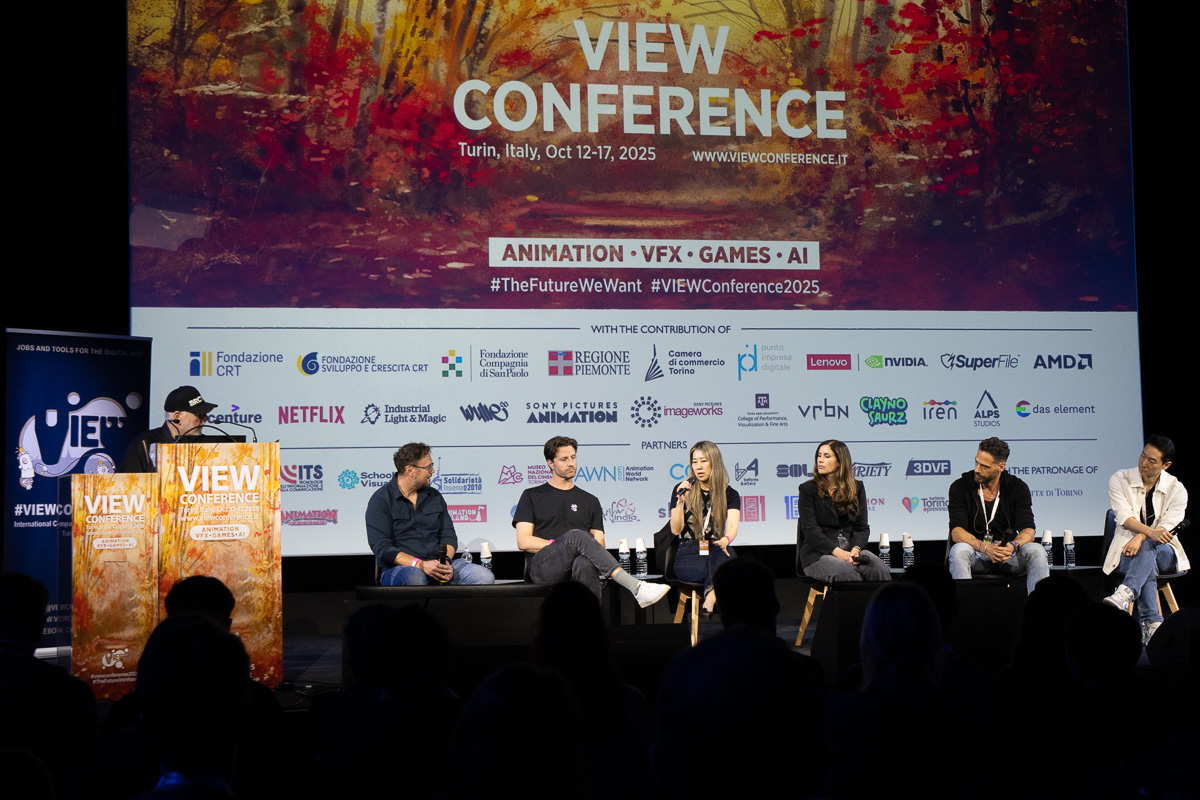
The 2025 edition offered a carefully balanced mix of big projects from big-name studios, forward-looking round tables and conferences on more confidential projects. Topics ranged from the latest blockbusters to the future of the industry, from research projects to advice on improving your portfolio. Not forgetting a healthy dose of nostalgia.
K-Pop and Dragons
Let’s get straight to the heart of the matter, and one of the highlights of the VIEW Conference: the presentations on the major projects of the past year and the months to come.
The conference on the live remake of Dragons, in front of a full house, was one of the highlights of this year’s event: the film’s team presented the film’s major challenges. The dragons could not be identical to those in the animated film, because too much cartoonishness would not have made them look credible in front of the real actors. Three months of tests were necessary to adapt the designs. Even Toothless was given a makeover, the aim being for him to be perceived as an animal rather than a character. Much larger in the live-action film than in the animated version, he has cat eyes, but with a lot of relief in the iris, like human eyes.
We were also treated to some behind-the-scenes footage, and we particularly enjoyed discovering the machinery used for filming: robots designed for the occasion and on which the actors were seated. The result is better acting on screen.
The K-Pop Demon Hunters presentation was another highlight. The duo in charge of production revealed a number of concept artworks and behind-the-scenes elements. Surprise: K-Pop is in fact one of the last elements to be included in the script. And that was a risk, since at the time K-Pop was still just a fad in the West. We didn’t know whether the wake of the BTS group would be populated by other successes or whether K-Pop would sink into oblivion.
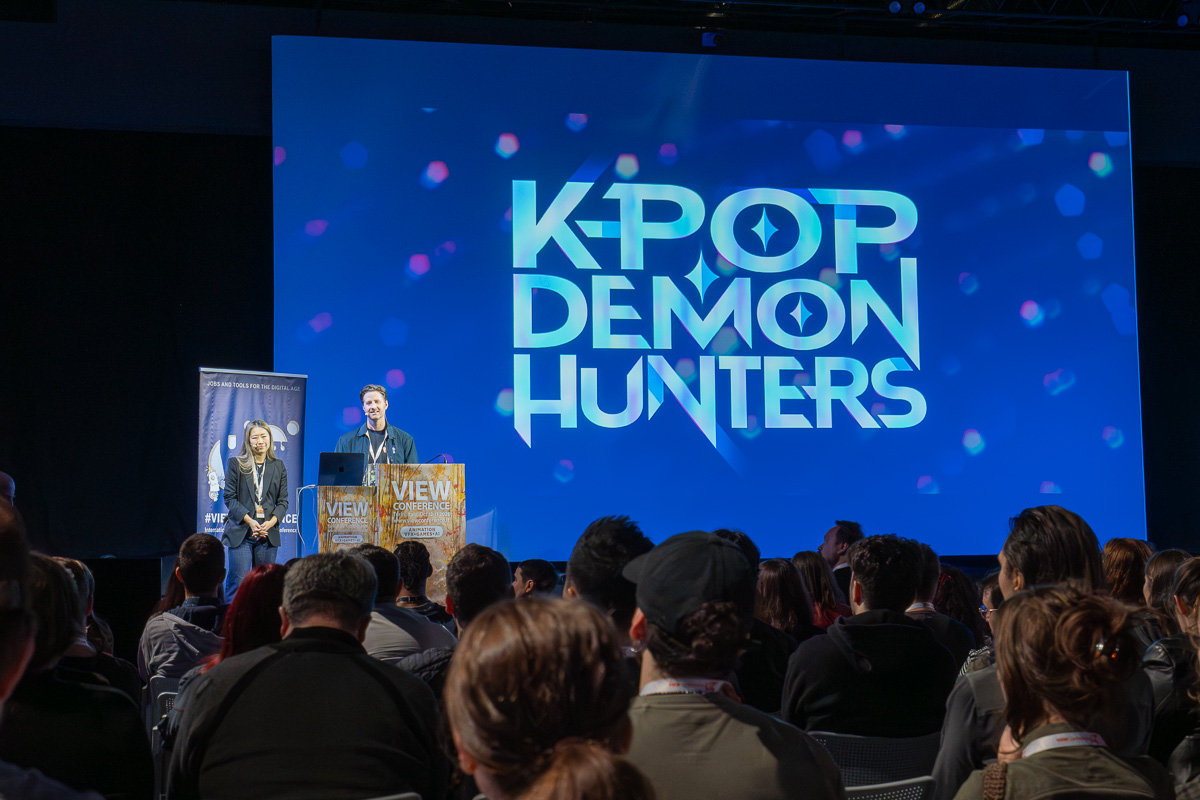
In another panel on the future of the sector, Maggie Kang and Chris Appelhans also looked back at the unprecedented hype surrounding the film, highlighting the fairly organic growth of the audience in a world where algorithms reign supreme on the networks. The film initially reached its main target audience, but fans created content around it, particularly on Tiktok, which increased the film’s visibility tenfold and enabled it to reach a much wider audience. The streaming release was undoubtedly a key factor: between hearing about the film and launching it on Netflix, it only takes a few clicks.
Gaussian Splatting: a mature technology at last?
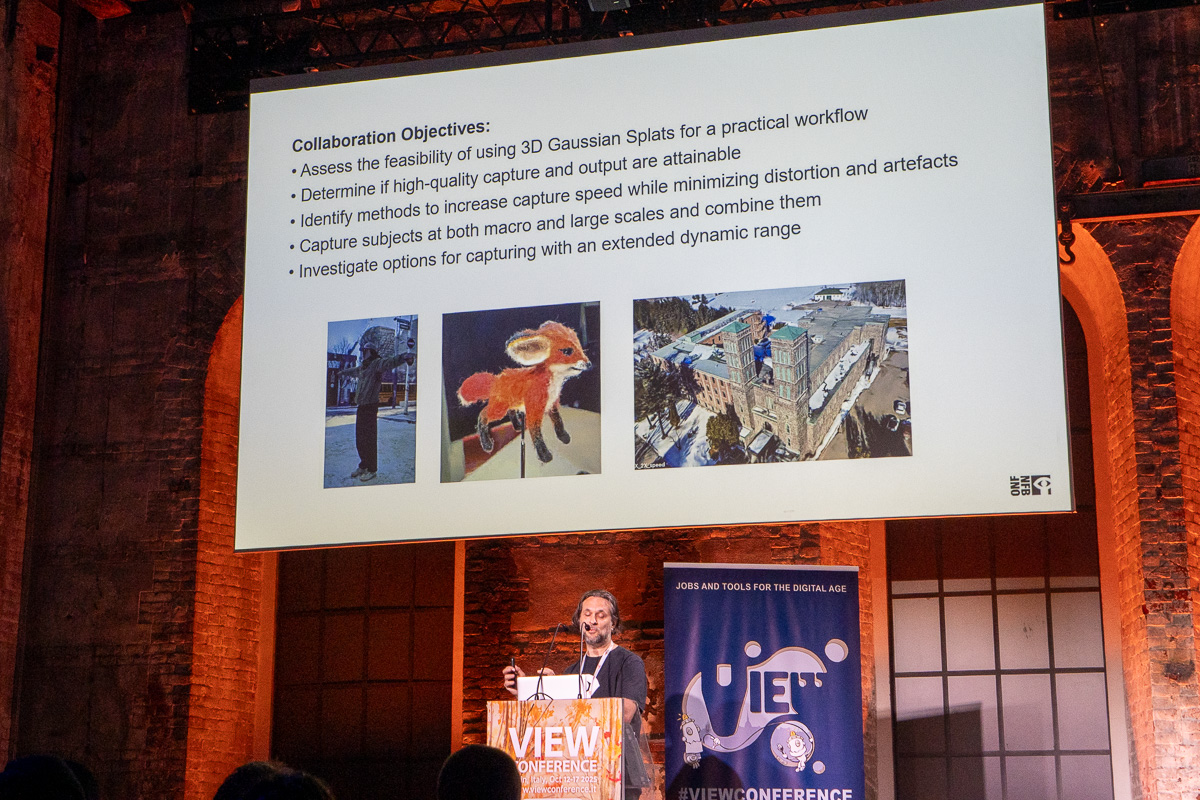
A number of presentations returned to the use of Gaussian splatting, a technology linked to the 3D capture of real elements which, although still in its infancy, is enjoying considerable growth. In simple terms, it can be presented as a kind of supercharged point cloud, with the points in 3D space replaced by coloured 3D shapes with blurred contours (the Gaussians of the name).
Without dwelling too much on the techniques, the main point is that compared with the good old meshes of polygons created by techniques such as photogrammetry, this approach is more qualitative for representing scenes with fine details, such as hairs or tree leaves.
Better still, it is also possible to have a visual appearance that changes depending on the point of view, and therefore to represent complex optical effects such as reflections and anisotropic surfaces. The result is greater realism. In other words, many of the limits of traditional photogrammetry are exceeded.
Numerous conferences highlighted the possible uses of these technologies. For example, on Jurassic World, during location scouting, the VFX team filmed various real-life sets using smartphones and consumer 360° cameras. The Proof studio then used this data to create scenes in Gaussian splatting, and injected them into a virtual camera system.
Director Gareth Edwards was then able to virtually walk through these scenes, prepare his cameras and think about the staging. And save precious time during filming.
This example is all the more interesting because the capture involved consumer equipment.
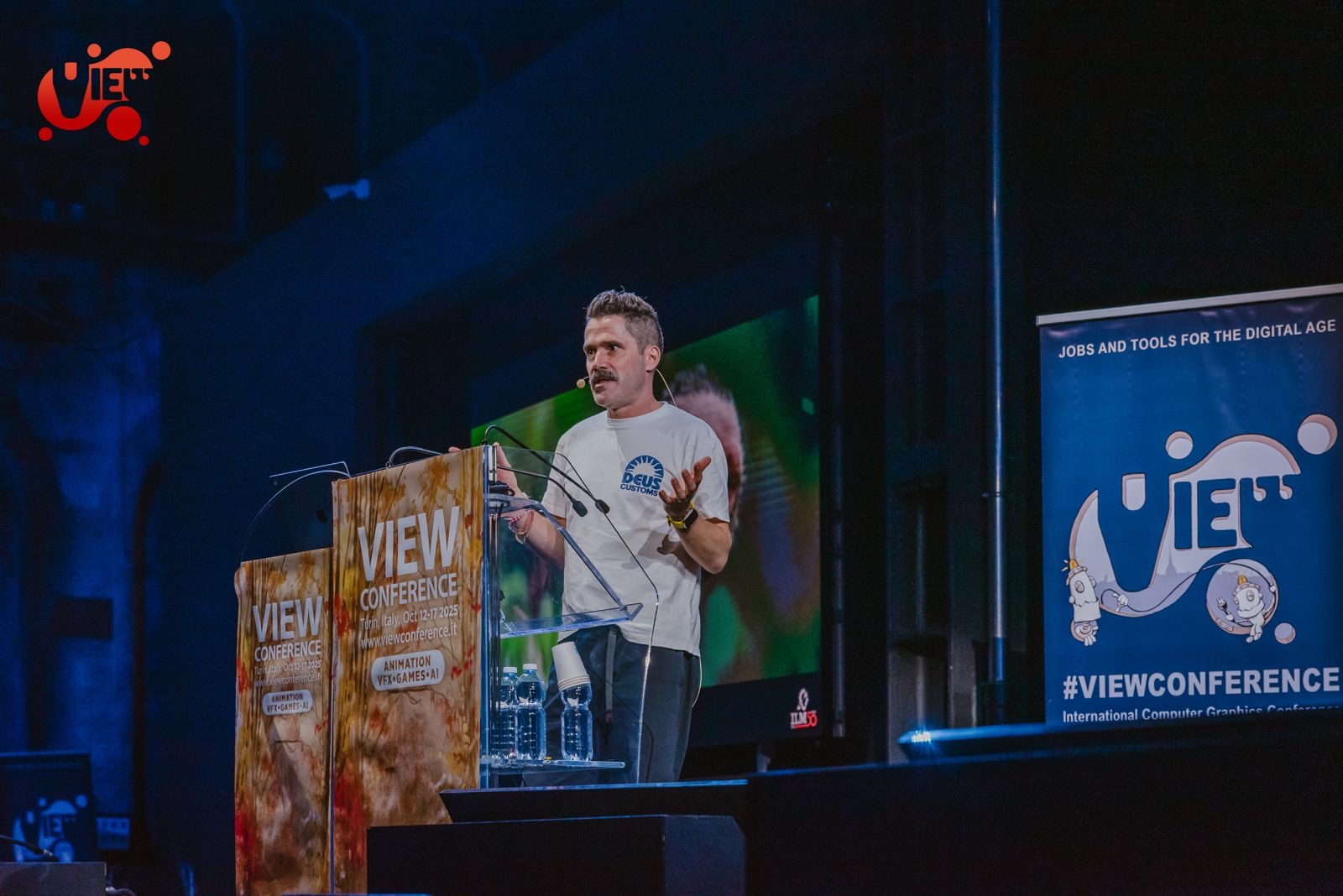
Another emblematic example is the latest Superman film. VFX supervisor Stéphane Nazé explained to us that the hologram of Superman’s parents was designed using gaussian splatting. This choice was made for a number of reasons: for example, the director was keen to achieve a very realistic rendering, and projection or 4D video would not have been enough.
The use of gaussian splatting also enabled the sequence to be cut easily, a glitch effect to be added under Houdini, and the camera to be adjusted easily after capture. All while retaining the director’s artistic vision and preserving fine detail.
These two examples show relevant uses, both on screen and in the creative process.
However, they also highlighted pipelines that are still relatively untested compared with conventional scanning: the technology is good but not totally mature, and developments are rapid.
Studios will therefore need to keep a close eye on technical changes, and not hesitate to test different tools and workflows.
The fact remains that the approach has a bright future, even for small projects, as Eloi Champagne of the NFB (in Canada) explained when presenting his experiments.
RenderMan: a small revolution for studios and schools!
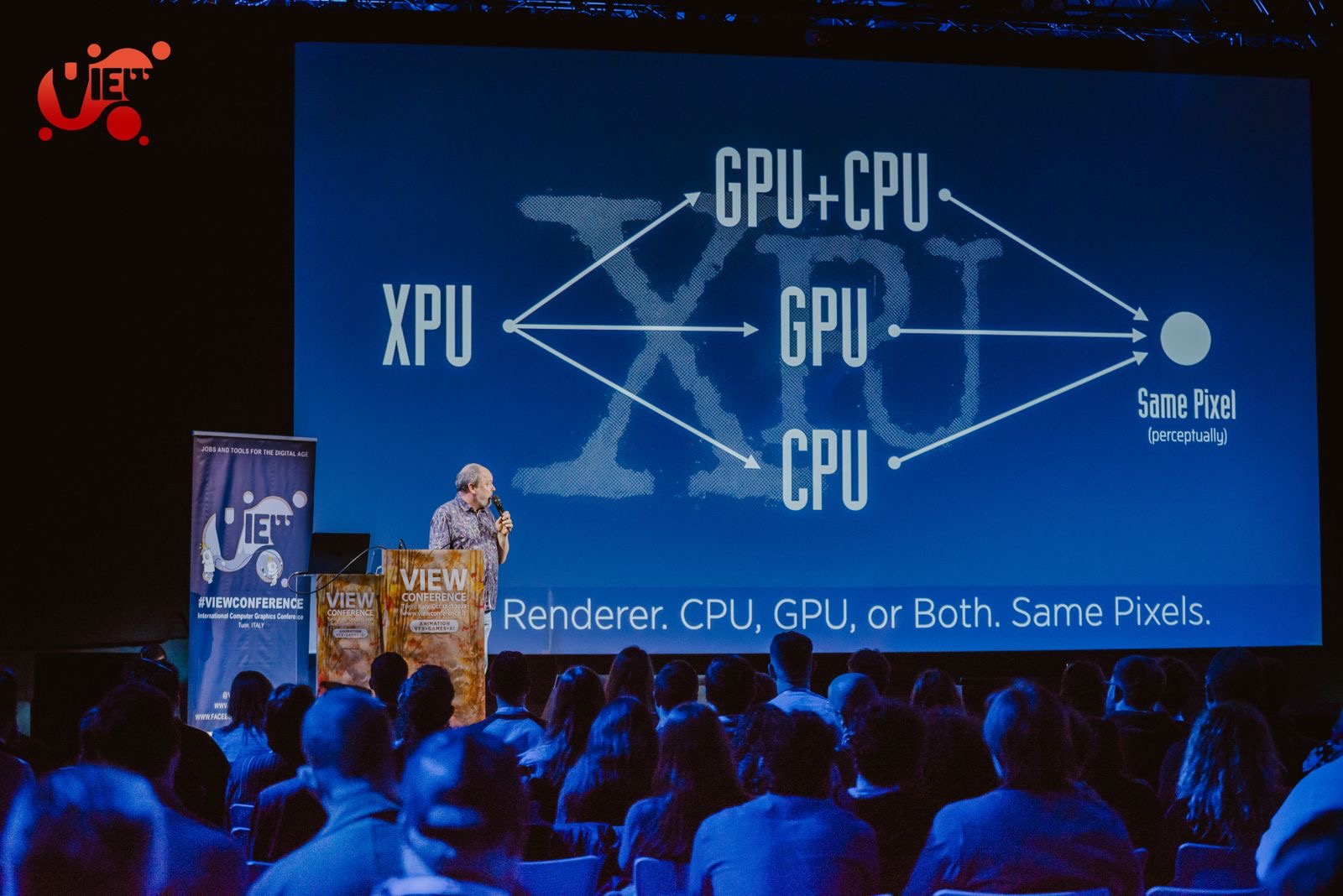
Another major technical advance was the arrival of the new version of RenderMan, Pixar’s rendering engine. Dylan Sisson showed us the improvements that have been made, the major point being the finalisation of XPU, which can now be used in production. This rendering architecture enables images to be rendered on both CPU and GPU, and even manages GPU servers. Of course, the image remains the same regardless of the hardware.
The benefits? Render times are drastically reduced, and it becomes possible to make better use of the equipment available to artists and studios. This observation also applies to schools: at ESMA, which uses RenderMan for a large proportion of its graduation films, students will be able to draw on these improvements. This will enable them to finalise scenes more quickly, or push their complexity even further.
Of course, Pixar isn’t just making announcements, and is putting its money where its mouth is: the next Toy Story 5 will use XPU.
AI: the industry is still searching
Another unavoidable subject is AI. Conventional AI, such as deep learning, is not the subject of debate: it’s generative AI that’s raising questions. A number of conferences touched on the subject, sometimes from diametrically opposed points of view: while studio directors were either enthusiastic or resigned to the idea, others feared the impact on the image industry and on the way we consume animated content (what impact would an even greater flood of content have?). Still others saw it as a false problem, believing thatAI could never reach the level of human creativity, and that there would always be things to correct.
Phil Tippett‘s studio has approached the subject from a very specific angle: the team is experimenting with generative AI, but with data created in-house and with a rendering that evokes stop-motion. The idea is to get around copyright issues while controlling the entire chain, and without losing the soul of the studio.
Listening to the team, it was clear that they felt waiting was the worst choice. It has to be said that the past has a clear impact on current decisions: in 1993, Tippett had seen the arrival of digital effects bring about the collapse of stop-motion, and the Jurassic Park dinosaurs that were supposed to be made with physical puppets were finally brought to the screen in animatronics, but also and above all in digital pixels. The visual effects legend is determined not to be left behind.
Even if AI remains uncontrollable and unpredictable: “We don’t pretend to know where we’re going”, explains the team, before adding that these are trials, work in progress. Phil Tippett concludes: “It’s like a bad sci-fi film, AI is a bit like fire, it will change everything. It remains to be seen whether it will keep us warm or burn everything down.
This uncertain vision of the future was echoed in other panels. In a conference focused on the future of creation, one voice denounced the plundering of works without compensation to train generative AIs, while another panellist saw AIs as the camera of smartphones: compared to 20 years ago, we all have in our hands enough to make films, content creation has exploded, but the overwhelming majority is not seen.
In another round table, one studio explained that most of its clients were refusing to use AI because of the risks (particularly legal), while another explained that it was used regularly. Here again, depending on the field and the client, the uses are not, for the moment, harmonised.
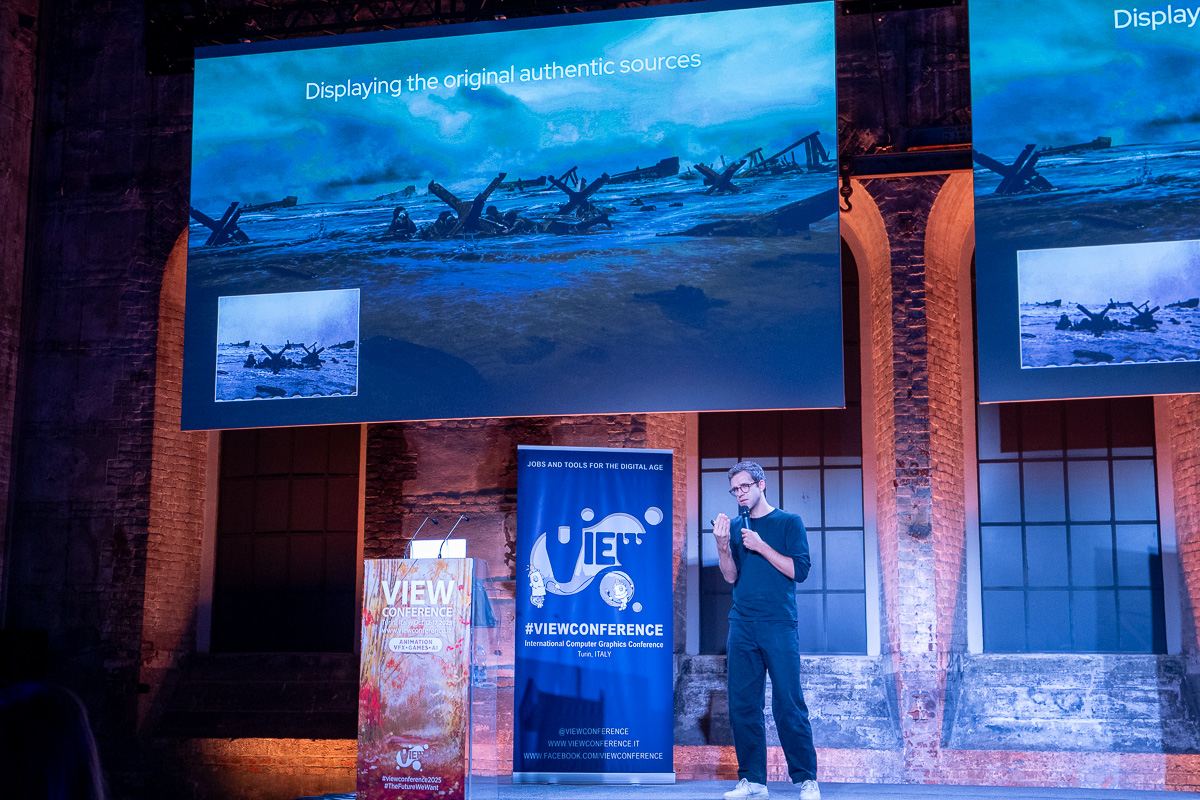
At Targo, a French company specialising in XR and documentaries, AI is seen as a tool, but the team remains cautious. Their choice: use it, for example, to bring an old photo to life or create textures, but make it clear to the viewer that AI is being used. For example, by mentioning it in the credits or by leaving the original photo used as a basis visible.
Finally, the conference featuring studio executives was less mixed than some of the other presentations, with most of them either in favour of generative AI or assuming that its rise was unstoppable. Nevertheless, we would have liked a little more frankness here about the impact to be expected: faced with an audience member who wondered about the fate of his studio (which specialises in rotoscoping and is therefore likely to be replaced by AI), the answers seemed to us to skirt the issue.
Be that as it may, and taking a step back, it’s worth appreciating that, on the scale of the event as a whole, views ranged from enthusiastic endorsement to outright rejection and criticism, in a way that many recent conferences have produced timid views, with many not daring to take a clear stand.
Emotion and nostalgia
Let’s end with a look back. We really enjoyed the presentation by practical effects veteran Ian Hunter. He showed us behind-the-scenes photos of films he worked on during his career: a sublime model of a ship for Total Recall, the tanker in Waterworld, a model of a bomber for the thriller Broken Arrow, sumptuous miniature sets for Inception …
All this was punctuated by anecdotes, such as the presence of a can of Coca-Cola on one of the sets of Total Recall. He didn’t fail to mention the technical advances that have enabled the practical effects teams to save time and money have always come back to the ears of the producers, who have not failed to adapt their requirements accordingly. Perhaps this is a lesson to bear in mind when it comes to generative AI, which, if it helps to reduce production costs, will also have an impact on overall budgets.
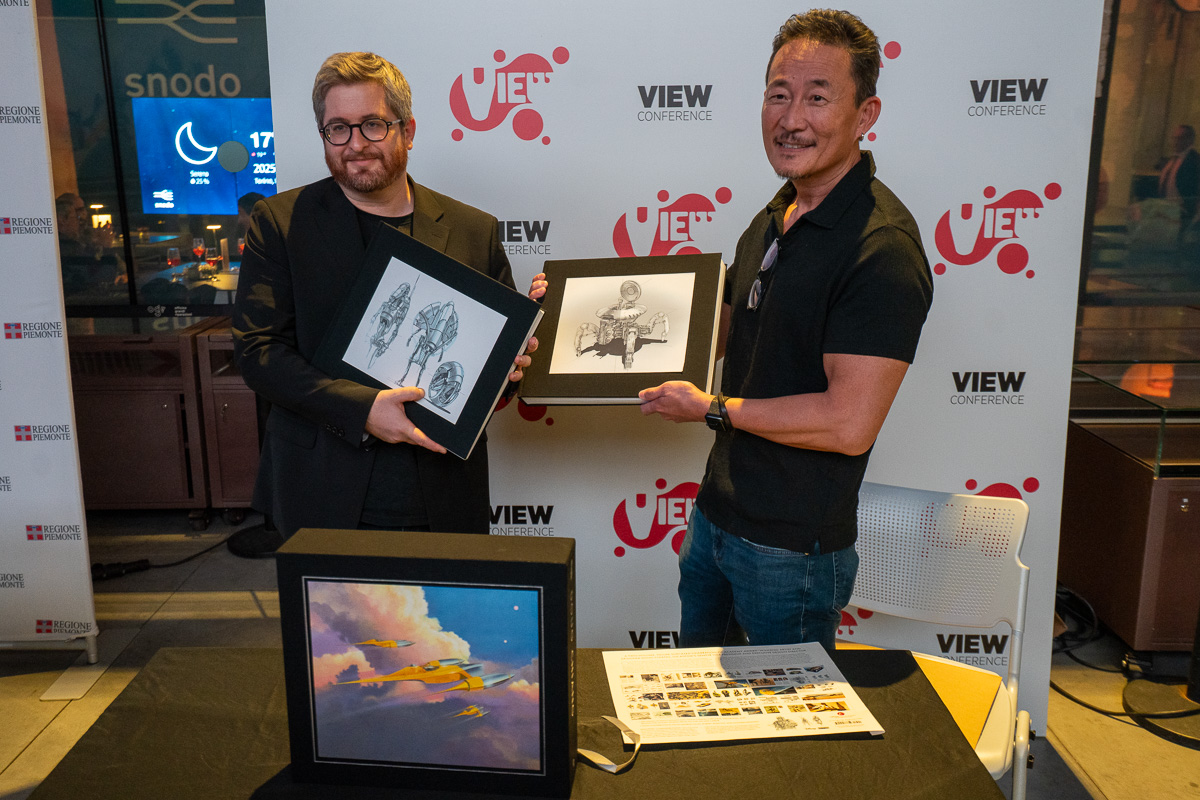
Nostalgia again with Alexandre Poncet, who showed us extracts from the forthcoming documentary Walking With Animators. This is not so much a historical film as a 2-hour presentation of the world of animation, its techniques and the vision of various artists. Alexandre Poncet also presented us with a massive double book on Doug Chiang, created with his help. An entire career and hundreds of photos, on 800 pages. A titanic piece of work. Two projects carried out with his accomplice Gilles Penso, but also with other supporters, such as Eugénie Poncet for the production of the film.
Two projects that remind us of the importance of not forgetting the past, and of keeping track of projects: archives are a treasure to be carefully preserved, and we can only invite studios and artists not to forget it.
A rich VIEW Conference, an industry in transition
As you can see, the VIEW Conference is a diverse event, well worth a visit. There were many highlights and a wide range of perspectives. What emerged was a similar picture to that seen recently at SIGGRAPH or the Annecy Festival: that of an industry in transition in the face of certain developments. The contrasting positions on AI had the advantage of highlighting the many issues at stake, without providing definitive answers.
In the meantime, the industry is also celebrating its history: through anecdotes and historical milestones, the industry is passing on its passion. And with a quarter of a century under its belt, the VIEW Conference is proving to be an event well worth a visit.