A specialist in RenderMan, which he now promotes, Dylan Sisson uses his skills to spread the word about this tool to professionals around the world, through conferences, short promotional films and much more.
And when he’s not working for Pixar, the artist devotes himself to painting and illustration, with over thirty exhibitions to his name!

A big fan of ESMA productions, Dylan Sisson agreed to share with us his advice for students and aspiring professionals at the heart of a fast-changing sector. Find out more in our interview below.
Building bridges between art and technology, a vocation
Dylan Sisson has been working at Pixar Studios for over 25 years, and more specifically in the team responsible for developing the studio’s rendering tools, including RenderMan. He also created the design for the famous RenderMan Walking Teapot. “Today, I’m lucky enough to collaborate with studios, artists and partners across the industry. When I’m not developing new demos or presentations, I helporganise the RenderMan Art Challenge, an opportunity for artists to develop their skills on our tool.”
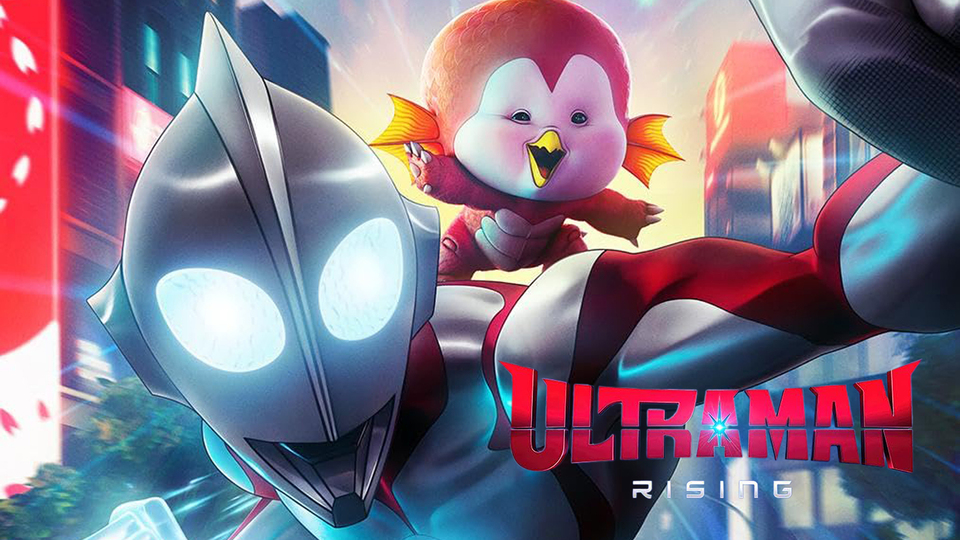
Among the latest projects on which he has collaborated, Dylan Sisson cites Stylized Looks, a set of tools for RenderMan that was used in Ultraman Rising. “It’s this type of assignment, straddling the line between cutting-edge technology and unbridled creativity, that suits me completely.”
The technical artist is now working on RenderMan XPU, a hybrid CPU/GPU renderer that aims to accelerate rendering by using both processors (CPUs) and graphics cards (GPUs). A minor revolution for the tool, which Sisson believes has completely changed the way the studio approaches rendering today.
An industry in transition
That’s what Dylan Sisson is saying. On the one hand, tools that are more powerful and accessible than ever. On the other, there is growing pressure on the studios, and increased competition. “New voices and new regions are making themselves heard, and producing incredible films. What’s certain is that the industry has no shortage of creativity!”
For Sisson, this transition is part of a structural transformation, involving changes in tools, but also a change in the way content is created, the people who create it, and the way it is consumed.
“That said, I don’t see this change as negative. It’s an evolution, computer capabilities and new technologies are reshaping the industry, and it’s difficult to predict what will happen. When I started my career, the animation sector was in the midst of a transition from 2D to 3D. It was a big change, but the fundamentals remained the same: the importance of storytelling, lighting, design and so on. These are all parameters that remain at the heart of what makes a good production, according to the expert, for whom the evolution towards the stylisation of 3D will continue.
“There is a real resurgence of artistic intent, which takes precedence over photorealistic rendering. In technological terms, interoperability and portability, with USD and open standards, will continue to democratise pipelines, which will contribute to the internationalisation of production.
In this globalised world, Pixar is part of the Disney galaxy, sharing its technologies with Disney Research, ILM and Walt Disney Animation Studios.
It’s an opportunity, and one that allows us to continue to raise the bar both in terms of artistic quality and our working methods.

Today, it’s important for us to continue developing technologies that help artists share new stories.”
“Today, generative AI does not offer us sufficient quality to produce feature-length animated films”
At Pixar, art challenges technology and technology inspires art, according to Dylan Sisson. “We are constantly experimenting and adapting.
RenderMan XPU is a good example of this: this tool allows us to render final images more quickly and with more interactivity, which transforms our iterations.”
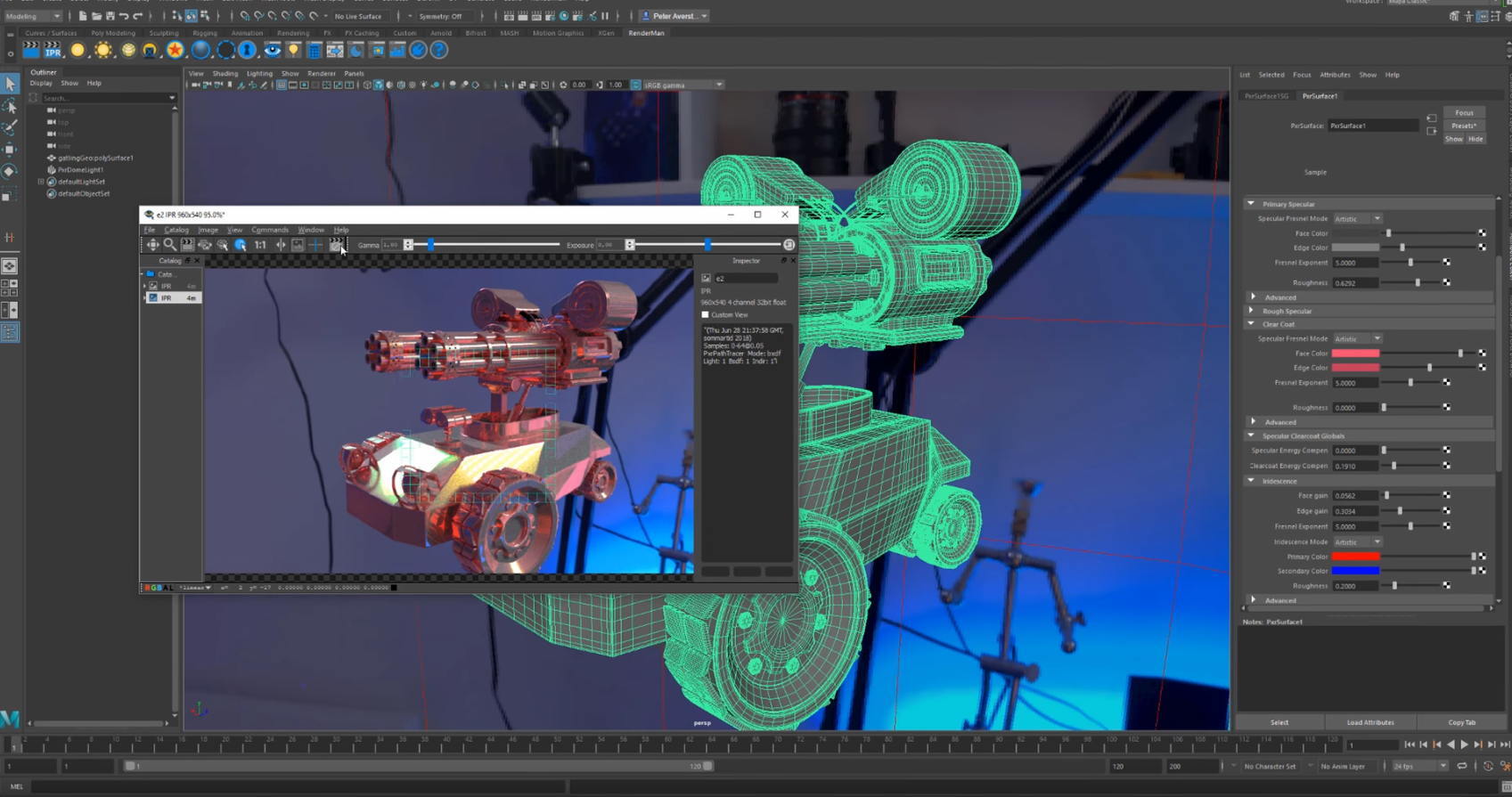
This is a major change, because it also allows the teams to create new images, at a level never achieved before.
Asked about the role of AI, and the dangers it poses, the expert moderates: “When we create feature films, every pixel must be under control, and the director must have complete creative control. That’s not what generative AI offers us today. We’re interested in useful technologies, like our Denoiser Machine Learning. It’s a special-purpose tool that improves the final quality. Our focus at Pixar remains on giving artists and storytellers better tools, not replacing them. Technology is a tool that can help them in their work, but we are convinced that good stories come from people.”
How do you fit into the industry today?
For Dylan Sisson, what makes a good professional is not just his skills in Maya, Houdini or the other animation software used in the industry. For him, it’s above all curiosity, adaptability and the ability to fit into a team that come first. “The best artists are also those who are able to communicate, ask the right questions, give and accept feedback, and think beyond their screen.”
In this sense, Sisson emphasises the role of students and young professionals, who bring to the industry new ideas and an ability to ‘think the impossible’. In his view, this desire to surpass oneself, to go beyond technology, is crucial, because with today’s technical advances, it is not uncommon for impossible ideas to become possible. It’s an attitude that he believes benefits the industry as a whole.
Her advice: create what matters to you
“At Pixar,” explains Dylan Sisson, “we’re looking for talent that brings both artistic vision and problem-solving skills. We’re a big studio, with clearly defined roles. Find where your passion lies, create what matters to you, and do it because that’s what motivates you.”
If this has not yet been clearly defined, the expert recommends that you try your hand at a smaller studio, which will allow young 3D animation graduates to discover the entire pipeline of a professional project. It’s a good way of identifying your real passion in the field.
“France has an impressive history of animated film. Continue to push back the boundaries of this art, these technologies and this way of telling stories. The level of production of ESMA’s graduation films is remarkable, you can feel the technical mastery but also the vision and passion of the students who use them. Everyone can see when artists bring something personal and daring to their project. And if it’s a bit atypical, that’s even better.”
Find out more about RenderMan and the latest news about Pixar’s software here.