It’s a way of reducing the risks and keeping the various people employed by the studio busy (in the long term). This is how many studios divide their time between commissioned work and core projects, between advertising, trailers and multiple and varied projects.
Passion Pictures is a good example of this ecosystem, a studio specialising in services that has now acquired an international reputation. With projects ranging from documentaries to animation and vfx, Passion Pictures now has offices in London, Paris, New York and Barcelona, and employs hundreds of people to complete large-scale projects that have won awards at Cannes and Sundance, as well as the Oscars and Emmy Awards. These include The Lost Thing (2011), which won an Oscar for Best Animated Short, and the documentary Searching for Sugar Man (2012), which won an Oscar for Best Documentary.
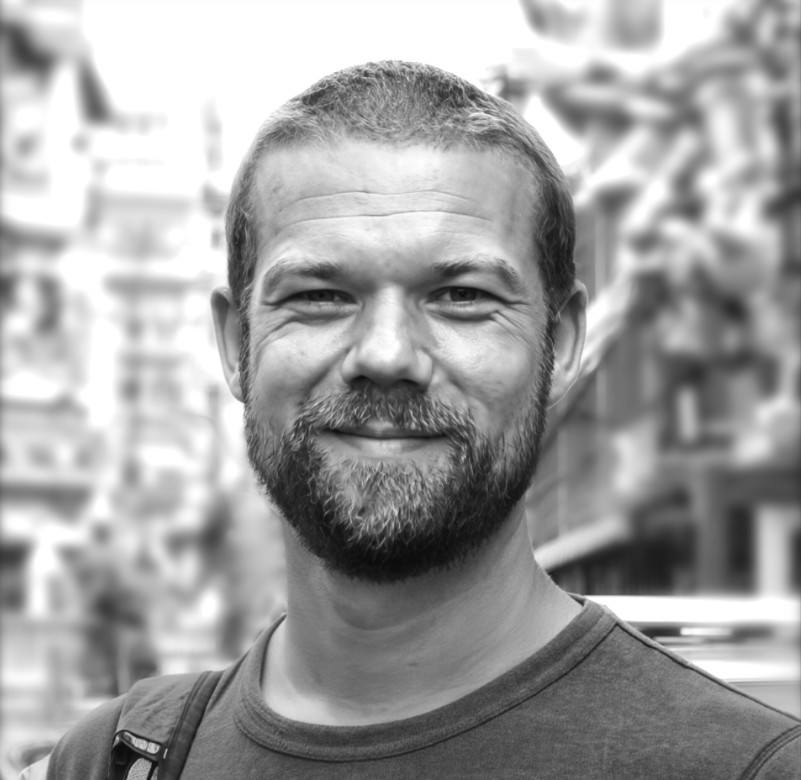
Today we had the pleasure of talking to Simon Brown, head of the Passion Pictures studio in London. An animation professional with over twenty years’ experience in the sector, he worked with Aardman Studios, the BBC and Framestore before joining Passion Pictures in 2012 as CG/VFX supervisor. Since then, Brown has built his career on a number of projects, including lookdev and lighting, before becoming Head of CG and then Studio Director in March this year. An exciting career path, and new challenges that this industry veteran agreed to share with us.
Can you tell us about your position today?
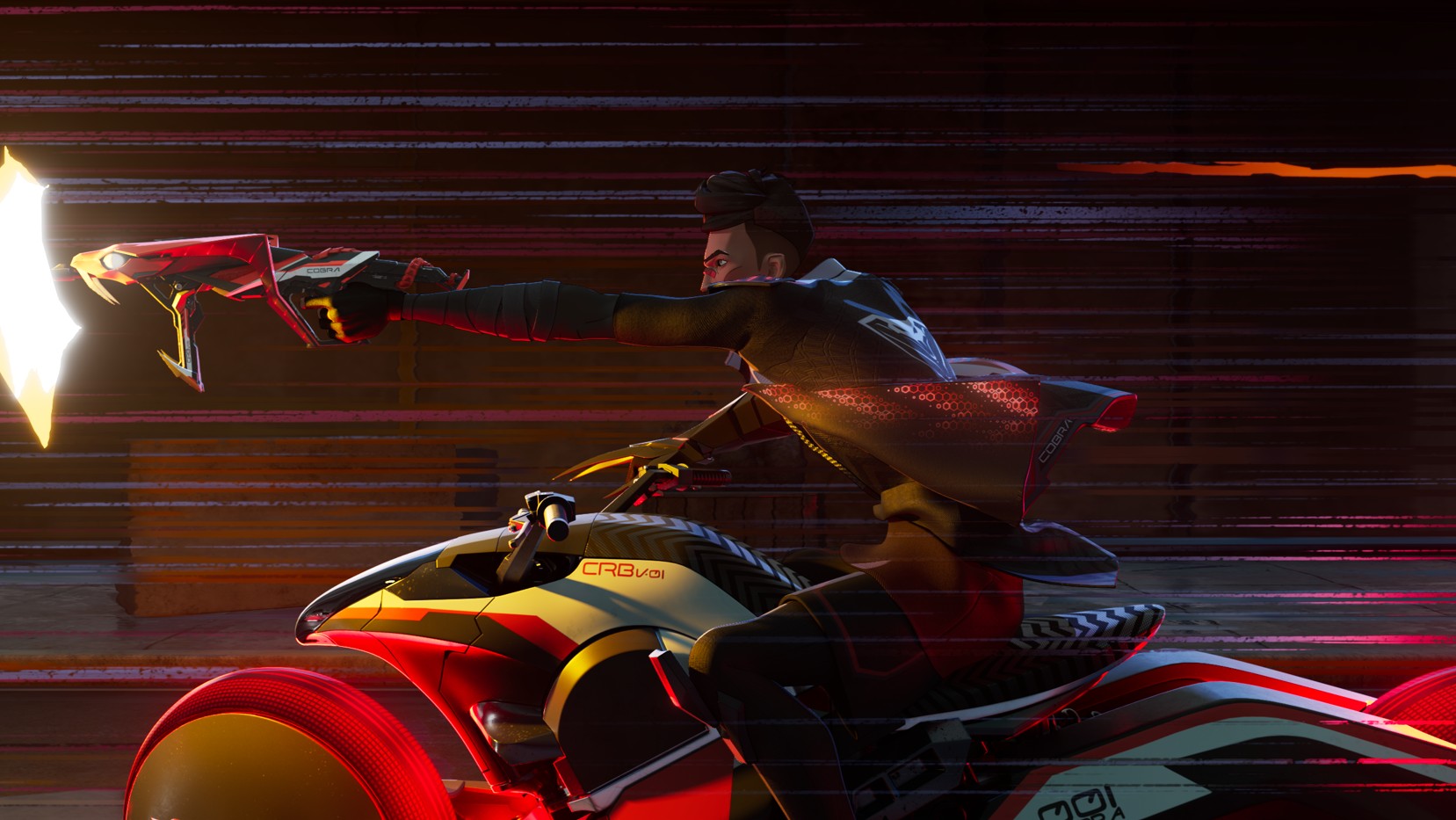
I’m Studio Director at Passion Pictures in London, where I oversee the creative and technical aspects of production. Our work spans animation, visual development, cinematics, feature films, television, cinema, advertising and, increasingly, research and development around real-time and AI-enhanced workflows.
I currently manage projects ranging from high-end game cinematics to stylised control work, as well as in-house R&D on hybrid pipelines that merge traditional know-how with modern machine learning and procedural tools.
What is your proudest project to date?
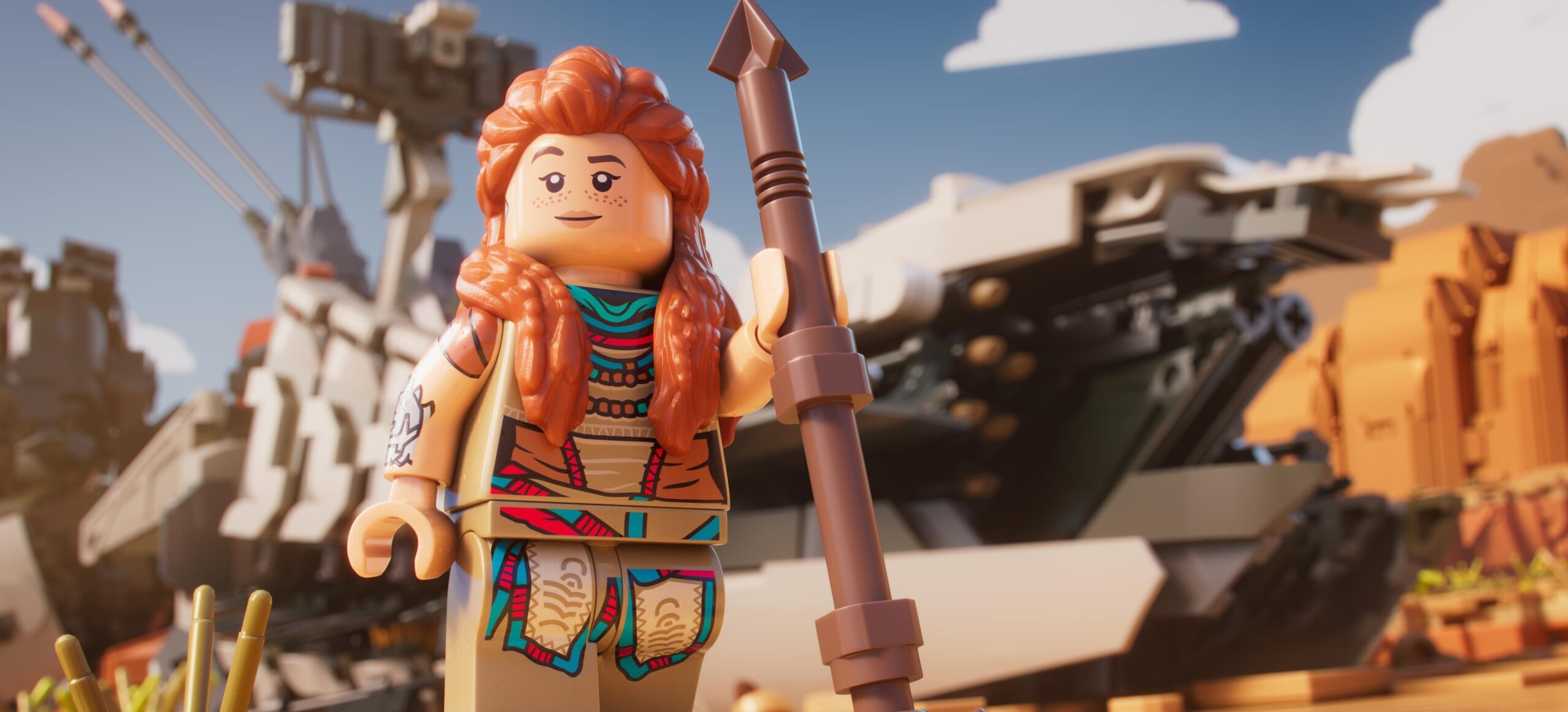
I think it’s LEGO Horizon Adventures, a project on which we’ve been working on cinematics, lookdev and trailers in collaboration with studio gobo and Guerilla. It’s a project that brilliantly blends storytelling, animation and cutting-edge game engine technology. It is a perfect example of how an animation studio can bring its storytelling expertise and character design to the world of video games in an innovative and collaborative way.
Twenty years into your career, how do you see the sector today? What are your observations, and what prospects do you see for the future?
These are fascinating but volatile times. The international animation and video game industries are evolving rapidly, with consolidation, budget shifts and increasing overlap between previously separate disciplines. Production processes are converging, clients are also more international and the pace of change is faster than ever.
Do you see this as a cycle or a more profound transformation?
I don’t see this as a temporary phase. I feel I’m witnessing a structural transformation. Technology is no longer a separate layer; it is integrated into the creative process itself. This creates both pressures and opportunities.
Compared to the beginning of my career, when specialisation was the norm, the current context values versatility and curiosity. People who have mastered both the art of storytelling and the technical tools, as well as a way of thinking that combines these two aspects, are in a strong position.
What exactly makes a good professional in today’s sector? What skills are you looking for?
Today, a good professional combines technical expertise with adaptability. Technical skills are still important, but they are not enough: communication, problem-solving and empathy are essential to the smooth running of a team. I think that young graduates are often very technically competent, but not always prepared for the collaborative and sometimes unpredictable reality of production. That’s where mentoring and studio culture come into their own.
So soft skills and technical mastery are equally important?
For me, interpersonal skills and technical expertise are not opposites, but interdependent. A brilliant artist who can’t communicate will struggle, and an excellent communicator who lacks technique will end up stagnating. The ideal is to find people who can listen, learn and continually improve.
To the students who want to work for Passion, I would say: be curious, independent and open-minded. Show initiative, but also humility. We value artists who care as much about telling stories as creating images – people who bring energy and ideas, not just skills.
The fact remains that the tools you use require a good technical background. Can you tell us about the software you use on a daily basis?
Today, we use Unreal Engine for previewing, visual development and virtual production; Houdini and Blender for procedural workflows; and AI tools for concept generation, style exploration and technical acceleration.
At Passion, we don’t see AI as a substitute for humans, but as a multiplier of creativity. We are actively experimenting with generative tools in R&D, to test how they can extend artists’ capabilities, automate repetitive tasks and open up new visual perspectives.
New technologies have profoundly transformed our production methods. Certain roles will inevitably evolve, such as page layout, previewing and even certain aspects of design, but new roles are also emerging. The key is to preserve creative authorship. Our approach is to integrate AI in a way that supports human imagination, not dilutes it.
How do you see the future?
In the medium term, I think we will see a growing convergence between animation, video games and interactive media. Real-time rendering, procedural programming and machine learning will give rise to new forms of narrative: immersive, adaptive and highly visual.
In this creative landscape, Passion Pictures is first and foremost a creative studio, while integrating technology to tell more powerful stories. Our strength has always been our ability to bridge different worlds: art and technology, commercial and narrative, traditional and experimental.
We constantly collaborate internationally – with partners in Asia, Europe and North America – but what defines us is not geography, it’s our vision. We bring a unique blend of artistry, design sense and attention to detail to everything we do.
What message would you like to give to young students today, and to schools?
To students: learn to master your tools, but also learn to think. Be curious about everything: light, movement, design, people. The best artists understand how things work. They don’t just look, they feel the world around them.
To schools like ESMA: encourage experimentation and interdisciplinary learning. The future belongs to those who know how to navigate with ease between art and technology.
Finally, for those entering the industry in France today, Passion Pictures has a privileged relationship with European creativity, thanks to our studios in Paris and Barcelona, in addition to our London base. We have close links with all the animation schools.
I invite French animation artists and directors to contact us at paris@passion-pictures.com and studio@passion-pictures.com.
We share the same passion for strong universes, but also the sense of storytelling and characters that are so characteristic of European animation. Continue to create works that reflect your style – that’s what studios like ours are always looking for.
To find out more about Passion Pictures and their productions, visit their website.