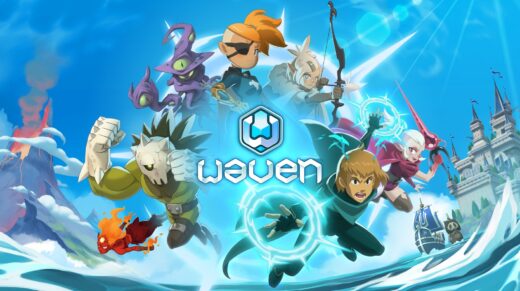
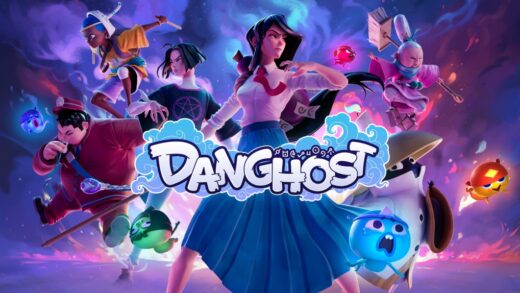
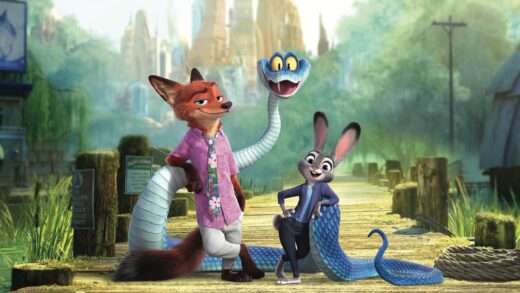
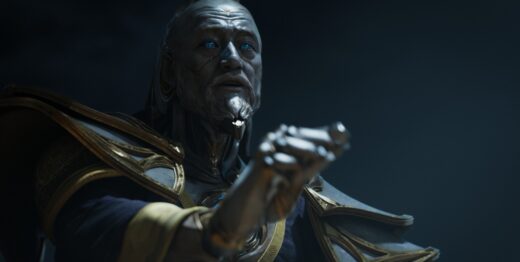
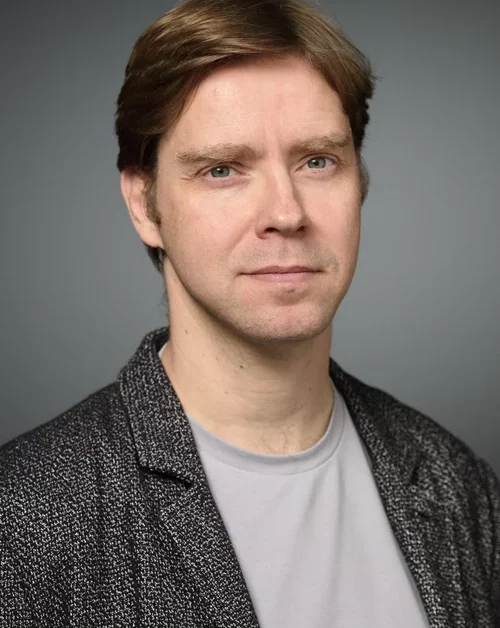
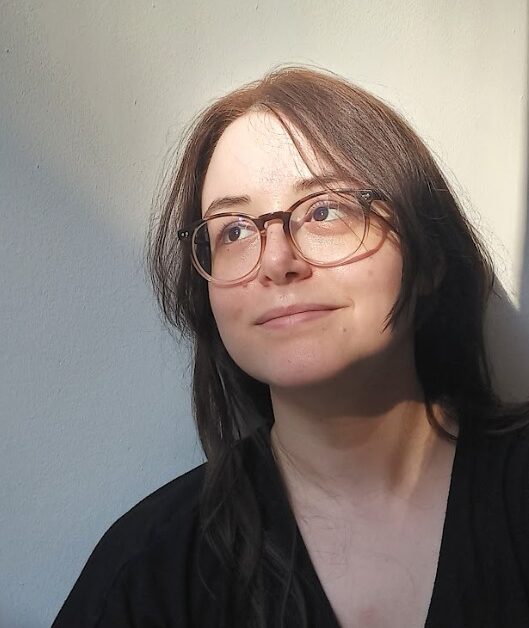
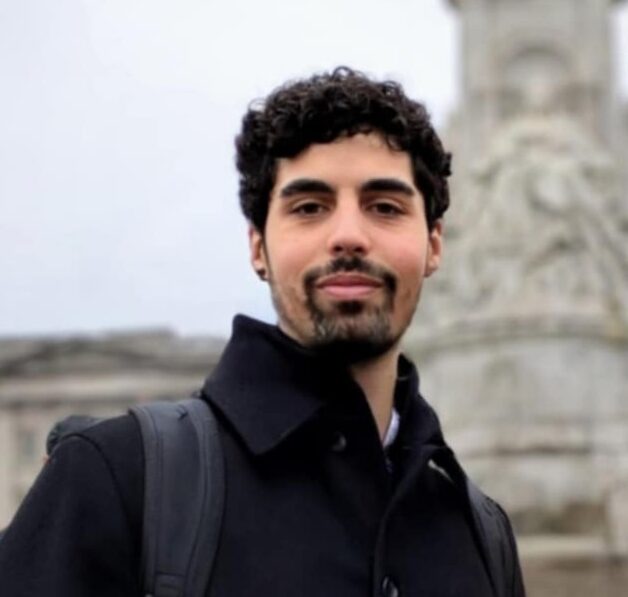
A Senior Technical Artist for the past ten years, Franck Elisabeth left ESMA in 2003 before starting his career as a 3D Artist over twenty years ago. Since then, this alumnus has navigated the world of design, video games and 3D animation between South Korea and France, working on virtual and augmented reality, gaming and the design of interfaces between man and machine. It’s a passion that he is now pursuing within the Renault Group, in a sector that (it’s not always realised) employs many 3D artists and special effects artists.
To find out more about his unique career path and his work as an HMI Design Engineer, we sat down for a long chat with him.
Franck, thank you for your time. Could you tell us about your career since graduating from ESMA?
I started my career in 2005 as a 3D Artist. Through various missions in the field of serious gaming, I had the opportunity to work on many different projects, before arriving at Renault. The experience I’ve gained has been enriched by sharing and learning from each other over the years and by the people I’ve met.
In the course of my career, I’ve had the opportunity to work with simulation, but also VR, AR, mobile applications and even the management of industrial infrastructures using digital tools. In each of these situations, my approach has been based on curiosity, fuelled by my desire to discover new aspects of this industry.
What made you choose this school and this sector?
At the time when I wanted to study at ESMA, it was complicated to get into such a school with a technological STI baccalaureate. But I didn’t give up, and after a year’s preparatory course at the Arts Appliqués in Marseille (now the Condé school), I was able to get up to speed. At the time, ESMA was still very young and the course lasted two years. During my training, it was extended to three years, but I stopped after two.
As for my motivations, I was particularly interested in computer graphics. When I was growing up, Pixar films, Jurassic Park, as well as a number of short films and series like Reboot, which was shown on Canal +, really inspired me. And video games of course, especially on the PC. So much so that when I was 16, my mother gave me a choice: it was either a computer or a driving licence. The rest is history (laughs), but I’ve still got my driving licence…
What has your training done for you in concrete terms?
What I particularly remember was the open-mindedness and knowledge of our many teachers, and the importance they attached to teamwork. You can’t make a short film without a team, you need everyone’s expertise to achieve your goal. Organisational skills, the ability to listen, the development of artistic and technical qualities and the opening up of our creative minds have been fundamental to this teaching.
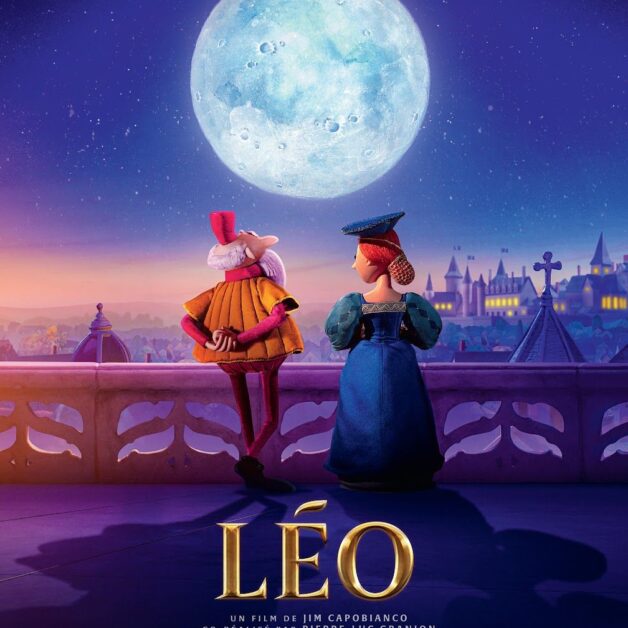
Right from the start, ESMA also created links between the professional world and the students. For example, a series of ESMA students took part in the short film Play the Game, by director Stéphane Barbato, and I was lucky enough to be one of them. It’s still a wonderful memory for me, a real filming experience. It was unique, and being able to contribute to the film’s special effects afterwards was a real treat. In fact, I’ve kept in touch with the members of the team, they’re friends who have remained dear to my heart, and it was through this experience that I later met my wife.
How did you get your first job?
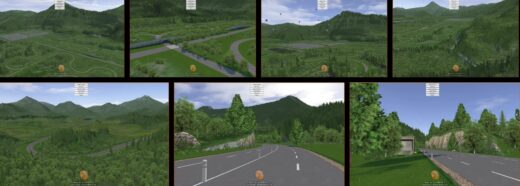
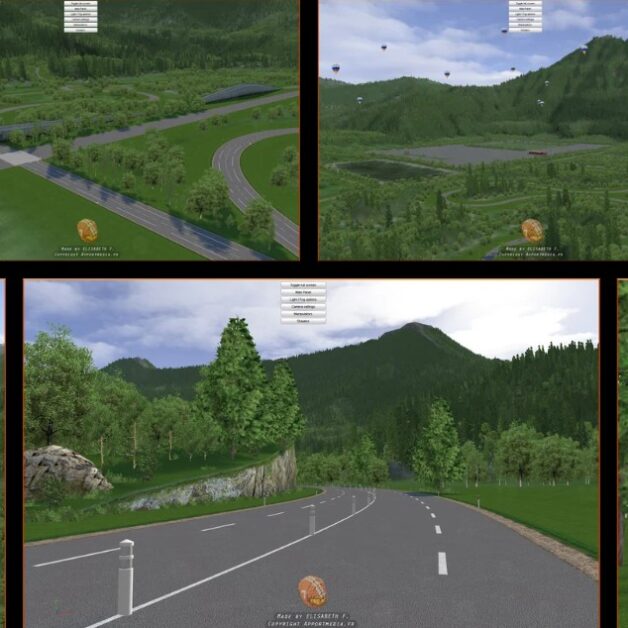
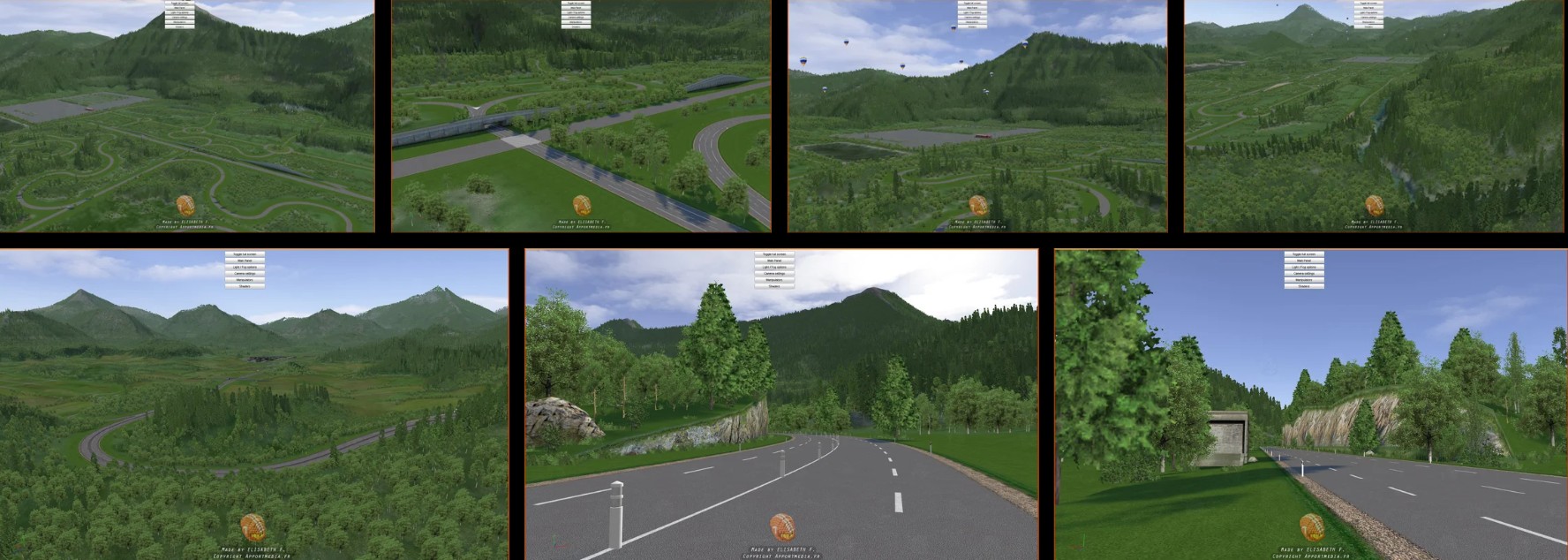
My first job in the industry was at APPORTMEDIA, a company that was working on a real-time driving simulator for police trainers, firefighters and emergency doctors. Of course, at the time we could already play Gran Turismo or Far Cry, but between imagining and creating an environment, it seemed like an unattainable dream for our little team.
After a great deal of effort, we were able to present a 500 metre square area designed entirely by hand, which raised the funds needed to develop the project. For such a small team, managing to create such a vast environment was very gratifying. In the end, we created an area 4 kilometres square in 2007. I spent more than five years on this project and within this company, which has evolved and grown.
At the time, I was working with Damien Courtois, the graphics engine developer, and it was he who made me want to get my hands dirty. Making tools that can be used to produce something is both creative and very satisfying. And even if you don’t have the artistic ability to put your hand to it, you can help the artists who do.
You spent a long time working abroad, in Asia. What has this experience taught you?
Living abroad is an adventure. For family and health reasons, my wife and I decided to move to her native country, South Korea.
At first I worked freelance for my old company, but then it was time to study to learn the language because we lived outside Seoul, so it was a bit difficult to find work with just English.
Living for a few years as a foreigner in a completely different country is something that everyone should have the chance to do. It’s a lesson in humility, sharing and reflecting on oneself through others.
Is what you do today what you imagined as a student?
Let’s just say that I’ve adapted. My original intention was to break into the video game industry, but even if I didn’t manage to find my place in that industry, the tools I use today are exactly the same, and are as effective as those that are standard in the sector.
The needs are different, that’s for sure, we’re working with less powerful machines in embedded systems than today’s consoles. But I would like to emphasise my admiration for all these creations. Whatever the graphic quality or the platform, you can always marvel at these productions.
What is your current job at Renault?
At Renault Group, we create embedded systems with what are known as “Human Machine Interfaces”, or HMIs.
Cockpit graphical interfaces need to be faithful and intuitive, with lots of graphics, information layouts, settings and visuals representing our vehicles.
It all has to be attractive, because today when you sell cars in 2025, you’re selling dreams/ And graphics, now that screens have invaded our cars, are crucial. The comparison with video games is automatic, and that’s why all car manufacturers make it a point of honour to have striking and interesting visuals.
We need to win over both car enthusiasts and everyday users.
What types of projects are you currently developing?
Well, in order not to divulge anything, and because I work in a confidential manner, I would say that I am working on the automation and convergence processes for our 3D asset creations, in order to satisfy the customer as much as possible. The aim is to be able to use the data created by our designers and engineers and to be able to transpose their creations as simply and efficiently as possible into real-time systems, directly into our cars. Representing vehicles with the right level of detail, in a dynamic, interactive way, and with all the refinement that we expect today from a triple-A game like Gran Turismo, to take an ambitious point of comparison.
What is your proudest project to date?
It’s a personal project that doesn’t necessarily have the beauty of a graphic work, but it’s just as important and has changed my career prospects.
From 2017 to 2024, I created a compilation of kits for the 3D creation software Modo, which I still love very much. As part of this, I developed a lot of scripts and commands in Python, even though I knew absolutely nothing about it ten years ago.
It was both a challenge and a very rewarding experience, which enabled me to meet some very talented people, including William Vaughan and the artists in the Pixelfondue.com group.
I can’t thank them enough. Every time I had a positive or even critical comment about my interfaces or my kits, it was always a way of challenging myself to come up with something better. It’s a virtuous circle and it also motivates you to create your own tools and develop your own skills.
At the end of the day, that’s what we’re all looking for, the feeling of being part of a team and contributing to the production of artistic works like the ones that inspired us in our teens.
What do you think makes a good professional in this sector today?
This ties in with what I’ve just said: listening, the ability to accept criticism, suggestions and advice is very important. We forget a little too often that the person giving you this feedback is doing so out of a desire to help you. There are exceptions, of course, but it’s often very benevolent. In this industry, it’s not talent or technical, artistic and graphic skills that count most, it’s really the ability to interact within a team. Whatever the size of the team.
How do you see the integration of young graduates today?
They face some tough challenges, especially with the advent of AI in recent years. It’s sometimes difficult to make clients, who are always looking for ways to optimise and cut budgets, understand that quantity does not mean quality. AI is like the fast food of 2D or 3D animation. Something that’s quick and ‘easy to produce’, but the quality isn’t there. In my opinion, AI should be used for more specific missions, for example with agents capable of helping to optimise the production of tomorrow’s artists. We need to facilitate their creativity, not replace it. Replacing their creativity (with artificial intelligence), on the contrary, is an easy way out, to the detriment of quality.
In my experience, young people are highly motivated, even if their future is uncertain. They’re fuelled by this desire to create, so I’m fairly confident. They will find their way.
And where do you see yourself in 5 years’ time?
Good question, I imagine that challenges will continue to loom on the horizon in the automotive sector as in any other, but they are always just as interesting to tackle.
In my case, perhaps specialising in creative processes to manage teams would be a good thing. I like creating tools for end-users and artists, but I’d also like to be able to direct them and guide them in a team production.
What advice would you give to students training today?
Use AI and scripting wisely. Of course, you’re an artist, you’re a content creator, but tools like Copilot, ChatGPT and others can make your life easier as you learn. In the past, you had to scour the forums, find the right information and spend lots and lots of time doing it. Today, you can devote it to creating and refining your processes. Specialise in one area, and think about scripting to overdevelop your skills. Today’s schools are doing essential work in nurturing our young talent, and you’re one of them.
Find out more about Franck Elisabeth’s career on his LinkedIn profile.