How do you create it, how do you feed it and what do you need to promote through this tool that’s somewhere between a CV and a visual business card? That’s what this guide is all about.
What is a 3D animation portfolio and what is it used for?
In the 3D animation and special effects sector, the portfolio is an extremely important tool for making yourself visible to recruiters. The portfolio is in effect the equivalent of your CV, and will show those likely to take you on as part of their team your ability to carry out complex assignments, overcome technical obstacles, make proposals and integrate yourself into an artistic production.
Having an up-to-date, detailed portfolio that highlights your skills and experience is essential if you are to navigate this constantly evolving industry.
What should you emphasise in your portfolio to stand out in 3D animation?
A 3D animation portfolio should go further than a simple CV, providing an immediate and visual demonstration of your professionalism, technical mastery and artistic vision. But be careful: applying the “less is more” principle, it’s essential to select your most significant projects to showcase the breadth of your skills, without drowning the potential reader of your portfolio with superfluous information. Cut to the chase and highlight the following elements:
Successful projects
If, in the video games industry, being able to offer complete and playable games is essential to show the range of your skills, being able to integrate completed films and projects that can be seen by everyone is essential to make your portfolio attractive to recruiters.
For student portfolios, the graduation film is the best business card there is, but don’t forget to include any other projects you may have taken part in (teasers, study projects). All the more so if these productions fall within the same speciality, such as rigging, lighting or other very specific technical fields.
Demonstrations of your skills
Have you worked on a large-scale project or put your heart and soul into creating a unique character for your final year project? Put this experience to good use and use it as a persuasive force to get yourself recruited. Your portfolio will stand out to studios through case studies or more in-depth articles that highlight your ability to solve complex problems. With visuals and video, of course, to best illustrate your experience.
Your creations
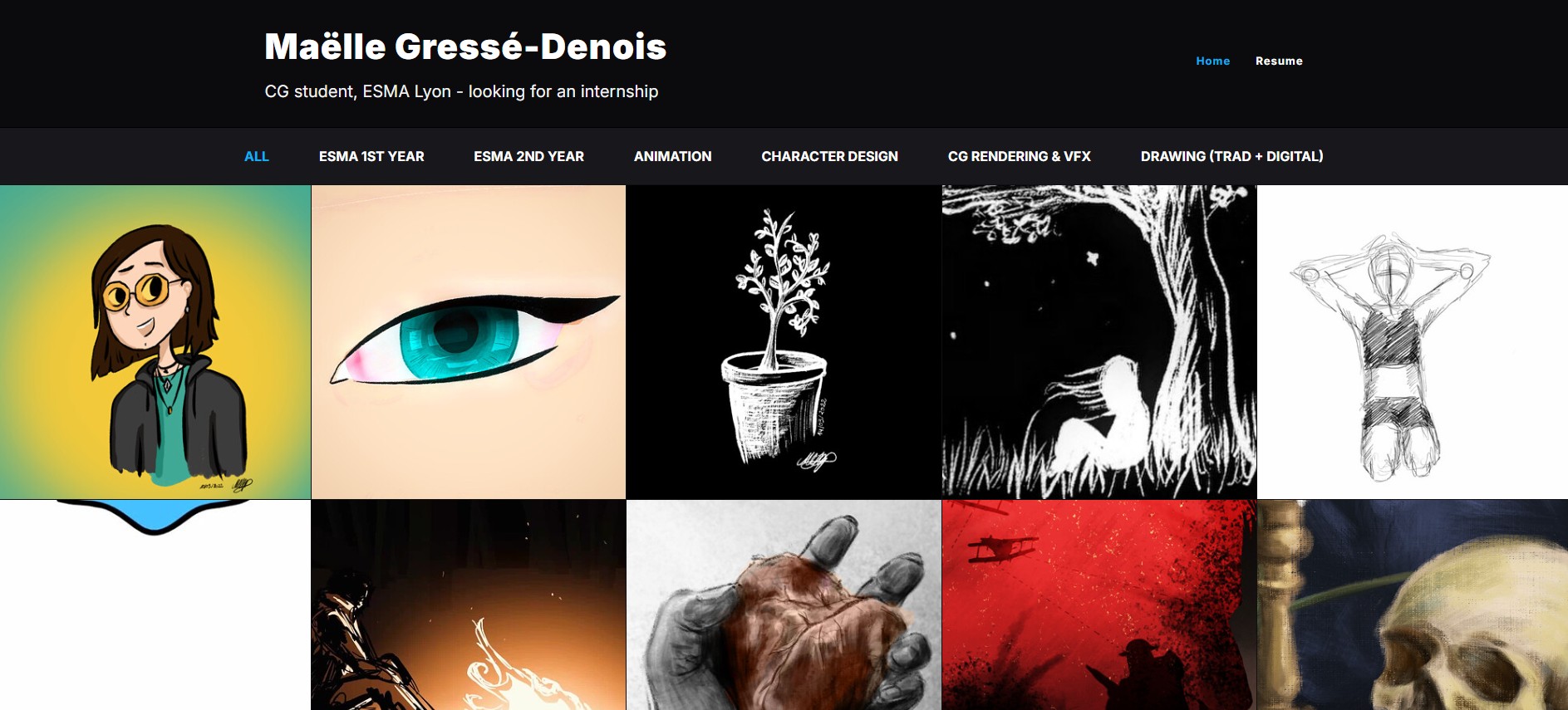
Whether you have a number of completed projects or are still in the process of producing your first works, it’s important to showcase your artistic vision and your ability to create in different contexts. As a student, for example, you could create a portfolio combining character design, vfx, drawings and exercises, as former ESMA student Maëlle Gressé-Denois did. This will give recruiters a glimpse of your talent at a glance, which is very useful in a competitive sector where the time devoted to these processes is increasingly short.
A section about you
After presenting your skills, it’s time to talk about yourself. Present your profile, what fuels your passion, your experience in a few words and the specifics of your training in 3D animation.
How can I contact you?
It may seem obvious, but it’s crucial that anyone who browses your portfolio can easily get in touch with you, or subscribe to your social networks. Indeed, many recruiters actively follow many artists on Instagram or other specialist platforms. Offering this opportunity to keep in touch also means increasing your chances of being contacted when the need arises within these teams.
What format should you choose to present your 3D animation portfolio?
The most traditional format for presenting your portfolio is obviously the website, because this allows you to showcase videos, visuals and texts in a professional and attractive presentation. That said, don’t be afraid to be inventive!
As a 3D animator, you’ve developed the perfect skills to turn your portfolio into a truly immersive experience. Use motion design and work with After Effects, or create animated visual elements to accompany the reader as they browse.
Why not make your portfolio more interactive by offering a mini-game?
Or, to go beyond the demoreel, make a short film that is complete and structured into a story, to take your audience on an adventure through your career?
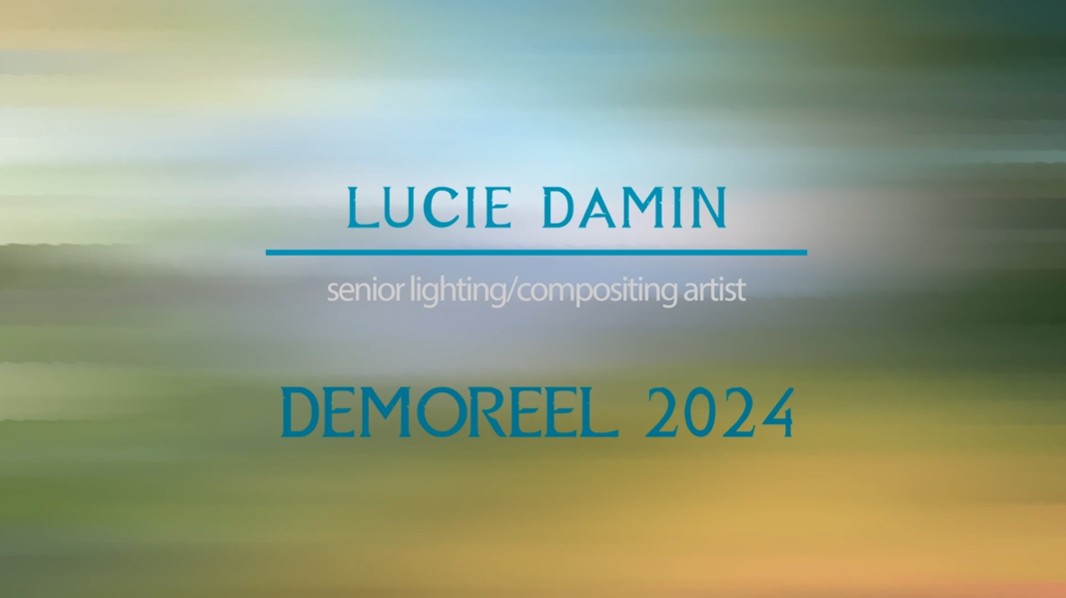
The possibilities are endless, and the only limit is your imagination.
Always bear in mind that the ultimate aim is to make an impression on the recruitment teams, while showcasing your technical skills and artistic vision.
Mistakes to avoid when creating your 3d animation portfolio
Include too many projects
As in all sectors that use this tool, the 3D animation portfolio needs to make an impact. You should therefore avoid including too long a list of projects, which will be more like an enumeration than a real selection. Quality must always take precedence over quantity, and that’s why it’s up to you to choose the most relevant projects and those that best represent your work.
Don’t hesitate to adapt this portfolio according to the type of job you are looking for, because a well-targeted application will always have a better chance of success than a mass mailing without personalisation.
Do not take page layout into account
If there’s one mistake you shouldn’t make, it’s underestimating the importance of your layout. If your work is of high quality but it’s impossible to find your way through your portfolio, you’ll lose any chance of being contacted by recruiters.
Adopt a direct style, focusing on the most impactful visuals, and build your portfolio so that it can be viewed seamlessly on both computer and mobile.
There are a number of platforms available for this purpose, as well as pre-established templates, which will enable you to build up a solid portfolio base before customising it to make it unique.
Too much text, not enough images
Because a portfolio is first and foremost a tool that allows you to showcase your artistic and technical skills, it’s in your best interests to limit the amount of text and give priority to images.
Use video or visuals to showcase your skills and your work. Of course, it’s important to put your projects in context so that people can quickly understand the challenges you faced and the solutions you found to overcome them. But don’t forget that too much text risks losing the reader, and that you only have a limited amount of time to convince them.
A well-balanced portfolio, combining the right amount of text with relevant, high-quality visuals, should help you land that first interview, when you’ll have the chance to talk more about your experience.
Examples and inspiration for 3d animation portfolios
To create a memorable portfolio, take inspiration from professionals in the sector, and don’t hesitate to feed off their ideas and their inventive, impactful proposals.
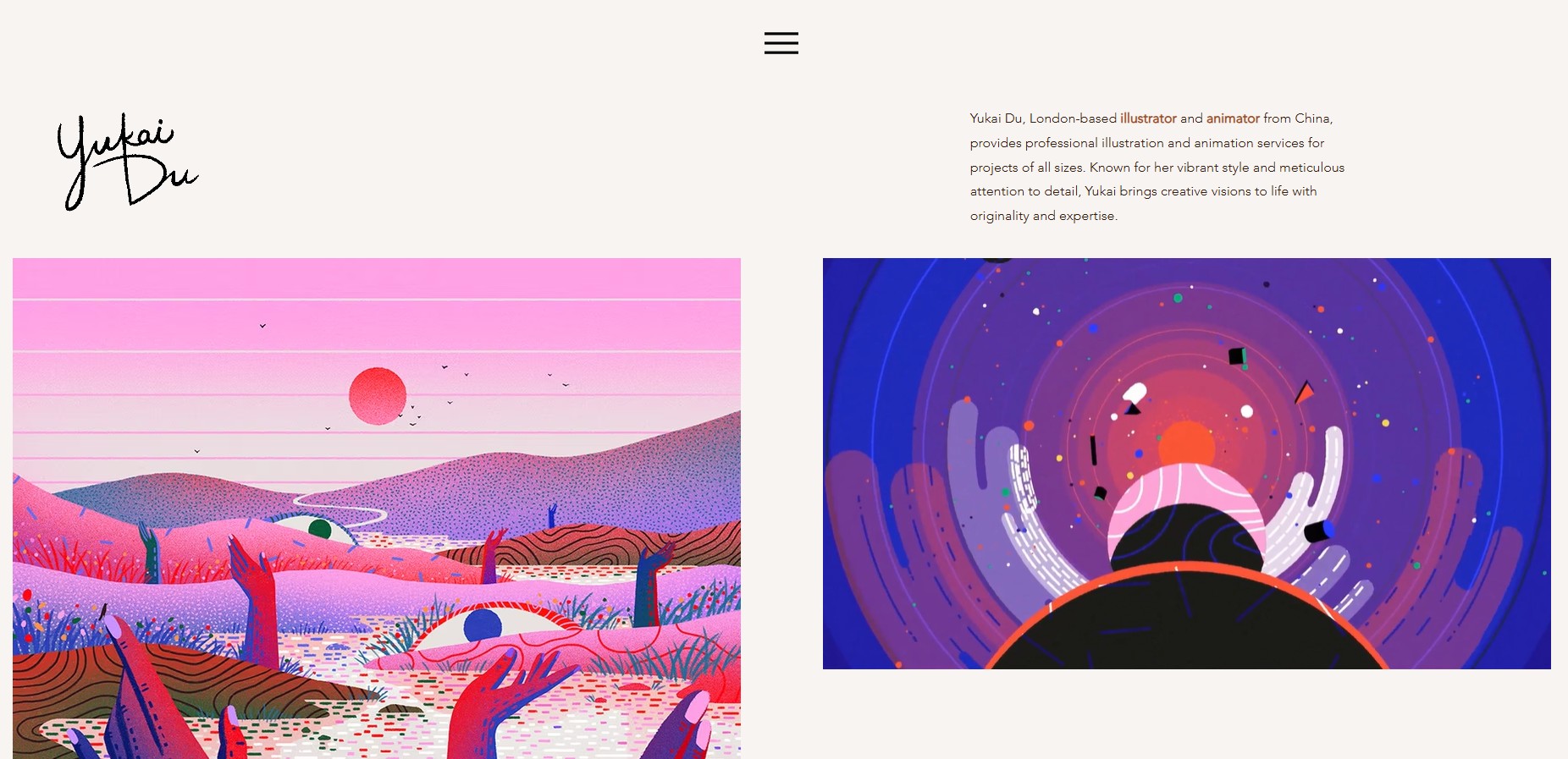
Yukai Du, a Chinese artist and illustrator based in London, has created a lively portfolio combining animation, still images, photographs and contextualisations of her work. A clean, dynamic and unique site that catches the eye while showcasing the creativity of this artist who has worked with some of the biggest brands.
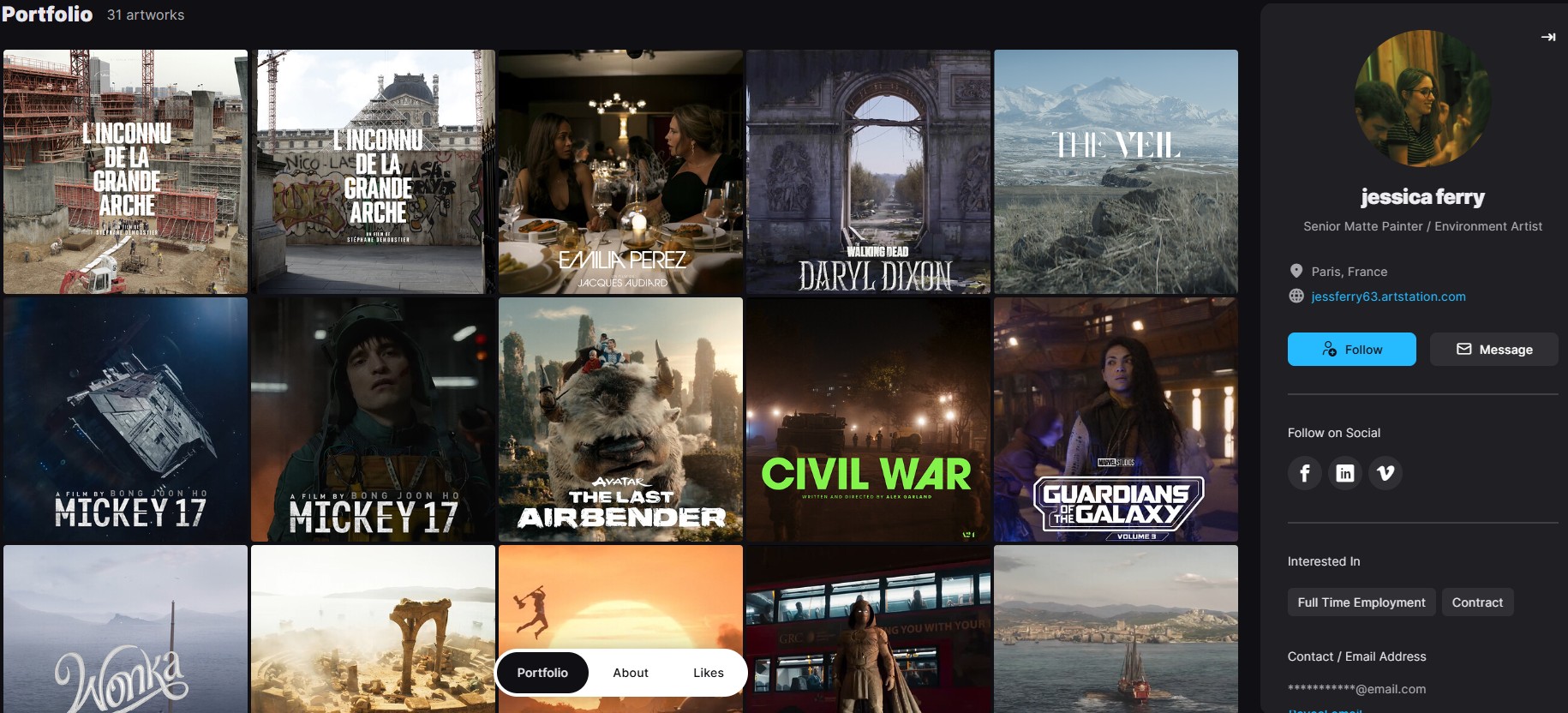
Another particularly interesting profile is that of Jessica Ferry, Senior Matte Painter and Environment Artist based in Paris. With the Artstation platform, she has built up a dense but visually very direct portfolio, where each of her projects is outlined like a vignette, inviting discovery.
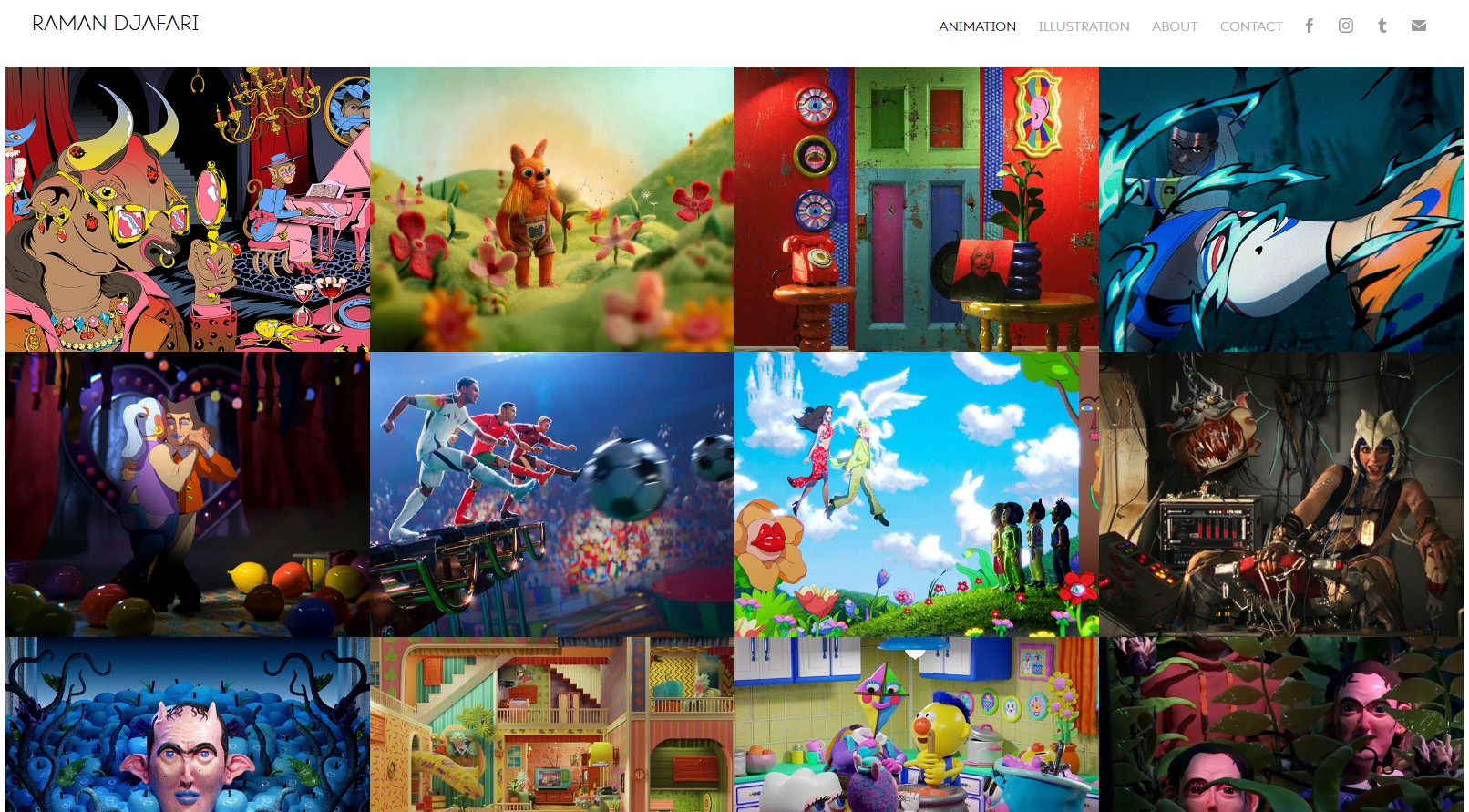
It’s an approach that artist and 3D animator Raman Djafari has also chosen for his own website. Somewhere between illustration and animation, Raman Djafari’s work is showcased in a sober way on his home page, while offering a more complete discovery when you click on each of the thumbnails. It’s a good way of summarising the range of your skills, while allowing those interested to go further.
Finally, for the best-known and most experienced artists, it can become difficult to keep an up-to-date and complete portfolio, without spreading oneself too thin. In this case, there are tools and solutions, as Mexican artist and film-maker Jorge R. Gutierrez has clearly understood.
His linktree showcases the full range of his recent work, as well as the talks he has already given in the industry.
As you can see, there isn’t just one way to build your portfolio, but dozens.
What tools and platforms should I use to create a portfolio for 3d animation?
Among the most widely used platforms, ArtStation is undoubtedly the best known in the 3D animation industry. Both an individual website and a community tool, ArtStation is an ideal platform for anyone wishing to create a professional portfolio quickly and cost-effectively. Be careful, however, to feed it regularly and in a structured way, otherwise the quality and relevance of your page will rapidly decline.
Alongside this tool, a personalised website created with tools such as WordPress or Wix is also a very good option. This will allow you to choose the exact layout of your site, highlight your visuals according to your own criteria, and create an impactful and unique page. On the two platforms mentioned above, it is also possible to use existing templates, or even to use AI to improve your layout and offer interactive sites with a truly immersive experience.
Finally, if you have the time and the skills, don’t hesitate to use software that you are familiar with, such as After Effects, or other motion design tools to create a unique portfolio.
Whatever the case, the form and content of your portfolio should reflect your profile, highlighting your skills, your vision and your ability to solve problems both independently and as part of a team. That’s what’s going to make the difference in a sector that’s undergoing rapid change, but is still dynamic.