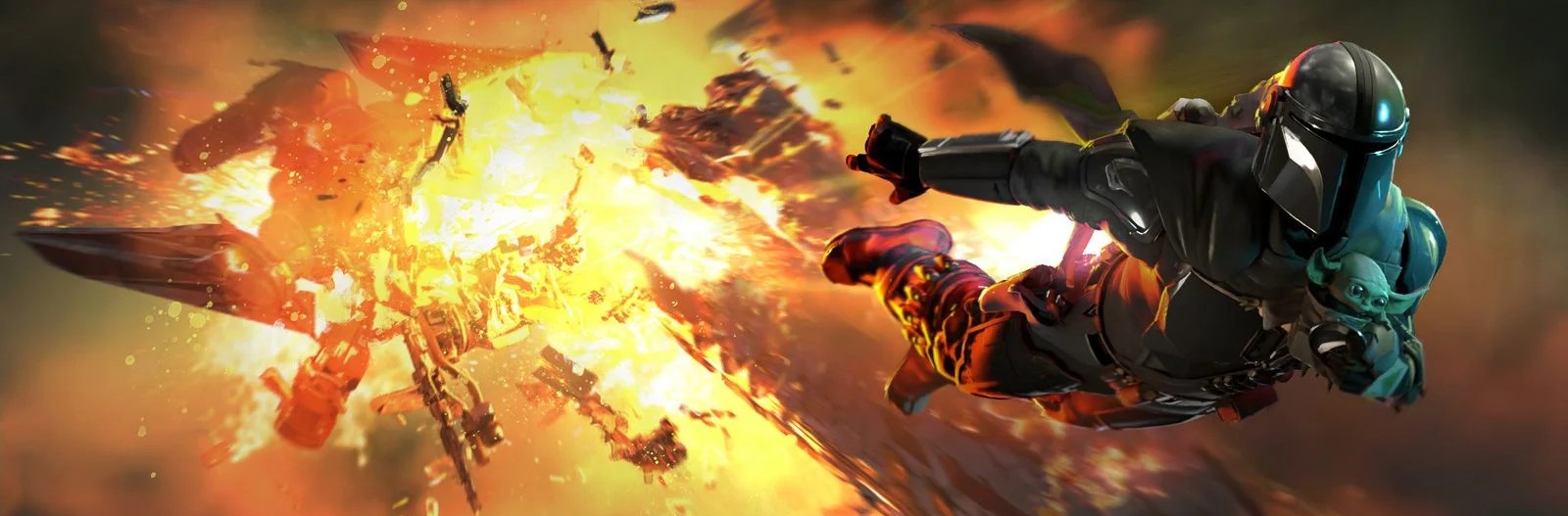

Yet it’s thanks to The Mandalorian, a Disney+ series released in 2019 that now boasts three seasons, several spin-offs and now a feature film, that Lucasfilm and Disney have managed to dust off one of their strongest universes, while making people forget the pathetic conclusion of their last trilogy.
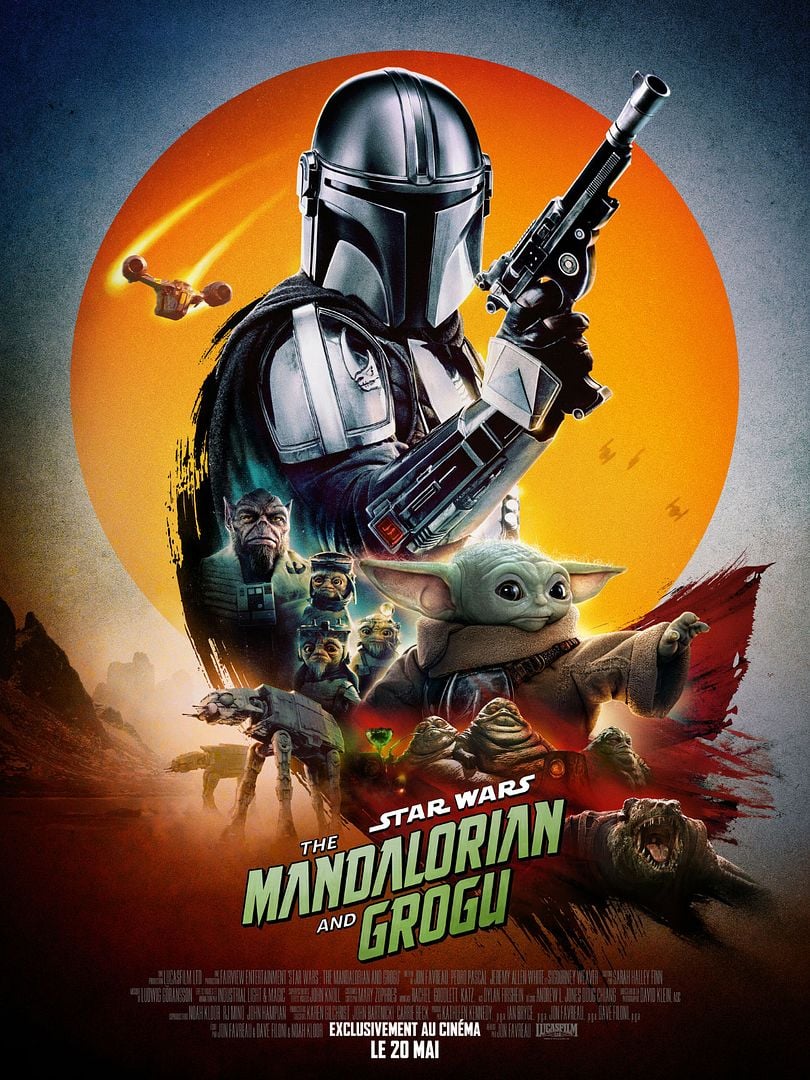
There’s only one step from the small screen to the big one? It’s certainly the one that Din Djarin and his adopted child Grogu, aka Baby Yoda, have managed to take, buoyed by a convinced community and a visual and script quality that has been maintained for three seasons now.
With the release of Mandalorian & Grogu, we thought it was time to take a look back at the duo who revived the world, and to meet the people who brought this new impetus to life, first in series, and now in film.
A very first series from the Disney stable
Jon Favreau, the MCU’s leading actor, producer and director, is responsible for this first live-action series to be developed in the Star Wars universe. George Lucas himself had a similar project in 2009. But it was too costly and was abandoned.
The series was made possible by Disney’s acquisition of Lucasfilm and the development of the Disney+ platform. Written and directed by Jon Favreau, whose credits include Iron Man and Iron Man 2 as well as Elf, Zathura and the recent remakes of The Jungle Book and The Lion King, The Mandalorian series immediately stands out for its blend of comedy and action, driven by a hero who is both cynical and charismatic.
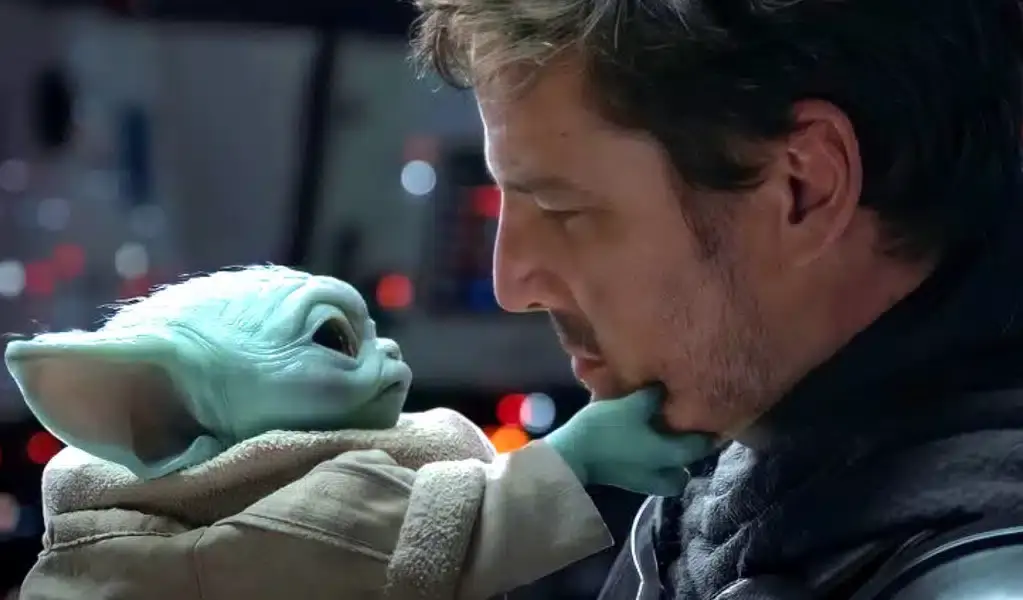
Have you ever drawn parallels between Tony Stark and Din Djarin? The similarities in the storyline are quite striking, even if the two characters seem to be poles apart… The fact remains that, in just one season, the series has managed to carve out a royal place for itself in the Star Wars universe and in the hearts of fans the world over. And it’s not just thanks to Pedro Pascal’s charisma and Grogu’s irresistible cuteness: The Mandalorian is an innovative series in more ways than one.
A meticulously crafted project, the fruit of multiple perspectives
While Star Wars has regularly been criticised for being written and directed only by white directors, when the project was first announced, producer Kathleen Kennedy stressed that the writing and directing teams would be from a wide range of backgrounds and genres, in order to broaden the scope of the series’ storytelling.
Jon Favreau wrote several episodes of season 1 and directed a number of episodes in seasons 2 and 3, but the series’ directors include Deborah Chow, Peter Ramsey (co-director of the first Spider-Verse), Bryce Dallas Howard (a talented actress and director), Robert Rodriguez, Rachel Morrison and the inexhaustible Taika Waititi. Favreau, meanwhile, is directing the feature film Mandalorian & Grogu, the fourth season of the series turned theatrical film.
Maestro, music!
As well as its cast, its production teams and this top-notch virtual production, the music of The Mandalorian universe also deserves a special mention. Written by Ludwig Goransson, one of Hollywood’s hottest composers, who has just won another Oscar for Ryan Coogler’s Sinners , it is both steeped in Star Wars DNA and profoundly unique.
But the real strength of this Mandalorian is the technology that is also at the heart of this new opus, and which has enabled us not only to create unique atmospheres, but also to bring to life one of the most emblematic characters in the Star Wars universe.
Impressive production value
How did The Mandalorian manage to make its mark on our minds, taking us from one planet to the next, with its fantastic settings and multiple atmospheres?
Unlike blockbuster films such as Avatar, or series with huge budgets such as Rings of Power or Game of Thrones, the teams at Disney, Lucasfilm and ILM have managed to reduce the production costs of their project, while offering their audience a genuine Star Wars experience.
The secret of this success is StageCraft technology, invented by ILM and now an industry standard.
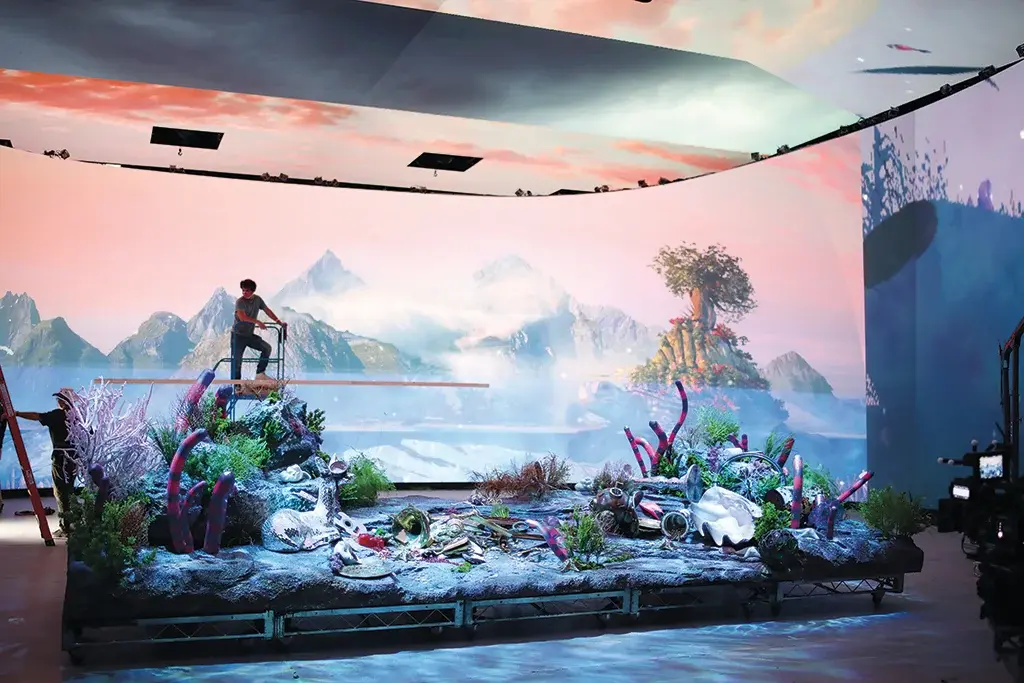
StageCraft, if you’ve never heard of it, is in fact a virtual production technology based on giant LED screens, onto which digital environments are projected live to serve as ultra-realistic backdrops for the actors and film crews.
As relayed by The Verge in February 2020, this success is also the result of a successful collaboration between ILM and Epic Games, whose Unreal Engine was used to create all of these digital environments.
Spaceships, digital motorbikes, setting sun(s) and a wide variety of creatures are all elements that can be integrated directly into the plans, enabling real sets to be reproduced and enhanced without having to send entire teams to the other side of the world.
Finally, the light and shadows projected by this digital lighting also have a beneficial effect on the real sets in the foreground, so there’s no need to recreate a fictitious sun in post-production, or to add numerous lighting points in compositing.
Another undeniable advantage of this virtual production is that the actors who play and interact with these imaginary worlds are themselves much more convinced by the environment in which they are evolving, unlike a traditional green screen, which is much less immersive.
Add to that Pedro Pascal’s silent charisma, and you’ve got a fearsome cocktail that’s as addictive as they come.
The origins of the myth: the creation of Grogu aka Baby Yoda
Disney’s (very) big surprise, however, was the stratospheric excitement generated by the creature nicknamed “L’Enfant”, but very quickly renamed “Bébé Yoda” by the Internet community. Grogu, his real name, is both a puppet built by Legacy Effects Studios and a 3D character developed by ILM, a sort of digital stand-in for the touching creature used for certain wide shots, as CG Supervisor Richard Bluff explains. Bluff even told The Hollywood Reporter that the team itself quickly fell under the spell of this puppet, which sometimes required more than five people to manipulate and bring to life.
If you’d like to find out more about the virtual production of the first season of Mandalorian, go here. You can also go behind the scenes of the production of Mandalorian and Grogu in a number of featurettes, like this one.