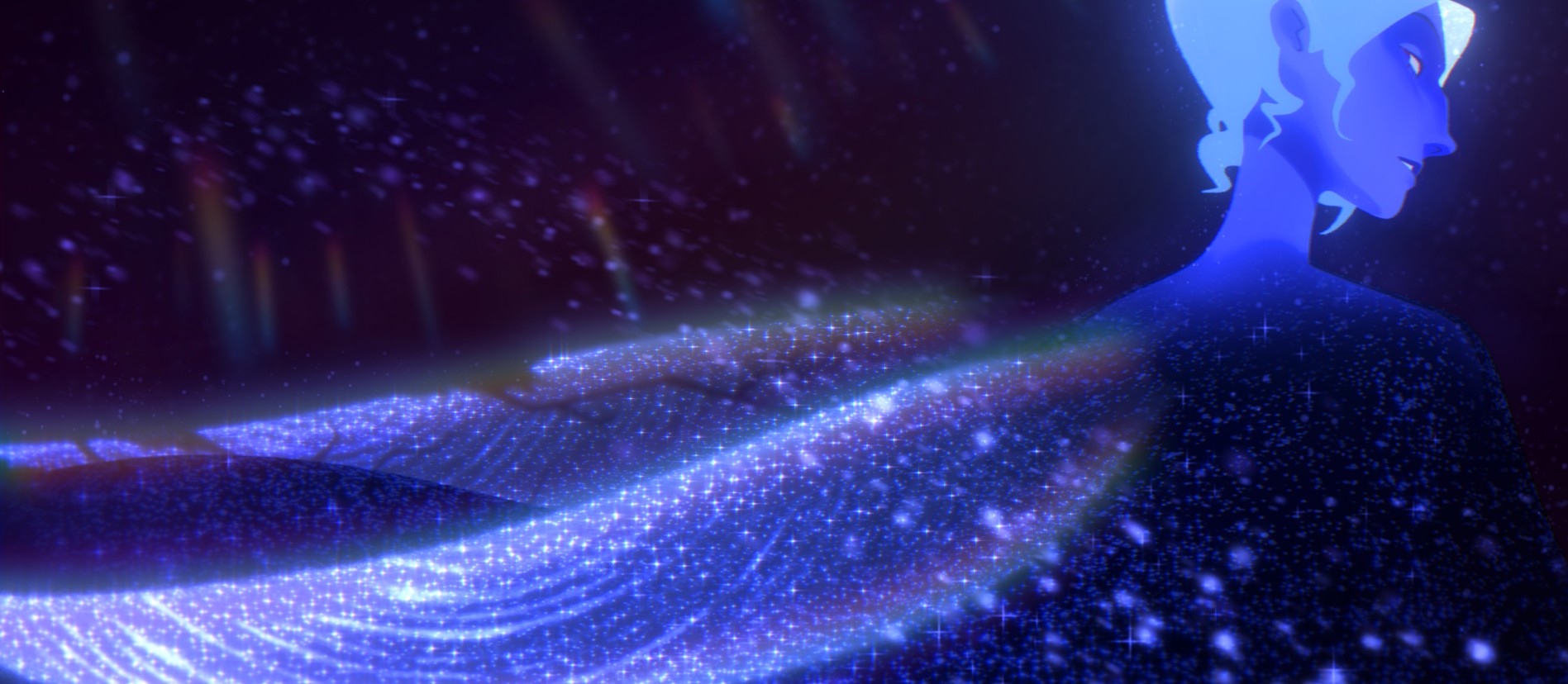

Two particularly interesting perspectives at a time when Fortiche has established itself as one of the most closely watched French studios on the international scene. Behind this recognition lies one name, of course: Arcane, the adaptation of the League of Legends universe, developed and produced by Riot Games in collaboration with Fortiche and streamed on Netflix.
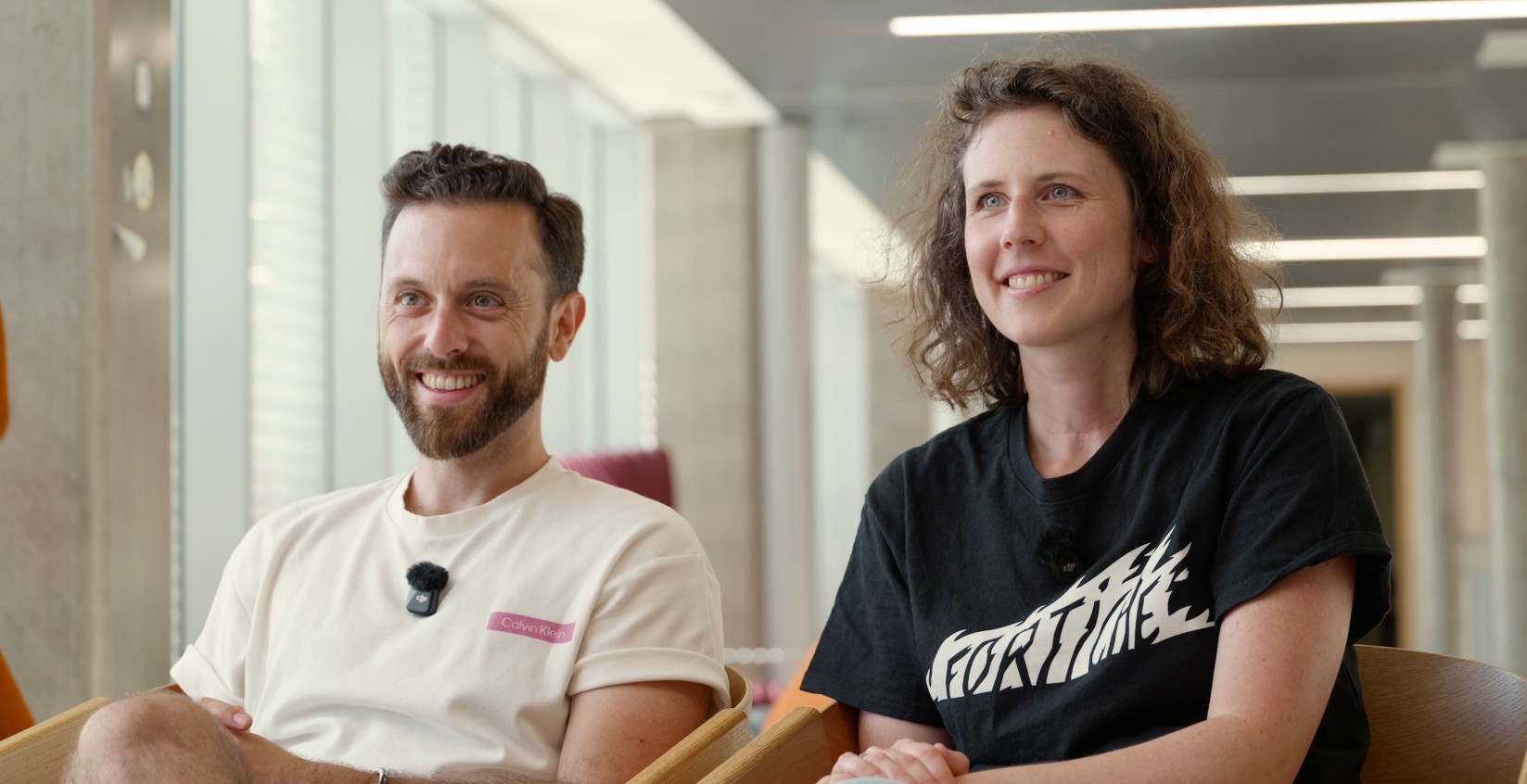
But the studio’s history did not begin with the series. Founded in 2009 by Pascal Charrue, Jérôme Combe and Arnaud Delord, Fortiche first made a name for itself in advertising and music videos, gradually developing a distinctive visual style combining 2D and 3D animation. This distinctive style caught the attention of Riot Games in the early 2010s and led to a collaboration that was set to take things to a whole new level.
From *Get Jinxed* to the productions centred on K/DA, this collaboration ultimately led to *Arcane*. For Fortiche, the project represented a significant step up in scale: the studio, which had originally been organised around a few dozen people, had to expand its workforce and organise a production on a scale it had never before undertaken. It also expanded its operations beyond Paris, notably to Montpellier and Las Palmas in Spain.
Upon its release in 2021, *Arcane* was a hit with critics and audiences worldwide. The series won four Emmy Awards in 2022, including Best Animated Programme. Its second and final series, broadcast in 2024, cemented Fortiche’s place in the global animation industry. This trajectory directly echoes the topics discussed during this Grand Jury session: artistic ambition, production constraints, evolving formats, professionalisation and the growing prominence of animation aimed at more mature audiences.
32 films and just as many proposals
What strikes Emmanuelle Aubeau first and foremost at the end of the day is the diversity.
This year, the Grand Jury 3D features 32 films from ESMA’s various campuses. It is a substantial number, but above all, these 32 entries never give the impression of telling the same story.
She describes it as a “very rewarding, very eventful” day, characterised by extremely diverse stories, sensibilities and artistic visions.
Some films opt for animation, whilst others lean towards more realistic or much darker settings. Humour can follow on from more dramatic, or even more radical, approaches. For Emmanuelle Aubeau, this diversity allows students to explore a whole range of emotions and also demonstrates a growing willingness on their part to take risks.
This observation resonates particularly strongly with Fortiche’s recent history. With *Arcane*, the studio helped to demonstrate that an animation production on an international scale could fully appeal to a teenage or adult audience, with storytelling, aesthetics and themes that are not confined to the conventions traditionally associated with children’s animation.
“It feels as though the budget is unlimited.”
For his part, Marcel André is struck by the scale of the work that has been carried out.
A former student of ESMA, part of the Class of 2014, he views the projects from two perspectives: that of a professional accustomed to the practical constraints of production, and that of an alumnus able to gauge how the course has evolved.
He is particularly impressed by the sheer number of environments, sets and props produced. So much so that it sometimes gives him “the impression that the budget is unlimited”.
The phrase might raise a smile, but it takes on a special significance when it comes from a supervisor who has worked on a production on the scaleof *Arcane*. Even on the most ambitious projects, a studio remains subject to constraints in terms of time, human resources and production, and is therefore constantly having to make trade-offs.
It is precisely this ability to produce a great many films whilst maintaining artistic and narrative coherence that catches his attention in several of the films on show.
A development he has been able to observe since his own training
On returning to ESMA several years after graduating, Marcel André also noticed a change in the very nature of the projects on offer.
When he left school in 2014, his style was still largely associated with cartoons and an aesthetic similar to that of feature-length animation. At the time, the opportunities to explore much more adult themes seemed more limited to him.
By 2025, the range of styles had broadened considerably. Students can move from cartoons to realism, venture into hyperrealism or explore much darker themes. For Marcel André, this openness above all highlights what he finds most striking about this selection: ‘the diversity of stories’.
A particularly interesting development for a studio like Fortiche.Arcane’s success is built precisely on its rejection of a simplistic dichotomy between mainstream animation and artistic ambition: complex characters, violence, painting, 3D, 2D effects, a cinematic style and a wealth of visual references all coexist within a single work.
Seeing students emerge, right from the start of their training, who are capable of exploring a wide variety of styles is therefore a particularly significant indicator for studios looking to recruit.
*Where Love Lied*, *Salamander*, *Cursed*: choices that made an impression on the jury
Of the 32 films screened during the 2025 Grand Jury 3D, some particularly caught the attention of the two industry professionals.
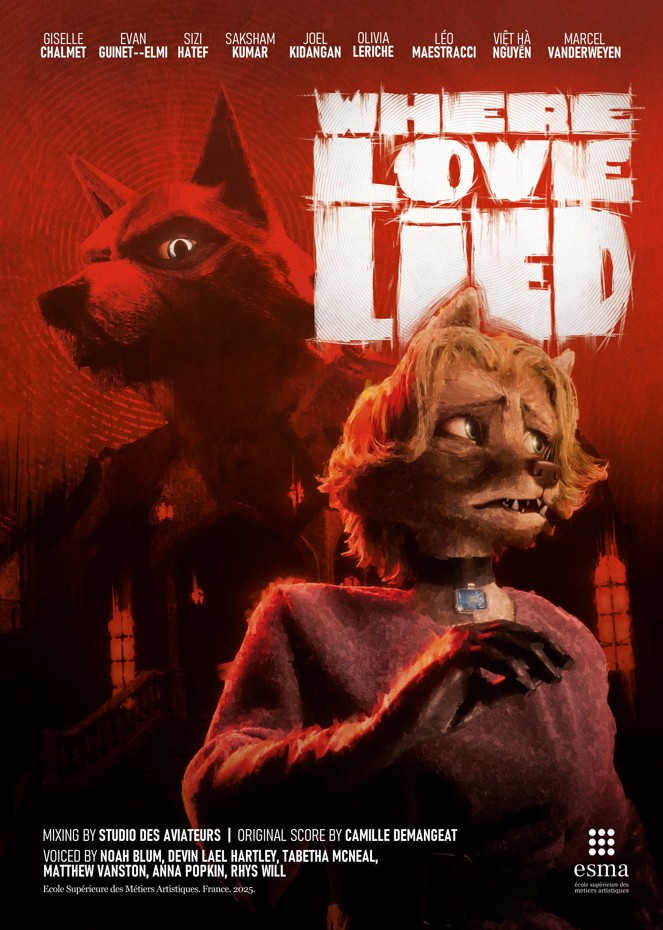
Marcel André singles out *Where Love Lied* in particular, which he considers to be one of the most accomplished projects in the selection.
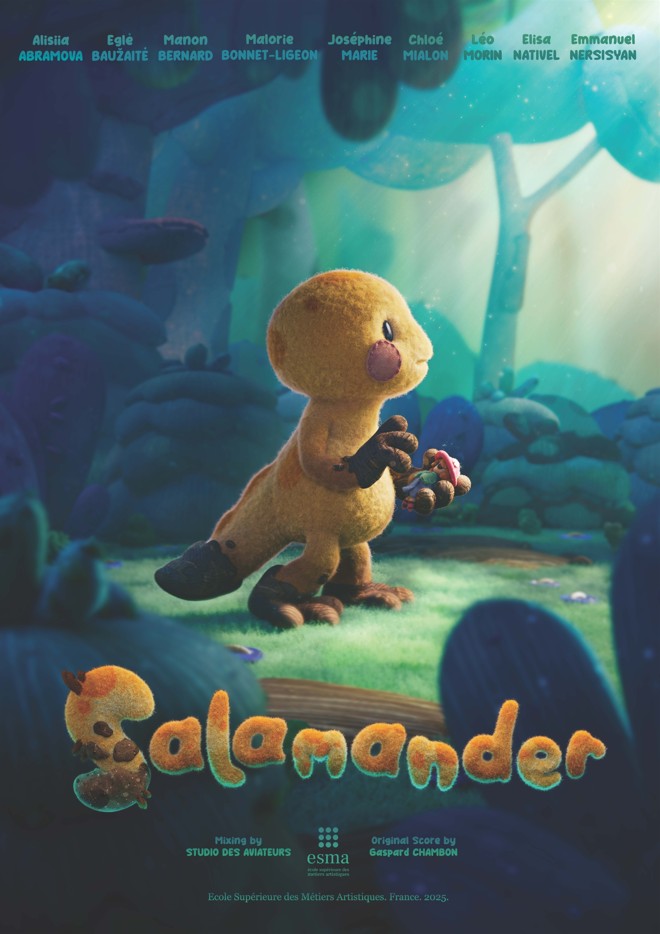
He also singles out Salamander, particularly for the work carried out in relation to its art direction.
More than just a succession of beautiful images, it is the coherence of the whole that interests him: the world that has been created, the direction and the various artistic choices all give the impression of being part of the same project.
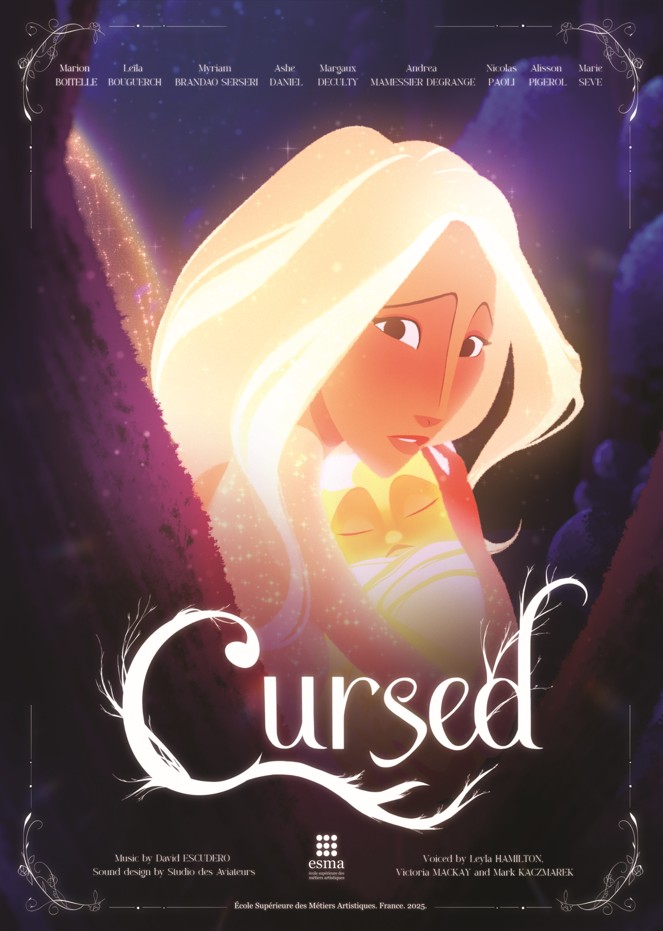
This notion of coherence also features in Emmanuelle Aubeau’s analysis of *Cursed*.
In her view, the film succeeds in creating its own world and, above all, in remaining true to its creative choices throughout the narrative. She also highlights the quality of the animation and its ability to ‘draw’ the viewer into the story.
Beyond any particular film, what ultimately interests him is the soundness of the decisions made by the students: understanding why a particular style, direction or approach to animation genuinely serves a story, rather than simply seeking technical excellence.
A solid foundation for entering the industry
The Grand Jury also gives Emmanuelle Aubeau the chance to take a step back and reflect on the training.
She is already familiar with ESMA, having spoken to students during masterclasses. Year on year, she says she sees not only a solid technical and artistic foundation, but also the impact of the resources made available to each cohort to enable them to see ambitious projects through to completion.
Moreover, these films are not merely the culmination of several years of study.
They become the first real calling cards for recent graduates when approaching film studios.
According to Emmanuelle Aubeau, students leave with a sufficiently solid foundation to tackle the world of work: “They are well equipped to enter the world of work.”
She has also observed a steady improvement in standards. Each new cohort seems to take ‘another step forward’, both in terms of technical quality and the variety of ideas on offer.
In a globalised industry where studios are looking for both highly specialised skills and artists capable of understanding a director’s vision, this combination of technical mastery and artistic sensibility becomes particularly important.
Networking: a professional skill in its own right
All that remains is to gain that initial experience.
On this point, Emmanuelle Aubeau prefers to highlight a reality that is sometimes less obvious to students: a degree and a portfolio are essential, but they are not everything.
Animation remains a volatile industry, with periods of high activity and others where projects and recruitment slow down. His first piece of advice is therefore simple: “don’t give up”.
Continuing to create, develop personal projects and maintain one’s skills helps to keep one active. But she is equally keen to emphasise the need to maintain the connections forged whilst at university.
Tomorrow, our fellow graduates will become programme coordinators, supervisors, team leads, artists or production managers in various studios. This network, which has developed naturally over several years, therefore already serves as a first stepping stone into the industry.
You should gradually start building up a professional network: contact studios, network with artists, use LinkedIn and don’t hesitate to reach out to specific people directly.
“The informal side of the job is important,” she points out.
A significant proportion of opportunities do, in fact, come through professional contacts, recommendations and people we have worked with before.
In her view, therefore, one must be prepared to seek out these opportunities and, in a sense, become ‘the architect of one’s own fortune’.
An animation industry undergoing radical change
This need to remain active is all the more important given that the sector itself is changing.
Fortiche’s recent track record is a case in point. A French studio that had traditionally worked on music videos and short-form content was able, thanks to a strong artistic identity and a long-standing relationship with Riot Games, to take part in one of the most ambitious animation productions of recent years.
In 2022, Riot Games took another step forward by acquiring a significant minority stake in Fortiche, whilst allowing the studio to retain its operational independence.
This trend reflects a broader shift in the market: animation is no longer defined solely by family-oriented feature films or children’s programmes. Streaming platforms, video games and the emergence of new intellectual property have created more scope for works aimed at teenagers and adults.
For Marcel André, this shift represents a real ‘breakthrough’ for programmes that are not so exclusively aimed at children.
It creates new opportunities, but also requires young artists to keep pace with a sector in which aesthetics, tools and production methods are changing rapidly.
His final piece of advice can ultimately be summed up in a few words: the industry is changing, so we need to ‘keep up to date’.
A message that sums up this 2025 edition of the Grand Jury 3D rather well: master the fundamentals, develop your own perspective and remain curious enough to keep pace with an industry that, itself, continues to reinvent itself.