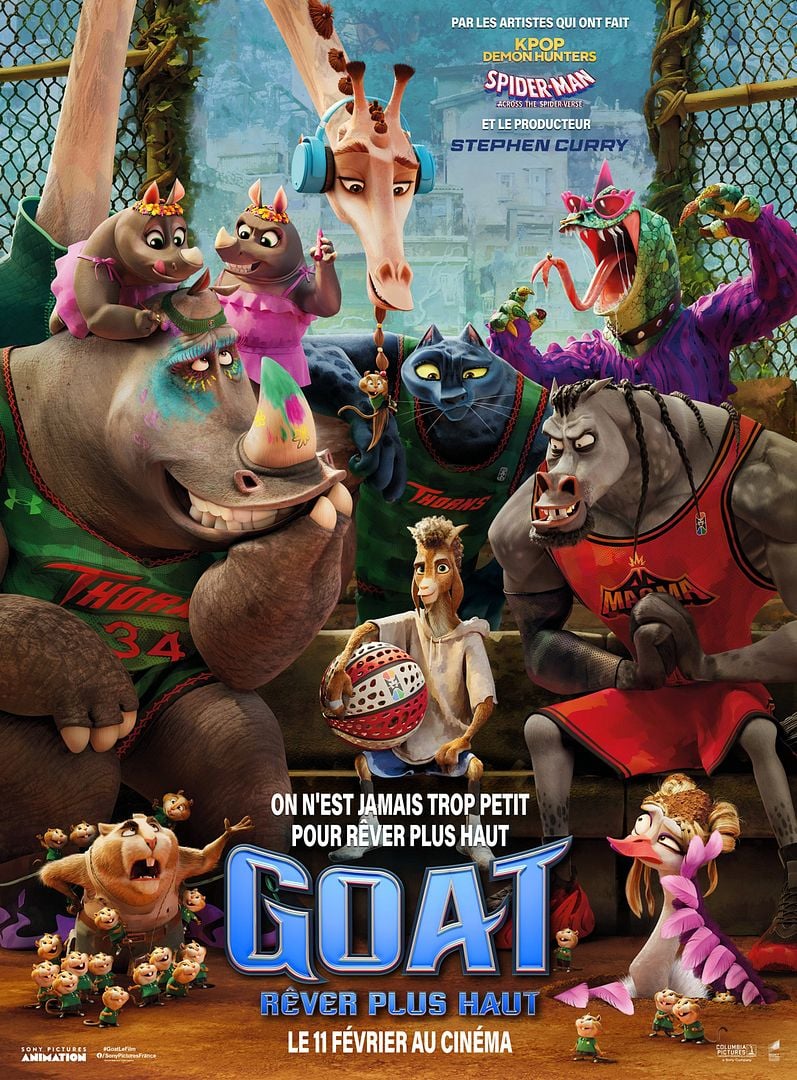
A few months after the film’s cinema release, he agreed to sit down with us to reflect on this experience and his career path since graduating from ESMA. Read the full, in-depth interview below.
Alexandre Mazelly, do you remember what led you to choose this school and this sector?
After watching a documentary about Pixar when I was a child, I fell head over heels in love with these behind-the-scenes roles. They combined my two main interests: art and technology.
So later on, when I had to decide on my career path, I set about finding out straight away how to achieve that dream: to become a 3D artist.

I attended a few open days at French art schools, which were a great help in making my choice and confirming my interest in the field. And after a year of preparatory art classes, I began my studies at ESMA in Montpellier.
In practical terms, what did your training bring you?
Attending a school like ESMA is a real learning experience. You’re quickly encouraged to develop independence, rigour, a serious approach and organisational skills, but you’re also strongly encouraged to embrace your natural curiosity.
In this context, we also learn to work with others, to understand how our work affects that of our colleagues, and we discover the various roles across the entire post-production chain. This is, in fact, something that sets us apart in the job market: we graduate with a specialism but are still able to do a bit of everything, and this all-rounder profile is highly valued by studios.
Looking back, what made the biggest impression on you during your school years?
I think what made the biggest impression on me was the volume and pace of work throughout the course. The exercises are varied, very practical and challenging right from the start. This is what pushes us to be thorough – or to become so – but it is also sometimes what gives rise to doubts and makes us question ourselves.
When you enter the world of work, you realise just how closely this training mirrors real-life studio conditions, and you’re glad you were prepared for it.
Does what you’re doing now match what you envisaged when you were a student?
Yes and no! On my graduation film, *The Other Me*, I was lucky enough to work on CFX simulations for plants (using Vellum in Houdini). Our main character didn’t have any clothing or hair simulations, and at the time I had no idea that my work on the seaweed in the short film would stand me in good stead for my future simulations on INOXTAG’s *Cube* , *GOAT* or even *Spider-Man: Brand New Day*.
It was when Framestore got in touch with me a year after I left school to join the Launchpad Pro course in CFX that I seized the opportunity, thinking to myself, ‘Why not?’. After all, it’s hard to turn down the chance to work for one of the world’s biggest visual effects studios!
Could you briefly tell us about your current role?
I am a CFX Artist. I work as a Techanim artist, Creature FX artist or Cloth/Hair FX artist, depending on each studio’s terminology. My role involves simulating the movement of clothing, hair, muscles, skin and any other objects (flags, balloons, spider’s webs, etc.). I’m currently working as a Mid-Level CFX Technical Director for Sony Pictures Imageworks in Montreal.
How did your work on GOAT go?
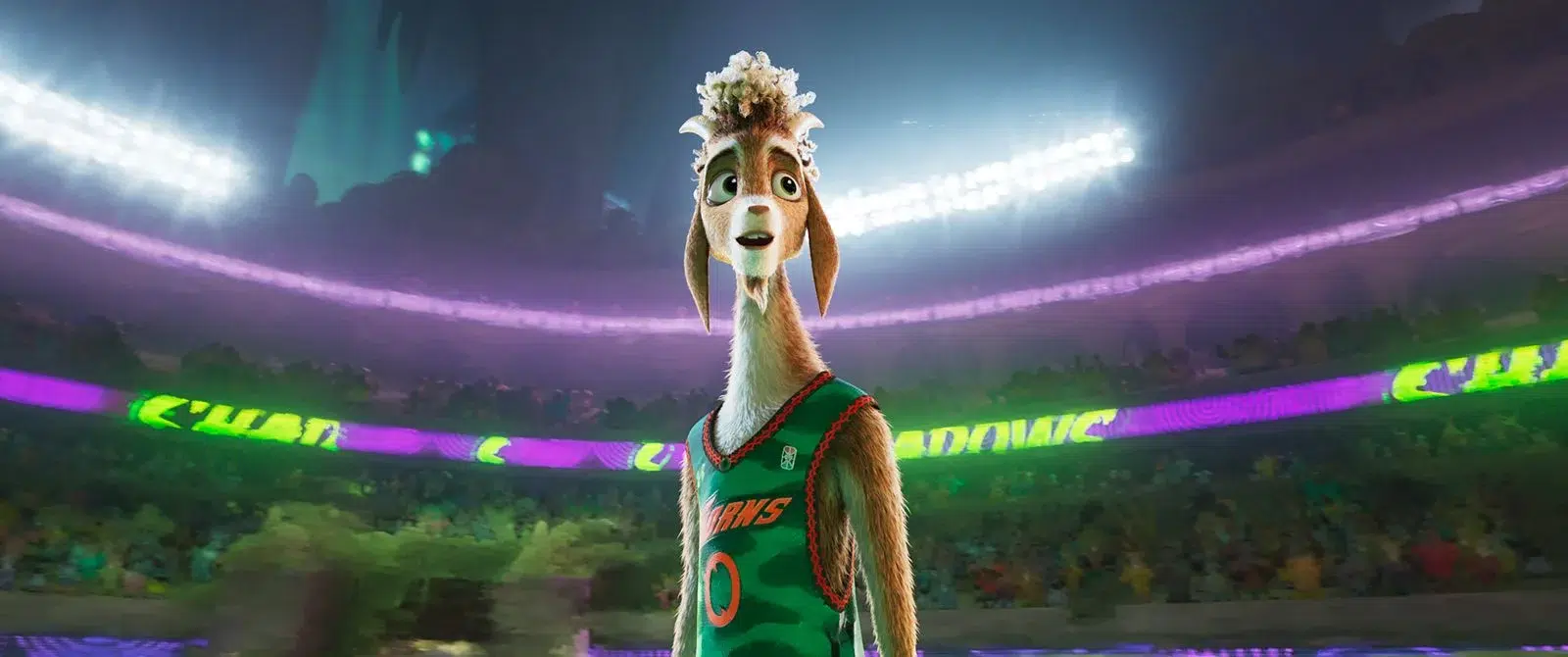
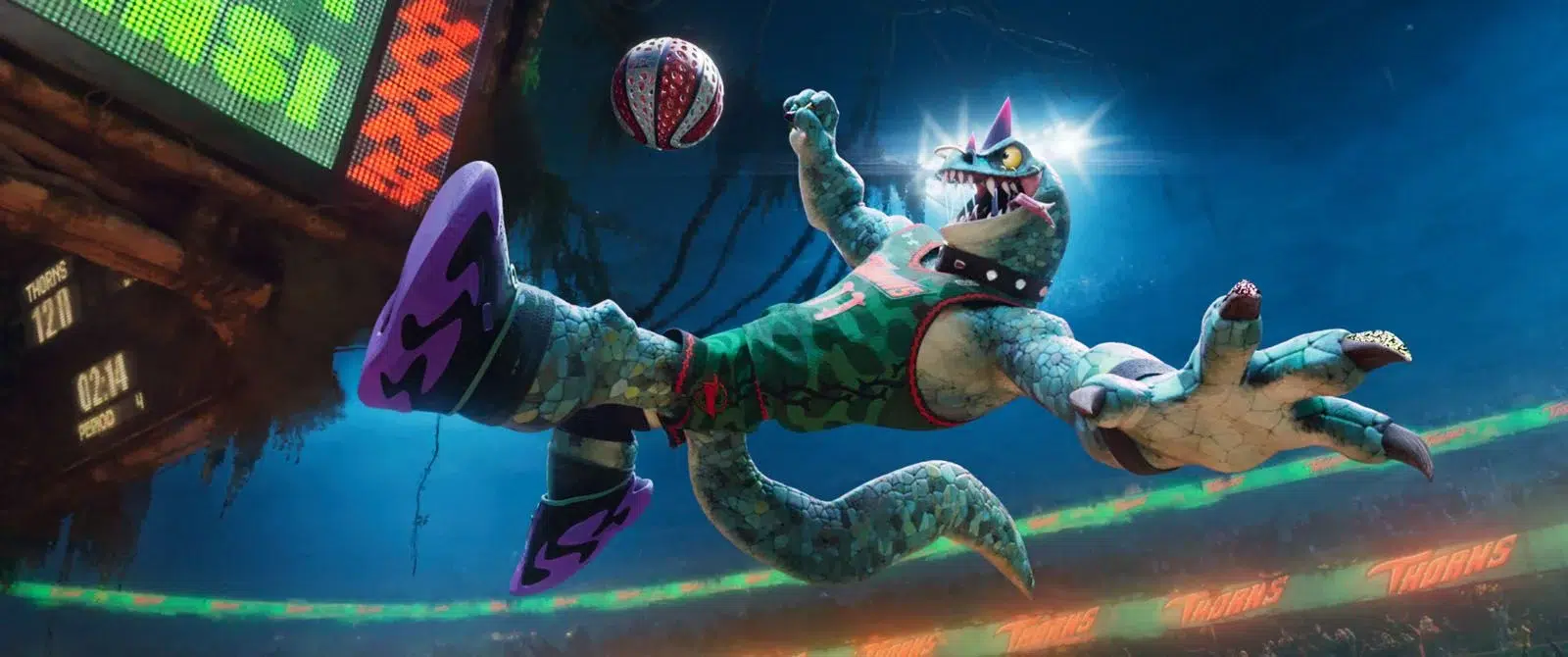
The project went very well despite numerous challenges, notably combining cartoon-style animation with ‘stepped’ animation (12 frames per second). In practical terms, this meant we had to convert each animation into a spline (24 fps) so that we could run a simulation as we normally do, and then convert these frames back to stepped animation.
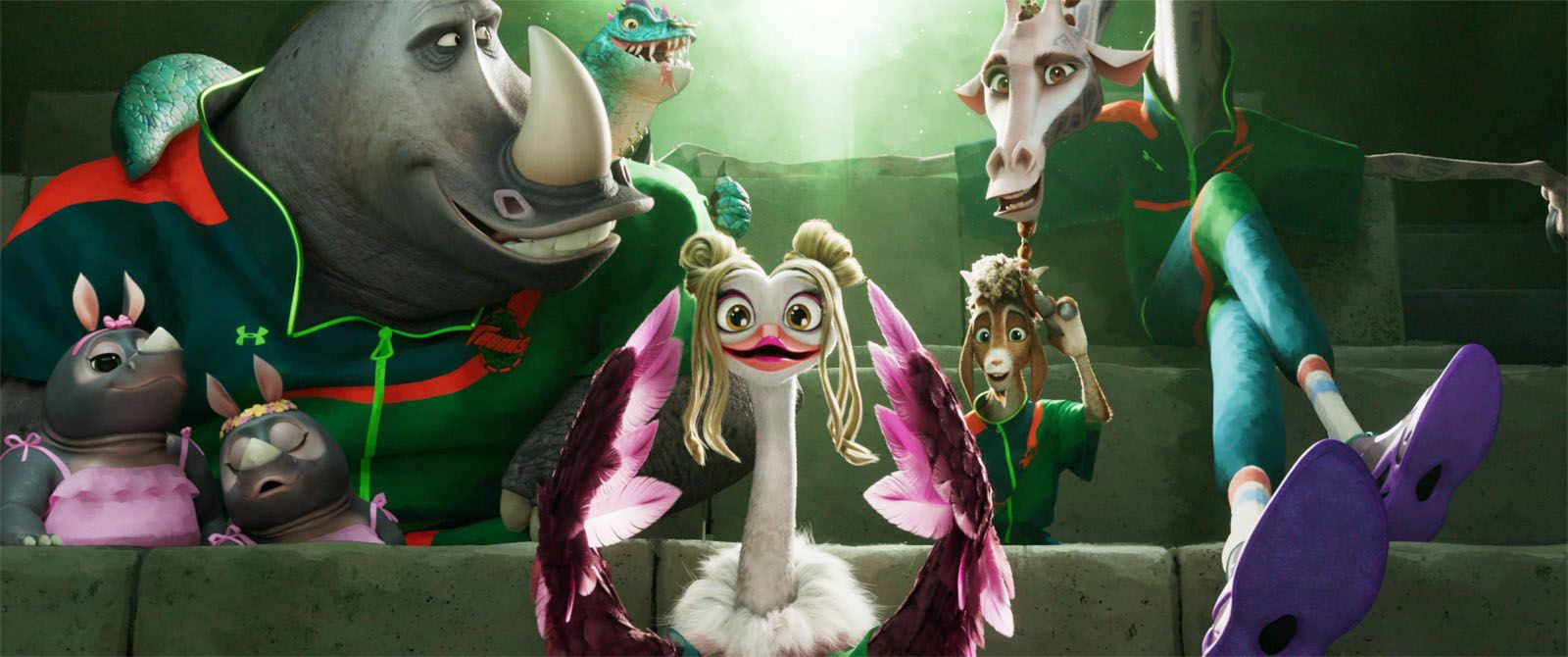
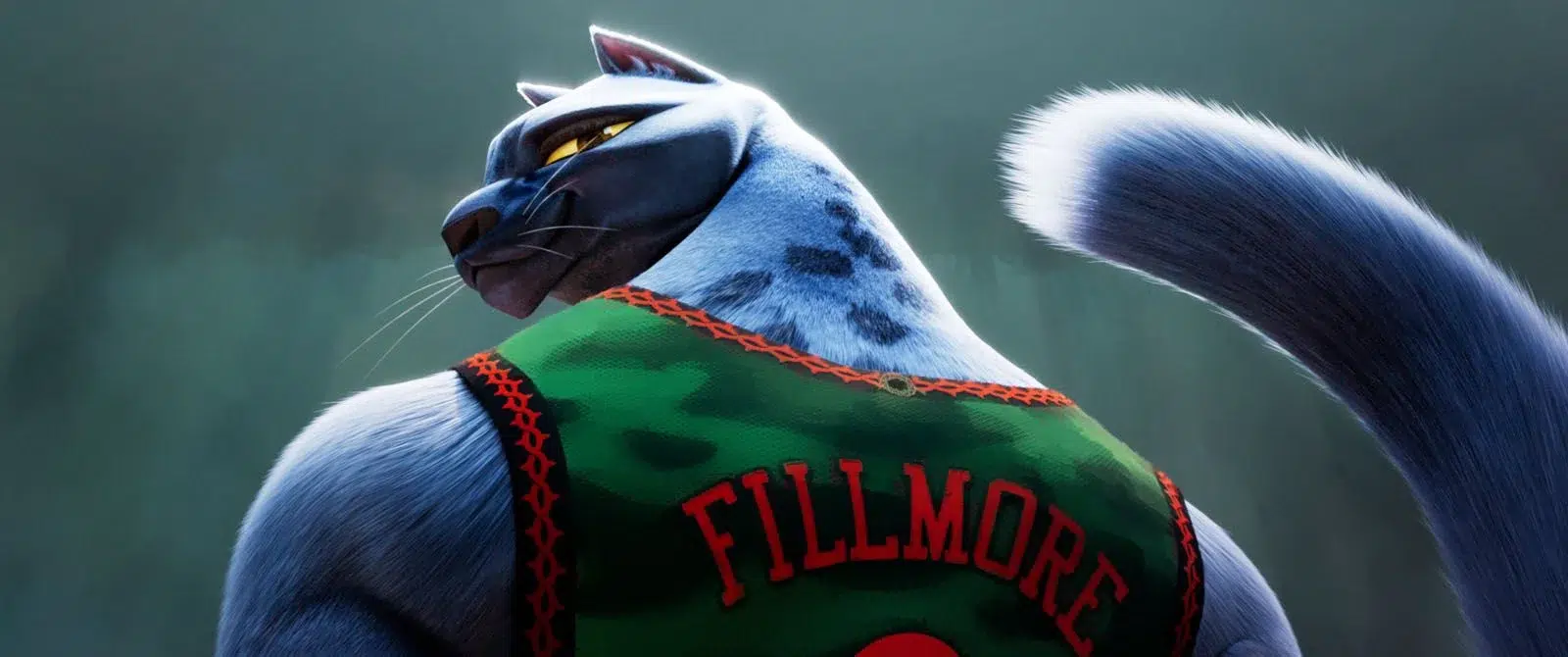
On top of this challenge, we had a huge variety of animals: from the little hamster to the rhinoceros, including the giraffe, with all their distinctive features (variations in fur, feathers, the way they move, etc.) and sporting different outfits and personalities. But in my opinion, the greater the challenge, the more interesting and fun our work is!
What were the expected deliverables?
In CFX, we take the animations supplied by the animation department and integrate them into the setups that we have previously programmed and tested.
The aim is to produce simulations of clothing and fur/feathers/muscles that are fluid and consistent with movement (especially during the various basketball matches!). Once approved, these are then forwarded to the lighting department to be integrated into a scene with the final lighting.
Could you point us to some examples where you’ve had a direct impact?
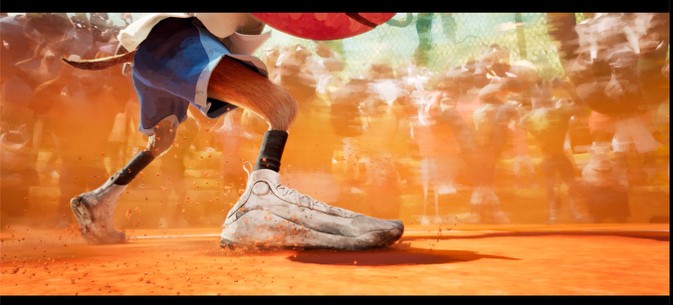
In the animations shared below, I had to tackle various challenges myself, such as the dribbling motion in basketball, where the shorts and hoodie moved quite quickly.
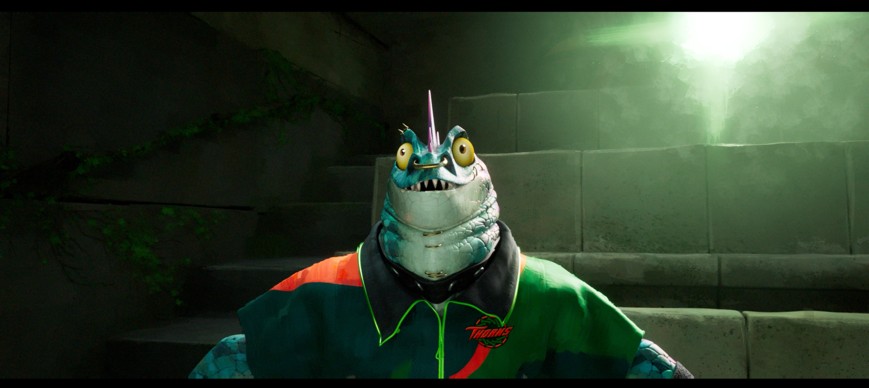
In this respect, the rings had to be crafted with great care to ensure they matched the original design, despite the movement of the various layers of the neck, which tended to ‘swallow’ them.
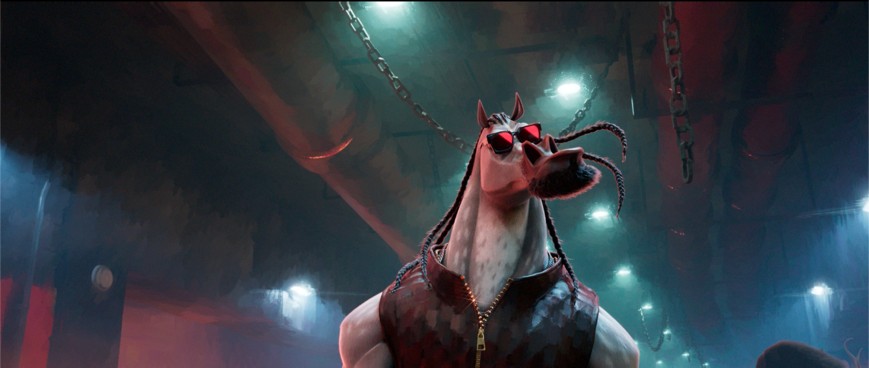
In this shot of Maine the horse, we needed to find a natural and attractive way for his manes to move when he moves his head.
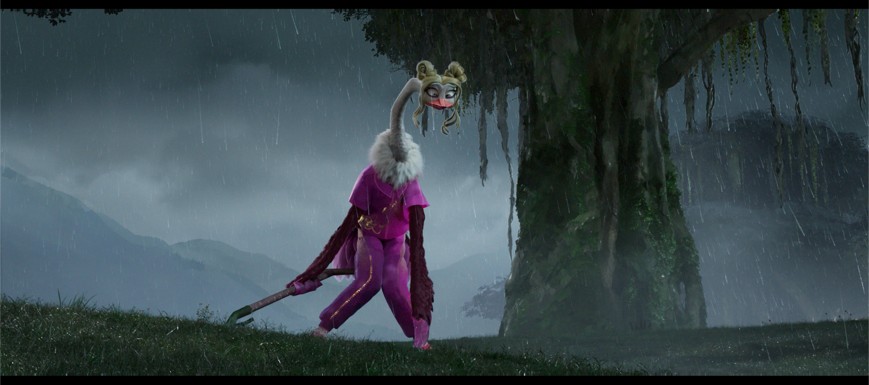
Finally, for Olivia, the feathers had to bounce and not get tangled up with one another – a rather complex shot, but one that works very well in the final result!
How has this experience helped you develop professionally?
I was really pleased to be able to work with Houdini again, something I’d hardly had the chance to do since my time at school. It allowed me to develop my skills with the software, to gain a deeper understanding of and insight into animals, and to see very clearly how movement affects the character’s overall presence.
But what helped me grow the most was the sheer volume and standard of the shots I had to deliver, which pushed me to discover new tools and learn from senior colleagues who were excellent at teaching and more than willing to share their experience. That’s the magic of working in a studio!
Looking beyond this film, how do you view the current state of the sector?
That’s a difficult question. The situation has become more complicated since the pandemic and the numerous strikes by screenwriters and actors in Hollywood. The sector has experienced a major slowdown, with budget cuts and even the cancellation of entire projects.
At the same time, in Quebec, tax credit policies have changed, which has led to many productions being relocated and has made the province less attractive, resulting in numerous closures. It’s always heartbreaking because we often know the artists working there, and are aware of the effort they put into projects that are sometimes abandoned. These difficulties make the sector very competitive for artists. Personally, it took me a whole year to find my first job.
Today, I feel very lucky to have joined Sony Imageworks, a studio I’ve long dreamed of working for, and I’m delighted every time my contract is extended. You can really feel their dedication to reassuring us and making our lives easier in these areas whenever possible.
Despite this, there are still some great opportunities in our industry. Especially if you’re prepared to travel to cities that are growing in this sector, such as Melbourne, Vancouver and Paris, for example.
In your opinion, what makes a good professional in this sector?
Proper training. We know it’s a profession you can learn on your own, but nothing can replace working as a team, external pressure and the guidance of professionals with practical experience to prepare us for these realities.
Even though it takes time to find the right course and it’s expensive, I would always advise a young person today to choose a good course, rather than simply the one that’s nearest or quickest.
When it comes to soft skills, communication is paramount. We work with people from all walks of life, with different educational backgrounds and from different cultures, who all speak different languages; it is essential to be able to communicate clearly, to have the confidence to ask questions, to ask for clarification and not to be afraid of looking a bit silly.
Finally, it is important to move away from the academic mindset of wanting to prove what you can do, and instead to acknowledge what you don’t know – so that you can ask for help and learn a great deal from more experienced people. And little by little, you become the more experienced person whom others turn to for advice.
No one in a studio will ever hold it against you if you don’t know something; in fact, that’s how we can ensure the quality of a working environment – through a willingness to help those who work there, as well as the ease with which help can be found.
What about managerial skills?
I haven’t had the chance to be a lead, but from what I’ve seen, the most important skills are having a very keen eye for spotting even the tiniest simulation issues, which requires quite a lot of experience.
It’s a job that requires an understanding of the work of the artists, the challenges they face, and the ability to anticipate problems. And you also need a lot of composure as the deadline approaches!
In your opinion, are recent graduates sufficiently prepared?
It really depends on the schools, but generally speaking, yes! Houdini has become an essential tool for all simulation needs, and schools have recognised this. However, French schools still offer the best training, according to several professionals!
How have new technologies changed the way you manufacture?
At CFX, very little has changed since I first started working in the studios.
I’ve noticed a few improvements in the solvers (whether it’s Maya nCloth, Vellum or Qualoth) and also in the muscle simulations, but the work remains broadly the same as it was 3–4 years ago.
However, the COVID-19 pandemic has forced many studios to improve their tools for collaboration, review and communication.
To date, technology continues to have a positive impact on productivity, teamwork and communication. However, we are all keeping a close eye on the emergence and adoption of generative AI within the sector.
How do you balance technological innovation with artistic standards in your projects?
The answer is a bit of a cop-out, but it’s also, in a way, the very foundation of what we do: technology serves creativity and art.
These are tools that bring ideas to life. They are our magic wand. We hope it stays that way for as long as possible. Technological innovation has enabled – and will continue to enable – us to spare artists from repetitive tasks or those where their talent adds no value, to push the boundaries of simulation and audience immersion, and to bring ever more worlds to life.
What do you see as the key trends for the sector in the medium to long term?
It will be interesting over the coming years to take a close look at the development of artificial intelligence and how it will be used for ‘good’ or ‘evil’. We (the artists) hope that AI will remain merely a tool for improving efficiency and debugging. Image generation still has its limitations today, but progress has been so exponential over the last three years that it could reach a new level of quality that would be difficult for most viewers to distinguish from the real thing.
A second trend in the 3D animation sector is the return to 2D-style rendering, mainly since the release of *Spider-Man: Into the Spider-Verse*, to name but one.
This is a trend that is becoming increasingly prevalent and is also benefiting 2D animated films produced mainly in France and Japan.
What role does French production play in an increasingly globalised market?
French (and French-language) productions have always managed to establish themselves on the international market, whether in the form of TV series or films. Today, Illumination, Mikros, nWave, TeamTo and other studios are gaining ever greater prominence with productions such as *Miraculous*, *Paw Patrol* and *Super Mario the Movie*, amongst others. Many of these productions are also making their mark at prestigious award ceremonies such as the Oscars.
The quality of the education provided in French schools for over 25 years now has an international reputation.
And what about you – where do you see yourself in five years’ time?
That’s a very good question. The last five years have shown us that everything can change in the blink of an eye.
If Sony Pictures continues to offer opportunities like the ones we have at the moment, I would be delighted to continue contributing to them, whether as a lead or a senior artist.
If not, I hope to be able to put my skills and all this experience to use in other ways and at other studios. I consider myself lucky to have found my place in this field and to have earned the trust of prestigious studios, and I remain optimistic about the future of my career.
What advice would you give to students studying today?
Be curious, be versatile, and don’t be afraid to step outside your comfort zone: adverts, YouTube, video games, music videos, illustrations, television, events, healthcare. 3D spans a huge range of fields; as the number of jobs in the film industry is limited, you need to keep an open mind so you can work to the best of your ability across a whole host of different sectors! Be patient when looking for your first job – it can sometimes be a long road.
And what about the schools that support them?
Maintain your relationships with film studios so that students always have the opportunity to undertake interesting, formative work placements that can open doors for them in the future. Don’t idealise the film industry, but broaden their horizons to enable young people to discover new sectors that are just as in need of their talents and skills!
Finally, I would also suggest that we consider the impact of opening new courses and schools in the current climate.
Maintain your relationships with film studios so that students always have the opportunity to undertake interesting, formative work placements that can open doors for them in the future. Don’t idealise the film industry, but broaden their horizons to enable young people to discover new sectors that are just as in need of their talents and skills!
Is there one last thing you’d like to share?
Thank you for your interest in my career journey; I hope this account will be useful and inspiring to anyone who reads it. It is an extremely fulfilling profession which, although full of challenges, is rewarding and makes our hearts beat like children’s.