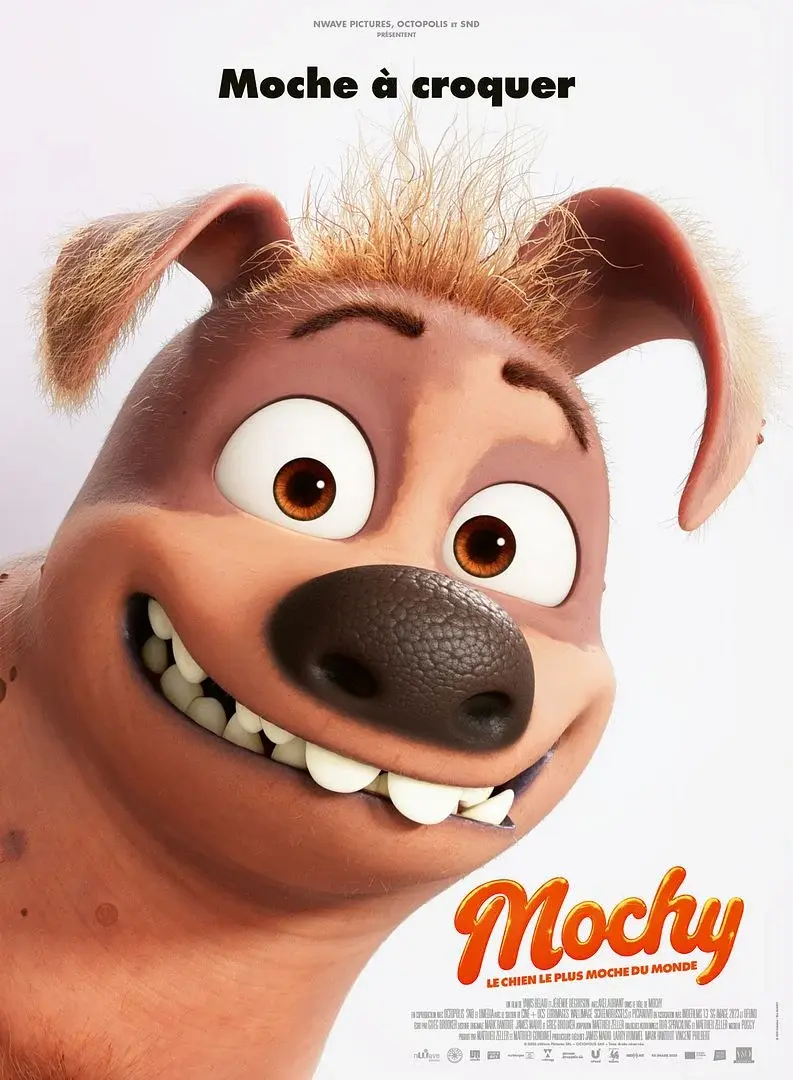
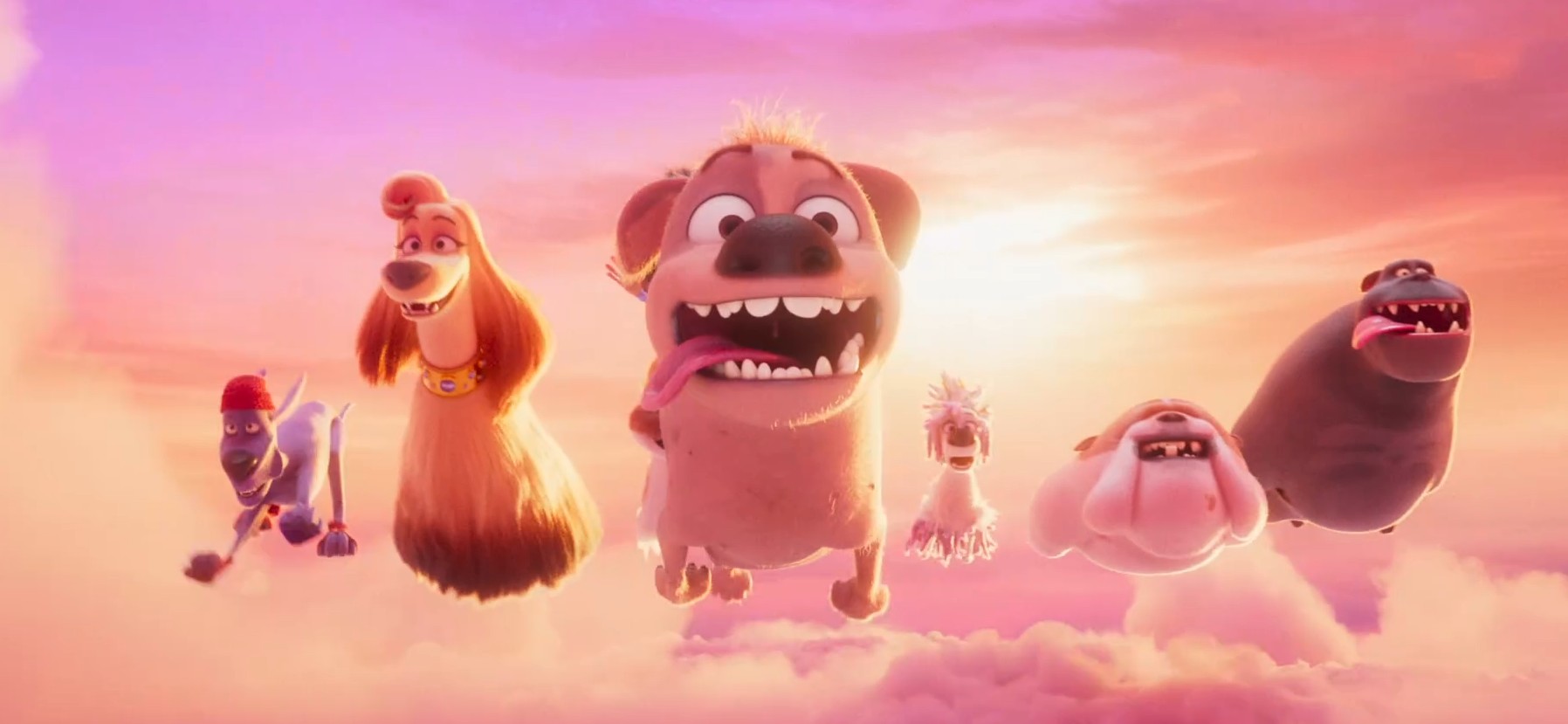
Yugly, as it is known in English, or Mochy in French, centres on a canine protagonist whose ugliness is so exaggerated that it becomes almost endearing. In order to finally find a human willing to adopt him, Yugly embarks on an epic odyssey with a single goal: to take part in a dog beauty contest that will make him a star and enable him to find his soulmate.
Alongside Christopher Grao, a former student at ESMA Montpellier and CG Supervisor at nWave for over 20 years, Kevin Hermans completes this dynamic duo, which in turn mirrors a second duo: that of directors Yanis Belaïd and Jérémie Degruson.
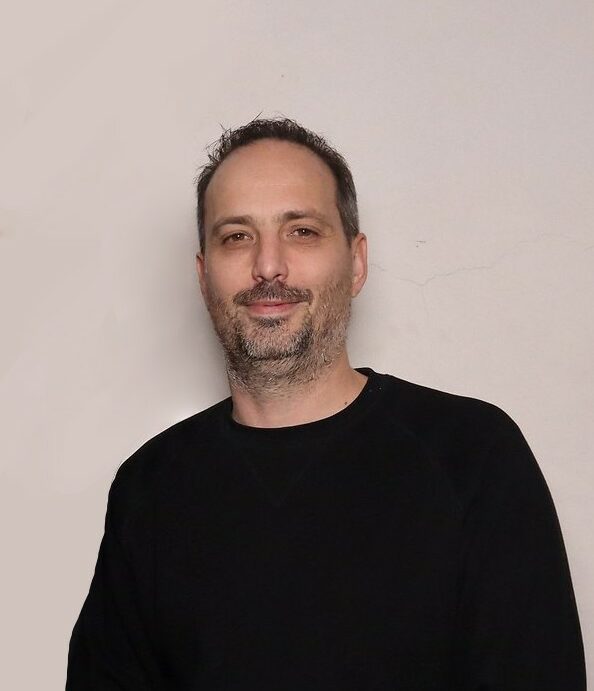
Degruson, who directed *Les Inséparables* – nWave’s tenth film – has teamed up here with a promising young director, who is making his debut feature-length animated film with *Yugly *.
Even before the film was screened at Annecy, we had the pleasure of speaking with Christopher and Kevin, who were still hard at work putting the finishing touches to the film. It was an opportunity to discuss the technical advancements that have enabled nWave to step outside their comfort zone, as well as to revisit the fundamentals of what makes a character relatable, and the importance of direction and framing in animated film.
Could you start by reminding us what your role was in the film?
Christopher Grao: As far as I’m concerned, I’m in charge of all the technical and artistic aspects of the film. To support me with this – as there were other projects on the go – Kevin came along to help. His speciality is more in character design, lighting and colour, whilst I focused on the sets. So we were able to divide up the work quite quickly.
Kevin Hermans: Absolutely, and it’s always gone very well. We’re lucky to be on the same wavelength all the time and get on well together.
You mentioned off the record that this was your first experience working as a duo. How did that come about?
Christopher Grao: Quite naturally. Kevin has more experience with character design, and he was able to help push things forward, to take a chance on designs that weren’t necessarily in line with what we were doing at nWave. And having another duo opposite us – our co-directors Yanis Belaïd and Jérémie Degruson – created a real synergy and a good group dynamic. Kevin really likes to play with depth of field to add
the various elements and working on the shots, and our filmmakers’ framing was a great help.
As you’ll see in the film – and without wishing to belittle what we’d done up to that point – our whole approach changed for this project, with proper compositions and cinematic framing in this film. That really spurred us on, Kevin and I.
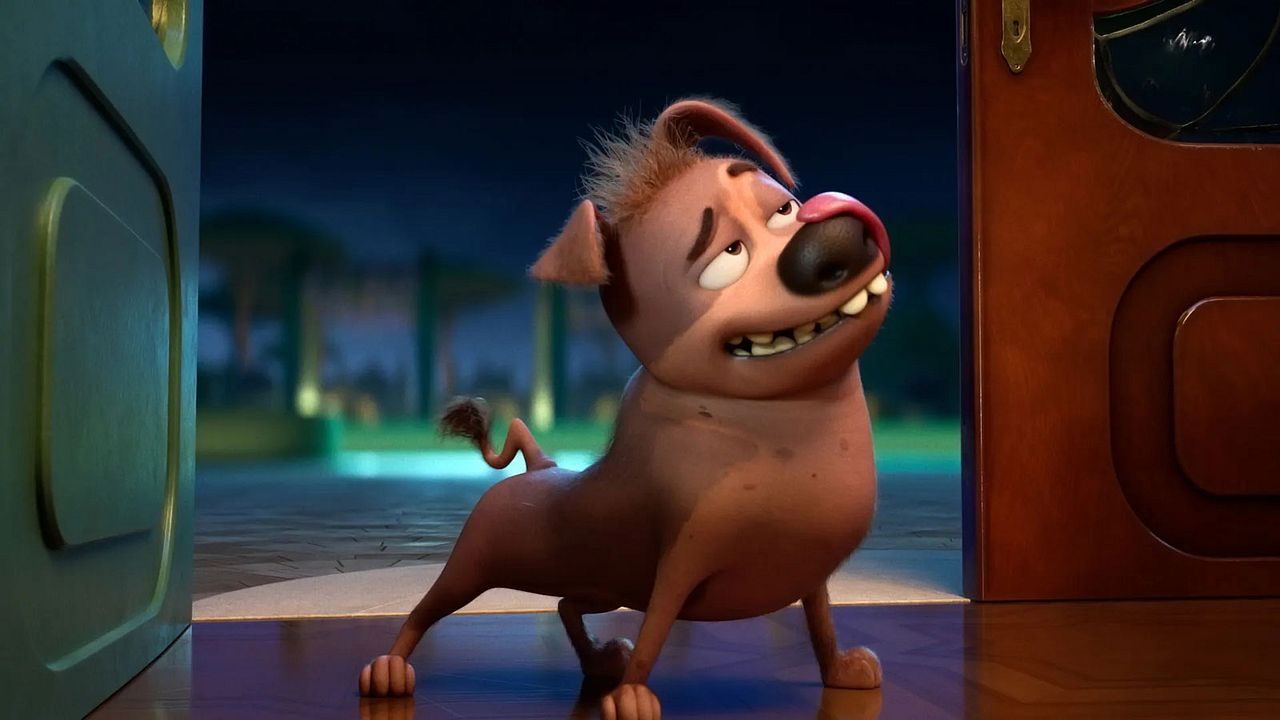
What were your influences behind this development, and what prompted you to make these changes?
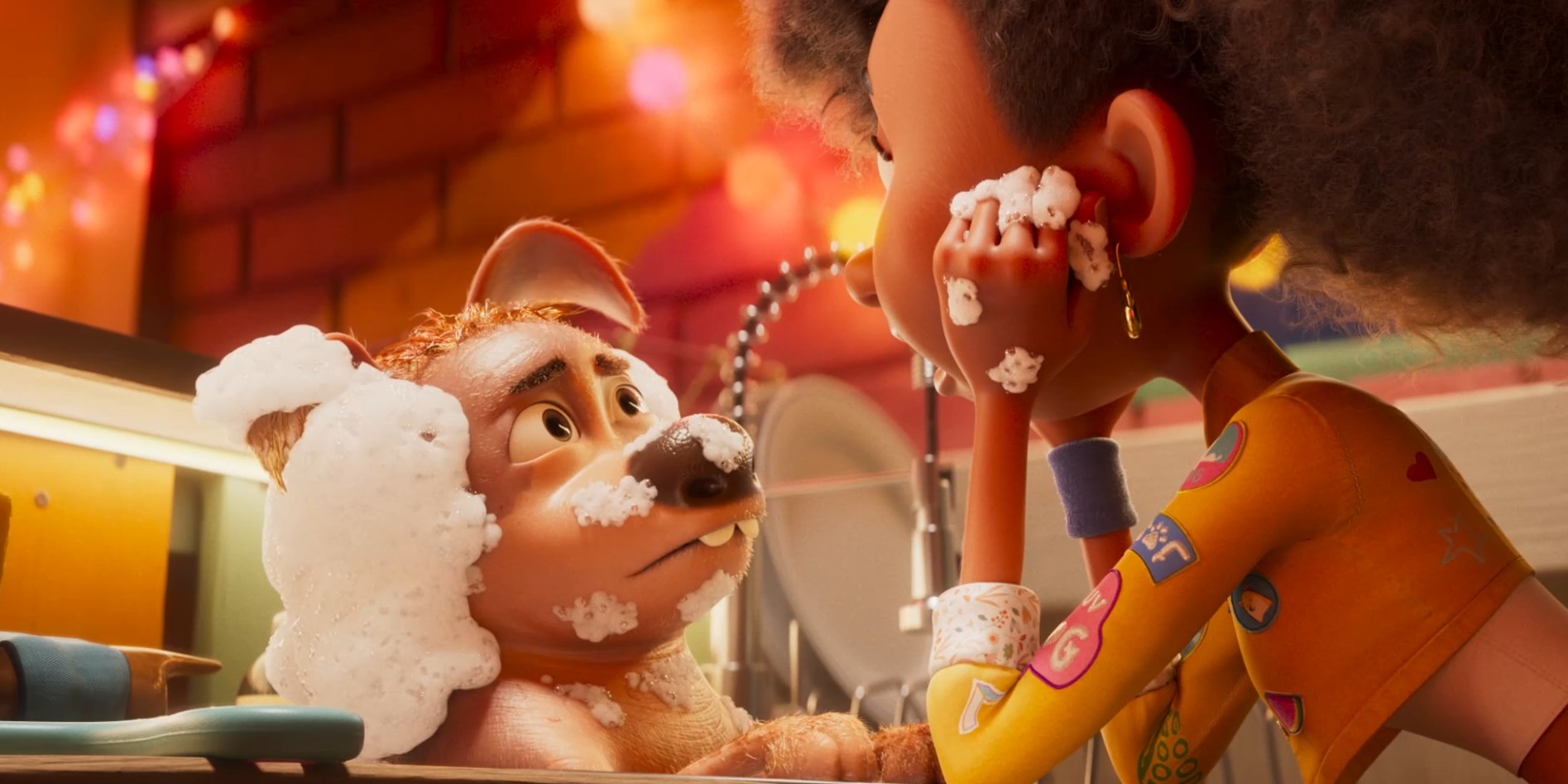
Kevin Hermans: When it comes to the characters, I think it was mainly in terms of their attitude that we wanted to develop them, so that we could better empathise with their feelings and emotions. Little touches with certain characters, small details that help us get a better sense of who they are, such as Gerald, Molly, …
Christopher Grao: Based on the character profiles provided by the scriptwriting teams, we defined the visual aspects to clearly establish each character’s personality. As for the set design, personally I’m more influenced by painting, with works such as those by Pierre Soulages – which isn’t to everyone’s taste. But Kevin and I complement each other quite well, and we trust one another. That made the work easier. In fact, nWave’s strength lies in having lots of talented people at every level, who often contribute interesting ideas. We try to remain open-minded, whilst sticking to our guiding principles.
How many people worked on the film?
Kevin Hermans: It’s hard to say without going into the production details, but we must have had around 150 people working on Yugly. It isn’t necessarily our biggest production, and that’s also down to the way our workflow has evolved – we now work with smaller teams whilst remaining efficient.
Let’s talk a bit about the technical side of things: you mentioned that you’d updated your production pipeline for this film – what did that actually involve?
Christopher Grao: To be honest, we’ve changed quite a few things, starting with the switch to a USD pipeline. It’s become something of a standard in studios, even though not many have implemented it fully in production yet. As for us, we’ve managed to do it, and we now have a complex hybrid pipeline, where we have USD at the end of the chain from the VFX department – which is now 100 per cent Houdini – combined with Maya for animation, which isn’t USD-based.
Our development team did a brilliant job of bringing all this together, and thanks to our efficient and flexible teams, we were able to find solutions to every challenge posed by this new film.
Do you have any examples of production challenges you could share with us?
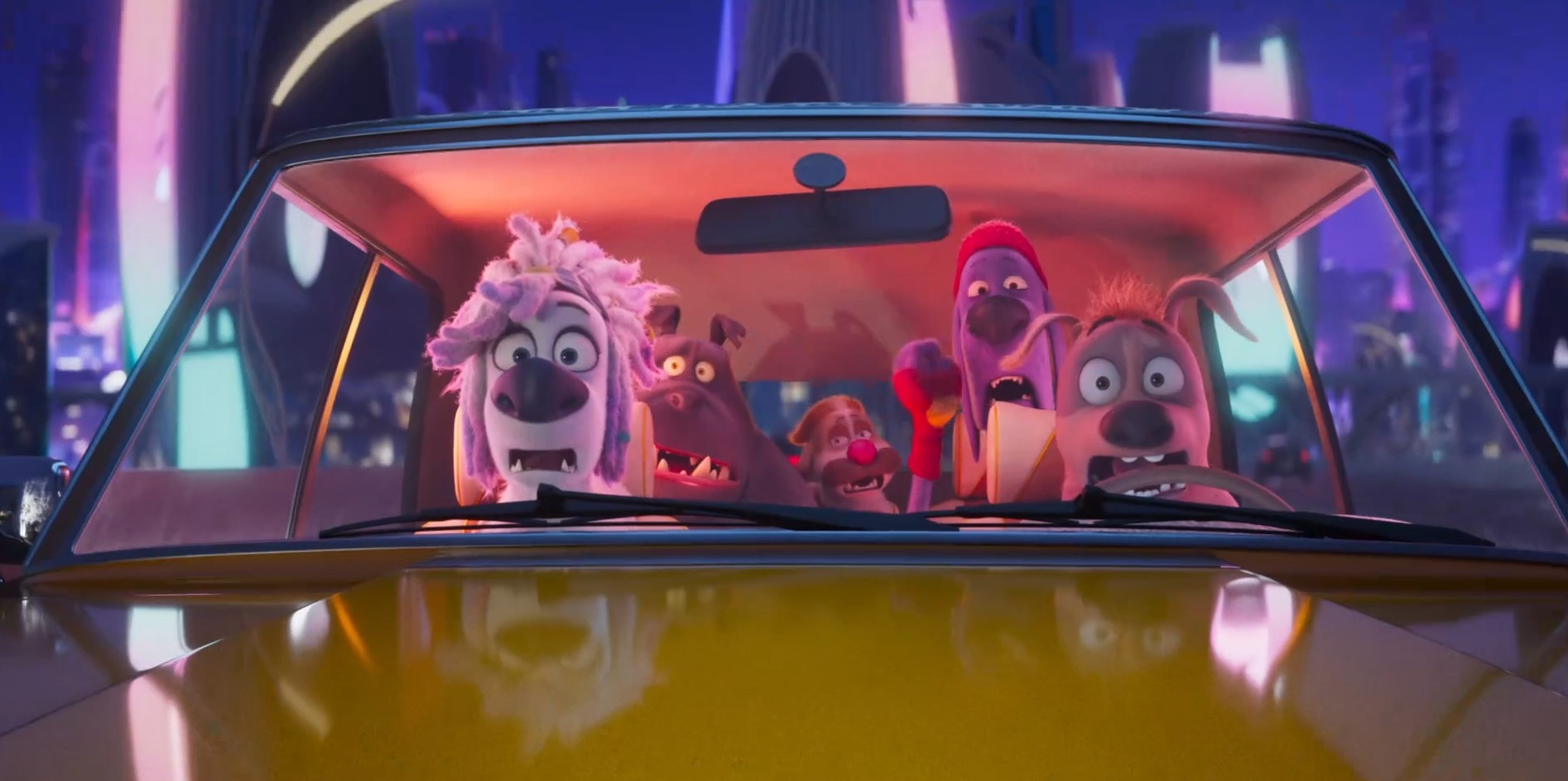
Christopher Grao: The sequence featuring the big show is undoubtedly the one that gave us the most headaches. There’s a lot of coordination involved with the crowd, parameters to manage, camera movements… All of this has to come together within a limited timeframe. It’s a challenge, but once again our teams rose to the occasion.
Kevin Hermans: As far as lighting is concerned, the switch to Houdini was also a real game-changer. Of course, the transition from the 3DS Max/Maya combination to Houdini – which doesn’t have the same interface – was a challenge, but everything worked out well in the end. For me personally, the city and the dome posed the biggest challenges, but we’re very pleased with the result.
What have you learnt, on a personal level, from this project?
Kevin Hermans: As far as I’m concerned, this is the first time I’ve been so heavily involved at the early stages of a project, during the organisation and development phases. It’s undoubtedly this big-picture view that has made the biggest impression on me, along with realising just how interdependent all these departments are, and the constraints that this creates. You really have to take every stage of production into account one by one, and be able to manage the impact they can have on one another.
Christopher Grao: For my part, despite the fact that I’m still up to my ears in work, I can confirm that working as a duo has really been a wonderful experience. It forces you to be less self-centred, not to dig your heels in, and to be more open-minded. Technically, we’ve learnt a great deal from Yugly and the new software we’ve used for this production. I agree with Kevin on the importance of fully understanding the specific challenges faced by each department. Often, people don’t realise what their work entails. Yet we’re all in this marathon together, and animation remains a team effort.
This year, Yugly had the privilege of opening the Annecy Présente competition. What does that mean to you?
Christopher Grao: To be honest, Annecy isn’t really the event that best suits the kind of animation we produce. Their selection tends to be more 2D and artisanal. That said, I’m very pleased that people were able to discover it there, and that word of mouth spread, as well as coverage in the international press. I hope this will generate some buzz around the film.
We’ve put a lot of ourselves into this production, and in a way I feel as though this is the first film in which I’ve opened my heart to the world. I hope it goes down well.
Yugly or Mochy, the world’s ugliest dog, is in cinemas today.