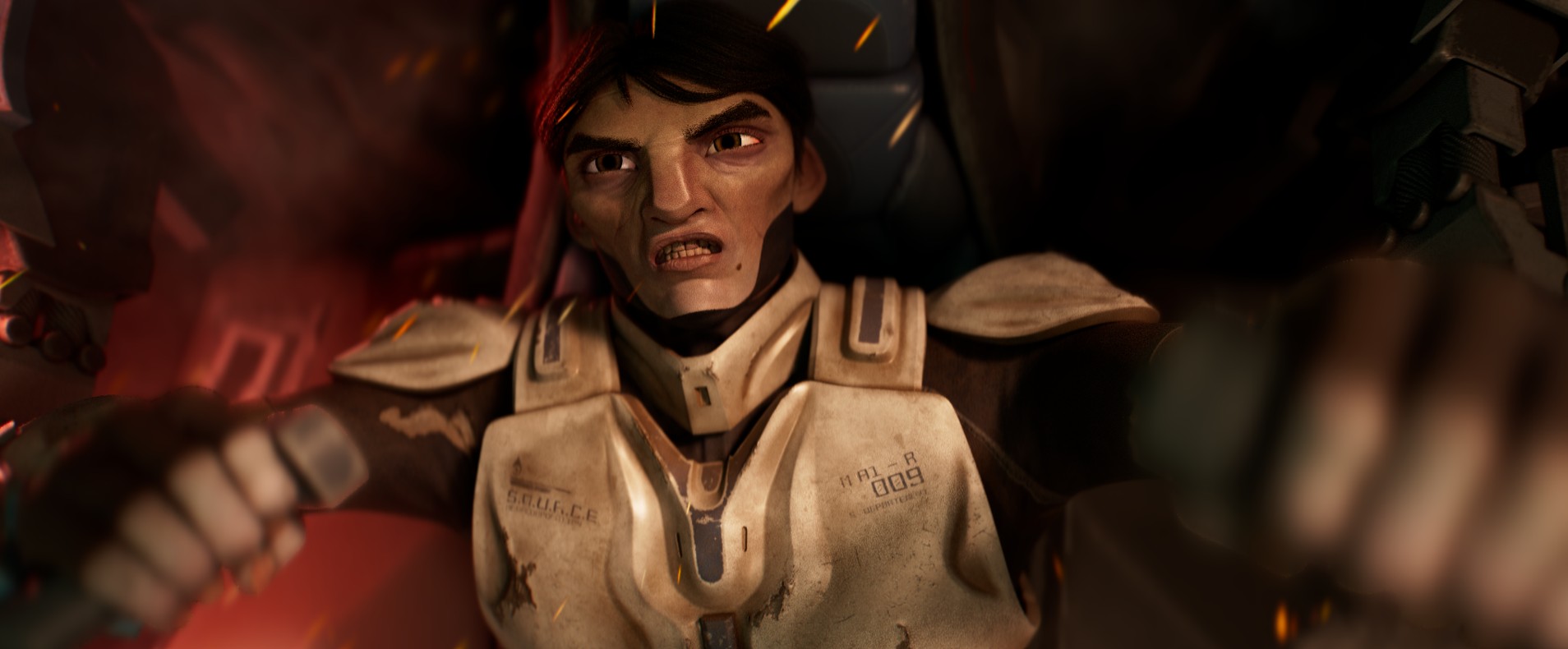

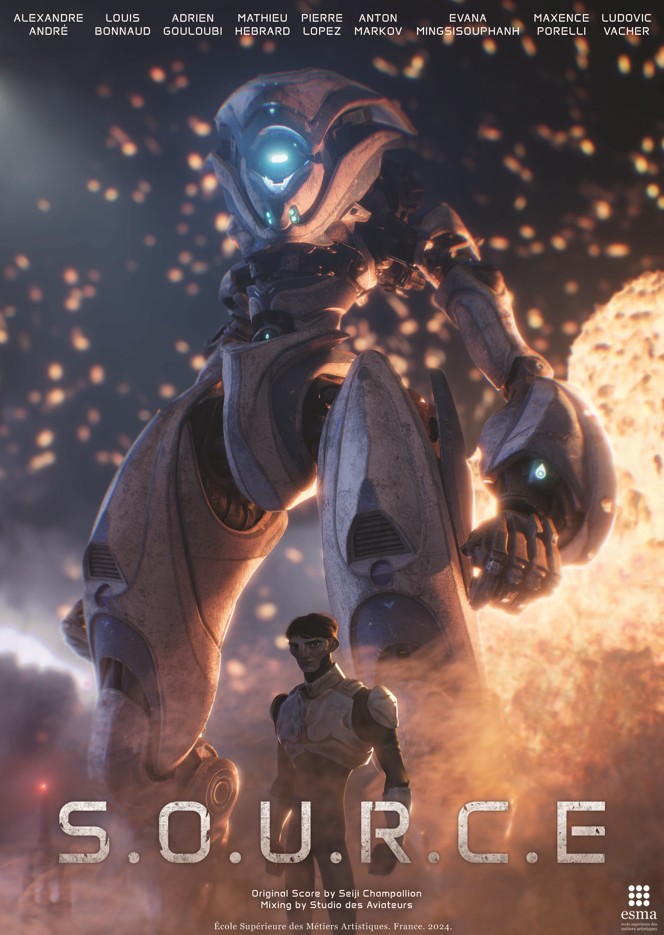
Who will win, the soldiers of the intergalactic corporation S.O.U.R.C.E. or the local population? After bitter battles, only two soldiers remain, one from each side. At the controls of their mechas, they are ready to do battle. But at what price?
From the outset, S.O.U.R.C.E. positions itself as a powerful short science-fiction film, coupled with an anticipatory tale with obvious climatic overtones. The 3D animation work by the student team is gripping, and immerses us in this titanic confrontation with a captivating atmosphere.
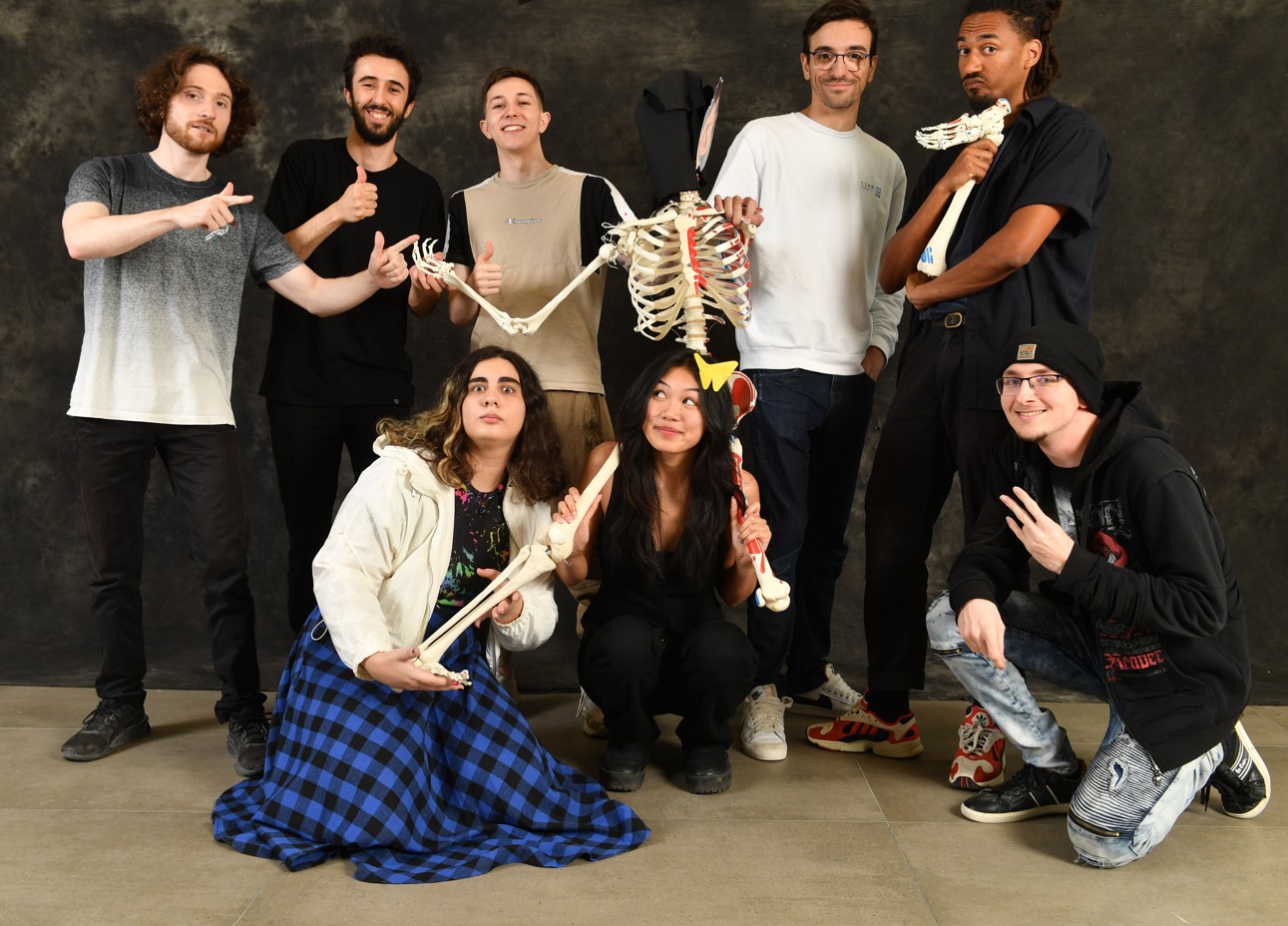
How did Louis Bonnaud, Anton Markov, Pierre Lopez, Adrien Gouloubi, Ludovic Vacher, Mathieu Hebrard, Maxence Porelli, Evana Mingsisouphanh and Alexandre André manage to pull off this tour de force? Find out here.
A complex universe based on a simple idea
S.O.U.R.C.E. was born of an idea by Louis Bonnaud. A final-year short film for this team of nine students, the project is above all a distillation of their passions and ideas, as they tell us in an interview. “Everyone was a fan of robots or post-apocalyptic universes at their own level, whether through anime or cinema.
We combined these passions to create a universe around a simple idea: to deal with war through this confrontation, while putting ecology at the centre of this conflict to make the film resonate with audiences”.
S.O.U.R.C.E. is a cinematic exploration of the futility of war and the crucial issues facing our planet as a result of the shortage of drinking water. It’s a dark tale born of the team’s many iterations, where the stakes are crystallised by this titanic duel. This conciseness has enabled the project leaders to focus not only their characters’ motivations, but also their narrative around a central theme.
“For us, the film centres on the human condition, our collective responsibility towards our planet and the urgent need to rethink our relationship with water, war and our environment.
We wanted to challenge the actions of our society, and invite people to contemplate a future where cooperation and the preservation of our planet take priority over mutual destruction, and profit for the benefit of selfish conglomerates.”
For the corporation for which one of the pilots works, S.O.U.R.C.E., is a thinly veiled metaphor for modern multinationals, where profit comes before people.
It’s a message that the team succeed in integrating perfectly into their film, through these protagonists literally crushed by their machines.
Two characters with almost nothing in common
To give this epic duel all its depth and humanity, the team has created two radically different protagonists, both in terms of their personalities and their mecha, which mirrors them.
Rick, the last guardian of the Oasis, is loyal and serves the corporation without flinching, despite the intrinsic violence of his mission.
His mecha, ‘Shark‘, is as sleek as it is modern, reflecting the advanced technology and huge budget of the company he works for blindly.
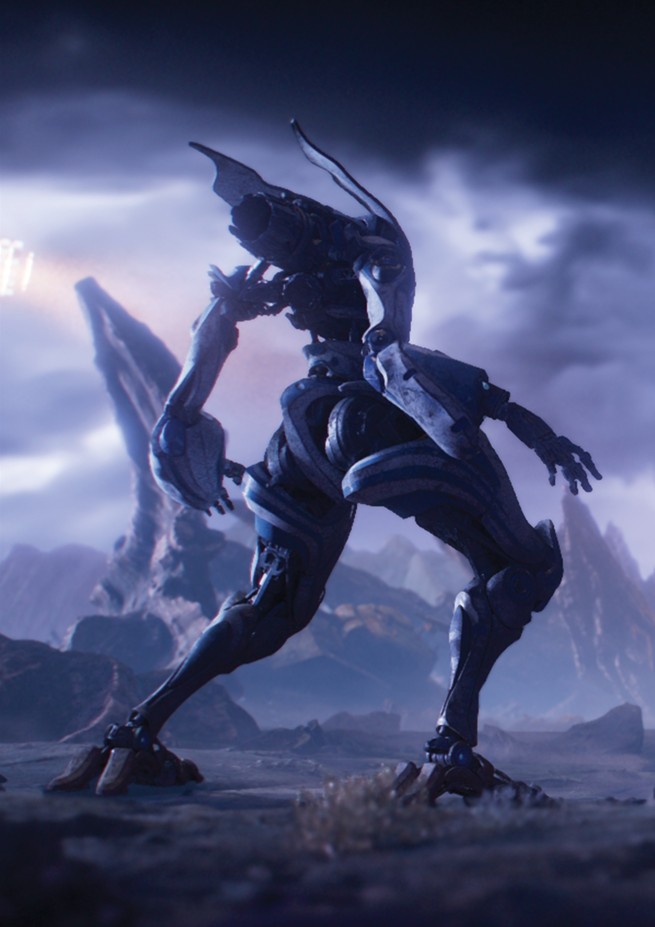
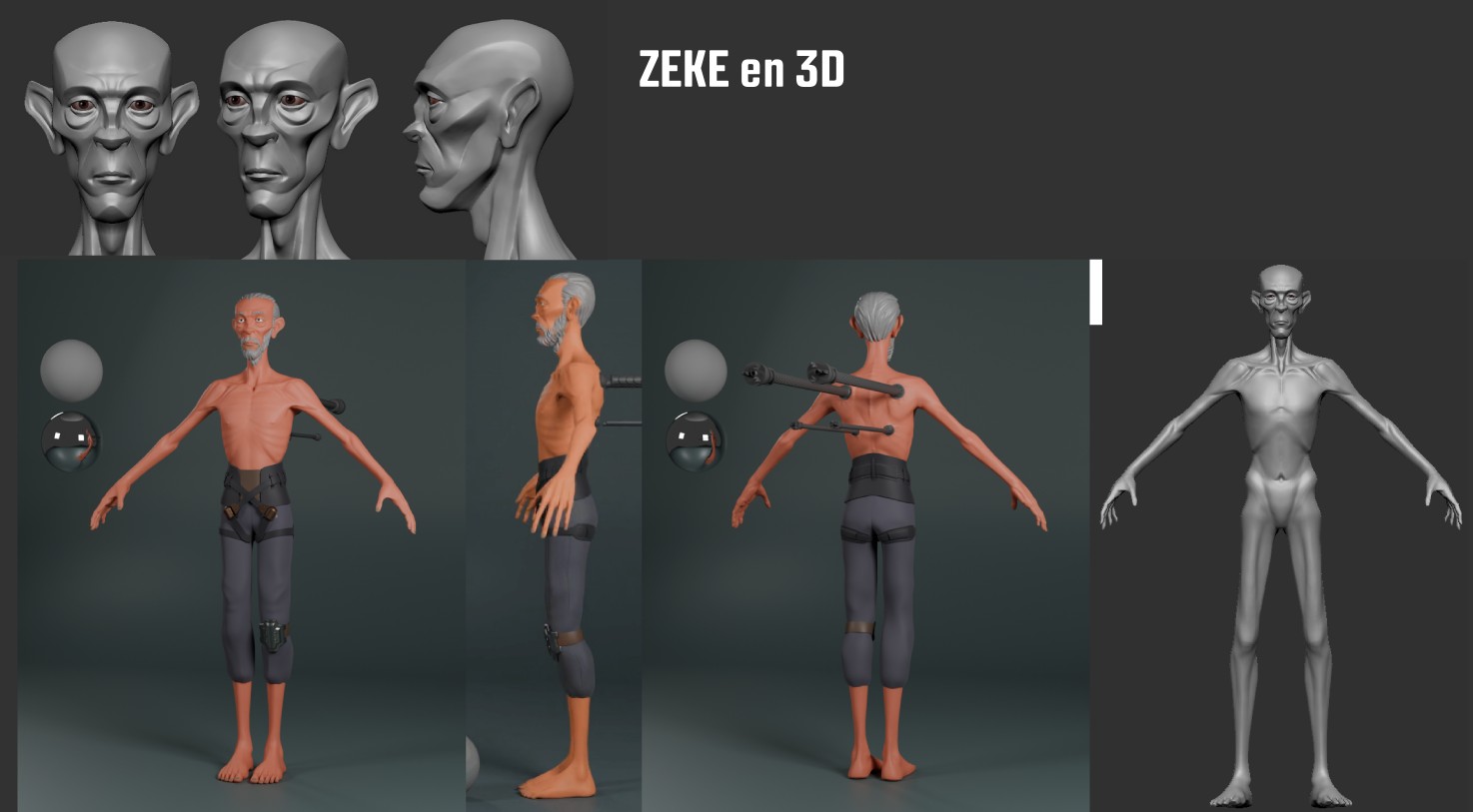
Opposite him, Zeke, the only survivor of the indigenous tribe from which the corporation is taking the water, is a determined man who is trying to survive in spite of everything.
This story is reflected in his Mecha ‘Goliath‘, a massive but powerful robot built with the energy of despair from reassembled parts.
How do you convey these complex stories in a short film lasting just a few minutes? This is the tour de force of this project, which succeeds through its sets, its atmosphere and the subtle expressions infused into its characters in giving all the depth to a story that goes far beyond this confrontation.
“Every aspect is important if the characters are to fit seamlessly into the narrative. To do that, we had to make them credible in their reactions as much as in their appearance. Creating a past for them allowed us to bring them to life and make them more believable. It’s all these details, both physical and mental, that give our characters and the story their depth.”
A story steeped in multiple influences, starting with Japanese anime.
A tribute to the genre
“What guided us first and foremost was the desire to pay tribute to Japanese culture and mecha anime, such as the Gundam or Evangelionseries”, explains the team. “By putting this confrontation, which is emblematic of this type of series, at the centre of our project, but also through the recovery of a style of emotion, or the framing of certain shots, it was all Japanese animation that inspired us.”
The team also drew inspiration from the community of artists who love the genre, as well as from other worlds such as Pacific Rim and the video game Overwatch.
Defining a universe, between science fiction and futurism
To design the arena in which these combatants evolve, the film team started from scratch, refusing to accept any spatial or temporal constraints. After many iterations, an arid desert with bluish hues was chosen for this duel, under a threatening sky heralding the imminent battle.
“We drew inspiration from artists such as Pascal Blanché to avoid overly realistic lighting, while varying the colours to enhance the visuals of the robots and the station. The station, a combination of metal and concrete, was inspired by sets from science fiction worlds such as the video game Anno 2070.”
These unique environments were a real challenge for the team, particularly in terms of the lighting, which played a crucial role in making the action clear and easy to understand.
“It was also this stage that caused us a lot of hassle for the shots inside the cockpit, and we had to take particular care with these lights, as well as the textures, with several ironings.
Compositing was really a crucial stage in our production.”
A host of technical challenges to match the ambition of the project
Over and above the problems encountered in managing the sets, whose gigantic size caused the team a great deal of concern, it was the balance between realism and animation that had to be defined, while taking into account the technical constraints of the project.
“In a film of this type, every detail is crucial, and we constantly had to strike a balance between the ‘realism’ conveyed by the textures of the environments and characters and the ‘illustrative’ style inspired by our animated references. The time spent on R&D was considerable, even if we had to take into account our time constraints. It was Evana Mingsisouphanh, the only lighting/compositing artist on the team, who trained us in the basics, so that we could in turn help her to guarantee the final rendering of the project.”
To facilitate this stage, the team used Light Path Expressions (LPE) to guarantee total control of the light and consistency throughout the film.
Renowned for its ability to handle complex simulations and scenes, Houdini proved to be an essential tool for managing not only the sheer size of the mechas, but also the special effects (FXs) required for combat.
In combination with the Arnold rendering engine, the team used the strengths of the two software packages to achieve dynamic lighting and fast previews on the one hand, and optimum quality of the final renderings on the other. All this while retaining total control over the lighting, which is an integral part of the story.
A multitude of tools and techniques, where each member of the team was able to showcase their skills, and put their abilities and creativity to the test.
Sharing is key to the success of the project
From the outset, the S.O.U.R.C.E. team adopted a collaborative approach to developing the project and overcoming the technical challenges of learning new tools. This approach went beyond the confines of the team itself, through exchanges with the other project leaders and all the students in the class.
“At the same time, we established a clear division of labour and appointed several production managers, who oversaw the allocation of roles and tasks according to skills and expertise, while keeping an eye on the various deadlines in our schedule.”
This ensures a fair, efficient and harmonious division of labour, even if the project has of course had its moments of tension.
But through rigorous planning, regular quality control and weekly meetings, S.O.U.R.C.E. was successfully brought to life. A film that lives up to its ambitions, and a real source of satisfaction for the group.
“In the end, it was the skills and determination of each and every one of us, as well as the many, many hours of work, that made this film possible,” says the team.
“Trust yourself and move forward”.
This is the advice that the S.O.U.R.C.E. team would like to pass on to those who are currently working on their artistic project. “Don’t think too big or be too ambitious, however tempting it may be, because the year goes by so quickly. The quality of the film will take care of itself if you concentrate on very specific elements and use them to the full. There’s no point in adding layers of script or characters that will end up being under-exploited. Trust yourself, don’t waste too much time procrastinating, and move on.”
It’s sound advice, often repeated by artists, and it paid off for this team.
Discover S.O.U.R.C.E., ESMA’s 2024 graduation film, now available in full: