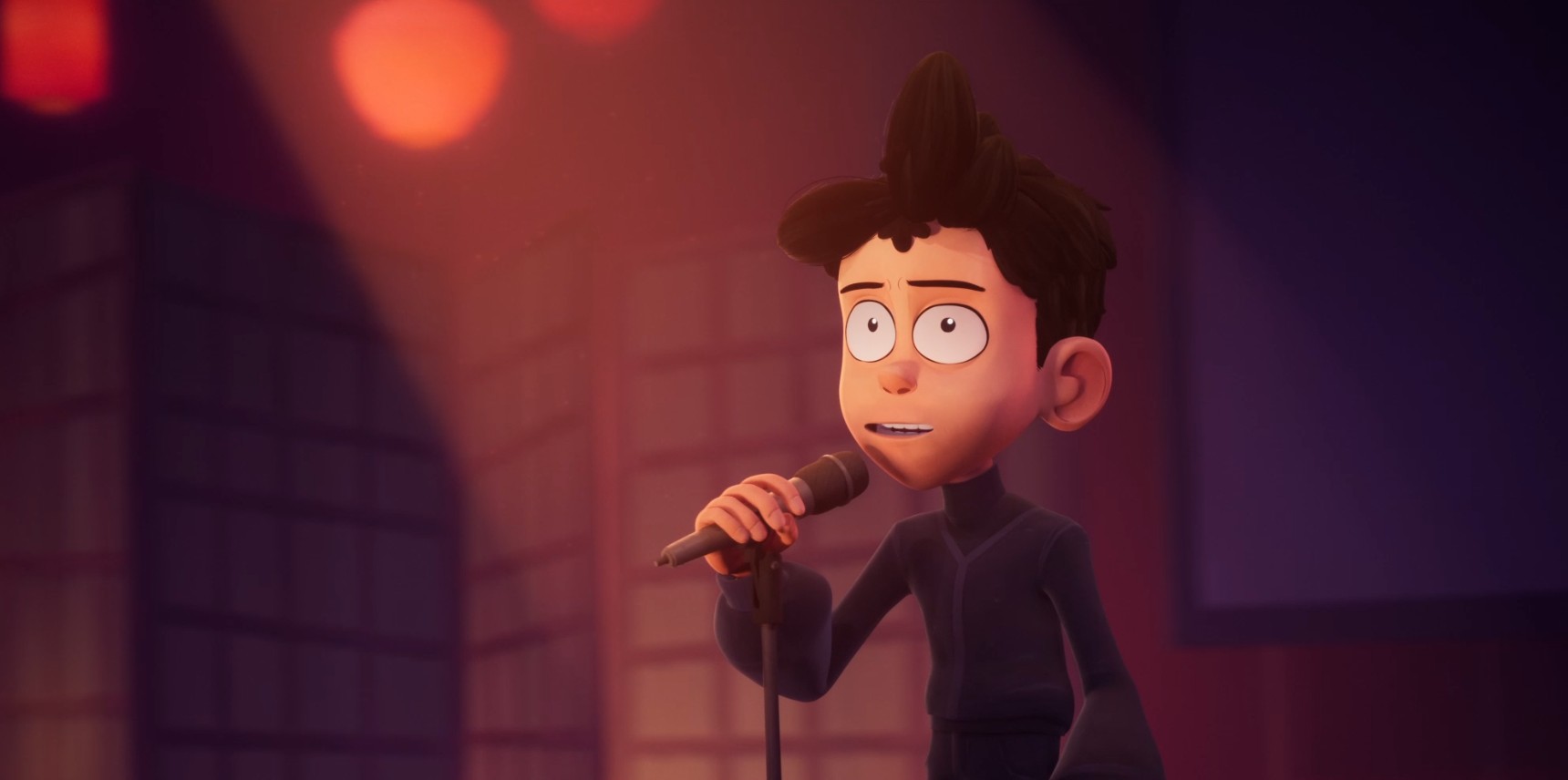

A film inspired by the real-life experiences of one of the team members, nicknamed ‘the ninja’ because of her discretion, and a bittersweet tale of both the positive and negative aspects of this ability, which affords great freedom whilst also leading to profound loneliness.
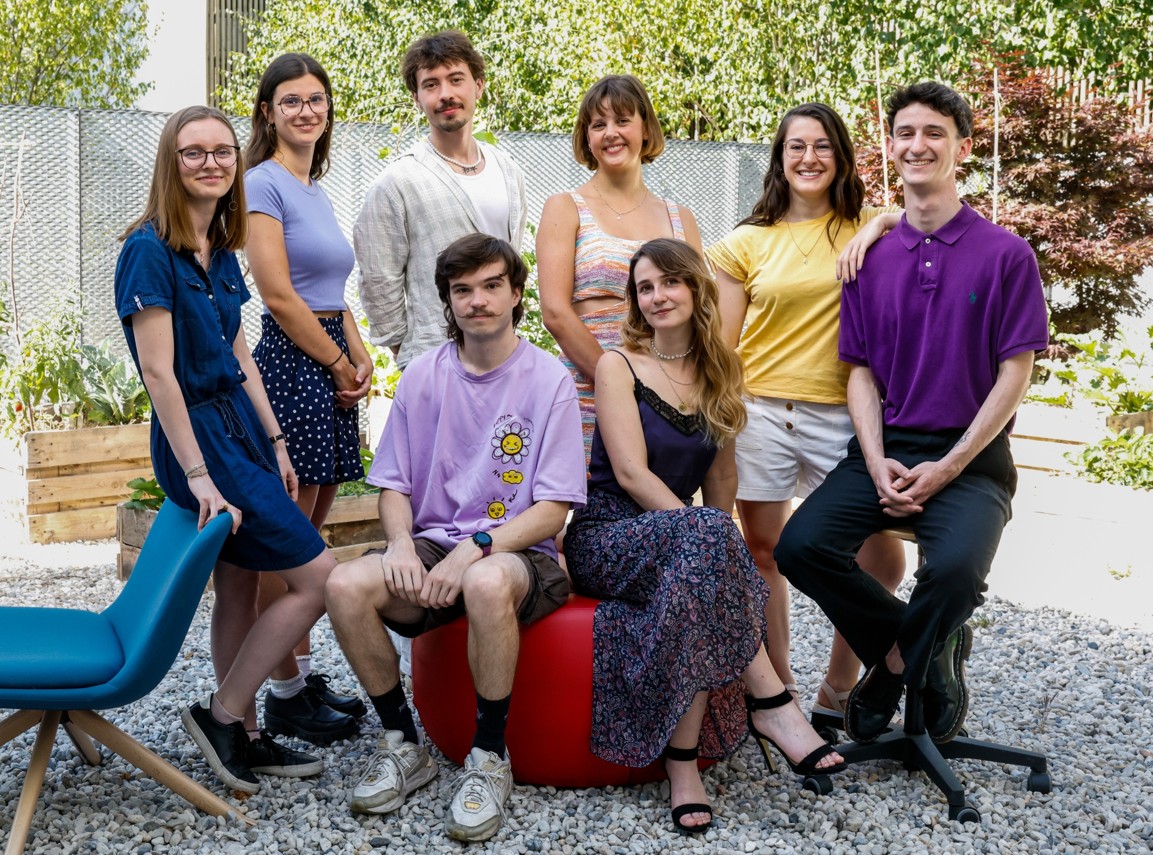
Together with the team, we discussed this duality, the challenges it presents, and the way in which these students – now graduates in 3D animation – have portrayed these contradictions.
Given your desire to explore the theme of loneliness, how has the project evolved over time?
Originally, we wanted to talk about introversion. We initially set the story in an office where a game of hide-and-seek would take place.
But the main character, who thinks he is demonstrating his talent for camouflage, is so invisible to his colleagues that he is forgotten and dies in his hiding place.
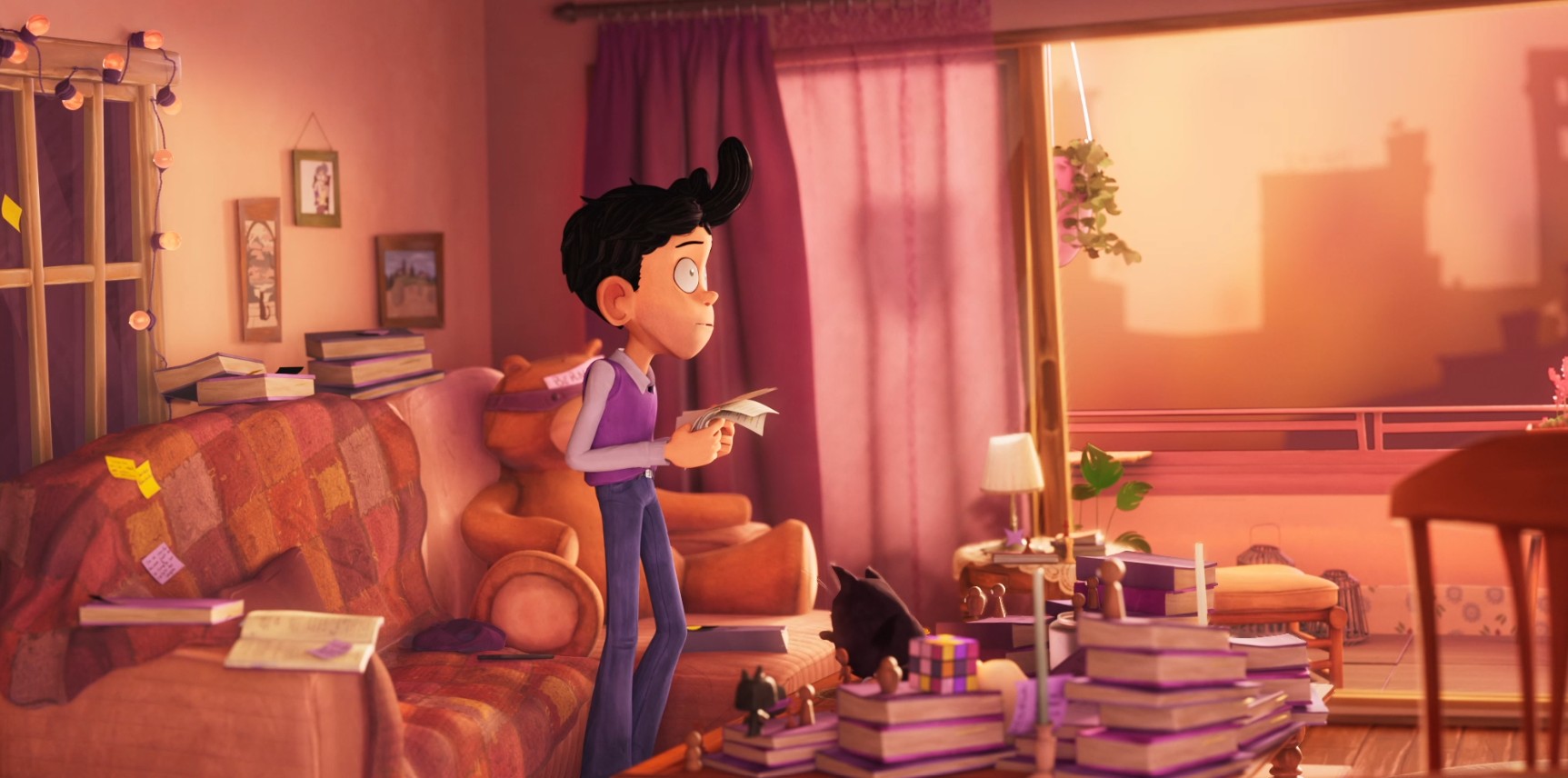
We quickly moved away from the ‘office’ aspect to make Théo, the main character, more of a homebody and bring him closer to his family, as well as giving him a stronger passion that would motivate him to step outside his comfort zone. Then, we decided to remove the irredeemably tragic element from our ending, so that the film would convey a sense of hope, particularly to people who might identify with it.
What guided you in these narrative developments?
Above all, we wanted *Ninjaaa* to be a light-hearted film despite its subject matter. That’s why we chose to make it a comedy-drama, with a few jokes to counterbalance the more serious and tense moments, so as not to make the film too sombre. Right from the initial brainstorming stage, certain sequences seemed obvious to us, so we tried to build our film around them. And from an aesthetic point of view, we were looking for the best way to convey emotions whilst remaining organic and warm.
How did you develop your main characters?
We simply drew inspiration from introverts we know, or from ourselves. Théo doesn’t say much, but the way he moves and his reactions become key to understanding him through the film.
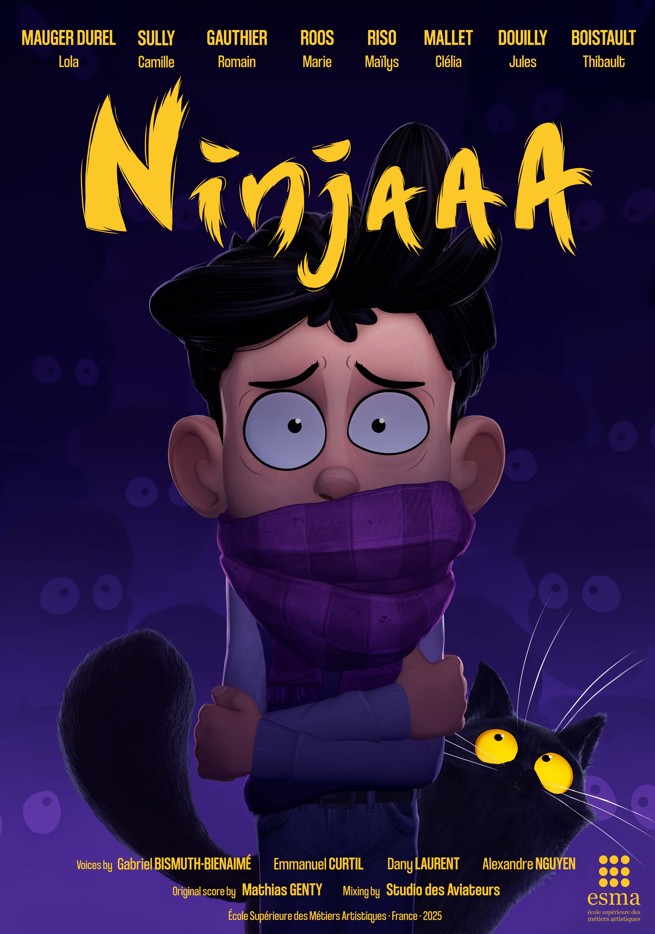
In terms of character design, the fact that he is tall and slim and constantly hunched over shows that he feels uncomfortable.
What’s more, the scarf he always wears – and behind which he hides – also makes his unease visible without him having to say a word.
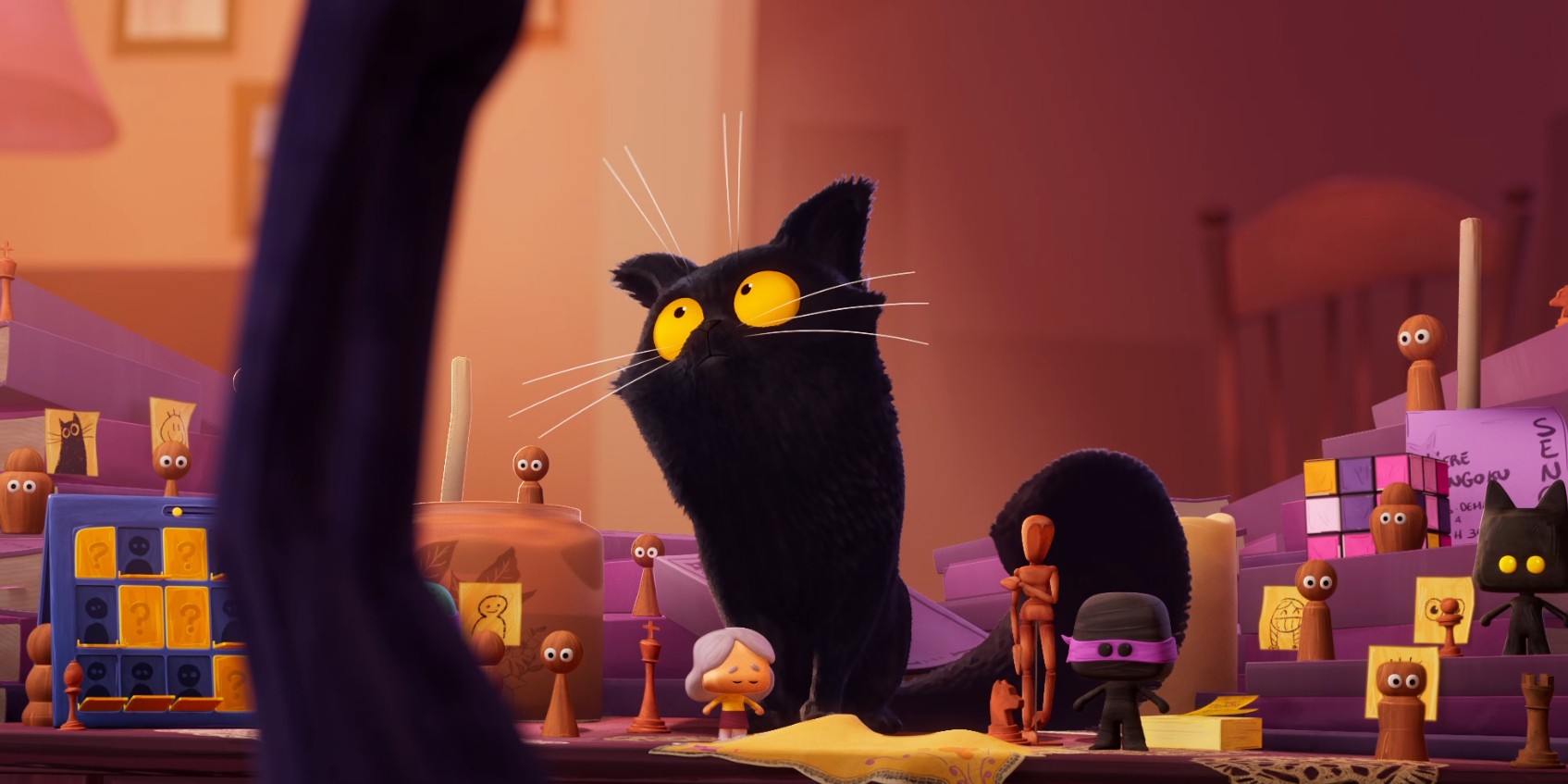
Janine, his grandmother, is the complete opposite of Théo. She is vibrant, outgoing and effusive, and acts both as a driving force (encouraging him to come out of his shell) and as a hindrance, as her energy can exacerbate his unease.
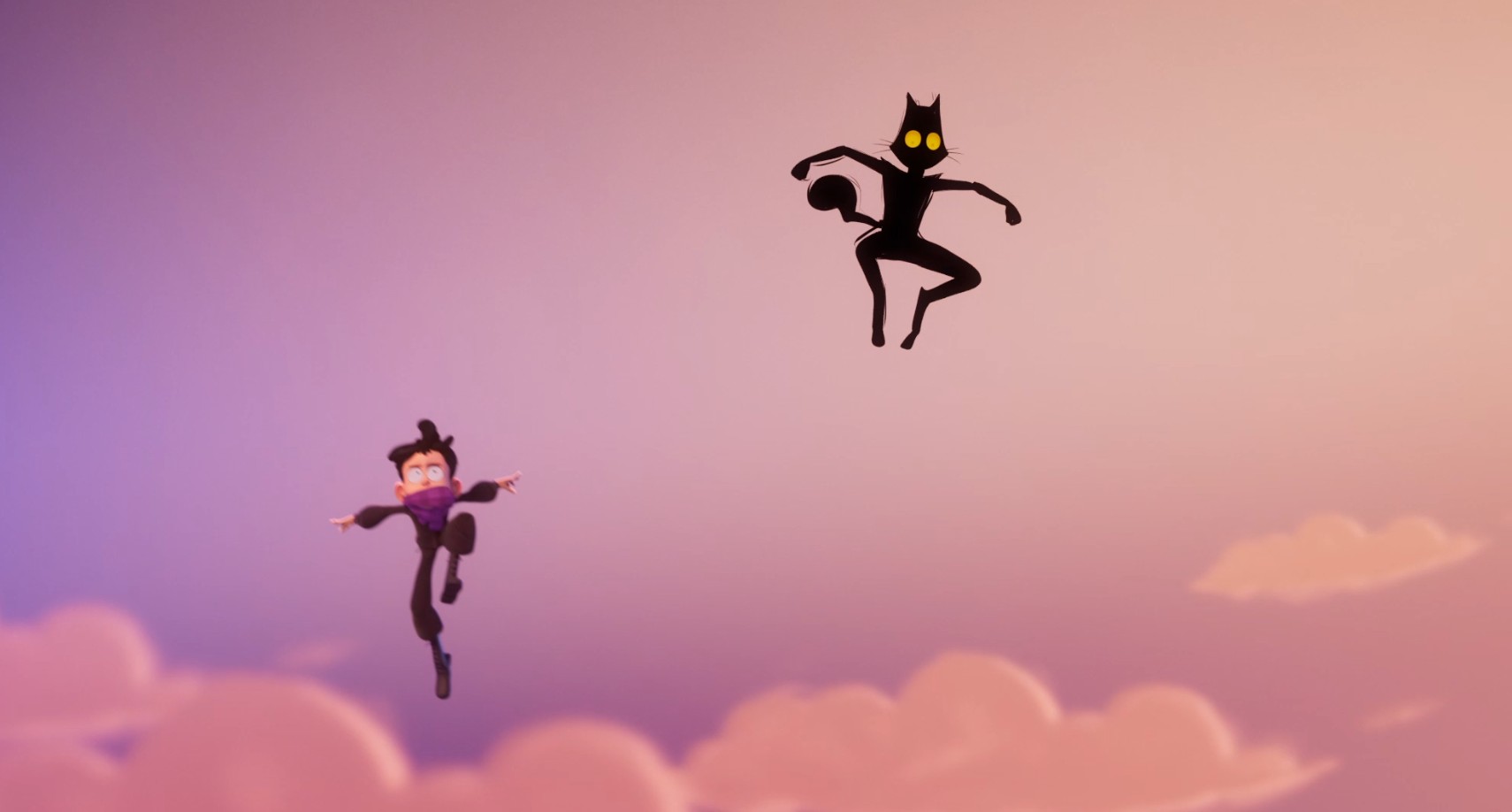
Finally, his cat, Touille, embodies the comfort of introversion, the desire to remain hidden. His black colour symbolises this discretion and invisibility. He is in perfect harmony with Théo’s inner state.
Could you tell us about your sources of inspiration?
Our main visual reference for Ninjaaa is the Sony Pictures Animation film *The Mitchells vs. The Machines*, released in 2022. We were inspired by its vibrant colours, its organic style, the characters’ big eyes, and the painted effect seen throughout the film. As for the animation and the way the city is depicted, we’ve tried to emulate the film *The Bad Guys* as closely as possible, with its fluid and dynamic style.
The visual design of the Ninchat gave us a bit more of a challenge, even though we knew what we wanted: to make it stand out and be unique. We experimented a great deal, then found what we were looking for in The Task, the ‘villain’ from Spider-Man: Across the Spider-Verse, when he’s in his most conceptual form.
What were the biggest challenges in making these characters believable or likeable?
Ninjaaa is a 5-minute short film, which can be very short when it comes to setting up a story and making it clear from start to finish. It’s also difficult to manage the silences needed to let an emotion take hold, which is why we had to find the right dialogue to sum up our characters’ feelings in a single sentence whilst still making an impact: fine-tuning the actions to build tension, all whilst editing the film down to the second! When it comes to humour, it’s all about timing…
How did you define your artistic direction?
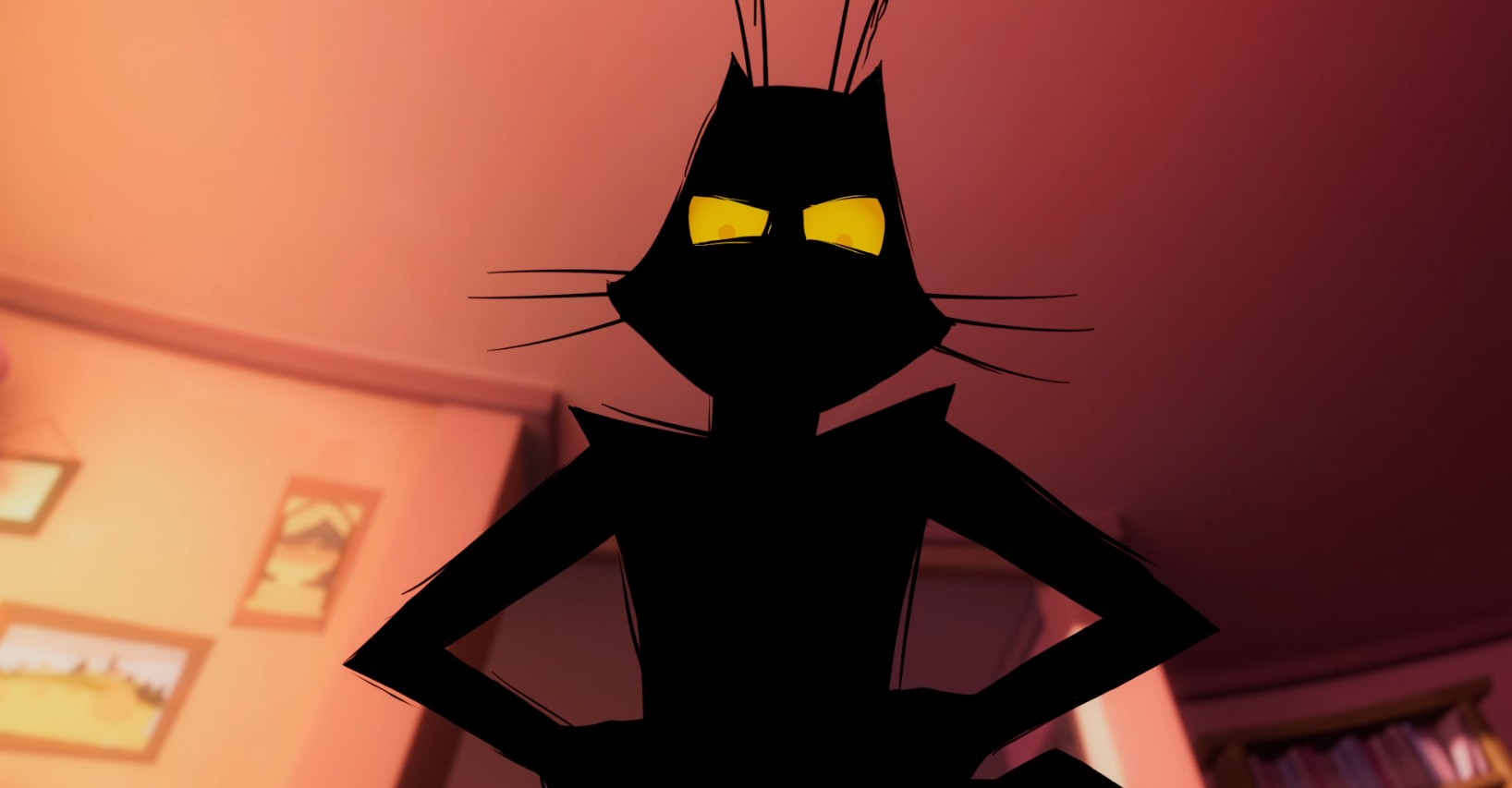
To define the world of Ninjaaa, we first chose a colour profile that would allow us to immerse ourselves in the atmosphere and emotion we wanted to convey, as this short film is based on emotion. We therefore established a colour scheme: yellow and orange help to create a reassuring atmosphere, whereas purple evokes anxiety and unease.
Ninchat, for his part, was created from Théo’s (our protagonist’s) emotions: in Théo’s eyes, he is a mentor, whilst in reality he is nothing more than the embodiment of Théo’s deepest and darkest emotions: his social anxiety.
Which element of the set or the atmosphere gave you the most trouble?
Ninjaaa is a film set partly indoors, but also in the heart of a bustling city and on a packed talk show. Animating this crowd was a bit of a challenge, given the number of characters to create and the need to simulate their movements in the streets.
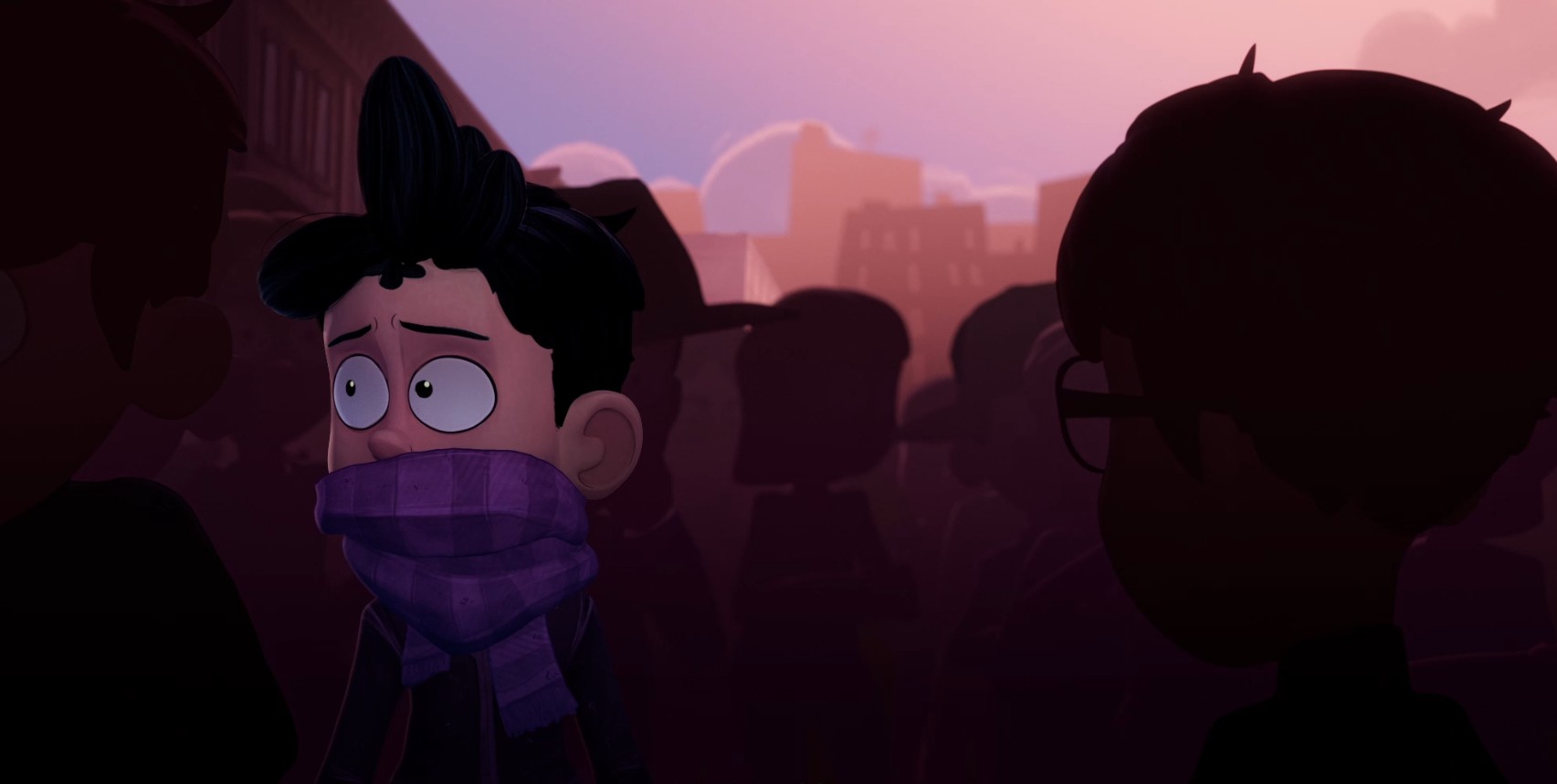
Furthermore, to heighten our protagonist’s panic attacks, we wanted to create 2D anxiety effects. These required a great deal of research and graphic effects, as well as specific colours.
Apart from these concerns, what were the main technical difficulties encountered?
Given that Ninchat is merely the personification of our protagonist Théo’s anxieties, he has no existence of his own. To convey this, we wanted to create a contrast between his design and that of the rest of the film. Ninchat therefore became a flat black shape that appears as a silhouette, set apart by a sketched special effect. He has no mouth or eyebrows, only eyes that are meant to convey his attitude and charisma.
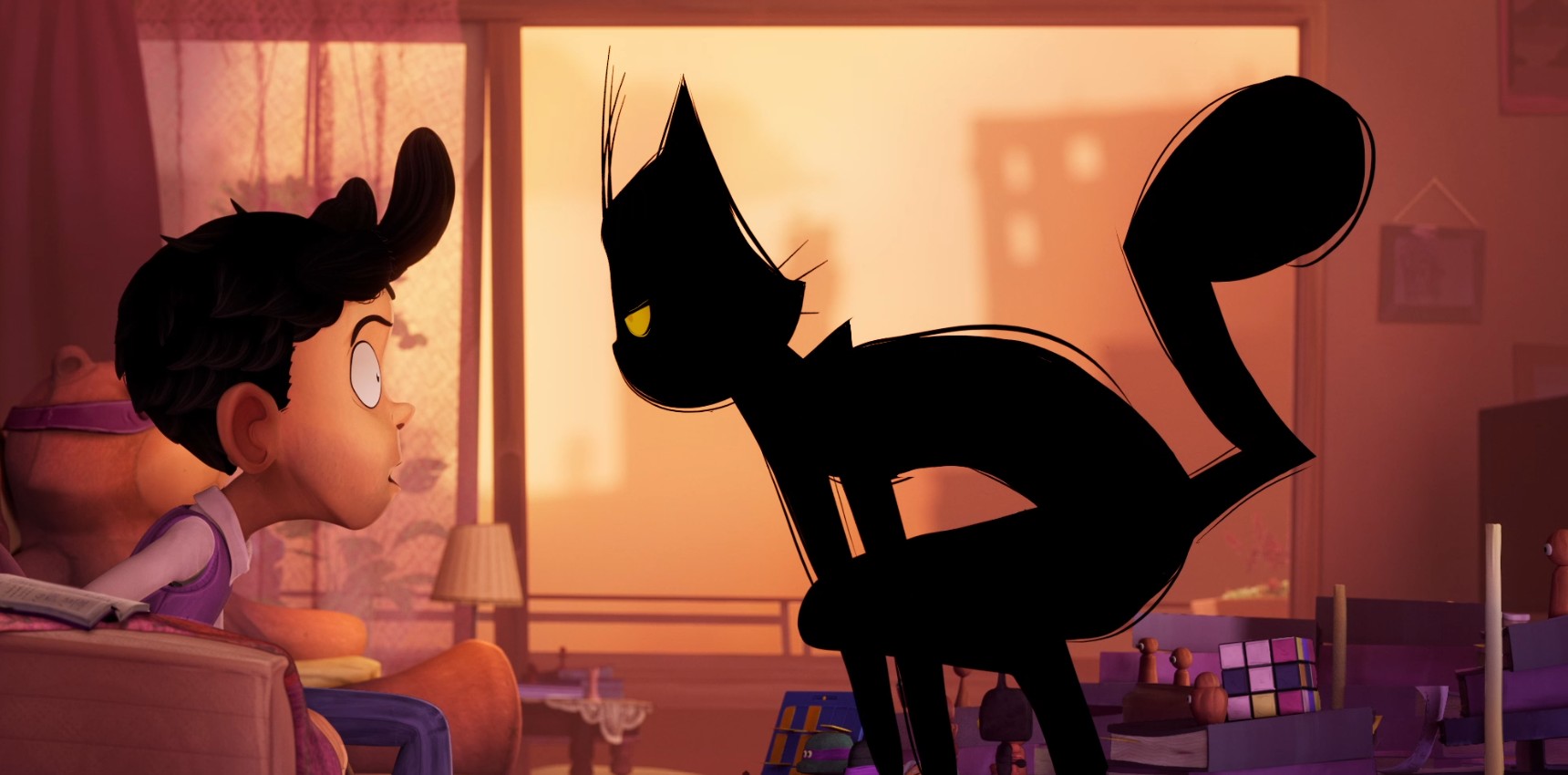
Half-human, half-cat, Ninchat is a biped with the paws and tail of a quadruped, and this required us to carry out a great deal of testing using a wide range of techniques: in 2D, with special effects, in animation…
After attempting to create a smoke effect around Ninchat to give him an eerie, ghostly appearance, we eventually reverted to the concept from our pre-production sketches: a sketch resembling fur, which was animated in 3D using Houdini and then reworked frame by frame in 2D to suit the requirements of the shot.
How did the allocation of roles and teamwork go?
The division of labour fell into place very naturally; each of us had rather different interests and areas of expertise, which meant we were able to keep everyone happy. Tasks were distributed fairly at the outset, then reorganised during production as required. As with many projects, there were times when the volume of work to be produced seemed overwhelming given the tight timeframe; we were stressed by the tasks or technical challenges that had to be completed within what were sometimes tight deadlines, but missing them risked causing significant delays elsewhere. Fortunately, we knew we could all count on one another to help out when real difficulties arose. Thanks to our interns, by the way, and to their credits!
Having a close-knit team that communicates smoothly really is what enabled us to see this project through to a successful conclusion. When everything runs smoothly, nobody has to keep checking up on each other to retrieve a particular file or make sure it’s been done properly. Thanks to this cohesion, we were able to make faster progress and work more efficiently.
What makes you most proud today when you look back on this project?
One of the things we’re most proud of today is the cast we’ve managed to assemble. Being able to work with passionate and professional actors (notably Emmanuel Curtil, the French voice of Jim Carrey, *Les As de la jungle*, etc.) really warms our hearts.
As an aside, right at the start of the project, we’d got it into our heads to offer Pierre Niney the role of Théo. We had a good laugh trying to get hold of him. We later learnt that he was clearly unavailable, as he was filming the movie *Gourou* [by Yann Gozlan, released in January] at the time.
Looking back, what would you have liked to have done differently?
If we were to do it all over again, we would no doubt spend some time developing certain aspects of the art direction in greater depth.
We stayed within our comfort zone for far too long, and by the end of production we no longer had time to explore other possibilities.
But Ninjaaa is still an unforgettable experience that we won’t regret.
What advice would you give to students who are making their films today?
Just one: Be bold. It might sound clichéd, but a final-year film is one of the greatest opportunities to do exactly as you please. Push the boundaries to the limit; don’t hold back, whether you’re working in 2D or 3D. That curiosity will pay off.
Discover *Ninjaaa* now, a 2025 graduation film from ESMA, available to watch in full: