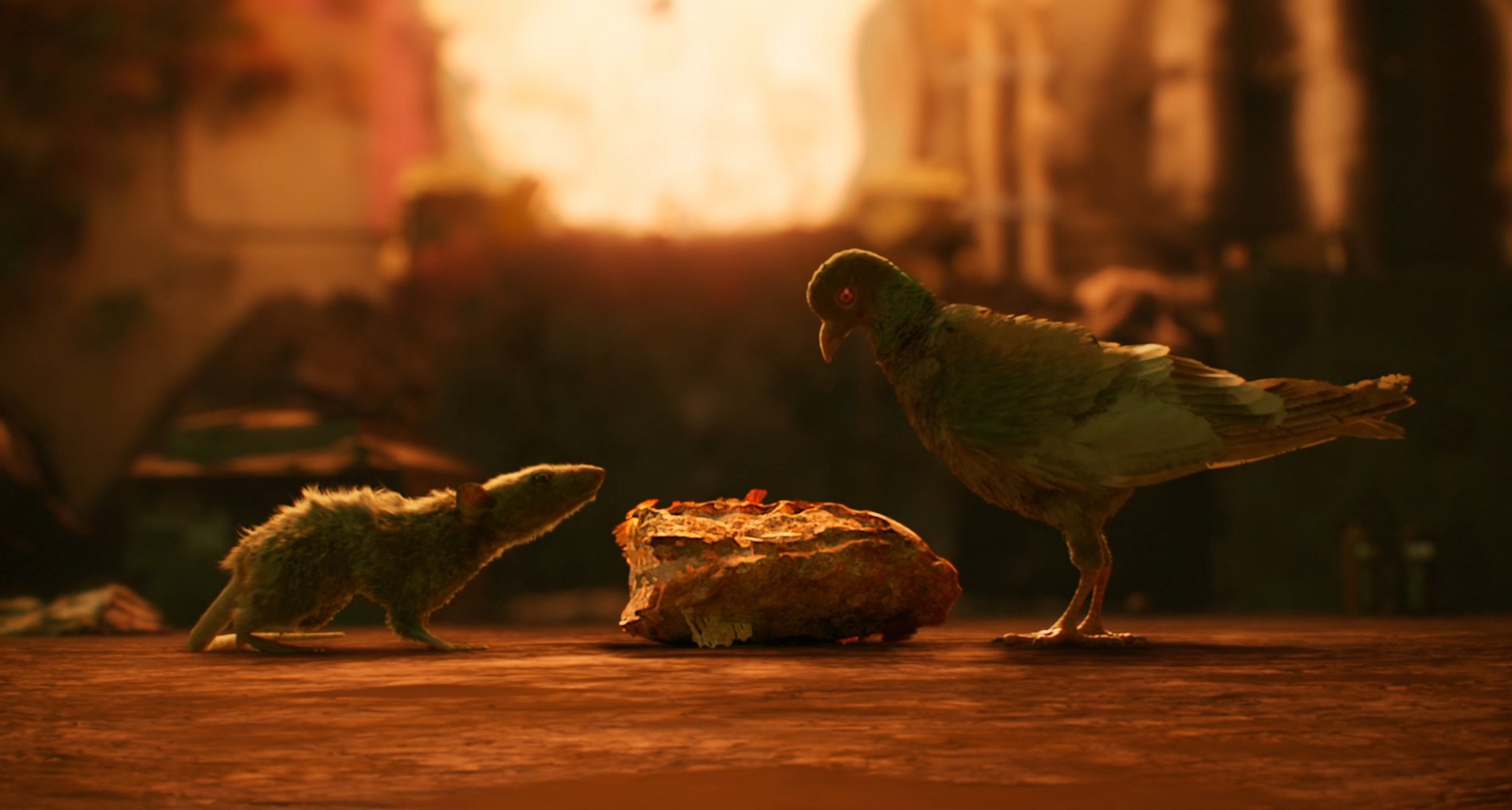
And with good reason – it’s far from finished. After winning over the ESMA jury at the 2024 Graduation Show, this brutal clash between two urban pests (a rat and a pigeon) in a dark alleyway has been selected for numerous international festivals, winning the awards for best student short film at the Cinequest festival (USA), the Animayo Festival (Spain), and most recently at the prestigious BAFTA Student Awards ceremony in Los Angeles.
What’s next? Given the numerous awards it has already won, *Trash* is now on the longlist for the Oscars in the Best Animated Short Film category, and could therefore potentially win this extraordinary award.
In the meantime, the film continues its festival run, accompanied by its crew. We were lucky enough to chat to Grégory Bouzid, Maxime Crançon, Robin Delaporte, Matteo Durand, Romain Fleischer, Alexis Le Ral, Margaux Lutz and Fanny Vecchie about this ambitious and captivating project. A behind-the-scenes look at this dizzying chase.
From an individual idea to a collective project
It was Maxime Crançon who came up with the concept for Trash as part of the final-year film project at ESMA. Through a selection process, each student was then able to choose the project they wanted to work on, and that is how the Trash team came together.
“From then on, the eight of us worked on the film for nearly a year and a half,” continues Maxime. “The initial idea came to me quite naturally: I wanted to explore a theme of social struggle through non-human characters. Although the pitch has evolved since its earliest versions, the central idea has remained the same: to use animals to speak about humans, by showing them in an absurd struggle for survival. We then developed the screenplay as a team, starting from a shared desire to structure the film around a single long take. As for the idea of the windows, that came about quite quickly, as a means – both visual and narrative – of opening up the frame and adding a social dimension to the background.
Transforming the ugly into something beautiful
This idea is, in fact, the shared vision that guided the whole team in their narrative and artistic choices. “The film’s entire aesthetic was built around this idea: to create a visually chaotic, raw look, whilst still striving for composition and elegance in the imagery,” continues Maxime Crançon. “Our inspiration came mainly from live-action cinema, with directors such as David Fincher, Ari Aster and Gaspar Noé, who have made a lasting impression on us as much through their visual worlds as through the narrative tension they create.”
“On a personal level, I’ve also been greatly influenced by comics and graphic novels, particularly *L’Homme sans rêve* by Joseph Safieddine and Olivier Bonhomme, which inspired me greatly with its tone and artistic style.”
Somewhere between revulsion and tenderness: the design of unconventional characters
When choosing the two main characters, the team took their inspiration directly from real rats and pigeons.
With a deliberate choice of repulsive and feared species, which embody the city’s seedy, urban side.
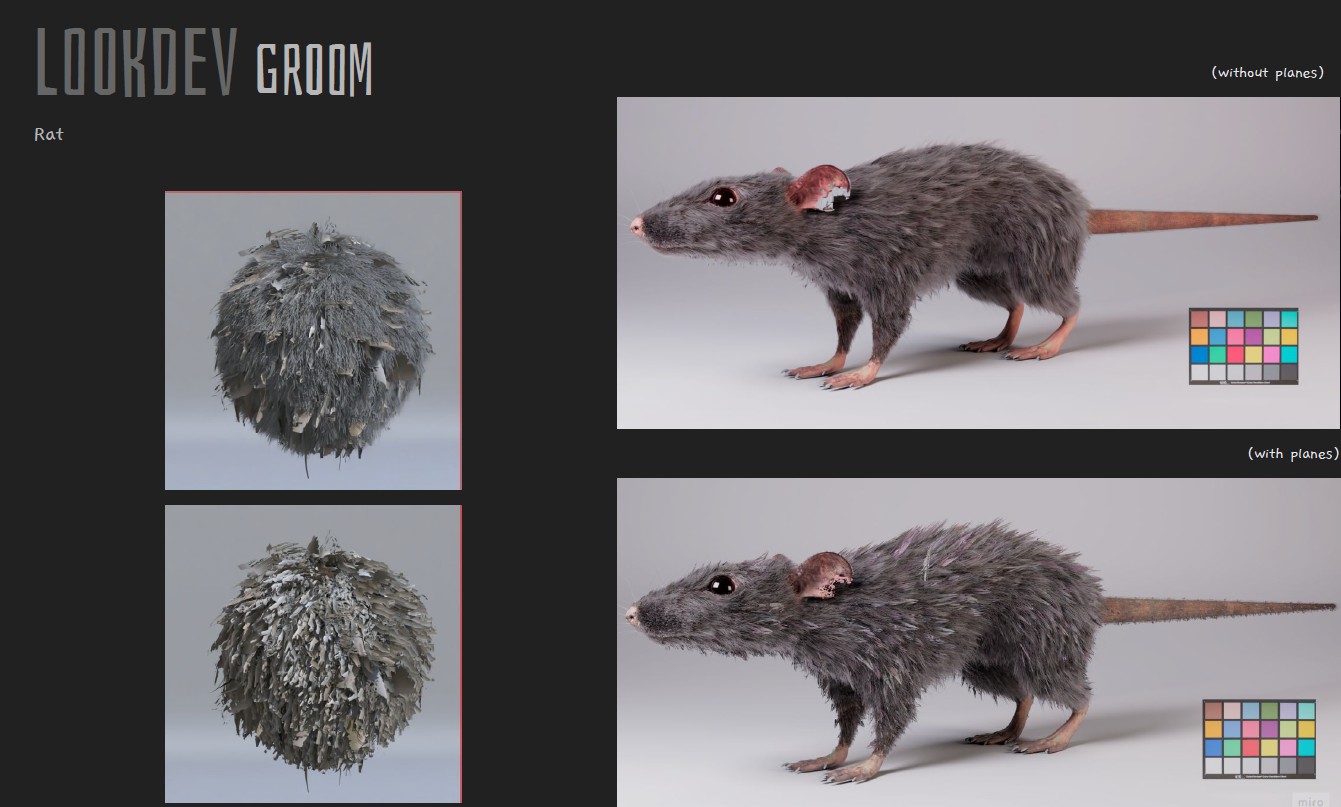
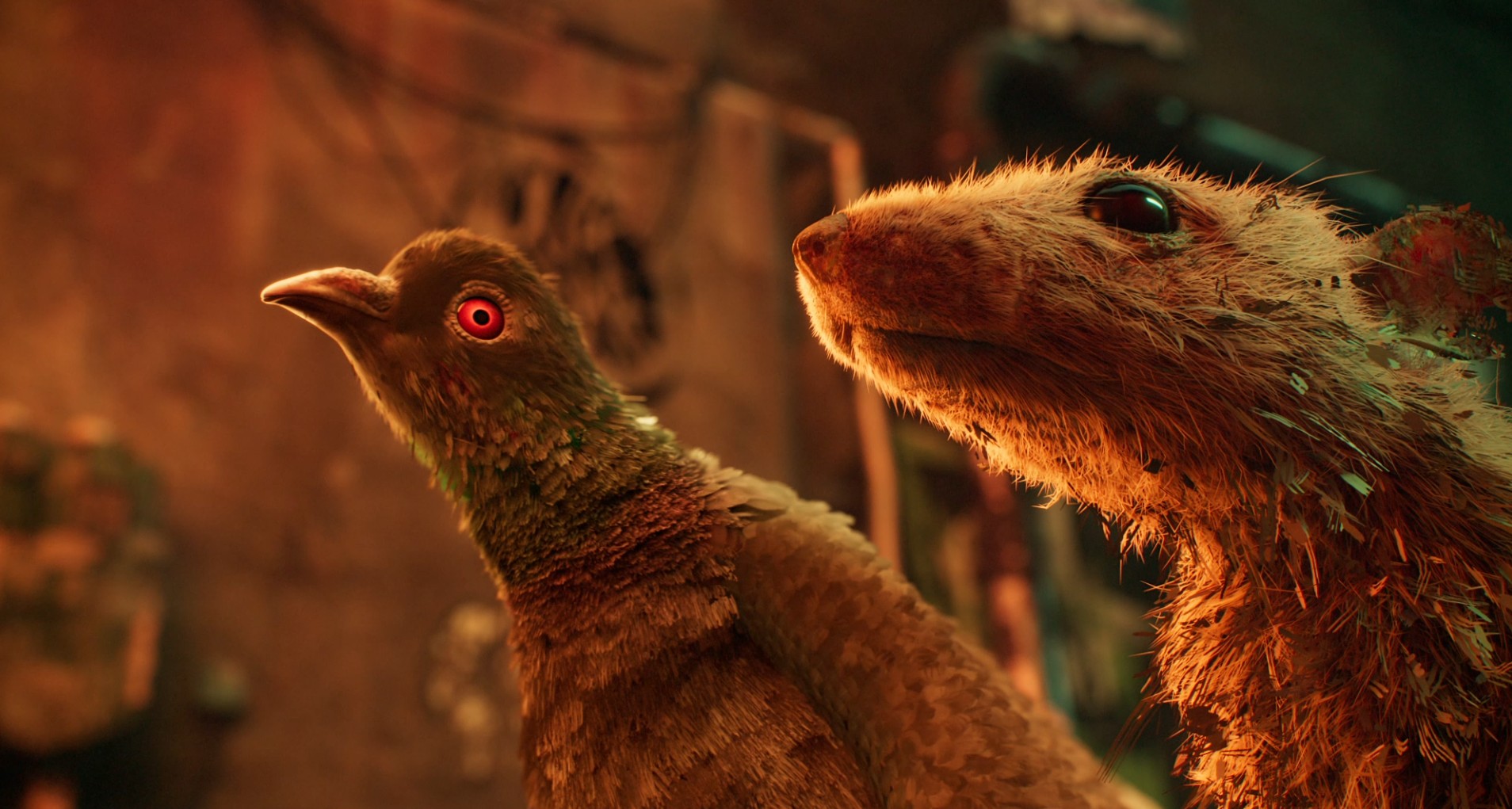
So how, then, can we make this rat and this pigeon (often nicknamed the ‘flying rat’) endearing and touching? “By working on their appearance, which is sometimes fragile, almost touching,” explains Fanny Vecchie. “The aim is to move the audience through our characters, despite their initially negative image.”
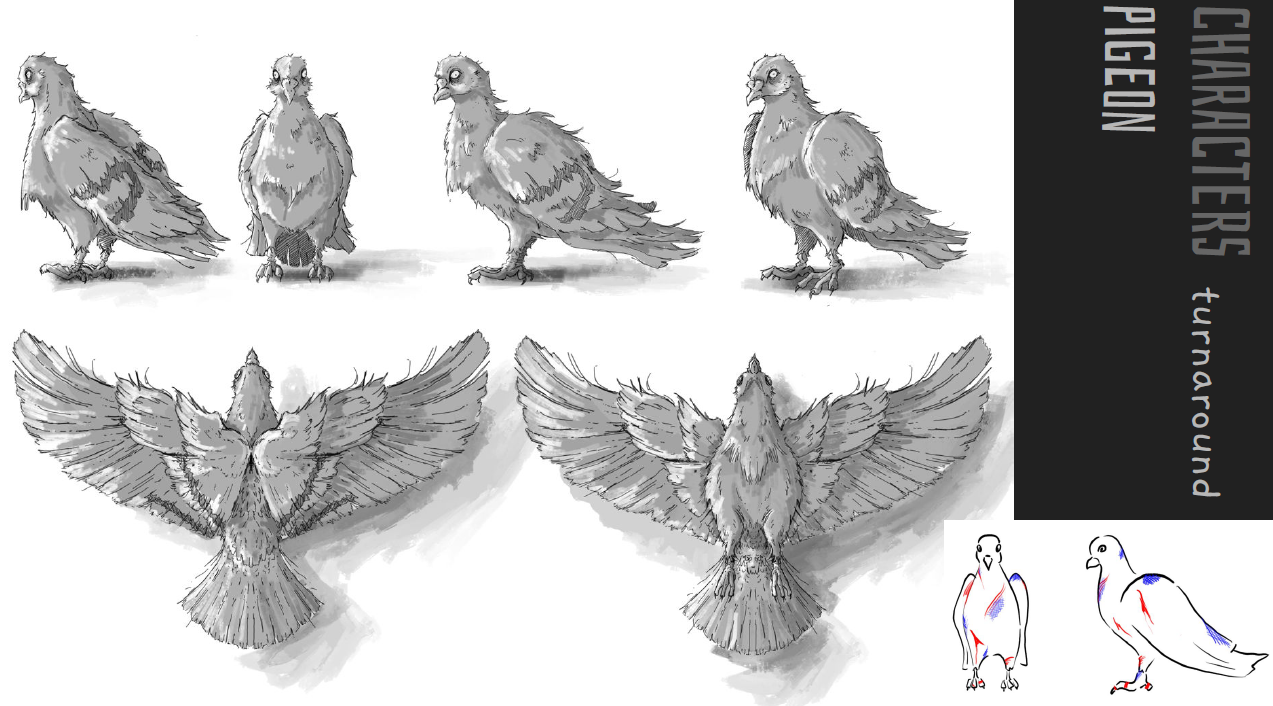
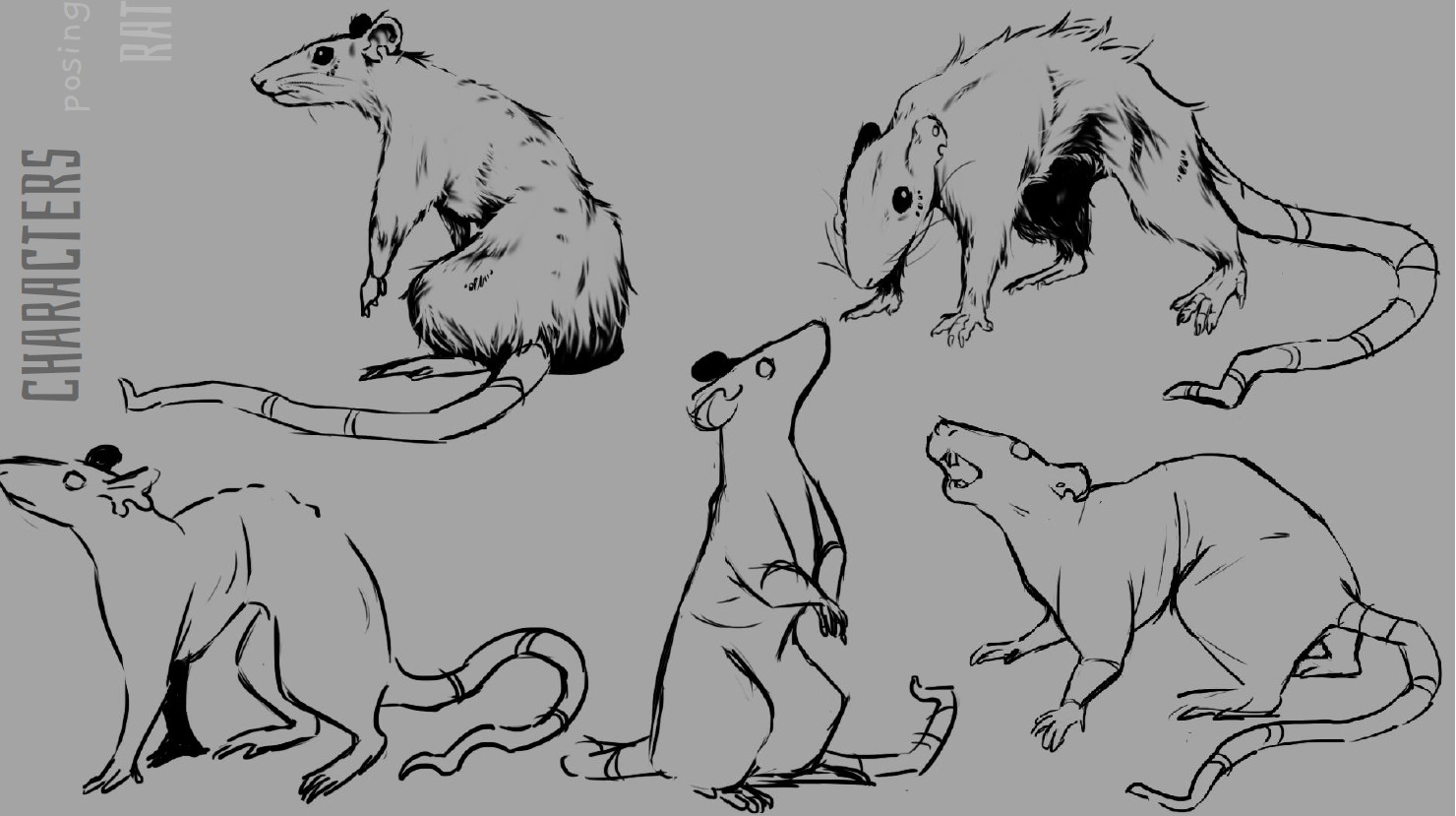
Their actual proportions have been retained fairly faithfully, but their appearance has been stylised and their behaviour slightly humanised.
Initially, their design was heavily influenced by our artistic direction: lots of smudges, textures and brushstrokes… but this made them look too off-putting, even frightening.
We then simplified their appearance, in particular by making their eyes and ears larger to make them more expressive and endearing.
“We also made them look very thin and slightly dishevelled, to emphasise their struggle for survival in a hostile environment. Finally, although our aim was to ensure our story remained credible and true to the animals, we paid particular attention to their interactions, as their relationship evolves as the film progresses.”
A world with the feel of an urban closed-door setting
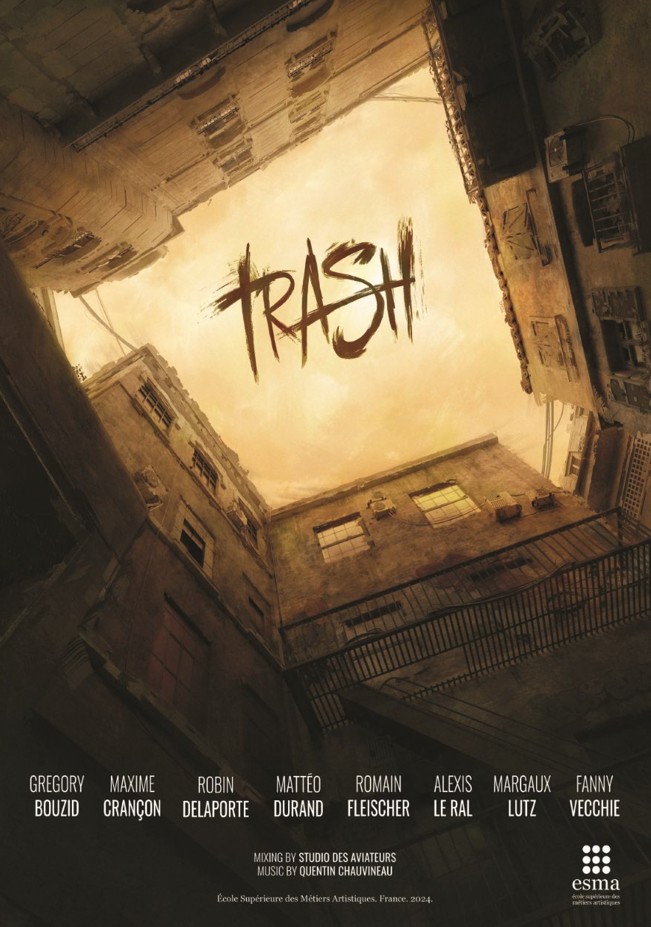
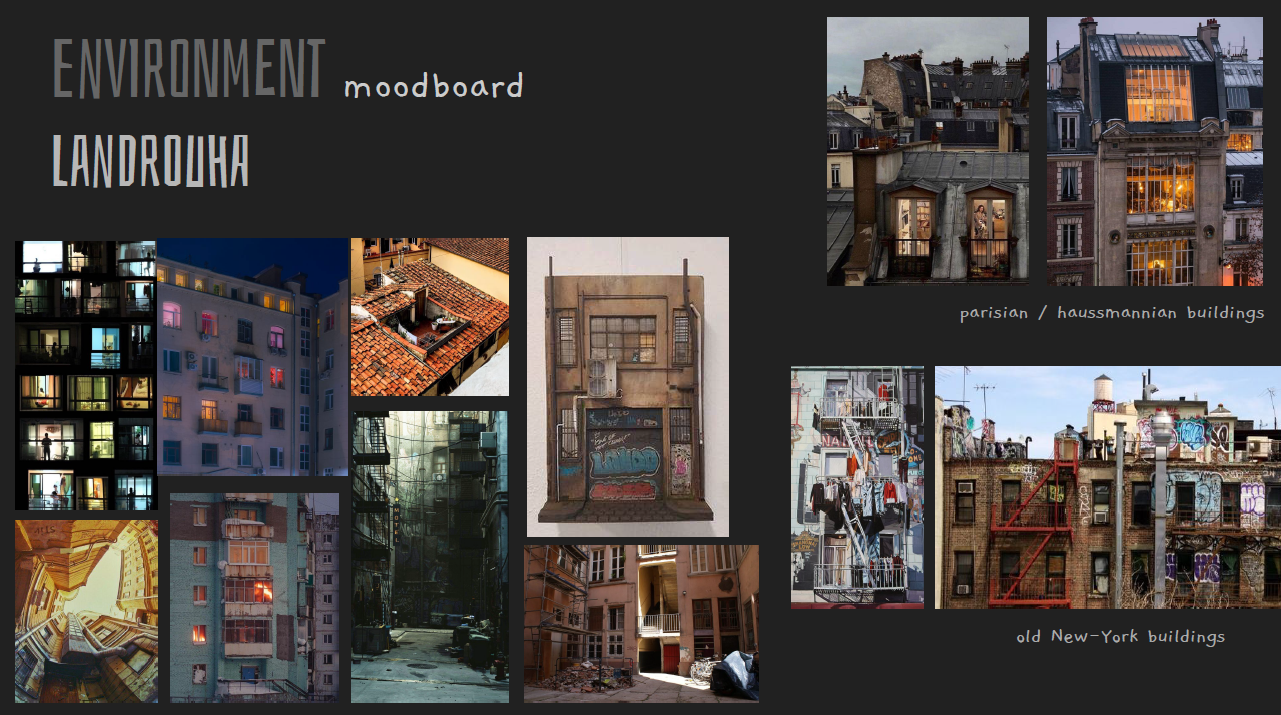
A blend of various architectural styles, some more recognisable than others, *Trash* was intended by its team to be a film with no real geographical ties, yet one that offers a glimpse into a gritty, urban world that might seem familiar to most people. “The dark cul-de-sac,” explains Grégory Bouzid, “also stems from a desire to create an atmosphere that inspires unease and repulsion. It is the ideal setting for a closed-door drama in which the viewer, through the camera, might feel like an intrusive voyeur.”
Citing the influence of artists such as Miki Bencz and the Croatian painter Božo Balov – an artist who works notably in VR – the team adopted a deconstructed artistic style, in which the abrupt brushstrokes lend the film a unique charm and style.
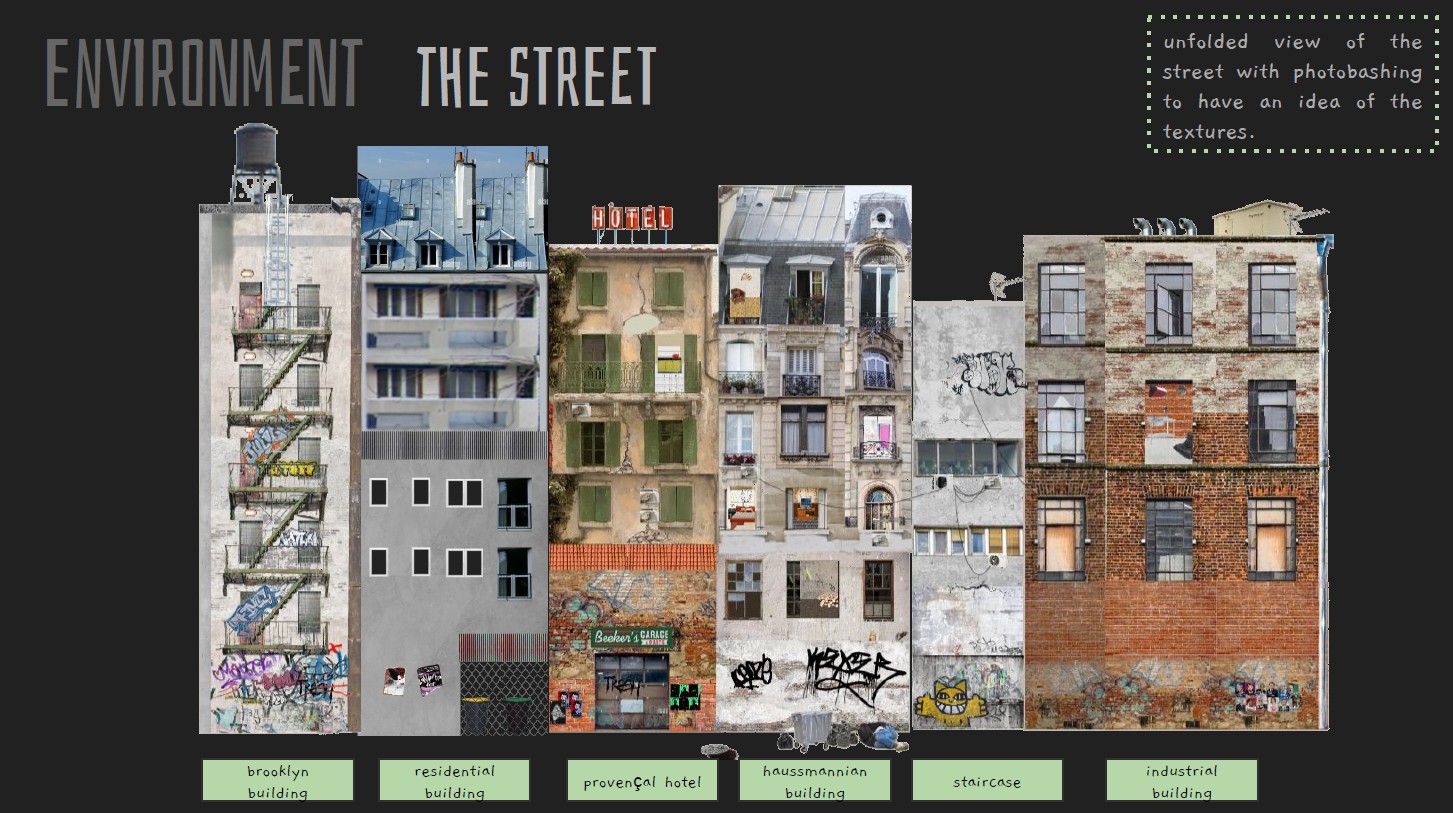
A microcosm that unfolds as the chase progresses, offering a wealth of fleeting glimpses into the lives of the people hidden behind these countless windows. A real tour de force, because to successfully weave each micro-story into the wider narrative whilst ensuring the individuality of each atmosphere, the team had to spend many hours on visual research and consultation.
A myriad of technical challenges
For Robin Delaporte, *Trash* “was a technical challenge right from the start of the project.” And with good reason: these students wanted to make an “uncompromising” film. What’s more, they opted for a challenging cinematographic technique: the long take.
“This involved planning in advance how the characters would move through the different floors, how the lighting would change, the layout of the street, and how to capture it all with a single, fluid camera shot,” explains Robin Delaporte. “Every change to the script therefore meant having to revise a large part of the storyboard.”
The number of supporting characters (14 in total) also led the team to optimise the 3D production to save time, and the set design required a great deal of thought to ensure it matched the specific dimensions of the two protagonists. Finally, the decision to use a ‘painting-style’ 3D rendering added a whole new set of challenges.
To overcome these obstacles, the team redoubled their ingenuity. “To construct the long take,” recalls Robin Delaporte, “we designed a cardboard model of the alleyway with each flat represented, and used a red string to visualise the animals’ path. During the storyboard meetings, we precisely defined the route and the transitions using ‘fake cuts’ to optimise the scene and conceal certain elements. The camera, which posed a challenge due to its mobility, was operated using a dedicated rig built by Romain Fleischer to make it easier to control.”
Robin, for his part, has developed a pipeline manager to manage scenes and backups, and to automate the use of assets, in order to streamline the project’s workflow.
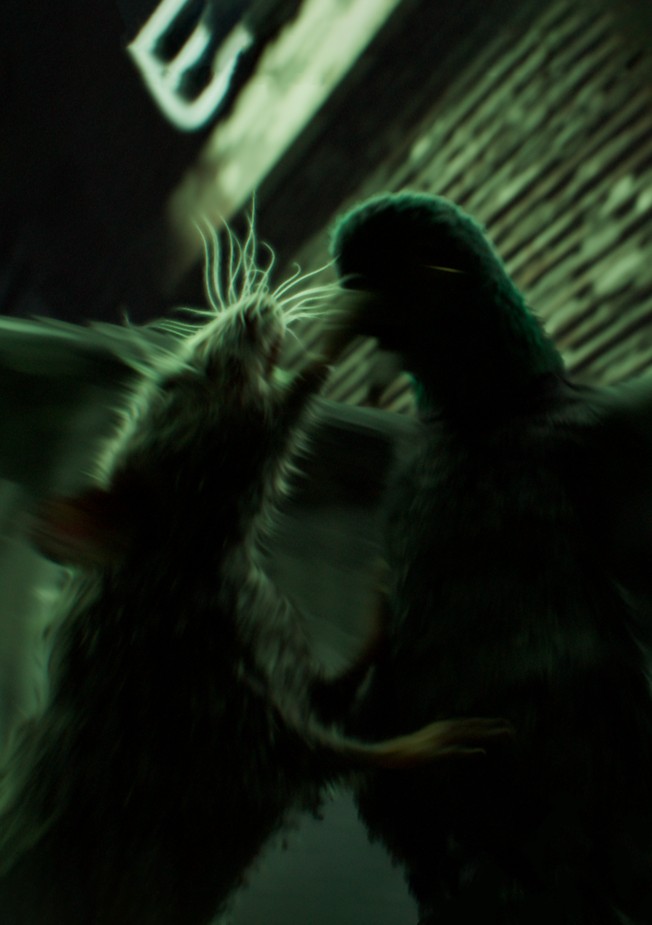
The set, which is entirely modular, was adapted by the team into several versions to suit the requirements of each scene (textures, levels of detail, etc.), and integrated into the pipeline so that they could be quickly swapped out. All secondary characters also share a common rig, based on two ‘standard models’ (male/female) that have been modified in line with the concept art.
For denoising, an interface enabling the use of the latest version of the Renderman 25 denoiser has been developed. This tool enabled the team to utilise the denoiser’s features, whilst also incorporating image compression capabilities, thereby streamlining the transition to post-production software.
Finally, a Houdini setup enabled us to quickly generate planes on our assets, and a visual style guide had been produced during pre-production to define the appearance of the materials based on their textures and patterns.
All these tools and methods have led to this outstanding result, which you can discover in the teaser below.
A close-knit team for an unusual project
Following an initial discussion, the division of roles within the Trash team fell into place naturally, with everyone able to express their preferences and take on roles based on their skills or interests.
In this unconventional project, it was communication that enabled the film to come to fruition, despite all the technical challenges and a very different production process, due to the choice of the long take as the format.
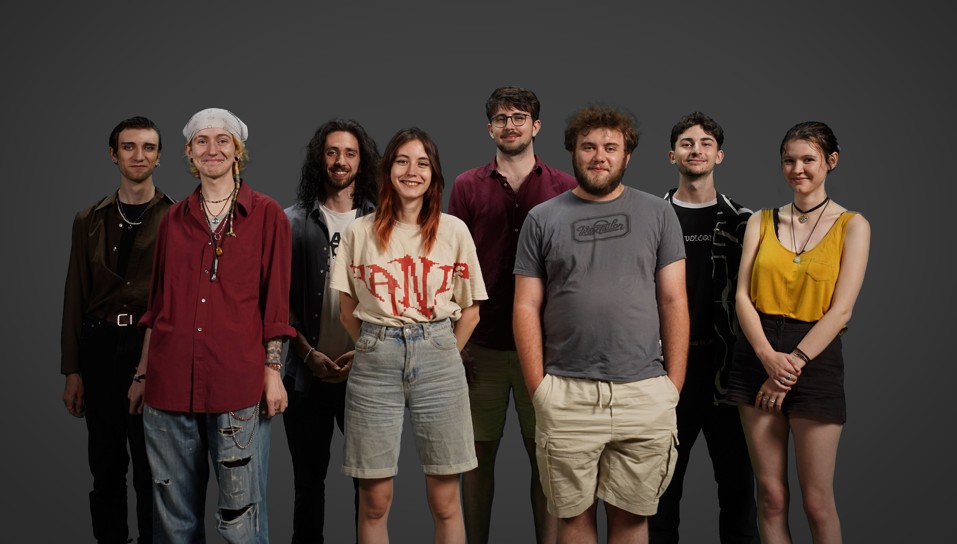
“Throughout the year,” explains Robin Delaporte, “we maintained regular communication within the team so that we could allocate tasks and collectively decide on the priorities needed to meet our deadlines. For each stage of production, we appointed ‘Leads’ – people in charge of specific areas who were responsible for reporting on the progress of each aspect of the project. This enabled us to better identify what needed to be prioritised during production. Finally, the fact that we realised very early on the technical challenge the film posed prompted us to adopt an optimisation approach from the outset. On the one hand, to simplify tasks, and on the other, to ensure visually consistent quality throughout the film.”
What have these students learnt from this experience?
Apart from the cold sweats caused by a temperamental Houdini setup, what the team is particularly proud of today is the consistency of the set design they managed to maintain throughout the film. For Alexis Le Ral, this was made possible mainly thanks to the detailed mapping and the meticulously planned architecture of this alleyway, which was developed in parallel with the storyboard.
On the subject of “regrets”, Mattéo Durand highlights the desire to have made certain decisions – both artistic and technical – more quickly, which would have allowed the team to free up more time towards the end of production. “That said, these moments of doubt were also an integral part of the creative process, and they sometimes led us to solutions that were richer than those we’d initially envisaged. But if we were to do it all over again, we’d no doubt try to be more rigorous with our planning, and trust our instincts sooner.”
Any advice? “Stick to your guns right to the end”
“The best advice I could give,” concludes Mattéo on behalf of the team, “is to always bear in mind the project’s original intention. Right from the start, establish a clear concept, a strong message, and a visual and auditory palette, and stick to this course right through to the end. This guiding principle must serve as a compass for all decisions, across all departments.”
In our case, for example, we wanted a film that was gritty, raw and almost unsettling. This allowed us to justify bold visual choices: breaking up the sometimes overly clean geometry of the modelling, playing with greenish and orange hues in the lighting, or maintaining a deliberately chaotic and textured image in the compositing. When all these decisions are aligned with a single intention, the film gains coherence, and every detail serves to reinforce the narrative.
“So stick to a simple, powerful idea, and bring it to life in every creative decision.”
Discover TRASH now, a 2024 graduation film from ESMA, available to watch in full: