These watches, painted with radium by women with no protection whatsoever against radioactivity, were to cause numerous illnesses and deaths amongst those who painted them. These deaths were only linked to the radioactive element following a high-profile court case, which led to improvements in workers’ rights in the United States.
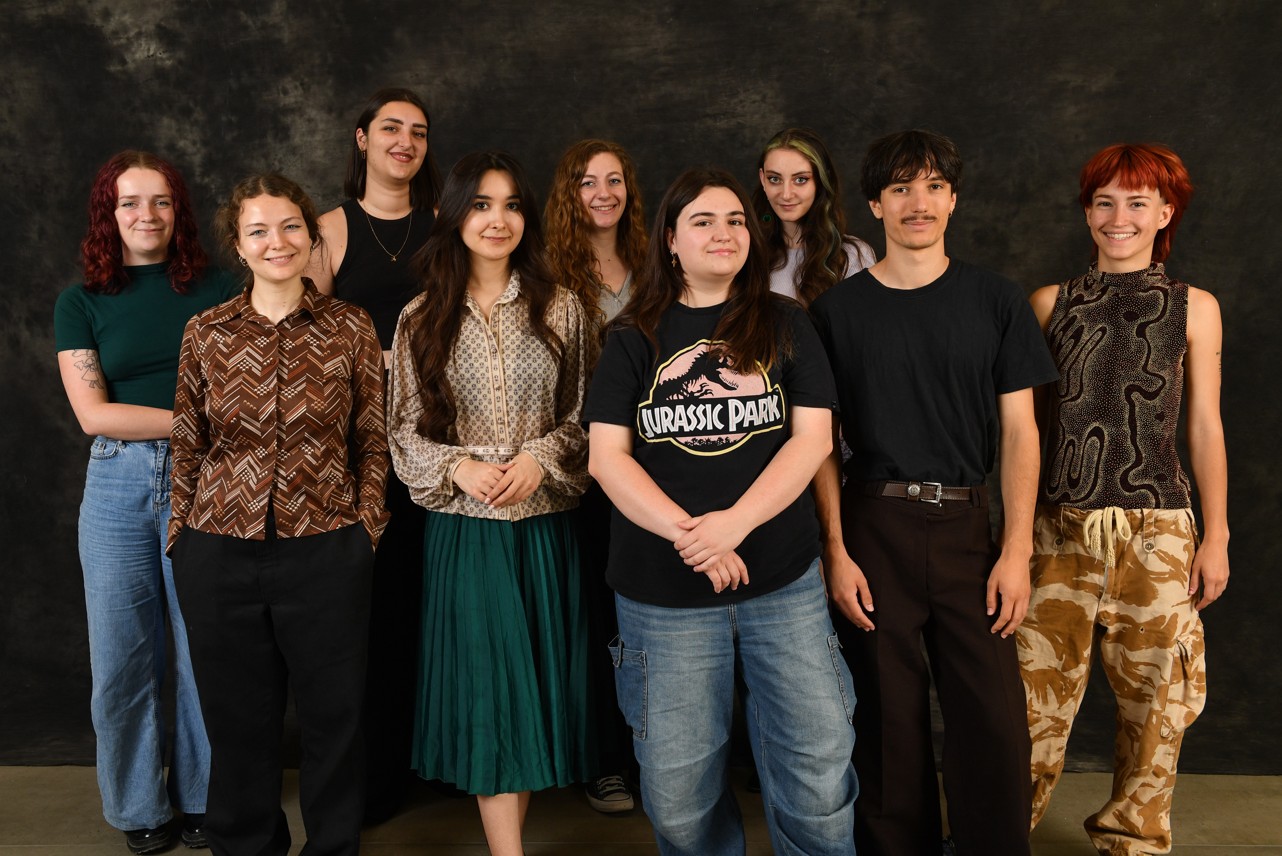
It is to these women that Mathieu Staropoli, Maïa Xueref, Clémentine Gabard, Ambre Fournier, Loïs Angilella, Léa Faynel, Hannah Gozlan, Emilie Richard and Claire Represa have chosen to pay tribute to in *Les lucioles*, their graduation short film at ESMA.
A film with a powerful story, elevated by superb animation, which has won over audiences and international juries alike.
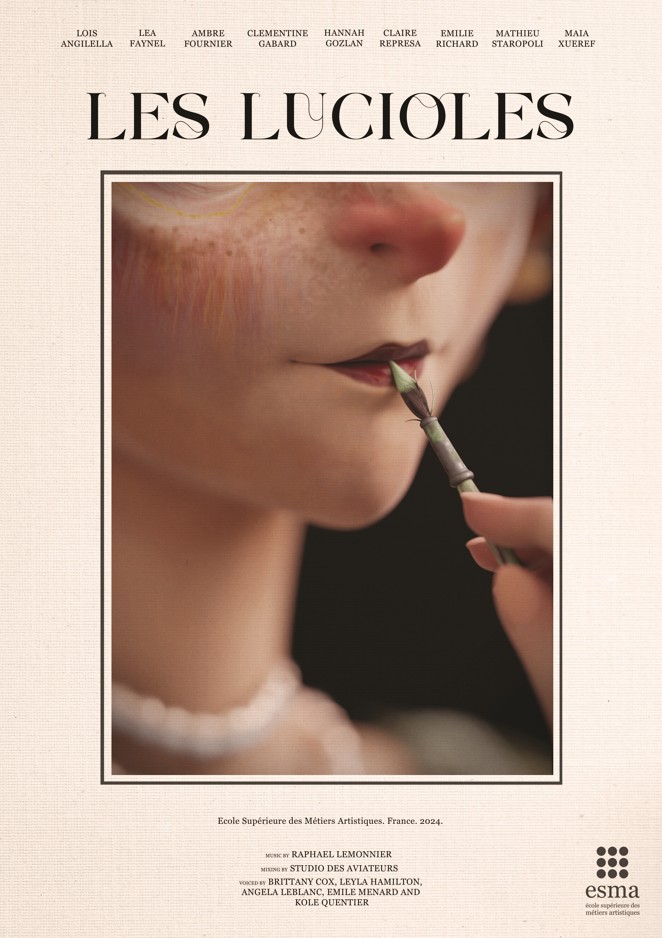
Since its inception, *Les lucioles* has been selected for numerous festivals, with an already impressive track record:
- SACD Award for Best Student Short Film at the Rennes Animation Festival
- Award for Best Animation at the Toyama International Film Festival
- Ossola Museum Award at the Malescorto Film Festival in Italy.
- First prize at the Nuit trop Courte festival in Grenoble
- The “Historical Narrative Award” at the Lunatico Festival
- Best Animated Short Award at the New Directors – New Films Festival
And finally, not one but four awards at the Touchstone Independent Film Festival: Best Animated Short, Best Director, Best Sound Design and Best Original Score.
This enthusiasm is also evident on social media, where the project already has over 20,000 followers and a close-knit community of supporters.
Between posts, and whilst they were travelling to various film festivals, we had the chance to chat with the film’s team. We invite you to read the interview here.
How did this project come about?
It was Mathieu Staropoli who, after discovering this story on a France Culture podcast, suggested the idea to us. This tragic story of female workers in the 1920s, who were poisoned by radium paint whilst painting luminescent dials, made a deep impression on us. It was through our research that the outline of what was to become our short film began to take shape. With its echoes of feminism and the workers’ struggle, the subject inspired us and sparked a desire to craft a narrative around it as a tribute to these women.
Unlike many of our fellow students’ short films, the story as it was originally conceived changed very little during production. With the historical context and the atmosphere of 1920s speakeasies in mind, we started with the idea of a ball at the watch factory, and built our narrative around that.
Of course, we did consider the narrative structure, the number of settings, the number of characters, and so on. But in the end, the idea of a closed-door setting – so that we could really focus on the interactions and the characters, and keep these women at the heart of their own story – seemed to us to be the strongest option.
Given the historical nature of the film’s subject matter, it was also important for us to focus on the lives of the female workers rather than their deaths, which often overshadow their memory. We also had a great deal of discussion about the ending of our story, in order to avoid a conclusion that was too clichéd or too rushed in its presentation, which might risk losing the viewer.
By developing our characters, both physically and psychologically, we were able to begin shaping our narrative on a solid foundation.
What guided you in the aesthetic choices that defined your characters?
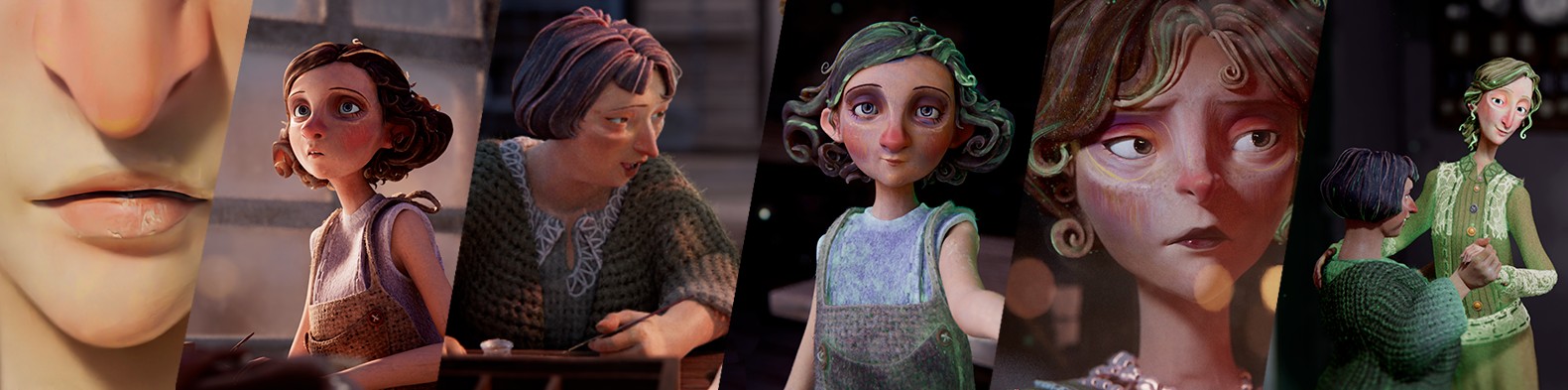
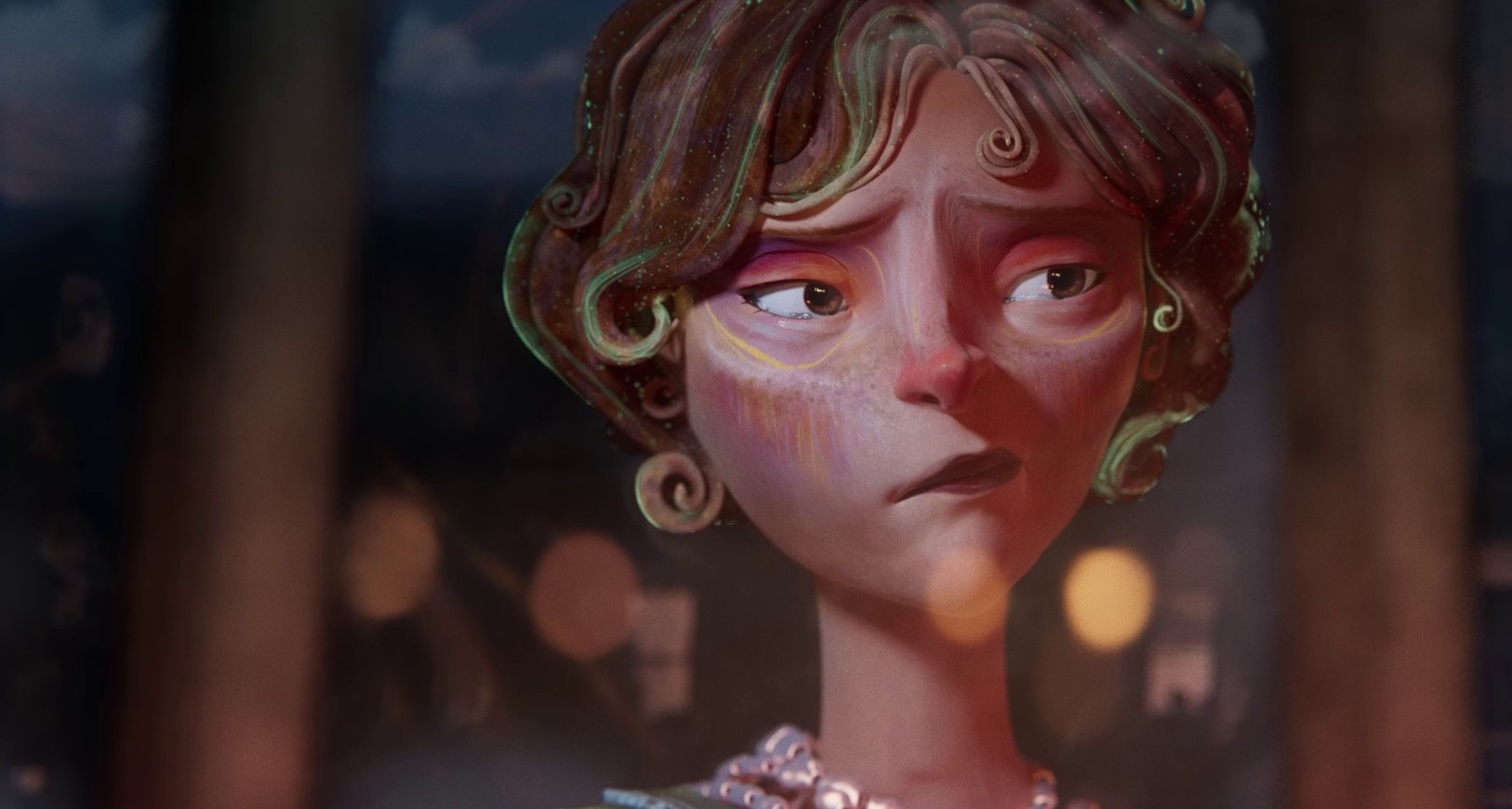
We explored different stylistic approaches, experimenting with varying degrees of caricature and realism. Within our team of nine, there were six concept artists who worked tirelessly on our characters in a wide range of styles. This diversity also helped us push our style and ideas as far as possible, ultimately giving our film that stop-motion look. This ‘doll-like’ aesthetic resonated with the idea of female workers trapped or manipulated by a system over which they had no control. The ‘stop-motion’ and ‘handmade’ look in 3D came with its own set of challenges, but ultimately, it really allowed our film to stand out and establish a striking visual identity.
It was also important to us to represent diversity in body types and personalities through our four characters, who complement one another without being alike, featuring all kinds of noses, faces, body shapes and sensibilities.
Every detail reveals something about them, so a great deal of thought went into their costumes to reflect their personalities, whilst remaining true to the 1920s aesthetic and maintaining a working-class simplicity.
We’ve chosen something sensible and a bit old-fashioned for Grace, a slightly more glamorous dress for Margaret, a practical and comfortable jumper and skirt for Irène, and a simple little dress without tights for Mollie.
Making the characters believable and lifelike is undoubtedly the biggest challenge in a project like this, and we put a great deal of effort into it right from the writing stage.
We therefore took care to tailor every line of dialogue to each character’s personality, and we also worked on the characters’ demeanours and reactions with several teachers, including a drama teacher, as well as three theatre actors, to refine our animation references, camera shots and staging. They were a great help!
Could you tell us a bit more about your creative world and your sources of inspiration?
We drew a great deal of inspiration from period photographs. Radium factories were almost prestigious back then, attracting a great deal of newspaper articles and reports, and so there was plenty of material to work with. We then spent a lot of time working on the stop-motion stylisation of the set, particularly in terms of textures.
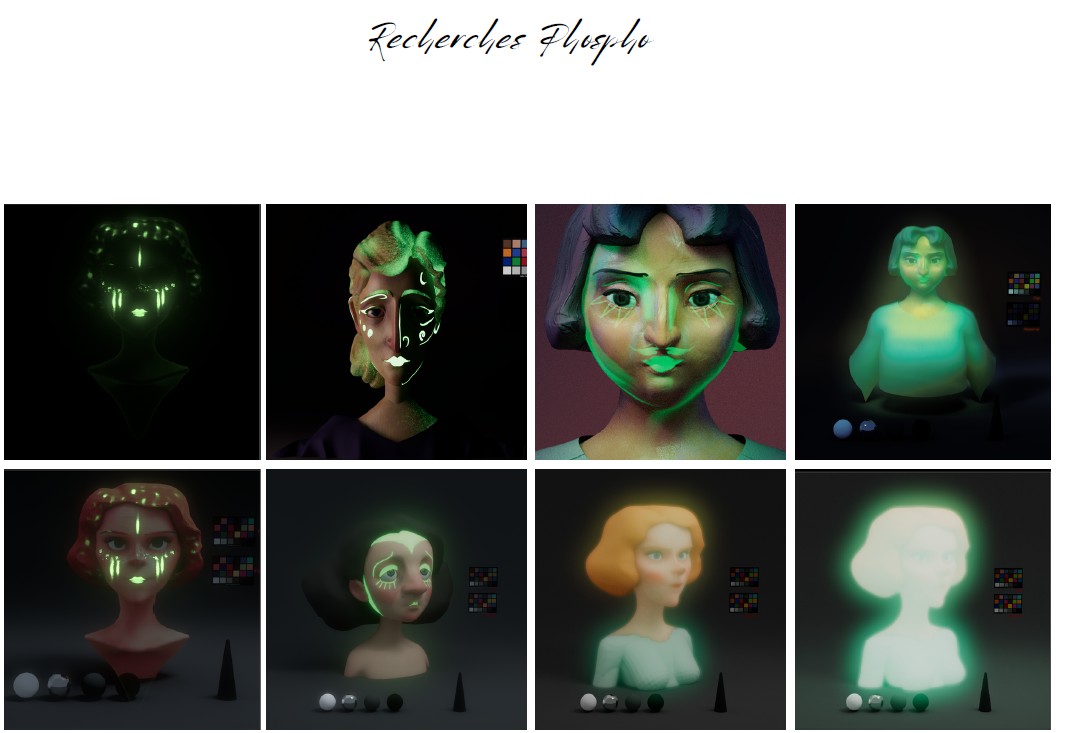
For us, it was important to get the scale and texture just right, and to treat each object as if it were handmade. Radium itself – a key element in the film – took us a great deal of time and effort to achieve a consistent colour and texture in every shot; it was a real challenge!
Speaking of challenges, what were the main technical challenges you faced?
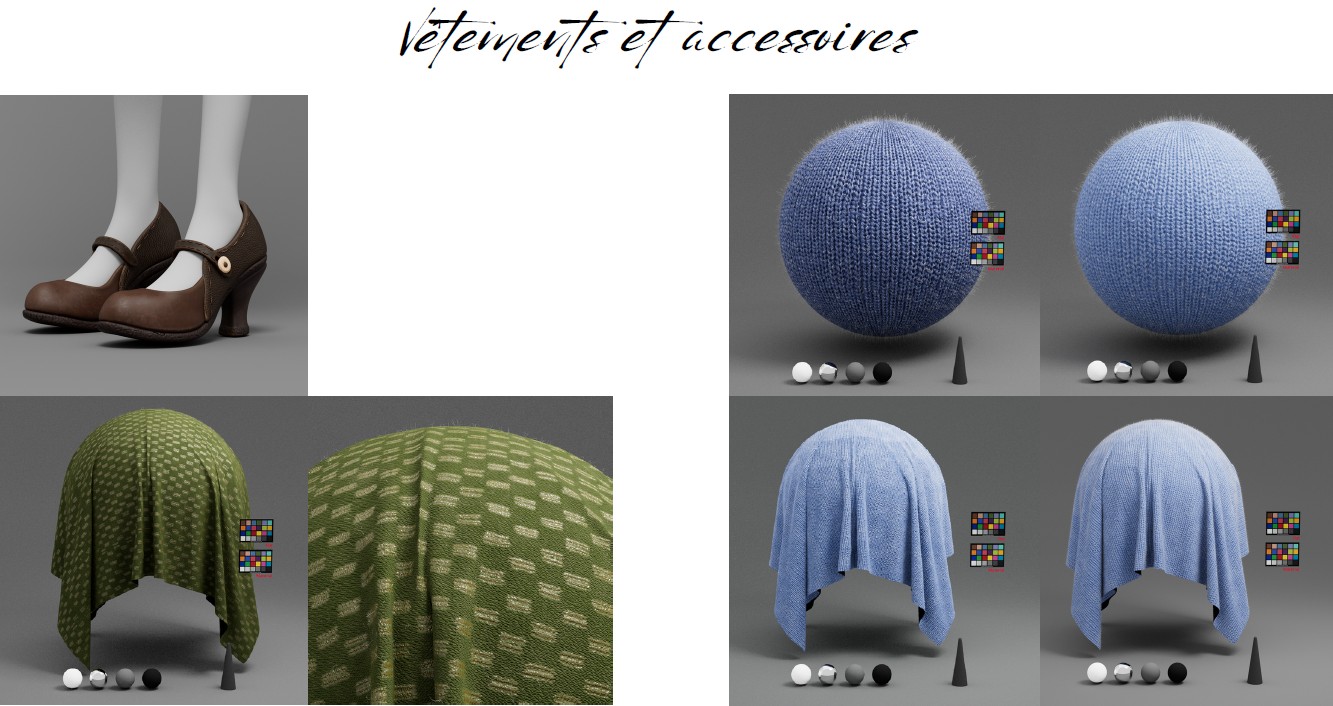
The decision to create a world on a doll’s scale presented us with technical challenges, mainly relating to textures – such as their scale: how to render the stitches, what thickness to give the fur – as well as difficulties in simulating clothing. We wanted a fluid look, but fabric on a 15 cm doll doesn’t drape very much. So we had to experiment in that area. As for the animation, as we were aiming for a stop-motion look, we considered animating at 12 fps. However, we ruled out this option, as it would have caused problems with the cloth simulation.
We had lengthy discussions as a team to plan the various stages of the project and choose options that would suit everyone, but also – and above all – meet the film’s requirements. And we did so even though these options weren’t necessarily the easiest. For example, we chose to carry out all the clothing simulation in Houdini, at the request of our CFX artists. This caused problems later in production, when we had to transfer our files to Maya. Despite this, we managed to pull it off, thanks to meticulous, precision work – a characteristic that has always been an essential part of how our pipeline operates.
When it came to textures, we spent a long time searching for fabrics at macro scale and experimenting in Substance Painter. Having solid references allowed us to push the detail to the absolute limit, to the point where you can almost feel the fabric’s weave.
Finally, we put a lot of work into an element that might seem trivial, but is anything but: the other workers. These were modelled on our characters and animated using the same rigs. To do this, we used Studio Library, which allowed us to re-use the animation from our characters and apply it directly.
How did the allocation of roles and teamwork go?
Everyone had roles based on their specialisms and skills. Starting with a collaborative effort on the concept and script, we formed smaller working groups based on areas such as lighting, rigging, sculpting, etc. Within these groups of two to three people, we were able to make decisions more easily and each make progress in our respective areas. We also appointed two production managers, who were responsible for managing everyone’s schedules, production quotas and deadlines to ensure we fell as little behind schedule as possible.
Even so, bringing the film to fruition was no plain sailing. When we realised that, given the number of shots required and our five characters, the amount of 3D animation needed initially would be far too great and would far exceed the allocated deadlines, we did our utmost to reduce the number of characters per shot, and we managed (with the help of four assistants) to overcome this challenge, whilst retaining the sensitivity and emotion we wanted to convey through the story.
Looking back, our greatest strength was our ability to work together. Without everyone’s goodwill and hard work, we would not have been able to create a short film of the quality and calibre of *Les Lucioles*.
What makes you most proud today when you look back on this project?
*Les Lucioles* has won several international awards and been selected for over 20 festivals around the world. But above all, this project has really taken off thanks to the hard work and determination we put into its development.
Since the project began, we have gained over 20k followers and 1 million views on our social media channels.
There is nothing more precious than having succeeded in building a community around a project into which we have poured so much of our hearts. Seeing people engage with our content and share their ideas and experiences about the story of the radium girls keeps the memory of these women alive. For us, it’s a resounding success!
What advice would you give to students who are making their films today?
With hindsight, if we’d anticipated certain technical issues, we could have avoided a lot of sleepless nights! For students who are about to make their own films, the best advice would be to research as much as possible about the structure of the software and the 3D pipeline, and to keep up to date with new software and tools that can help streamline the process. We learnt a great deal during this production, and having that knowledge could have helped us make faster progress and refine the film even further.
Finally, listen to the advice of professionals, whilst remaining confident in your artistic vision. This project is your film, and it’s an incredible opportunity to create something that moves you and reflects who you are!
Discover *Les Lucioles* now, a 2024 graduation film from ESMA, available to watch in full: