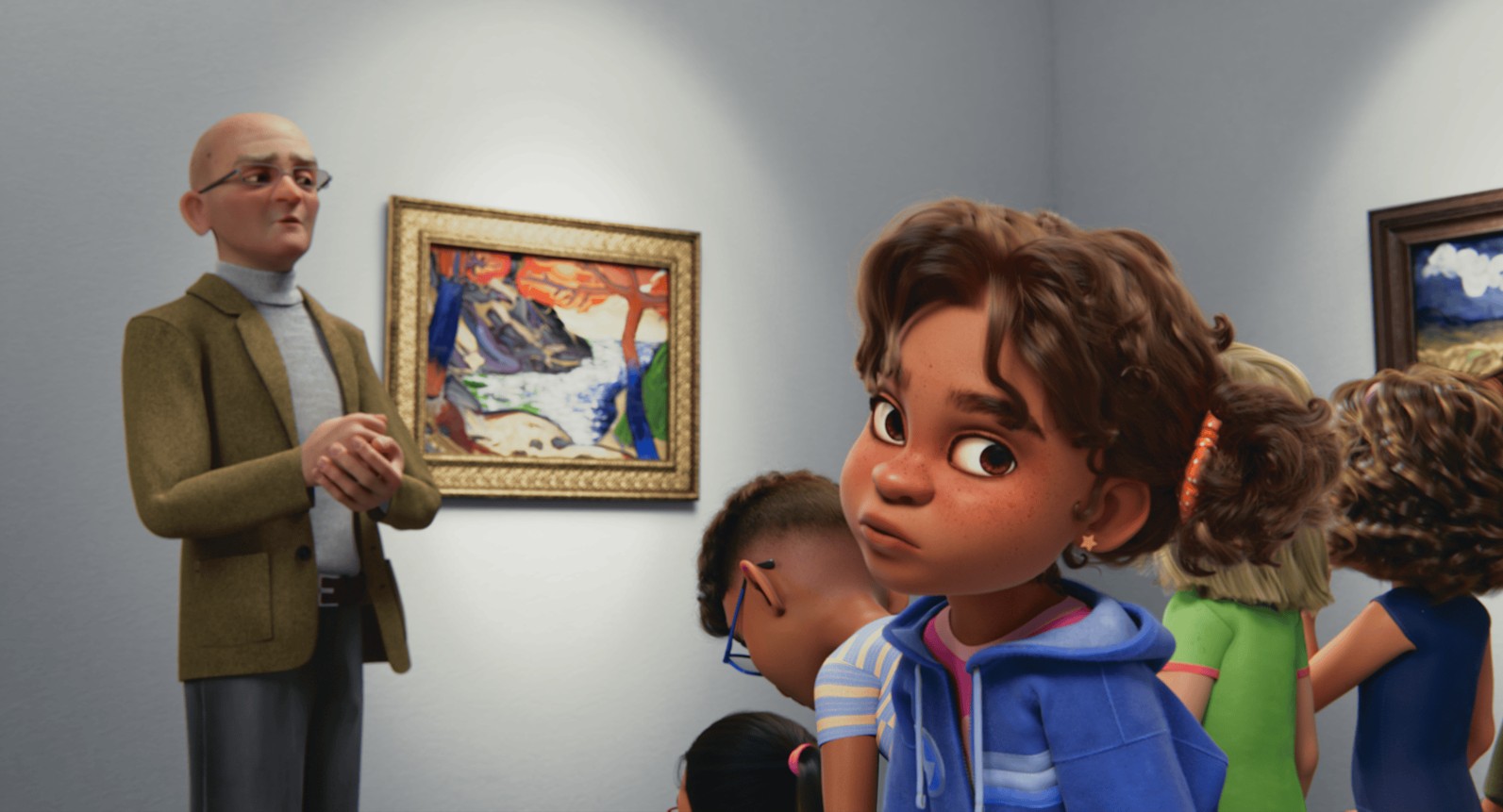

This provided an opportunity for Agnès Cabaye, Tom Daza, Thomas Dekoster-Duyck, Célina Do, Matteo Favret, Julie Lohe, Nikita Mudrov and Eloïse Pico to showcase a whole range of artistic worlds brought to life in 3D, in a style reminiscent of both Pixar and the wild experiments of the animators of the last century.
From surrealism to contemporary art, via abstraction and street art, this endearing duo takes us on a journey through the entire history of art – one that would make any self-respecting museum curator green with envy. After all, what better way to engage the youngest visitors with their collections?
A meeting with the team to immerse ourselves in this living tableau, just like their young protagonist.
How did the idea for Tixecome about?
The screenplay was written by Matteo Favret a year before our final year, which is when we make our graduation film.
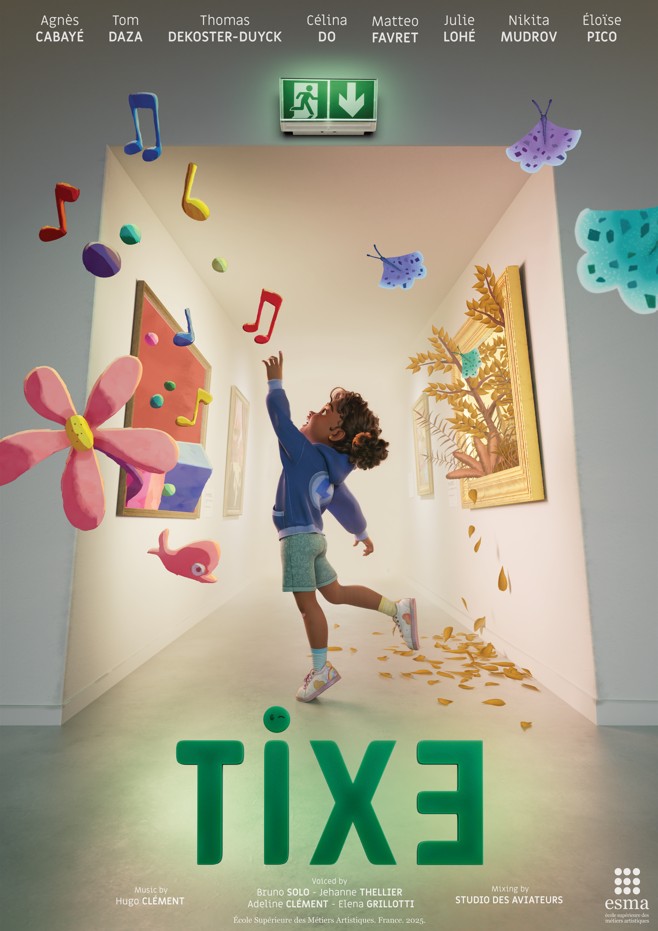
The idea came to her whilst visiting several museums with her family, as she observed the interactions and reactions that viewing a work of art in a museum could provoke, as well as the constant presence of ‘emergency exit’ signs, which led her to devise a story centred on them.
How did this idea evolve into the film’s final version?
Originally, the story featured just one character at the centre of attention, called Tixe. As the pictogram on an ‘emergency exit’ sign, his dream was to be looked at and seen as if he were a painting in a museum.
It was only after several revisions and discussions about the script that it seemed appropriate to add a child at the heart of this story, to enable the audience to relate more closely to the story and to allow us to introduce a mentor-pupil relationship between Tixe and our little Samia.
Furthermore, their story was to be set within the Musée d’Orsay in Paris and allow our heroes to interact with existing works of art. However, once the project had taken shape and become a collaborative endeavour, we decided to move away from using an existing museum and its paintings, and instead to reimagine our own paintings based on recognised styles, so as to give ourselves the freedom to determine the messages conveyed by these works.
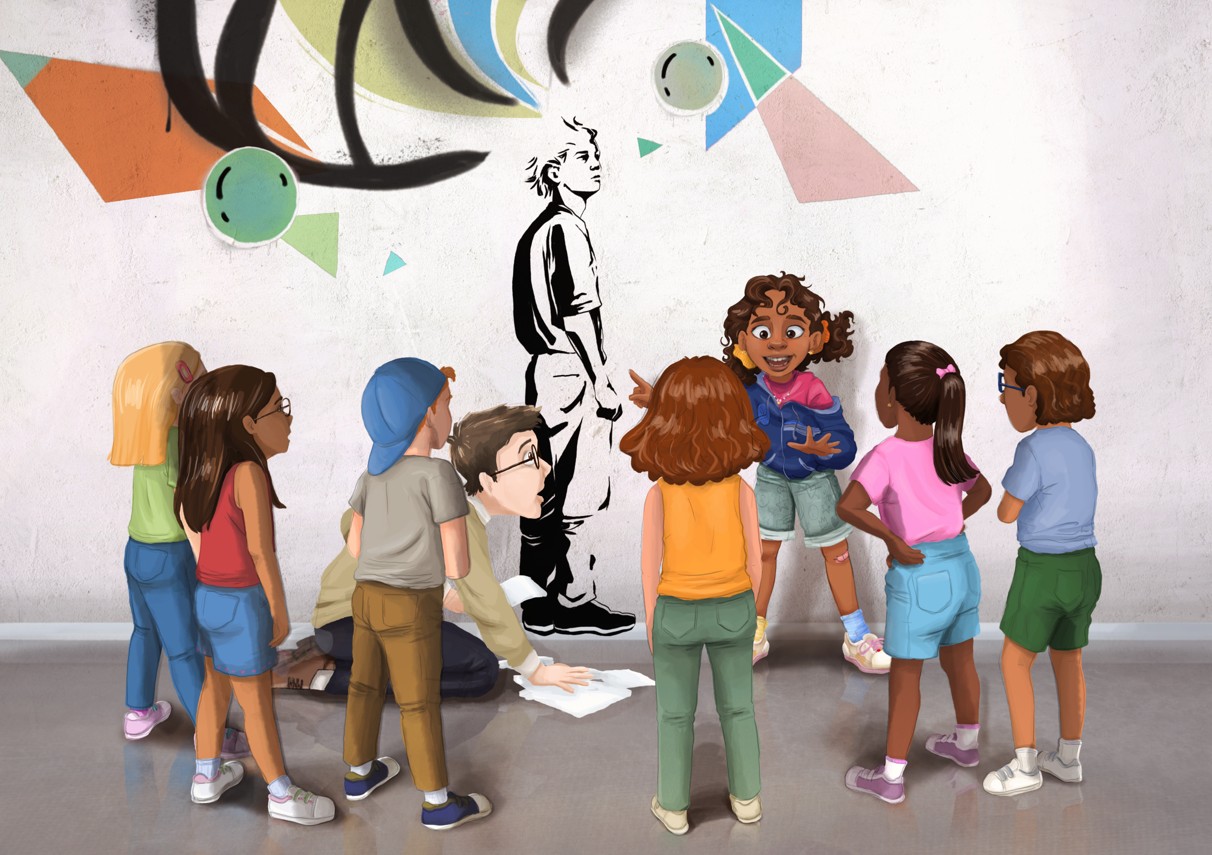
In its final version, the film no longer focuses on any particular artist, but rather presents a sequence of artistic movements that have evolved over time and throughout history.
This decision was also reflected visually in the creation of a museum that is less tied to a specific era, with a view to giving it a more universal scope.
But our aim has always been to convey a clear and accessible message, without overcomplicating the narrative, by focusing on the essentials.
How did you develop your main characters?
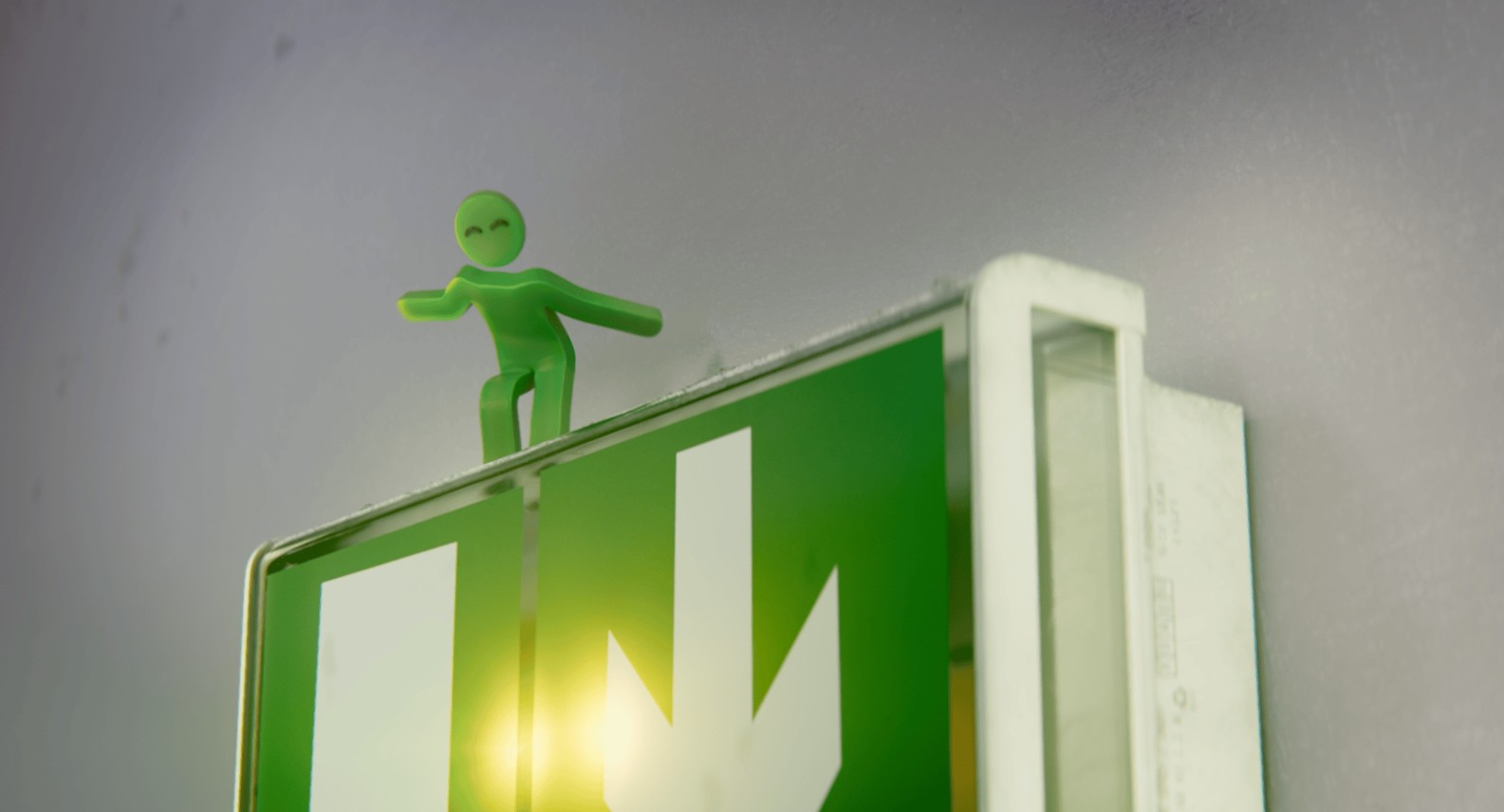
The main inspiration for the creation of Tixe, our pictogram, was quite simply the ‘emergency exit’ sign – a universally recognised symbol. With this in mind, a question soon arose: should we retain its original form as a 2D icon, or give it a more prominent presence?
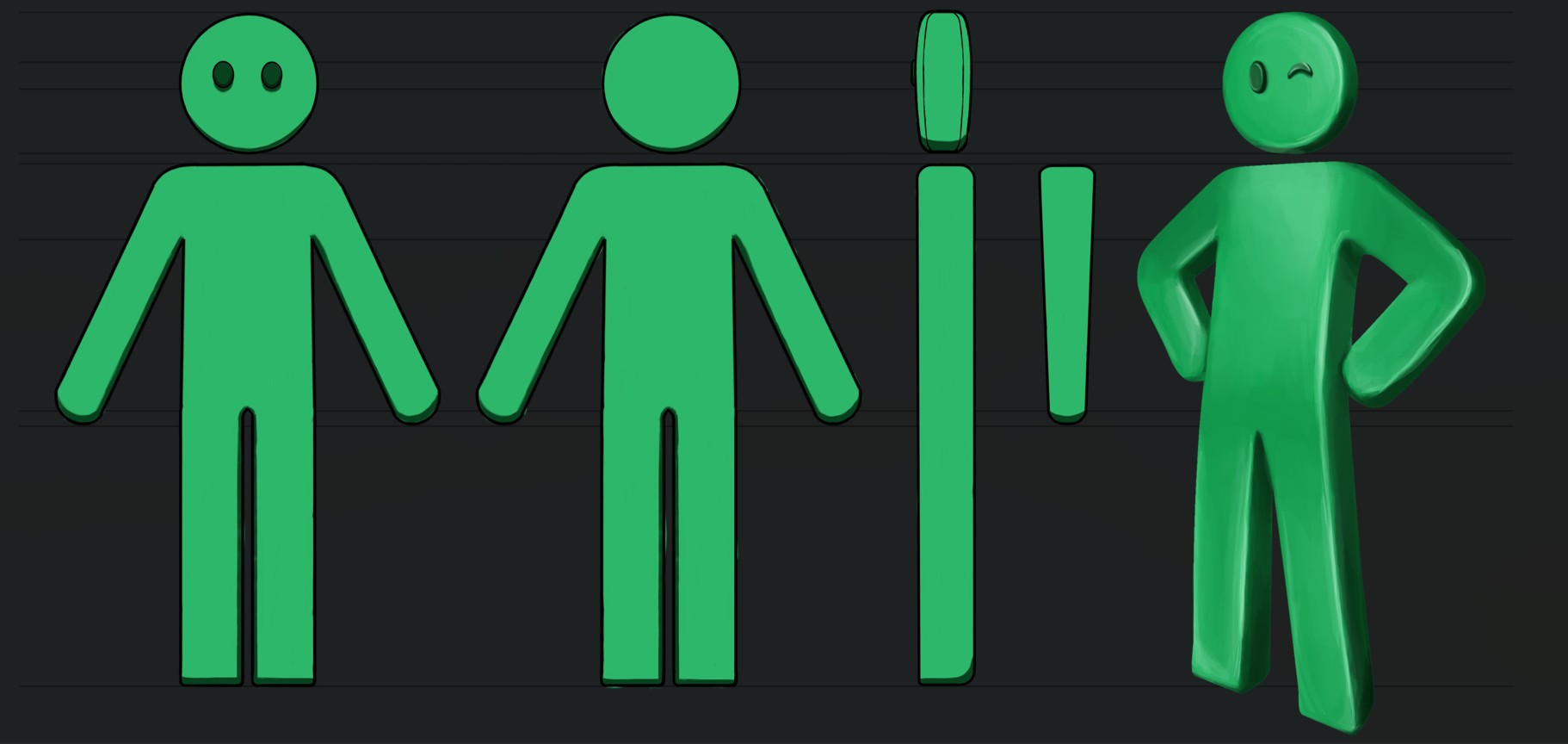
We ultimately decided to give him more character in order to strengthen the audience’s connection with him and make his relationship with the little girl more believable.
This resulted in the character being given greater depth and expressiveness, particularly through his eyes, whilst we chose not to give him a voice so as not to distort his character. It was essential that he remained simple and instantly recognisable.
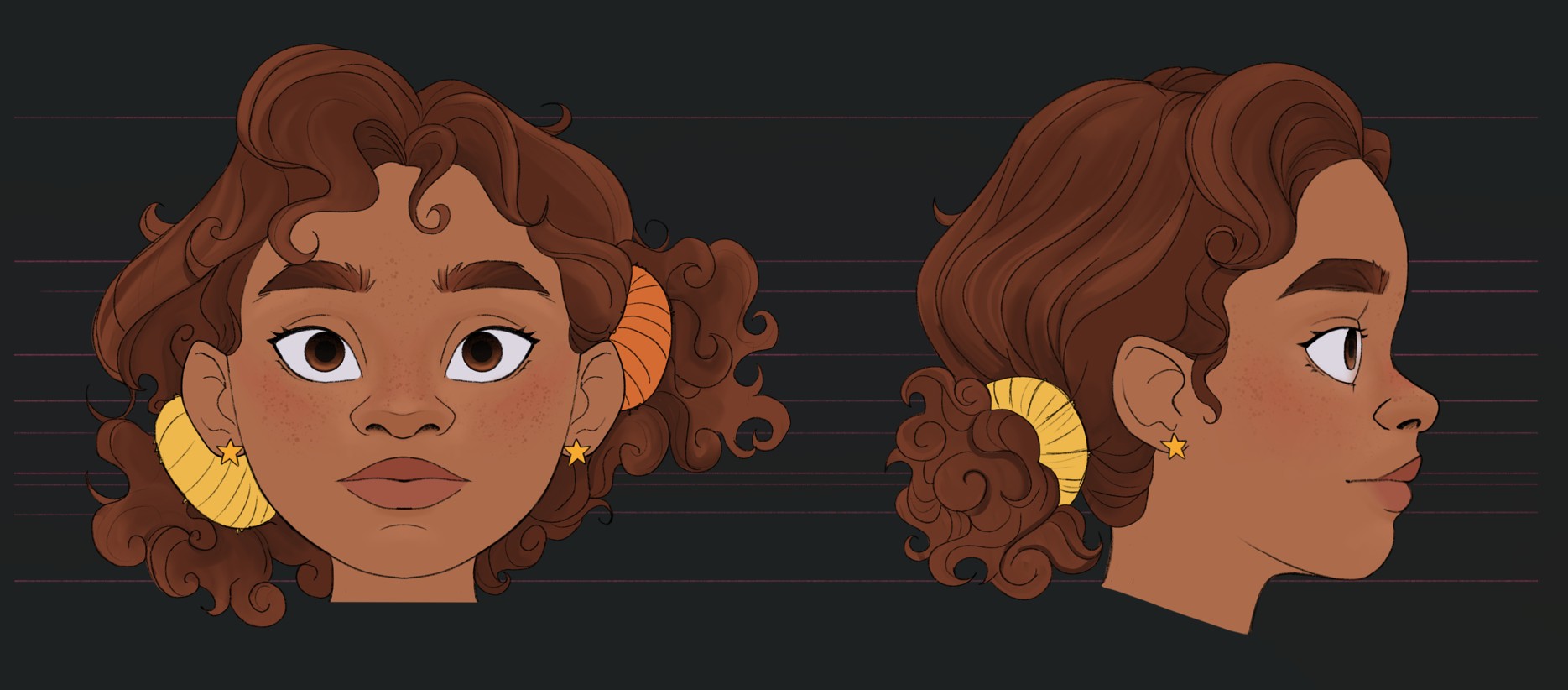
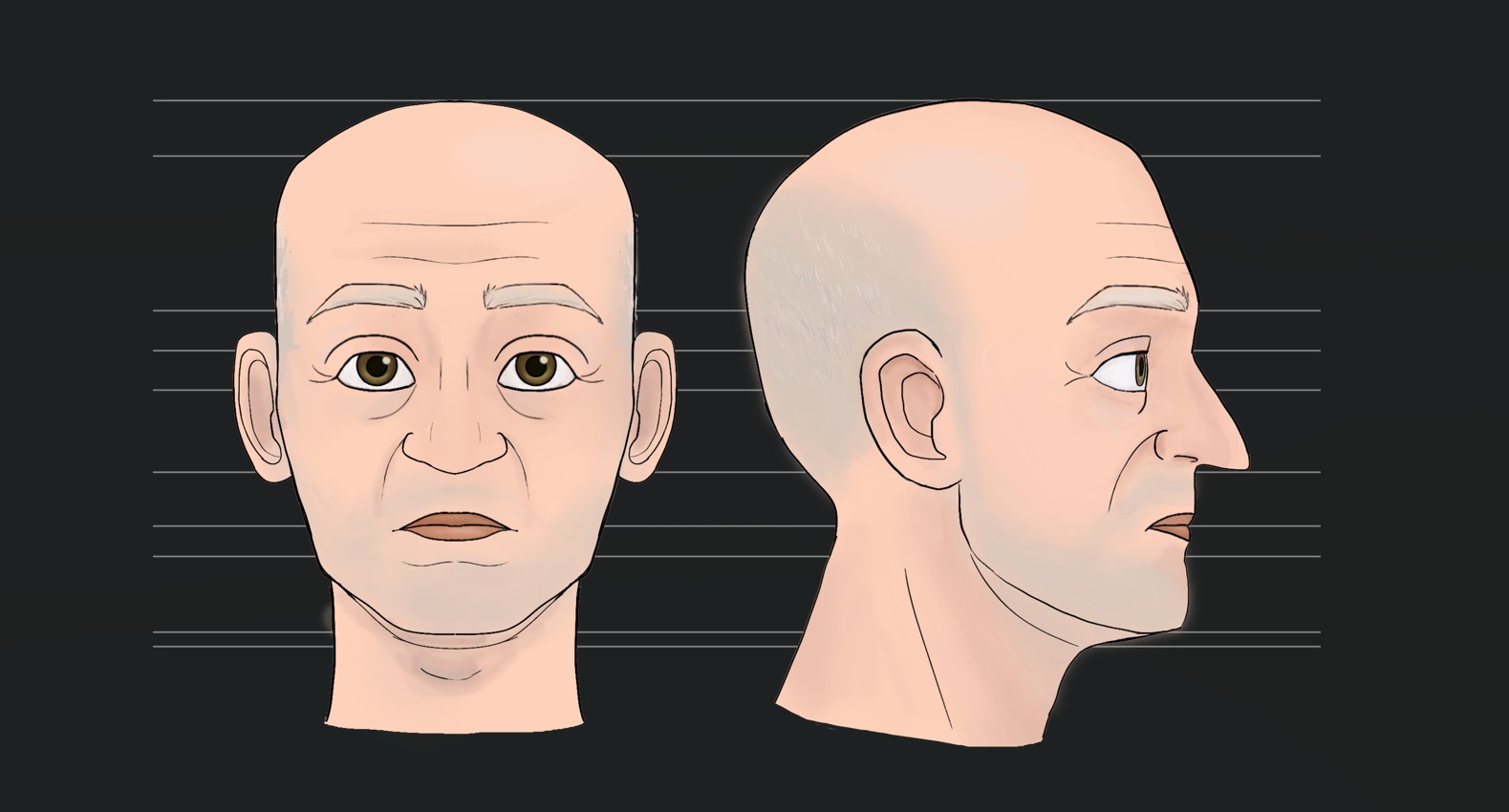
As for Samia, the little girl, her development went more smoothly, largely thanks to the numerous references to Pixar films such as *Soul* and *Coco*, as well as a thorough pre-production process that enabled us to define our intentions precisely right from the start.
The biggest challenges arose during the production phase, particularly with regard to managing the character’s hairstyle and the behaviour of 3D clothing items such as his jacket, which required a great deal of work to achieve a realistic result.
How did you define the film’s world?
The artistic direction was quite clearly defined from the outset. The main challenge was to maintain visual consistency throughout the film, whilst creating a bridge between the overall style – largely inspired by the world of Pixar films – and the various visual elements featured in the scenes.
Each painting is inspired by a specific artistic movement, each with its own visual language. The film is structured around these works, so it was essential to find a common thread to link them together. We therefore chose to depict the evolution of artistic movements, ranging from naïve art through to surrealism, abstraction and contemporary art, right up to street art.
The most ambitious challenge was the final scene, which depicts contemporary art. This is a movement that is more difficult to define and convey visually, particularly when it comes to integrating it coherently into the film’s world without disrupting the rest of the artistic direction.
Apart from these complex artistic choices, did you encounter any particular obstacles during production?
From a technical point of view, the main challenges centred on the animation, particularly in terms of managing the camera movements. These needed to be immersive and easy to follow, without ever causing the viewer to lose their way within the film’s structure.
Animating the supporting characters also proved a challenge, as they had to come across as believable whilst still serving the narrative.
As regards rendering and lighting, the aim was to recreate a museum-like atmosphere: a relatively neutral environment, without any overly pronounced stylistic choices, yet one that remains visually appealing. Striking this balance required numerous adjustments.
The CFX sequences also required a great deal of research to achieve a result that was credible and consistent throughout the film. Furthermore, the visual representation of the various scenes – whether through compositing or stylised rendering – involved a lengthy period of experimentation. As mentioned earlier, each painting had to have its own visual identity, whilst still fitting into the overall picture. This meant we had to be adaptable and, at times, innovative in order to achieve a satisfactory result.
How did you overcome these challenges?
Team cohesion was crucial. We were able to allocate tasks efficiently according to each person’s skills. The implementation of tools enabling us to automate several tasks for CFX, batches and the pipeline allowed us to save valuable time and streamline production, whilst focusing more on the creative aspects.
The division of roles actually fell into place quite naturally, based on personal affinities and skills. Our team consisted of four artists responsible for rendering and lighting, and four animators, each with more specialised responsibilities depending on their skills.
Of course, the production process was no walk in the park. There were moments of doubt, when we questioned the direction of the project or the clarity of the message. But these phases were also part of the process. Looking back, this experience has helped us grow, with both its successes and its challenges. And what enabled us to see the project through to a successful conclusion was, above all, our team spirit and our shared passion for what we do.
What do you take away from that experience today?
First and foremost, for seeing this project through to completion. The end result has evolved considerably from what we originally had in mind, but it represents such a significant investment of human effort that we can only be satisfied with it, given how far we’ve come.

It would also have been helpful to anticipate issues more effectively right from the pre-production phase, but we learnt a great deal from this experience. For example, focusing on all the sequences and taking a broader view of the project, rather than getting bogged down in the details.
As a bit of a side note, about three months before the deadline, we completely reworked the contemporary scene. This change of direction was a real gamble: it allowed us to restructure the narrative and create a more expressive staging in keeping with the contemporary style. So we took the risk of starting afresh with a new approach, one that is more in keeping with the film’s current version.
Any advice for students making their own films today?
There’s just one, and it’s very simple: rely on your team. Mutual support – whether within your group or even with other teams – is essential. Making a film is, above all, a team effort, so stick together and communicate as much as possible.
Discover *Tixe* now, a 2025 graduation film from ESMA, available to watch in full: