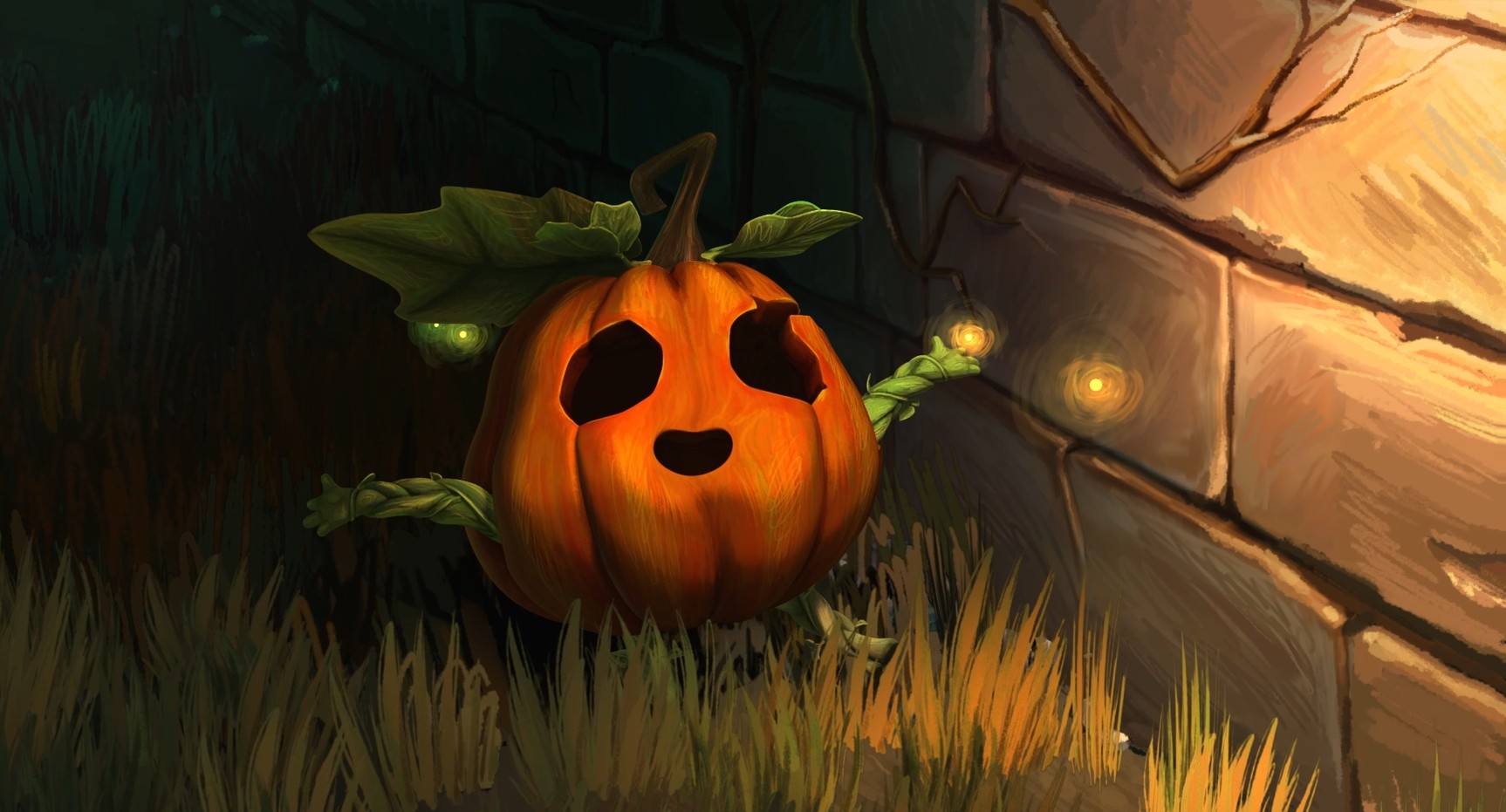
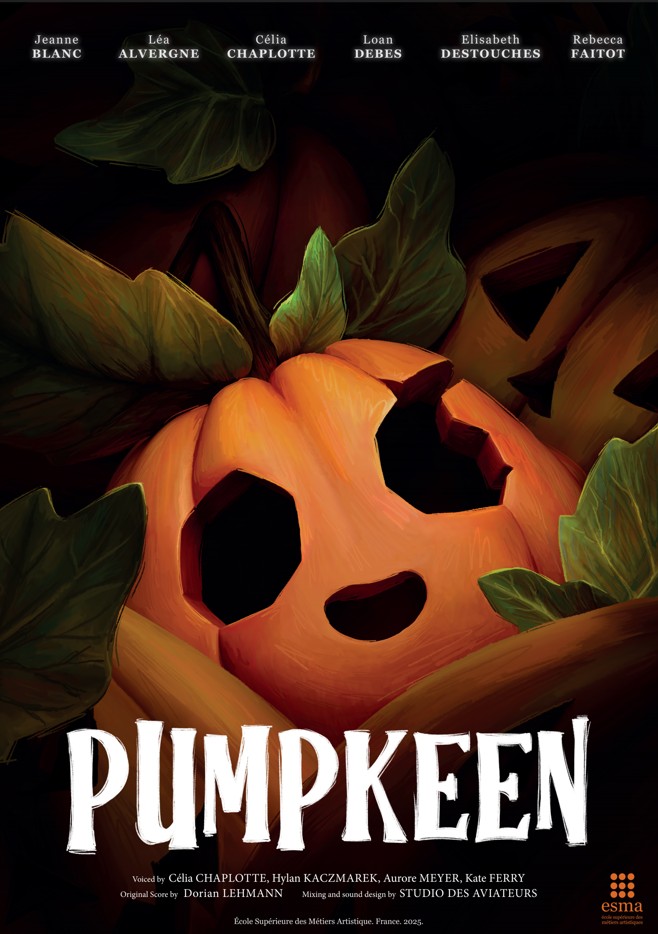
*Pumpkeen*, a graduation short film from ESMA directed by Léa Allvergne, Célia Chaplotte, Loan Debes, Rebecca Faitot Febrer, Elisabeth Destouches and Jeanne Blanc (who also came up with the idea), this team presents us with a charming little Halloween fable, rendered in soft 3D with a distinctive 2D look and welcoming lighting.
A real treat for the eyes – and the “PumpTeam” has kindly agreed to reveal its secrets to us.
What made you want to tell this story?
Above all, this film was born out of a fascination with Halloween. It is a unique time of year when sharing, helping one another, adventure and exploration take centre stage.
It is a festival steeped in symbolism: All Souls’ Day, trick-or-treating, the All Saints’ Eve vigil… it brings people together and, quite unwittingly, creates a warm and welcoming atmosphere for children and adults alike.
It was this vision of Halloween that sparked the idea for the script. As a huge fan of horror films, Jeanne wanted to take the opposite approach and create something moving, touching and, ultimately, beautiful. Drawn to the autumnal colours, the artificial lights of the fairy lights and the decorations that adorn the streets at Halloween, it was the tradition of pumpkin carving that led Jeanne to Pum, the little pumpkin who is the heroine of our story.
Over time, the idea took shape. We kept our pumpkin, but turned it into a character who is naive about the outside world. Although initially rejected, we decided to give it a more childlike quality, far removed from human vices and emotions. A relatively impulsive, positive and enthusiastic character. She becomes a driving force behind the choices made by Léo, who is fearful, passive and shy. Thanks to Pum, Léo will overcome his fears, discover a courage he didn’t know he possessed, and grow up.
Visually speaking, how did you develop this project?
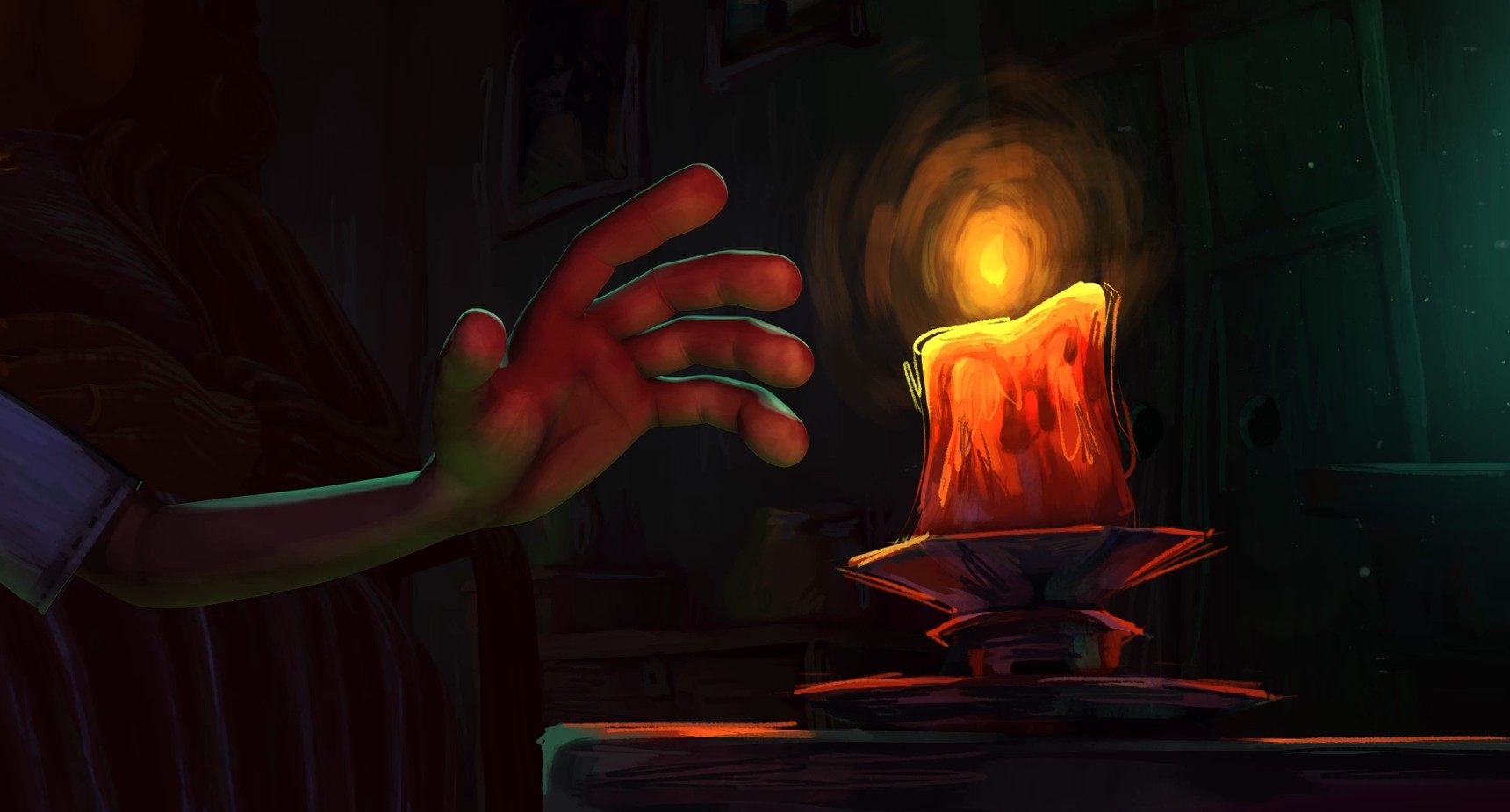
The design process began with a concept art research phase, during which we explored several graphic styles based on the theme ‘Halloween for children’. We developed various variations in shapes, proportions, costumes and levels of stylisation in order to identify a coherent visual direction.
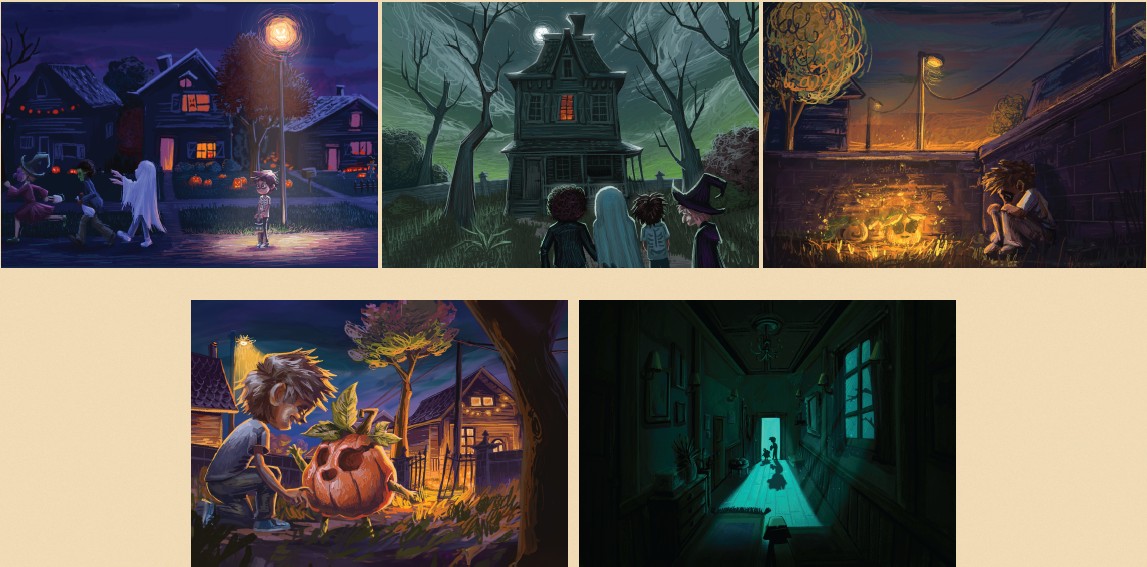
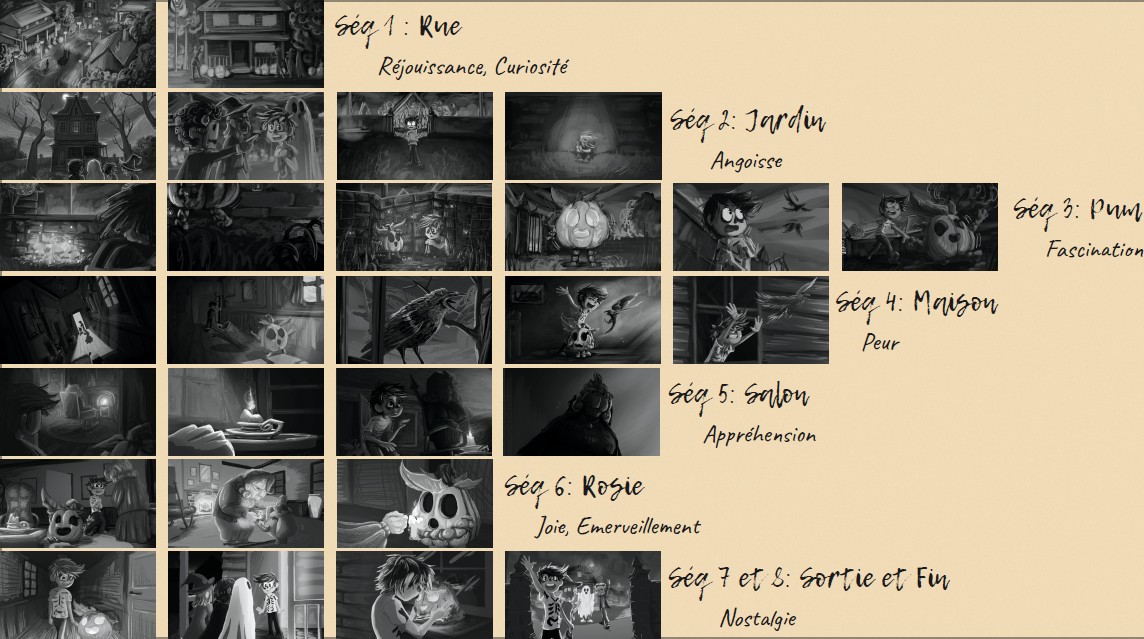
Particular attention was paid to adapting the 2D design for 3D: the aim was to understand how to translate the stylised nature of the drawing into a three-dimensional form without losing its expressiveness and spontaneity.
We also gave a great deal of thought, right from the start, to a line art effect similar to a pencil sketch, which could be reliably reproduced in post-production.
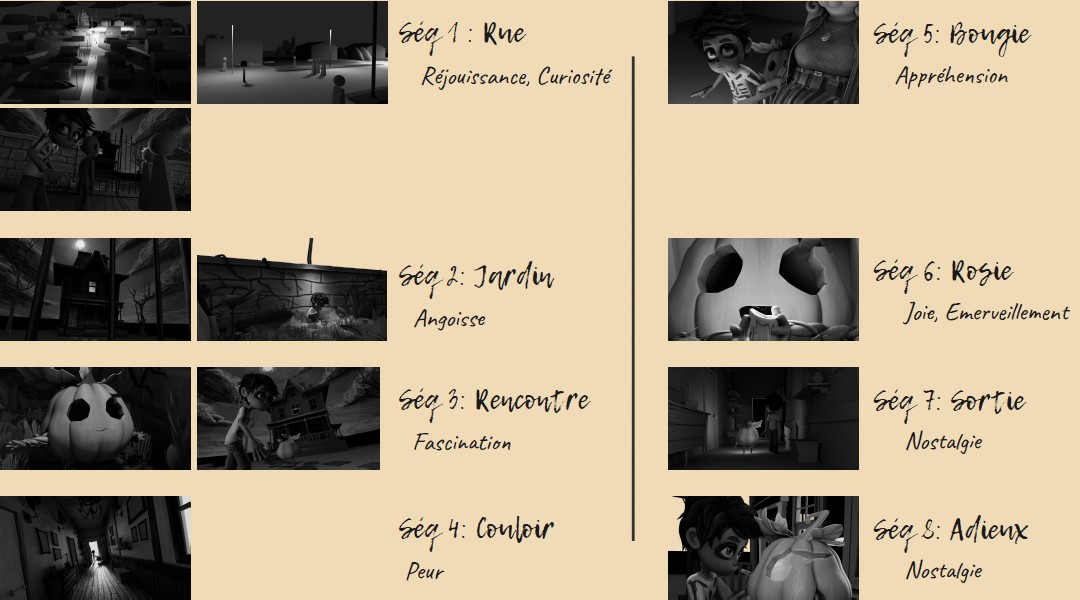
What inspires you?
The initial designs came from the world of Laika Studios, notably for characters such as Norman and Coraline. However, we felt this style was too harsh and high-contrast for the atmosphere we were aiming for; we wanted a softer aesthetic, reminiscent of children’s book illustrations.
We have therefore incorporated rounder, more expressive elements, inspired by characters from films such as *Coco* and *Luca*. Furthermore, we have added stylised effects specific to 3D animation, which are deliberately rough and slightly ‘scribbled’, influenced by films such as the recent *Teenage Mutant Ninja Turtles*.
As with every element of the film, there had to be a consensus on the visual style. So it took us quite a while to find a style that suited everyone. We were fortunate to have the support of our illustration tutor and our concept art tutor, which helped us to better define the artistic direction.
Our main points of reference were gentle, pencil-drawn children’s books and the more vibrant world of the 1990s *Creepshow*. But we were still struggling to find a film that came close to the style we were aiming for. In the end, we agreed on the main reference for these 2023-version Ninja Turtles; in our view, it was the best compromise between 2D and 3D. It was also reassuring to see that it was possible to translate this illustrative style into 3D, and that it had already been done before, even though it was relatively new.
Did choosing a pumpkin as a character present any additional challenges?
The main challenge was to convey our characters’ emotions: Léo had to carry much of the narrative through his facial expressions, as Pum, being non-human, could not display such a rich range of expression. His reactions therefore had to be particularly clear, and we had to make him endearing without dialogue and with a limited range of expressions and poses. Directing his gaze proved particularly complex; his spherical shape and the holes in place of his eyes made it difficult to convey any subtlety in his gaze without resorting to overly exaggerated movements.
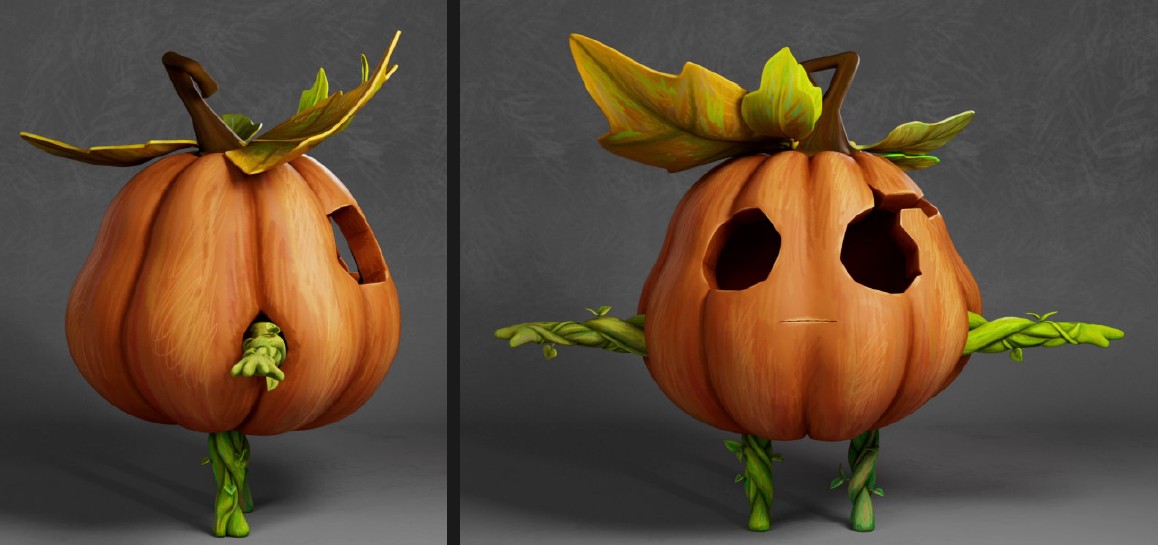
From a technical point of view, the physical interactions between the characters proved to be a real headache. Their very rounded and stylised designs made certain movements impossible to achieve in 3D. We had to resort to various ‘tricks’ in the staging to allow for believable contact or the handling of objects without creating any visual oddities.
Recreating 2D visuals using 3D animation – that must have been quite a challenge?
As a team well versed in 2D illustration, using DMP (digital matte painting) for the backgrounds saved us a huge amount of time. This allowed us to paint our backgrounds as if they were illustrations, and to limit 3D modelling to the bare minimum. The more complex elements turned out to be the characters: how could we make them blend into their surroundings? How could 3D characters have the same artistic style as our 2D backgrounds? There were several solutions: the first was to paint the characters with visible pencil strokes; the second was to rethink the way we lit them.
In our previous projects, this stage was carried out entirely in 3D using Maya and Renderman. We were proficient in this technique, but it gave the lighting a very realistic and gradual appearance, whereas we wanted something flatter, more 2D. To put it simply, we needed to divide the light on the characters into three zones: the brightest zone, the moderately lit zone, and the zone completely in shadow. This division, marked by pencil strokes, was the only way to ensure our characters matched the style of our set. We figured out how to do this during the compositing stage in Nuke, using the Terminator Breaker tool developed by a lecturer at the ESMA campus in Montpellier. This tool did exactly what we needed: it separated our 3D lighting, created in Renderman, into three distinct zones. It took us some time, and required Loan’s invaluable work to adapt this tool to our way of working, but we succeeded.
Was there one plan that proved more of a challenge than the others?
Without a doubt, the shot of the archway at the start of the film. As this shot featured in the teaser, it was important to shoot it first, and at that stage we didn’t yet have all the pieces in place. It was also a very complex shot as there were four characters inside, a sweeping camera movement and rather unusual lighting (the characters had to be backlit but we still needed to be able to make out their faces), and finally, clothing simulations which our team hadn’t yet mastered. The shot of the four characters in front of the gate was made all the more difficult by the fact that Léo bumps into the ghost character, which meant more time-consuming and complex work in Houdini. In the end, we managed to deliver a version we were happy with for the film’s trailer, and we were able to improve it further for the final film. Although work on this shot began in January, it was one of the last we finished in July.
At every stage of film-making, the R&D process plays a vital role in resolving technical issues. Through repeated testing, solutions gradually emerge, whilst other avenues reach a dead end and are abandoned.
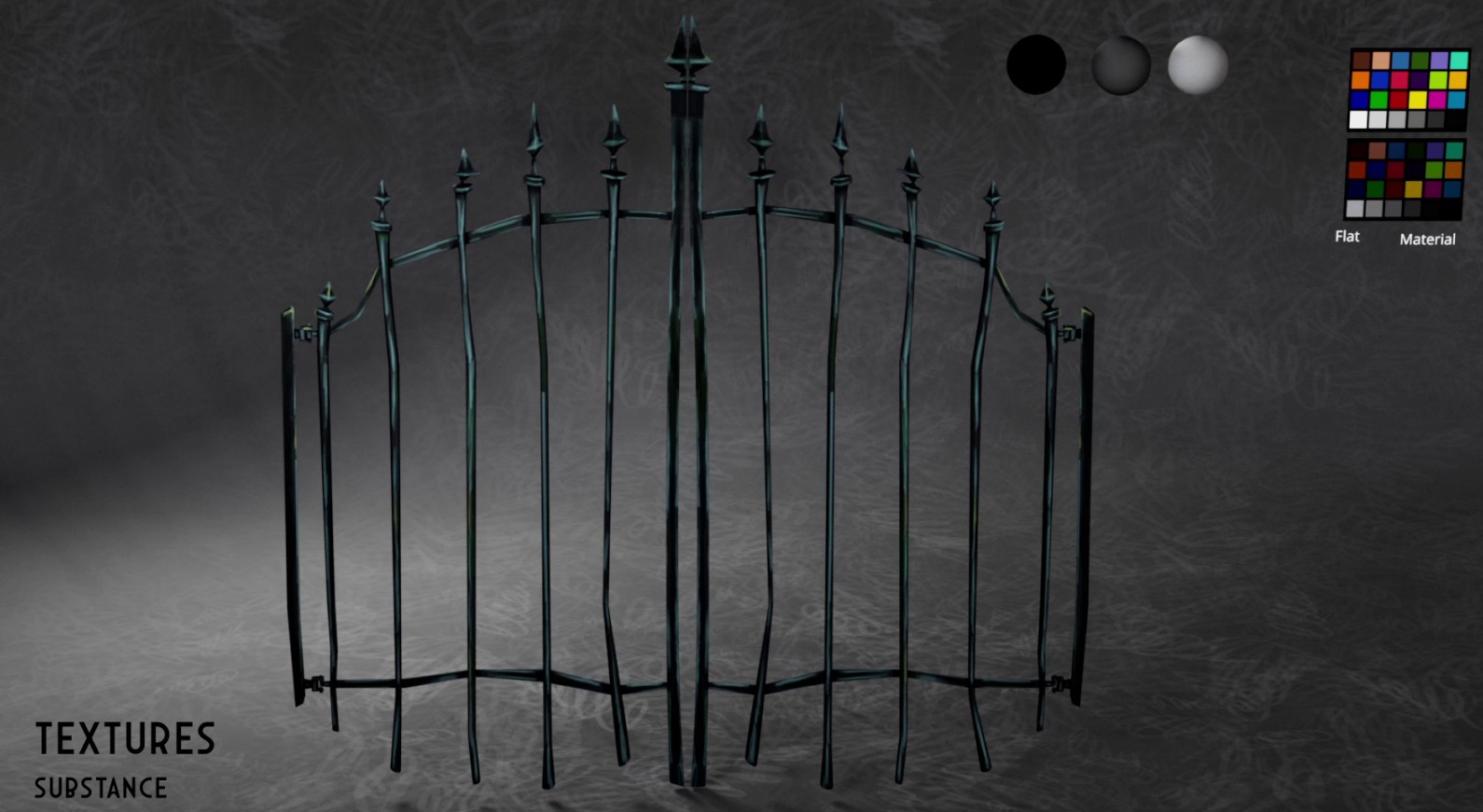
To achieve our visual goal, we opted for a pipeline that included matte painting: all the backgrounds are hand-painted, because what could be more effective for achieving an illustrative look than creating illustrations? In addition to this, we adopted the technique of camera mapping. This technique is interesting because it involves projecting 2D illustrations onto 3D elements, but above all, it ensures that the illustrations remain correctly projected despite camera movements! All of this was made possible by Nuke software, which we certainly made extensive use of.
How did you sort out this problem with the clothes?
In a ‘traditional’ 3D pipeline, these elements are simulated realistically, but this didn’t fit with the cartoon-style effect we wanted to achieve. On the other hand, animating them by hand would have taken time that we unfortunately didn’t have. So we ultimately simulated them, but limited the realism of the simulation, and reduced the overall frame rate of the characters’ animation from 24 to 12 frames per second, which emphasised this hand-drawn effect.
From a purely technical point of view, we had some issues with the render farm, but one of our lecturers stepped in to help us and optimise the entire process.
You were a relatively small team of six people, whereas ESMA students usually work in groups of between seven and ten on a short film project.
Could you explain how you’ve divided up the roles?
It happened quite naturally!
We each had our own areas of interest, which meant we could easily divide up the tasks between us. We were also fortunate to have very versatile team-mates.
For example, Jeanne learnt everything from scratch about clothing and hair simulation to meet the film’s requirements.
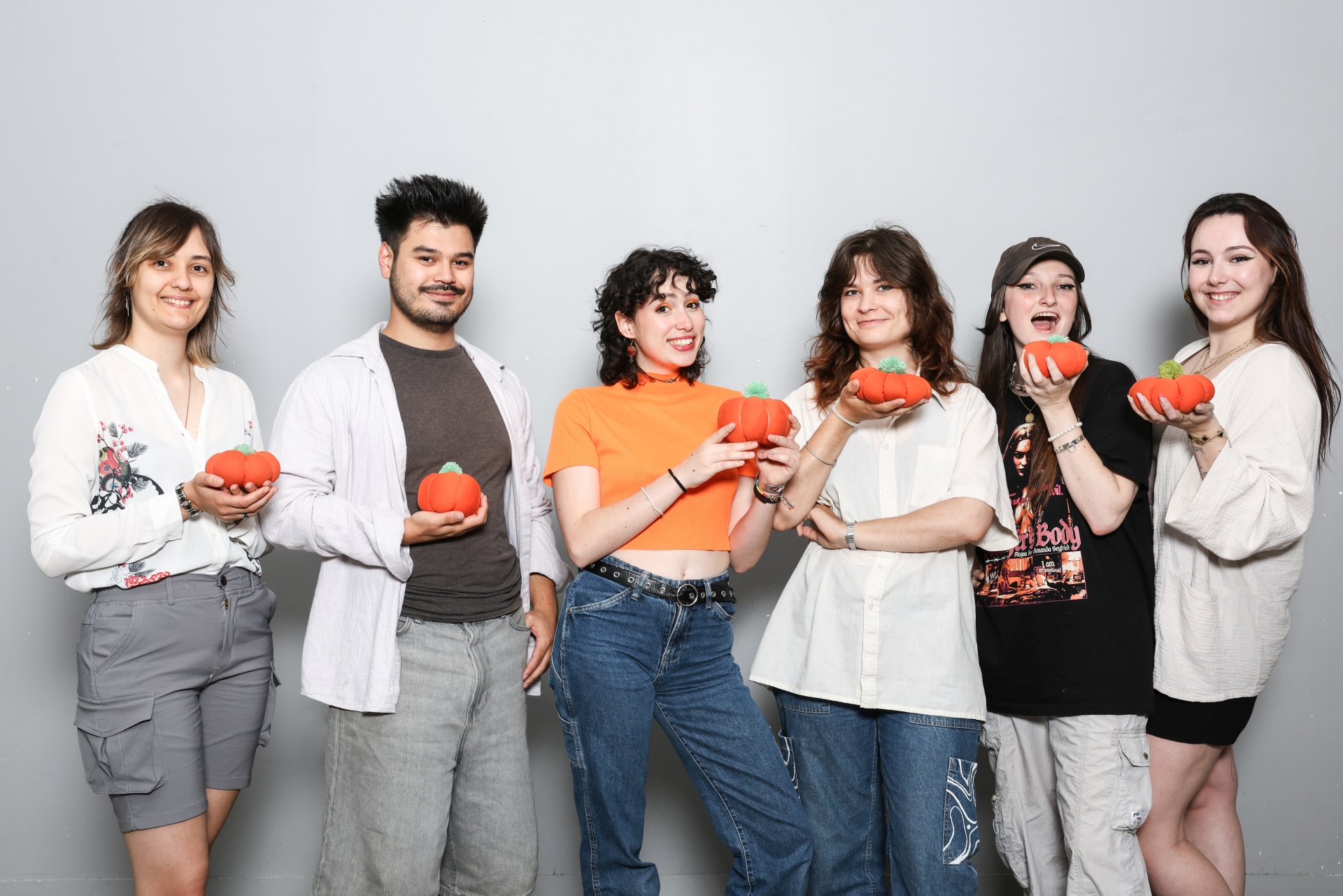
One of our animators also came along to lend a hand to the renderers, and helped with the matte painting and compositing for the film. We also brought in some helpers; this required us to adjust our organisation, but being open to outside help, remaining versatile and supporting one another proved to be a lifesaver for the film! Ultimately, it’s this diversity that makes the experience so interesting too. You learn a lot about yourself and about how you work with others. The key is to communicate constantly. In that respect, being a small team really helped us!
What enabled us to see this project through to a successful conclusion? A general sense of camaraderie. Whenever we faced a setback, we were able to support one another without ever faltering. We’ve all gone through tougher times, and it was reassuring and motivating to know that we could count on the other team members if any problems arose. This wonderful collective energy and unwavering motivation were undoubtedly one of the keys to the success of this project.
Any advice for students making films today?
Make the most of it. A graduation short film is a unique and truly enriching experience. There will be moments of doubt and difficulties, but whatever the end result, you’ll come out of it a better and more experienced person. And communicate! Good team dynamics make all the difference. For our part, we were lucky enough to have the creative freedom that allowed us to say we’d created a project that was truly our own. During production, we were able to experiment and, although the techniques used weren’t new, we can say that the artistic direction was entirely our own. We’re also proud to have been able to tell a story we love and to have finished production on time.
And whilst we don’t often talk about it, some members of the team now regret it: posture! Look after yourselves, listen to your bodies, get a good night’s sleep and don’t forget to look after yourselves. The important thing is to have fun making your film and to make the most of this final year of your studies!
Discover *Pumpkeen* now, a 2025 graduation film from ESMA, available to watch in full: