
“Sorgin”, in Basque – pronounced “chorguigna” – refers to a witch, or more generally to a woman who practises witchcraft. It is a word laden with meaning, one that would lead to the torture and burning at the stake of thousands of women across Europe, including in France.
An artistic style inspired by engraving
Bringing these women back to life on screen is also a way of paying tribute to them, and that was the aim of this ESMA team, whose graduation short film delivers a powerful transgenerational narrative that transcends space and time.
Directed by Alexandre Maurier, Bilal Duat Wibaux, Caroline Vanek, Enzo Mondet, Hugo Girard, Julia Beaurain, Leïa Ribon, Rebecca Hatté and Rebecca Pellegrin, *Sorgin 1615* also stands out for its polished aesthetic and its striking black-and-white palette, inspired by engraving.
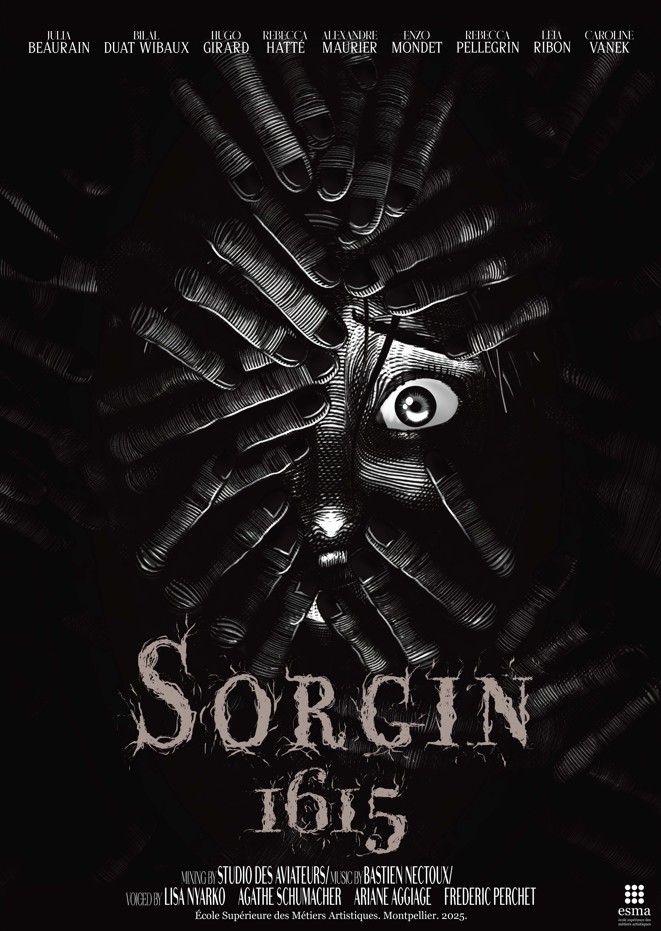
A technical and artistic challenge, as well as a real challenge in terms of storytelling, which we revisited with the production team.
“Our artistic direction is inspired by the aesthetics of engraving,” the team explains. This choice is consistent with the historical context of their story and the era in which Sorgin is set. In the 1600s, engraving was indeed a widespread artistic technique, particularly in the Netherlands, which had become masters of this art on a European scale.
“This visual technique was used, in particular, to disseminate the power and image of noble figures throughout the territory,” explains the team. “In our short film, we have chosen to subvert this practice to represent those whom history has erased. Rather than promoting authority and conveying images of power, we are using this technique to expose the abuses of those in authority and the stranglehold that certain men exert over women.”
This twist really brings this bold artistic direction to life. It was a successful gamble, which made a strong impression on the judges at the ESMA Graduation Show 2025, but also enabled the film to tour international festivals and win the award for Best Art Direction at the Luminarium Festival.
Combining form and content to heighten the impact of their narrative, the team uses these high-contrast black-and-white images to emphasise the dark and horrific nature of their storyline, whilst the hybrid 2D/3D style evokes the world of a fairy tale, adding a touch of charm to the whole. A bold visual choice, both aesthetically pleasing and thought-provoking, which nevertheless caused the team no end of technical headaches.
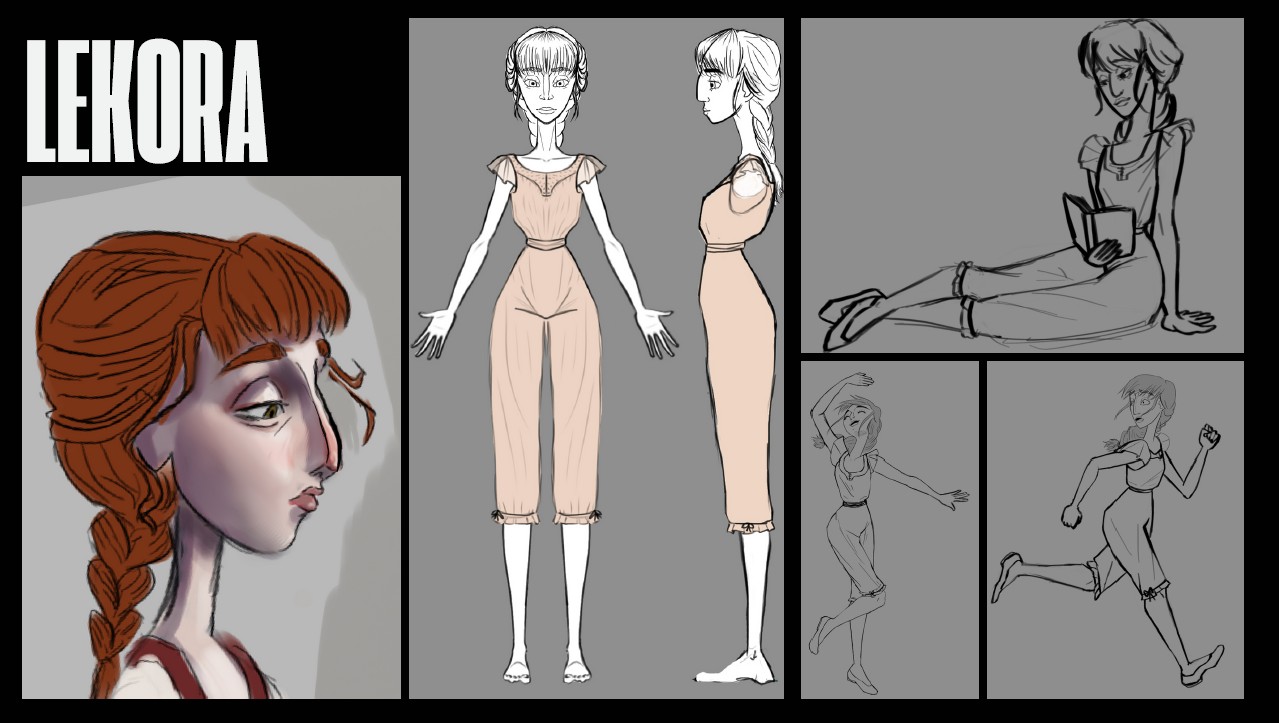
Technical challenges in recreating the aesthetic of the engraving
To bring this story to life, the team first created a 2D storyboard, which they then recreated in 3D to incorporate their uniquely designed characters.
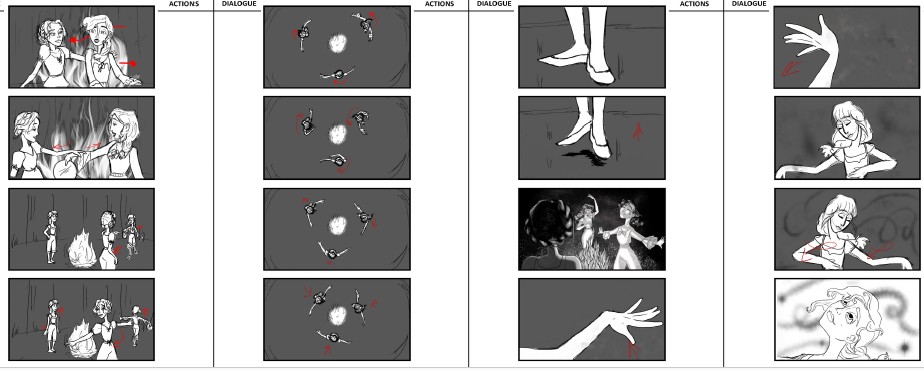
A great deal of sculpting work has gone into the hands, clothing and faces of the main characters, as well as the hunter who attacks the group.
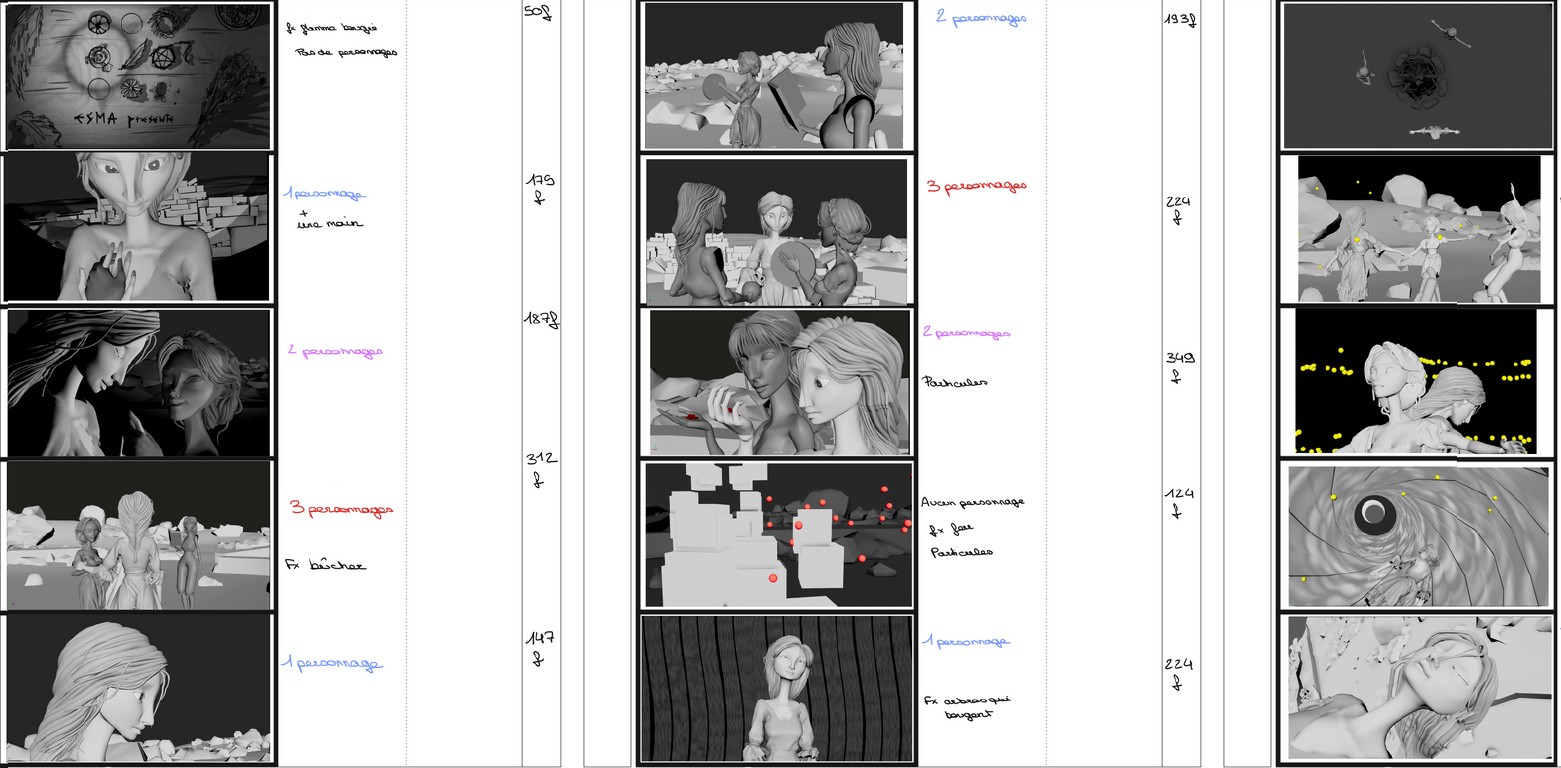
This serves to enhance the film’s visual and emotional impact, whilst remaining true to the influences cited by the team, whether modern or contemporary to the story.
“From a technical point of view, and in order to recreate the aesthetic of the engraving, we had to rethink our approach to 3D,” explains the team.
“For the characters, several types of lines were drawn by hand, with varying thicknesses. This method made it possible to adjust the thickness of the lines according to their distance from the camera, whilst ensuring they remained legible.”
As for the sets, the complexity and variety of elements to be rendered on screen (flames, vegetation, crowds, etc.) made this process difficult to reproduce manually. The team therefore developed a procedural system that projects lines directly onto the objects.
“This process gave us a great deal of flexibility, allowing us to easily adjust the density of the lines. To avoid visual redundancy, several lines of different colours and directions were projected, making it easier to choose the most legible orientation during compositing.”
Nevertheless, the use of these lines also posed a challenge when they interacted with light. A second technical challenge concerned the interaction of the lines with light. “To resolve this issue with the characters,” explains the team, “we implemented a toon shader using OSL scripts, which generated lighter-shaded areas.”
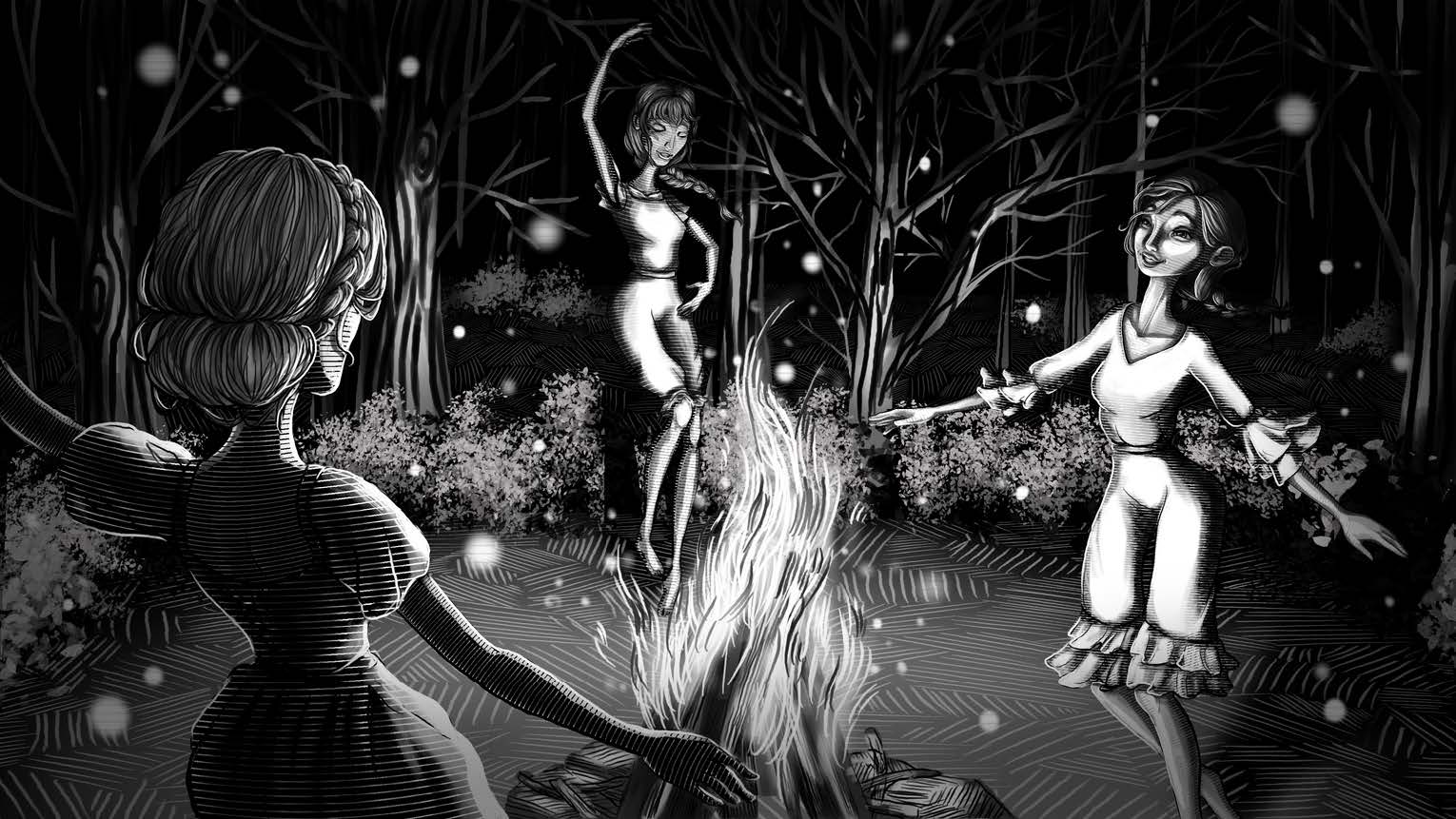
An ingenious way of overcoming the difficulties encountered during this team project, resolved through effective communication and the skills developed during their training in 3D animation and special effects, as well as through their own research. As for the set design, a system based on multiple line thicknesses, implemented by the lighting supervisors, allowed the lines to appear thicker when illuminated, thereby enhancing the contrast and the clarity of the forms.
A powerful story that still resonates today
Ultimately, *Sorgin 1615* conveys, in just a few minutes, a powerful message about the violence suffered by these women from a bygone era – a message that, at times, resonates all too closely with current events.
For beyond the witch-hunts – now a thing of the past – it is the very grip of an oppressive, patriarchal society that the team behind this powerful short film sought to portray.
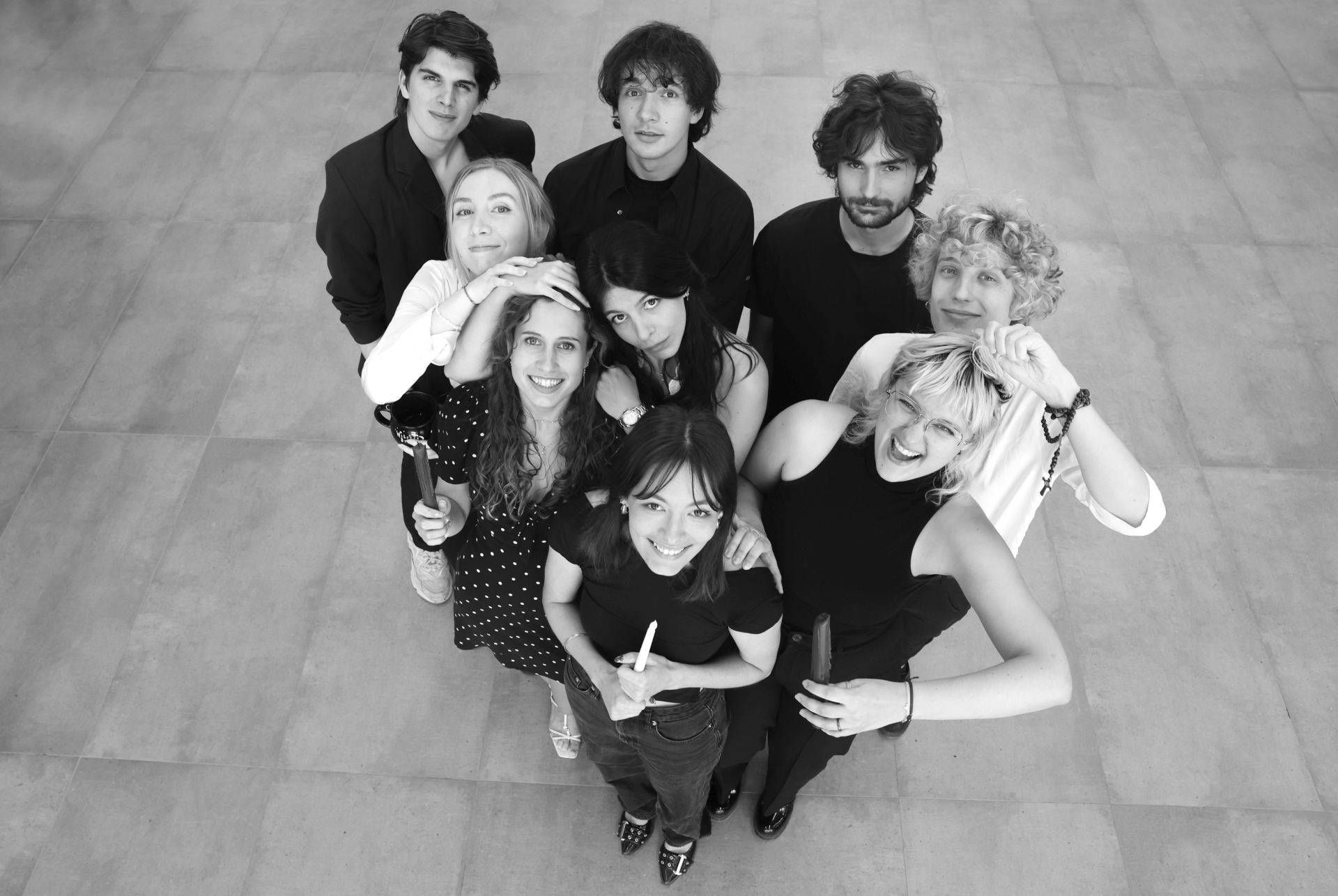
An artistically daring endeavour, fraught with technical challenges, but one which these students successfully overcame to produce this high-quality final-year film.
Discover *Sorgin 1615* now, a 2025 graduation film by ESMA, available to watch in full: