
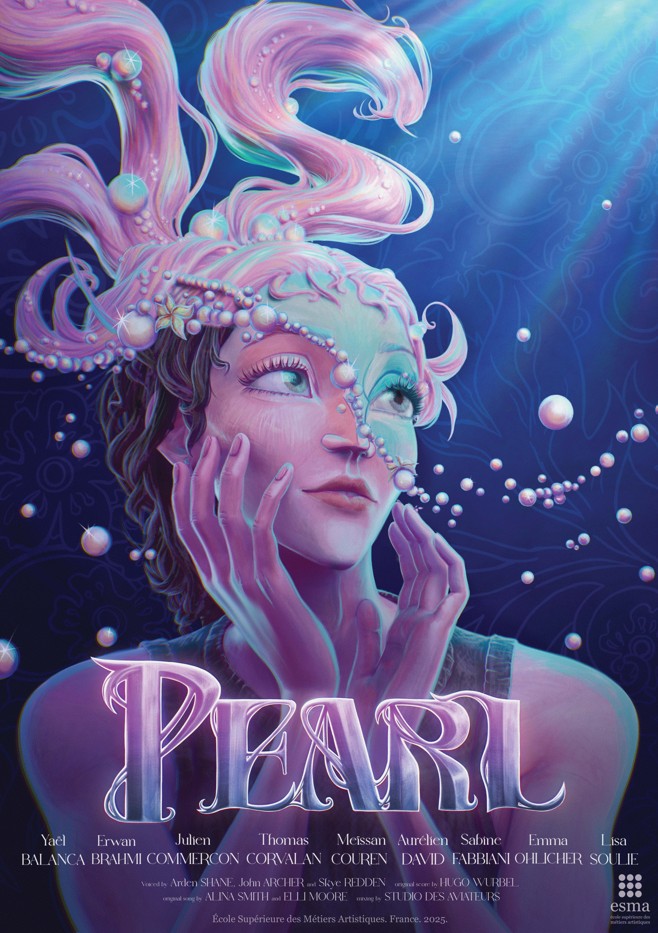
Directed in 2025 by Aurélien David, Yaël Balanca, Thomas Corvalan, Emma Ohlicher, Lisa Soulie, Sabine Fabbiani, Julien Commercon, Erwan Brahmi and Meïssan Couren, Pearl is an ESMA short film that stands out for its vibrant visual palette, whilst conveying a message of hope and self-acceptance that is sorely needed today.
To gain a better understanding of what drove the team throughout this long-term project, we spoke at length during an in-depth interview. Find out what went on behind the scenes here.
How did Pearl come about?
Our film grew out of a pitch we developed during our third year of study, based on an idea from one of the group members which we then adopted as our own. But the film has come a long way since then!
What was the original idea, and how has it developed over time?
Originally, Pearl (our main character) was due to audition for a cabaret show. One of the judges, who didn’t want her in his show, tried to trip her up, and that was where the conflict lay. This project was based solely on self-acceptance and highlighted a society that could both reject and accept difference.
Despite the project’s evolution, our core idea has remained the same. It has always been about letting that little spark that makes us shine and sets us apart take centre stage. The film aims to raise awareness of a reality that some people are unaware of, but also to offer support to those affected.
We were still missing, however, a universal dimension that could truly resonate with all audiences. That was when the idea of the family struck us as the obvious choice.
What guided you in your narrative or aesthetic choices?
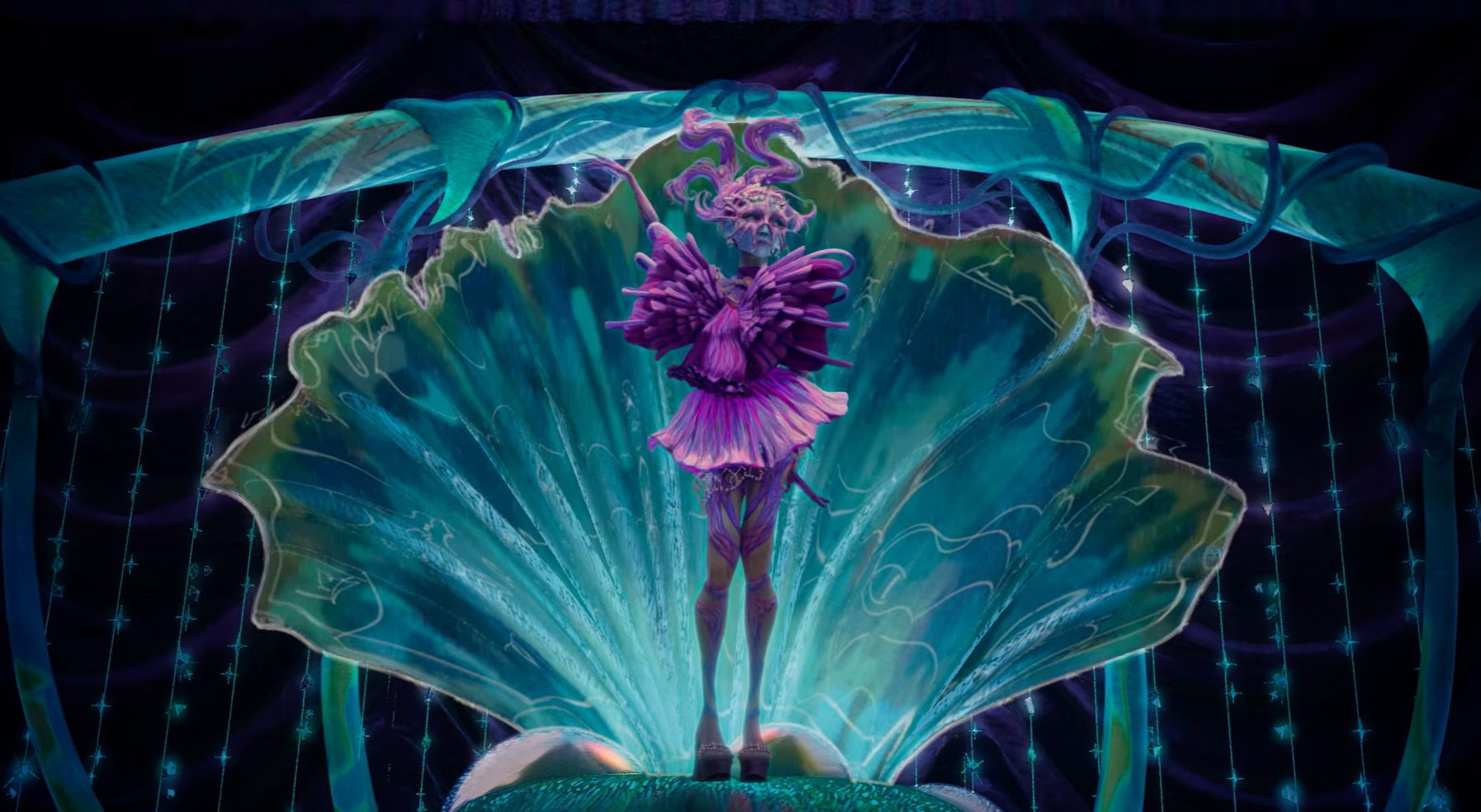
In terms of aesthetics, we quickly made the connection between drag art and Art Nouveau. After several artistic iterations, we settled on something original, unique to us, yet at the same time feasible to create in 3D.
From a narrative perspective, we tried to interview drag queens to find out about their experiences, and we also looked into dysmorphophobia [a mental health condition characterised by an excessive obsession with an imagined or very minor physical flaw, causing significant distress and social isolation, Editor’s note] from which our character suffers.
As a team, we also talked at length about our personal experiences, the pressure of other people’s judgements, family dynamics, rejection… Naturally, this helped us to develop the characters and create believable relationships between them!
Our guiding principle has always been the emotion and realism of the storyline. We wanted to pay tribute to an art form that is both deeply committed and flamboyant.
Having laid these foundations, how did you go about creating your main characters?
There were loads of rough drafts before we knew which direction we were going to take, although by choosing ‘Pearl’ as the first name, we were already exploring a water-themed concept.
At first, Pearl was supposed to have plaits, or much shorter hair, but we always tried to find a middle ground to ensure the characters remained true to our Art Nouveau style whilst not being too difficult to rig and animate.
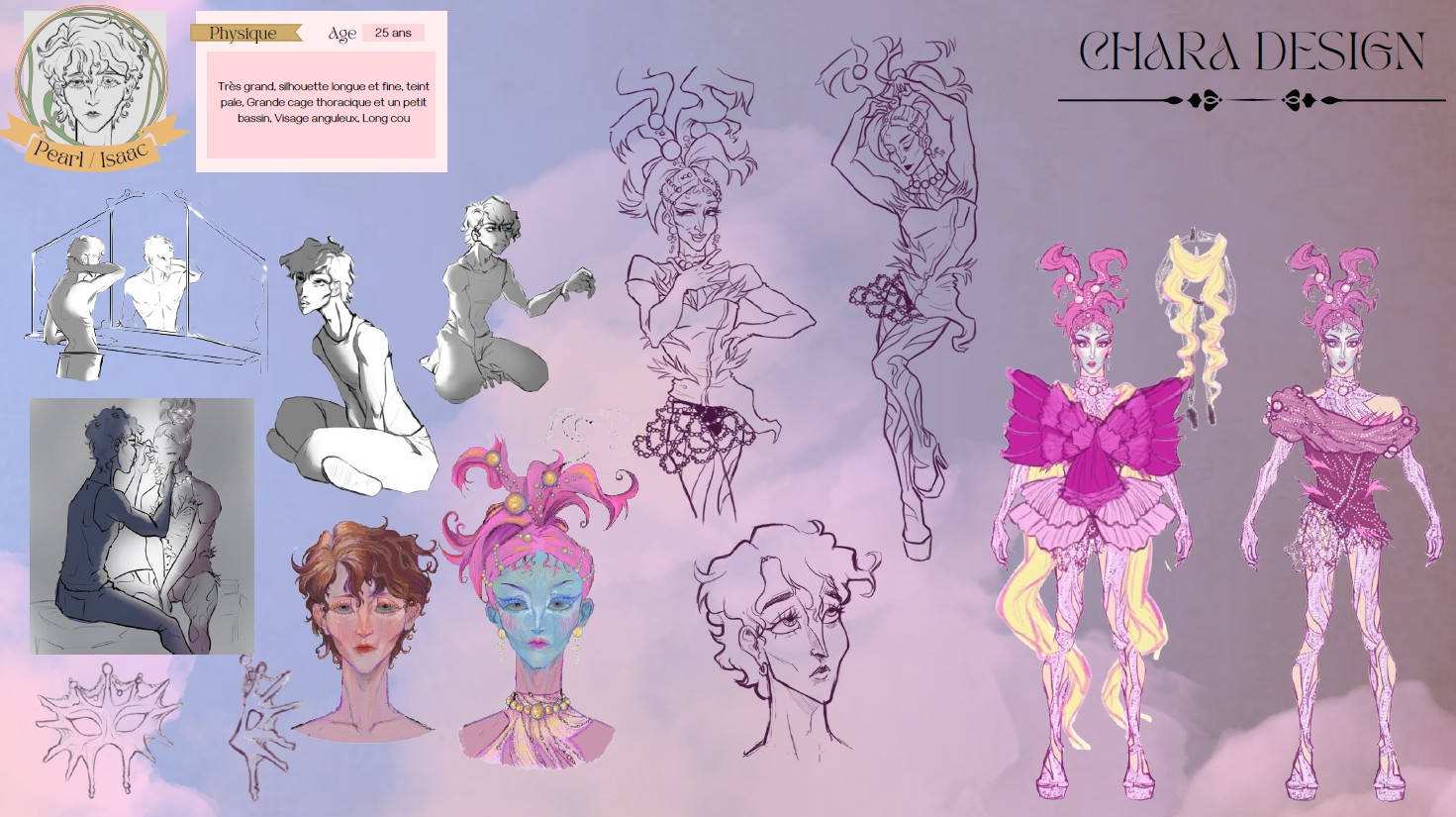
We naturally drew a lot of inspiration from real drag queens to see how their outfits were designed, and how they could be both extravagant and practical for dancing.
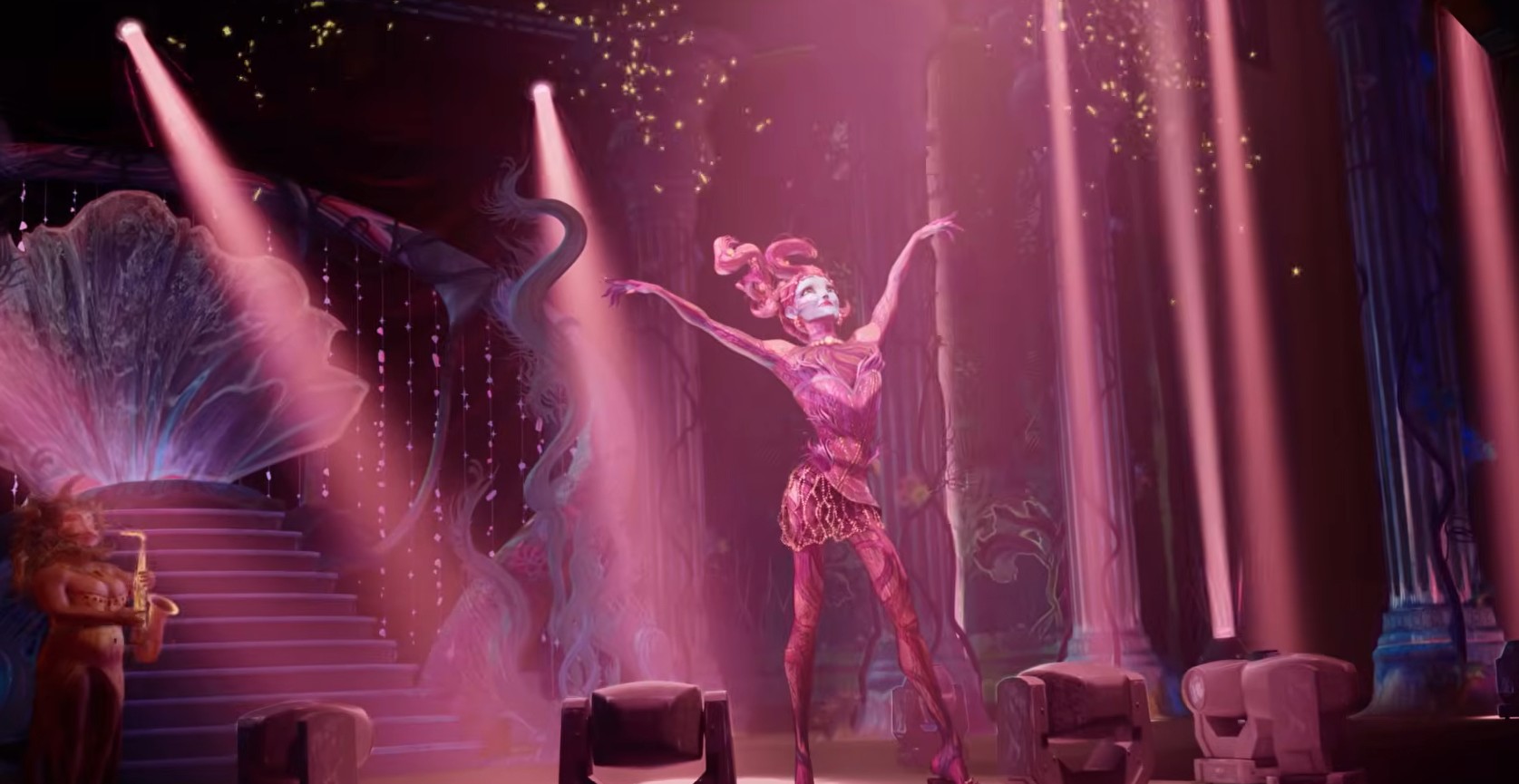
That is why Pearl’s final outfit for her show is very form-fitting, whilst still being fancy and adorned with pretty pearls. Similarly, her hair has been styled to suit voguing, the performance style that Pearl practises.
Most of the artists we have used as references fall more or less within this style: Nanako, with her graphic style and the clean lines of her characters; Mucha for his framing, curves, hairstyles and their graphic treatment; the film *Sing* from Illumination Studios, for its use of lighting and the staging of the shows. Finally, we also drew inspiration from K-pop music videos to add dynamism to the editing and the various shots of the performance.
What were the biggest challenges in making these characters unique?
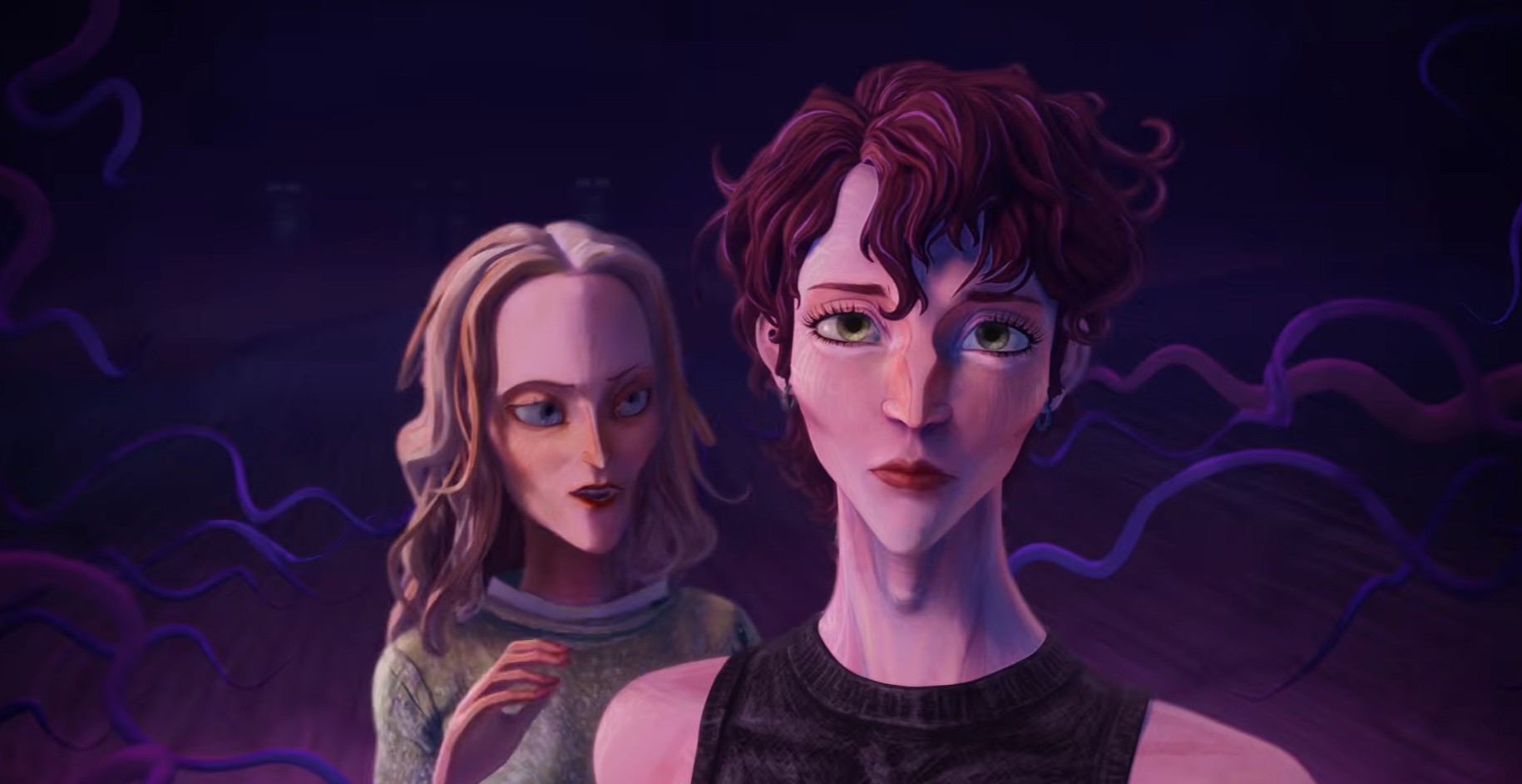
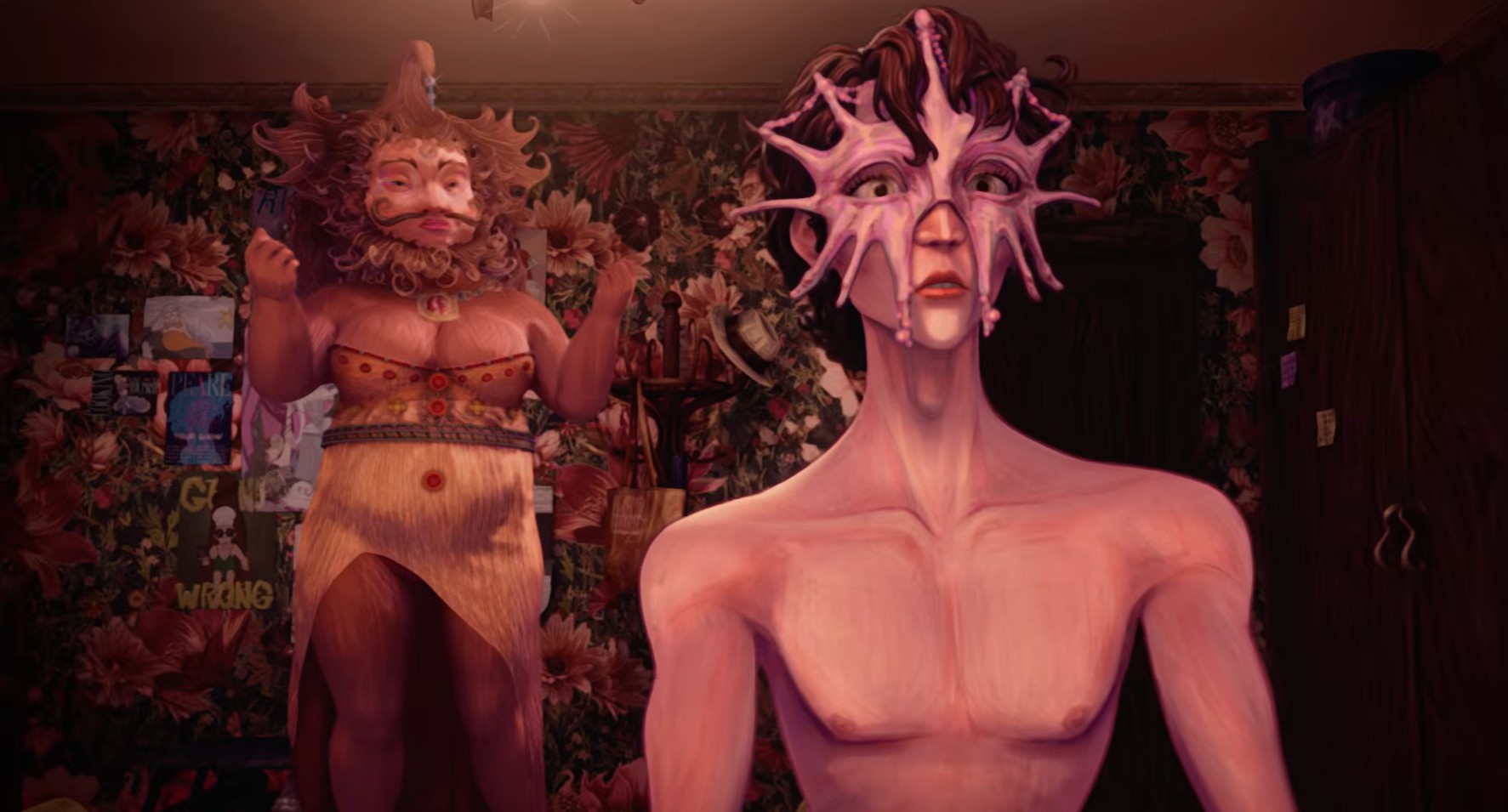
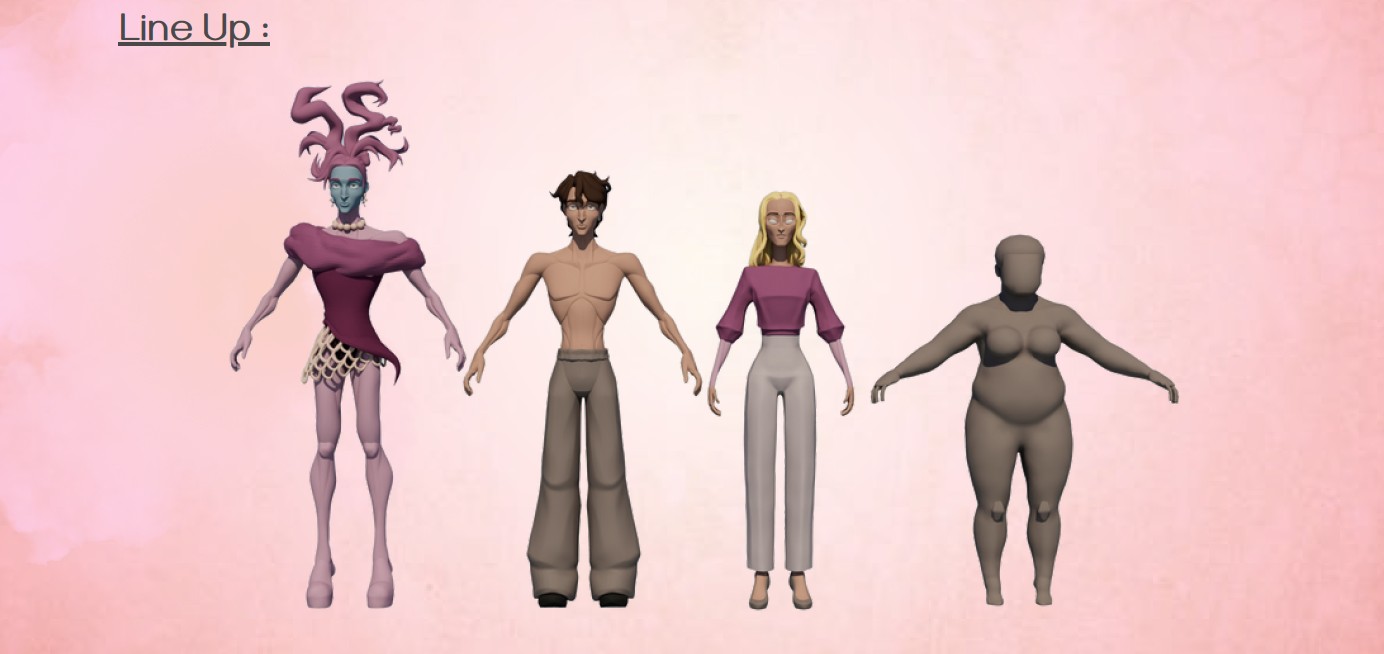
The biggest challenge was ensuring that our three characters, who are very different in terms of their physical appearance, were believable and worked well together. Katelyn’s character isn’t meant to be endearing; her character design is a perfect blend of a rather straight, angular style and animation that makes her seem cold and detached. In contrast, Diva La Vida (Pearl’s drag mum) is a radiant, cute character; she’s designed to be loved. She features warm colours and animation that makes her seem tender and cheerful. For Isaac/Pearl, the most important thing was to play with his gaze, as he needed to come across as both touching – a victim of his circumstances – and self-assured by the end.
Apart from the characters, how did you define the film’s world?
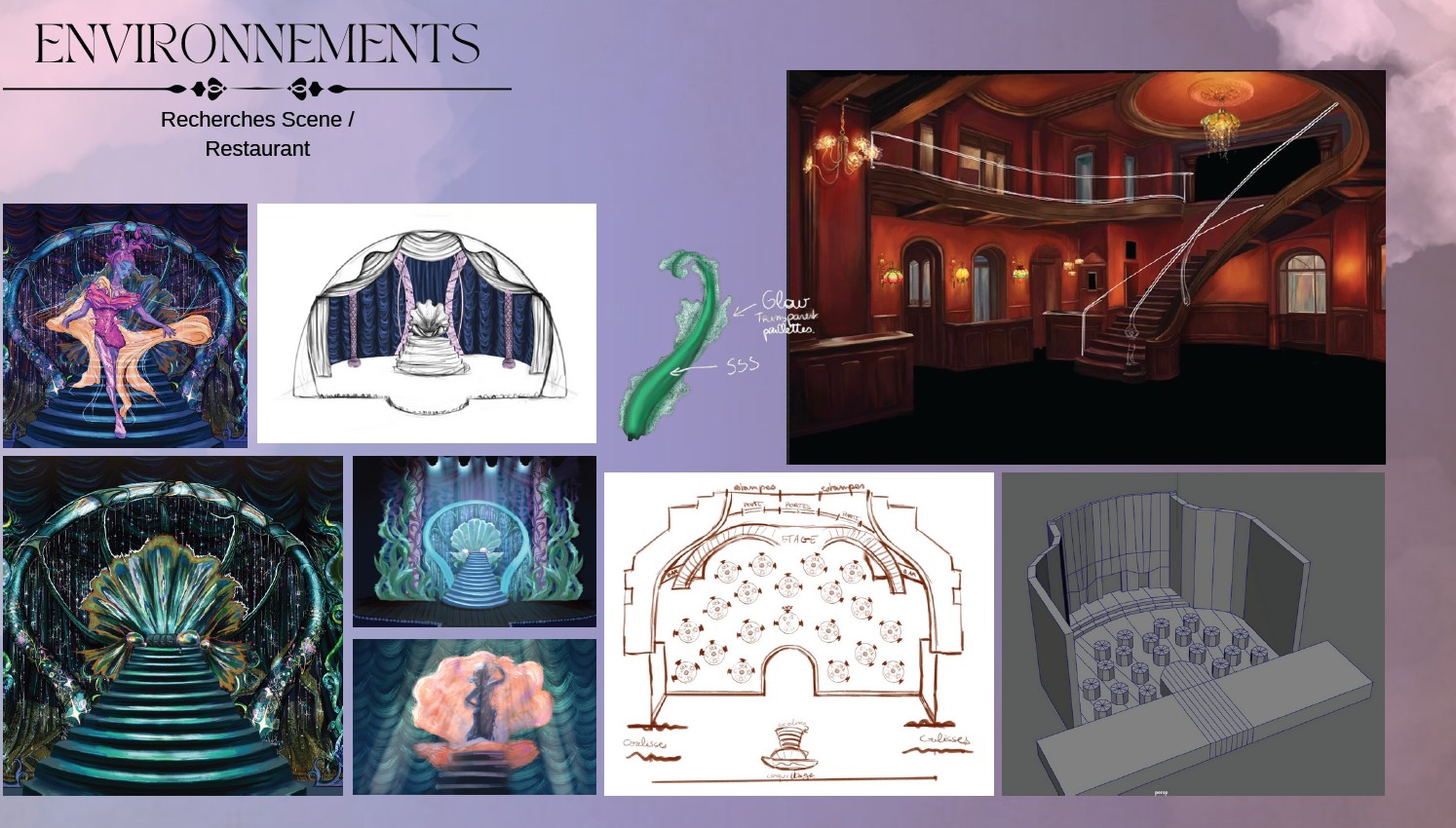
Our film is set in the world of drag, seen not only as a means of liberating identity and gender, but also as a gateway to new forms of performing arts. Through our main character, we have sought to explore drag as a space for total expression—one that is at once intimate, political and aesthetic.
Art Nouveau, a movement characterised by rupture and renewal, has fascinated us with its conception of art as a holistic whole capable of occupying all spaces, including those of everyday life. This vision echoes drag, which transforms the body and existence itself into a canvas for creativity.
By breaking free from traditional models and exploring themes such as the female form, nature and asymmetry, this art has enriched our visual and symbolic thinking, echoing the themes of identity, metamorphosis and freedom explored in the film.
Which aspect of this cinematic universe gave you the most trouble?
Without a doubt, the restaurant area of the cabaret – and, more specifically, the audience. We were absolutely determined to have a 3D audience, so we had to start with the base characters and create variations in hair, height, build, and so on.
So we’ll be reworking the rigs and textures for each of them. As an aside, every member of the team appears in the film – it’s up to you to spot them…
What were the main technical difficulties encountered?
The overall production of our art direction was quite complicated, particularly in terms of texturing and compositing. We had to come up with new techniques every time; it was an extremely time-consuming process and the style demanded a great deal of precision. The textures took an enormous amount of time, given that there were always adjustments to be made to certain maps that had been created specifically for our compositing and which underwent numerous compositing tests to check their effectiveness.
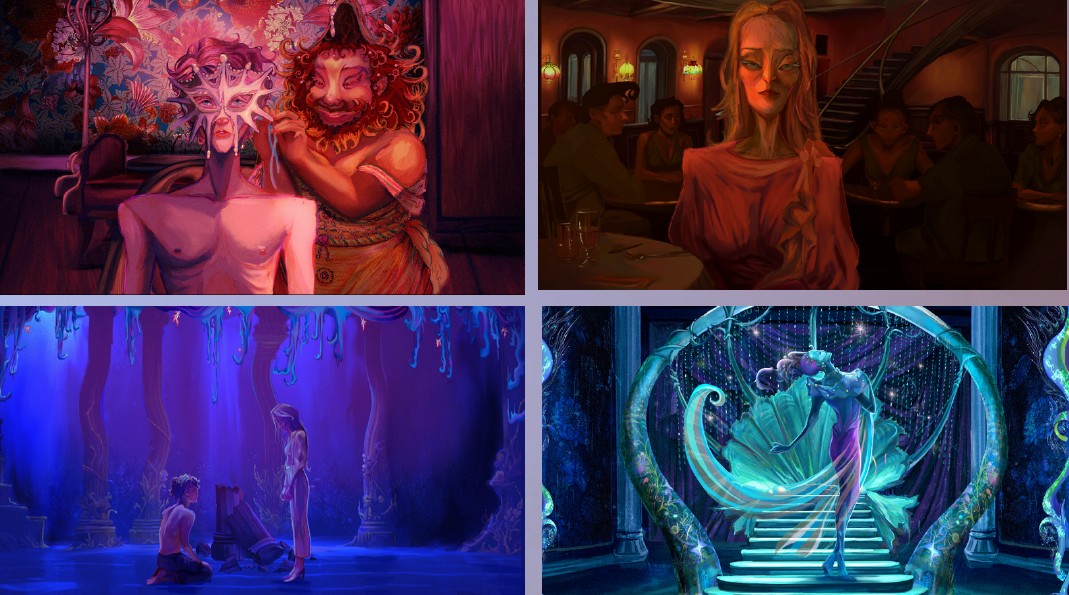
Setting up the compositing template was also a major challenge, as it worked very well on frames without animation, but for shots with a lot of movement, we had to fix a huge number of bugs and come up with workarounds.
Not to mention all the cool extras we stumbled across quite by chance and had to add to every shot to make the whole thing look consistent.
The animation also required a great deal of work, as there were quite a few characters. We had to create lots of different loops for the audience to make it look believable and natural, but above all, Pearl’s dance was the most complex part for our animators; we had to ensure the shots lined up properly and stayed in time with the music…
How did you overcome all these challenges, and what tools did you use to achieve this?
When it came to texturing, we did a great deal of research and carried out numerous tests. We worked with the compositing artists, who gave us feedback at every stage on what was working and what wasn’t. And it was much the same in compositing, where we needed the texture artists’ work to carry out tests and work out what we needed.
The template was therefore built up very gradually; each problem we came across was dealt with individually, and any useful additions we discovered during testing were standardised and incorporated into all the shots! Overall, there was a great deal of communication and collaboration between departments; that’s really what enabled us to find solutions quickly.
As there were several of us working on each subject, we carried out several research projects and tests at the same time!
For the animation, we watched a huge number of video references, and we didn’t just settle for what we could find online. We staged our own scenes and contacted a dancer who practises wacking [an urban dance style that originated in the 1970s within the underground gay community of Los Angeles, characterised by rapid, rotating arm movements, theatrical poses and strong emotional expression, Editor’s note] so that we could film him using motion capture and observe his movements from every angle (thanks, Kenthyn)! Finally, we produced lots and lots of playblasts to check continuity and spot any inconsistencies between shots.
How did the allocation of roles and teamwork go?
We divided up our tasks according to our personal preferences and discussed together how each team member could make the most of their talents. It was by communicating, supporting one another and listening to each other that we achieved a result we can all be proud of.
Was there ever a time when you thought the project might not come to fruition?
Yes, several times. The artistic direction presented an ambitious challenge given the time available. We chose to rise to that challenge by adapting our organisation to make it feasible. We stuck to our vision and ultimately succeeded!
In your opinion, what enabled you to bring this project to a successful conclusion?
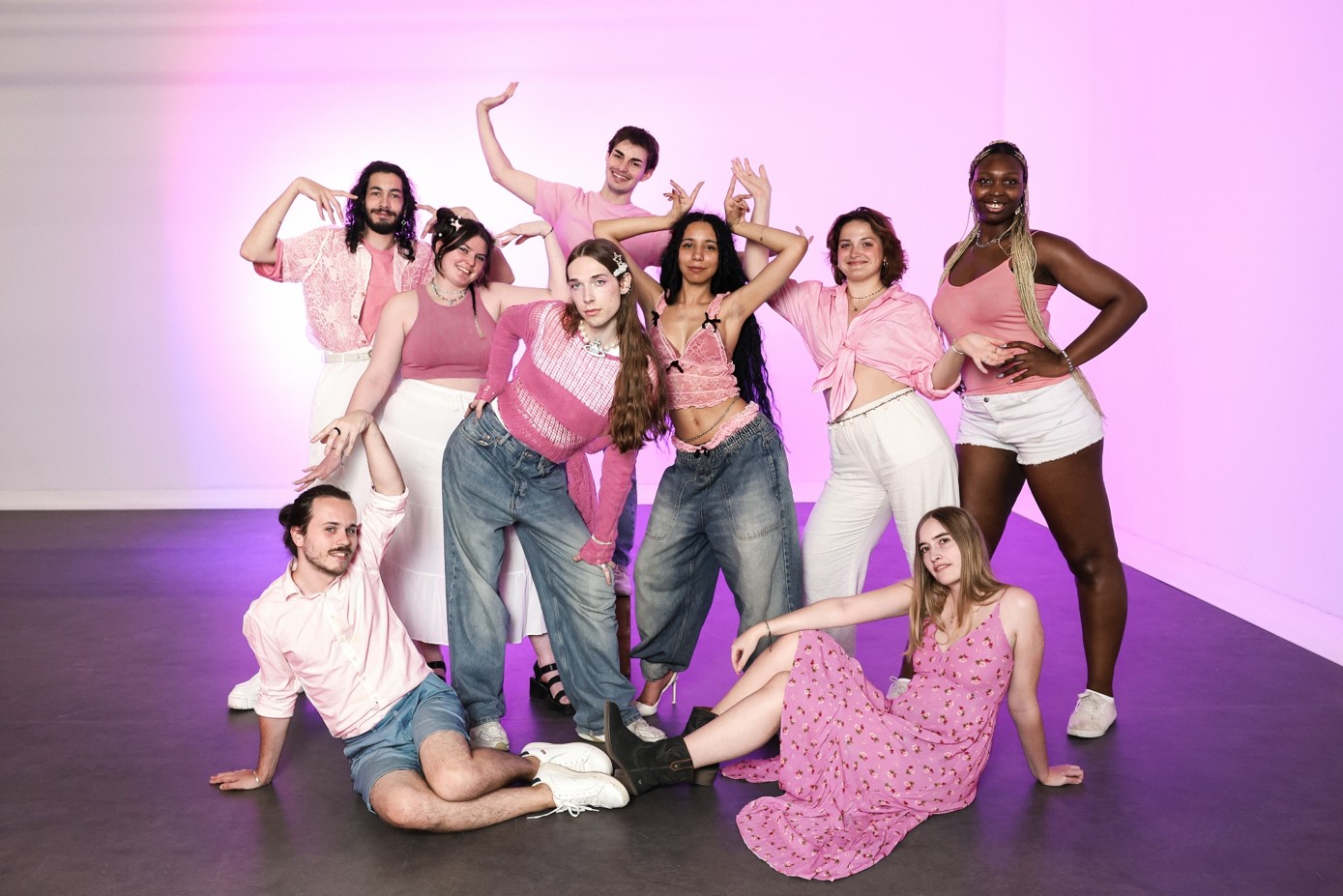
To be honest, the great atmosphere, the willingness to listen and the general spirit of mutual support meant that we always managed to overcome difficulties without too much trouble. Every Monday, we’d have breakfast together; this allowed us both to enjoy ourselves and to hold the first meeting of the week in a relaxed atmosphere. The fact that the group was very close-knit and that nobody had an inflated ego was a huge plus. We couldn’t have asked for better in terms of humanity – an important theme in our film that was well reflected in the Pearl team!
We are proud to have succeeded in creating a film with a social conscience, which we find aesthetically pleasing and which tackles a subject that is both topical and important to us. We believe these issues are extremely important in a world where a lack of understanding and ignorance regarding LGBTQIA+ issues is a danger and still claims lives.
What advice would you give to students who are making their films today?
What we might say to students making their films today is, first and foremost, to make the most of this experience! It’s a unique opportunity to make your own film and to be able to do exactly what you want with it. Don’t be afraid to show your work as widely as possible, including your test shots, and to ask your tutors lots of questions – but don’t stop there! Even if the answers can sometimes be hard to take, it will always be beneficial for you; it improves the quality of the film and can help resolve problems early on.
Communicate well with one another, be considerate because everyone is doing their best, put your ego aside because your ideas won’t always be chosen – but what matters is the film, and making the best choices for it; this won’t detract from your skills in any way. Drawing lots of storyboards and taking the time to organise yourselves takes a lot of the stress out of the process; always jot down everything that pops into your head, and always keep a written record – you’ll save yourself a huge amount of time.
Last but not least, don’t put your health at risk – it’s important to sleep well and eat well; you need to stay fit so you can give it your all!
Discover *Pearl* now, a 2025 graduation film by ESMA, available to watch in full: