It was this curiosity and desire to learn that led him to this career, which he was not at all predestined for.
A member of the ESMA 2025 jury, French by birth and Belgian at heart, Vincent Philbert agreed to talk to us about his eighteen-year career with nWave. We also talked to him about the state of the industry, what the future might hold and what the Belgian studio is looking for in the new talent it recruits.
How did you get to nWave?
My career path is actually quite simple: I’m proof that you can learn a trade on the job, and work your way up to where I am today.

Initially, I have a master’s degree in public relations and communications which I finished at the French Embassy in London and Dublin. Then I came back to France and, by chance, I started working in Luxembourg with an American production company and a French studio.
With my knowledge of languages (English, French and German), I was able to facilitate contact between people, and it was in this context that my name was suggested to Caroline Van Iseghem, co-founder of nWave. We met, the feeling grew and I became the studio’s very first production assistant, just as nWave was launching into 3D animated feature films.
You already had a particular interest in animated films?
For cinema in general. I came into this profession by chance, and I quickly got a taste for it. At nWave, I started my career at a time when we were building the studio’s methodology, which has since evolved a lot, and that’s also something I really enjoy. At the end of the day, filmmaking (animation in this case) is a human adventure that spans several years, enabling us to tell stories and reach as many people as possible, with the best possible visuals.
And being able to do this job in a studio on a human scale, while learning all the different trades and being a real part of a film, was a real plus.
You’ve been working for nWave for eighteen years now. Is there any one project that has stood out more than another?
It’s a difficult question, and it all depends on what matters most. Is it the quality of the final film, or the team we’ve managed to unite?
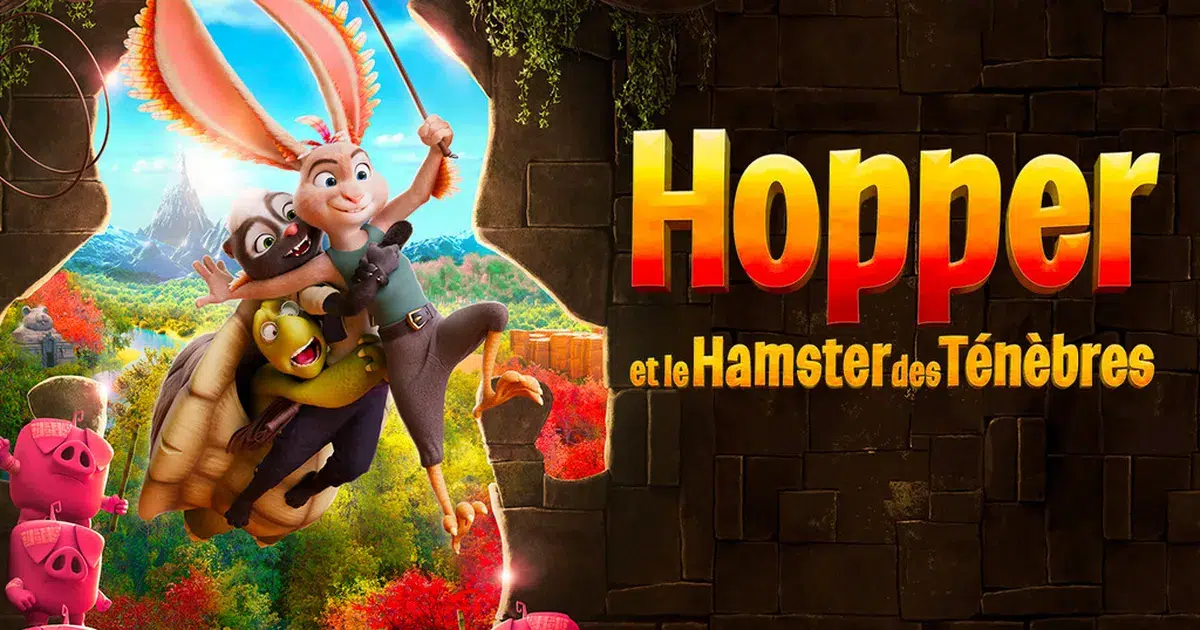
Incidentally, this is the 12th nWave feature film we’ll be releasing this year, and we’re already working (between Liège and Brussels) on the 13th, 14th and soon the 15th… One project that really stood out for me was the first part of Hopper and the Hamster of Darkness, or Chickenhare in English.
It’s the first time we’ve really managed to achieve a symbiosis between content and form, in my opinion. We’ve always been good at making beautiful images, and we make progress with each film. But here, the script, the characters and the structure were solid, and in keeping with nWave’s DNA: international, family-oriented films.
What’s your day-to-day life like these days?
The good thing about being a producer, or an executive producer depending on how the studio is structured, is that no two days are the same and you have to be organised. We know that a film, in our case, is built over two or three years of production and that you have to deliver more or less six minutes of film a month so that you don’t have to do 36 at the end. So the heart of my job is to support the teams to maintain a consistent quality throughout the production period, while being proactive and bringing together a group of people to work on a project.
Ultimately, it’s about giving them the tools they need on a day-to-day basis so that they can concentrate on their core business. All the while bearing in mind that in European animation production, it’s all about controlling budgets and getting down to basics, to achieve the best possible production.
How do you feel the European and international animation sector is evolving?
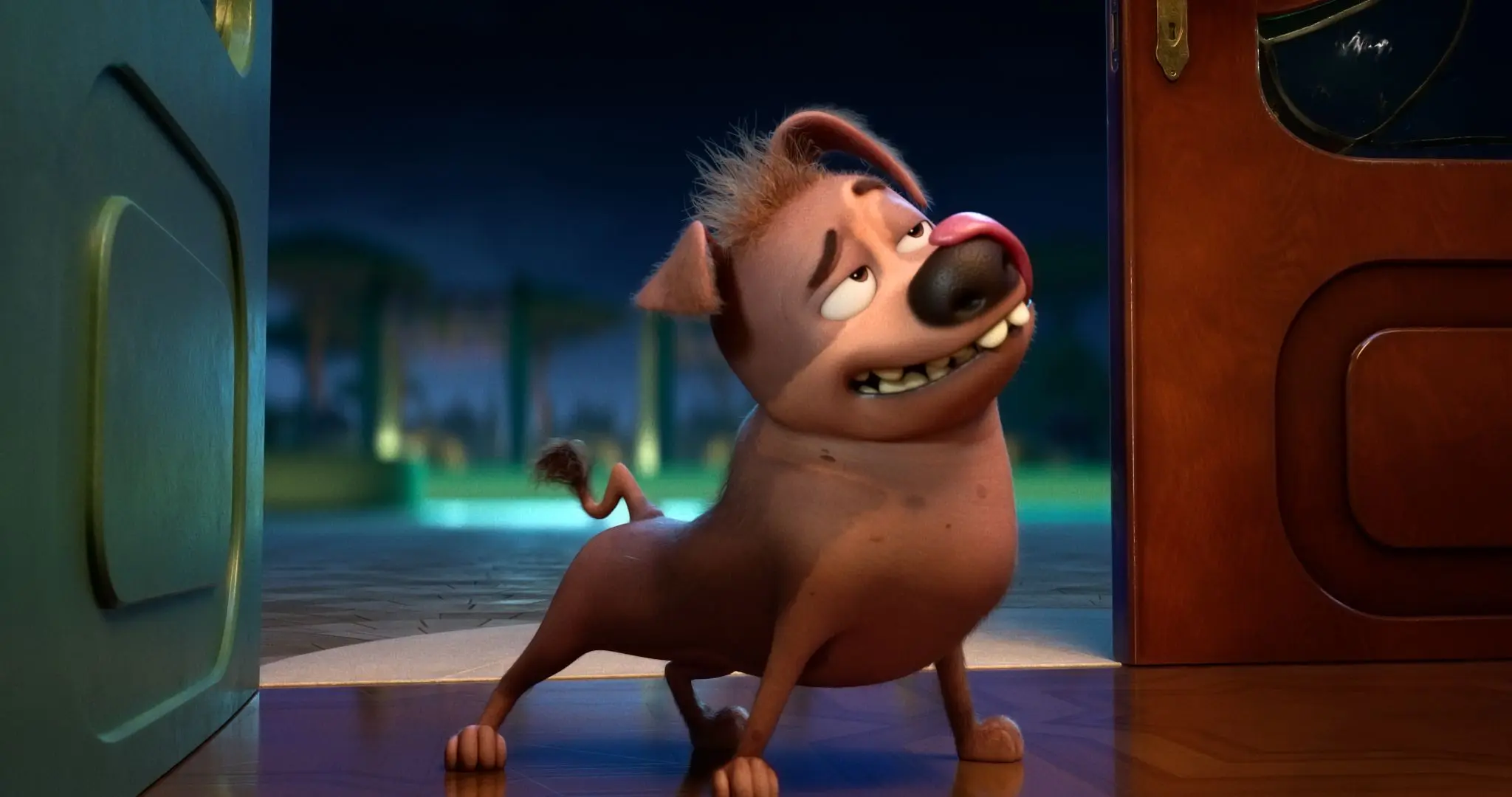
We’re lucky enough to be (as we’re often described) one of the big boys. Our budgets are decent for a European production, but not at American levels. The aim of the game, with technical developments, is therefore to see how we can maintain the level of skill of our artists while keeping up with these technological (r)evolutions. For the film we’re currently working on, Yugly , for example, we’ve set up a USD pipeline.
As far as I’m concerned, this also involves supporting and monitoring the teams so that they can do their job and reinvent themselves without remaining static. On projects like ours, we need people who are extremely well trained as generalists, to be able to work in several departments according to production needs.
In terms of technology, how do these changes affect the way you produce and think about your projects?
Over the last few years, we have had to overcome the technical debt accumulated since the creation of our pipeline, which dates back some fifteen years. With in-house technologies, but which meant having to train our pipeline developers each time they were recruited, and having to wait a certain amount of time before they were operational. Switching to an open source format like USD allows us to put things right, even if it’s only part of the answer, because it brings other challenges.
Beyond the format, there is of course the question of real-time engines, which enable certain advances but also raise questions about the way we operate. And finally, there is the question of AI, the answers to which will not be the same today, tomorrow, in six months or a year’s time. These are tools that we are thinking about, but always as tools, because they do not replace artists and their sensibility.
Speaking of artists, what skills are you looking for in an artist today?
What interests me today is finding people who are the right ‘fit’ for a particular job on our production line, which has between 12 and 14 specialities. I’d always prefer to have someone who’s at 95% of their capacity but who fits in well with the team, rather than someone who’s at 100% who’s going to want to reteach their colleagues how to live. Unfortunately, it only takes a few toxic people to create a grey cloud for everyone, and that’s what I want to avoid at all costs.
And what about skills?
It’s all about education and being able to plug and play. This is absolutely the case with ESMA, and in fact twenty years ago, when nWave launched into feature films, it was from ESMA that the studio recruited almost two thirds of its staff. Since then, the training has grown in skills, and we know that the young graduates who come out of ESMA have knowledge that is perfectly suited to what we’re looking for. People who are competent, flexible and ready to grow with us.
How do you see your future with nWave?
To be honest, I couldn’t say because I’m more in the habit of thinking about the end of the project and moving on to the beginning of the next one. It’s a big in-house joke: “at the end of the film, I’m taking a holiday!
On a more serious note, the idea for nWave is to continue along the path we’ve set out on so far, namely international and family cinema, with ever more attractive and shimmering visuals, while remaining within our budgetary prism.
And for me personally, it may be a bit of a cliché, but I’d like to be able to continue to unite these teams around important projects. For me, it can’t be said often enough, a studio is first and foremost people, then a pipeline, and finally a budget. But without the teams, there’s nothing.
And what advice would you give to the students who are training today, and who will soon be entering the job market (and perhaps nWave)?
The first and most obvious: learn English. Because even if you’re targeting a French-speaking studio, that doesn’t mean you won’t have English-speaking clients. The animation industry is now international, and not mastering English means closing the doors on a market that is already under pressure.
Then, stay thirsty to learn and in search of progress. I often say that the worst thing anyone can say to me is that we’ve always done it this way. The ability to evolve, to question yourself and to progress is essential in this business. These days, artists who come out of schools like ESMA are used to finding tutorials on YouTube for Houdini or other animation software, and it’s really this kind of thing that feeds a studio, in my opinion.
Any advice for schools?
I’ll say it again, we’re lucky to have a truly equivalent pipeline with ESMA, and this possibility of ‘plug and play’ in the industry is really important. This is not the case with all the schools, which make different technological choices. The obvious example is Blender, which is a very good tool, but it has to be said that very few studios use it today.
In any case, my advice to students is the same for all schools: keep abreast of technological developments. Today, ESMA is one of those schools where you know you can find extremely well-trained people who can help you to progress. And that’s essential in this industry.
The next feature film from nWave Studios, Mochy, the ugliest dog in the world, is due to be released in France on 14 October. To find out more about the studio, click here.