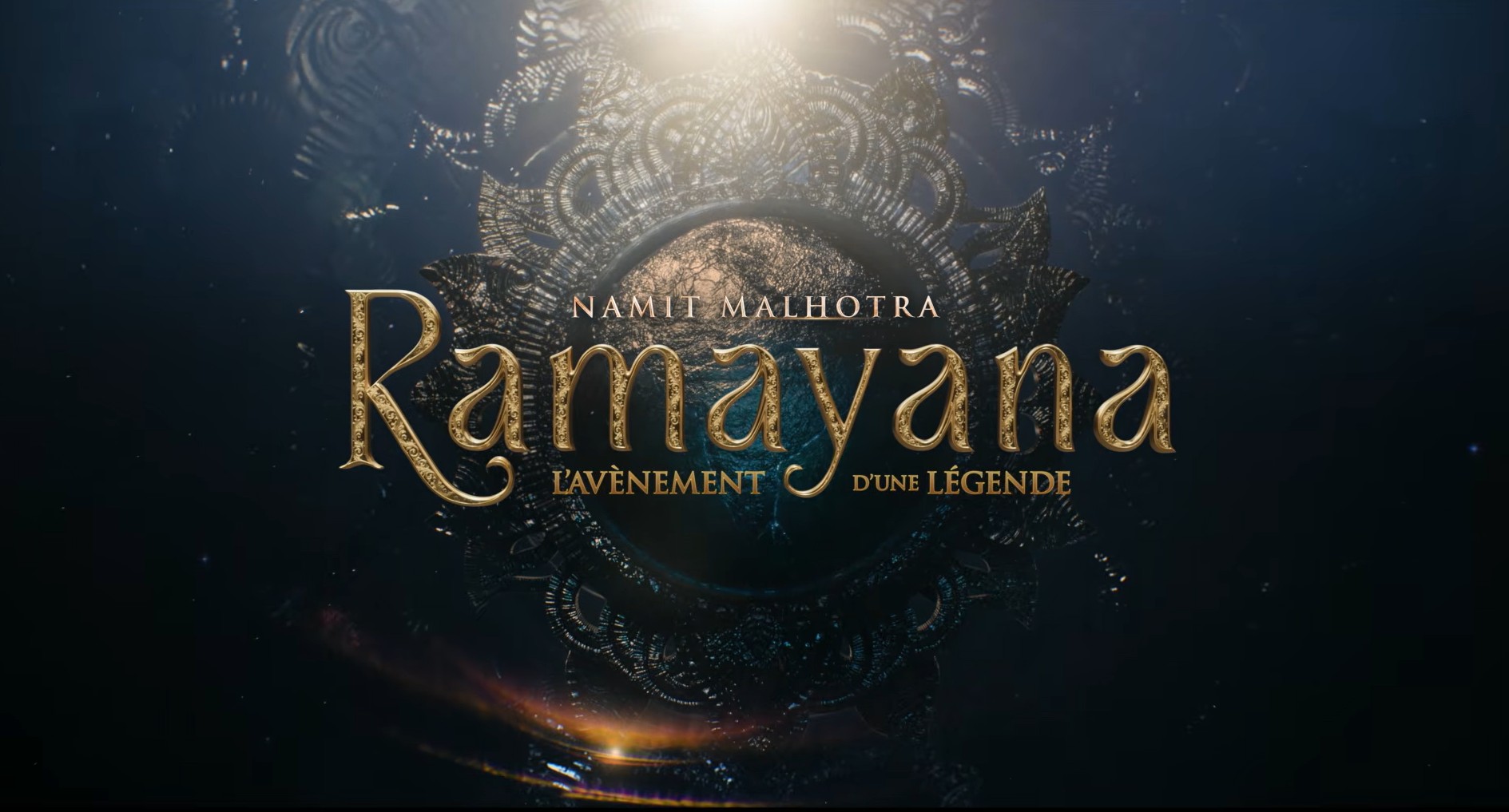
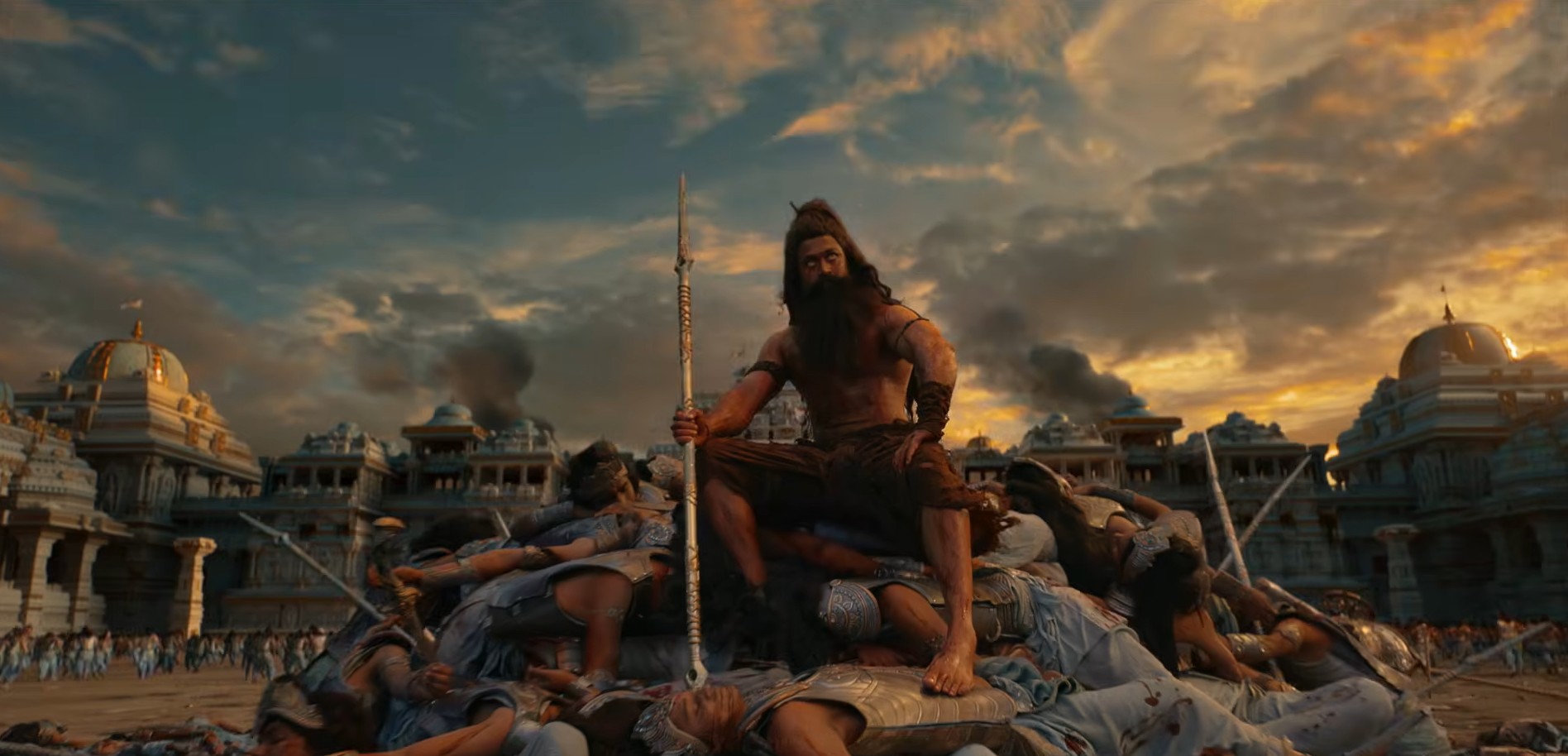
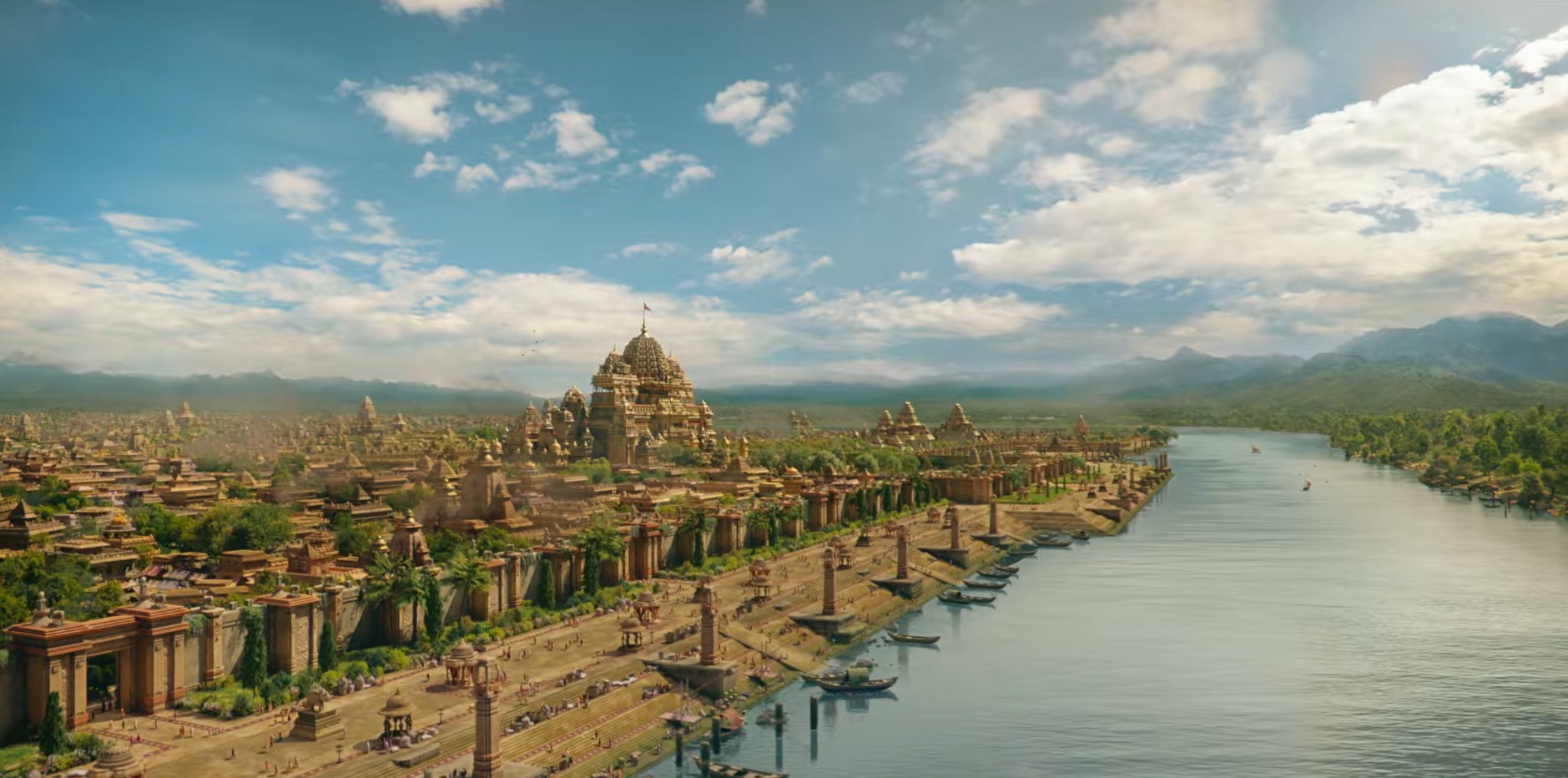
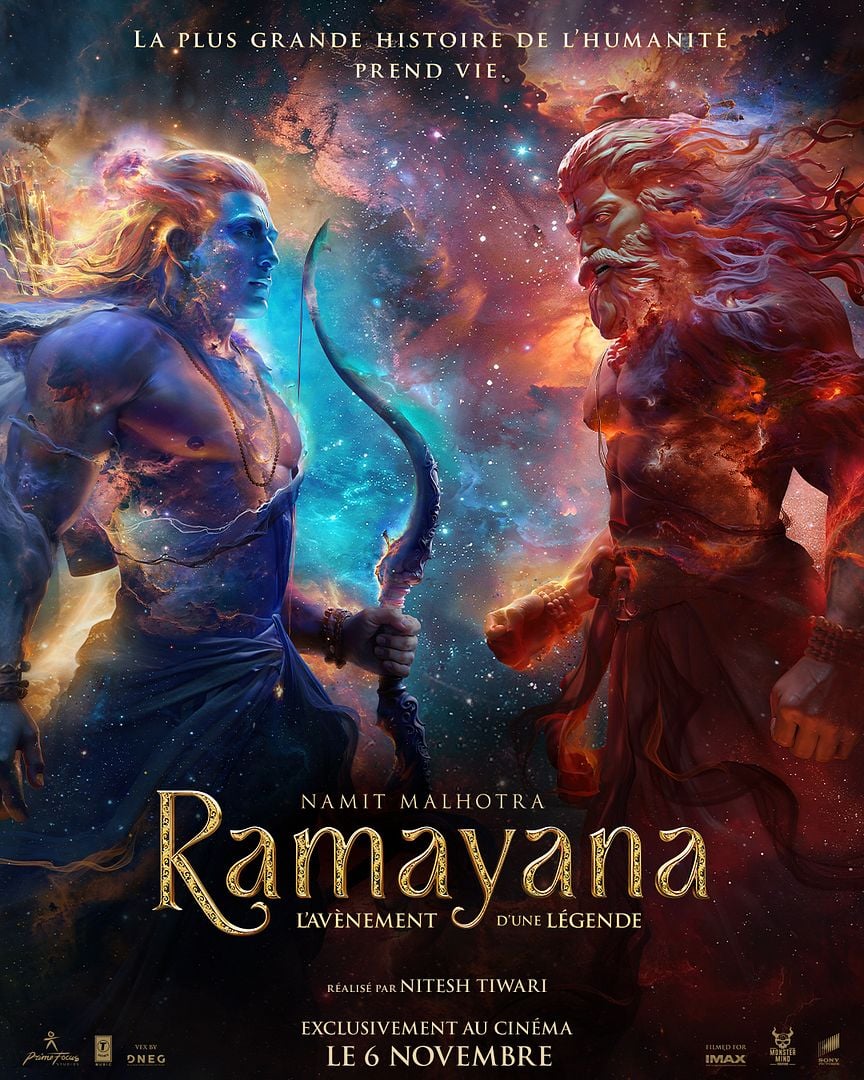
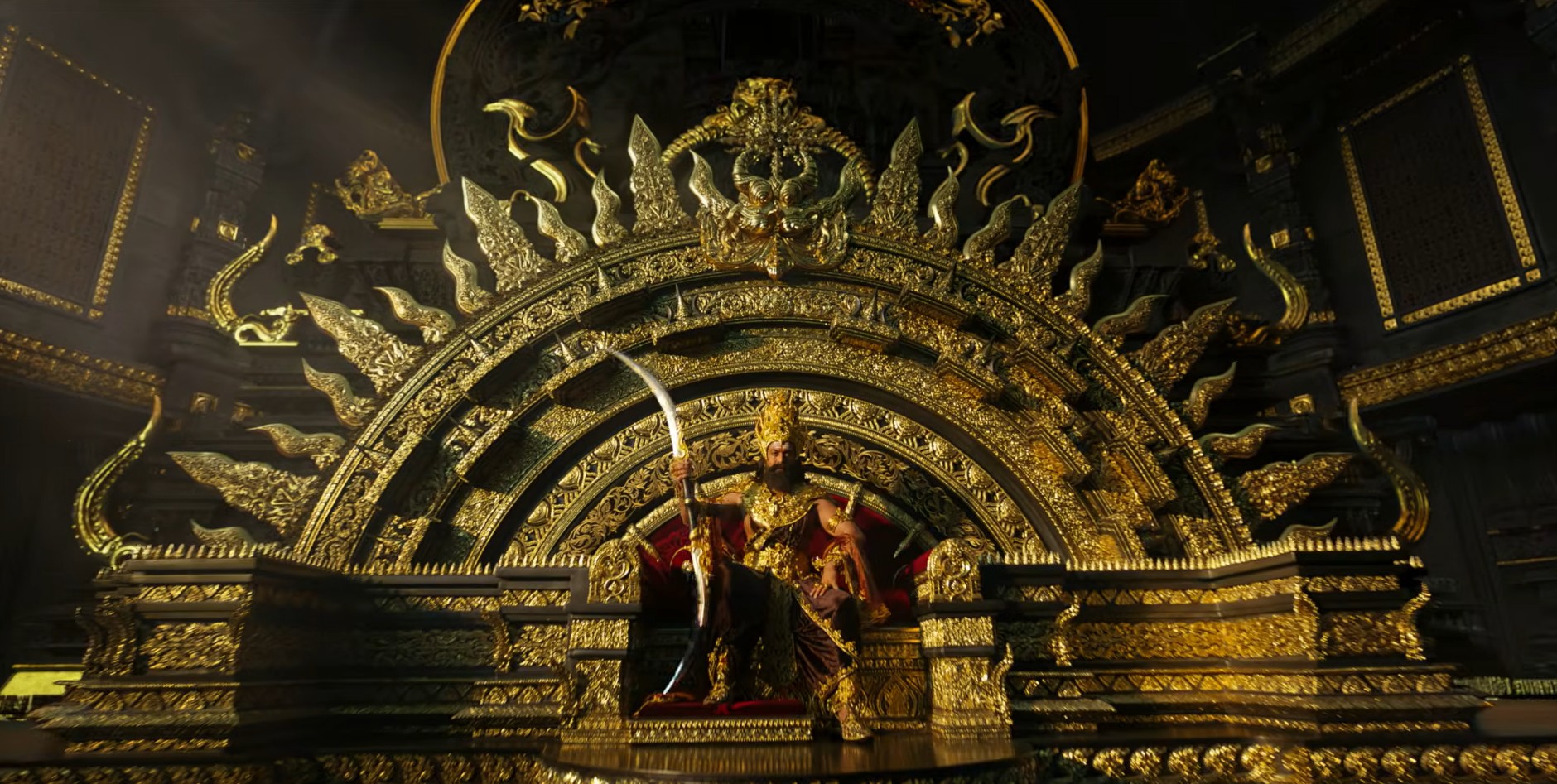
The plot? In ancient India, the fate of the young prince Rama is turned on its head when he is forced into exile shortly after his marriage to Princess Sita. Torn from their kingdom, the couple embark on a legendary journey that will lead them to face the trials of fate and the threat of the fearsome Ravana, the mighty king of demons.
A film which, for once, is brought to life by the same visual artists as *The Odyssey* and *Dune*, in a collaboration between Asia and North America, in which DNEG plays a key role.
It’s not every day that a film’s promotional campaign centres on special effects, and this is all the more worth highlighting when former ESMA students feature in the credits of the film in question!
This is certainly true of Wilfried Lhomme, Senior Crowd TD at DNEG Montreal, who has worked not only on this highly anticipated film, but also on *Dune: Part Three*, arguably the biggest cinematic event of the end of this year.
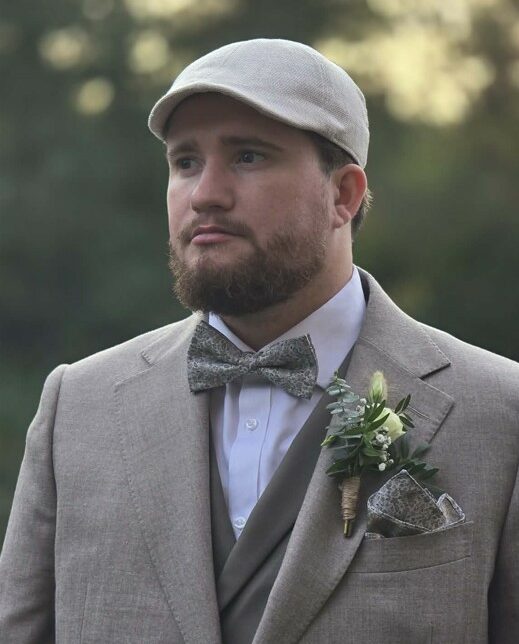
Just under a year after our last conversation about his work on *Wicked: For Good*, we were delighted to chat with Wilfried about these new productions and the recovery of an industry that is currently booming.
Even before the film was screened at Annecy, we had the pleasure of speaking with Christopher and Kevin, who were still hard at work putting the finishing touches to the film. It was an opportunity to discuss the technical advancements that have enabled nWave to step outside their comfort zone, as well as to revisit the fundamentals of what makes a character relatable, and the importance of direction and framing in animated film.
What’s been happening since we last spoke?
They’re going really well, with two new productions under their belt: *Dune: Part Three* and *Ramayana*! Two wonderful experiences, and I can’t wait to tell you more about them!
How is your work at DNEG going at the moment?
Everything’s going really well! I’ve reached an important milestone in my career by further developing my technical skills. This has enabled me to take on more responsibility, particularly in creating tools and setups for artists and supervisors. It’s a development I’m really enjoying.
As 2026 draws to a close, we’re hearing some studios talk of a resurgence in growth. How are you experiencing this period from your own perspective, and what feedback are you receiving from the sector?
Internationally, yes, definitely! Recruitment is picking up again, and some major studios, such as ILM, are even hiring junior staff. This is a particularly encouraging sign and quite revealing of how the market is evolving. I prefer to talk about the international market, as I’m not sufficiently familiar with the current situation in France, but these are encouraging signs.
Today, we’re discussing the Ramayana – could you remind us of your exact role on this project and when you were involved?
At Ramayana, I held the position of Senior Crowd TD from August 2025 to September 2026.
My work can be seen, in particular, in the film’s trailer. In it, you can catch a glimpse of a giant bird, Jatayu, surrounded by hundreds of other birds. My role involved, amongst other things, developing and managing these groups of birds – what is known as a ‘flock’.
What makes this production unique is that we used Houdini’s Crowd Motion Path system, which was introduced in version 20.
Traditionally, a crowd is simulated using a set of points that interact with one another. Here, we work directly with the characters’ trajectories, represented by lines that we can modify.
To put it simply, we used to work with a point cloud representing our crowd. Now, imagine a huge plate of spaghetti instead!
Each spaghetti strand represents a character’s path. We can then modify these lines to precisely control the movements of our crowd. It’s a rather vivid way of explaining it, but it sums up the principle quite well.
An interesting approach, but one that presents a real challenge when it comes to simulating birds in flight!
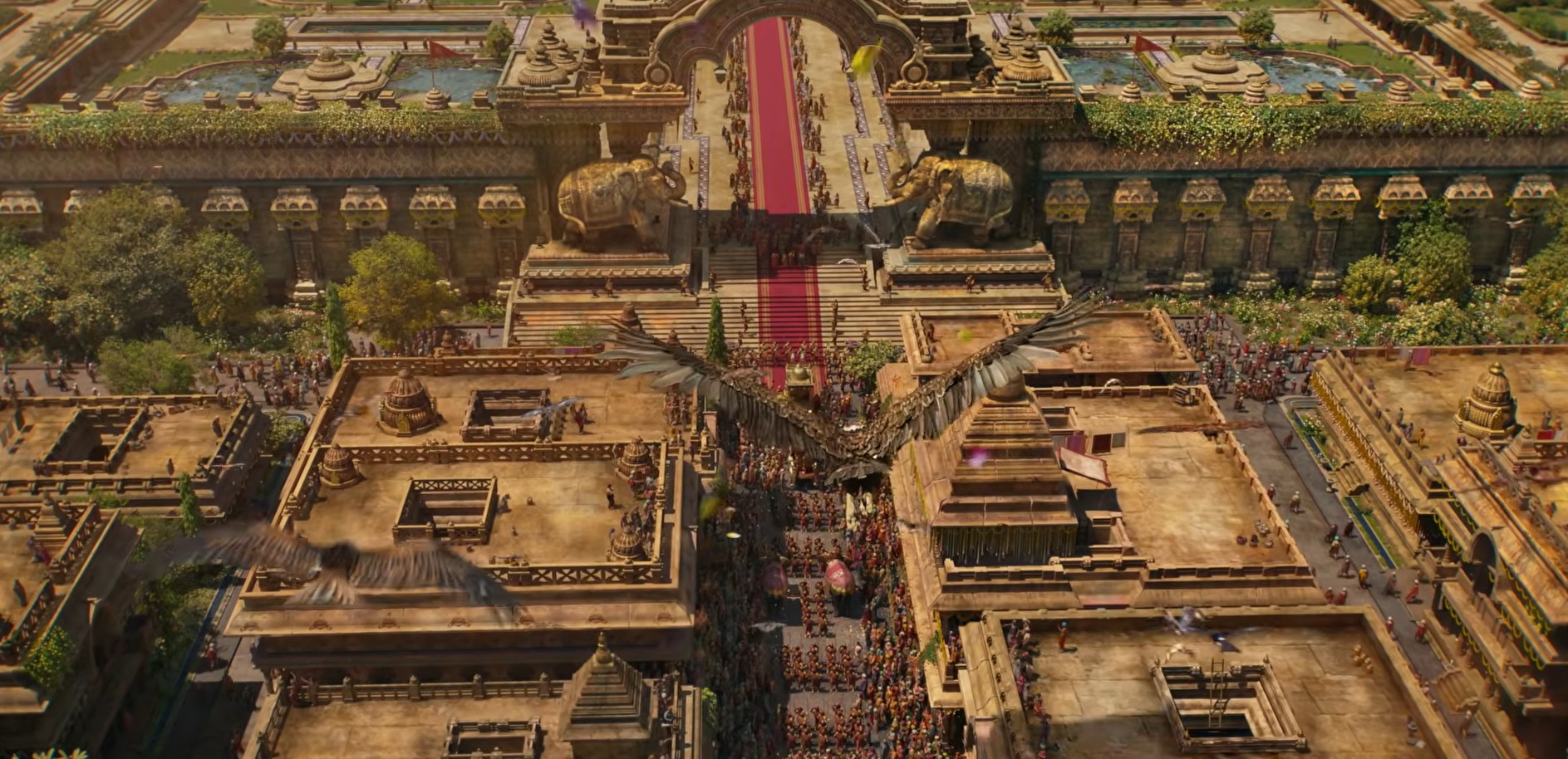
Apart from that shot, can you describe a specific scene or shot where you had a noticeable impact?
Unfortunately, none of the specific scenes from my work are shown in full in the trailers yet. You’ll have to go and see the film at the cinema to enjoy it to the full!
I can’t yet describe in detail the scenes I’ve worked on, but I can tell you a little story: it was on this sequence that I directed the most complex shot of my entire career. It took five months of R&D (research and development), working closely with the sequence supervisor!
It was intense, but an incredibly valuable learning experience. And the funny thing is, when you see this shot, you’ll probably never realise just how much work went into it. All its complexity lies in the technique, not necessarily in what’s immediately obvious on screen.
What technical or artistic constraints shaped this work?
As I mentioned earlier, this project was particularly challenging from a technical point of view. In particular, I developed new tools for use by the other artists on the team to make their work easier and improve the performance of the simulations.
I’m really proud of what we’ve achieved, particularly with this sequence. I genuinely believe there will be a ‘before Ramayana’ and an ‘after Ramayana’ in my career.
What tools or software did you use on a day-to-day basis?
At DNEG, we mainly work with Houdini. On *Ramayana*, we had the unique opportunity to use the Crowd Motion Path system.
Which other roles did you interact with on a regular basis?
Mainly with the Crowd Supervisor, the Animation Director and the VFX Supervisor. Communication was particularly important on this production, not least because of the many technical challenges.
Could you give a specific example of a situation where communication helped to resolve a problem?
Absolutely! On one of our plans, we’d gone down a path that was becoming far too costly from a technical point of view.
The rendering times were considerable, and even interacting with the Houdini interface became difficult because the software was so slow.
After two months’ work, my supervisor Crowd and I took a rather radical decision: to start from scratch. We completely rethought our approach in order to build something cleaner, more robust and, above all, optimised.
From a technical point of view, I’d say that 80 per cent of the work involves optimising the 20 per cent spent on R&D!
Ultimately, this decision enabled us to achieve a system that is much more fluid, efficient and easily adaptable. It just goes to show that knowing how to question your own work is sometimes the best solution.
Which aspects of your training have been directly useful to you on this project?
Above all, I’ll take away one philosophy: never give up when faced with a challenge. Starting again isn’t the same as failing. Sometimes, it’s actually the best way to make progress and find a solution.
As a Senior Technical Director, you must have had to manage a team – how did that go?
In fact, this time round, I didn’t have a team to manage directly, but I did have an important role providing technical support to the artists.
As I was developing some of the tools they used on a daily basis, we held regular meetings to gather their feedback, identify issues and improve the features.
That’s something I really enjoy: developing technical solutions that make other people’s work easier in practical terms.
What skills have you developed through this project?
A wealth of technical skills! Mainly in VEX, Python, creating HDA (Houdini Digital Assets) and developing tools that integrate with the studio’s pipeline.
I have also gained extensive expertise in Houdini’s Crowd Motion Path system, which I mentioned earlier. It was probably one of the most technically rewarding projects of my career.
What made the biggest impression on you during the journey that was this project?
The trust that DNEG has placed in me.
Before joining the studio, I wouldn’t necessarily have felt capable of achieving everything I’ve managed to do on these productions. They placed their trust in me, let me take the initiative and gave me the opportunity to push my own boundaries.
So, quite simply, a big thank you to them!
Is there a particular memory, encounter or anecdote that you’d like to share?
Yes, without a doubt: Yannick Cibin!
He was our Crowd supervisor on that sequence, and he’s now Head of the Crowd Department at Framestore. He’s truly impressive from a technical point of view. He can read code as easily as one reads a book, and write it with the same ease!
I’ve learnt an awful lot working alongside him. I genuinely believe that, thanks to him, there will be a ‘before’ and an ‘after’ in my career.
What would you like to explore in your future projects, either artistically or technically?
I’d like to continue striking a good balance between R&D and working on designs. I love developing tools and solving technical problems, but I enjoy using them to create images just as much. Being able to do both is really what I enjoy most at the moment.
You’ve also worked on *Dune: Part Three* – could you tell us a bit about your experience on that project?
On this project, my involvement was purely technical this time.
I have developed tools to convert motion capture (MOCAP) animations so that they can be used by our crowd agents.
So I didn’t have any shots directly assigned to me, but my work features indirectly in many of the film’s shots.
In a way, you won’t see my work directly on screen, but you’ll come across it all over the place! Some of the crowd animations, in particular, were created using these tools.
What advice would you give to a student looking to enter the sector towards the end of 2026?
In a world where AI is becoming increasingly prevalent and where creative works can sometimes end up looking very similar, my main advice would be to focus on personal projects.
It is these that enable you to showcase your personality and creativity, and, above all, to stand out from the other candidates.
To give you an example, a recent graduate contacted me on LinkedIn to ask for some advice. In particular, he wanted to incorporate crowd scenes into one of his personal projects. Three months later, he was in Montreal, hired by Rodeo FX as an FX artist!
So yes, despite the challenges facing the sector, it’s still possible. You need to persevere, learn and, above all, show what you’re capable of.
Is there one last thing you’d like to share?
This is probably one of the most important pieces of advice I can give to recent graduates: go abroad!
These days, I think there are often more opportunities abroad than in France, particularly at the start of your career. Don’t be afraid to move around, to discover other studios, other ways of working and other cultures.
You’ll always be able to return to France after a few years, with more experience and new skills.
But above all, be bold! It’s by stepping outside your comfort zone that you’ll sometimes discover the best opportunities.