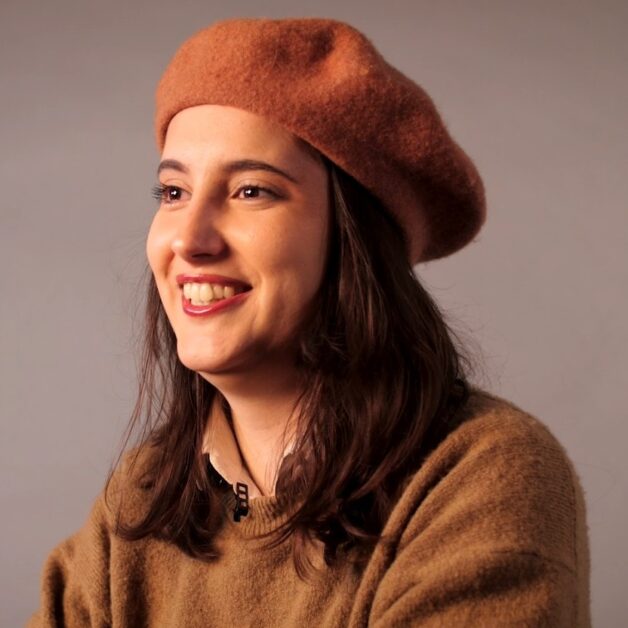
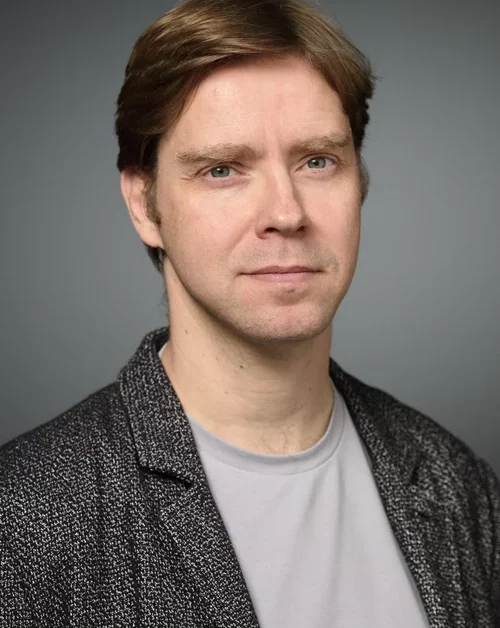
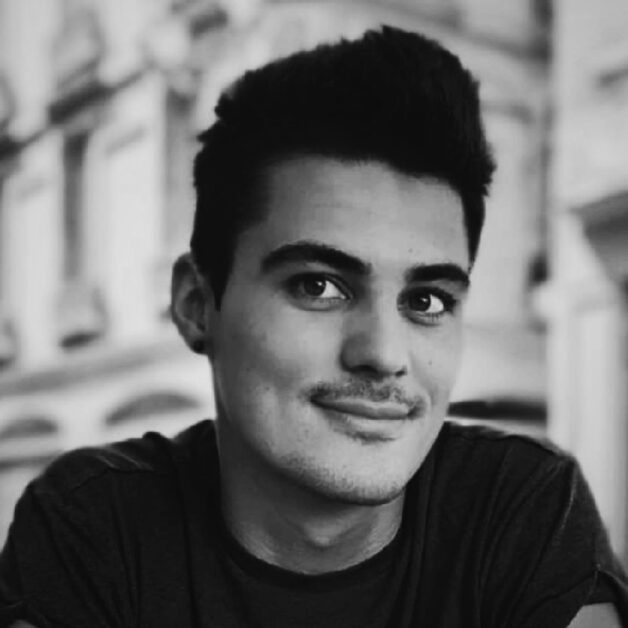
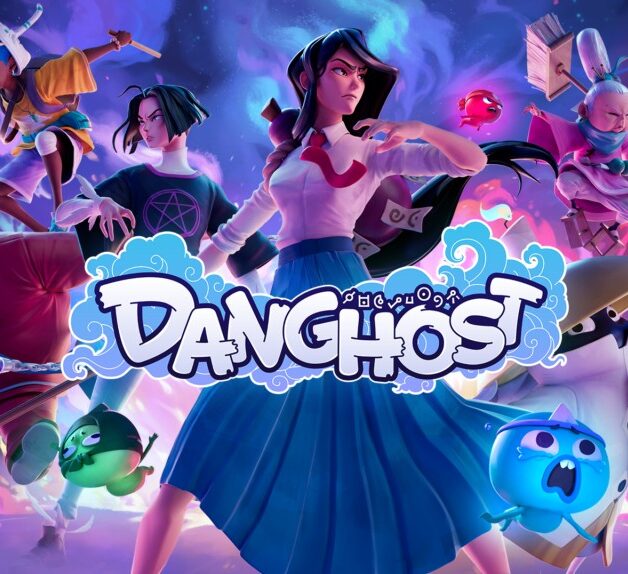
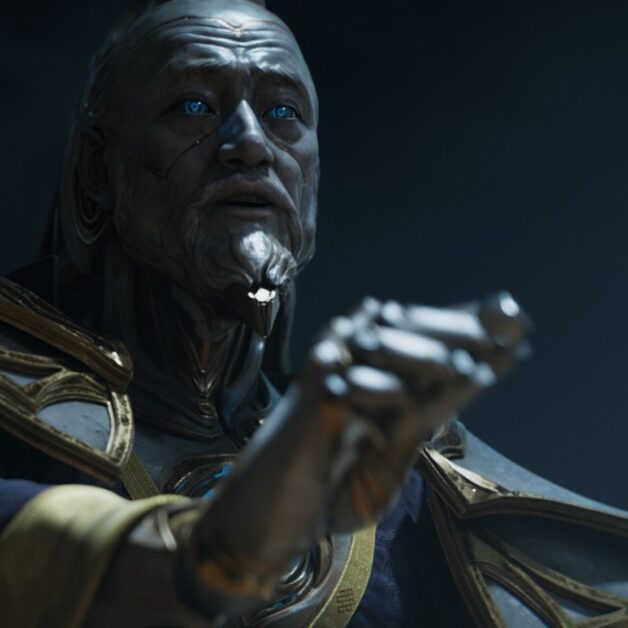
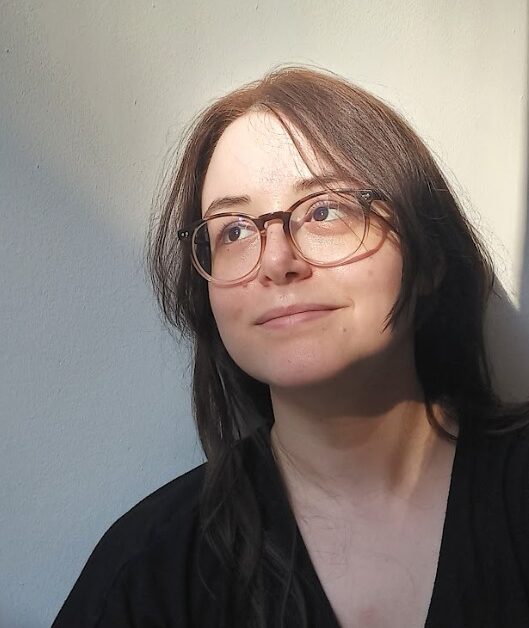
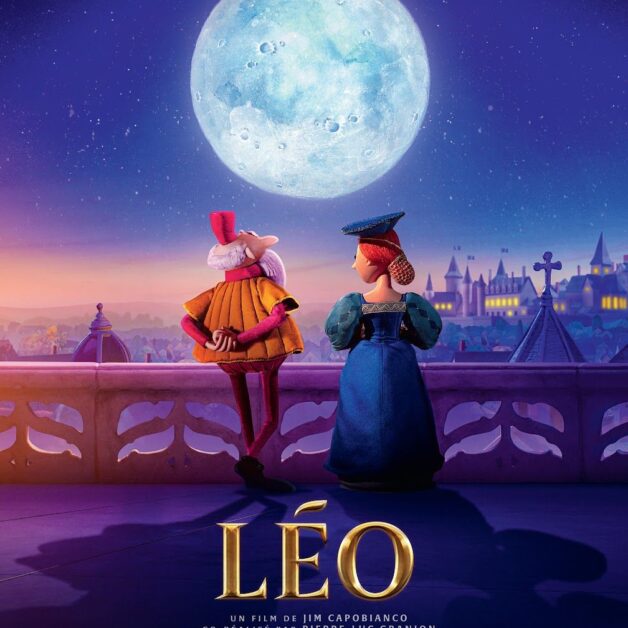
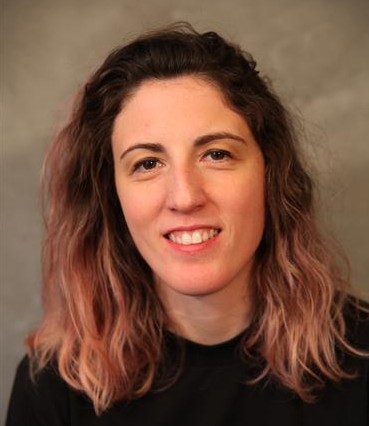
Now a Lighting & Compositing Artist at Illogic Studio, Inès Martin discovered animated film almost by chance, whilst looking for a career path that would allow her to stay close to drawing and creativity.
From her time at ESMA to her early experiences in the studio, she talks about a profession that is far more technical than she had imagined, the importance of teamwork in animation productions, and how she now views developments in the sector, particularly the advent of artificial intelligence.
When she began thinking about her future career path, Inès Martin knew one thing above all else: she wanted to stay in the world of the arts. Drawing already played a significant role in her life, and she naturally sought a course of study that would enable her to turn it into a tangible career. It was whilst doing her research that she discovered animated film, a sector she knew relatively little about but which quickly appealed to her, particularly when she came across the films made by ESMA students.
“I fell in love with the students’ creations. I thought they were absolutely stunning, and it made me want to do the same.”
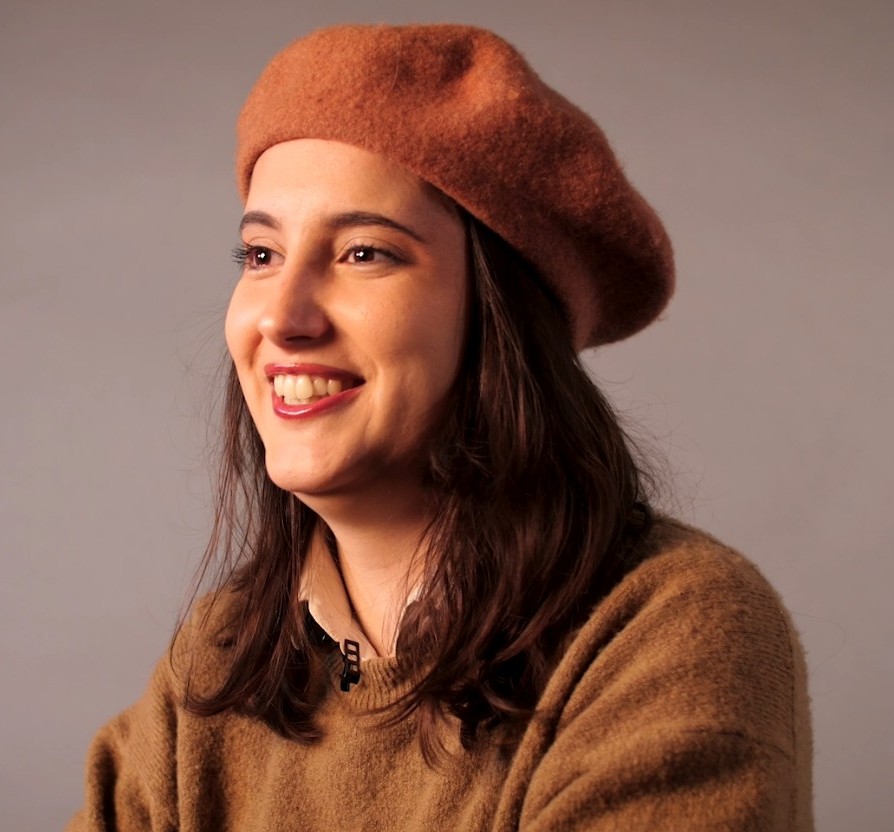
So it was the visuals that first won her over. Through the graduation films, she discovered a wide variety of worlds, a standard of filmmaking that impressed her and, above all, the prospect – a few years later – of leading a project of this scale herself. She joined ESMA with the rather simple desire to understand how these films are made and, in turn, to be able to make one herself.
Looking back, this is actually one of the aspects of her career that she looks back on with the greatest satisfaction: having been drawn to student films before being able to take part in this tradition herself by making her own graduation film.
Watch the video to find out what he had to say about his experience
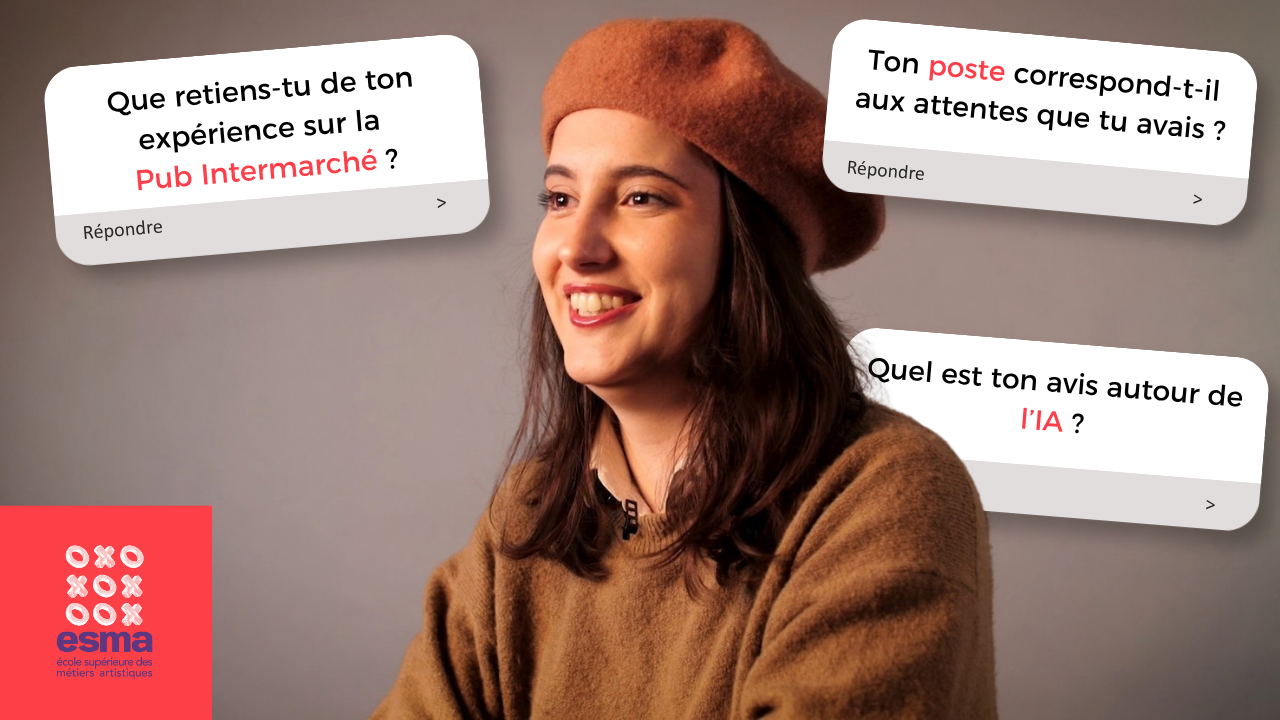
Discover the range of careers available before choosing your own
One of the first surprises comes from the diversity of roles involved in a 3D production. Before starting at the school, Inès didn’t necessarily realise everything that goes on behind the scenes to create a finished image, nor the number of specialists involved before a shot can be broadcast. Animation is, after all, just one stage amongst many others, alongside modelling, texturing, lighting, compositing and all the other specialisms that bring a scene to life.
“When you first get into 3D animation, you don’t realise that there are so many different roles and positions. You’re not necessarily aware of this until you’ve actually started working in the industry.”
It is precisely this diversity that she appreciates during her training, because the school gives her time to explore various stages of production before she has to choose a specialism. Rather than arriving with a perfectly defined career path, she is able to try things out, gain an understanding and gradually identify the areas in which she feels most at ease.
“What I really liked was that we could get to grips with the full spectrum of 3D production and then choose a direction and specialise in whatever we fancied. We’re still given plenty of time to explore the whole range of possibilities.”
She finds this approach all the more useful today as she works in a studio, where production rarely operates in completely isolated silos. Even when an artist has specialised, they remain in constant contact with other departments and must understand the constraints faced by the teams working before or after them. This comprehensive understanding of the production process enables better communication, but also a better understanding of the problems that may arise during a production.
“Even in the world of work, it’s important to understand how the various stages of production work.”
For Inès, this period of exploration ultimately led her to lighting and compositing, two closely related specialisms in which she quickly found what she was looking for: work that is deeply visual, but which also requires a genuine technical understanding of the image.
Bringing light and atmosphere to an image
In a 3D animation production, lighting comes into play at a stage when a large part of the scene already exists. The characters have been created, the sets have been modelled, the animation has been completed, but the image does not necessarily yet have the atmosphere or lighting that will give it its final character.
“Lighting is the process of illuminating a 3D scene. When we receive the animation, along with the modelled characters and environment, our aim is to establish the direction of the light, create a mood for the shot and ensure that the image works within that atmosphere.”
Compositing then takes over to build on this work. The image produced by the lighting team is taken, adjusted and enhanced to achieve the final render, which can then be delivered to the client or integrated into the film. The two disciplines are often closely linked, particularly in smaller organisations where artists may be required to take on several roles within the same production.
To explain this work to someone who isn’t necessarily familiar with how an animation studio operates, Inès uses a rather evocative image: ‘We’re a bit like the painters of the shot. ’ This phrase sums up the visual aspect of the job well, as it involves working with light, colour, contrasts and the overall atmosphere of an image, whilst operating in an entirely digital environment.”

A job that is far more technical than she had imagined
When she looks back on her early years, Inès readily admits that she entered the world of animated film with a rather intuitive understanding of the craft, driven more by her desire to create than by a precise knowledge of the various disciplines involved in a production.
“I went there rather naively, thinking that I wanted to make cartoons and that we’d just see how it turned out.”
She naturally expects to find an artistic environment, but is far less prepared for the central role played by technology. Working in 3D requires an understanding of complex software, physical parameters, computational logic and, at times, even certain mathematical concepts that are relatively unfamiliar to her.
“I didn’t expect it to be so technical and so maths-heavy. As I wasn’t at all good at maths back then, I had to get to grips with it.”
She points out that this is obviously not advanced mathematics, but rather a technical aspect that is a constant companion to the creative process. It is, in fact, this blend that is gradually becoming one of the most interesting aspects of the job: it is not enough to have an artistic eye; you also need to know how to achieve the result you have in mind from a technical perspective. This interplay between visual sensitivity and mastery of the tools is probably one of the aspects of the job she had least anticipated at the outset.
At Illogic Studio, scaling up without losing the team spirit
Among the experiences that have shaped her recent career, Inès singles out the campaign she carried out for Intermarché with Illogic Studio. When she joined the studio, the team consisted of around ten people. For this project, the scale of the operation changed completely, with nearly seventy people involved in the production.
“For us, it was a big team because Illogic is essentially a small studio. When I joined, there were ten of us, and now there are about seventy.”
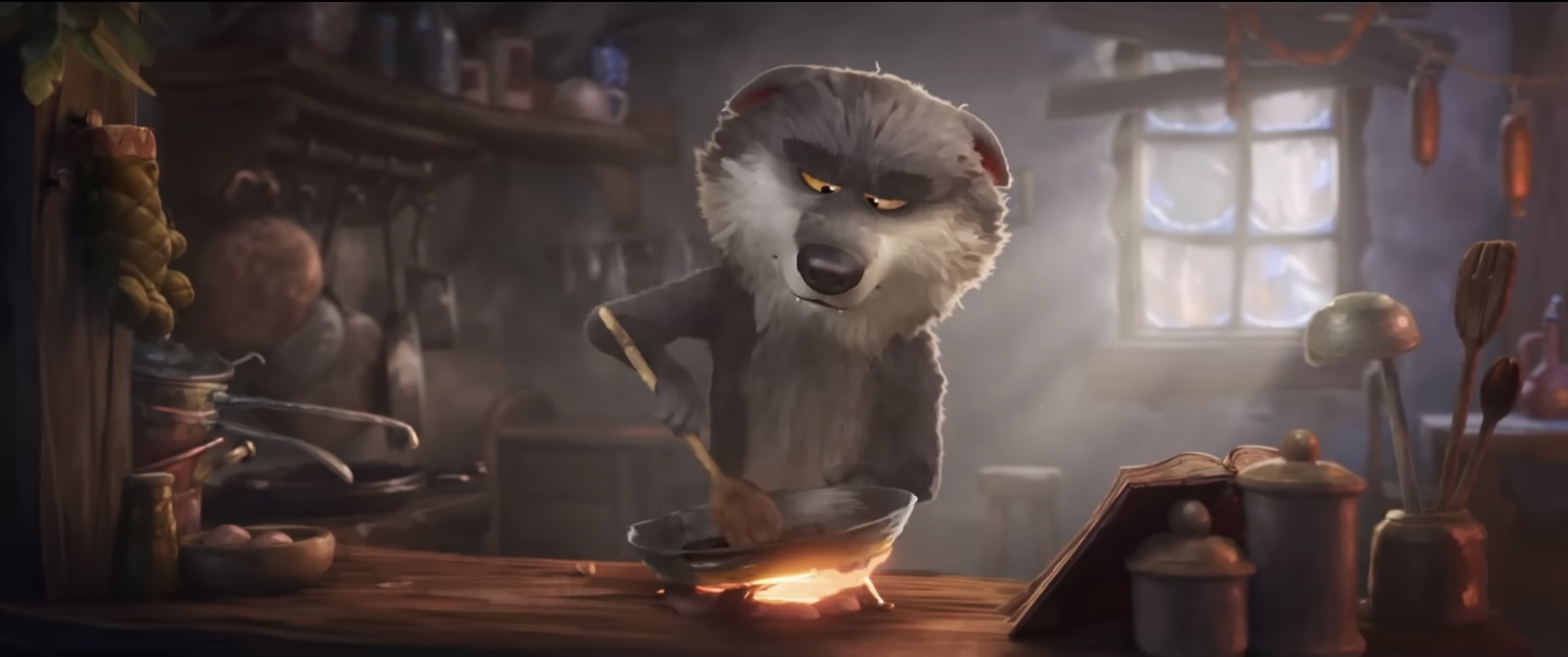
Beyond the number of people involved, what she finds most memorable is the atmosphere that has developed around the project and the pleasure of seeing new artists arrive – artists she had never worked with before. Despite the very significant increase in staff numbers, the production retains a collective and rather friendly atmosphere, which adds to the experience.
He also likes the project because, in terms of its ambition and approach, it is closer to a proper short film than to a traditional advert. For artists accustomed to working on very different visual productions, this aspect is inevitably stimulating and allows them to take certain artistic intentions a step further.
“We were all really pleased to be working on a project like this. It was almost more like a short film than an advert, and, artistically speaking, it really inspired us.”
The film’s reception then brings an added sense of satisfaction. After spending weeks working on a series of shots, seeing the project reach its audience adds a whole new dimension to the work carried out in the studio. Inès speaks of the pleasure of seeing that the film has been widely viewed, that it has been appreciated and that it has sparked a great deal of reaction – recognition that inevitably serves as encouragement for future productions.
“Knowing that it had worked and that so many people had enjoyed it was a real reward for the whole team.”
A daily life filled with a wide variety of projects
Of course, not all projects bring the same sense of fulfilment, and Inès acknowledges that one’s interest in a production depends very much on one’s artistic sensibilities. Some worlds appeal to her more than others, though this in no way detracts from the pleasure she derives from her work.
What matters most to her is that she has managed to work in the specialism she wanted to pursue when she left school. Lighting and compositing were already the roles she had chosen at the end of her training, and they are still the ones she works in today.
“I get up in the morning, join my colleagues – whom I get on really well with – and we make cartoons or animated adverts. I don’t think there are many better rewards than that.”
This collective aspect features regularly in her comments, because studio work revolves as much around the images produced as it does around the people with whom they are created. Days can vary greatly depending on the projects, constraints and teams involved, but for her, the joy of being part of the process of making a film or a advert remains one of the main driving forces behind her work.
Shaping your own path without trying to plan everything
When she thinks about her future career, Inès always sees herself working in lighting and compositing. However, she doesn’t necessarily seek to decide several years in advance which studio she’ll be working for or which projects she’ll be involved in, because the very nature of the industry makes this sort of planning rather uncertain.
Contracts, particularly for freelance performers in the entertainment industry, are directly linked to productions and can mean that artists regularly have to change studios, sometimes before returning to work with a team they already know.
“You might get contracts or offers coming in all at once, switch studios and then go back to your old one. I’ve gone back and forth a few times myself, so it’s quite hard to know exactly where you’ll be in a few years’ time.”
This prospect of change doesn’t particularly worry her. For the time being, she feels at home at Illogic Studio and would be happy to continue her career there, but she is also open to other experiences should the opportunity arise. Ultimately, she prefers to leave some room for opportunities rather than mapping out a career path that is too rigid.
Artificial intelligence: a tool to be understood rather than ignored
The issue of artificial intelligence is now hard to avoid in the creative industries, and Inès takes a rather nuanced view on the subject. She rejects both the idea that these technologies should be completely dismissed and the notion that they could entirely replace the work of artists.
“I think AI is a tool that should neither be demonised nor put on a pedestal. It’s a tool with its strengths and weaknesses, and knowing how to use it can be a good thing.”
In his view, the introduction of these technologies into studios seems, in any case, difficult to avoid. Ignoring them completely could therefore become a hindrance as they play an increasingly significant role in production workflows. The challenge is rather to learn to understand them, to identify the ways in which they can genuinely help artists, and to maintain a critical eye over what they produce.
“It’s going to happen in the creative industries anyway. Trying to hold it off for as long as possible, I think, is just shooting ourselves in the foot for years to come. We need to learn to embrace the new developments as they come.”
However, her position is quite clear: in her view, artificial intelligence can support the creative process, but it must not become a means of completely eliminating human involvement.
“In my view, AI can be a useful tool for fostering human creativity, but it is a poor substitute for humans.”
She therefore draws a fairly clear distinction between the tool used to assist the process and the finished product. She believes it makes sense to use artificial intelligence to support certain stages of production or to test new methods; however, she is much more cautious when the result generated becomes, directly, the creation delivered to the client. She notes, nevertheless, that more and more studios are beginning to experiment with these technologies and believes it is becoming necessary to understand how they work so as not to fall behind.
In a studio, interpersonal skills matter far more than one might think
When speaking to students who wish to break into the world of animated film today, Inès begins with a piece of advice that is by no means technical. Artistic skills are, of course, essential, as are software proficiency and the quality of a demo reel, but they are not always enough to make the difference when a studio is putting together a team.
‘People often forget to mention it, but whilst it’s good to be technically skilled, it’s good to be artistically talented, and yet one of the first qualities that’s valued in animation studios is also being friendly, being a good communicator and working well with others.”
The sector remains relatively small, and artists often find themselves working together again from one production to the next. Someone you meet in a studio might, a few years later, be working in a different team, recommending a former colleague or taking part in the recruitment process. A professional reputation therefore depends not only on the quality of the work produced, but also on how well each person fits into a team.
For Inès, this way of thinking actually begins during one’s studies, at a time when students do not always realise that their fellow students already form their first professional network.
“It all starts at school. Without us realising it, our classmates are already our first circle of contacts.”
Show what you want to do, not everything you can do
Her other piece of advice relates directly to the demo reels she may now find herself watching. She regularly notices that some students try to showcase the full range of their skills in a single portfolio, at the risk of making it much harder to gauge their strengths.
“Sometimes I receive demos from students and I can’t really work out what they’re trying to achieve because they tend to cram in just about everything they know how to do.”
For a studio, however, the question is not necessarily whether a candidate is versatile enough to work across several disciplines, but rather whether they can quickly articulate what they want to do and in what role they could join the team.
“I don’t want to know everything you can do. Above all, I want to know what you want to do and why the studio would take you on. Are you being considered for animation, modelling or texturing? It doesn’t matter, but it needs to be more specific.”
This ability to choose and commit to a specialism mirrors her own journey. Inès joined ESMA with a fairly broad desire to work in animation, without knowing precisely what roles lay ahead of her; the course then enabled her to discover the various stages of production before gradually finding her niche in lighting and compositing. A few years later, it is precisely this ability to identify what one really wants to do that she considers to be one of the keys to starting to build a career.