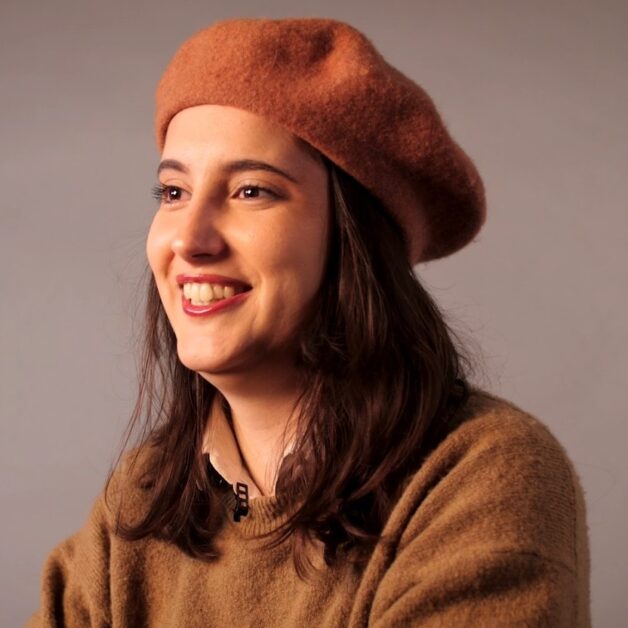
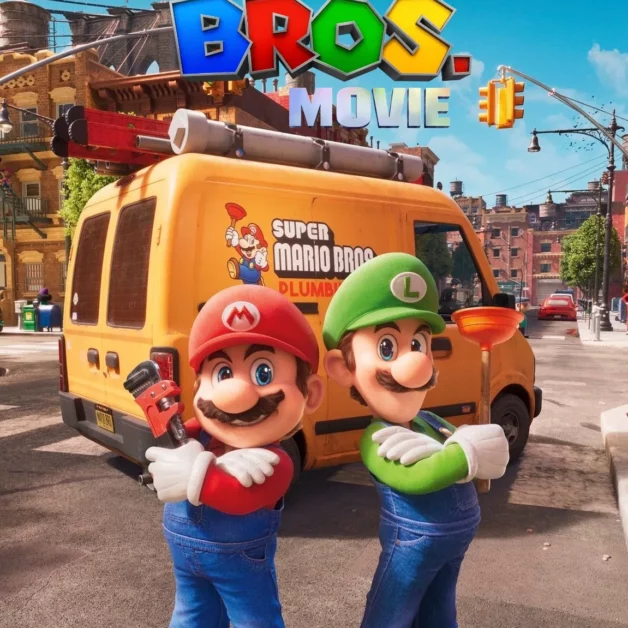
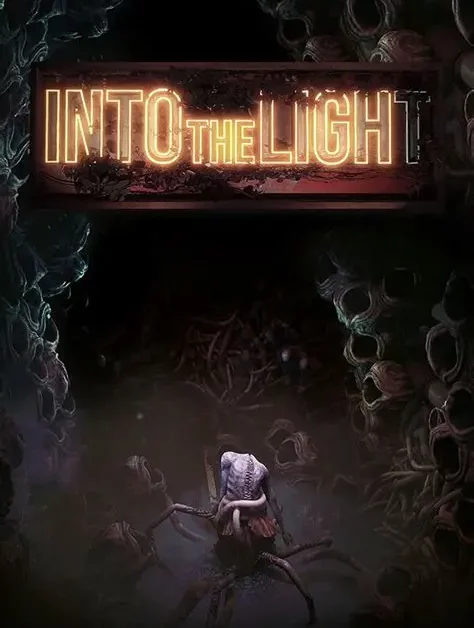
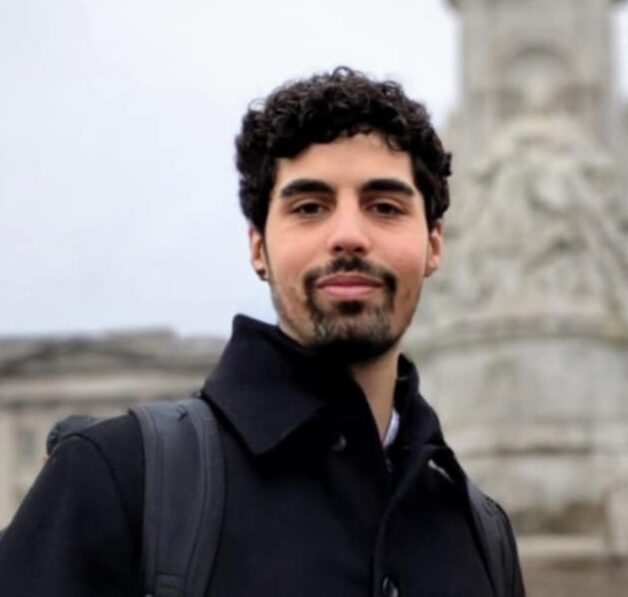
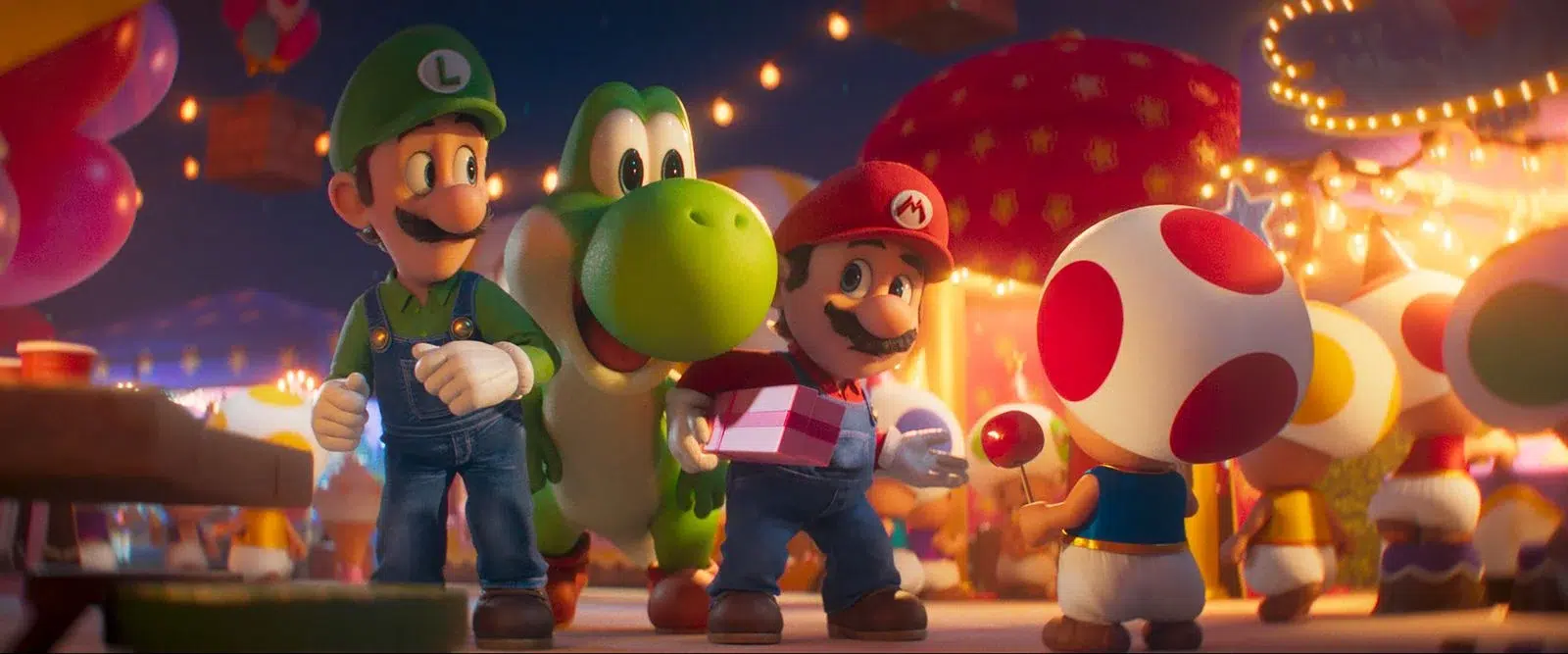
Despite everything, she persevered in her determination to break into the industry, eventually landing a job at Illumination Studio Paris to work on *Super Mario Galaxy* – no less.
Since then, juggling personal projects and new opportunities, Camille has continued her career in the animation industry, proving herself to be both pragmatic and determined.
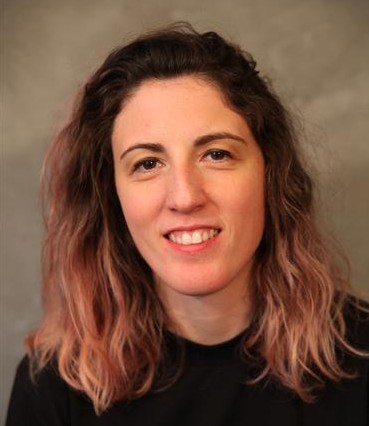
A chat with this former student, who is both kind and generous with her advice.
Could you briefly introduce yourself and tell us about your career path, from your time at ESMA to your current role?
From my second year at ESMA onwards, I had classes in English, and that was also one of the reasons why I chose ESMA Lyon in particular. In 2021, during my second year, I did an internship in 3D animation at ROKiT studio, which has since closed down.
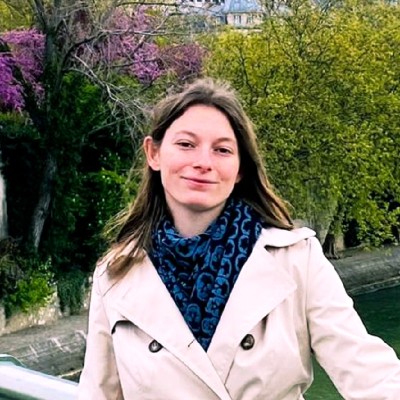
I graduated in 2023, which was a very difficult time for the job market in the film, VFX and video game sectors. I applied for numerous jobs, but it was by responding to a vacancy posted by Illumination Studios Paris for a junior rigger that I landed my first role in the industry, in January 2024. I stayed in the role for just over a year, working on *Super Mario Galaxy* and another project that has already been announced.
This was followed by an eight-month period of unemployment, despite once again applying for numerous jobs. I was able to use this time to work on the short film *Nos Entraves* as a props rigger. I have now been working as a rigger and technical animator at CI Games since October 2025.
What made you choose this school and this sector?
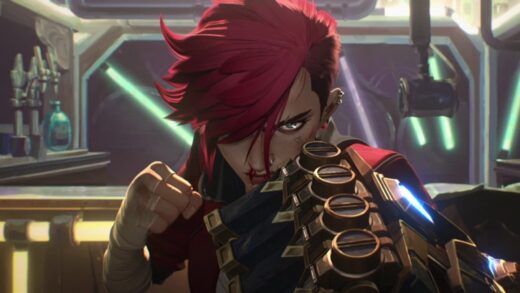
Back in my sixth-form days, I was really into animation, particularly the clips produced by Fortiche studio in partnership with Riot Games (I was a huge fan ofLeague of Legends at the time).
It was a classmate who told me about ESMA, and one thing led to another, and I realised that there’s a whole industry in France dedicated to these careers in animation.
At first, my mum would have preferred me to go to a state school, but the quality of the final-year short films and ESMA’s reputation helped me to convince her.
In practical terms, what has your training brought you?
First and foremost, excellent skills that enabled me to produce a high-quality demo reel. Through discussions with several colleagues over time, I realised that ESMA, through its 3D animation and special effects course, offered a good working environment, whether in terms of the premises, the equipment or the software licences. There were also several meetings with industry professionals, which gave us concrete answers and an informed perspective.
Looking back, what made the biggest impression on you during your school years?
On the positive side, I’d say the people I’ve met. Whether it’s my fellow students, who are now friends or colleagues, or the lecturers and professionals I mentioned earlier, they’ve all helped shape me into the person I am today.
On the downside, I’d say my final year. It was a pleasure to work on my graduation short film, and I was surrounded by talented and inspiring people, but certain exceptional circumstances made the production particularly complicated. I’m happy with the end result, but it’s true that there’s always that slight frustration knowing the film could have been even better without those issues.
Does what you’re doing now match what you imagined when you were a student?
Generally speaking, yes. I’ve always been drawn to the technical side of things and the ‘mathematical’ aspect, so right from the first year I was interested in rigging, even though I knew I wouldn’t start it until the second year. There’s a whole technical aspect to finding solutions that I really enjoy, but there’s also a sense of satisfaction in creating beautiful deformations.
Could you briefly tell us about your current role?
I am a technical animator specialising in rigging, which means I mainly work on character and prop deformation for video games, but I also support the animators when they have specific requests or needs. I do a bit of asset setup in Unreal Engine, whether that’s to support deformations planned in Maya, add additional behaviours (simulations, volume preservation) or other tasks falling within our department’s remit (other character-related setups, such as dismemberment or technical prerequisites for the game to run smoothly).
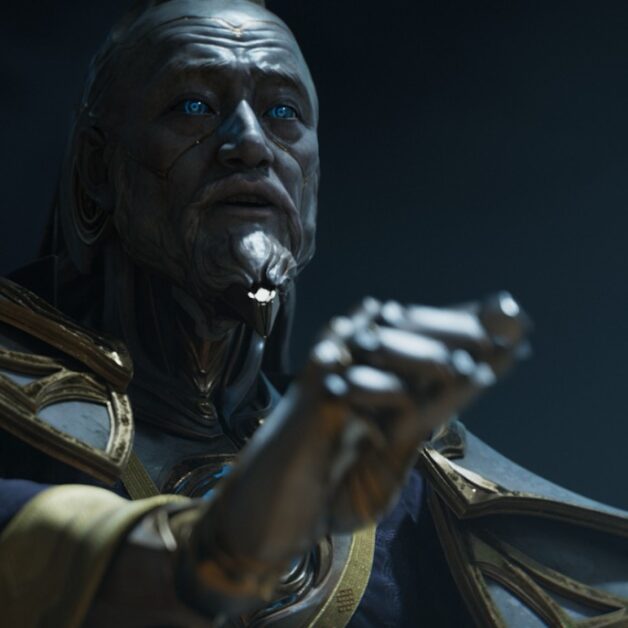
At the moment, I’m working on a video game: Lords of the Fallen 2. In my spare time, I’ve started work on a short 3D animated film, which is also helping me to develop my autorig.
Which project are you most proud of to date?
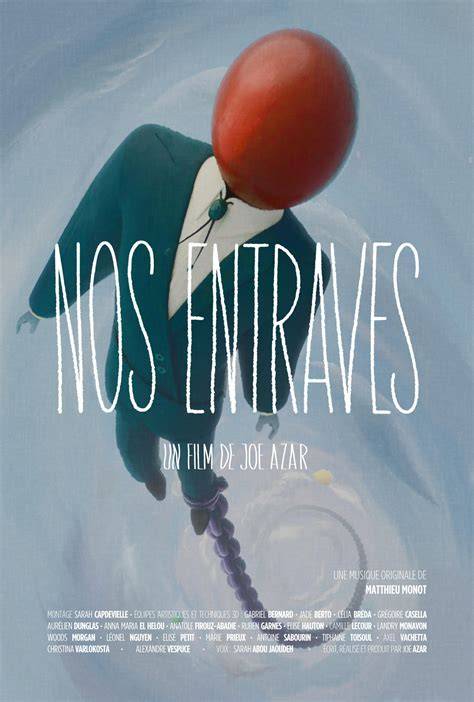
I think it’s the short film *Nos Entraves* by my friend Joe Azar. It was an independent production, which felt more on a human scale than the other projects I’ve worked on. I know that my work and my involvement had a direct impact on the final result, whereas in larger organisations, you’re just another graphic designer.
Of course, it’s also incredibly rewarding to work within these large organisations. The way the work is organised is different, and it always gives you a little flutter in your heart to work on major franchises like Mario or Lords of the Fallen.
How do you view the current state of the sector (animation / video games) in France and internationally?
I think the right word would be ‘troubled’. Let’s be honest, the crisis is still with us. Studios are closing, job opportunities are few and far between, and there’s a huge number of qualified people on the market.
As a graphic designer, I don’t necessarily have clear access to the budgets, but it seems that the number of projects has been falling in recent years.
That said, I don’t have much perspective in terms of time, so I don’t think I’m in the best position to make any assessments on this subject. In the case of France, it’s clear that the budget allocated to culture is being cut, and this inevitably has a negative impact on the number and quality of productions.
Do you think this is simply a cycle or a more structural transformation of the sector?
When talking to my colleagues, what really stood out was that there have always been tensions within the industry. It has never been easy to make a name for oneself in film or video games, even if certain periods have been more favourable. I do think, however, that there’s going to be a structural transformation of the sector: people’s purchasing power no longer allows for the same relationship with entertainment as before, and the arrival of AI is set to be a game-changer.
In this competitive market, what do you think makes a good professional these days?
As far as I’m concerned, there’s no magic formula – it’s mainly about being in the right place at the right time. That said, you do need to have a strong portfolio for the role you’re targeting, as well as good interpersonal skills. We spend most of our time with our colleagues, so it’s always nicer when we can have a laugh together, especially when production gets tricky. Ultimately, it also helps you build your network; you’re more likely to want to work with someone again if you’ve hit it off with them.
In your opinion, are recent graduates sufficiently prepared?
In my view, what recent graduates lack most is an understanding of how the industry is actually organised. Artists go from one short-term contract to the next, working as ‘intermittent du spectacle’ on TV series, films, adverts and VFX. It’s a rather precarious situation, and it’s difficult to plan for the future when you don’t know whether you’ll still be under contract in three months’ time. That’s why I think it’s also an industry with a fairly young workforce: it’s easier to make life plans when you’re in a stable and/or predictable situation.
How do you view the changing relationship between schools and studios?
It is important to maintain close communication between these stakeholders. Ideally, studios would provide more information on their projected staffing requirements so that training organisations can adjust their intake figures accordingly. This would also enable other professionals in the sector to better assess their position and plan ahead for the year. However, this is not always possible when the studios themselves are sometimes waiting for contracts and grants that they are not sure they will receive.
How have new technologies (Unreal, generative AI, real-time motion capture, collaborative tools, etc.) changed the way you produce content?
These new technologies provide tools that it is worth, at the very least, being familiar with. Generative AI has its share of controversies (copyright issues, environmental disaster, soaring prices for electronic components), but it can also be a powerful tool.
Just as motion capture has not replaced animators, I do not think that generative AI will completely replace certain professions. Large language models (LLMs), for example, can generate responses that do not work within the context of the code. Images generated for concept art are often inadequate (incorrect proportions, anatomically impossible poses, incompatible angles), and so on. However, it is certain that increased productivity will lead to a reduced need for staff.
When it comes to generative AI in particular, I remain vigilant about one thing: I don’t let it think for me. Yes, it’s handy to have it rephrase a text, format it, and so on, but these are all moments when my own thinking is at work and being exercised. It’s important for me to maintain mental discipline, just as one mustn’t spend too much time being inactive if one is to keep one’s body healthy.
Does this have an impact on team structure, budgets or deadlines?
So far, I haven’t noticed any impact. We’re still being asked to do the same things, sometimes with tighter deadlines, but I’ve never heard anyone say, “Do it with AI – it’ll be quicker”. But that’s just my personal experience. From a pipeline perspective, adding or modifying processes is very cumbersome; it’ll take a lot of momentum to get things sorted out on the structural side.
One thing is certain: as far as I’m concerned, the tool and the artist must each be kept in their proper place.
What are the fields or projects that inspire you at the moment?
It’s been on my mind ever since I started school, but I’d still really love to work at Fortiche. I want to work on high-quality projects that are meaningful to me, whether in terms of the end result or the work I do.
To take this a step further, it is clear that French cinema enjoys international recognition. The ‘French touch’ is one of its selling points, but there are also numerous support schemes that help the country remain an attractive destination.
And what about you – where do you see yourself in five years’ time?
I hope to still be working in the industry. But it’s hard to plan for the future with all these uncertainties. I’m lucky enough to have a stable job at the moment. And, to top it all off, I’m learning a lot there that will stand me in good stead in the future.
What advice would you give to students studying today?
Don’t hesitate to expand your network. This involves attending networking events, but also knowing how to use LinkedIn. Personally, I prefer to include a short message introducing myself when I send a connection request. Also, remember to target contacts in the fields that interest you and are relevant to you.
There are also plenty of resources to help you find out more: France Travail runs workshops and support programmes specifically for freelance workers in the performing arts. The 3DVF YouTube channel features numerous talks covering practical topics, including employment figures for 2025.
As far as schools are concerned, student numbers need to be aligned with the labour market. It would also be a good idea to offer an introduction to new technologies (motion capture, AI, Unreal) through one-off masterclasses, for example.
Finally, please bear in mind that there is nothing wrong with changing direction and moving into a different sector if things aren’t working out for you, whatever the reason. A person’s worth is not measured by their employability.