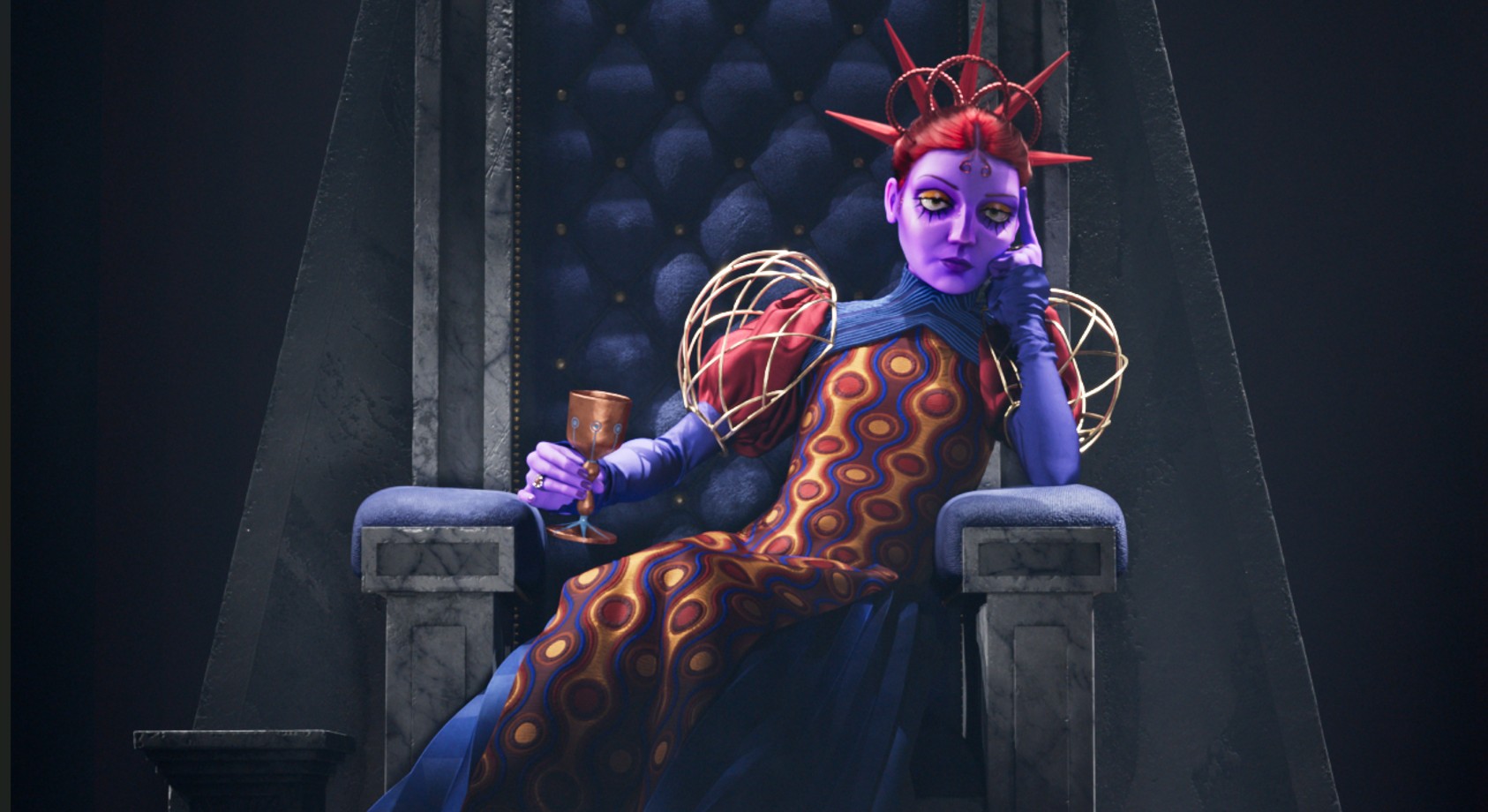

A graduation film that, with simplicity but a great deal of mischief, draws as much from fairy tales and theatre as it does from the figure of the modern autocrat, the better to turn it on its head. With a strong visual bias: freeing ourselves from sets to concentrate all the team’s work on animating charismatic, finely staged characters.
The gamble paid off, as the film has already been selected for numerous international festivals, including the Melbourne International Animation Film Festival, Cartoon Club and the Lunatico! festival, where it won Best Performance.
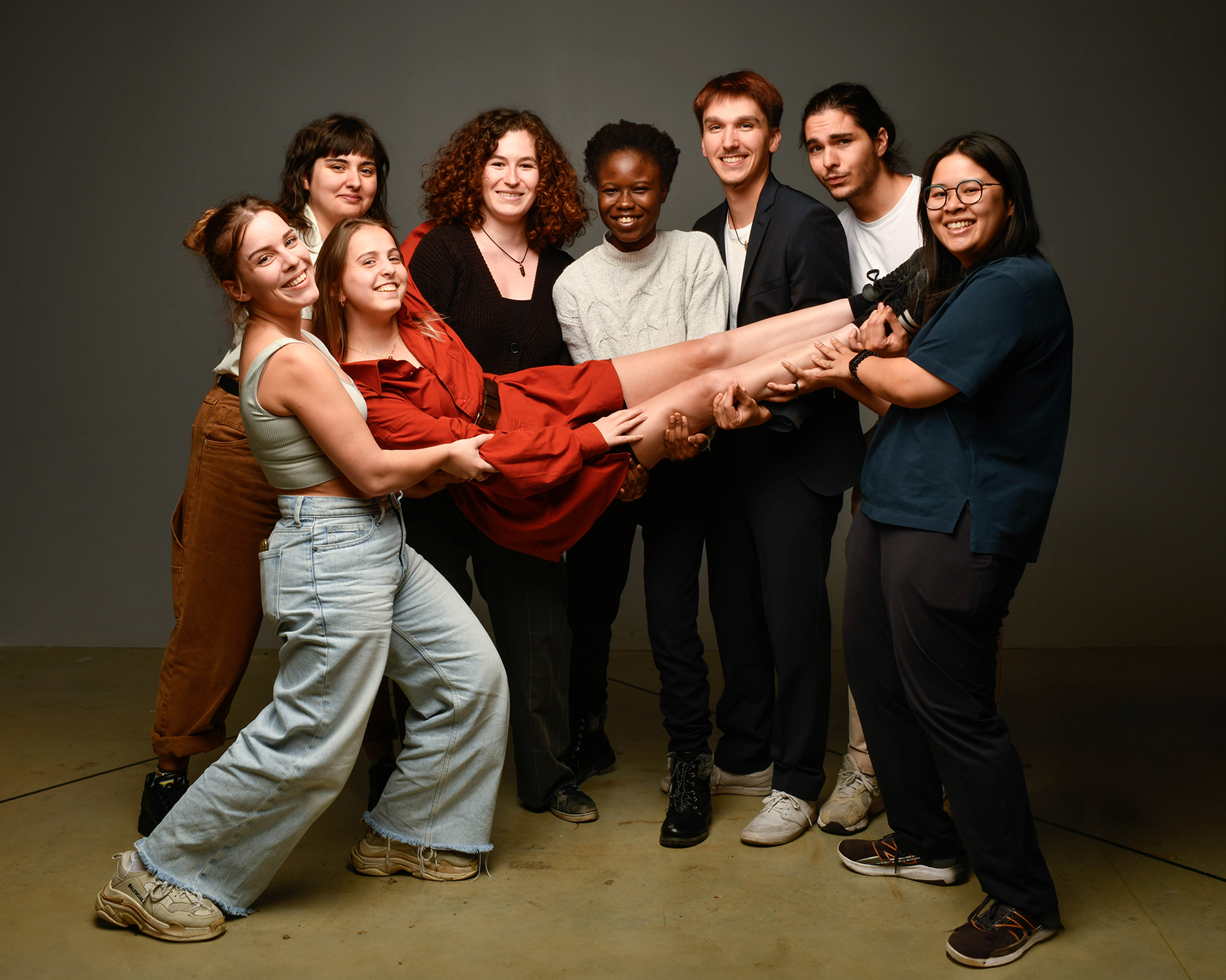
What were the major challenges in achieving this inspired and flamboyant result, and how did this first experience of directing go? That’s what we asked Alex Bajon, Lucie Coste, Charlie Coucoureux, Hindha Kone, Anne Lé, Aurore Meyer, Mariette Pons and Eloïse Vacher.
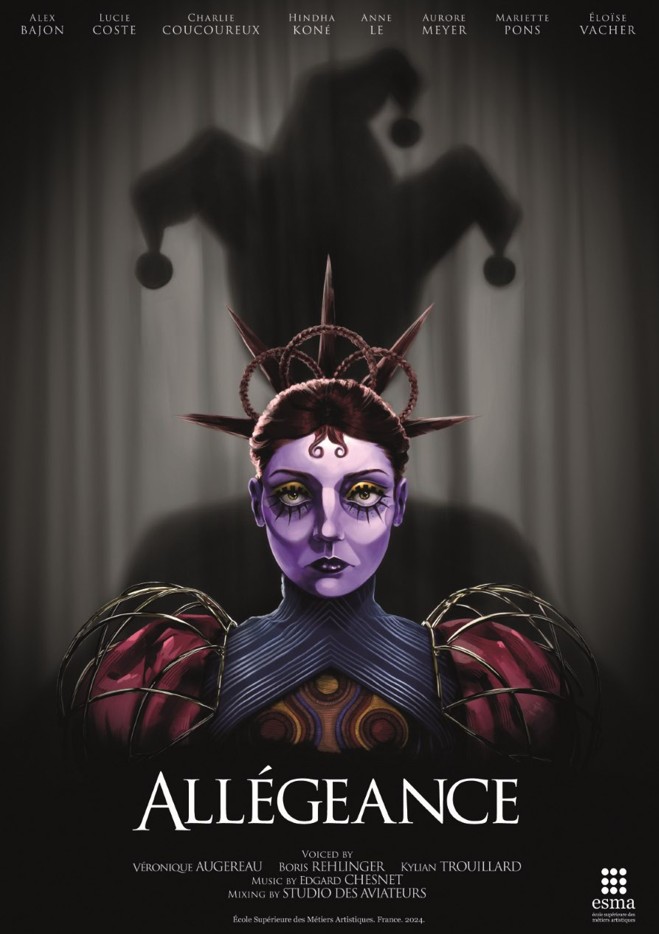
We spoke to these eight students about the various stages in the production of the film. It was a very full discussion, which we invite you to discover below.
From an unremarkable queen to an allegory of consumer society
Eloïse Vacher came up with the idea for this project. It was an idea that grew and grew with the feedback from those who were to become her co-directors, and the comments of the teachers supervising these development phases. But it was the visual of a blue-skinned queen in brightly coloured clothes but with a gloomy expression that really gave birth to the story.
“I had the visual before the story. The queen’s bright outfit contrasted with her expression, wallowing on her throne, isolated in the darkness of the room. This concept was born out of a desire to get out of my comfort zone by working with colour on the one hand, and on the other the desire to propose a scenario with no defined time frame.”
The team drew on a wide range of texts and influences, from philosophy to literature, to refine their approach.
“We were inspired in particular by Étienne de La Boétie’s Discourse on Voluntary Servitude , which analyses the way in which a people comes to obey and submit to the decisions of a single man. In our film, colour became the symbol of “power to act”. Today more than ever, power is no longer defined solely by function or wealth, but by the ability to stage and propagate one’s image. That’s how the Fou, our second character, came into being.
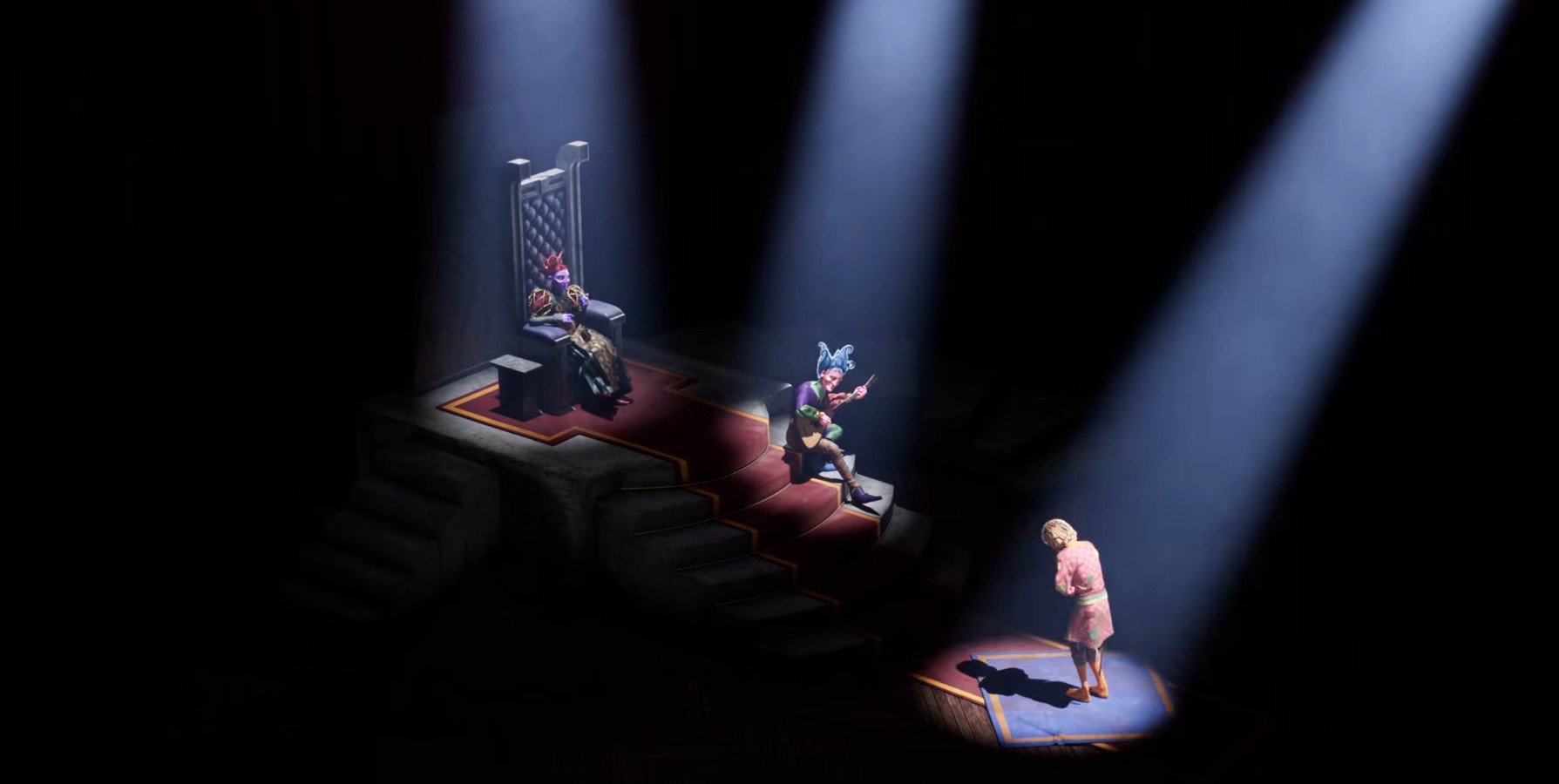
Finally, it was the theatre that provided the last piece of the jigsaw puzzle for this script. By adopting a theatrical staging, the team was able to integrate a real courtroom into the heart of the script, allowing them to break the fourth wall and place their characters and their story at the centre of the story.
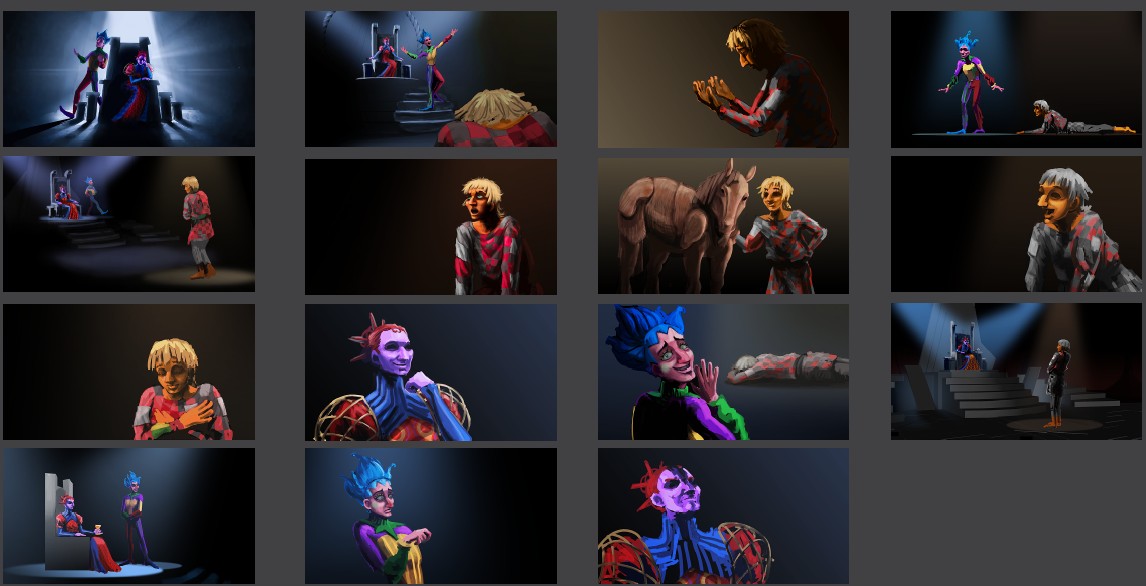
“All this,” concludes Eloïse Vacher, “without any superfluous elements, thanks to a dark, in camera setting. In this way we were able to offer a dual artistic medium, interweaving cinema and theatre in a single project.”
Archetypal characters with multiple influences
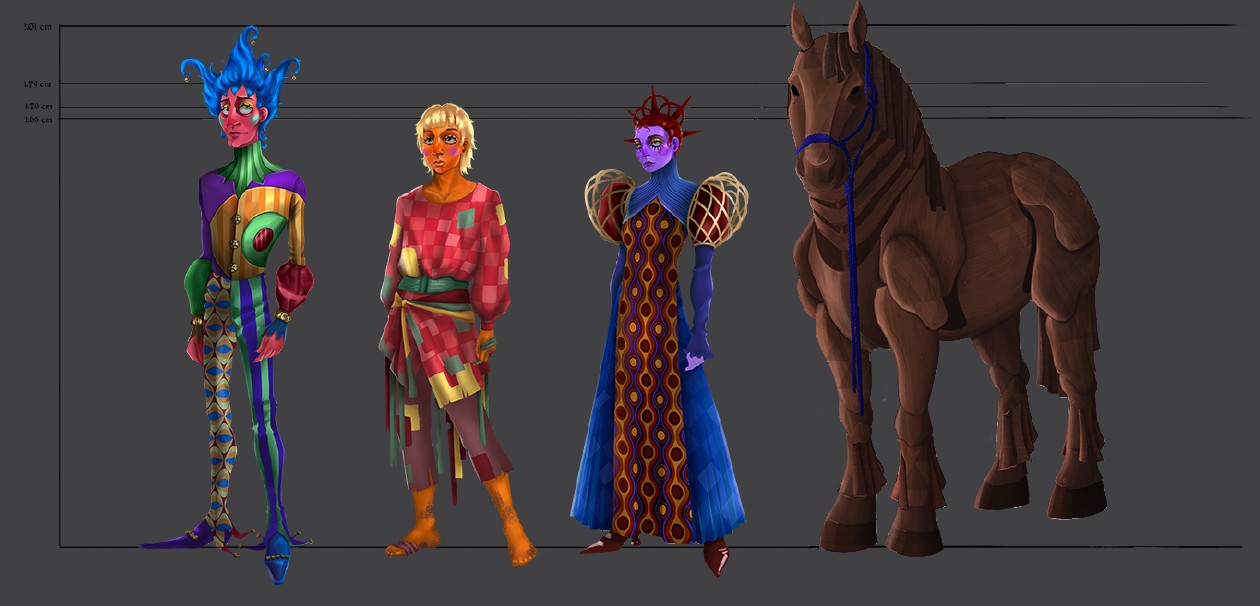
By concentrating on the development of these protagonists (the Queen, the Fool and the Griever), the team were able to give free rein to their inventiveness, inspired by fairy tales and theatre. Notre Dame de Paris, Henri IV and the Game of Thrones series are among the influences cited, even if they remain tenuous.
“The skin colour and stylisation of the characters was one of the biggest challenges,” continues Eloïse Vacher, speaking on behalf of the team. “Making the violet, pink and orange skin tones believable is no easy task.
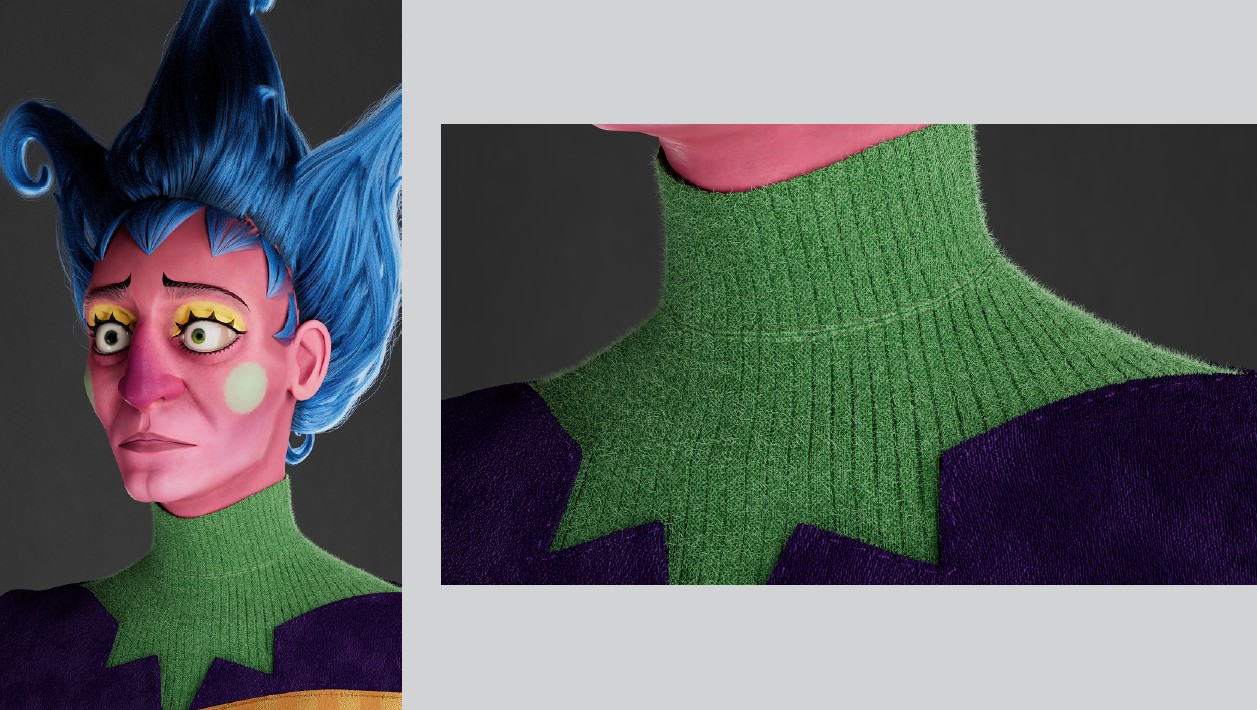
We went over it many times to get as far as possible from an ‘uncanny’ effect, that feeling of strangeness that can be caused by a humanity that is too approximate. Every shade had to be perceived as natural in the universe we’d built, and that pushed us to work the characters side by side all the time.”
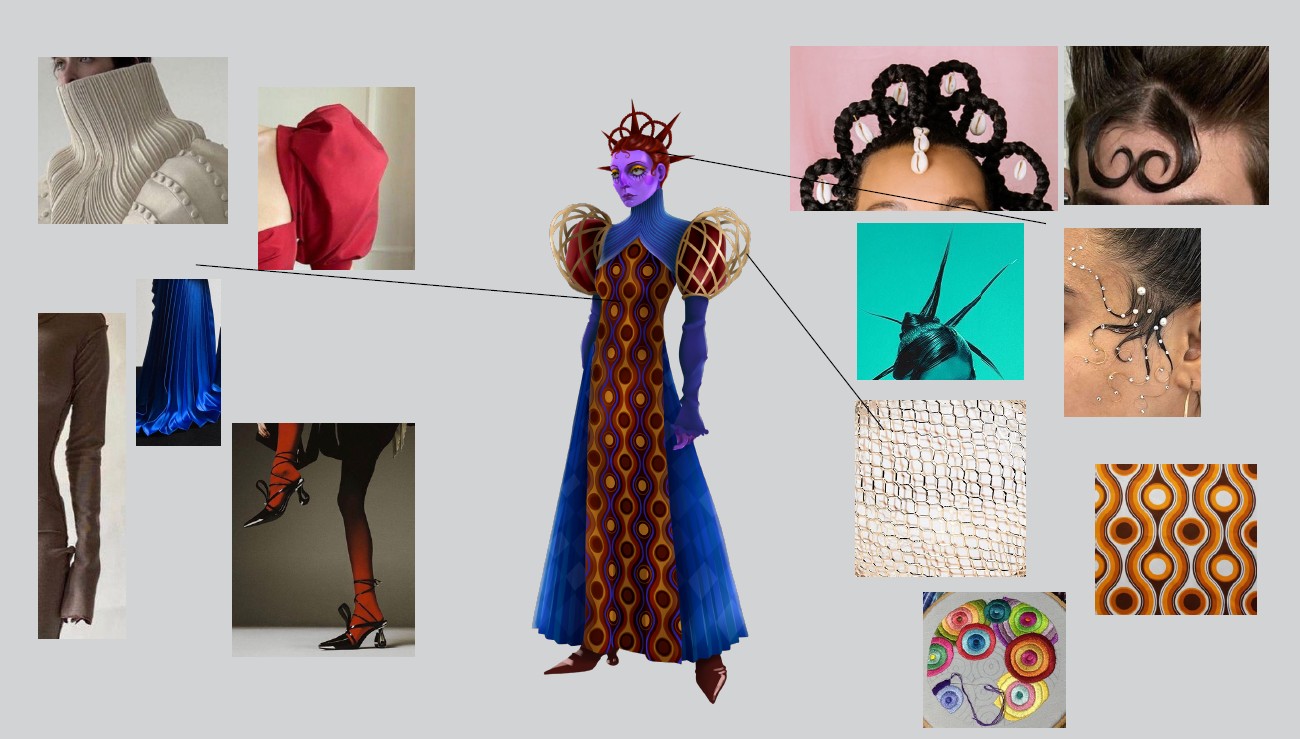
The Queen benefited from a subtle balancing act between strangeness and respect for the classic beauty canon. Iterations that also marked the creation of the madman, between too much madness and too much charisma.
Until her dark, manipulative side is revealed in the final part of the film. Finally, the peasant, for whom the team hesitated for a long time about his gender, is a male character with an androgynous appearance representative of a whole humanity, under the thumb of this sometimes generous, sometimes icy queen.
“Giving such an important place to dialogue represents a challenge in terms of writing and rhythm. Every word, every formulation had to be thought through. We had to time each character’s speaking time. The Queen’s speech had to be forceful and authoritative in the first few minutes, while the peasant needed more breathing space to show his hesitations. The tone, rhythm and silences themselves became narrative tools in their own right.
Sculpting space through light, and power relationships through colour
A timeless universe, detached from landmarks to leave room for the audience’s interpretation. It was with this vision, and the initial concept art developed by Eloïse Vacher, that the team set about creating this deceptively simple world.
“The theatre was both a narrative and a visual influence. We were lucky enough to attend the play Richard III at the Théâtre de la Cité in Toulouse, where the play of light played a central role in creating the atmosphere. The light sculpted the space through chiaroscuro and made it easier to understand the scenes. This experience greatly influenced our choices of direction. Combined with the colourful characters, it enabled us to create strong contrasts and atmospheres.
By creating this closed-door setting in which the lighting (unnatural and highly coloured) carves out the space, the team guides the viewer’s gaze, who immediately lends allegiance to this constructed narrative, guided by the points of view of the various characters. But these drastic choices also posed a number of challenges for this ambitious team.
“During the whole process, we had to find a chromatic balance, and the lights had to in no way alter the complexion of the characters. They may look harmless, but they were also a real challenge,” recalls Eloïse Vacher.
Technical challenges overcome thanks to an eclectic team
While the simplicity of the concepts may have given the team a certain amount of freedom, rigging, animating and lipsyncing these complex characters gave this eclectic team a lot of cold sweat.
“None of us really used Houdini, but it was a compulsory step for the simulation of the clothes and the R&D for the colour changes to the characters,” confirms Eloïse Vacher. “We had to create a pipeline exclusively for the clothes, which had to go through three different pieces of software for each shot: simulating the clothes on Marvelous Designer (which we didn’t have to start from scratch on), re-adapting the retopology on Houdini, then importing and rendering on Maya.”
It’s a time-consuming job, but one that the team managed to pull off thanks to a natural distribution of roles, based on each person’s strengths.
And despite their different working rhythms, and characters that weren’t always aligned, it was by dint of patience and perseverance that the project saw the light of day.
“That said, the film would be nothing without the help of our helpers! Animating three human characters with advanced, chatty rigs like ours for seven minutes was no mean feat. Our classmates were a great help, relieving us more than once from animating certain shots. Several third-year students came to our rescue, so we never doubted that the project would come to fruition.”
A “very French” film, between ambition and simplicity
“What makes us most proud is the originality of our proposal”, the team stresses. At the end of Allégeance, it’s hard to say: “I’ve already seen a short film like this”. As an anecdote, at our first screening in front of the end-of-year jury, someone described our film as “very French”! And it’s true that it’s hard to deny our penchant for knocking over crowns…”
What these students retain from the Allégeance experience is the need to invest in teamwork, going beyond personal tasks and egos.
“Finally, you have to find the right balance between ambition and simplicity. A film like ours may seem simple in its production, but we always underestimate the amount of time we spend on technical issues, which are nonetheless obligatory!”
A wise piece of advice, essential in an industry that combines the artistic and the technical, such as animation. In the meantime, as these professionals become integrated into the sector, their film Allégeance continues its festival run.
Discover Allégeance, ESMA’s 2024 graduation film, now available in full: