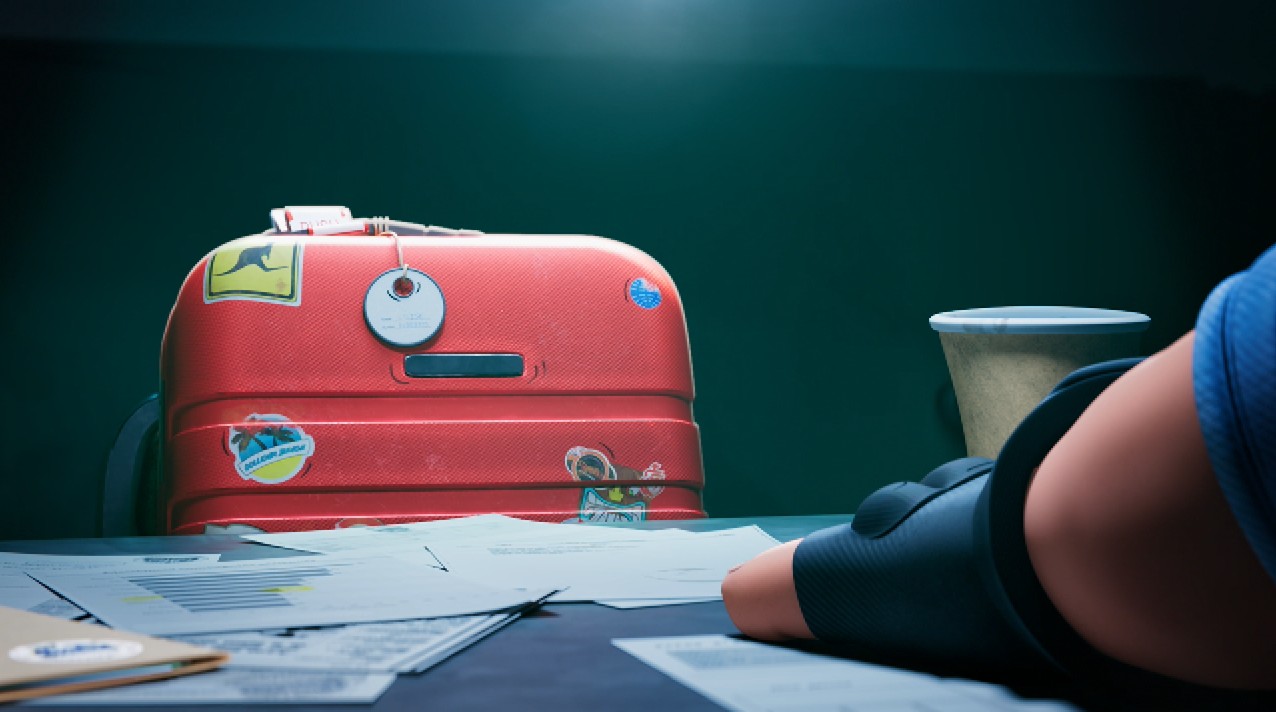
An explosive short film
Explosive and dynamic are two adjectives that aptly describe this short film by ESMA, which skilfully blends the codes of action film and comedy to produce a result that is as absurd as it is delicious.
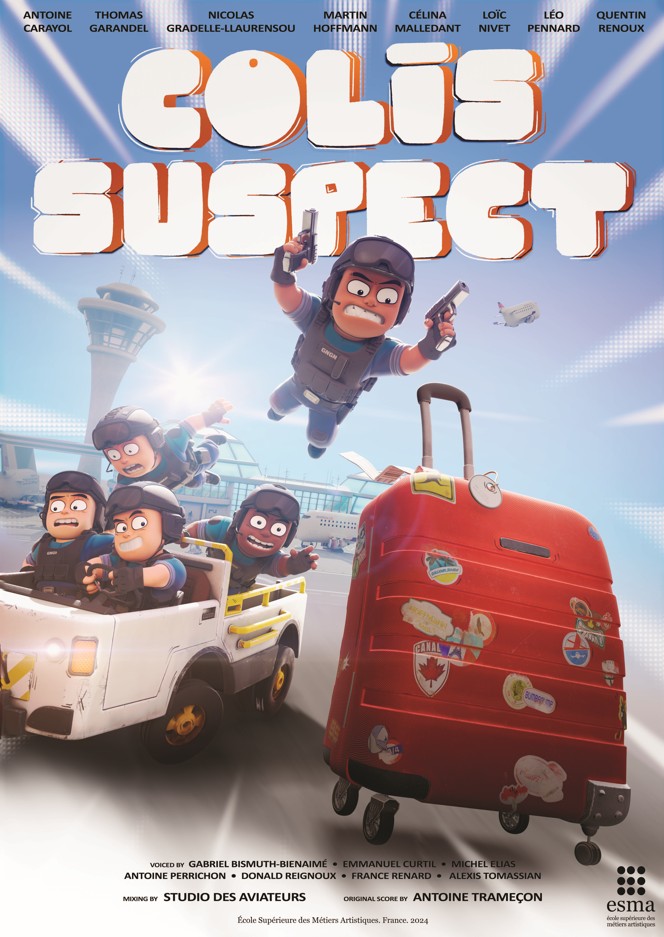
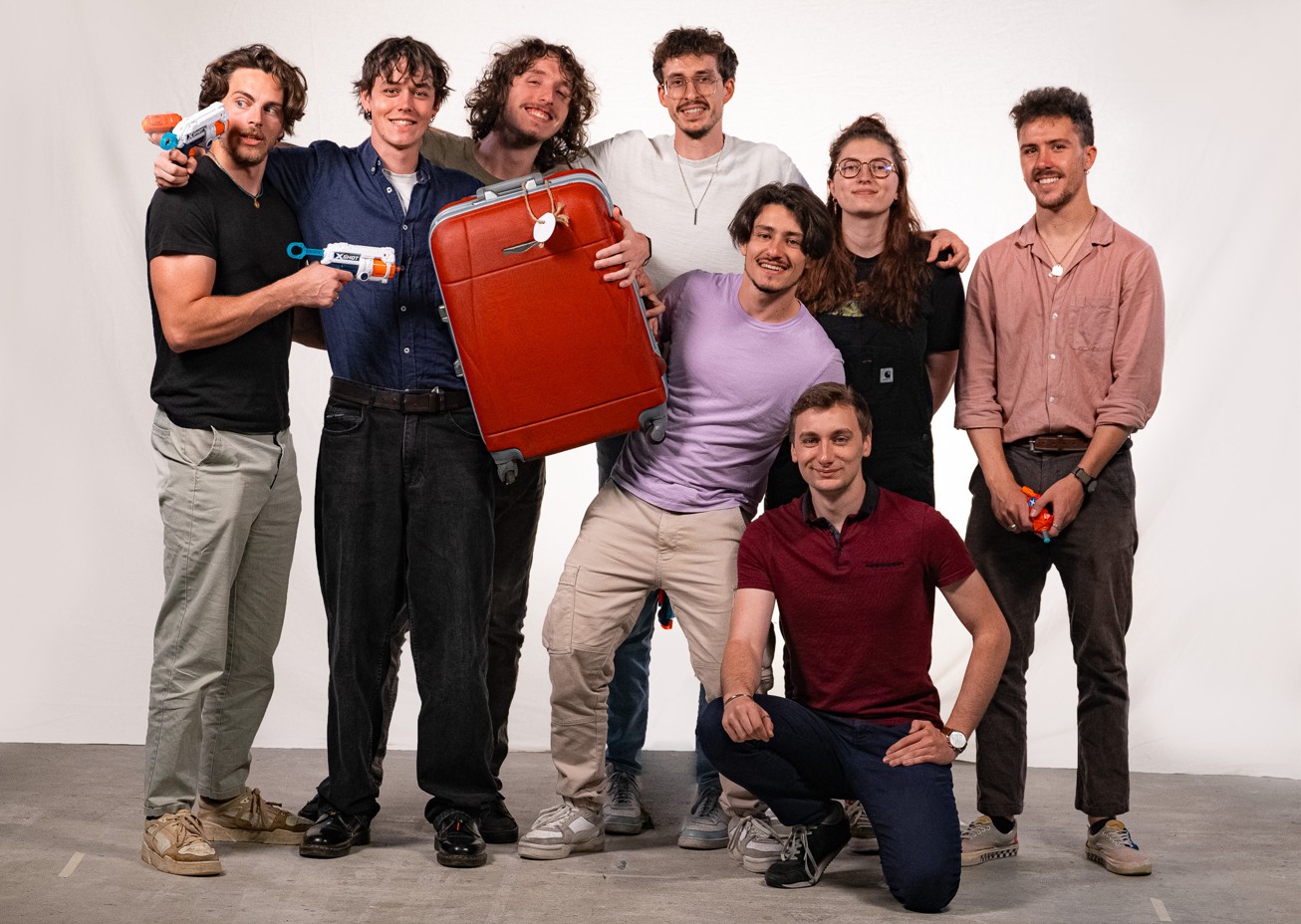
Produced by Antoine Carayol, Thomas Garandel, Nicolas Gradelle-Llaurensou, Martin Hoffmann, Célina Malledant, Loïc Nivet, Léo Pennard and Quentin Renoux.
To better understand the origins of this day-to-day adventure, which takes on completely disproportionate dimensions as the film progresses, we spoke to the team.
An opportunity to delve into the technical and artistic challenges represented by this colourful, pop project, which was selected at the Jeunesse en Court festival and awarded the bronze medal at the ESMA Graduation Show 2024.
What is the starting point for Suspicious Parcel?
This idea was born in Antoine Carayol’s mind during the 3rd year of our 3D course at ESMA. The basic intention was to make an absurd comedy film, which led Antoine to the concept of an inert suitcase being pursued by soldiers from an airport intervention brigade. Later, as the team grew, we reworked and developed the idea as a group.
A number of us were friends in the team, fun-loving people who wanted to make people laugh and have fun. We were very influenced by the incisive and creative humour found on the internet today, but we were also inspired by films such as Dernier Pub avant la Fin du Monde and Hot Fuzz by director Edgar Wright, or Rubber by Quentin Dupieux.
In the end, the original idea didn’t change that much, but it took a long time to work it out. Especially as we had enough material to make a feature film! The challenge was to contain ourselves and fit the story into a short film format of five or six minutes.
How did you build your characters?
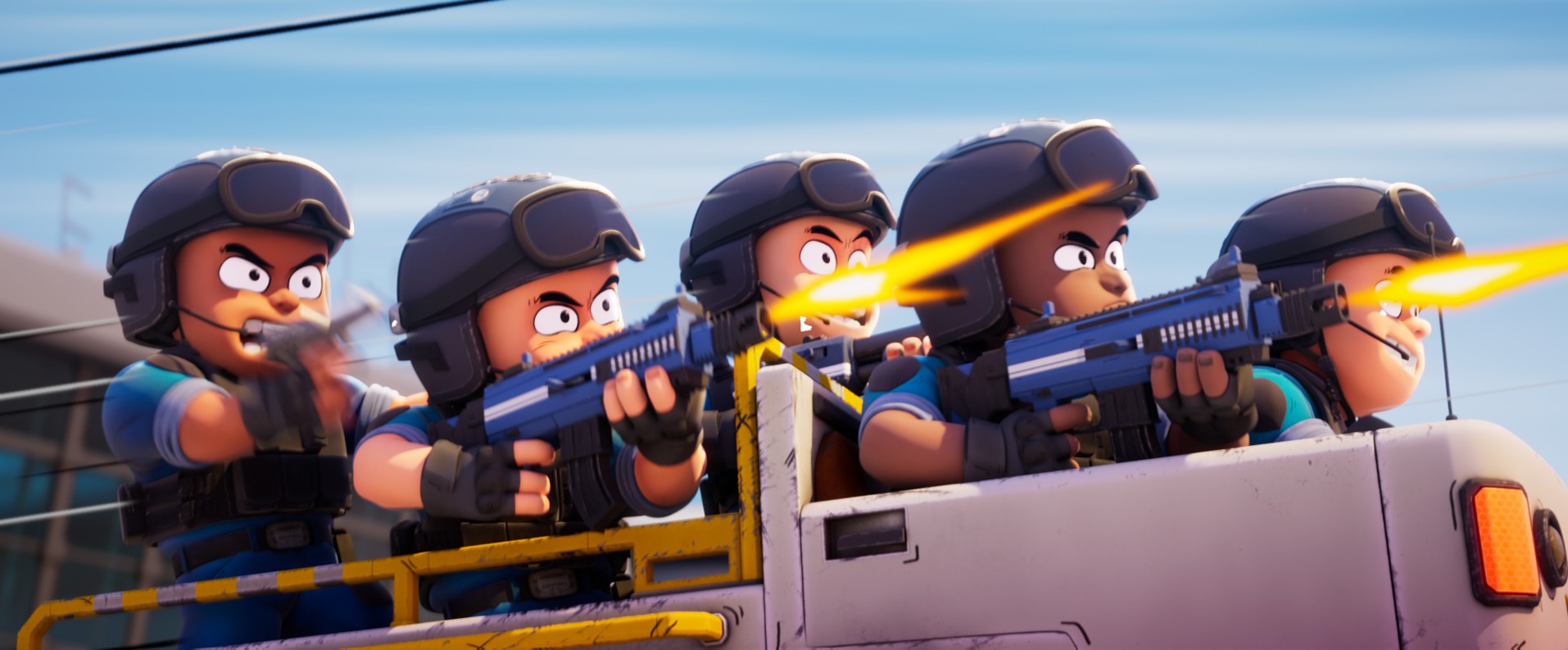
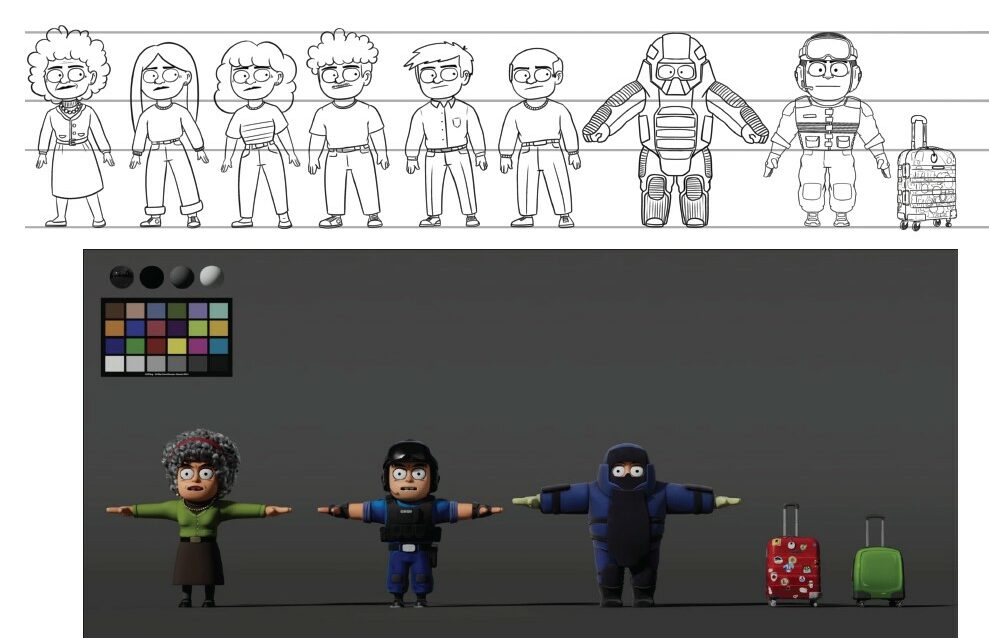
As far as the soldiers were concerned, we wanted characters with communicative expressions, while treating them as a group. Clones who always act together, which is why there’s very little differentiation between them. In that sense, we drew a lot of inspiration from Illumination’s ‘Minions’.
A simple, yet expressive and distinctive design that allowed us to juggle between a serious, daredevil look a la Rambo or Expendables, and a much less serious, even childlike look, typical of the minions.
In our film, the GNGN is an unsophisticated group and their paranoia leads them to overreact. The suitcase becomes a criminal to be stopped at all costs, and the contrast between the vision of these characters and the reality of a simple suitcase will enhance the situational comedy.
The suitcase, for its part, had to have an old-fashioned look and evoke empathy through a touching aspect, while remaining basic so as not to give it a ‘life’ of its own. Each of its movements remains the effect of a chain of causalities.
But these adventures tend to generate empathy for the suitcase, which we have reinforced through framing choices that give the suitcase the status of a real character to whom we can become attached.
Your film mixes 2D and 3D aesthetics, both in its effects and in its world. What was important to you in this mix?
We chose to have a very comic/manga look, which fitted in well with the direction our story was taking, and which is part of the references we share.
For the character designs, we drew inspiration from the Dragon Ball characters created by Akira Toriyama, as well as Dreamworks’ Bad Guys. The rest of the universe is a mix of references from the Supercell video game studio(Brawl Stars, Clash of Clans, etc.).
The choice of so many huge sets was a challenge in itself, and required a lot of work to set up. We also decided to unfold our story over a whole day, which meant we had to manage the passage of time through the lighting of the film and our different sequences. At the same time, we had to pay close attention to the connections between the sequences and to respecting this temporality, particularly in one sequence where we had to manage the sunrise in a fluid way.
What were the main challenges of this production?
Managing the size of each shot in production, whether in terms of the weight of the stage or the quantity and size of the sets, was a long battle with our machines.
The same goes for finding the visuals for our 2D FX (speed lines, smears, BD effects), which were produced in 3D.
There are no secrets to solving these problems: we had to optimise a lot, do a lot of research, and carry out tests again and again.
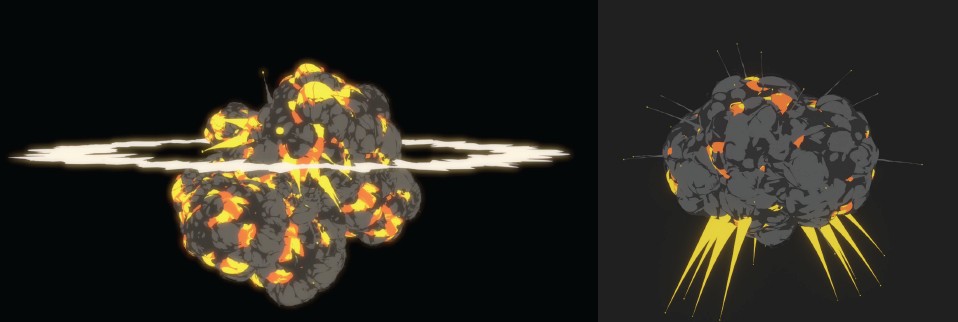
We mixed several 3D software packages – Maya, Blender, Houdini, as well as Substance and Nuke – to get the result as close as possible to what we were looking for.
How did you divide up the tasks?
At the start of the project, the team was already divided into four facilitators and four renderers, and the rest of the tasks were allocated quite naturally according to each person’s affinities. Beyond this division of labour, we remained focused on helping and supporting each other.
With only a month to go before the film was due to be released, we suffered a server breakdown that put us two weeks behind schedule. An extra challenge we could have done without.
To complete this project, we relied heavily on communication, mutual support and a good dose of fun to keep the team motivated, while presenting a film we could be proud of.
What do you remember about this project today?
In retrospect, we’re proud to have succeeded in bringing this huge project to fruition, but above all we’re proud of the year we spent working and laughing on this collaboration. It was a real pleasure to be able to pass on this energy to the public, and we were delighted to see how well our film was received. It was an adventure made up of cinema team buildings on a Monday morning when the servers were down, but also a project that enabled us to get Alexis Tomassian, Martin Mystère‘s double, to say some insane things, and where we were able to slip two sounds of flatulence into the film’s sound effects. It’s a very subtle form of humour, and very much in the DNA of our project.
On a more serious note, it’s still hard to say what we could have done differently, as the film is still too fresh in our minds. But one thing’s for sure: this project is what it is, a reflection of us and our abilities.
Our advice for those working on their film today? Communicate with your colleagues, don’t take things too personally. Above all, enjoy yourself!
It’s a great energy, which is also felt throughout the rollercoaster ride that is Suspicious Package.