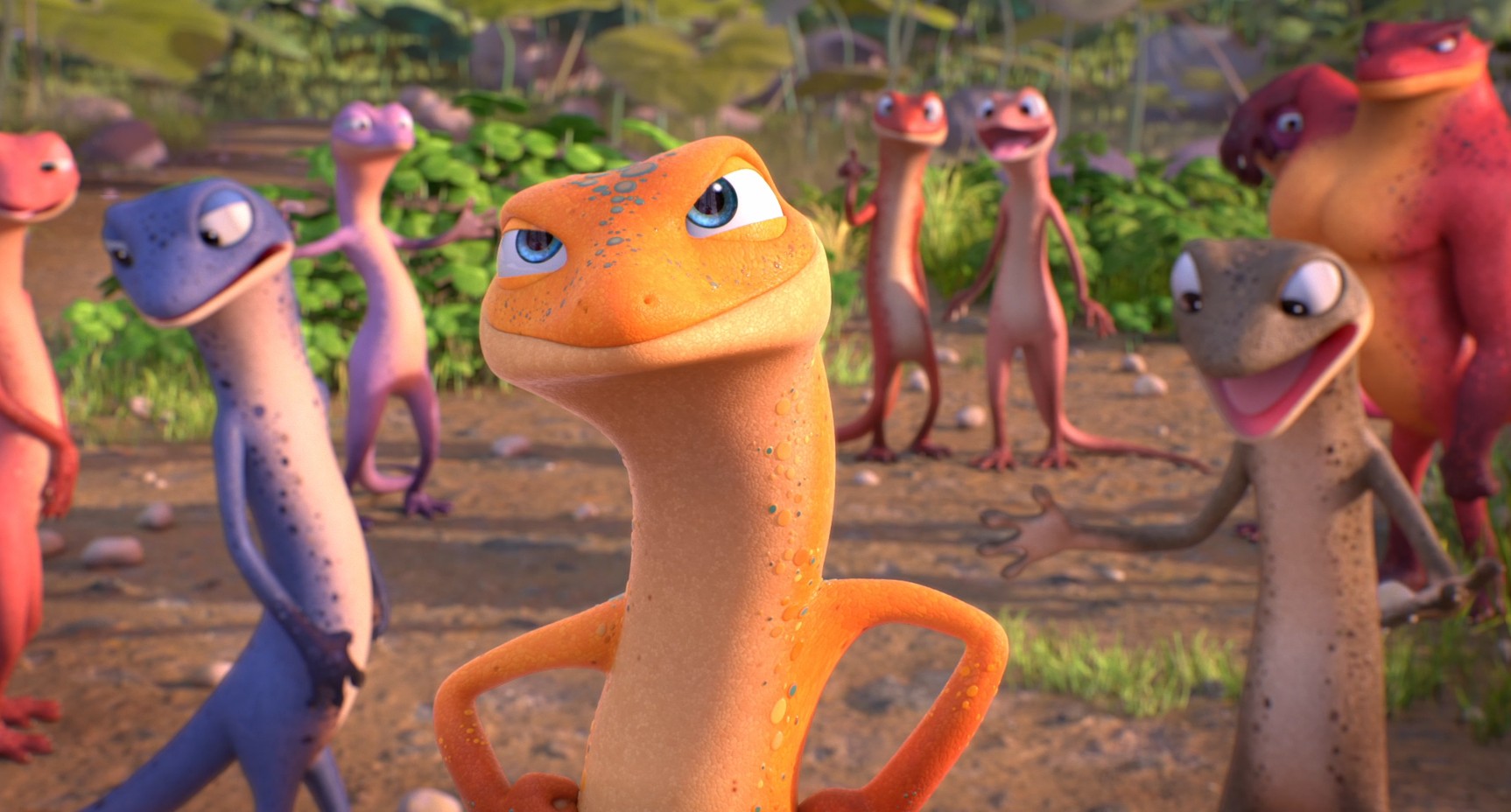

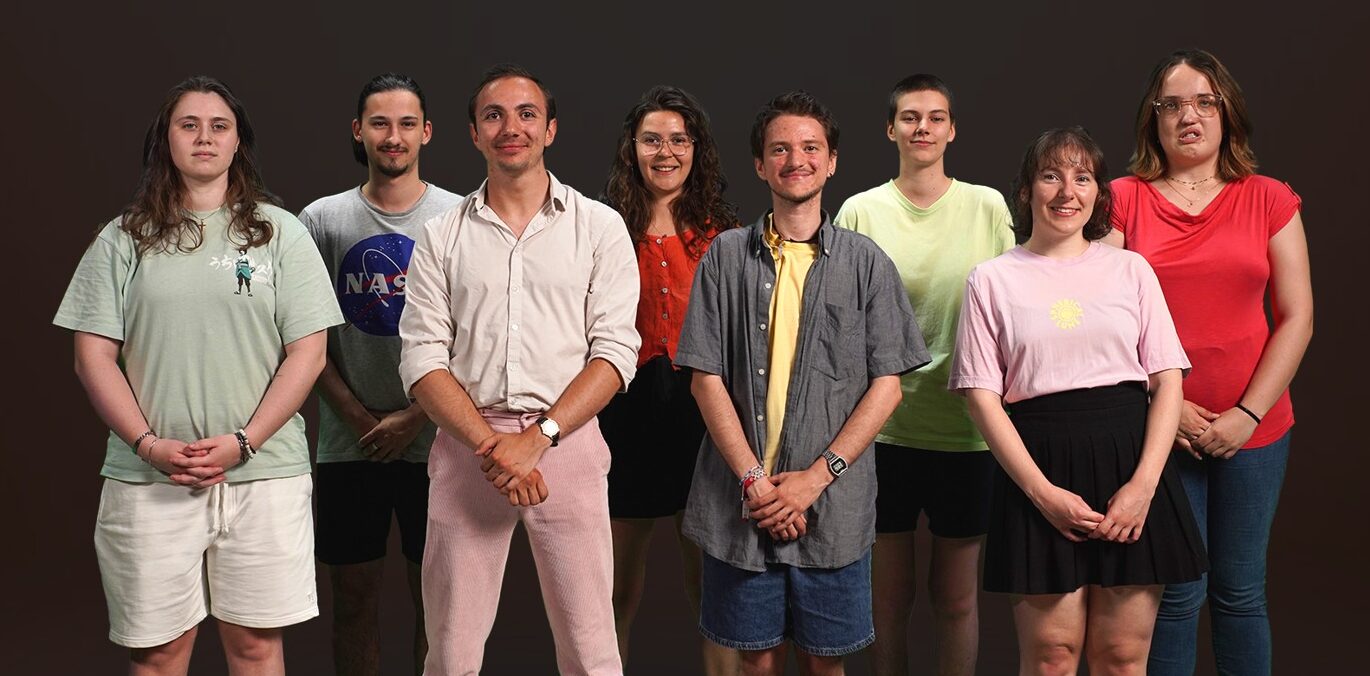
Through this sensitive short film, which balances schoolboy humour with genuine emotion, the ESMA team (Liselotte Allard, Alphonse Année, Margot Brun, Frédéric Dewit, Eva Dugue, Esther Garcia Fernandez, Lourenço Soares and Camille Szostek) present *Tailless*, a charming project that goes beyond romantic clichés and is sure to amuse both children and parents alike.
A meeting with the team behind this unique yet universal project, which has been selected for numerous international festivals, from Mexico (Guanajuato International Film Festival) to Greece (Thessaloniki Animation Festival, Athens Animfest), via Brazil (Anim!arte) and Italy (Sedicicorto Forlì International Film Festival).
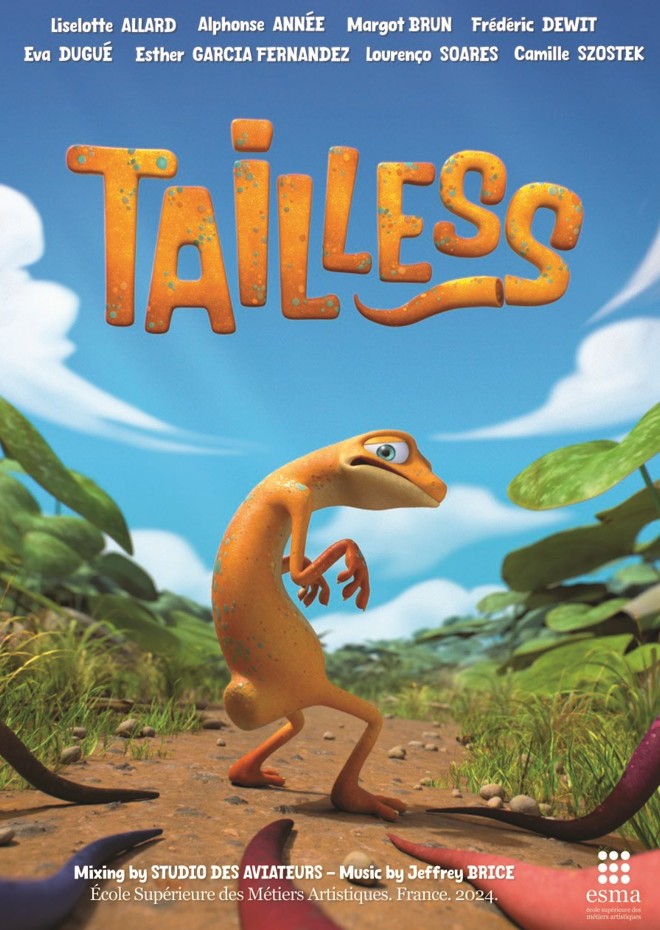
A tailless lizard tries to find love again
This pitch was originally Liselotte Allard’s idea, around which this team of eight students has built this animal world where size really does matter. “In a world where lizard tails are a symbol of love, we follow Sam, a tailless lizard, as he sets off in search of the perfect tail. Together with his friend Paul, they’ll embark on an adventure full of emotion, in a film we wanted to be humorous, but where emotions also had to have a place in the story.”
This determination helped the team with the many narrative and aesthetic choices involved in producing a 3D animated short film. The message is clear: accepting yourself as you are is more important than conforming to society’s standards in order to be loved.
Characters with iconic looks that speak volumes
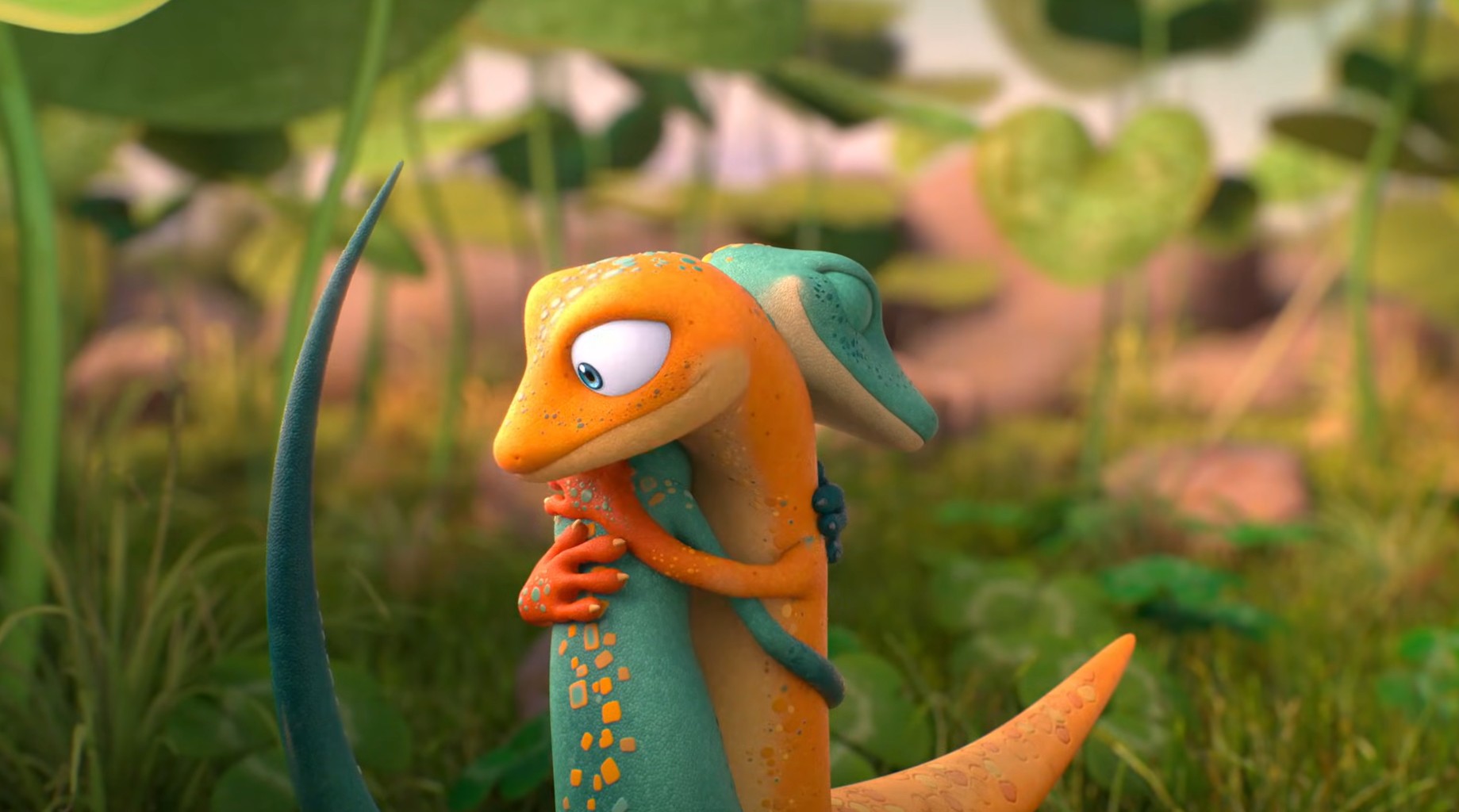
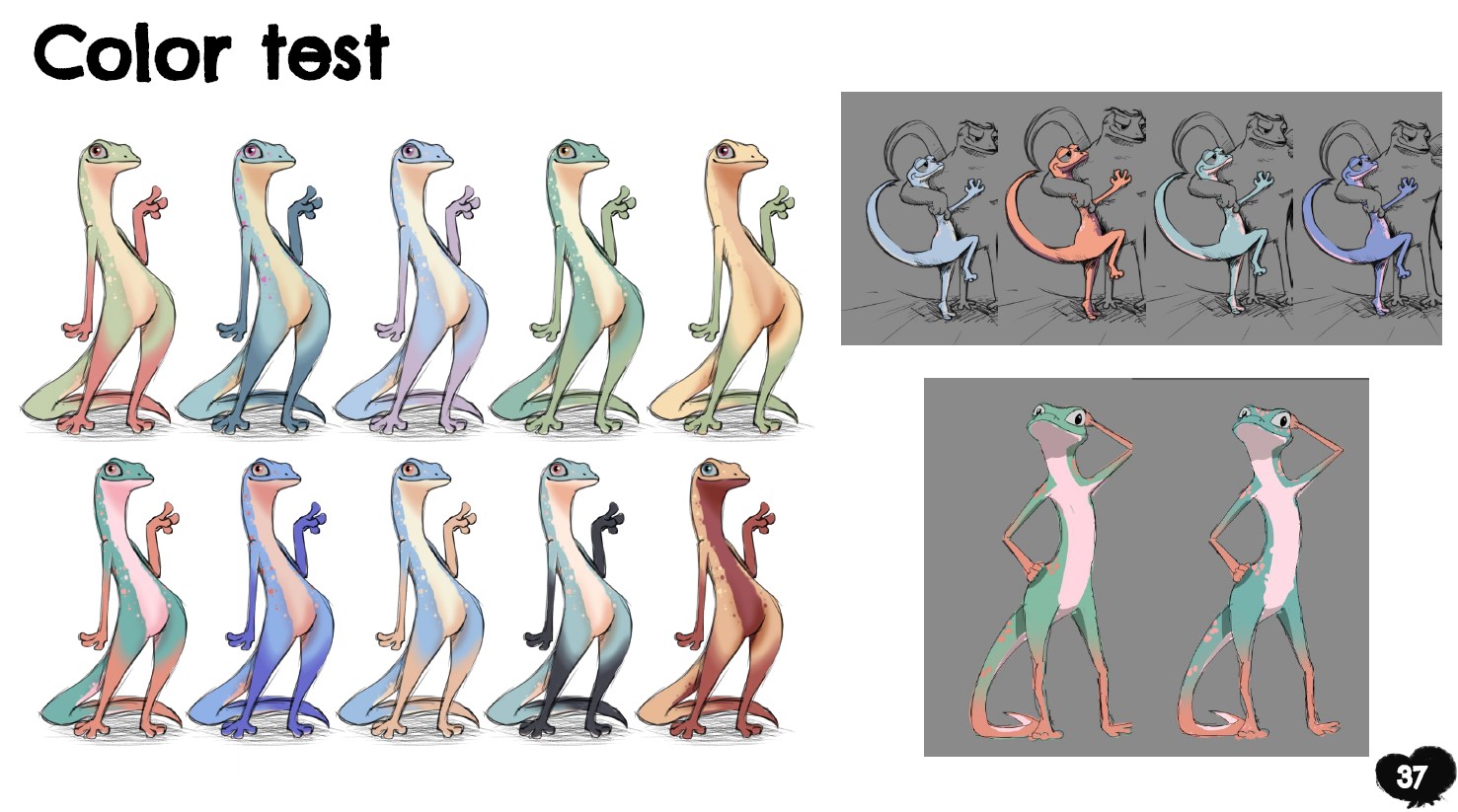
To create the three main characters in their film – Sam, his best friend Paul, and the muscular bad boy Jason – the team devised very distinct designs to bring the personalities of these three lizards to life. “After a long period of writing and refining these characters, we moved on to a concept art phase with several design proposals for each character, with the aim of choosing the one that best brought out their personalities through the design and colours.”
Sam, the protagonist without a tail, has therefore taken on a rounder shape to convey his friendliness, innocence and naivety. Paul, on the other hand, has a square shape that reflects his maturity and self-confidence.
Finally, Jason is adorned with menacing triangular scales, and sharp scales on his head and shoulders to emphasise his status as the antagonist.
“We drew inspiration for our textures from, amongst other things, the ESMA short film *Alternative Mesozoic*, as well as from recent Pixar films such as *Luca*, whilst Jason is based on Moto Moto the hippopotamus, a memorable character from the first *Madagascar* film.”
At the same time, Shrek served as a good benchmark for the film’s humour and its double entendres, which are funny for both children and adults, albeit to varying degrees.
“Through these choices, we also wanted to poke a bit of fun at the clichés of romantic films, both through the storytelling and our artistic direction.”
After all, size does matter!
And it wasn’t as part of the film’s narrative that the team wanted to highlight this, but rather in relation to one of the problems they encountered quite early on in the production process. “In fact, getting the scale of the environment right in relation to the lizards gave us quite a headache! At our first review meeting, it was pointed out to us that the lizards looked too big compared to their surroundings, which created a sense of strangeness. Fortunately, our environments weren’t too complex, and we didn’t have any further issues, nor did we with the moods we’d clearly defined using colour scripts.”
It was the lizard population that posed the biggest challenge for the team. There were a large number of characters to animate in certain shots, and just as many to texture. Not to mention that the protagonists had to stand out from the crowd, otherwise they risked being mistaken for their fellow lizards.
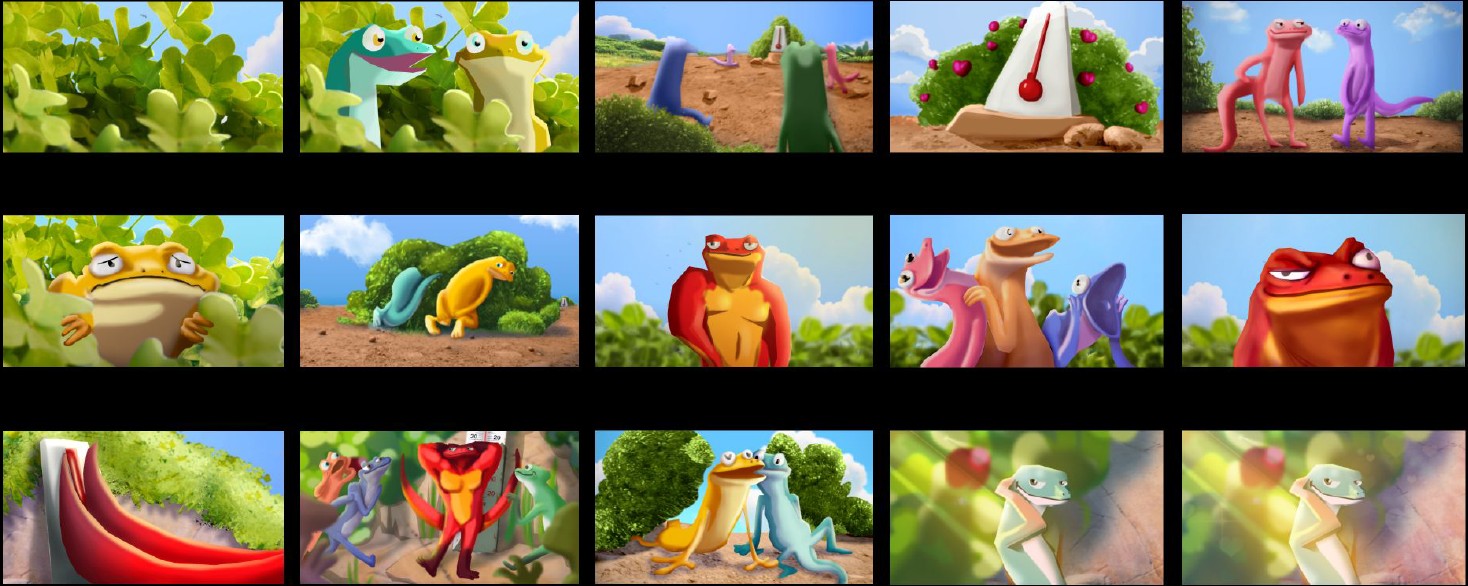
“For the textures of the lizard population, we had a general texture but with different colours. And these were quite different from our main characters. To organise ourselves on the animation side, we set animation quotas and divided the shots fairly according to their difficulty. This division of labour happened quite naturally: everyone mentioned the areas they wanted to work on, and we assigned tasks accordingly. The ESMA lecturers had already formed the groups by balancing the specialisms, so the subsequent allocation went quite smoothly.”
“Making people laugh is something I’m really proud of”
With a production that delicately blends humour and emotion, the Tailless team struck just the right note in telling this simple yet heartfelt story, and the audience certainly recognised this.
“When we show the film and people laugh and are moved, we feel as though we’ve managed to convey what we wanted to through the film.”
With hindsight, perhaps we could have set ourselves an even greater challenge to push the boundaries of certain shots and staging.
“That said, we’re proud to have seen the project through to the end and of what it looks like today.”
Any advice for students making films today?
For the team, it is the desire to go the extra mile and refine the sequences that seems to be the most important thing to bear in mind when working on a project like this. “Don’t be afraid to start again, because it’s always for the best. And don’t neglect your narrative, your script and your story: that’s what can make all the difference.”
Some sound advice on creating a work which, like all animated productions, must strike the right balance between technical excellence, creativity and emotion in order to connect with its audience.
Discover *Tailless* now, a 2024 graduation film from ESMA, available to watch in full: