Steven Spielberg and the teams at Industrial Light & Magic (ILM) have, of course, played a key part in this. With *Jurassic Park*, which is celebrating its 33rd anniversary this year, the filmmaker and the studio revolutionised the way dinosaurs are portrayed on screen. In doing so, they created one of the most lucrative franchises of the 21st century.
This success would undoubtedly never have been achieved without the technical and artistic expertise of the 3D teams who brought these creatures, extinct for millions of years, back to life.
But apart from *Jurassic Park*, TV series and films have given dinosaurs pride of place over the last three decades.
Without passing judgement on the quality of the screenplays in these productions, they all made a lasting impression through their use of the most advanced 3D technology of the time.
A look back at these productions, and at the studios and artists who enabled them to dominate the world of entertainment.
Jurassic Park: The origins of the hype
Released in 1993, the film restored dinosaurs to their former glory thanks to impressive direction, a compelling storyline, and special effects combining state-of-the-art animatronics with breathtaking 3D.
We have Industrial Light & Magic to thank for the effects. Whilst Steven Spielberg had initially begun developing his film by combining animatronics created by Stan Winston (who was responsible for the practical effects in *The Terminator*, amongst others ) with stop-motion animation, the filmmaker ultimately turned to digital effects for the wide-angle shots in his feature film.
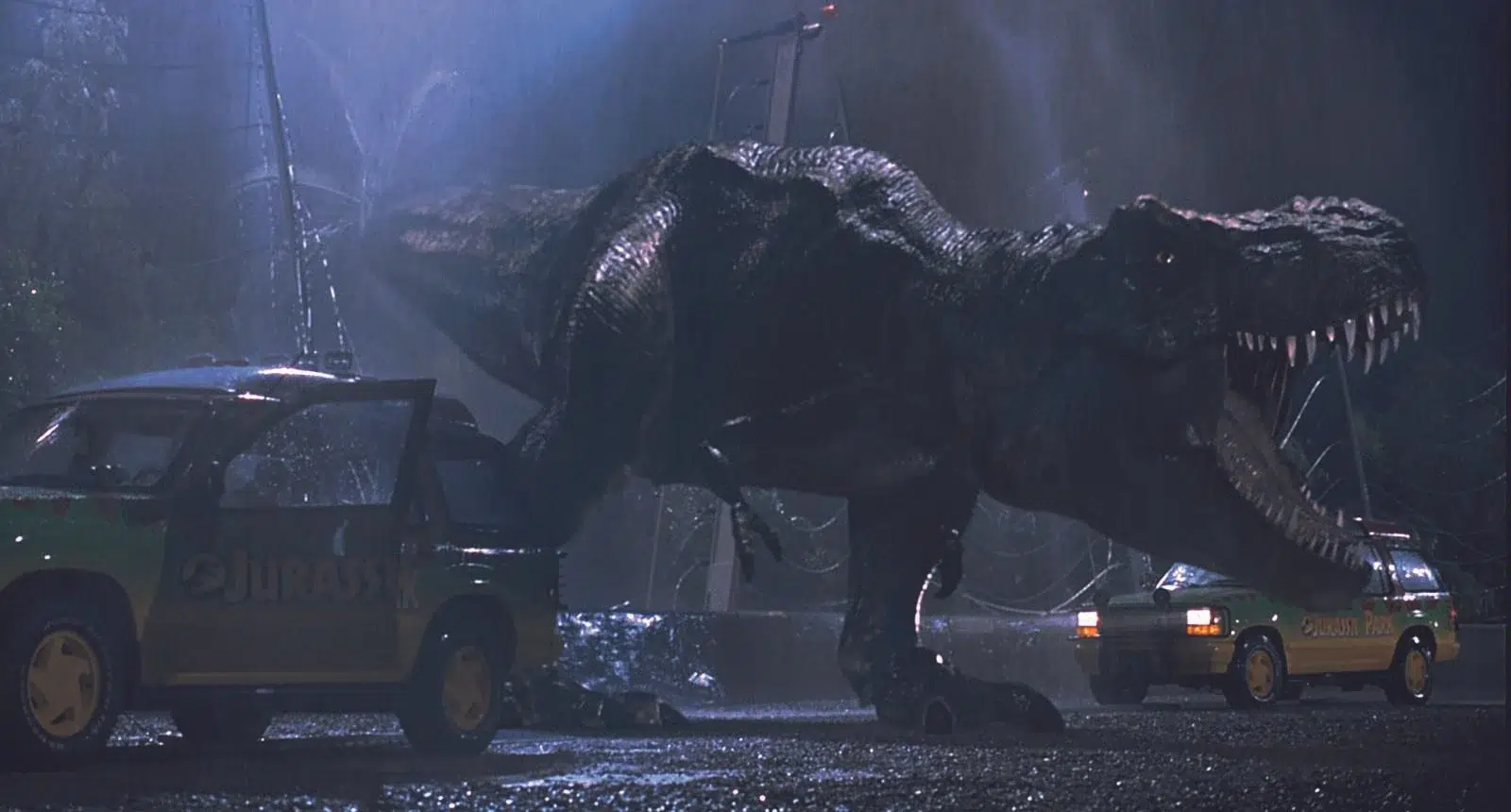
It was Dennis Muren, fresh from the success of *Terminator 2* – in which he was responsible for the liquid metal effects on the T-1000 – who convinced Spielberg to make this choice.
From there, the VFX teams set about creating realistic 3D rigs based on models built by puppet master Phil Tippett, whilst carrying out extensive research into the texture of the dinosaurs, in collaboration with the practical effects teams.
The result is the one we all know. A film that is now thirty years old, yet remains one of the most impressive dinosaur films in the history of cinema.
Since then, there have been numerous productions featuring these terrifying lizards, whether they be sequels to the franchise or entirely separate stories.
In fact, it was the release of *Jurassic Park* that inspired Tim Haines, a documentary producer for the BBC, to develop one of the most ambitious projects of the 1990s in terms of special effects, this time for television.
Dinosaurs in TV series
On the small screen, too, dinosaurs enjoyed their moment in the spotlight in the 1990s. More specifically, this was thanks to the BBC and one of its flagship programmes: *In the Land of the Dinosaurs*.
Narrated by the actor André Dussollier in France (Kenneth Branagh in the UK), *In the Land of the Dinosaurs* is a six-part mini-series that was first broadcast in 1999 on the BBC. Tim Haines, then a producer of science documentaries for the BBC, was deeply inspired by *Jurassic Park*. He even contacted ILM to discuss his somewhat crazy project: bringing dinosaurs back to life using 3D animation, in a pioneering wildlife documentary.
Problem: According to Haines himself, ILM reportedly asked for around $10,000 for every second that the dinosaurs appeared on screen. This was a budget the producer simply could not afford for his series of six 30-minute episodes…
In the end, it was the British studio Framestore that took on the project. Working with Haines, Mike Milne (then studio director) demonstrated his inventiveness by combining animatronics and 3D animation, whilst minimising wide shots and crafting narratives in which animations are repeated seamlessly.
With a team of just fifteen designers, they scanned clay models created in collaboration with artists and palaeontologists; these models were then animated frame by frame using Softimage software. In total, the teams at Framestore brought more than forty prehistoric creatures back to life after more than a year and a half of production.
A production whose cost remains, nevertheless, very high. Over €43,000 per minute! Upon its release, the series instantly became the most expensive documentary series in history (€7.1 million). A record it still holds today.
When Disney takes on the dinosaurs
Before Pixar’s *The Good Dinosaur*, Disney had already attempted to bring dinosaurs to the screen with the little-known *Dinosaur*, released in 2000. If you’ve never heard of this film, it’s hardly surprising. Despite enjoying relative success at the box-office, the film failed to fully win over the critics and was soon forgotten.
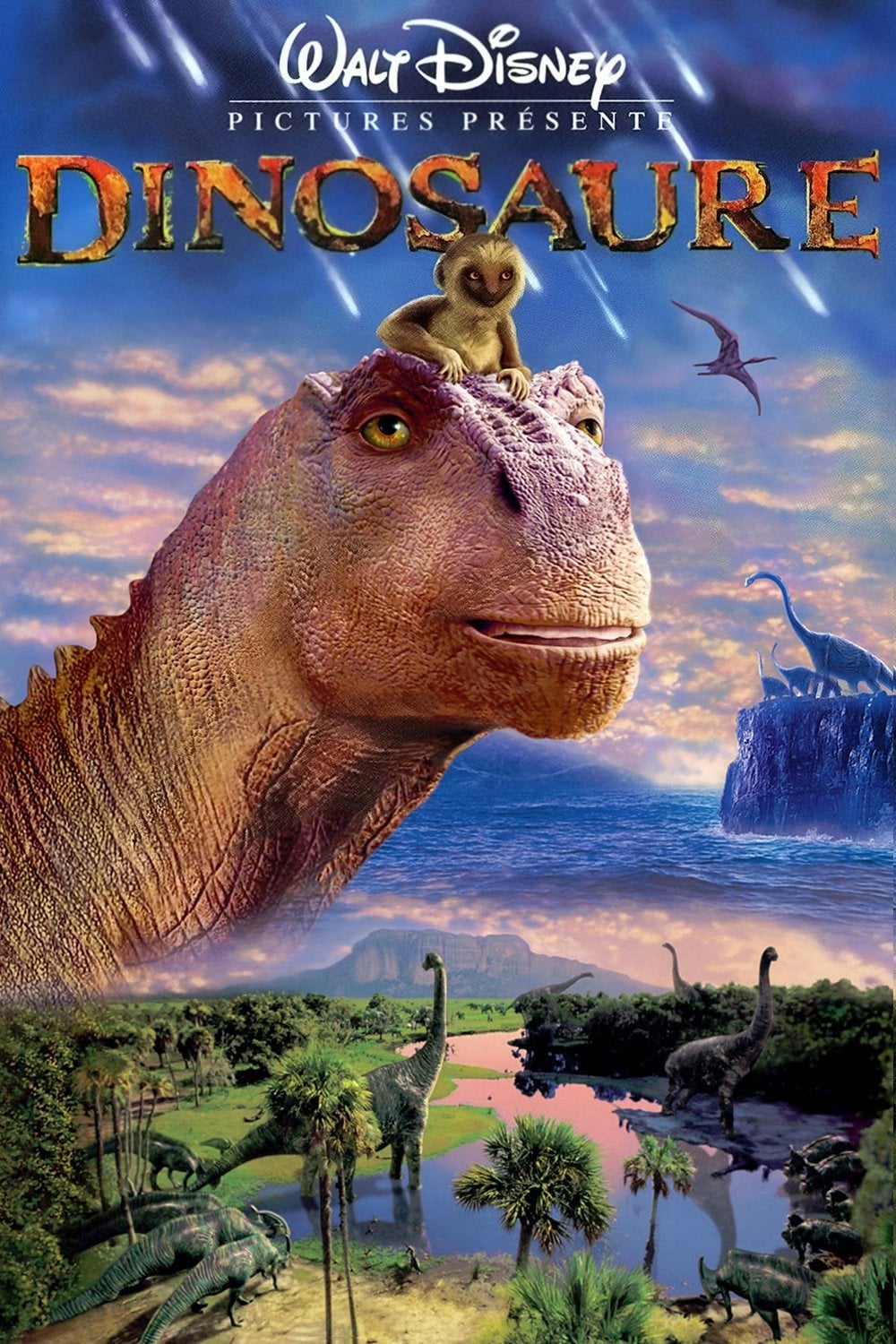
Nevertheless, the quality of its digital animation and its unique visual style make it a very significant film in the history of 3D dinosaur films on the big screen.
Did you know, by the way, that Phil Tippett was involved in the development of this project before he worked on *Jurassic Park*?
It was through the acquisition of the studio Dream Quest Images (winner of two Oscars for the special effects in *The Abyss* and *Total Recall*) that Disney gained the capability to produce this first feature film combining 3D animation and live-action footage.
This challenge was taken on by 48 animators, supervised by David Krentz. Using character designs drawn on paper and then digitised using PowerAnimator software, the modellers were able to create realistic dinosaurs, which were then animated and imported into software developed specifically for the project.
“Fur Tool”, a grooming programme, enabled Disney to add texture to the lemurs, whilst “Body Builder” was used to create the unique texture and appearance of the dinosaurs. Finally, Alias Maya (the predecessor to Maya) was used to synchronise the characters’ mouth movements and facial animation.
A real success in terms of 3D animation, which would inspire generations of artists and help Disney make the transition to a 3D-focused animation pipeline.
And since then?
i Since the turn of the 2000s, there have been more and more productions featuring dinosaurs on screen, and this is also due to advances in 3D animation techniques.
Thanks to increasingly powerful software and hardware, the artists behind the Jurassic World saga have been able to take this franchise to a whole new level.
In this field, ILM has, in fact, remained a master in the art of bringing dinosaurs back to life. It was this studio, alongside Image Engine, that was behind *Jurassic World* in 2015, and which continues today (alongside other major players in the sector such as DNEG) to hold the reins of these ever more impressive creatures.
At the same time, other documentary series have also been produced. Most recently, *The Dinosaurs* was released on Netflix, a project on which several former ESMA students specialising in 3D animation and special effects worked.
Finally, this summer saw two more dinosaur films take the big screen by storm.
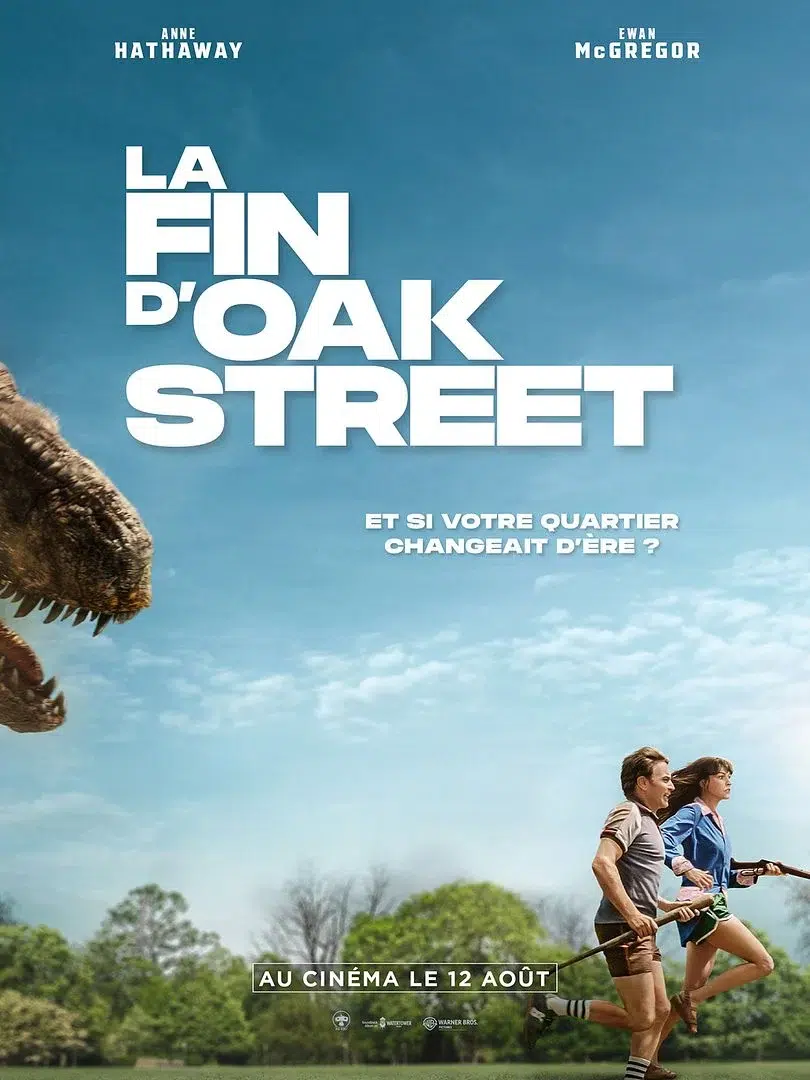
On the one hand, *The End of Oak Street*, directed by David Robert Mitchell, depicts a typical American family grappling with a temporal paradox that transports them back to the heart of prehistory. A feature film boasting impressive dinosaurs, with meticulous attention to detail in their grooming and texture (once again courtesy of ILM), which is what makes these 2026-style saurians so compelling.
And on a completely different note… Paw Patrol: Dino Mission, with its adorable puppies. For this 3D animated film, Mikros Animation (specifically its studios in Paris and Montreal) was commissioned by Spin Master, the company that holds the Paw Patrol licence. Here too, the credits feature a good number of artists who graduated from ESMA!
And what about you – which 3D animated dinosaur films have left a lasting impression on you?