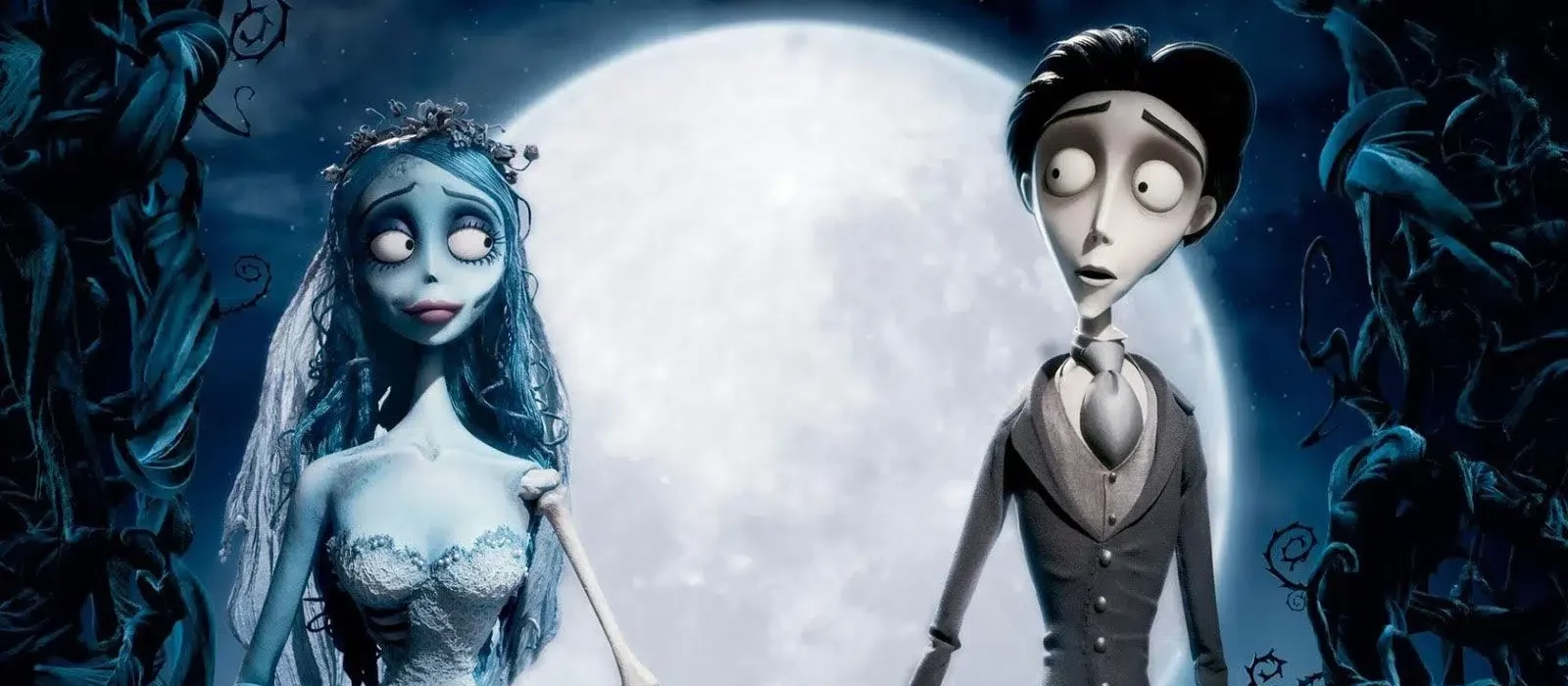

Some really set out to scare people, whilst others prefer to create a strange, gothic or fantastical atmosphere. That is precisely what makes the genre so rich: a Halloween-themed animated film can be unsettling without becoming horror-filled, funny whilst summoning the dead, or even melancholic despite a world filled with supernatural creatures.
Animated films also bring to life worlds that are difficult to recreate in live-action. Stop-motion offers very distinctive textures, traditional animation allows for great artistic freedom, and 3D can sometimes transform a simple set into a character in its own right. From *Coraline* to *The Nightmare Before Christmas*, via *Frankenweenie* and *Monster House*, here are ten animated films to watch this Halloween, depending on the atmosphere you’re after.
In summary
Among the best animated films for Halloween, *Coraline*, *The Nightmare Before Christmas*, *Corpse Bride* and *ParaNorman* have become must-sees.
For a more family-friendly evening, *Wallace and Gromit: The Curse of the Were-Rabbit* or *Scooby-Doo on Zombie Island* are excellent choices. Monster House, Frankenweenie, Wendell & Wild and The Halloween Tree round off this selection, which blends fantasy, monsters, humour and thrills.
What are the best animated films to watch at Halloween?
Coraline
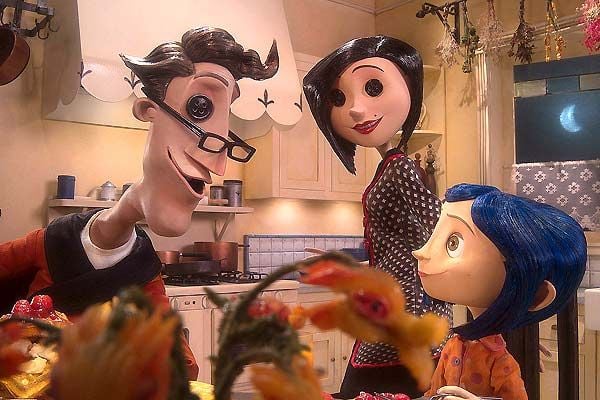
Released in 2009 and directed by Henry Selick, *Coraline* has become an essential classic whenever the topic of animated films for Halloween comes up. The story follows Coraline Jones, a young girl who has just moved in with her parents to a large house divided into several flats. Whilst exploring the house, she discovers a small, boarded-up door which eventually leads to a parallel world almost identical to her own. There, she finds another version of her house, her neighbours and, above all, her parents, who are much more attentive and caring than they are in reality.
At first, everything seems wonderful, until Coraline notices a detail she cannot ignore: the inhabitants of this other world have buttons instead of eyes. What seemed like an escape route gradually turns into a trap. The film builds its tension without resorting to cheap thrills. Instead, it transforms familiar elements into something deeply unsettling, by playing on the sense that everything is almost normal, but never quite.
Stop-motion animation plays a huge part in creating this atmosphere. The sets, the materials and the characters’ expressions give the world a very tactile, almost handcrafted quality, which makes the scenes all the more eerie. Coraline therefore works just as well as a fantasy film as it does as a genuinely scary animated film. It is undoubtedly one of the best choices for a Halloween evening with an audience keen to experience real tension whilst enjoying a particularly well-crafted visual world.
The Nightmare Before Christmas
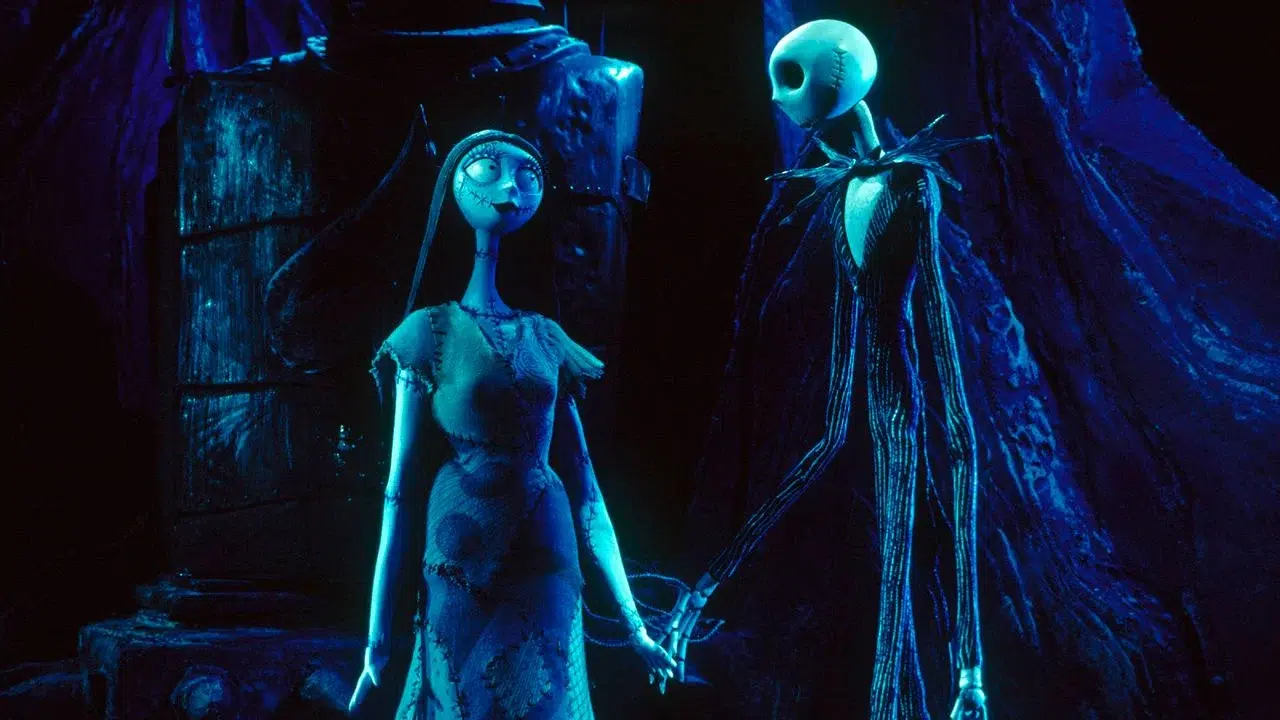
The Nightmare Before Christmas is probably one of the animated films most closely associated with Halloween. Directed by Henry Selick from a story conceived by Tim Burton, the film follows Jack Skellington, the central figure of Halloween Town. Every year, he oversees the festivities and helps direct the monsters, witches, skeletons and other creatures that inhabit the town. However, Jack is beginning to grow tired of repeating the same rituals over and over again.
When he stumbles upon the town of Noël, he is immediately captivated by this bright, warm world that is so radically different from his own. Convinced that he, too, can organise this celebration, he decides to bring its traditions into his own world. Naturally, the clash between the macabre aesthetic of Halloween and the joyful spirit of Christmas does not go to plan. This contrast provides much of the film’s humour, but also gives it its distinctive visual style.
Stop-motion brings to life sets filled with twisted silhouettes, impossible architecture and characters with instantly recognisable shapes. Despite its skeletons and monsters, The Nightmare Before Christmas remains more poetic than genuinely scary. It is therefore an excellent family film for Halloween, particularly for those who want to capture the festive spirit without choosing a film that’s too dark.
Wallace and Gromit: The Curse of the Were-Rabbit
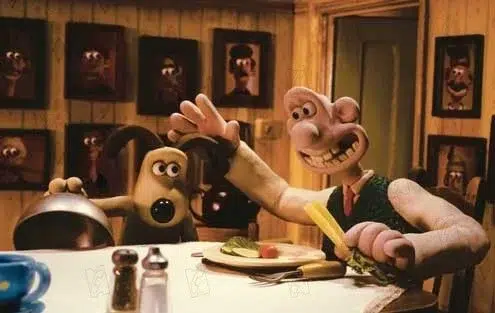
With *Wallace & Gromit: The Curse of the Were-Rabbit*, Halloween takes a much more comical turn. Released in 2005, the film brings back the iconic characters created by Nick Park and plunges them into an adventure inspired by the great classics of monster cinema. Wallace and Gromit run a business specialising in catching rabbits, which is in particularly high demand in the run-up to a major vegetable competition being held in the village.
Wallace is looking for a way to stop rabbits from raiding the vegetable patches without harming them. However, an experiment goes wrong and a gigantic creature begins to ravage the crops during the night. The mysterious were-rabbit then becomes the main threat to the competition and gradually transforms the village into the setting of a fantasy film.
The film works so well because it draws on the tropes of werewolves, scientific experiments gone wrong and nocturnal creatures, but reimagines them with Aardman’s very British sense of humour. The stop-motion animation further enhances the film’s charm and allows for extremely precise facial expressions. For a Halloween evening with children, or for those who’d rather laugh at monsters than be scared of them, this is a particularly good choice.
Corpse Bride
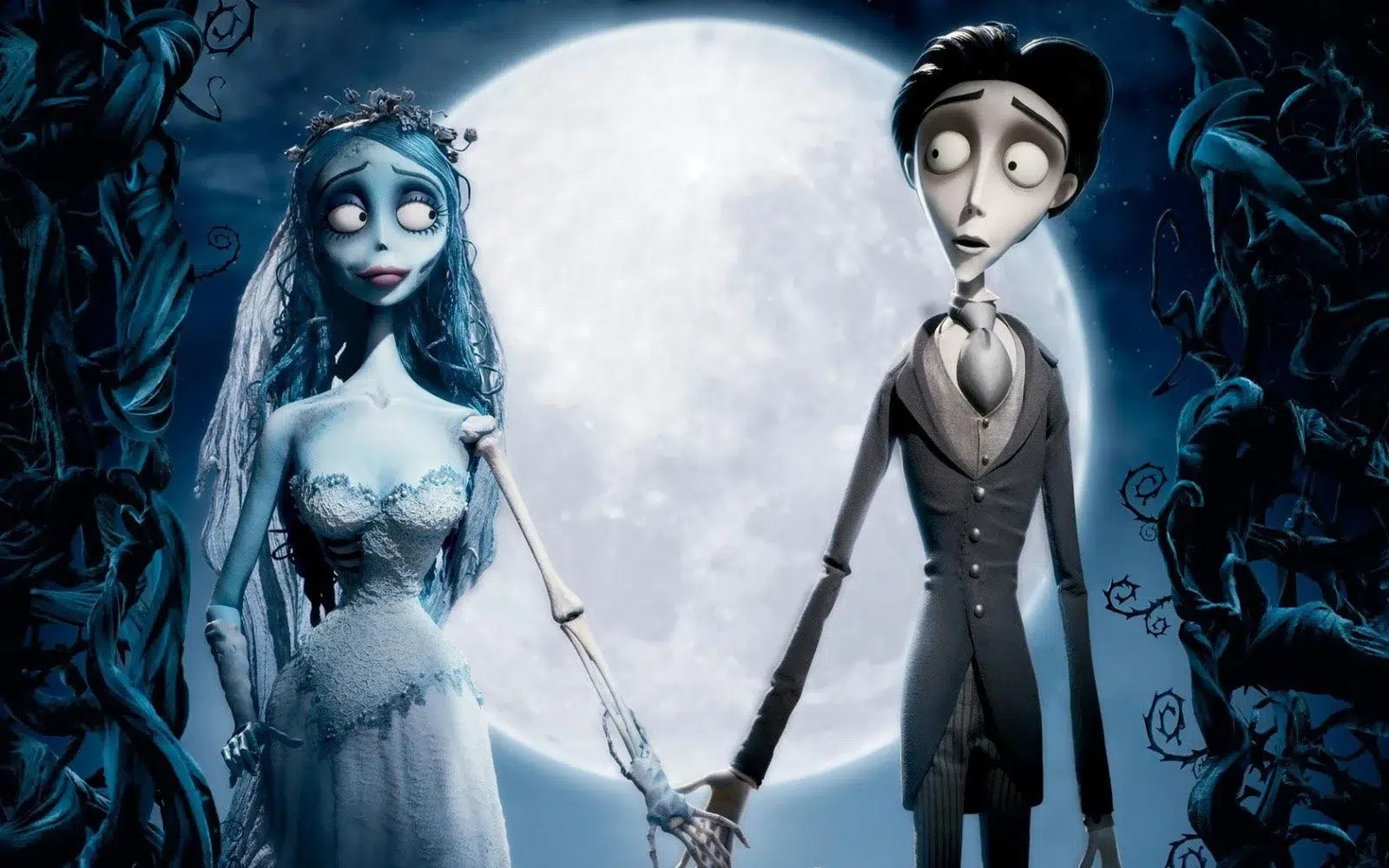
Corpse Bride plunges the viewer into a gothic world where the living sometimes seem more dull than the dead. Victor is to marry Victoria as part of a marriage arranged between their families. Feeling very nervous during the rehearsal for the ceremony, he goes off to practise on his own in a forest. Whilst practising his vows, he slips the wedding ring onto what he mistakes for a branch. It is, in fact, the finger of Emily, a young dead woman who immediately believes that Victor has just married her.
The film thus constantly plays on the contrast between the world of the living and that of the dead. The former is grey, rigid and regimented, whilst the latter is surprisingly colourful, musical and warm. This reversal allows Tim Burton and Mike Johnson to treat death not merely as a frightening element, but as the starting point for a romantic and melancholic tale.
Visually, the film perfectly captures the spirit of Halloween: dark forests, cemeteries, skeletons, a ghostly bride, candlesticks and Gothic architecture feature throughout the story. Yet *Corpse Bride* remains accessible and poetic. It is a Halloween-themed animated film particularly suited to those who appreciate macabre worlds without necessarily seeking a truly horrific story.
Norman’s Strange Power
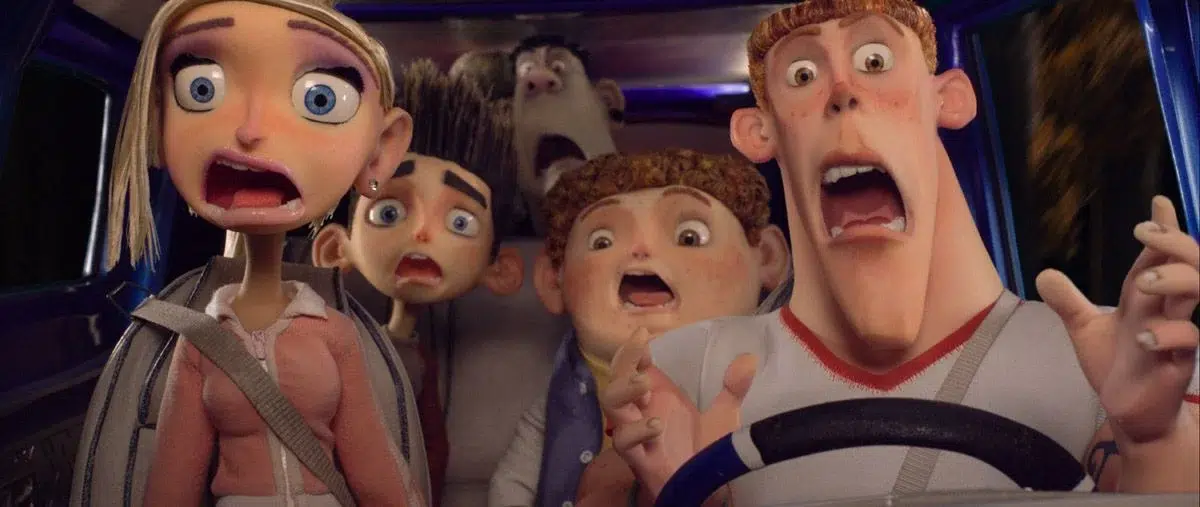
*Norman’s Strange Power*, or *ParaNorman* in its original version, is another fine example of stop-motion animation. Norman is a young boy who can see the dead and communicate with them. This ability makes him seem strange to those around him, including his own family. He therefore lives a relatively isolated life until the day an ancient curse threatens his town.
The film features numerous elements directly associated with Halloween: zombies, witches, ghosts, a cemetery and narrow streets shrouded in darkness. But behind this monster-film façade, the story primarily explores the fear of difference and the mechanisms of exclusion. Norman gradually realises that the characters considered dangerous are not necessarily the ones everyone thinks they are.
This dual interpretation makes the film particularly interesting. Younger viewers can enjoy a fast-paced fantasy adventure, whilst adults will find a more nuanced exploration of prejudice and collective reactions to the unknown. *Norman’s Strange Power* is therefore an excellent choice for a Halloween evening that seeks to combine thrills, humour and a meaningful message.
Frankenweenie
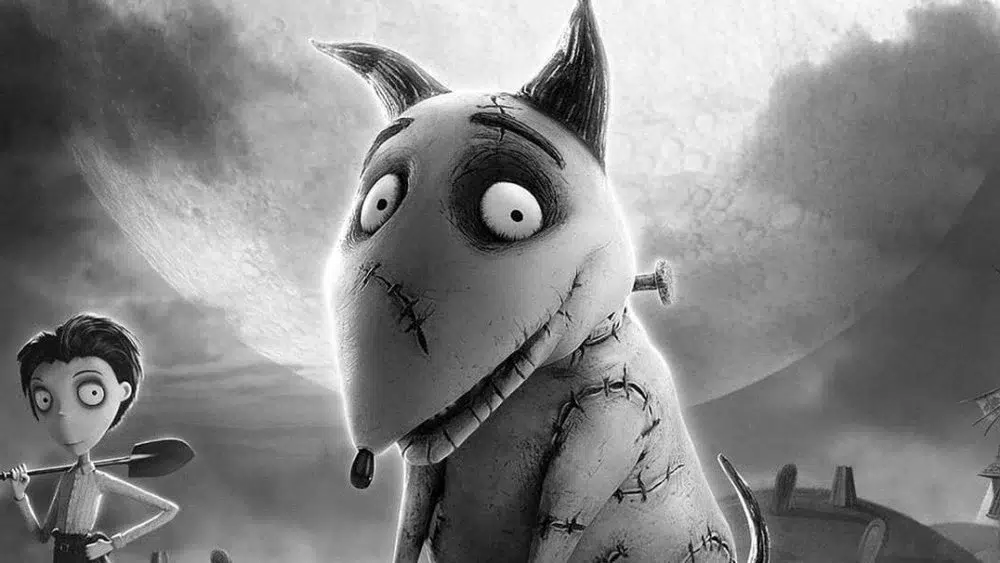
In *Frankenweenie*, Tim Burton offers a direct retelling of the Frankenstein myth through the story of a boy and his dog. Victor Frankenstein is a boy with a passion for science who shares a very close bond with Sparky. When the dog dies in an accident, Victor refuses to accept his loss. Inspired by a science experiment carried out in class, he decides to try to bring his dog back to life.
The experiment works, but the secret doesn’t stay hidden for long. Other children then want to replicate the method on their own deceased pets, with far less controlled results. The film gradually shifts towards a succession of resurrected creatures, uncontrollable experiments and references to the great monsters of classic cinema.
Filmed entirely in stop-motion and in black and white, *Frankenweenie* pays clear homage to classic fantasy and horror films. Yet at its heart, it remains deeply emotional. Behind the laboratories, the flashes of lightning and the monsters, the film is, above all, about grief, attachment and the difficulty of coming to terms with the loss of a loved one. This combination of tenderness and macabre aesthetics makes it an excellent choice for Halloween.
Scooby-Doo on Zombie Island
*Scooby-Doo on Zombie Island* is something of an oddity within the franchise. Released in 1998, the film brings together Scooby, Shaggy, Daphne, Velma and Fred for a new investigation that takes them to a remote plantation in Louisiana. As is often the case, the group initially expects to discover that a so-called supernatural phenomenon is simply a human ploy.
But this time, events take a different turn. The zombies they encounter are very real, and the island harbours a secret far more disturbing than the usual disguised criminals featured in the series. This departure from the traditional formula gives the film a much darker tone and partly explains why it has remained so popular.
The marshes, old buildings, ghosts and supernatural creatures create the perfect atmosphere for Halloween, whilst Scooby and Sammy’s humour keeps things light-hearted. It’s a brilliant Halloween cartoon for those looking for a film that’s accessible yet still mysterious enough to set the mood.
Monster House
*Monster House* is based on a simple yet highly effective idea: the haunted house isn’t just home to a monster – it is the monster itself. DJ, a young boy who has long been watching the house opposite his own, suspects that something strange is going on there. Its owner, who is particularly hostile, prevents all the children from going near his property. When he disappears, DJ discovers that the house now seems to be acting of its own accord.
Together with two friends, he then sets out to understand what lies behind this structure, which is capable of attacking anyone who comes near it. The film gradually transforms each architectural feature into a part of a creature: windows, doors, staircases and corridors all become menacing elements.
3D animation works particularly well in this context, as it allows the house to develop like a character in its own right. *Monster House* is a cross between an adventure film and a scary animated film. Some scenes may be a bit scary for younger children, but the film remains suitable for a family audience accustomed to ghost stories.
Wendell & Wild
*Wendell & Wild* marks Henry Selick’s return to feature-length stop-motion animation. Released in 2022, the film follows Kat, a teenager haunted by the death of her parents. Her life is turned upside down when she discovers she has a special connection with two demon brothers, Wendell and Wild, who are looking for a way to return to the world of the living.
Building on this fantastical foundation, the film constructs a richly layered world in which hellish creatures coexist with personal trauma, social conflict and a critique of certain mechanisms of power. The story is therefore more complex than that of many animated films aimed at a family audience.
Visually, *Wendell & Wild* has a particularly strong identity. The characters’ angular silhouettes, the contrasting colours and the distortions characteristic of stop-motion animation give it an instantly recognisable style. It’s an interesting choice for those looking for a Halloween film that’s more contemporary, stranger and slightly more grown-up than the usual classics.
The Halloween Tree
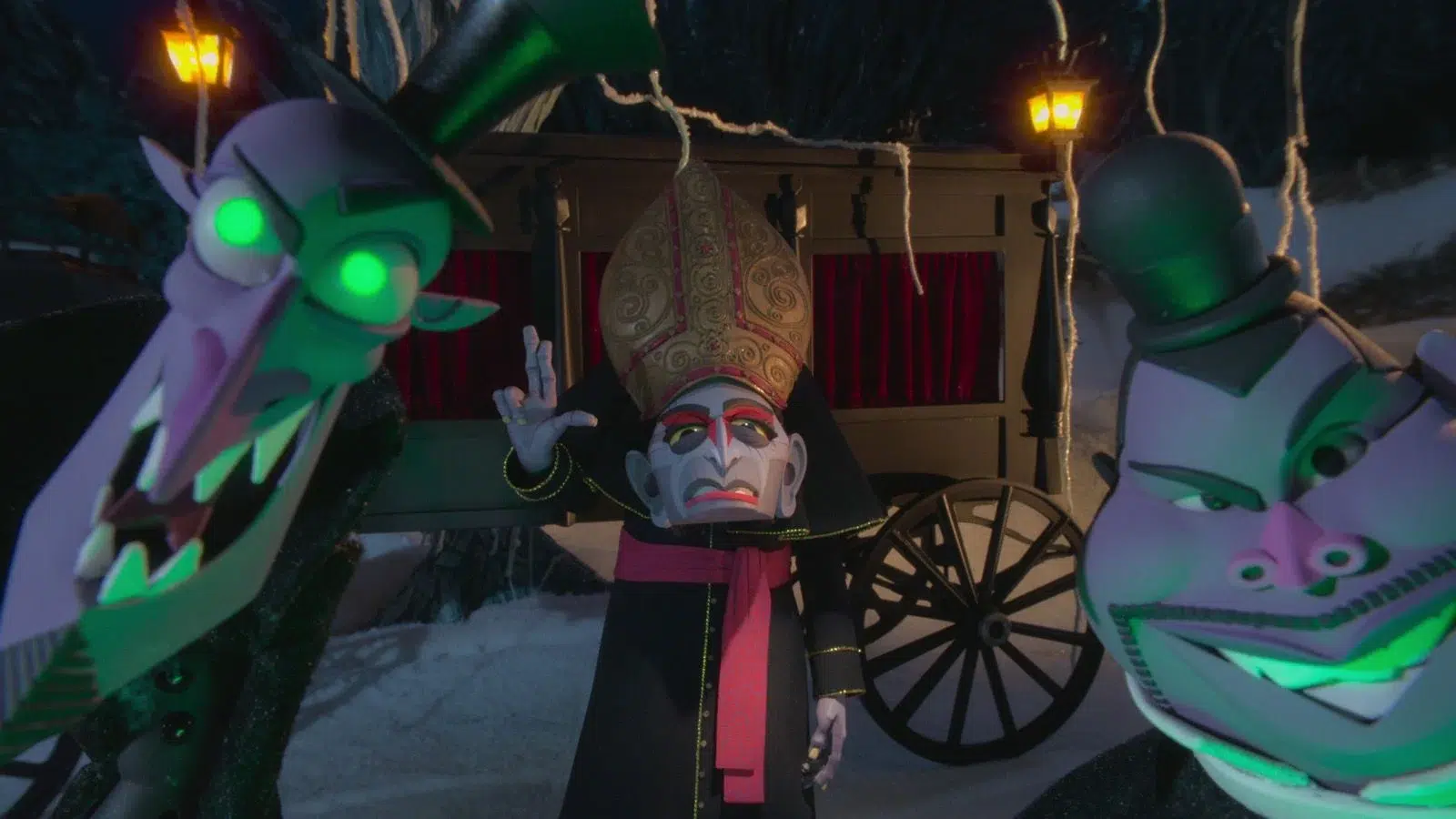
*The Halloween Tree* is undoubtedly the least well-known film in this selection, but it deserves its place because it deals directly with the history and traditions associated with Halloween. Adapted from Ray Bradbury’s novel, this 1993 animated film follows a group of children as they set out in search of their friend Pip. Their journey takes them through different eras and civilisations under the guidance of the mysterious Moundshroud.
The film explores various traditions linked to death, spirits and seasonal celebrations. Rather than simply using pumpkins and ghosts as mere props, the film seeks to show how different cultures have developed their own ways of representing the dead and the transition between worlds.
Its traditional animation gives it a special charm today, very different from the stop-motion or computer-generated films that dominate this selection. For a Halloween evening focused more on storytelling and discovery than on scares, *L’Arbre d’Halloween* is a particularly interesting alternative.
Which animated film should you choose for a Halloween night in?
The best animated Halloween film depends largely on the atmosphere you’re looking for and the age of the audience. For a family-friendly Halloween film, *Wallace and Gromit: The Curse of the Were-Rabbit* and *The Nightmare Before Christmas* are probably the most accessible. They capture the full spirit of the festival without really setting out to scare anyone. *Scooby-Doo on Zombie Island* adds a little more suspense whilst retaining the franchise’s humour.
For an evening with a bit more of a thrill, *Coraline*, *Monster House* and *ParaNorman* are all excellent choices. All three play on anxiety, ghostly apparitions and parallel worlds, whilst remaining within the realm of animation. Coraline is undoubtedly the most unsettling, particularly thanks to its atmosphere and the character of the Other Mum.
*Corpse Bride* and *Frankenweenie* will be more to the taste of those looking for a gothic and melancholic atmosphere. Both films deal with death, but do so with great sensitivity and without seeking to instil constant fear. Wendell & Wild, on the other hand, offers a more contemporary, highly stylised and narratively complex world.
Finally, *L’Arbre d’Halloween* is a good choice for anyone wanting to discover a film directly dedicated to the traditions of this festival. These ten films demonstrate, above all, that animation is particularly well-suited to the fantasy genre. Whether through stop-motion, 2D or 3D animation, it can create characters and worlds that would be impossible to reproduce in the same way using any other medium.
So, for Halloween, all that’s left is to choose between a living house, a ghost bride, a town full of monsters, zombies, a resurrected dog or an eerie parallel world where everything seems perfect until you notice the buttons in place of the eyes.