
Yet certain scenes in these animated films evoke a sense of unease quite different from what one might have expected upon entering their world.
These scenes sometimes catch us off guard because the film has already won our trust. We know the characters and think we understand the rules of their world. A toy can talk, a fish can joke, a cat can believe itself to be invincible. Then the narrative shifts gear or reveals a danger, and this familiar setting suddenly becomes less reassuring. The emotion strikes us through entirely fabricated images.
To mark Halloween, we take a look back at four scenes from well-known films: Sid’s toys in *Toy Story*, the deep-sea fish in *Finding Nemo*, the incinerator in *Toy Story 3* and the encounter with the wolf in *Puss in Boots 2*. From design and lighting to the characters’ performances and visual effects, these scenes allow us to see how 3D animation builds suspense.
Warning: this article reveals key plot points from the films mentioned.
Toy Story: when toys become unsettling
A familiar figure made to look strange
In *Toy Story* (1995), Andy’s bedroom is a well-organised world. Every toy has a recognisable appearance, a personality and a place within the group. Even the tensions between Woody and Buzz play out within a world whose reference points we understand. At Sid’s house, the creations the two heroes discover seem to defy this order. A doll’s head attached to mechanical legs is enough to shake our familiar notion that a toy should be a comforting object.
The power of these compositions lies in their construction. The individual elements remain recognisable, but the way they are combined creates a sense of unease. A baby’s face evokes a fragile presence; the body carrying it conveys a different impression. The viewer tries to recognise what they are seeing without being able to slot it into a simple category. This hesitation lends the design a dramatic quality, even before any threatening gesture is made.
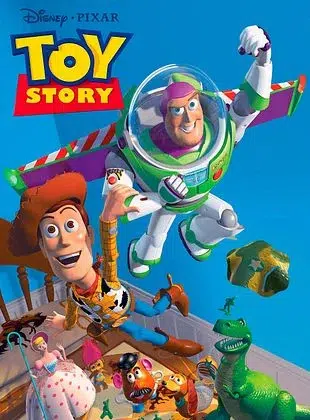
To create an unsettling character, adding more teeth or claws is therefore not the only option. A discrepancy between ordinary elements can be enough. In this scene, the familiarity of each piece actually heightens the strangeness of the whole. We understand what a toy must have been before its transformation, and this origin remains discernible. The character tells us something about what it has been through through its form.
In 3D animation, volumes and materials bring this contrast to life. The roundness of the face stands out from the mechanical elements surrounding it. The surfaces do not convey the same impression of softness, rigidity or wear and tear. The design thus raises an initial question, which the modelling and appearance of the materials make visible from various angles. The object must remain recognisable when it enters the frame, changes position or approaches the characters.
The clarity of the silhouette is particularly important in a scene where several characters appear together. Each one must appear to come from the same world of homemade toys, whilst remaining instantly recognisable. Proportions, the distribution of mass and points of support lend a sense of logic to the body. However strange it may be, it must appear capable of standing upright, moving and acting. The model sheet, modelling and motion tests therefore all address the same question: how can we preserve the impact of the initial idea when the character moves from the drawing into a three-dimensional space?
Movement shapes our judgement
Movement adds another layer of perception. A static composition might come across as a bizarre invention. When it moves, the viewer must imagine an intention behind this figure. The rhythm of the approach and the reaction of Woody and Buzz then help to shape our interpretation. We observe the newcomers through the lens of the mistrust felt by the characters we already know. Their fear gives us an initial interpretation of the situation.
Yet the film turns this impression on its head. Sid’s toys turn out to be kind-hearted and come to Woody and Buzz’s aid. Their appearance remains the same, but we no longer attribute the same meaning to them. This reversal shows just how much fear depends on the relationship between design and narrative. A creature does not automatically become dangerous simply because its body looks strange; its actions can change the way we perceive it.
The narrative subverts the initial impact of the design
For an aspiring character designer, this sequence highlights two issues at once. How do you design a silhouette that makes an immediate impression? And how do you allow the narrative the opportunity to develop that impression? Sid’s toys remain recognisable after the scene cuts to the other side. The film changes our understanding of their personalities without having to alter their shapes. Anxiety thus becomes a starting point for discovering characters we had judged too quickly.
Finding Nemo: the light that lures us into the trap
A point of light draws all the attention
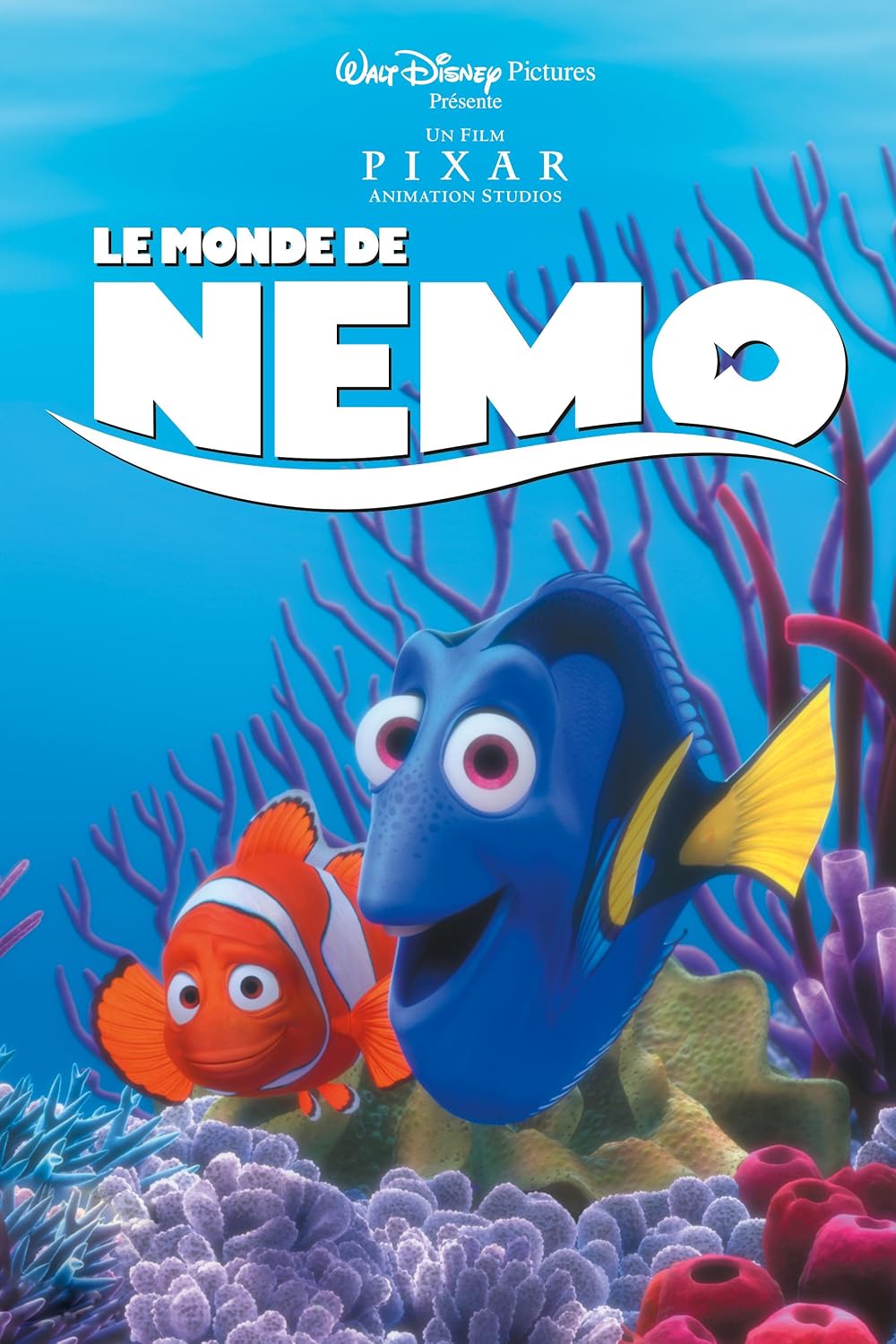
In Finding Nemo (2003), Marlin and Dory venture into the depths to find a diving mask. In the midst of the darkness, a small light catches their attention. It seems to offer a point of reference in a space that has become difficult to navigate. Then the fish to which it belongs is revealed: a huge mouth, long teeth and a threat that is suddenly very close. What seemed to be guiding the characters has led them straight into the clutches of a predator.
The scene works by channelling our curiosity. As long as the fish remains hidden, the point of light serves as the focal point for the available information. We watch alongside the heroes and discover the danger the moment this point of reference shifts. The light was not an isolated element: it was part of something we could not see. The shock stems from this revelation, but also from the realisation that the threat was already present.
The lighting design plays a narrative role here. Lighting a scene does not necessarily mean making every object visible. One must also decide what the viewer should be able to recognise, what they should merely guess at, and what will remain hidden. In the depths of Nemo, the darkness leaves room for our imagination, whilst the point of light gives it a very precise direction. The trap, therefore, also concerns our attention.
The composition of the frame contributes to this effect. A setting full of detail might cause the viewer’s gaze to wander. Here, the lack of reference points heightens the significance of what is visible. To analyse the sequence, it is worth noting where the characters are positioned in relation to the light and the muzzle that appears. Fear depends on this spatial relationship: we suddenly realise just how close they have come to the danger.
In 3D, this relationship must remain clear despite the absence of familiar reference points. Depth, the apparent size of the characters and the movement of the camera enable the viewer to gauge a distance that the darkness tends to obscure. Too much light would reveal the fish before the intended moment; a shot that is too close-up would make it difficult to gauge its size. The scene therefore strikes a balance between concealment and restraint. When the fish’s mouth appears, the viewer must be able to immediately compare its size to that of Marlin and Dory. The reveal works because it simultaneously conveys shape, scale and danger.
The setting removes the usual points of reference
The contrast with the film’s colourful settings heightens the sense of disjunction. The underwater world we have discovered is full of life, movement and interaction. The depths strip away some of this visible richness. The viewer can no longer interpret the space with the same certainty. This shift demonstrates that a setting can transform the emotional tone of a scene without the film’s visual identity disappearing as a result.
The deep-sea fish also stands out from the characters around him. He does not speak, unlike the expressive fish with whom Marlin and Dory interact elsewhere. We have fewer clues to understand its intentions or imagine a conversation. Its mouth, teeth and behaviour take the place that an approachable personality would normally occupy. The danger remains difficult to defuse through dialogue or humour.
Lighting is becoming a narrative tool
In 3D creation, this scene invites us to consider the character, the environment and its revelation as a whole. Simply designing an impressive creature is not enough: one must decide at what point its form will become clear and from which viewpoint. The same face, if shown well in advance, would not produce the same sense of discovery. The staging therefore transforms the model into an event. The work on lighting determines part of what the viewer learns and the moment at which they learn it.
Toy Story 3: feeling worried for characters we know
The characters’ performances convey the emotion
In *Toy Story 3* (2010), Woody, Buzz and their friends are swept towards the flames of an incinerator. They try to escape, then stop struggling and hold hands. The scene subverts a typical expectation of adventure films: that the heroes will find a solution. The danger continues to advance, whilst the characters no longer seem able to halt its progress.
This scene is unsettling without the need for a terrifying creature. We are familiar with the toys, their relationships and their arguments. We have already seen how they come up with ideas and support one another. Seeing them faced with a situation that seems hopeless lends a new gravity to the threat. The emotional impact stems not only from what might happen to them, but also from the change in their behaviour. They no longer react as if this were just another adventure they think they can get themselves out of.
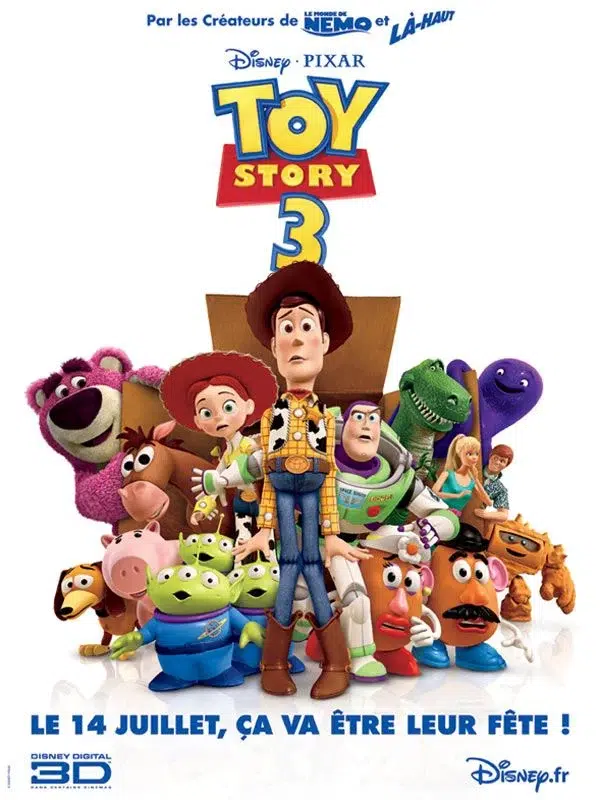
The animation conveys this change through simple gestures. A glance turns towards another character; a hand is held out, then accepted. This gradual progression allows the audience to understand a collective decision without the need for lengthy explanations. The precision of the acting matters more than any spectacular movement. A moment’s hesitation or a pause between two gestures makes the transition from struggle to a different attitude towards danger palpable.
In a group of characters, every movement must also have its place. If they all reacted in exactly the same way and at the same moment, we would mainly see an overall effect. By following their gazes and interactions, on the other hand, we are able to recognise them as individuals. The scene preserves their individuality within a shared experience. For the director, this means considering each character’s performance and the relationships between their actions.
At the same time, the animation must hold its own against the general movement of the set. The toys are swept towards the fire, but their key movements must remain visible. A hand held out too quickly would go unnoticed; a pose held for too long would seem artificial amidst the flow. The rhythm is therefore built on two levels: the inexorable advance of the carpet and the more subtle interplay of glances between the characters. This interplay gives the scene its intensity. The danger never ceases, whilst the emotion requires a few seconds of clarity to be understood.
The effects lend a sense of gravity to the danger
All around them, the mass of rubbish and the light from the fire lend the setting an overwhelming sense of scale. The toys appear small and vulnerable. Their bodies, which elsewhere allow them to explore or squeeze into spaces, give them no control over the situation here. The setting acts as a force: it sweeps them along and limits the possibilities for action that we might imagine for them.
This impression is also down to the practical work involved in creating the visual effects. For this sequence, Pixar used Houdini with RenderMan and in-house tools to visualise the rubbish being swept into the incinerator. The foreground elements interacting with the characters were handled differently from those further away. This approach allows for the creation of a believable mass without treating every detail in the same way. The production process is tailored to the requirements of the shots and what the audience needs to perceive.
The technique serves a clear purpose here: to convey that the movement of the setting extends beyond the characters. The viewer does not need to identify every piece of rubbish, but must sense the scale, the direction and the immediacy of the danger. The effects become part of the narrative when they enable this interpretation. A highly detailed image would lose its impact if it made the toys difficult to follow or obscured their key actions.
Coordination of the production line
Watching this sequence again thus allows us to observe the collaboration between several disciplines. The animation brings the characters’ reactions to life; the effects give the danger a tangible presence; the framing and lighting shape their interaction. It is this coherence that transforms a digital incinerator into an emotional scene. We feel afraid because the image makes us understand what the toys are facing, then gives us time to see how they experience it.
Puss in Boots 2: when the hero stops thinking he’s invincible
Fear is evident in the hero’s body
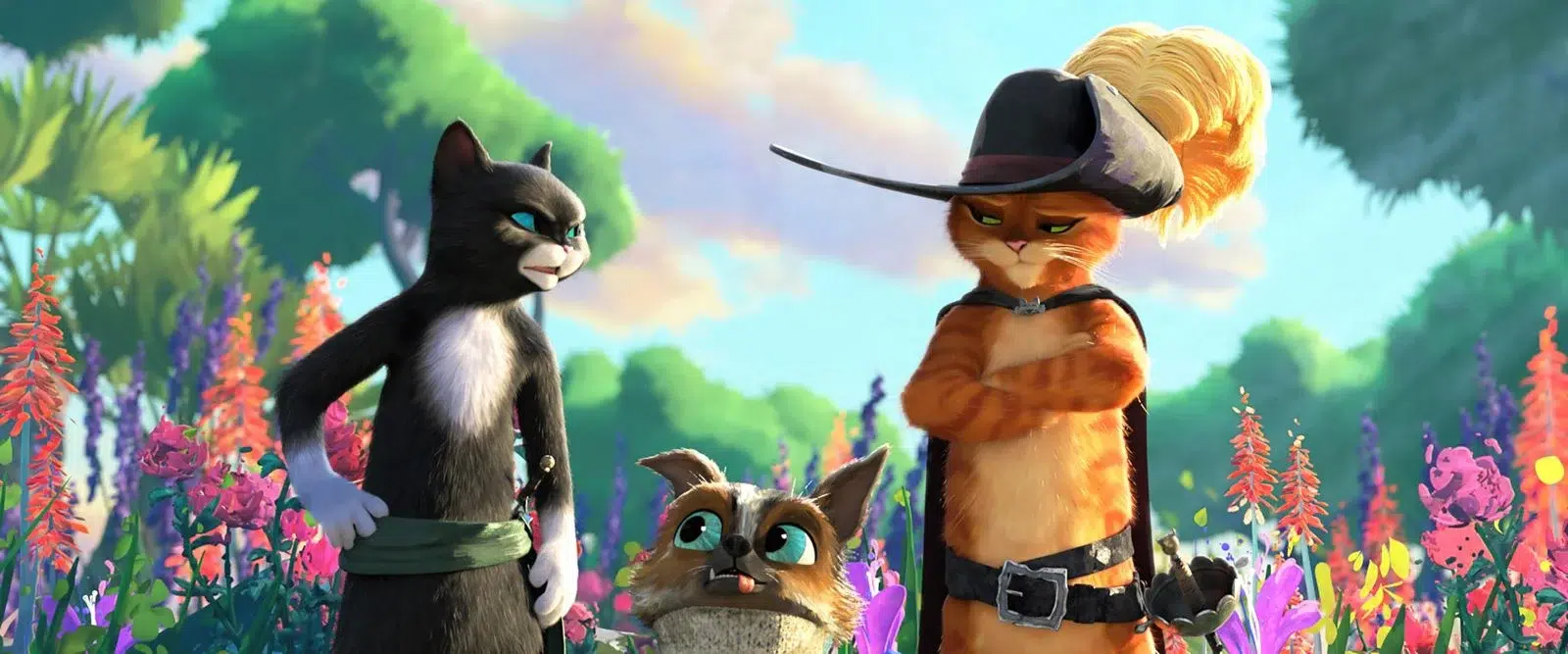
In *Puss in Boots 2: The Final Quest* (2022), the hero has used up eight of his nine lives. His encounter with the wolf brings to light something he would rather have ignored.
In the bar, his confidence is no longer enough: his opponent has the upper hand and forces him to flee. The character who loves to turn danger into a spectacle finds himself faced with a threat that he can no longer keep at bay using his usual tactics.
Fear arises, first and foremost, from this change. We are familiar with Puss in Boots’ attitude, his way of provoking, joking and showing off. These behaviours give us an idea of his self-assurance.
In the face of the wolf, this composure crumbles. The contrast makes the emotion plain to see: we notice the fear because it disrupts a way of carrying oneself and behaving that the film has taught us to recognise.
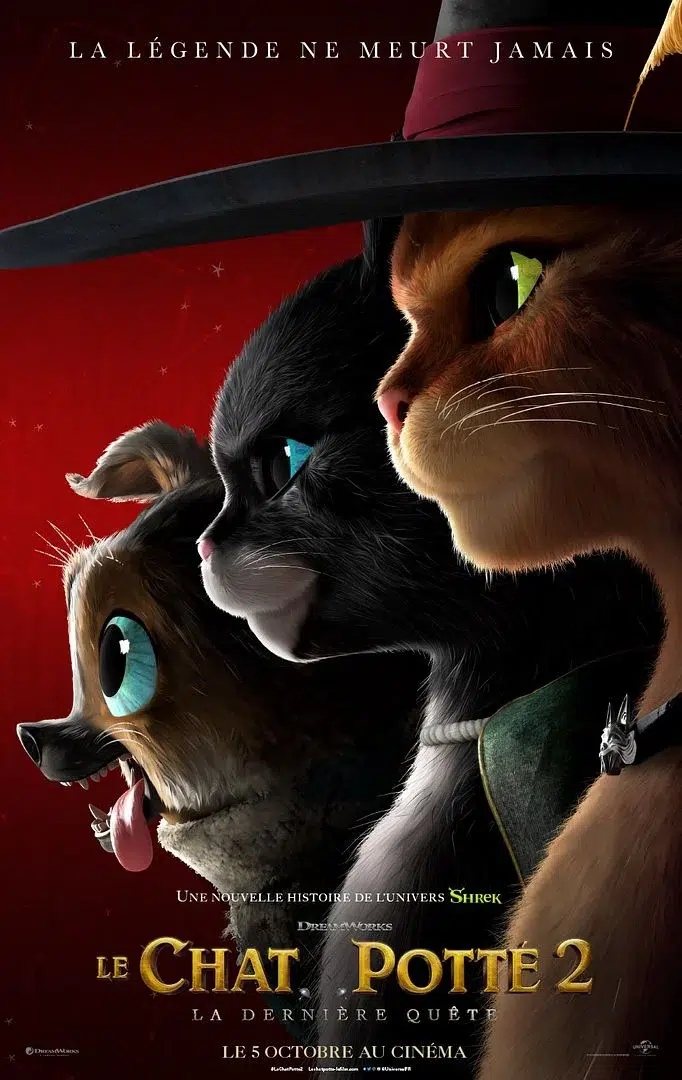
Directors Joel Crawford and Januel Mercado explain that this scene was intended to shift the tone of the film: the audience needed to feel that the hero’s final life was truly at stake. During editing, James Ryan suggested having his past lives flash before his eyes. He tested this idea using footage from the first *Puss in Boots*, in a rough cut. This process demonstrates that an emotional decision can be assessed before the final images are created. First, you need to check that the idea tells a story, then give it its visual form.
The wolf establishes its presence with restraint. Its silhouette, red eyes and calm demeanour combine to form an immediately recognisable threat. It does not need constant agitation to dominate the scene. This restraint creates an imbalance with the hero, whose reaction becomes increasingly apparent. The sense of power can thus stem from the contrast between the two behaviours, rather than from a succession of aggressive gestures.
The visual contrast reinforces this opposition. Puss in Boots is associated with open poses, fluid movements and an expressiveness that seeks to engage the audience. The wolf restricts his movements and seems to economise on every action. In animation, therefore, power does not always depend on range of movement. An almost motionless character can dominate the frame if their pose, gaze and rhythm force the other to react. The viewer assesses the threat through this visual balance of power, even before the fight confirms which opponent has the upper hand.
Sound warns of danger before the imagedoes
The whistling sound that accompanies his appearances adds a distinctive auditory signature. A character can continue to unsettle us even before entering the frame, as long as a sound reminds us of his presence. The threat then extends beyond the boundaries of the frame. When creating an animated sequence, this illustrates just how much sound and image benefit from being conceived together: one can set the scene for an appearance that the other will then confirm.
In terms of the performance, Puss in Boots’s gaze and posture make his emotions palpable. Creating fear does not rely solely on the threatening character. The person facing the threat must also allow us to assess that threat. A step back, a loss of balance or a delayed reaction can signal that the situation is getting out of the hero’s control. The audience recognises the danger in the consequences it has on a familiar figure.
This scene therefore allows us to view animation as a form of performance. It is not enough simply to move a character correctly through space. The movement must convey what the character understands, what they are still trying to hide, and the moment when they can no longer maintain their composure. The pose and the rhythm give shape to this inner state. They make perceptible a development that dialogue alone could not convey.
An emotion that transforms the character
The wolf thus reveals a vulnerability that transforms the story. Puss in Boots must re-evaluate his relationship with his own life, beyond the immediate confrontation. Fear becomes a driving force for the character: it influences his choices and leads us to see him in a new light. For a budding animator, the value of this sequence lies in seeing how an emotion can alter a hero’s behaviour whilst driving the story forward.
Creating fear, from the first sketch to the final shot
Start with the emotion you’re aiming for
These scenes draw on different narrative devices. *Toy Story* makes a familiar object seem strange, then challenges our initial judgement. *Finding Nemo* guides our discovery by controlling what we can see. *Toy Story 3* gives an overwhelming sense of the danger surrounding beloved characters. Puss in Boots 2 conveys the power of an adversary through the hero’s vulnerability. No single formula can replace the choices specific to each story.
What they have in common is that they link the creation of the image to an emotional intent. Before looking at the details of a creature or the complexity of an effect, one must understand what the scene is meant to make the viewer feel. Should the viewer fear what they cannot see? Worry about a character? Be misled by appearances? This decision then influences how the shot is conceived and how the work is organised.
To observe these choices, one can rewatch a scene whilst focusing on a specific element. Looking first at the silhouettes and distances helps one to understand the relationship between the characters. Then, following the changes in light reveals what the image conveys at any given moment. Finally, observing the characters’ gazes and pauses helps you interpret their performances. The film becomes richer when you can distinguish these elements without losing sight of the overall emotional impact.
We can also distinguish three mental versions of the same shot: the still image, the movement without sound, and then the complete scene. The still image reveals the silhouette, the composition and the visual hierarchy. The movement shows how attention flows and how a pose becomes an intention. Sound adds duration, off-screen elements and cues that the image does not contain. This simple exercise helps to distinguish between the different craft without pitting them against one another. Fear often arises at the point where their decisions converge, for example when a light reveals a space at the very moment a sound prepares us to react.
Understanding the production chain behind the image
For a student project, this method avoids treating the technical aspects as an end in themselves. A complex simulation is only useful if it remains easy to interpret. A richly detailed character loses its impact if its silhouette blends into the background. Spectacular lighting can undermine a plot twist if it reveals too early what the narrative was meant to conceal. Conversely, a simple idea gains strength when the storyboard, layout, animation, effects, lighting and compositing all serve the same purpose. These famous scenes remind us that the quality of a 3D image depends as much on the consistency of the choices made as on their technical difficulty.
At ESMA, the 3D Animation and Special Effects course covers the stages of production that bring these worlds to life, from visual design to animation and compositing. These well-known films provide a gateway to understanding the relationship between technique and creativity. At Halloween, watching them again allows you to discover how an object, a light or a gesture created in 3D can become an image that stays with you for a long time.