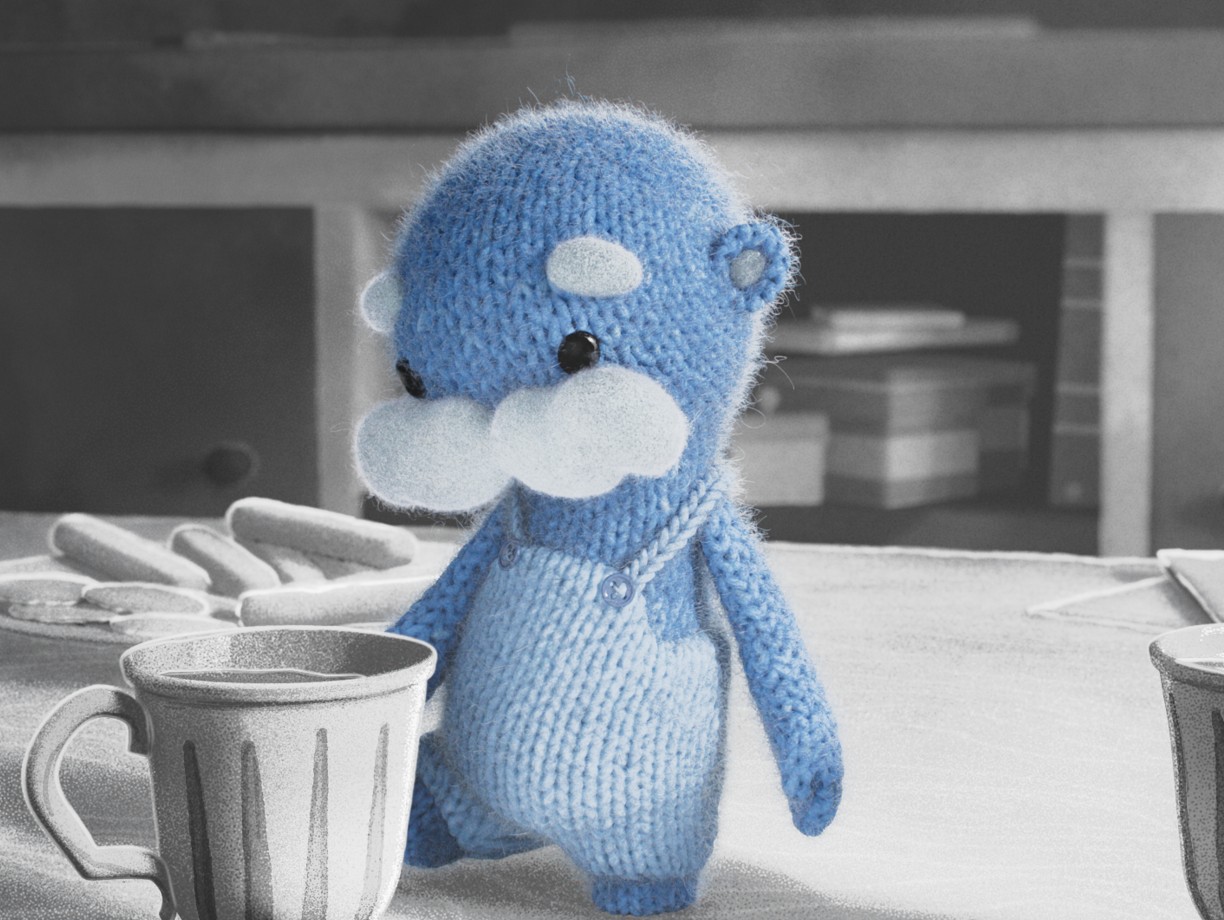

A final-year project created with care and professionalism by the team of students at ESMA, which impressed not only the audience and the jury at the ESMA Graduation Show 2024 but also the selectors at numerous international festivals.
Included on the longlist for the BAFTA Student Awards, and now in the running for the Rookie Awards for Best 3D Animated Film of the Year, *Tricot de corps* has also been selected for the Toronto Animation Arts Festival, the 24 FRAME Futur Film Festival and, most recently, the Cartoon Club.
A real accolade for Pierre-Marie Bavay, Laurie Beldent, Joan Haubois, Maëlle Le Bris, Camille Lequeux, Malo Lescop, Clara Navoizat and Emma Rateau – the team behind this moving story.
How did they bring to life the story of Patsy, a recent widow, and that woollen soft toy that reminds her all too vividly of her late husband Paul? That’s what we invite you to discover in this behind-the-scenes feature.
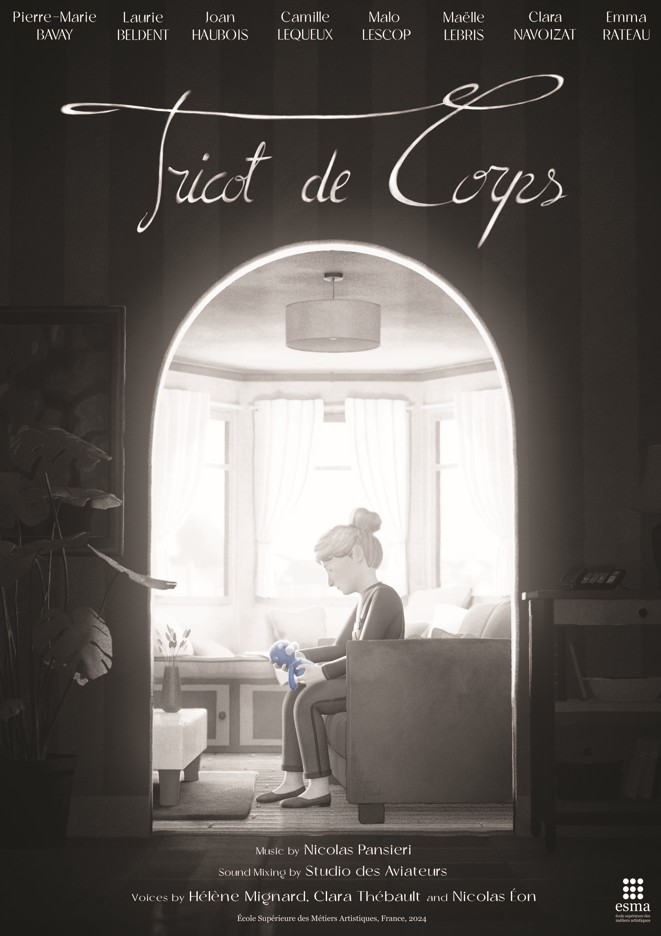
“Every bereavement is unique”
In addressing the theme of grief and the loss of a loved one, the team wanted to approach the subject with kindness and sensitivity, despite it being a difficult topic. “For us, every bereavement is unique. Through Patsy, we wanted to show that some people struggle to come to terms with the pain of such a loss, whilst also addressing related themes such as love for one’s own family and end-of-life care.”
This theme, which was incorporated into the team’s thinking at a later stage, required numerous rewrites to ensure the film’s gentle, nostalgic tone was not compromised. To avoid these pitfalls, the team put into practice the well-known cinematic adage: ‘show, don’t tell’, relying on aesthetic elements to delve into the protagonist’s psyche. This evolution is also evident in the colour palette, and helps the viewer better understand the changing relationship between Patsy and her creation.
A meticulous design to reflect complex characters
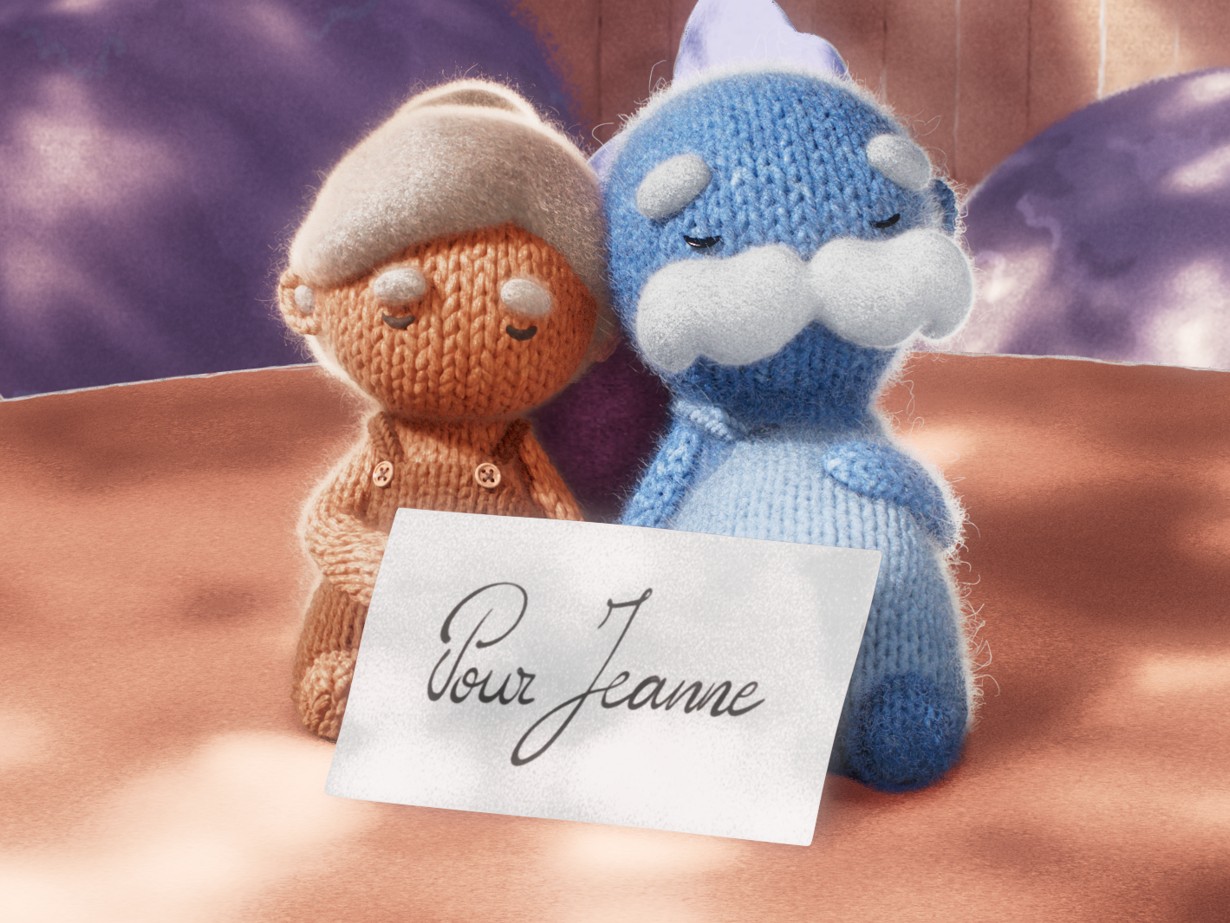
For the film’s team, the character design phase provided an opportunity to infuse their various characters with the film’s themes, whilst adding depth to them.
“We literally modelled them on the personality of each protagonist. Patsy is an elderly, patient woman who, although she tries to hide it from her daughter, is deeply saddened by the loss of her husband. Her appearance therefore had to be plump and gentle, without making the character look too old.”
In contrast, Jane is a busy woman who juggles her children and her work, which is reflected in her outfit and the way she moves.
After all, Tewey must have had a reassuring and cheerful soft-toy-like appearance, as Patsy knitted her to comfort herself whilst her husband was ill. Unconsciously, she modelled her on him.
“For the latter, we actually drew inspiration from characters such as Baymax (Big Hero 6) and Poe (Kung Fu Panda).”
It was this character who gave the team the most trouble – no pun intended. With no dialogue, we had to manage to make the character endearing and expressive, without him becoming unsettling. We succeeded, thanks to his cute design and lively features.
From stop-motion animation to a multifaceted, intimate and poetic world
When the project began, the team’s ambition was to create a short film entirely inspired by the stop-motion technique, made using wool. However, due to a lack of time and a sufficiently original angle, the team ultimately opted for a very distinct style combining black and white, a pointillist rendering and elements of 3D animation inspired by wool.
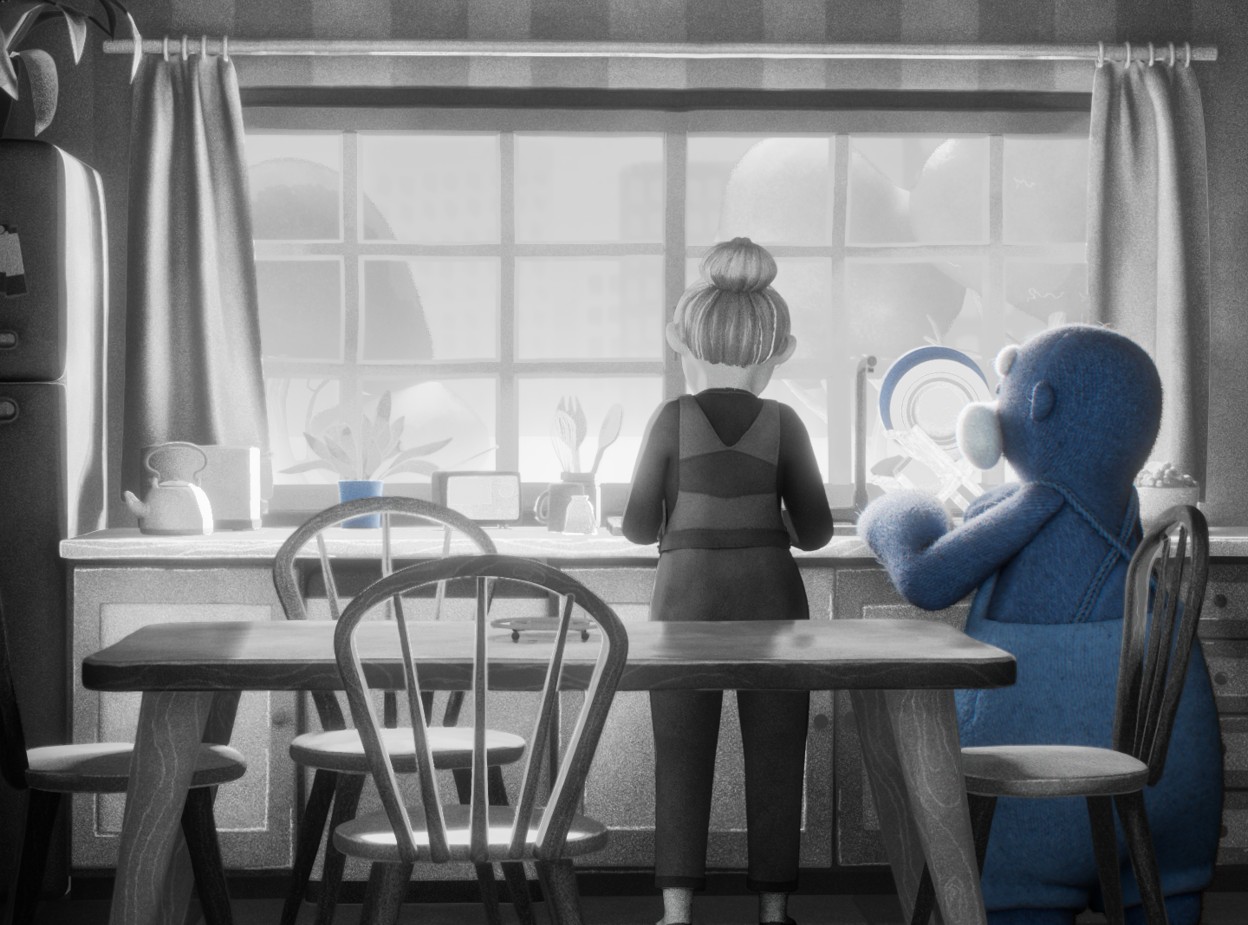
“We wanted an intimate and poetic world that reflected Patsy’s feelings. The black and white evokes her melancholy and fragility in the face of the events she is confronted with, whilst the colour, which returns in the final sequence, evokes the joy of being reunited with her husband. In terms of aspect ratio, we opted for 4:3, a way of bringing the viewer as close as possible to the characters by immersing them directly in their environment. Finally, the pointillist effect lends the film a dreamlike atmosphere, which is enhanced by soft, ethereal lighting effects.”
These choices were largely inspired by filmmakers such as John Kahrs (Paperman) and David Lowery (A Ghost Story), as well as by the work of pointillist artists such as Eleno Kopka and Benjamin Geffroy.
Significant technical challenges
When you first discover *Tricot de corps*, it is, of course, Patsy’s design that immediately catches the eye. The rendering of the wool – realistic yet subtly integrated into this two-dimensional, pointillist-style world – works a treat. This was a tour de force that forced the team to overcome numerous technical challenges. It was during the compositing stage – one of the final phases of production – that most of these obstacles were surmounted, the team explains:
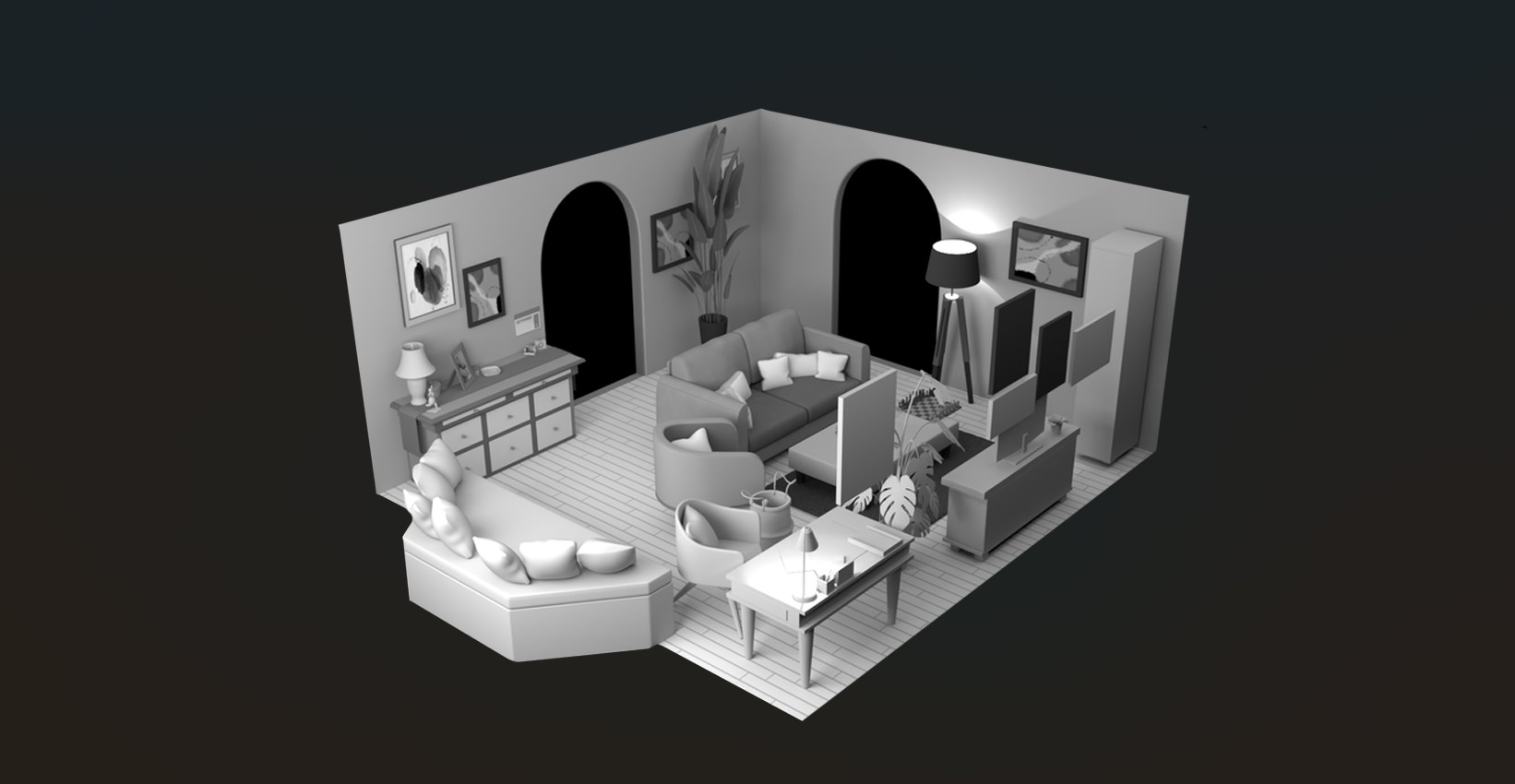
“The 2D pointillist effect was mainly achieved through compositing, but this meant we had to handle many elements of conventional 3D film in a different way. For example, we had to experiment with different ways of handling the blur in the background, so as not to detract from the pointillist effect.”
“As many of the visual effects involved compositing, we had a very specific method for isolating the different parts of each image. In particular, we calculated images in which only the wool elements were present, as they do not undergo the same visual processing as the rest.”
Substance was used to texture the wool characters, with the fibres positioned very precisely to achieve a convincing fleece effect. Subsequently, and thanks to the capabilities offered by Nuke, the team applied the pointillist effects to the other elements in the image, based on their positions in 3D space. This technique allowed them to transform their simple, greyscale textures, giving them this unique look.
“We also wanted to incorporate lines resembling pencil strokes on each object, which was also achieved through projection via compositing. Only the characters had facial features modelled in 3D, which we rigged so that we could make them appear and distort them whilst animating their expressions.”
Finally, to create a contrast between the characters of different natures, the team also experimented with several different animation frame rates, ranging from 12 to 24 frames per second depending on the movements. “Despite this, we decided to keep the camera movements at 24 frames per second, and we chose to use them sparingly as it was difficult to manage our projection technique during compositing with too much camera movement. Ultimately, this worked in the film’s favour, as these predominantly static shots lent a nostalgic aesthetic to our compositions.”
Close and seamless collaboration
Thanks to their shared background in 3D animation, the various members of the *Tricot de corps* team were able to collaborate effectively, with each producing distinct visual concepts whilst contributing to the production as a whole. It was also through teamwork that the script and the film were developed, thanks to a fair division of shots, regular production monitoring and constant communication.
“Of course, we faced a bit of a final rush during the last week of the project, but our close monitoring, along with our ability to discuss the challenges the film presented, meant we never doubted that we would succeed in bringing this project to a successful conclusion. It was this rapport, combined with good communication within the team, that clearly made all the difference. Everyone contributed their strengths to the project and gave it their all. We also received excellent guidance from our lecturers, who supported us in resolving every single one of our problems.”
Their advice? Experiment, collaborate, and be a good teacher
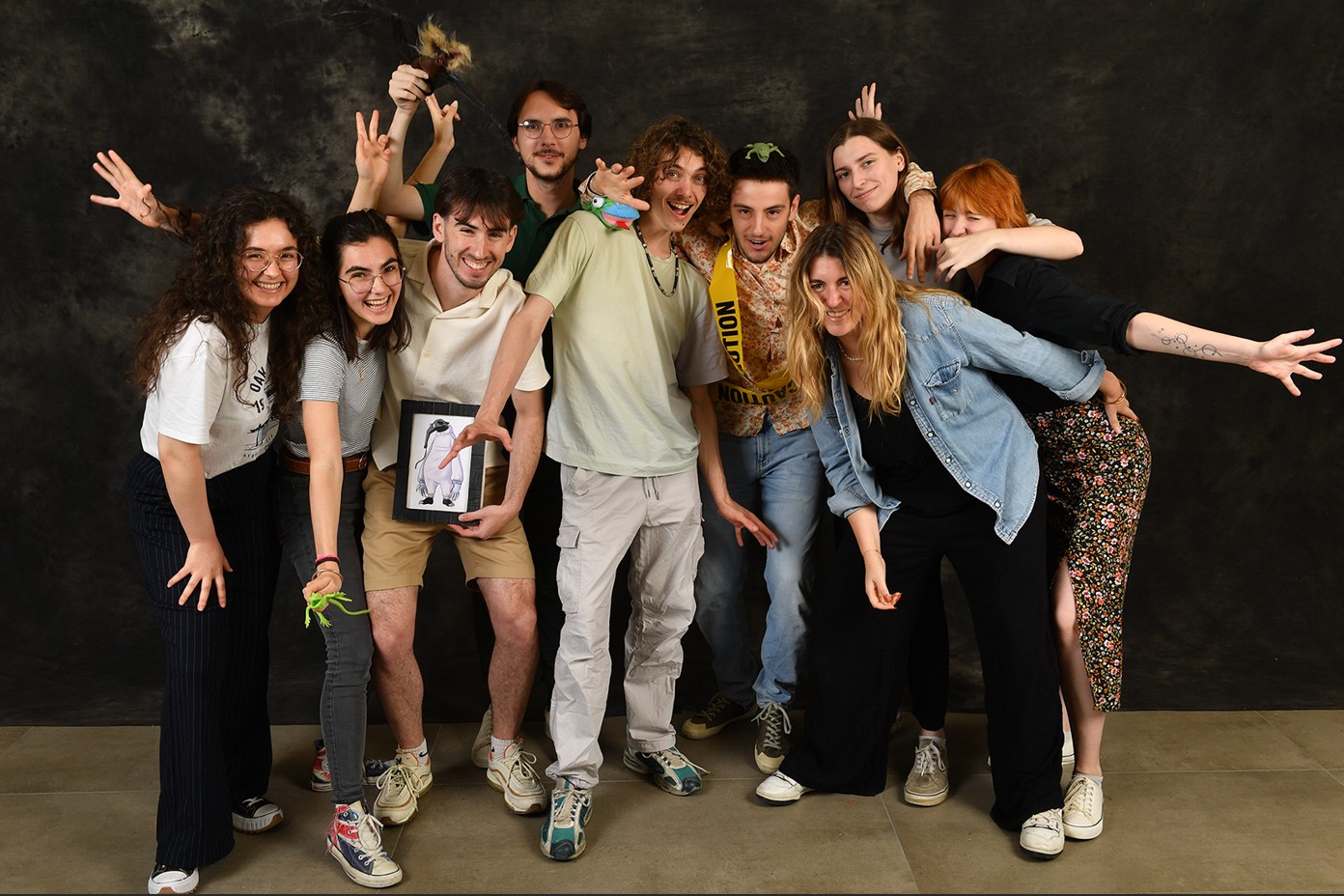
Today, the team remains very close-knit, answering our questions with one voice. Feedback from the audience – who are often deeply moved – continues to fill these young graduates with joy as they promote the film whilst entering the job market. Their advice for students about to embark on a project like this? “Teach one another, and try to work with everyone without getting in each other’s way. You also need to realise that you won’t produce a film of the same quality as a DreamWorks or Disney production on your first attempt. A student film is, above all, an opportunity to experiment with new techniques within a visual style that appeals to us.”
A review full of warmth, for a film that is just as heart-warming. *Tricot de corps*, as the film has already demonstrated at numerous festivals, will have no trouble resonating with a wide audience. The quality of the animation produced by this inventive and close-knit team makes this short film a real delight, complemented by a tender, simple and universal story.
Discover *Tricot de Corps* now, a 2024 graduation film from ESMA, available to watch in full: