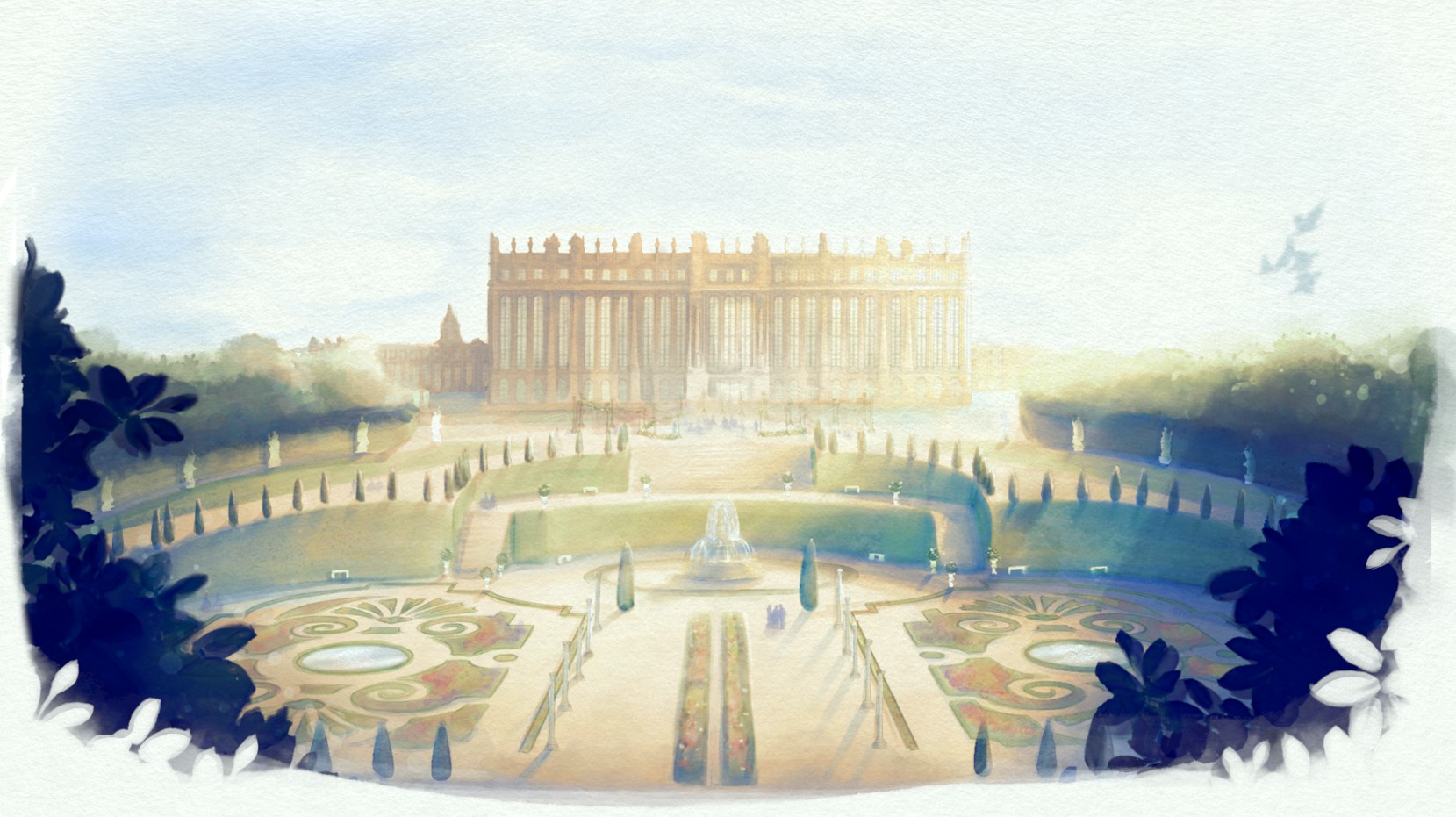

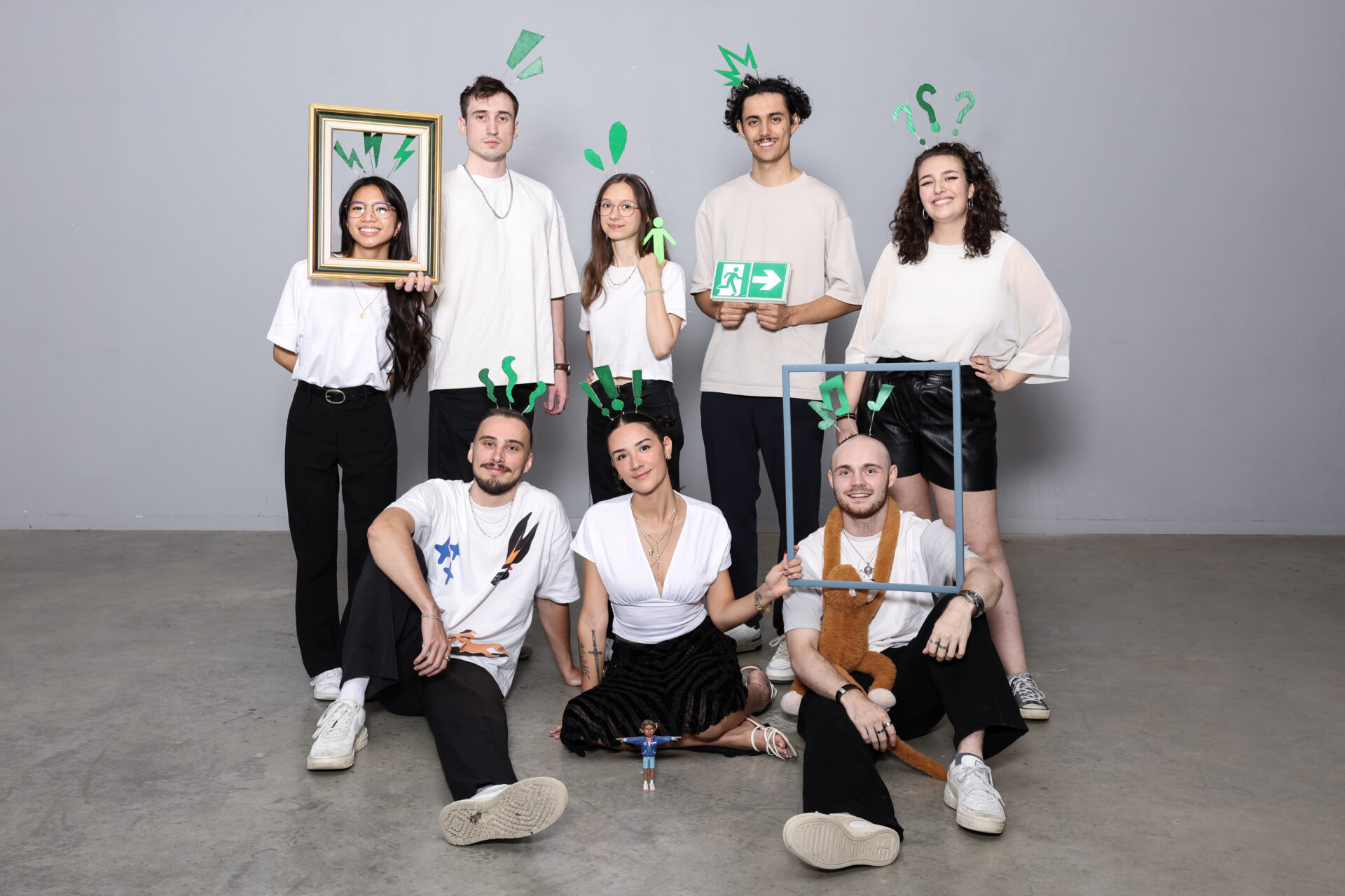
In *Le jardin de Versailles*, Emeline Basseux, Léonie Bensaid, Clara Desnoix, Coline Meurville, Jean-Gabriel Michel, Coline Nogier, Marine Payet, Théophane Sicard-Cazeneuve and Gaénore Vaginet. A touching film, delicately animated through vignettes and a soft watercolour style that is all too rarely seen on screen.
To understand the challenges posed by these bold choices, we spoke to the team, who gave us an insight into the manufacturing process.
How did this film come about?
To be honest, this film came about through conversations, sketches and a lot of inconclusive trials.
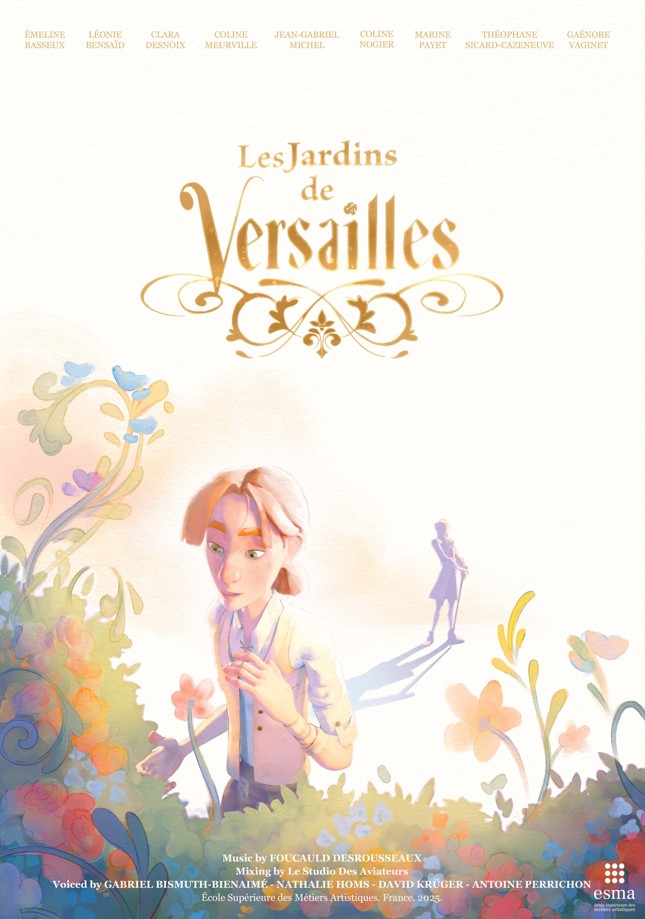
But as time went on, we managed to agree on the direction to take, and that is how Honoré, Louis and Ambroise came into being. The idea stemmed from a single sentence: “What if the gardener at Versailles had to rise above his social standing to save the King?” From that initial idea, we had to reach a consensus and align our expectations and aspirations in order to present a coherent message that would suit everyone. After three draft scripts were scrapped, and weeks of discussions and debates, we managed to reach a consensus and finalise this one.
What guided you in your narrative or aesthetic choices?
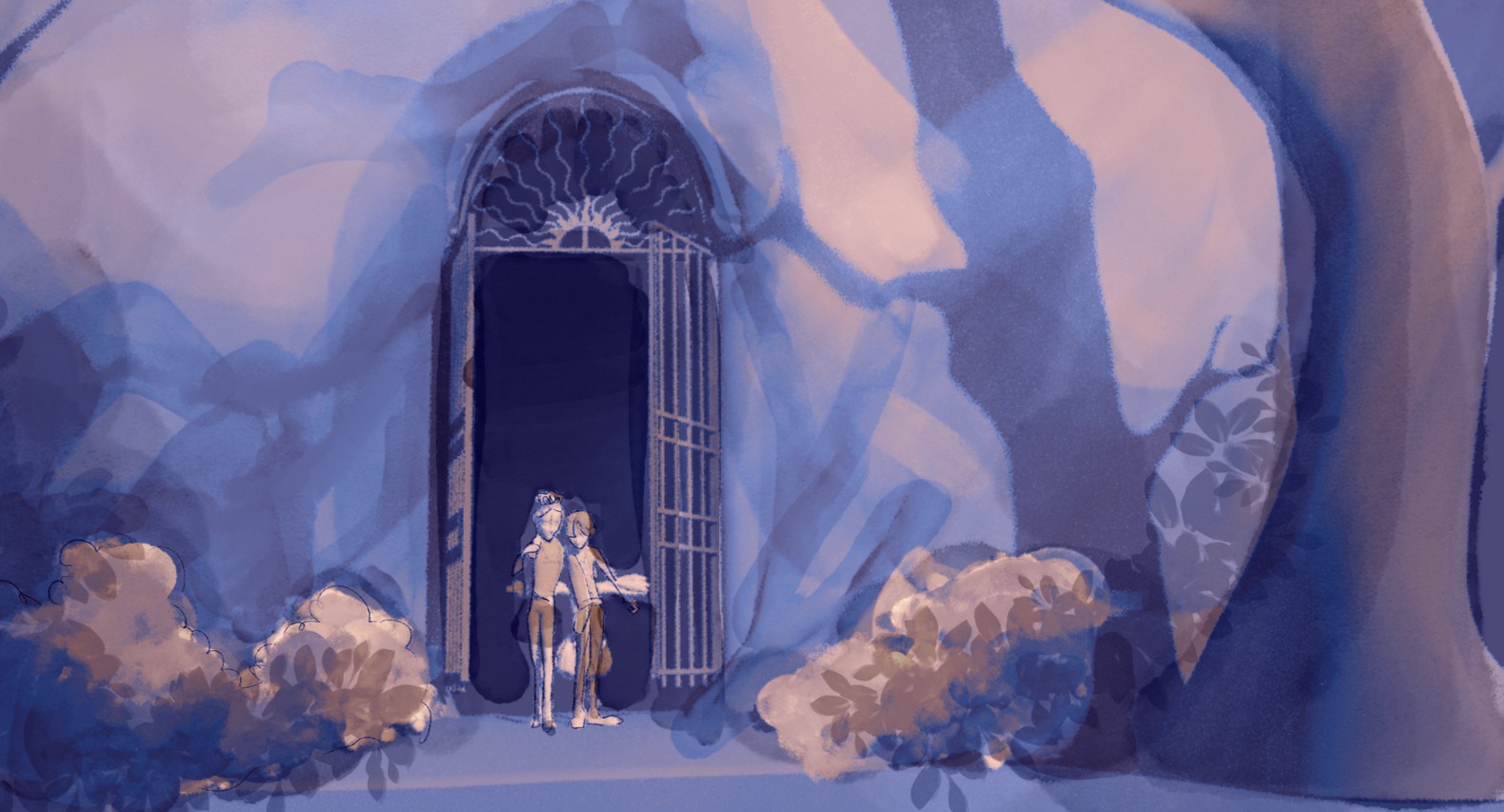
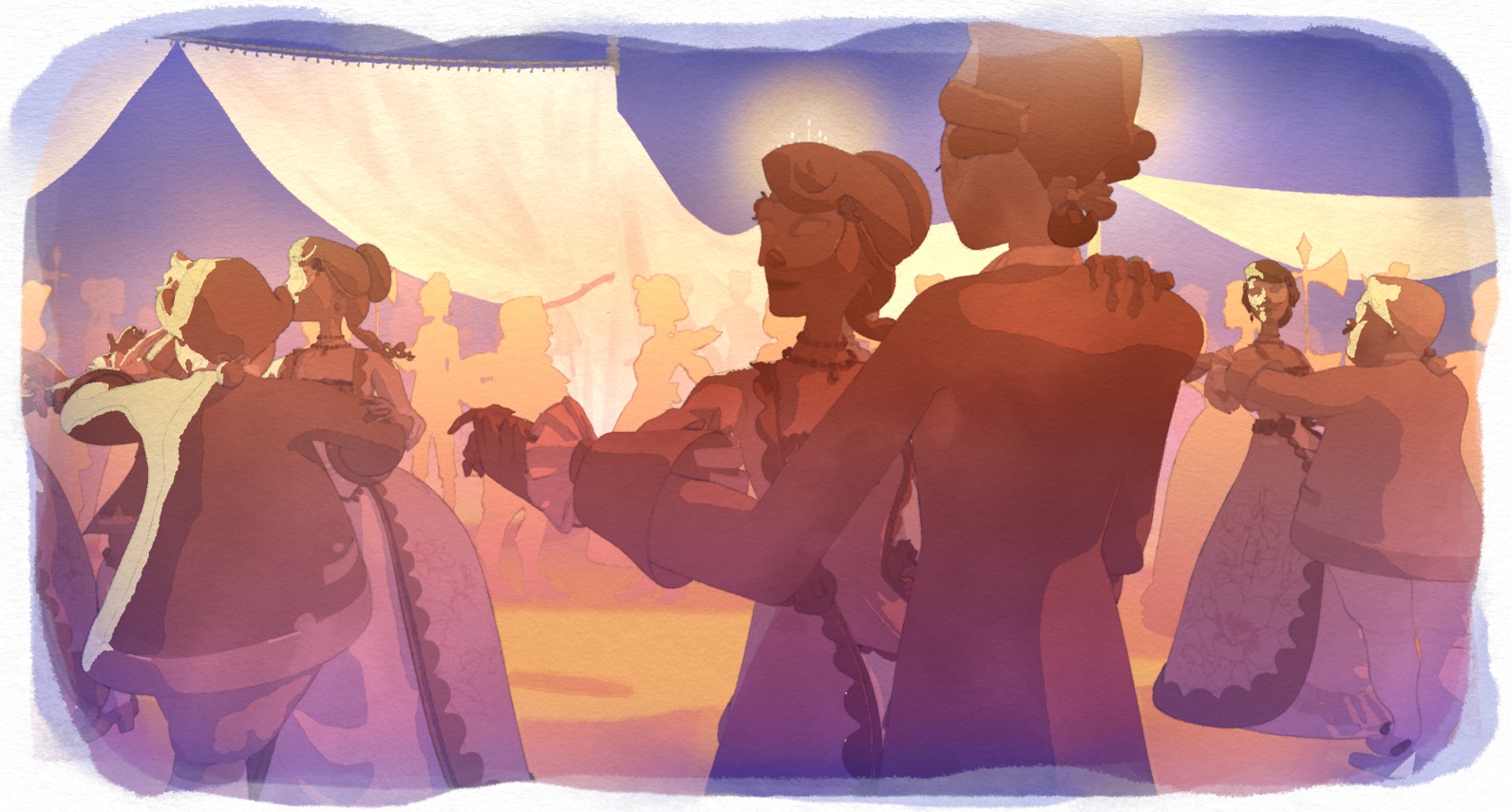
Right from the start, we wanted to explore watercolour as a technique. It’s a style that hasn’t really been utilised in 3D until now, and we were captivated by the lightness of the medium, as well as the compositing and storyboarding work it promised to involve. We wanted our story to have the feel of a fairy tale, and watercolour allowed us to move in that direction, with compositions inspired by artists such as Gianluca Garofalo.
How did you develop your main characters?
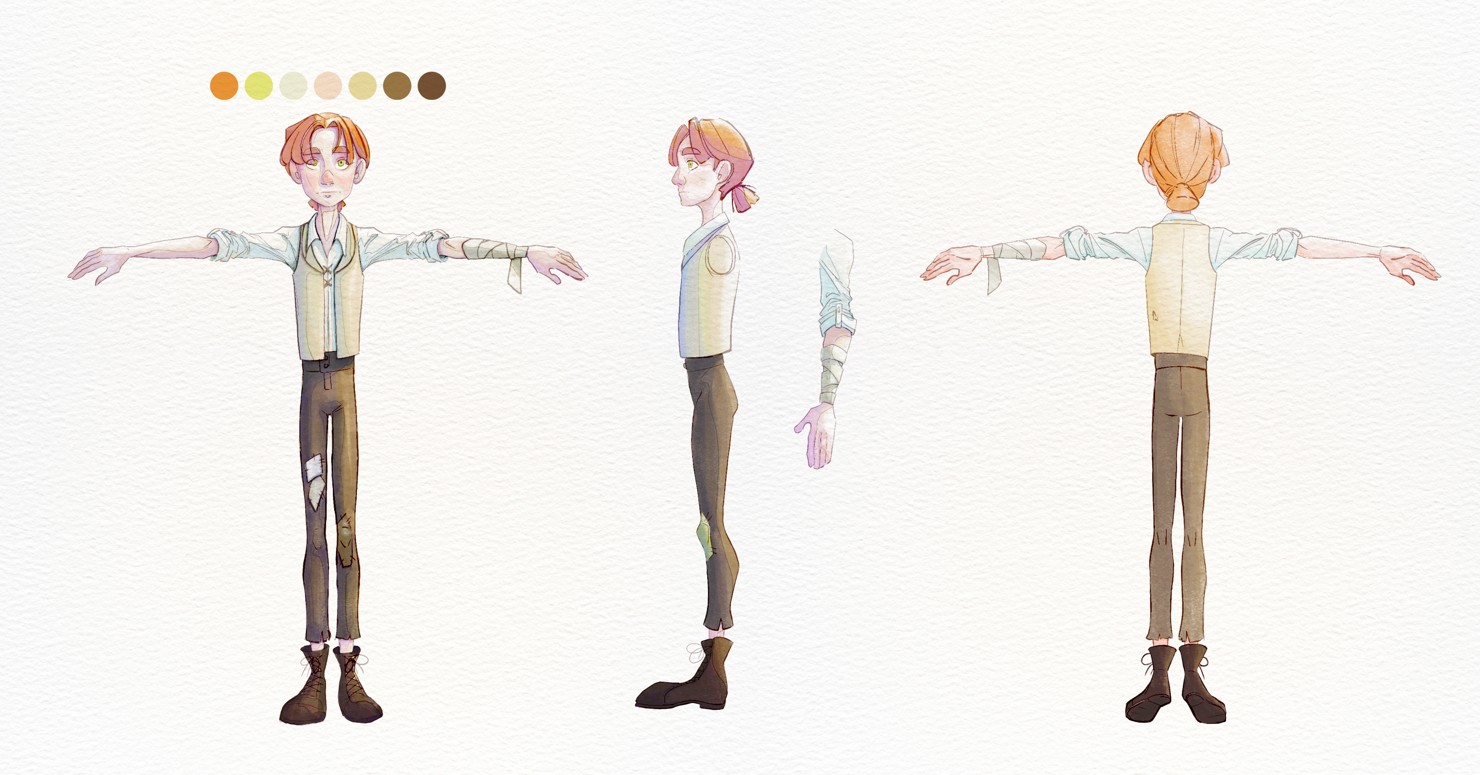
To begin with, we assigned each character an animal to represent them. Ambroise would be a falcon, whilst Honoré would be more like a small, fragile but resourceful rodent.
Next, for the character designs, we did a great deal of research into historical costumes that were appropriate for the period. We did, however, add a touch of our own flair that strayed from historical reality, but which emphasised the nobles’ extravagant silhouettes so that they could be distinguished from the servants.
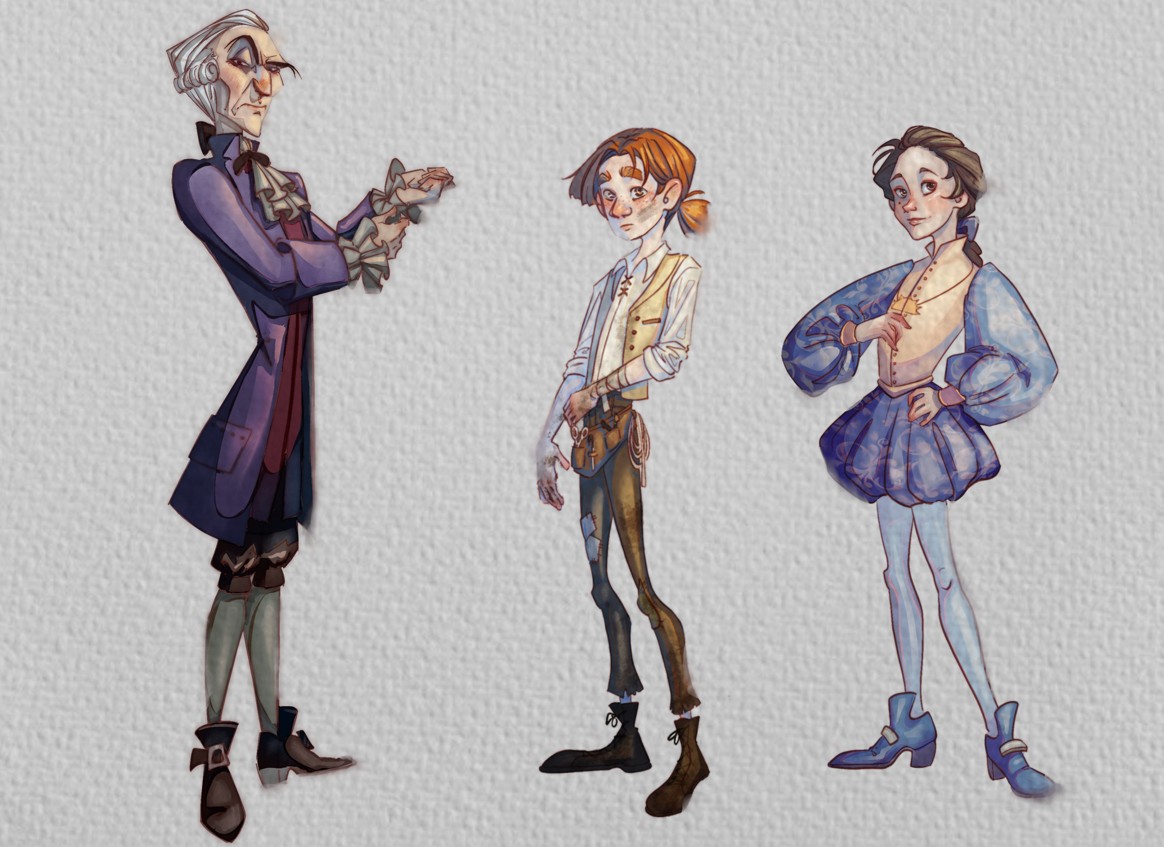
When it came to inspiration, it seemed obvious to us to draw on the character of Judge Claude Frollo from *The Hunchback of Notre Dame* – a villain, strategist, deceiver and a very haughty figure – for Ambroise. For Honoré, the choice was a little more complex; we drew on influences from Arthur in *Merlin the Enchanter * and Jim in Disney’s *Treasure Planet *.
We really wanted a shy, delicate teenager, and it was difficult to find a specific source of inspiration that met all our criteria. We had a lot of trouble with his character design, as it was very difficult to make him look cute without losing sight of the fact that he’s a 15-year-old teenager. So there were several iterations of the sculpt, which gradually came closer to the attitude we wanted him to convey.
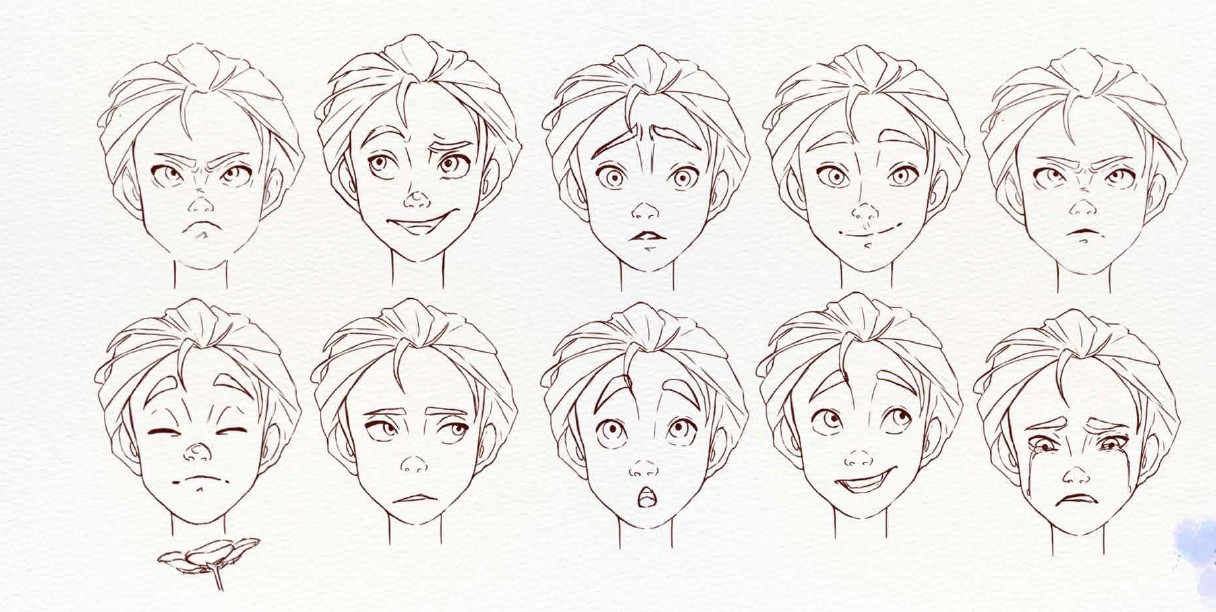
That said, Ambroise also presented his fair share of challenges: we wanted to portray a character with a commanding presence, and it was quite tricky to show him being defeated without making him appear weak. We had to devise camera angles and compositions that put him in a difficult position, without detracting from his grandeur.
How did you define the film’s world?
The gardens of Versailles speak to everyone, and the differences between social classes are visually apparent, whilst also being easily discernible from the characters’ attire and demeanour. As poetry and light-heartedness play a crucial role at the heart of our story, this colourful and rich natural setting seemed to us to be the perfect playground.
As mentioned earlier, we drew heavily on the compositions of Gianluca Garofalo, which are characterised by a unique and striking poetic quality.
The way he composes the image is effective and visually striking; the key lines are crisp, and the way he handles the different planes within the image – making use of the transparency of watercolour – has greatly inspired us in creating our storyboard. As there is such a wide variety of watercolour techniques, we tried not to get sidetracked and to stick to his approach: large blocks of colour with a few variations in hue, but always very clean and simple.
Which element of the set or the atmosphere gave you the most trouble?
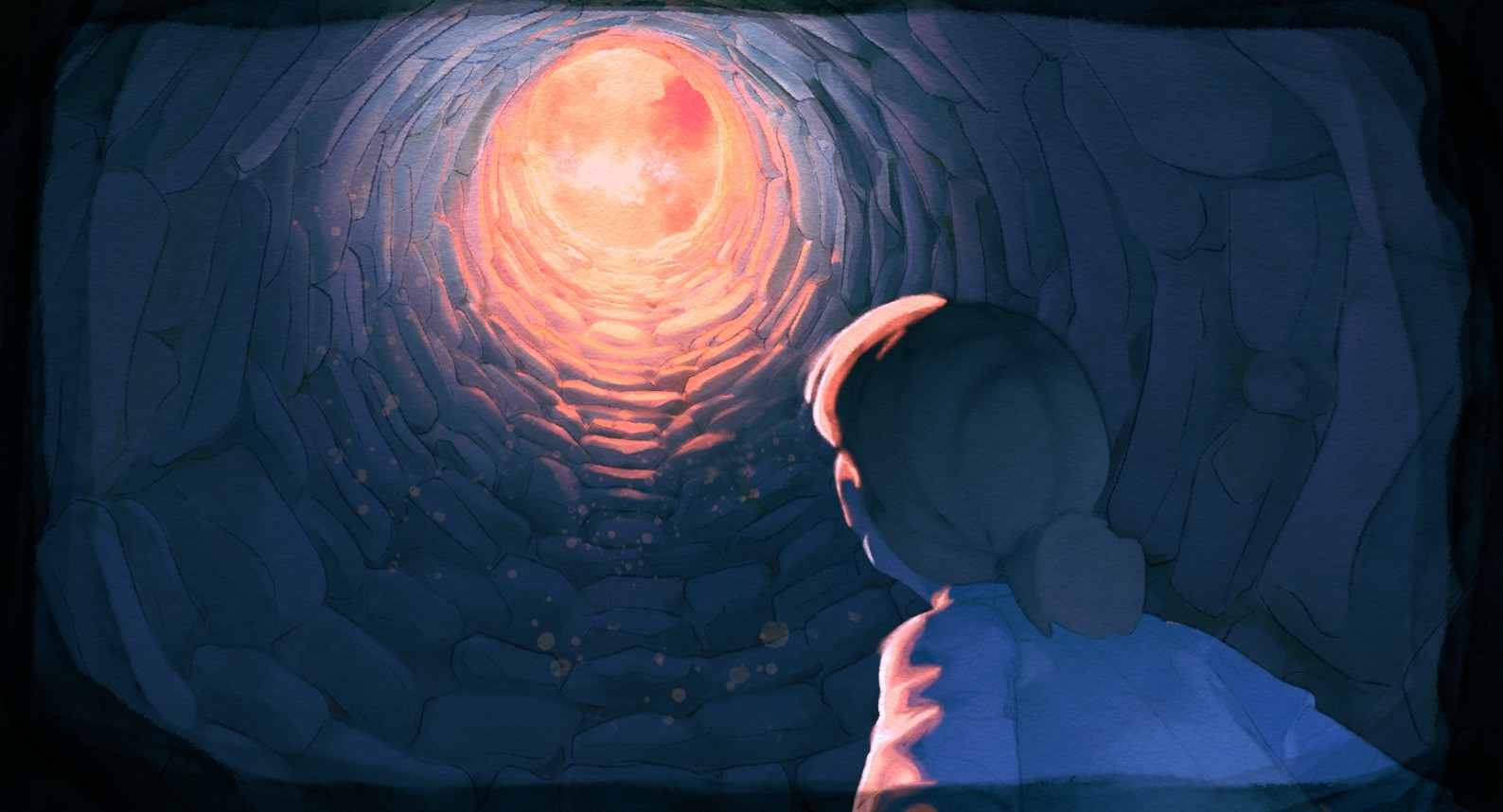
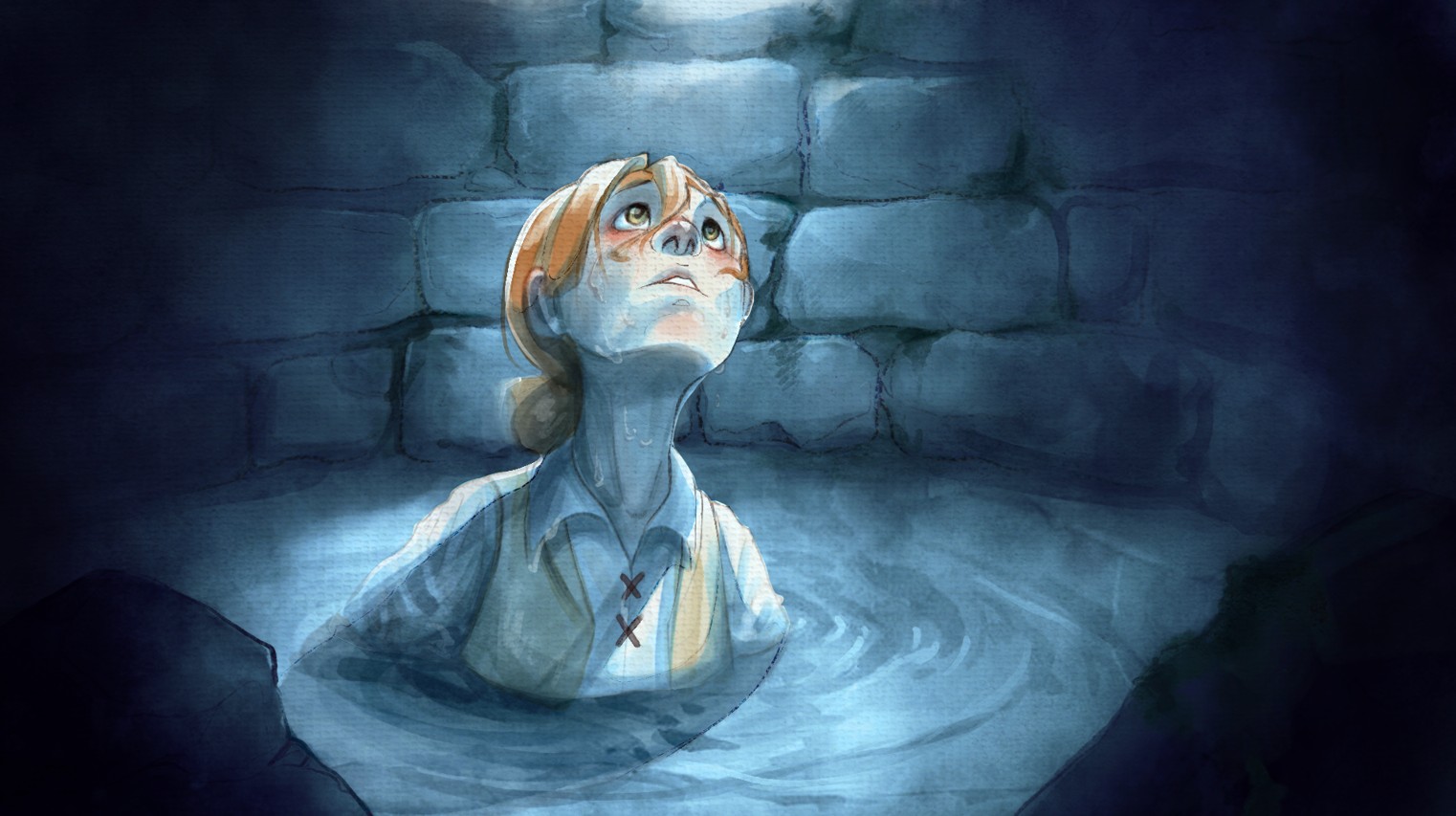
The atmosphere in the finale took a huge amount of work. This sequence comprised around fifty shots, and the lighting and colour grading were synchronised with the character’s progress through the crypt: the further the character was driven back towards the end, the more dramatic and intense it became. Managing the tension and colour balance required a great deal of thought and conceptual work on our part. The choreography was also redone several times by the animation team, who had to revise the storyboard in parallel using the animation references.
Apart from this sequence, what were the main technical difficulties encountered?
Given our artistic direction, we spent a lot of time looking for references that matched the style of watercolour we liked. Once we’d all agreed, we first tried to recreate a still image to see how it might look. That’s when we realised we would have to approach our film as a 2D production, and adjust the frame rate and flicker of the image accordingly.
What’s more, we had a lot of different characters: three main ones, plus a host of nobles and servants. Finally, the film’s ambitions and the number of scenes were far beyond what we could manage in terms of the schedule.
How did you overcome these challenges, and what tools or technologies did you use to achieve this?
Following our technical research, we looked into the Flair software, which had a workflow for rendering watercolour effects. We examined how it worked, then streamlined the process to retain only the parts that interested us. In a nutshell: we started with a Renderman render, then in Nuke we retained only the albedo, to which we added layers of shadow and light in a manner somewhat reminiscent of a traditional watercolourist, using various blend modes. The most complex part was blending the different layers so that there was no repetition of patterns, whilst breaking away from that very ‘perfect’ 3D look.
To achieve this, we made extensive use of the IBlurU node, combined with blur layers generated in After Effects, so that, frame by frame, the blur does not resemble that of the previous frame, as in a 2D animation. This flicker had to be very subtle to avoid an overly stroboscopic effect that would be tiring on the eye, and we only applied it to moving subjects. For the backgrounds and static details, we carried out an initial compositing pass and then went back over them in Procreate to refine them.
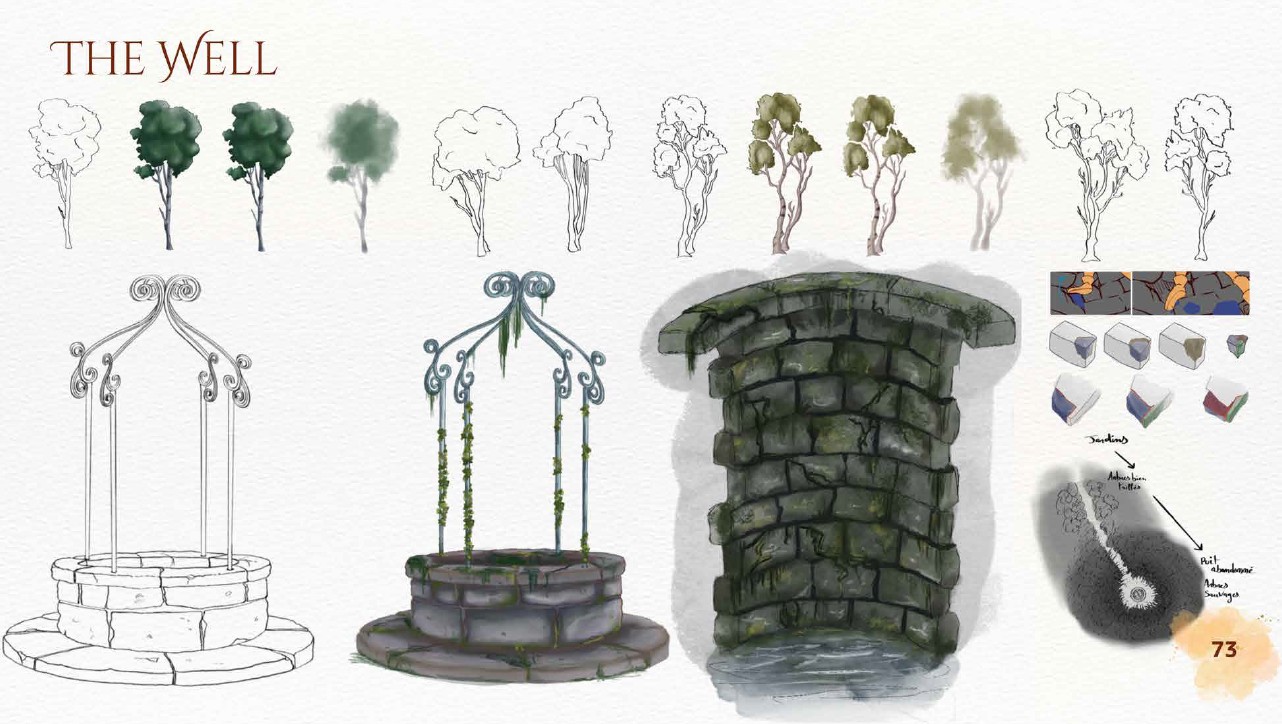
As regards the characters, and more specifically the crowds, we created three body templates onto which we randomised clothing, hairstyles and textures in order to achieve a diverse and lifelike crowd. Finally, it has to be said that there are no quick fixes for this last problem: we had to cut part of the film and reorganise the sequences to ensure we met the deadlines and production constraints.
How did the allocation of roles and teamwork go?
Everyone was responsible for at least one specific area, and reported back to the production managers, who would then assess whether or not we were behind schedule. But beyond this division of labour, everyone handled several specialisms (animation, storyboarding and skinning, for example), so that everyone always had something to do. This also enabled everyone to develop a range of skills for their respective portfolios.
Was there ever a time when you thought the project might not come to fruition?
Quite frankly, yes, because we had 160 shots in our film, whereas other films tended to have around 80 to 100 at most. Admittedly, our rendering time was very fast, but the 2D post-production work on almost every single shot really took us a long time. What’s more, as our initial 3D tests weren’t conclusive, we fell way behind schedule. Despite everything, it was the motivation to create a film we could be proud of, as well as the freedom we were given on this project, that drove us to see the film through to completion. There were some very difficult moments, but we always sought solutions, combining ambition and motivation with a pragmatic approach, particularly when we had to make choices and cut certain parts of the film.
We’re really pleased to have seen the project through to the end, and the thought that there’s a little bit of each of us in every detail of the film always brings a smile to our faces.
Looking back, what would you have liked to have done differently?
We spent a great deal of time on certain aspects of pre-production that could have been speeded up. In terms of team organisation and workload management, we learnt a great deal about the need to coordinate, support one another and communicate during stressful periods. Paying close attention to these three aspects of teamwork is crucial, and it saves both time and energy on projects of this scale.
What advice would you give to students who are making their films today?
Trust yourself and trust others; if you have a clear vision of what you want, go for it! And above all, have confidence in your abilities and in your capacity to learn. This sort of project is incredibly rewarding, both on a personal and a technical level. Spoiler: you’ll laugh and cry, and you might even regret some of your decisions, but in the end it’ll all be worth it.
Discover *Les jardins de Versailles* now, a 2025 graduation film by ESMA, available to watch in full: