
A perspective shaped by thirty years in the world of animation
He describes himself simply, almost modestly, as someone who has ‘done a bit of everything’ in the world of animation. Yet behind this modest statement lies a rich and varied career, spanning several decades of creation, production and mentoring.
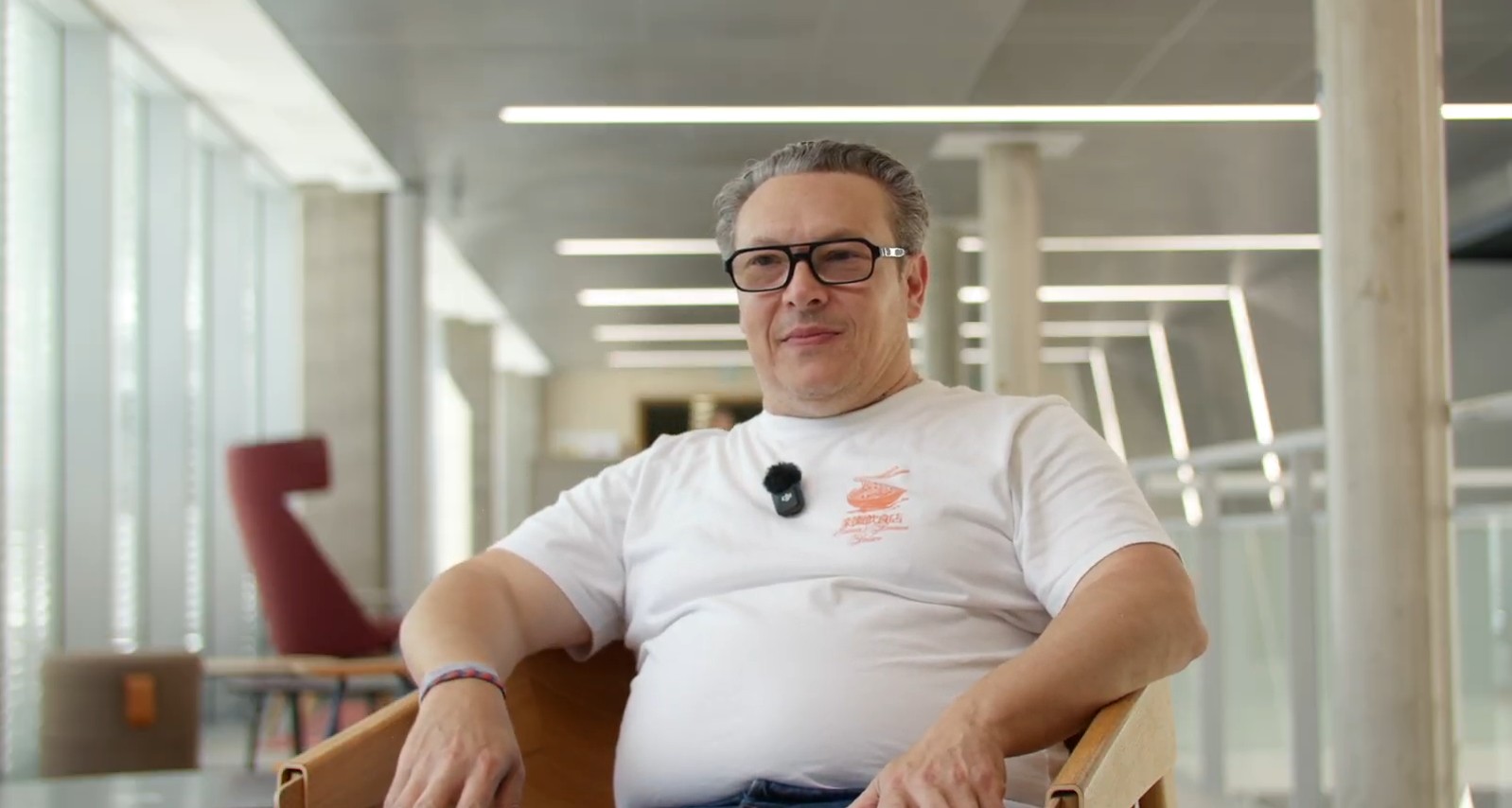
Fred Vilquin has been working in the animation industry for thirty years. Having trained at Les Gobelins, he has explored various aspects of the profession: personal creative work, animation, supervision, directing, and also storyboarding, to which he now devotes a significant part of his time. “I’ve done personal creative work, animation, animation supervision and directing too. These days, I’m the storyboard supervisor on lots of small projects,” he summarises.
This background lends his perspective a particular depth. Fred Vilquin does not simply watch a film for what it shows on screen. He perceives its structure, the directorial choices, the animation work, the visual coherence, the precision of movement and the narrative intent. He understands what a shot demands, what a rhythm implies, and what a camera conveys. And when he talks about the student films he has just discovered, it is first and foremost this attention to the craftsmanship involved that shines through.
“I loved all that creativity”
His overall impression is immediate. “I loved it,” he says, before emphasising the richness of the films on offer. What struck him first and foremost was the diversity of the worlds presented. The films do not seem to follow a single formula. They explore different styles, aesthetics and intentions. “There really is a huge range of approaches, visual choices, ideas – loads of ideas,” he emphasises.
For a professional accustomed to analysing images both in their making and in their final form, this diversity is a strong indicator. It reflects an ability to explore, propose and assert unique directions. It also speaks volumes about the artistic maturity of a cohort capable not only of producing technically sound films, but also of championing genuine points of view.
Fred Vilquin also highlights the overall standard of the projects. In his view, some films are of a particularly high quality. “The bar is set quite high,” he observes. This high standard does not apply solely to the visual finish. It also relates to the students’ ability to construct coherent narratives, create powerful atmospheres, develop credible characters and produce images that convey a clear intention.
On the whole, the word that keeps coming up is ‘impression’. Not a vague or polite impression, but a professional one, informed by experience. “There’s a certain maturity to some of these films that really moved me,” he confides. For him, emotion does not contradict technical analysis; it complements it. For Fred Vilquin, a successful film is precisely one that manages to combine mastery with sensitivity.
City of Silence: love at first sight
Of the films he discovered, *City of the Silence* very quickly emerged as his absolute favourite. Fred Vilquin says without hesitation that the film ‘caught his eye straight away’. In his view, it is a particularly accomplished work, combining several essential qualities: technical mastery, narrative effectiveness, aesthetic power and dynamism.
“For me, it’s a fully realised film,” he explains. He also sees it as a project that fully justifies his use of 3D. The technique does not come across as a mere demonstration, but as a language serving the narrative. “Technically, it’s extremely well done,” he continues, before singling out the camerawork in particular, which he describes with enthusiasm.
In *City of the Silence*, everything seems to work in harmony. “It has it all: the aesthetics, the story, the movement, the dynamics,” sums up Fred Vilquin. This overall coherence is undoubtedly what sets the film apart in his eyes. Every element seems to contribute to the viewer’s experience. Nothing seems isolated or gratuitous. The camera accompanies the narrative, the movement conveys the emotion, and the aesthetic enriches the world of the film.
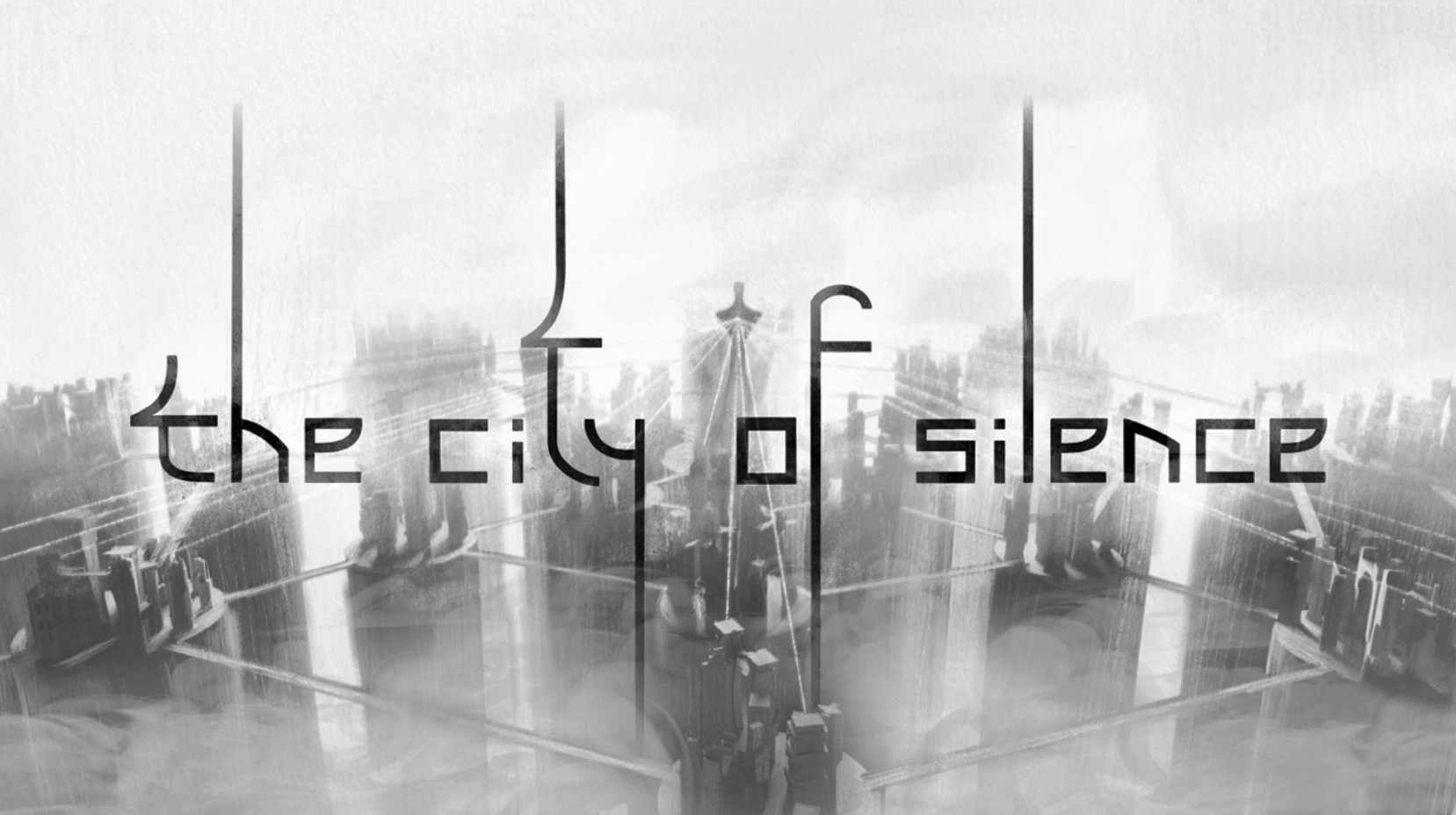
So the film is not merely skilfully crafted; it sweeps you away. And that is precisely what Fred Vilquin expects from a successful animated film: that it goes beyond a technical showcase to become a genuine cinematic experience. “In short, it swept me off my feet,” he concludes. The first prize it was awarded therefore seems entirely fitting: “It won first prize – that’s for sure.”
Perfect Match: the energy of cartoons and the richness of reinterpretation
Fred Vilquin also mentions *Perfect Match*, another film that made a lasting impression on him, particularly for the quality of its animation. Here too, he focuses on the way in which movement tells a story, characterises the characters and sets the pace. “I really liked the animation in *Perfect Match*,” he explains, highlighting its cartoon-like energy and technical mastery.
What first catches his attention is the film’s liveliness. The animation comes across as a driving force behind both the comedy and the narrative, with a self-assured energy. “There are lots of very energetic, very cartoonish elements, all skilfully executed,” he explains. For a professional in storyboarding and animation, this control over energy is essential. A cartoon film does not rely solely on exaggeration. It requires balance, rhythm, a nuanced understanding of the intentions and precision in the timing.
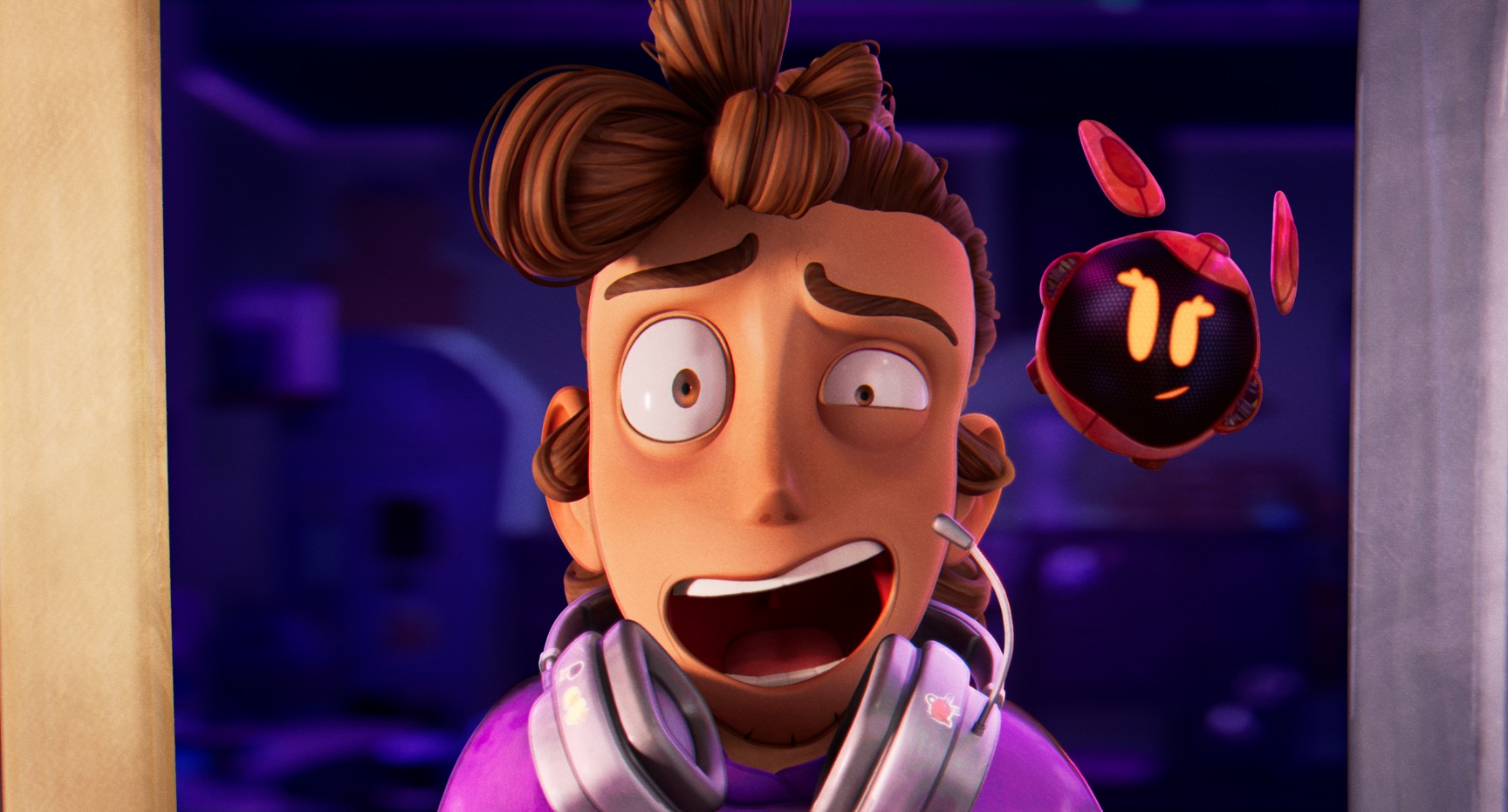
But *Perfect Match* isn’t just appealing because of its immediate impact. Fred Vilquin also sees in it a rarer quality: the ability to linger in the viewer’s mind. “What I also liked about this film is that it has staying power,” he explains. By this, he means that the film doesn’t lose its impact after the first viewing. It offers several layers of interpretation. “There’s a second way of looking at it, a third way, and that’s really interesting.”
This remark says a great deal about his approach to film. Fred Vilquin is not merely seeking an immediate impact. He is interested in what remains after the screening – in what the viewer continues to understand, discover or interpret. In a short film, and even more so in a student film, this richness of interpretation is a sign of depth. It reveals a more complex narrative style, capable of going beyond mere superficial effectiveness.
Student films that already demonstrate a genuine auteur’s vision
As well as the most obvious favourites, Fred Vilquin also singles out a film that tackles the issue of animal slaughter. Although he couldn’t recall the title at the time of the conversation, his memory of the film remains very clear. This project made a deep impression on him because of the power of its message and the way it fully embraces its subject matter.
“I really liked it because it’s a film with a strong message, a well-crafted film that sees things through to the end,” he explains. This ability to see an intention through to the end is essential. A socially conscious film cannot be content with just a powerful theme. It must find a form, a coherence, a point of view. It must stand by its perspective without getting lost in the discourse. This is precisely what Fred Vilquin seems to have recognised in this project.
He goes even further by referring to it as a ‘good arthouse film’. That’s a strong statement, especially when applied to a student film. It means that the film goes beyond the mere scope of an academic exercise. It does not merely seek to demonstrate technical skill. It conveys a vision. It takes a stand. It exists as a personal work, with a clear and deliberate intention.
For Fred Vilquin, the presence of such a wide variety of films – some narrative, others more graphic, more cartoon-like or more politically engaged – is one of the selection’s great strengths. “I was talking about diversity in all the small projects I’ve seen. It’s quite incredible,” he emphasises. This diversity isn’t just a variety of styles; it reveals a plurality of perspectives.
A generation that loves what it does
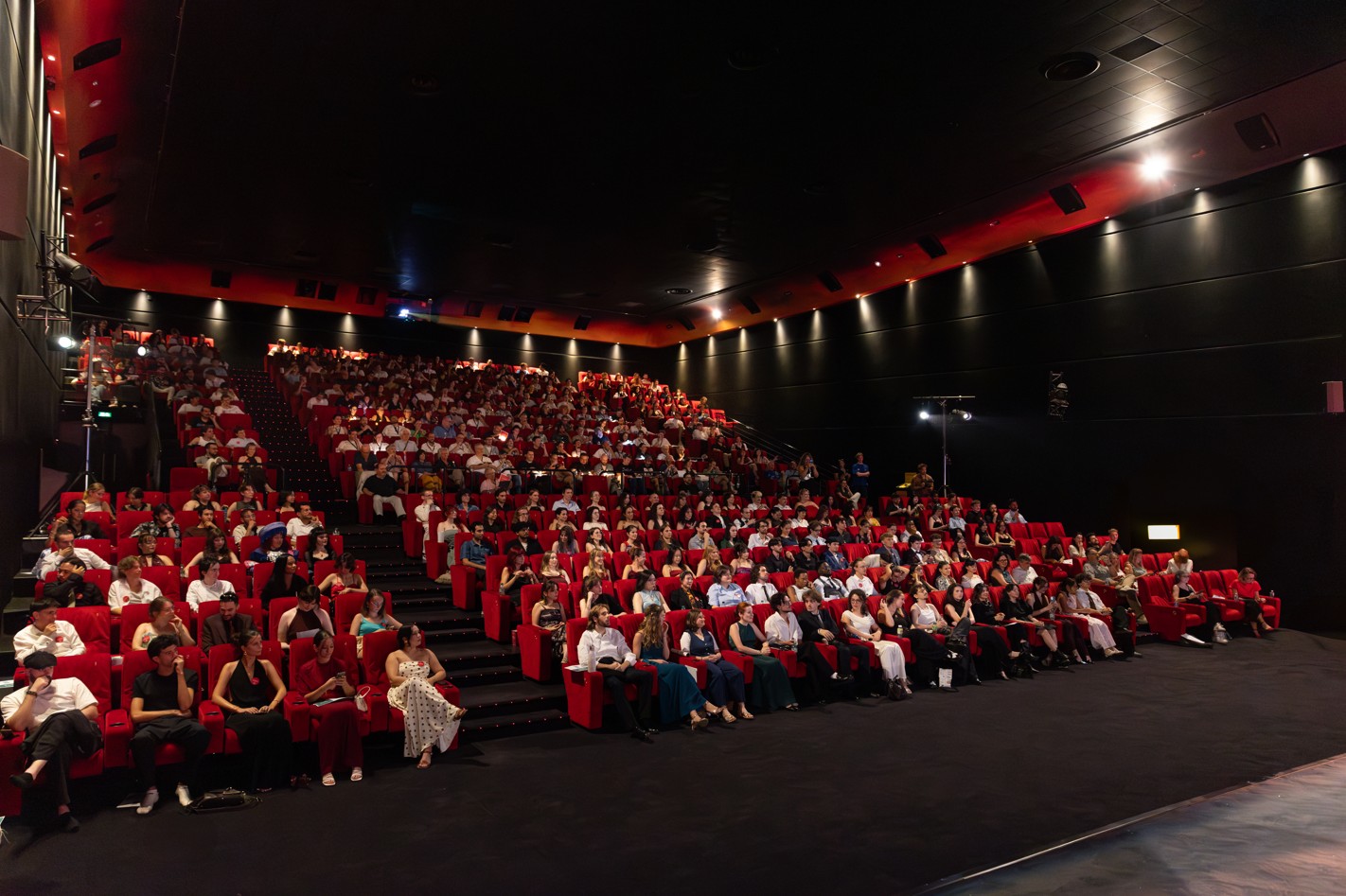
What comes across in his account is a sense of confidence. Fred Vilquin doesn’t just talk about successful films. He talks about students whose desire, commitment and joy in creating he can sense. Through the images, he sees not only the work, but also the passion. And that passion, he believes, is palpable.
When asked what he wishes for the students, his answer is simple: “A long career. ” The phrase might seem like a cliché, but here it takes on a very concrete meaning. Fred Vilquin knows the demands of the profession. He knows what a training programme lasting several years entails. He also knows what it means to complete a film, to champion it, to screen it, and to accept that it will become one’s first professional calling card.
“After a five-year journey, after achieving something – a film – they simply have talent,” he says. He does not present this talent as some abstract promise. He can already see it at work in the projects on display. It is evident in the visual choices, the ideas, the movement, the storytelling, and the ability to move or surprise the audience.
But what matters perhaps even more is a love of the craft. “You can sense it – this is what they love, and you can see it,” he says. For Fred Vilquin, a film reveals the dedication of those who made it. Animation is a demanding, patient and meticulous art form. It requires time, attention and a great capacity for hard work. When this investment is driven by genuine passion, it ultimately shines through on screen.
A professional’s perspective, a smuggler’s account
Through his words, Fred Vilquin comes across as a discerning observer who is, nonetheless, deeply attentive to emerging talent. He does not merely hand out praise. He identifies what works, what moves the viewer, and what makes an impression. He recognises technical skill when it serves the film. He praises energy when it is masterfully controlled. He recognises commitment when it is carried through to the very end. He values creativity when it opens up whole new worlds.
Fred Vilquin knows that animation is a profession that requires patience, precision and a collective spirit. He also knows that a career is built on early works, encounters, choices and perseverance. In paying tribute to the quality of the films, he is therefore also paying tribute to the promise shown by those who made them.
His testimony ultimately boils down to a simple conviction: this generation has something to say, and it is already beginning to say it with conviction. Through *City of the Silence*, *Perfect Match*, socially conscious films and all the other works he has discovered, Fred Vilquin sees the emergence of writers, animators, directors and artists capable of bringing images to life in a new way.
And that is perhaps the greatest compliment a professional can pay to young graduates: their films are not merely successful exercises. They already look like the start of a career.