It was at the Annecy Festival that he met the teams from Floating Rock Studio, a boutique animation studio based in Wellington. Literally, on the other side of the world.
Yet Loïc set off for New Zealand just a few months after graduating.
Driven by a desire to travel and a professional opportunity, this is how he began his career at Floating Rock, a studio with which he still collaborates today whilst continuing to develop new projects, notably with The Rookies.
During a video call with a ten-hour time difference, Loïc agreed to share his experience, advice and thoughts with us from the other side of the world.
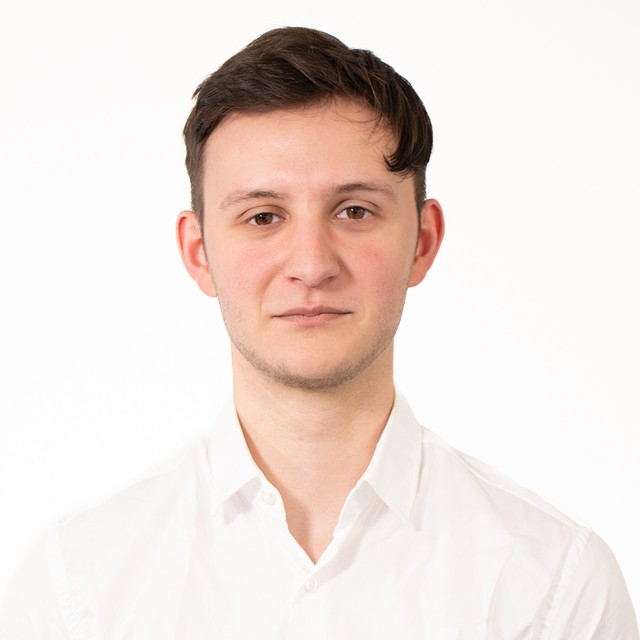
To begin with, could you introduce yourself and tell us how you got into the world of 3D, as well as a bit about your educational background?
I graduated from ESMA Lyon in 2023, but it’s true that my interest in the arts and 3D dates back to my childhood; I used to do watercolour painting with a teacher in Brittany, where I’m from. Although I’d put that artistic side of things on the back burner for a few years, meeting a friend who’d gone to Les Gobelins changed everything. He gave me an insight into the artistic side of new media, video games and films, and that’s what made me want to pursue a career as a designer.
At the age of 18, as I needed to brush up on my drawing basics, I spent a year on a preparatory course. It was a very rewarding year, but the school I attended didn’t quite suit me once the preparatory course was over. So I went to ESMA Lyon to study 3D animation and special effects.
How did the training go?
It was an incredible experience. As we were only the second or third intake to graduate in Lyon, everything at the school was still being set up. This created a very special bond with the lecturers and a unique, family-like atmosphere that I have very fond memories of. During my course, I focused on the visual aspects and imagery of 3D rather than pure animation, becoming a generalist in environment design.
In my fourth year, thanks to a trip organised by ESMA to the Annecy Festival, I took the opportunity to meet people from the industry. It was then that I met the founders of Floating Rock, and that’s when they recruited me and brought me over from France to New Zealand about three or four months after I graduated, at the end of 2023.
How did you come to decide to leave France for New Zealand, and what impact did moving to the other side of the world have on you?
New Zealand is literally at the end of the world – it takes 35 hours to fly here. As I didn’t have much opportunity to travel when I was younger, I promised myself I’d go abroad as soon as I graduated, no matter where I went.
Initially, I’d been making arrangements to go to Canada on a Working Holiday Visa, but we were hit hard by the COVID crisis and the writers’ strike, which really took its toll on the industry. And in Canada, the situation wasn’t looking so appealing anymore.
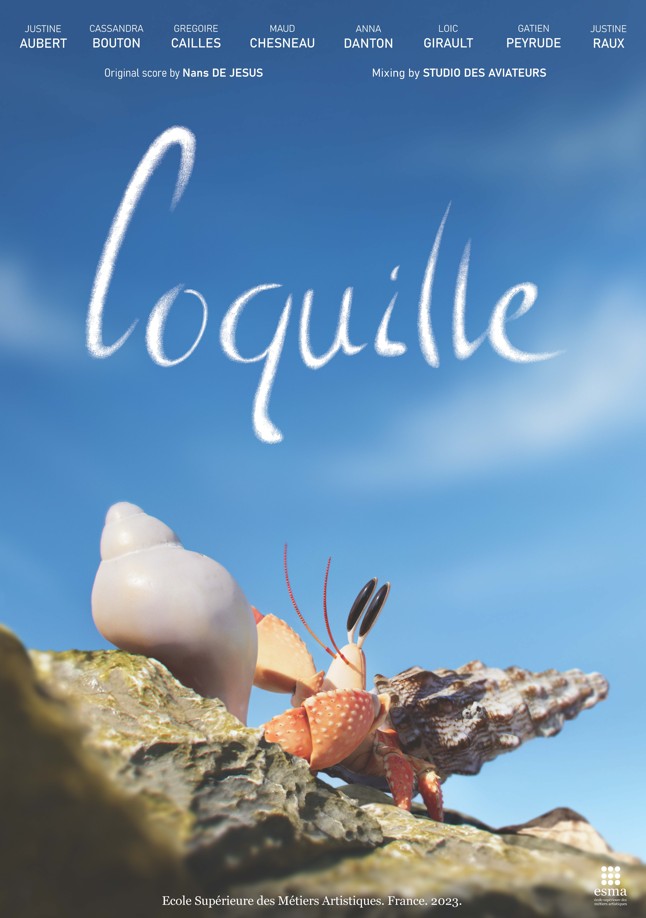
Fortunately, I slipped through the net. I got on really well with the Floating Rock team when we met in Annecy. The studio seemed like a nice place, they were interested in my all-round skills, and the success of our graduation film, *Coquille*, no doubt played a part as well.
When they offered me the chance to come and work in New Zealand, I didn’t give it much thought – I saw it as an adventure.
How would you describe your current role at Floating Rock?
It’s a small team, which means we have a hand in a huge number of things. Since I work on the environment side, I get involved fairly early on in the early layout, modeling/gray block, set dress, look dev, and sometimes lighting phases, continuing through the end of look dev—and occasionally doing a bit of scatter and lighting work.
It’s really exciting to be involved in the entire pipeline. Talking to artists working at major studios in Wellington, such as Wētā FX, has made me realise just how lucky I am. In very large studios, you often find yourself confined to one or two assets, and you end up being more of an executor than a true artist. At Floating Rock, we enjoy greater creative freedom. And if you earn the trust of the leads and supervisors, it’s much easier to progress, develop and take on more responsibility.
What sort of projects are you currently working on?
When I started out, I dabbled in a bit of everything. Floating Rock was working on projects using Unreal Engine, a rendering engine I hadn’t used at all during my studies. So I had to work on some personal projects on my own to show them that I was keen to learn and that I had the ability to adapt to their working environment. I think they appreciated this creative approach and my level of commitment.
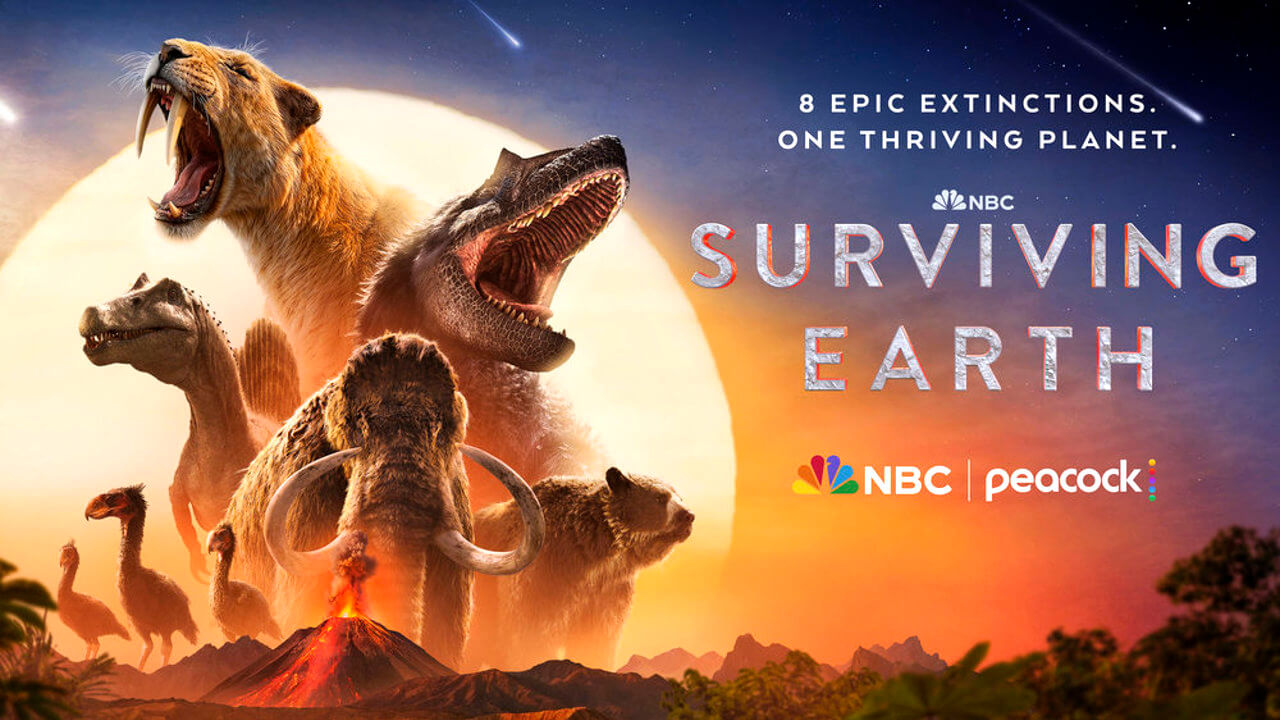
My first official project at the studio was a series for NBC (Surviving Earth), a prehistoric production featuring creatures. I worked on creature design and carried out some fairly basic tasks.
Floating Rock also develops its own intellectual property through an incubator called Pitchfest, where they select projects and then produce them in-house. I was able to work on these original projects, which were very diverse and still in their early stages, offering a great deal of freedom to experiment. In 2025, I also worked for another studio (37Degrees) on some really cool video game cutscenes, before returning to Floating Rock in 2026.
How do you view the state of the animation industry worldwide today?
This is a very broad question, one which I often discuss with ESMA students during mentoring sessions and webinars. I remain generally positive, even though there are many legitimate concerns when you’re starting out in your career. Speaking with the founders of 37Degrees, I’ve noticed that these uncertainties can sometimes paralyse people when they feel overwhelmed by these developments. Artificial intelligence is perceived as a threat, an increasingly powerful sword of Damocles. Colleagues on the technical side at Wētā or Epic Games are already seeing real changes: in some cases, they no longer need junior staff because AI is capable of coding directly.
However, as far as the artistic side is concerned, I think it all depends on how we position ourselves.It would not be surprising if the most repetitive and standardized tasks were the first to be affected by automation. On the other hand, if we establish ourselves as genuine artists with our own distinctive style or an engaging personality, I’m convinced that our place in the industry will be much more secure. If we are content to work as a light painter in an automated way, for example, or to treat lighting as a repetitive, assembly-line task, we become technicians rather than artists, and technicians are easy to replace. The artist, on the other hand, appeals to emotions – something AI is incapable of conveying. That is why I have confidence in the future.
To tie this in with what you’ve been saying: what do you think makes a good professional in this sector today?
And are young graduates sufficiently prepared when they enter the job market?
Recent graduates are well trained, but it depends on the school. The current market is seeing a surge in the number of new schools opening, which is constantly flooding it with junior candidates. In this sea of candidates, you need to know how to stand out, and that isn’t just about technical skills. I wasn’t top of my class, but I’ve always been very proactive. Being proactive and demonstrating your motivation spontaneously make all the difference. For example, my decision to teach myself Unreal Engine on my own really helped me land my job at Floating Rock.
These days, I’m also involved in organising the Wellington Animation Festival, setting up competitions and supporting local students, who face significant isolation and a lack of opportunities compared to France. This proactive approach has also opened the doors to The Rookies, where I work alongside Alwyn Hunt and Sabrina Scalfari, two wonderful people who have placed their trust in me to develop new collaborations and partnerships.
Of course, in this sector, having an excellent artistic and technical portfolio is the bare minimum, but one must never overlook the human and interpersonal aspects.
Where do you see yourself in five years’ time?
To be honest, I’m not really sure. My involvement in festivals and The Rookies allows me to develop new leadership and management skills (securing sponsors, managing budgets, organisation), which is entirely compatible with my work as an artist.
Over the course of two or three years, I realised that my perception of this industry was somewhat different from reality. I don’t like the idea of simply following orders, and exploring other fields allows me to broaden my horizons and consider new possibilities – or even combine the two.
To be perfectly honest, I find it impossible to look five years ahead with any certainty in such an unstable environment, where contracts rarely extend beyond a few months or a year. My aim is to continue developing my own expertise, to take on personal projects (a film, a game or a business) and to surround myself with the right people.
At 26, I’m still relatively young. The advantage of New Zealand, and Wellington in particular, is that it’s a small city that attracts highly experienced people who have travelled far and wide. Many come here after working long and hard in Canada or elsewhere, seeking a healthier lifestyle away from the hectic pace of crunch time. It’s easy to get to know these people here; you can easily build relationships with them, which is extremely rewarding and explains why I want to stay here for a while longer.
What’s interesting is that there does indeed appear to be a certain generational gap between your profile and that of your predecessors: today’s young graduates are exploring more ‘jack-of-all-trades’ roles to broaden their horizons, unlike people in the past who would specialise and then gradually progress within the same studio.
How do you view this development?
It’s a real issue. When I left school, I worked on the series *The Wrecking Crew* for Amazon Prime, and I sometimes found myself having to create assets in a very repetitive way, such as producing trees in batches. It’s a kind of ‘Fordism’ in the industry, where studios break tasks down to the extreme to boost efficiency, and that doesn’t interest me.
That’s the real appeal of small studios that put their trust in you and let you manage an entire project from start to finish. It was also to protect myself from that industrial routine that I turned to The Rookies. I’m in my twenties so everything’s fine, but I can’t see myself churning out assets on an assembly-line basis when I’m 40 or 50. This type of work isn’t really what I’m looking for personally, and that’s what led me to explore other ways to get involved in the industry.
As far as schools are concerned, the fact that tools and access to training are becoming more widely available is a very good thing. Admittedly, this brings a large number of junior professionals onto the market, but it also allows incredibly creative talent to express themselves to the full. When you look at the personal projects created with Blender, or some of the portfolios featured on The Rookies, the quality is simply impressive.
To sum up, what we’re going through today isn’t the end of the world; we just need to carry on working and developing our art.
Any advice for future graduates?
To summarise my key advice for future graduates, I would say this: start by actively developing your own skills rather than passively waiting to be recruited. Don’t view the junior/mid/senior progression in a studio as your only possible path: there are other ways to build a career, such as developing your own projects, exploring different organizations, or combining several activities.
Stay curious about new technologies, and work hard on building your network, as this is the only way to bounce back in difficult times.And finally, establish and maintain a lasting relationship of trust with your colleagues, as this trust is essential for building lasting collaborations.
Finding projects in New Zealand can sometimes be tricky, as many productions move to Australia for tax reasons, which makes things more difficult for local studios. But in my view, we need to stay positive. The public consumes huge amounts of content on Netflix and in video games; the industry is far from dying, and there will always be a need for talent to create these visuals.