
She had been a student there nearly twenty years earlier. She was returning as an experienced professional, a producer at DON’T NOD, after nearly fifteen years in the worlds of video games and animated film.
This return was far from being a mere symbolic gesture. It told the story of a journey shaped by experience, perseverance and encounters, but also by a very practical understanding of the realities of production.
Pauline Dupuy understands the demands of the sector: deadlines, teams, trade-offs, artistic ambitions, technical constraints and unforeseen circumstances. She also knows what it means for young creators when a student project ceases to be merely an exercise and becomes their first professional showcase.
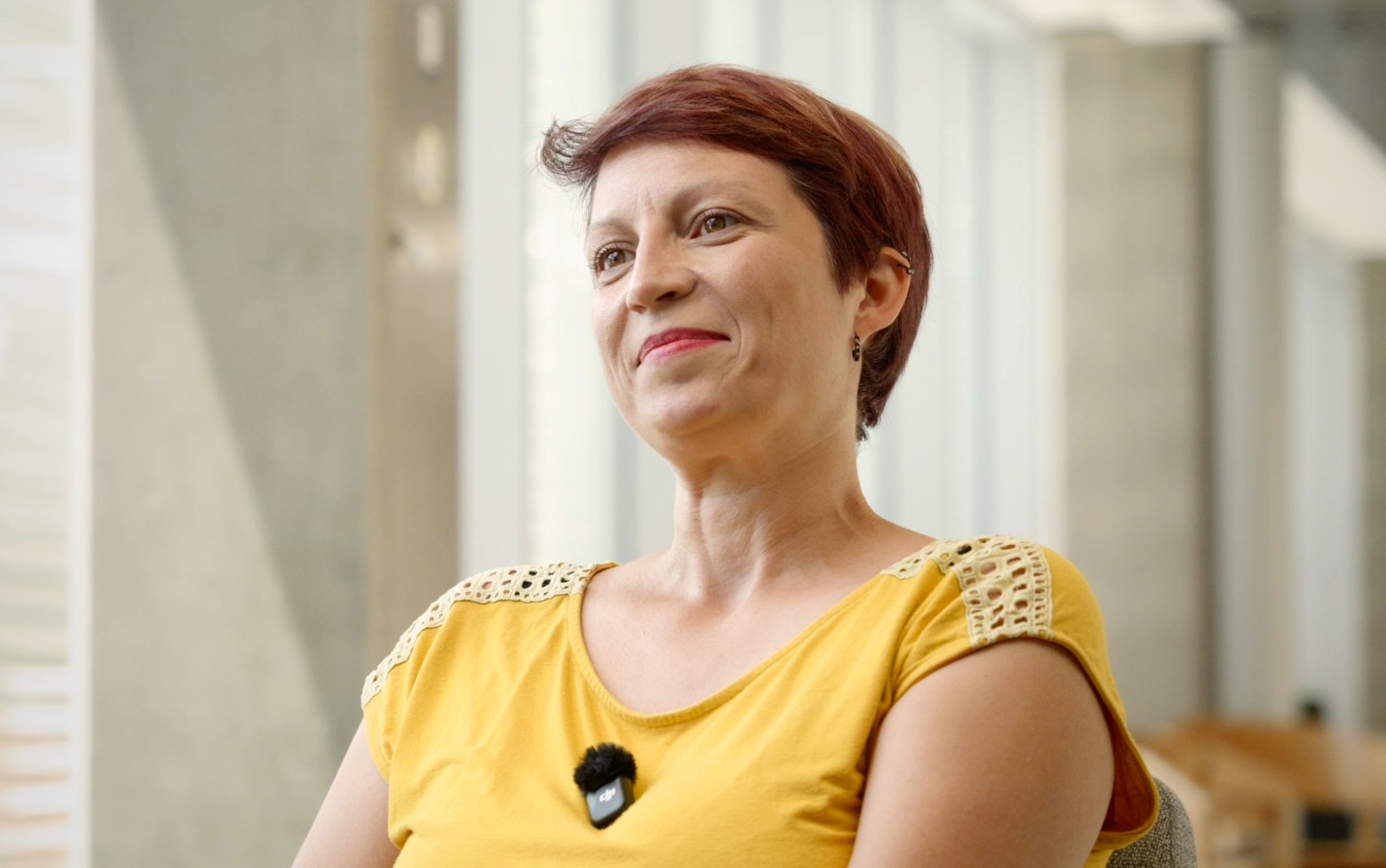
Invited to join the jury after bumping into Isabelle Tessèdre again, she accepted, keen to meet the students and discover their work. Over the course of several days, she was able to observe, test, listen to and ask questions about the projects presented.
First, the playtest, to experience the gameplay first-hand. Then the presentations, the artistic and technical explanations, the production choices, the pipelines and the creative intentions. Finally, the deliberation. An intensive, meticulous process in which the jury had to assess the quality of the end result, the coherence of the process and the maturity of the teams.
A panel to assess the performance, but also the way it is staged
At this year’s event, nine games were presented by students from the three participating schools. For Pauline Dupuy, the aim was therefore not merely to discover different worlds, game mechanics or artistic styles. It was also about understanding how each team had built their project, what decisions had been made, how the technical and artistic choices had been justified, and how the students had managed to stay on course right through to the final presentation.
What struck her most, first and foremost, was the standard of the productions. She put it bluntly: “I was pleasantly surprised. I think the quality is very, very high for student projects. ” Some groups had even had to change their vision mid-production, which is always a tricky situation, especially when the schedule is already tight. Changing direction, readjusting a project, getting back on track without losing the team or the original ambition: these are situations that one also encounters in professional production.
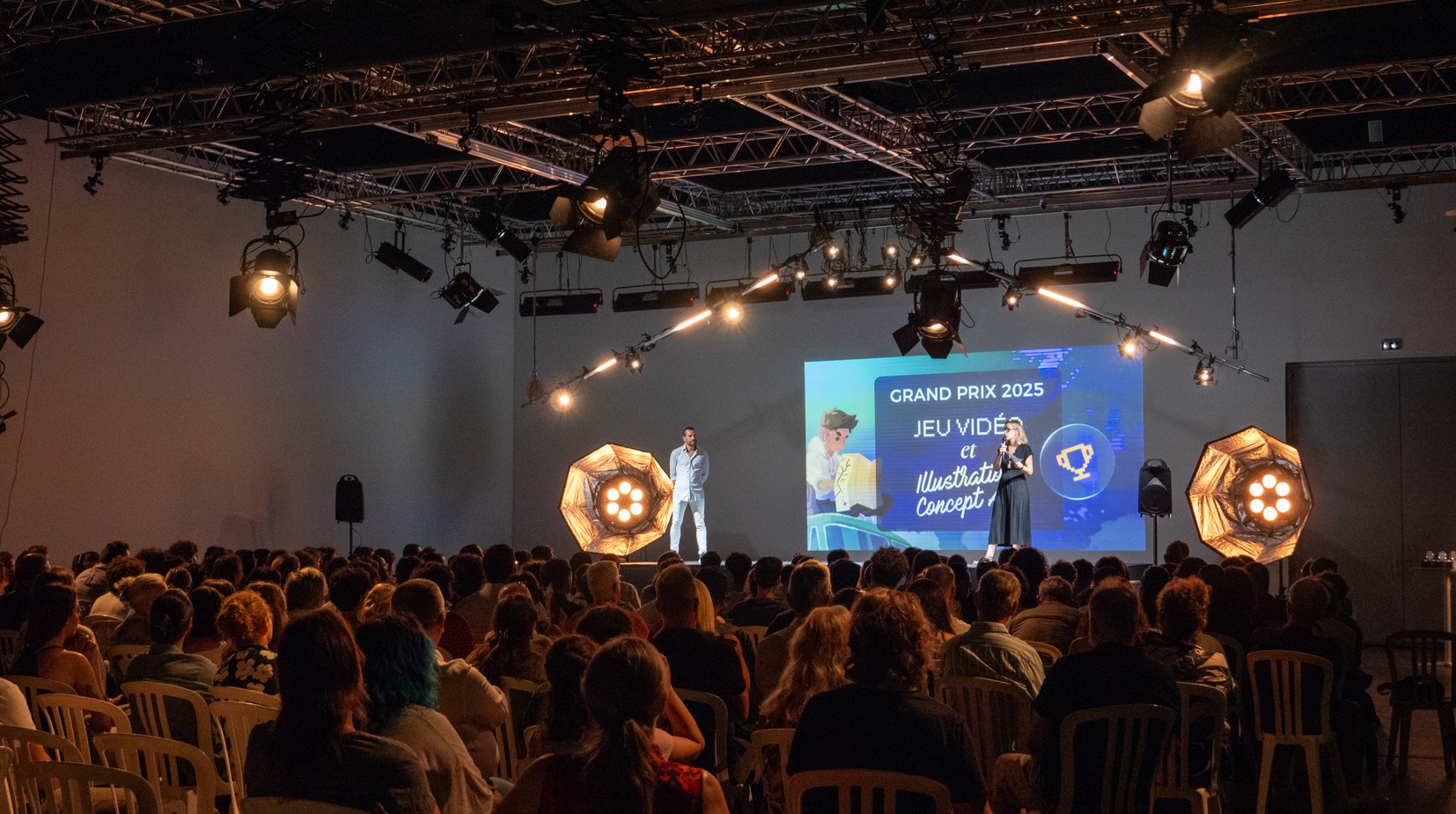
That was precisely what made these presentations so interesting to her. Beyond the final performance itself, Pauline Dupuy observed the way in which the students had worked, persevered, adapted their choices and structured their presentation. In a sector where projects are constantly evolving, the ability to explain the creative process counts for almost as much as the final result.
A video game is never just an idea. It is the sum of decisions, compromises, constraints that have been overcome, adjustments and collective choices.
Through this judging panel, Pauline Dupuy also rediscovered what drives her in her own profession: the link between creativity and organisation. A good project is not solely down to artistic intuition or gameplay mechanics. It also depends on how well a team manages to work together, to allocate responsibilities, to share information, to mediate when necessary, and to maintain a clear vision whilst remaining mindful of the constraints of time, tools and available skills.
To produce is to create the conditions for collective work
This focus on the process lies at the heart of her role. For Pauline Dupuy, being a producer is not just about sticking to a schedule or keeping production schedules on track. It is about creating the right conditions for the teams to work effectively.
At DON’T NOD, her role involves, amongst other things, coordinating the technical teams working on the engine, animation tools and production issues. She supports, organises, anticipates and resolves issues. She ensures that people can focus on their core tasks without being held back by matters that do not fall directly within their area of expertise. She sums up her job as follows: “It’s really project management in the strictest sense – coordinating the teams so that they can work in the best possible conditions.”
This is a simple yet very accurate definition of production: making work possible. In an industry where creativity depends as much on the idea as on the ability to bring it to life, this role becomes central. A video game is not just about art direction, gameplay mechanics or storytelling. It is a collective endeavour, built by people from different disciplines, with constraints that are constantly interacting. Production involves keeping this dialogue alive, clear and functional. It means ensuring that ambition does not get lost in the complexity.
Pauline Dupuy also applies this perspective to education. On returning to ESMA, she noted how the school had changed since her own time there. The premises, the facilities, the resources, the diversity of the curriculum, the support provided: in her view, students today are provided with a solid foundation to prepare for their future careers. “The course has come a long way since I was there,” she emphasises, referring in particular to the equipment, the number of lecturers and the variety of subjects.
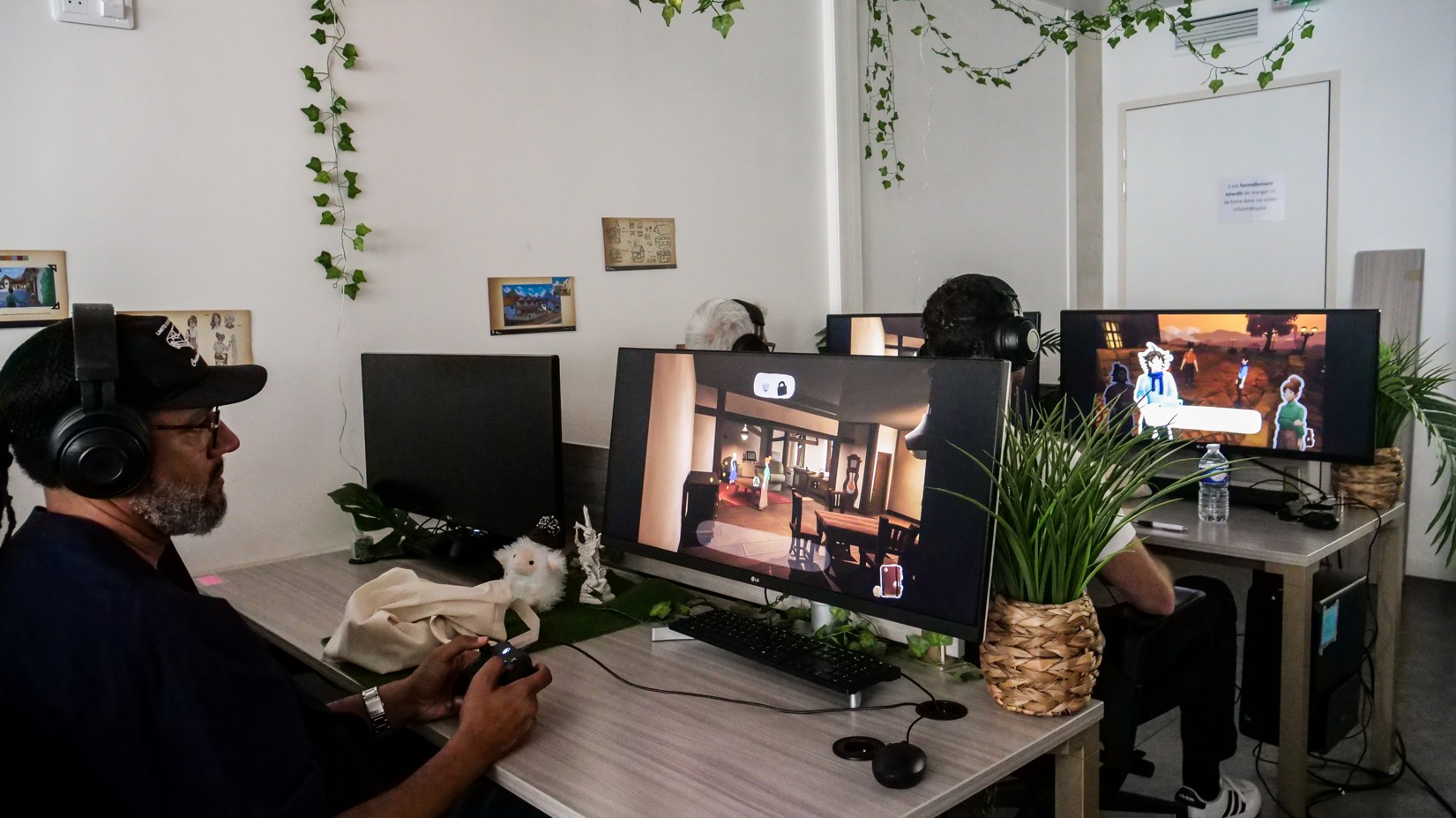
She does, however, emphasise one key point: a school can provide a framework, give access to the right tools and teach methods, but personal commitment remains crucial. Professionalism cannot be imposed; it is built through hard work, perseverance and the ability to face up to reality.
It is precisely this real-world environment that the students are already exposed to. The engines, production methods, project presentations, team structures, and the trade-offs between technology, gameplay and art direction: all of this brings them closer to the conditions they will subsequently encounter in a studio. For Pauline Dupuy, the students are “directly immersed in the reality of what they will subsequently encounter in video game production”. The tools matter, of course. But what is also at stake is the ability to think through a project as a whole, to defend choices, to work as part of a team and to take ownership of a vision.
A clear-eyed view of the industry, aimed at young professionals
Pauline Dupuy does not romanticise the sector. The video game industry is going through a difficult period, marked by studio closures and a sense of instability affecting the industry on an international scale. She makes it clear: the recent upheavals have been worrying, and the sector has not yet fully recovered. She hopes to see a stabilisation, with a gradual recovery in employment and a more rational approach to production.
His analysis goes beyond simply noting the crisis. It questions the very rationale behind certain projects. In her view, the industry must strike a balance between ambition, feasibility and the desire to play. Producing bigger and faster, relying solely on indicators, data or KPIs supposedly guaranteed to ensure success, is not enough. “Let’s not kid ourselves, that’s not how it works,” she points out. Figures can help guide the way, but they are no substitute for vision, coherence or the desire to create an experience that players will genuinely want to play.
This viewpoint is interesting because it comes from a producer. She does not reject management, methodology or data. On the contrary, she knows just how necessary they are. But she refuses to let them become the only focus. For her, the challenge probably lies here: returning to productions that are better scaled, more coherent in their scope, and capable of achieving quality without chasing a mechanical combination of supposedly profitable trends. Put simply: producing methodically, yes. Producing without soul, no.
She also passes on this sense of realism to her students. Her advice to those just starting out is very practical: meet professionals, attend events, do your research, play lots of games, understand the studios you’re applying to, and tailor your demos, applications and pitch accordingly. Show that you’re not just applying for a job ‘in the video games industry’, but that you understand a company, an artistic direction, a production culture and a way of working.
She also highlights the importance of networking, not in an opportunistic sense, but in its simplest form: making contacts, discussing ideas, learning, raising your profile and understanding expectations. In the world of animated film, events such as Annecy fulfil this role. In the video game industry, communities and events also provide opportunities to meet professionals, exchange ideas with them, and break out of the isolation often felt at the start of one’s career.
And then there is a more intimate, more personal piece of advice: hang in there. Pauline Dupuy speaks here from her own experience. She did not complete her studies at ESMA, and yet she has carved out a place for herself in the sector. This detail is not merely anecdotal. It shows that career paths are not always straightforward. They sometimes involve detours, less obvious opportunities, moments of doubt, support from others and decisive encounters. “With determination, and with the right people around you, you gradually manage to achieve what you want,” she says.
These words hold particular significance for students presenting their projects to a panel. At that precise moment, they may feel that everything hinges on a mark, a prize or a piece of feedback. Pauline Dupuy implicitly reminds them that this is just one stage. An important one, certainly, but not the be-all and end-all. A career is built over time. A student project may open doors, but it does not define a person. What also matters is the ability to learn, to bounce back, to remain curious and not to be discouraged by the rigours of the sector.
Her role as chair of the jury had then taken on an extra dimension. She wasn’t just there to assess. She was there to offer a professional perspective, to encourage, to provide useful feedback, and to give the students a glimpse of what lay ahead. Indeed, she spoke of this chairmanship with a sense of surprise and gratitude: “I’m very honoured; I wasn’t expecting it at all.” She also saw it as a way of coming full circle: returning to a school where she herself had once been a student, so that she, in turn, could support a new generation of creators.
When asked to sum up her experience as a jury member in three words, Pauline Dupuy replied: “Speed, incredibly enriching and pure joy.” The phrase is spontaneous, almost raw, but it captures the energy of those days perfectly. The fast pace, the richness of the discussions, and that special satisfaction of seeing projects take shape, driven by students who were about to take their first step into their careers.
In an industry that is questioning itself, reorganising and seeking a new balance, this perspective retains all its power. Pauline Dupuy embodies an approach to production that is both clear-sighted and committed: understanding the constraints without compromising on creative standards, structuring teams without stifling their intentions, and supporting talent without presenting them with a simplified view of the profession. This is an invaluable perspective for students preparing to enter an industry that is as demanding as it is exciting.