But before reaching that point, Jordan Soler, who graduated from ESMA Montpellier in 2015, had gained a great deal of experience in the industry.
A portrait of a globetrotter who isn’t one to mince his words and doesn’t turn a blind eye to the realities of an ever-changing sector.
For behind this outspoken nature lies a love of animation in all its forms, which continues to inspire Jordan Soler, who remains entirely at home in this profession and passion, where he has built his career and his business.
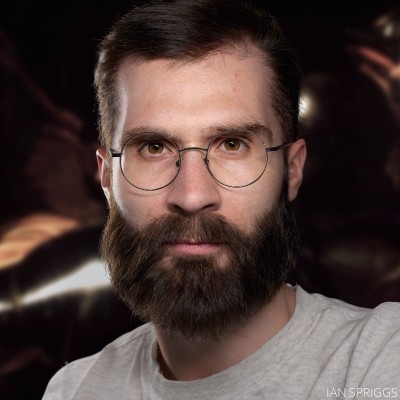
Could you briefly introduce yourself and tell us about your career path, from your time at ESMA to your current role?
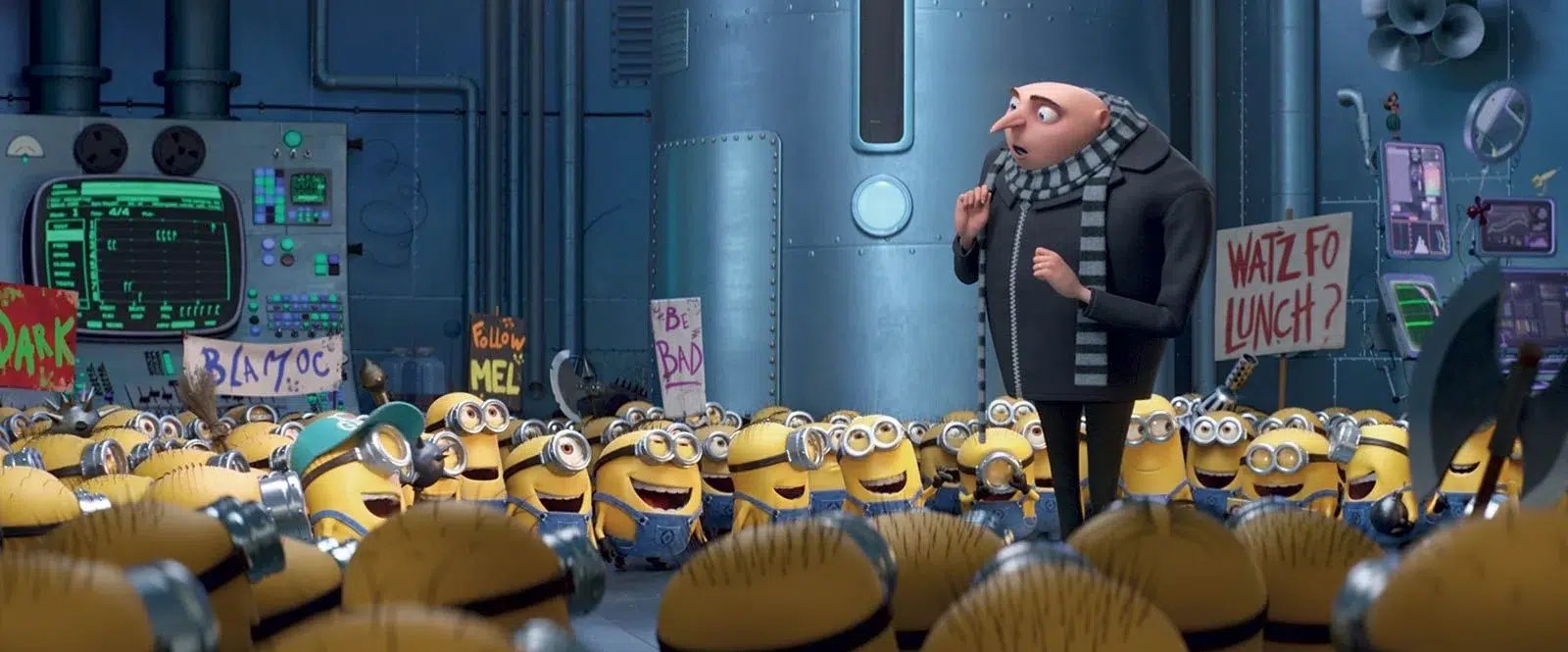
To cut a long story short, I started at Illumination Mac Guff the week after my graduation, working on *Despicable Me 3* as a junior groom artist in Paris. After a year there, I was contacted by MPC London for the same role, and I moved there in August 2016. I was able to work on quite a few projects there (The Mummy, Alpha, Justice League, The Lion King, etc.), before moving to Sydney in 2017.
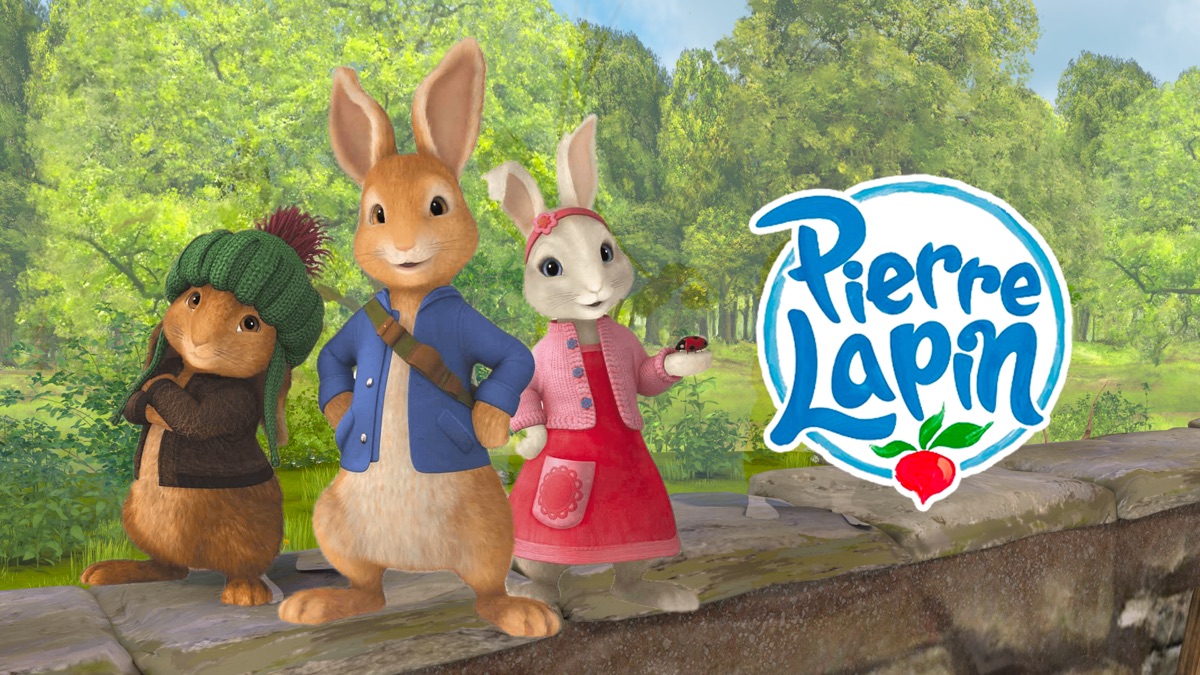
Animal Logic (now Netflix Animation) contacted me about a role as a senior groom artist. I mainly worked on *Peter Rabbit* there, where I was fortunate enough to be the lead groom artist on all the characters.
With my Australian Working Holiday Visa coming to an end, Method Studios (in Vancouver) made me an offer for January 2018. So I went back to France for just two short months, during which time I worked in Paris at Superprod, helping them with the initial development of various series, notably *Toto*.
This was followed by quite a few years on Canada’s west coast. First at Method Studios, where I worked as lead groom on Aquaman, Fantastic Beasts, The Christmas Chronicles, amongst others, then at Image Engine, where I supervised the grooming work on projects such as Game of Thrones, The Mandalorian, Mulan, John Wick, etc. When the Covid pandemic hit, they asked me to join the teams at Cinesite, where I worked as a senior groom on the animated film *The Addams Family*.

After a few months at Cinesite, I decided to leave to set up Stim with Félix [Ferrand, also an ESMA graduate, Ed.], whilst continuing to work as a groom supervisor at Atomic Cartoons in Vancouver. I eventually returned to France at the end of 2023 due to the company’s growth and the need for me to be physically present on site.
It was a while ago now, but what made you choose this school and this area?
I was looking for a 3D school online and, at the time, forums such as Le Site du Zéro (now OpenClassrooms) were real hubs for discussion. I spoke to a former student there who recommended ESMA to me. I came to visit the premises and decided to apply.
Looking back, what made the biggest impression on me during my time at school was the quality of the teachers. In my day, the course lasted three years and was extremely demanding. In my view, it was an ideal programme that prepared students to face whatever lay ahead in the world of work.
Does what you’re doing now match what you imagined when you were a student?
As for a career in business management, not necessarily, as I had the impression at school that I was going to pursue a career purely as a graphic designer. On the other hand, all my years as a graphic designer were exactly what I’d had in mind. Since leaving school, there hasn’t been a single day when I’ve gone to work with a knot in my stomach. The idea of a ‘dream job’ is a reality, and I think that’s what drives each and every one of us.
Could you briefly tell us about your studio and the projects you’re working on there?
Stim is a manufacturing studio that was first established in Lyon, before expanding to Angoulême, Liège and now [since June 2026, Editor’s note] to Tenerife in the Canary Islands.
We started out creating assets, and then moved on to taking on projects from start to finish. We’ve dabbled in everything: adverts, VFX, animation, TV series, feature films and short films… Today, we’re focusing much more on animated series and feature films. We’re a production studio that works very closely with producers and distributors, able to create bespoke financing plans for them thanks to our various locations. However, we do not develop any projects in-house: we are not a production studio in the strict sense of the term, and we do not seek to create our own IP (intellectual property).
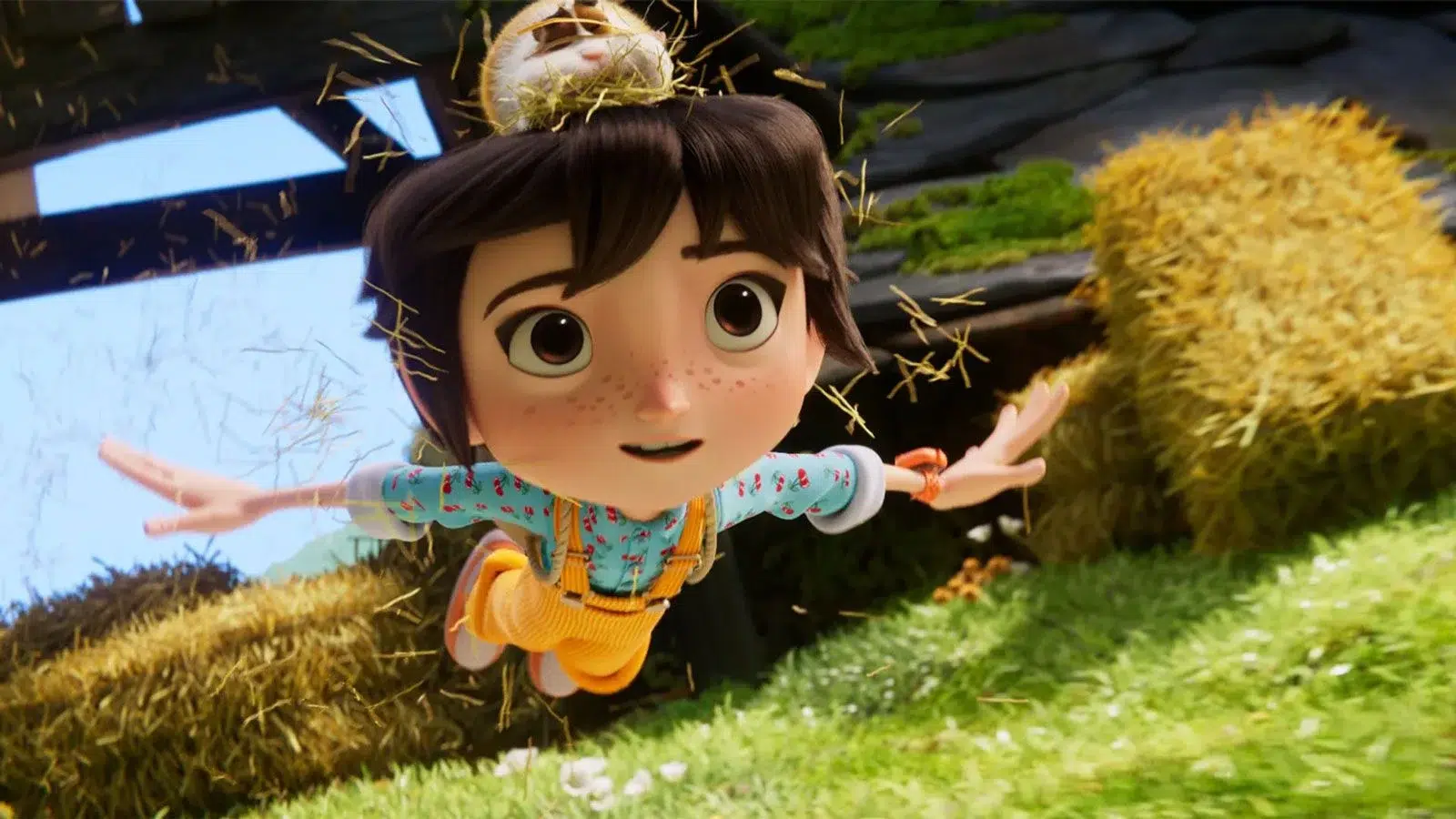
The project I’m most proud of is *La fille dans les nuages* [produced by Brio Films and Panama Productions, Ed.], our first feature film, which is due for release on 22 July 2026. It is a source of immense pride to be able to say that we did everything from start to finish, with some of the animation produced at Supamonks in the Occitanie region. With this film, we have reached a major milestone for us, which allows us to look forward with confidence to making other feature films!
How do you view the current state of the sector in France and internationally?
The state of the industry is rather worrying. France and its regions are not making the necessary efforts to ensure that we remain competitive, even though we had everything it takes to be the leading country in this sector. At Stim, we are trying to provide a coherent response to this crisis by establishing our studios in several regions and countries, but it is crucial that everyone realises that the industry will never be the same again.
We experienced a sort of Eldorado where everyone was spending freely (Netflix and other platforms). Production studios rode this wave and now, ten years on, find themselves caught off guard by the crisis and the bursting of a bubble that everyone could see coming. We have been burying our heads in the sand for far too long.
The blow is a harsh one, but it will at least enable us to start afresh on a sounder footing, even if the transition is painful for everyone. The future remains exciting and bright, but we must not repeat the same mistakes.
In this context, what do you think makes a good professional today?
Increasingly, what will make the difference is a comprehensive understanding of 3D and artists’ curiosity about how a project is structured: understanding funding plans, knowing what our clients expect and being aware of our constraints. Art and aesthetics are one thing, and that’s what we’ve been asking everyone to be able to do for the past twenty years. But today, to be a good professional, you have to go beyond that.
What do you think of the recent graduates entering the job market in 2026?
Recent graduates from ESMA or other prestigious higher education institutions possess excellent technical and artistic skills, and we are always delighted to welcome them onto our team.
On the other hand, they are increasingly ill-prepared for the realities of our industry, particularly its flexibility: the ability to be mobile, to travel and to go where the work is. Remote working has done a great deal of harm in this respect (even though it has brought benefits in other areas). I receive far too many emails from junior staff asking for rates that are completely out of touch with market realities, and who have no desire to travel. Schools need to address this; it is vital that students are prepared for the real-world constraints of studios.
As for the relationship between schools and studios, I feel it still lacks fluidity. We have a good relationship with ESMA because we’re former students there and, as our business has grown, we’re one of the studios that recruits the most graduates from there. But overall, there’s still a real disconnect in the market.
How have new technologies changed the way you operate, and what impact has this had on staff and budgets?
For most technologies, there have been no drastic changes. There have been plenty of promises, but they are still just tools. The reality is that our industry undergoes regular revolutions, as was the case with the arrival of Houdini and so many other software programmes. Unreal, motion capture or collaborative tools do not fundamentally change the game.
On the other hand, AI is the real technological revolution that is completely transforming every single industry. There is no simple or single explanation, but AI is changing every aspect of our sector, both now and in the future. We need to use it, understand it, and be consistent in how we intend to apply it, particularly from an ethical perspective. Like any tool, this inevitably has an impact on structures and budgets, with the difference being that this one is evolving every week.
What do you see as the key trends for the sector in the medium to long term, and what role will French manufacturing play in the industry’s future?
In my view, the major trend will be the emergence of studios capable of taking a versatile approach to production and financing. Simply being a service provider who passively waits for opportunities to come their way seems to me to be very difficult these days. Budgets are shrinking and are likely to continue doing so: we have to live with that and find smart, agile ways of producing content.
France clearly has a role to play, provided the regions and the CNC play their part properly. We have everything we need to succeed: talent, technology, companies and the drive. The ball is also in the court of regional policymakers. Where do I see myself in five years’ time? Stim will continue to grow, and we will carry on producing feature films and major TV series.
What advice would you give to students and schools?
For students: keep your options open. Understand the departments that come before and after yours in the pipeline. Then focus your efforts on what you want to do, where you have a talent, and, above all, where there are job opportunities.
Above all, get to grips with AI. If you don’t, you’re already behind the times, and that’s not right. Our industry was born out of a technological revolution; if you’re afraid of new technologies, you have no business being here. That doesn’t mean being ‘for’ or ‘against’ them, nor does it mean refusing to regulate them. But you won’t make any progress by shunning progress.
For schools: the same applies. Be transparent and consistent with your students about the reality of the world of work. Perhaps train fewer young people, but ensure they are prepared for the realities of the market. Talk to them about manufacturing costs and production costs; talk to them about AI; and bring them up to speed on what the animation job market is really like today.
And as for the regions: let’s have a clear discussion about what you can offer the events sector, and what we can guarantee you for the future.
Finally, Stim is set to recruit on a large scale over the coming months, particularly in Tenerife [the company’s latest studio, following those in Lyon, Angoulême, Liège and Canada].
Visit our website and follow us on social media!