
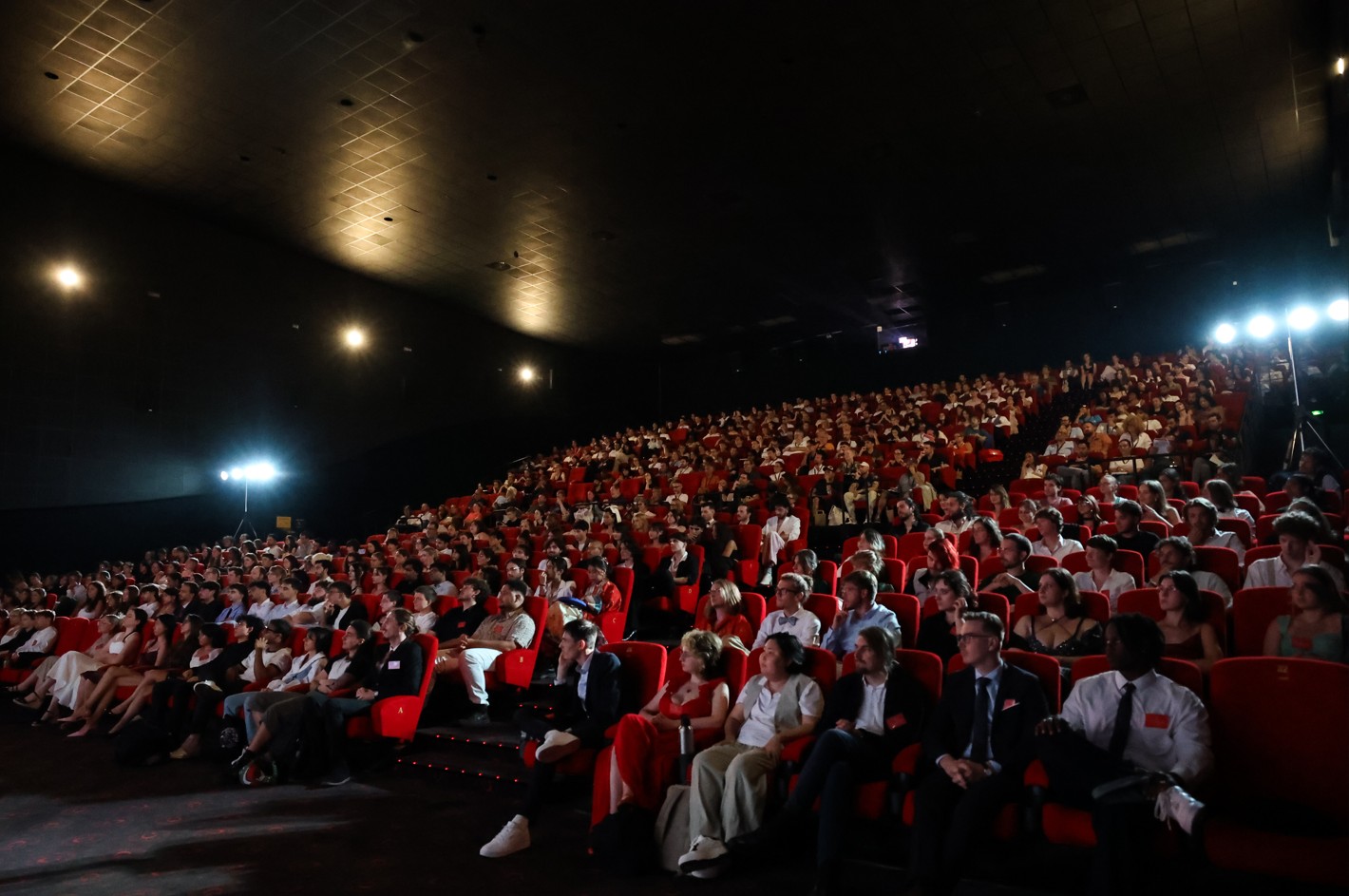
A day that looked demanding on paper, but which quickly proved to be a thoroughly enjoyable experience, thanks to the quality of the films, the maturity of the artistic visions and the level of preparation shown by the young talents.
When a professional jury is told that they are going to spend a whole day watching student films, the prospect can be daunting. So many projects, so many worlds, so many formats to take in within just a few hours. But for Claubel, this intensity turned out to be a stimulating experience.
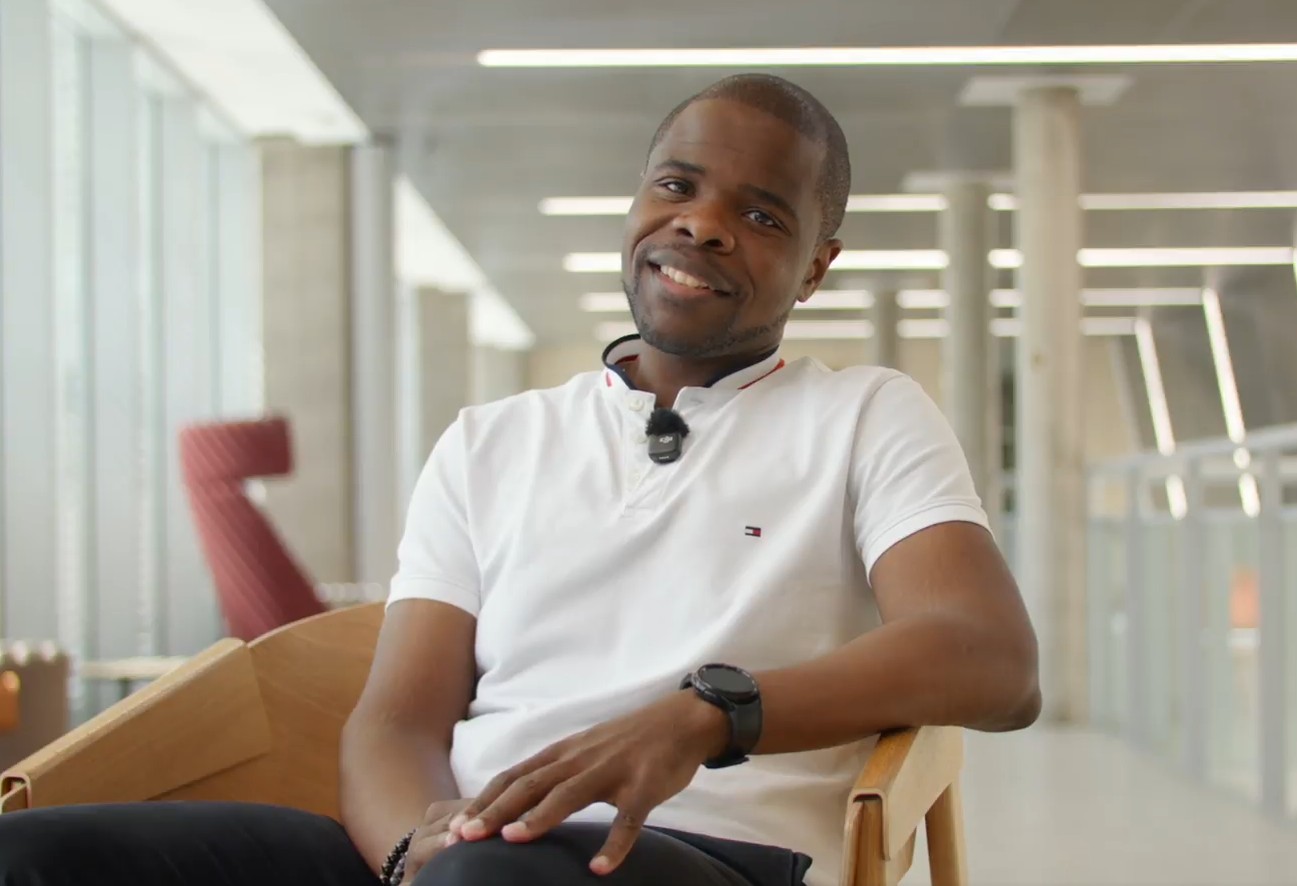
“When the films are of high quality, the time flies by,” he sums up. What might otherwise have been a long, technical day then becomes “a day of enjoyment”. A pleasure for the viewer, watching carefully crafted works. A pleasure for the professional, too, in observing the artistic, narrative and technical maturity of young graduates who are already ready to stake their claim in the industry.
A day of judging characterised by the high standard of the films
This outside perspective, offered by a representative from Rodeo FX – an internationally renowned visual effects studio – confirms an impression widely shared by the professionals in attendance: the standard of ESMA students is particularly high. “If one thing is certain, it is the standard of ESMA’s students,” emphasises Claubel. In his view, the screening merely served to confirm this reputation.
Among the films screened, one project in particular caught his attention: *L’Ombre du Kivu*. Not simply for its formal quality, but for the consistency of its artistic vision. Claubel sees it as a film driven by ‘an artistic choice upheld to the very end’. This is an essential quality in an industry where technical mastery alone is never enough: one must also know how to defend a creative vision, build a world and stay true to that vision right up to the very last shot.

His attachment to the film also stems from a more professional perspective. “It’s exactly the sort of film I can see Rodeo FX working on,” he says. A remark that speaks volumes about the project’s ability to move beyond the academic sphere and address studio-level concerns: atmosphere, visual identity, narrative potential and production standards.
The role of a juror is nonetheless a delicate one. He points this out with caution: he does not really like the term ‘judge’. When it comes to the students’ work, he prefers to speak of a privilege, but also of a responsibility. ‘We’re certain of the talent,’ he insists. The jury’s role, then, is less about penalising than about deciding between projects which, each in their own way, demonstrate a high level of commitment.
The task becomes all the more difficult when the films are of such a high standard. One has to choose, prioritise and award prizes, whilst knowing that many would have deserved to be recognised. “It’s a burden, but a joyful one,” he explains. A phrase that sums up the ambivalence of the day: enthusiasm for the films, and the difficulty of not being able to reward everyone.
ESMA: a course geared towards the realities of the industry
Beyond the films, it is the training itself that stands out from this experience. ESMA does not merely impart technical skills. It prepares its students to enter a real-world professional environment. “ESMA does not just train students; it trains professionals,” he says.
This distinction is crucial. In the fields of 3D animation, visual effects and digital imaging, a recent graduate must, of course, be proficient in the tools, the pipeline and their specialism. But they must also know how to present themselves, talk about their work, listen to feedback and understand the expectations of a recruiter or supervisor. This is precisely what Claubel says he observed during the professional networking sessions organised as part of the event.
Students arrive well prepared. They know what they want to showcase in their demo reel. They can explain the reasons behind their choices. They also know how to articulate their aspirations. For a studio, this approach matters almost as much as the quality of the footage. It demonstrates an already advanced understanding of the world they are about to enter.
“What I’ve seen are professionals whom the studios are able to hire straight away,” he continues. The compliment is straightforward. It is not merely a matter of praising fine graduation films, but of recognising genuine employability: the ability to join a team quickly, to slot into a production and to continue learning in a demanding environment.
Advice for recent graduates
For this is also one of the pieces of advice he gives to recent graduates: to believe in themselves, but never to stop learning. For him, confidence is essential. In a competitive, sometimes unstable and often demanding industry, you need to be able to stand up for your work and believe in your own progress. But that confidence must remain open-minded, curious and receptive.
“You have to accept the idea of remaining a student for a little while longer,” he points out. Leaving school isn’t the end. It’s a transition. Early experiences in the studio extend the learning process, broaden it and expose it to other constraints: deadlines, client feedback, the collective workflow, production requirements and collaboration between departments.
In his view, this is often where the difference between two junior candidates lies. Those who rest on their laurels are likely to progress more slowly. Those who continue to learn, observe, ask questions and gain a wide range of experience build a more solid career path. “Keep seeking to learn. Visit different studios. Gain experience,” he advises.
This emphasis on lifelong learning also ties in with his view of ESMA. Speaking of his second experience with the school, he says he has found an institution that works well, but above all one that is close to its students. He describes it as ‘a well-oiled machine’, not in the impersonal sense of the term, but as an organised ecosystem capable of supporting young talent right through to their entry into the industry.
In his view, this close-knit atmosphere is one of the school’s strengths. Students are not only trained to make a film; they are prepared to present it, take ownership of it and discuss it in front of industry professionals. They learn to turn their final-year project into a genuine stepping stone into the job market.
At the end of the day, Claubel therefore highlights two things: the quality of the films and the maturity of the candidates. A modest observation, but a valuable one in an industry where studios are looking for young professionals capable of combining talent, a methodical approach and the ability to adapt.
For Rodeo FX, as for the other professionals in attendance, these events provide an opportunity to assess what the school has been building up over several years: not only polished visuals, but also artistic and technical talents ready to join the industry.
And whilst the jury had to make choices, the perspective on the graduating class remains largely a collective one. Not every project can be awarded a prize. But they all help to reinforce the same impression: at ESMA, graduation films are not merely academic exercises. They are already the first signs of a professional career.