Whatever the scale of the project, the issue of cost is key: it is impossible to go into production without having a clear idea of the costs involved. In this article, we break down the cost categories, key figures and available funding options for financing a 3D animated film production.
The various costs involved in producing a 3D animated film
As with any creative project, the costs of a 3D animated film are broken down into several distinct categories. These are listed below and are common to any type of production.
Salaries and human resources
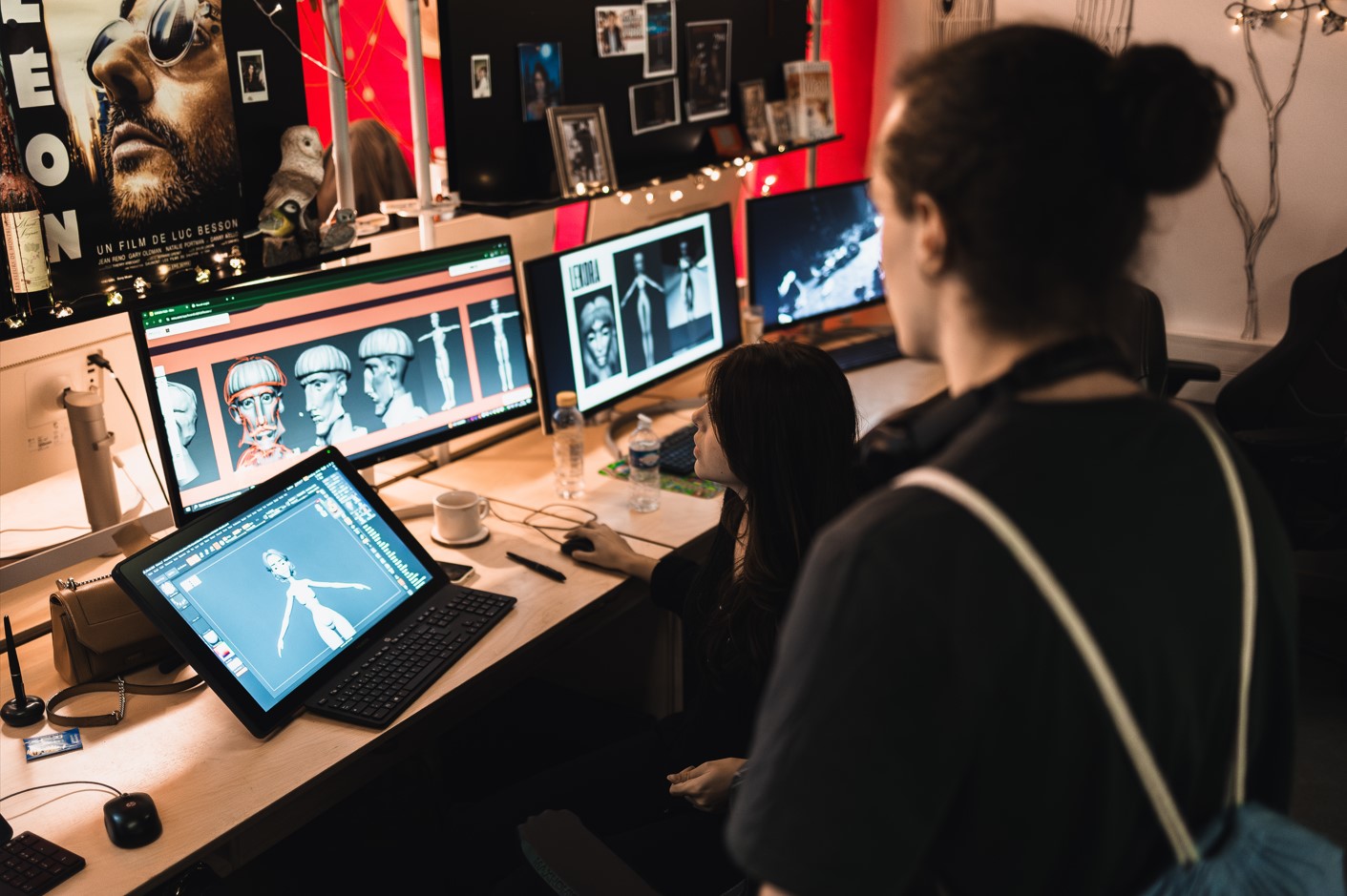
Labour is by far the biggest expense in a 3D animated film. A feature-length film involves dozens of professionals with highly specialised skills: screenwriters, storyboard artists, modellers, riggers, animators, lighters, VFX compositors, sound engineers, etc.
It is worth noting that in France, a junior 3D animator starts on a gross annual salary of between 28,000 and 33,000 euros. A senior animator, capable of supervising a department or managing a complex pipeline, will naturally be paid considerably more.
Multiply all these salaries by the duration of a project – often two to five years – and by the number of people involved, and you have the primary factor driving up the budget for a 3D animated film.
Equipment, premises and rendering infrastructure
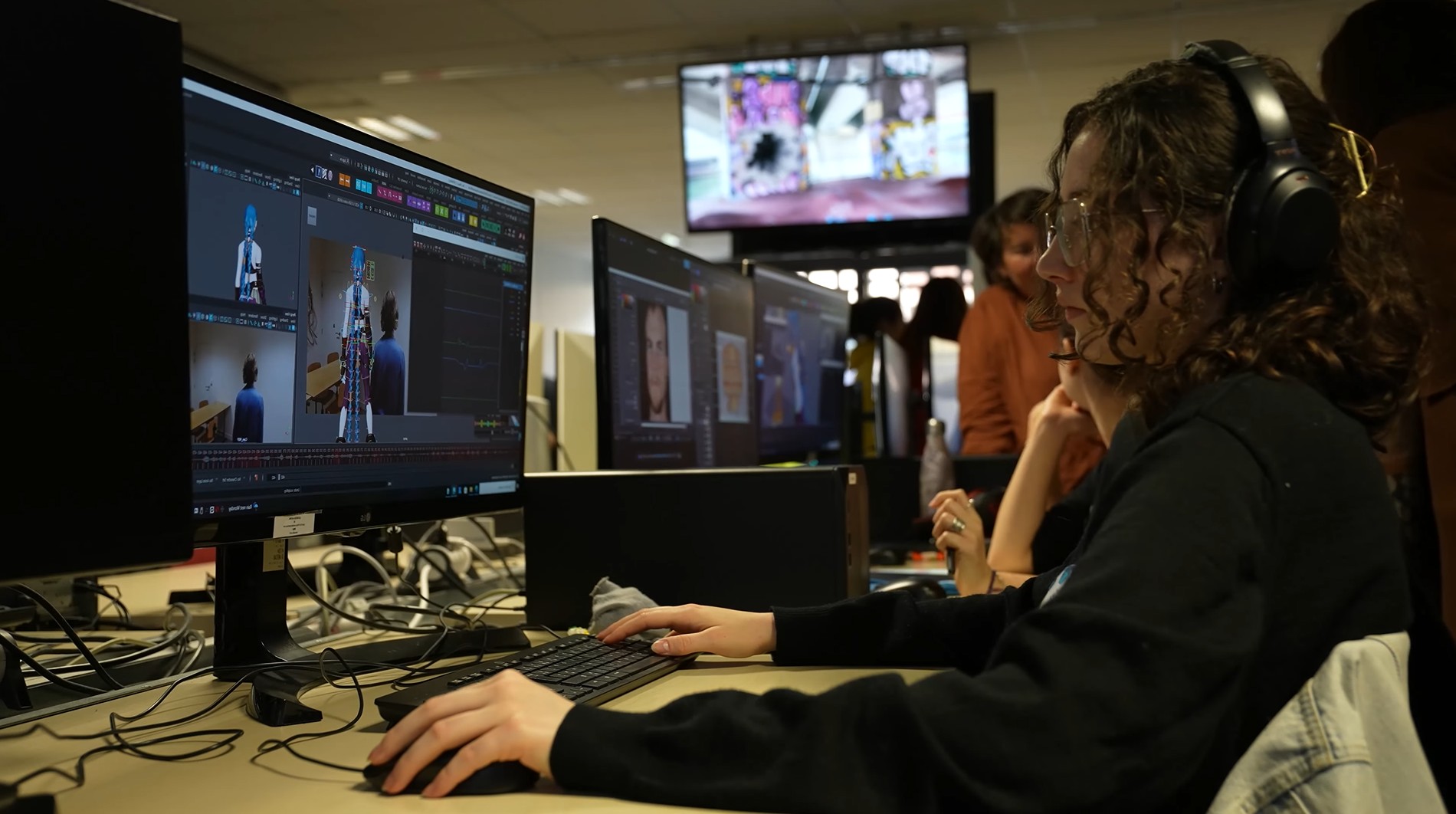
Producing a 3D film requires a substantial technical infrastructure: high-performance workstations, specialised equipment (graphics tablets, motion capture systems, etc.), but above all a rendering farm.
As the rendering of each final image can take several minutes or even several hours, depending on the complexity of the effects and the required resolution, it is this rendering farm that will incur the highest costs, as the duration of this process translates directly into infrastructure costs or cloud billing.
Software licences
As a significant item in a production budget, the cost of software licences must be factored in from the pre-production stage. The industry’s leading tools (Maya, Houdini, Nuke, Arnold, RenderMan and many others) require annual subscriptions per workstation, which add up quickly as the team grows.
Whilst there are, of course, open-source programmes such as Blender – a viable option for low-budget productions or short films – these free programmes are not yet the industry standard.
At the same time, texture and model libraries that require commercial usage rights also form part of these recurring costs, which are often invisible to the uninitiated.
Marketing and distribution
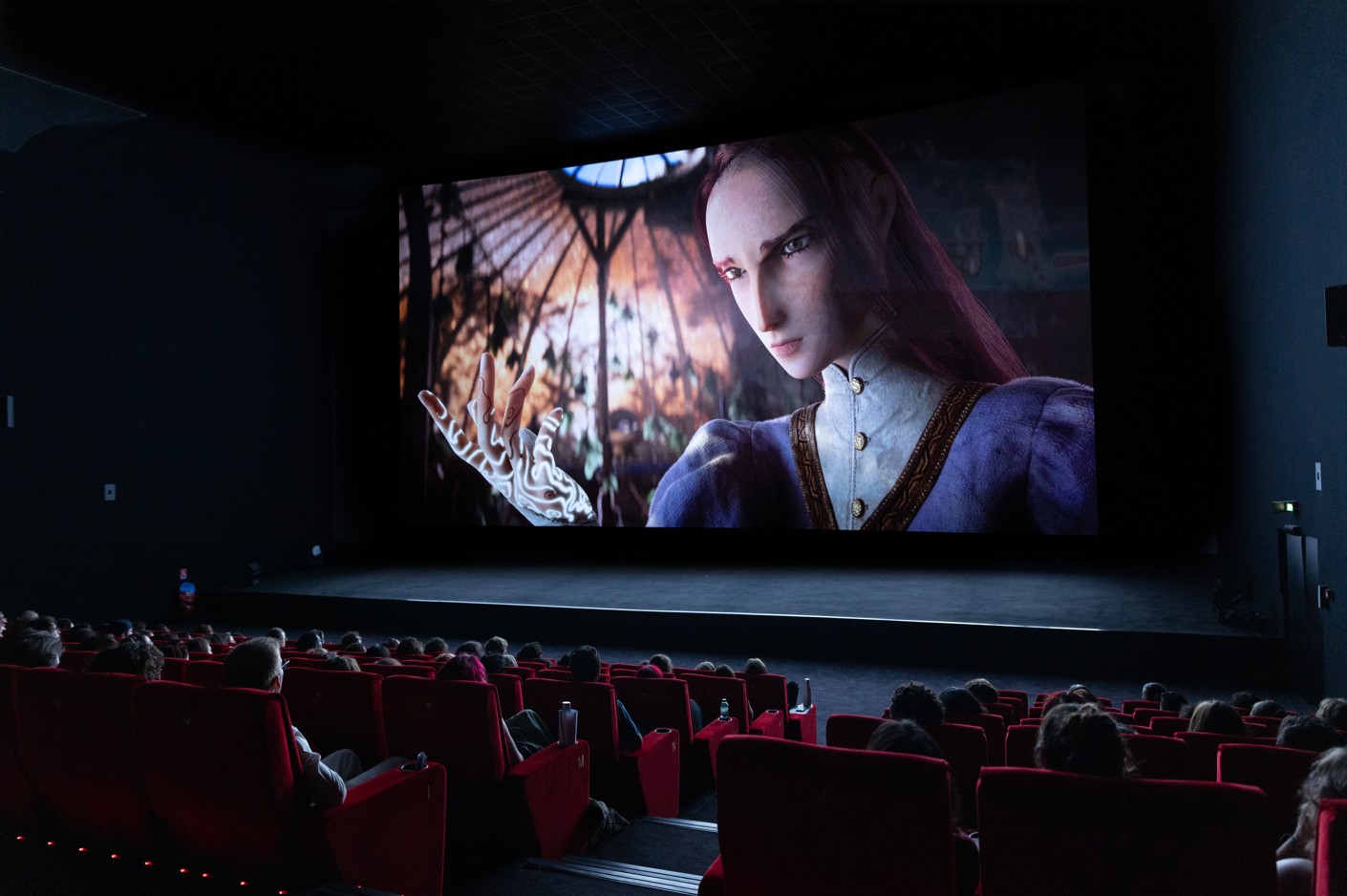
Once your film project has been approved, don’t count your chickens before they’re hatched. You also need to think about distributing and promoting it if you hope to recoup your costs. The distribution and promotion phase represents an investment in its own right. In fact, studios sometimes spend as much on marketing as they do on production itself, and a film is generally only considered profitable if it generates at least 2 to 2.5 times its total cost. These figures can quickly become very high when it comes to major studio films such as Super Mario, Toy Story 5, or upcoming Disney films like Hexed.
How is the money from a cinema ticket distributed?
According to an analysis carried out by the website festival7.fr, the average breakdown of the money from a cinema ticket is as follows: 5.5 per cent VAT, a TSA (the Taxe Spéciale Additionnelle, a quasi-fiscal levy collected directly by the CNC to fund its ‘support fund’) of 10.72 per cent, a SACEM contribution of 1.515 per cent for copyright, a cinema venue rental rate of 50 per cent (paid to cinema operators) and a commission of 20 per cent for distributors.
This goes to show why it is important to assess the risks carefully before embarking on a career as an animation director or producer, and, above all, to make a realistic estimate of potential revenue.
The film’s development and its life after release
After its cinema release, your animated film naturally continues to generate revenue, but it also incurs costs that must not be overlooked.
Localised versions, subtitling, adaptation for streaming platforms, and home video releases: these are all variations that entail additional costs which must be factored in right from the project’s conception stage, particularly as they can open up significant long-term revenue streams through international sales.
Funding a 3D animated film: what are the options?
In France, the financing of a 3D animated film rarely comes from a single source. The CNC is involved at every stage of the industry: scriptwriting, development, production, distribution and export, through automatic grants (calculated on the basis of box-office takings from previously produced works) and selective grants awarded on the basis of applications. These schemes are an essential pillar of support for French productions.
International co-productions, meanwhile, make it possible to pool public funding from several countries, whilst sharing the financial risks. For smaller-scale projects, crowdfunding can provide the initial spark, bringing a community together around a project even before the first day of production. Finally, when ambitions are greater, raising funds from private investors or negotiating pre-purchase agreements with television channels and streaming platforms remains the best way to secure a solid financing plan.
Common mistakes to avoid when estimating the budget for a 3D animated film
From Hollywood blockbusters to small independent studios, the budgetary pitfalls are often the same. The main mistake remains underestimating expenses in order to make the project look more attractive on paper, particularly to financial partners. An undersized budget inevitably leads to understaffing, production delays and, in some cases, the outright cancellation of the project.
Underestimating the time it takes to produce a 3D animated film is another common mistake. Every artistic change made during production (a change to a character, a scene that needs reshooting) can set off a chain reaction throughout the entire process, multiplying the number of hours of work required. Conversely, neglecting the pre-production phase to ‘save time’ always comes back to haunt you later on: a slapdash storyboard means wasted modelling time, animations that end up in the bin, and many other headaches.
Finally, overlooking the costs associated with distribution and marketing can prove fatal, even if the production itself is well managed. To avoid such misjudgements, it is essential to master not only the technical tools, but also the project management specific to animated film. These are two skills that ESMA’s 3D animation and special effects course takes great care to develop, through close collaboration with industry professionals.
A practical example: the budget for a 3D animated film in France
In France, the budgets for 3D animated feature films are mainly concentrated within a range of 7 to 20 million euros, as illustrated by *Dofus – Book 1: Julith* (€7.5 million), Les Inséparables ( €15.9 million), Bigfoot Family ( €15.2 million) and the recent adaptation of Patrick Sobral’s cult comic strip Les Légendaires ( €18 million). However, certain high-profile franchises significantly exceed this threshold: the two 3D *Asterix* films by Alexandre Astier and Louis Clichy each grossed between 30 and 34 million euros,
The most expensive of these: *Miraculous: The Movie* by Jérémie Zag, with its astronomical budget of 80 million euros for a 100 per cent French production. With such a production cost, the adaptation of the popular TF1 animated series became the second most expensive film in the history of French cinema across all genres, just behind Luc Besson’s *Valérian and the City of a Thousand Planets *.
Nevertheless, whilst these figures generally fall short of those of Hollywood blockbusters, they demonstrate that the French film industry is capable of producing ambitious 3D animated films, provided it can rely on European co-productions and substantial public funding.
A practical example: the budget for a Hollywood 3D animated film
On the other side of the Atlantic, the figures are quite different. To state the obvious, Pixar’s film budgets range from $150 million (Jumpers, Elio) to over $200 million for established franchises such as Inside Out or Toy Story.
But these impressive figures can be surpassed when unforeseen factors come into play. *Tangled*, released in 2010, cost Disney $260 million (a record for the studio) due to a complete overhaul of the project partway through, a merger with the Pixar teams, and the creation of a brand-new 3D technology to animate the character’s hair as well as the texture and movement of the water. A perfect example of the upheavals that can befall any animated film project.